Gustavo Gutierrez and Liberation Theology’s Critical Faith Theory

The Great Gustavo Gutierrez died this week. He transitioned as a 96-year-old giant whose A Theology of Liberation: History, Politics, and Salvation (1971) popularized and spurred the most important theological movement of the last 1700 years (i.e. since Constantine in the 4th century). In fact, liberation theology (LT) might well be described as responsible for the West’s most influential intellectual and social developments of the last 175 years (i.e. since the publication of the Communist Manifesto in 1848). United States and Vatican fierce opposition to LT testifies to its impact.

Think about it. Without liberation theology it is impossible to account for Salvador Allende’s rise to power in 1973 or the triumph of Nicaragua’s Sandinistas in 1979, or the power the FMLN in El Salvador had and continues to enjoy today. The Zapatista movement in Mexico is also intimately connected with liberation theology. Even more, without reference to liberation theology, it’s impossible to fully understand the rise of new left governments throughout Latin America. All of them are indebted to liberation theology and its power to motivate the grassroots.

Perhaps more surprisingly: apart from LT, one cannot fully understand the prominence of conservative evangelicals in the United States. That’s because (as we’ll see below) political support for their movement was part of the Reagan administration’s strategy to defeat liberation theology which the White House and the Pentagon termed a national security threat. Their fear of LT mirrored that of the Vatican which ended up cooperating with Washington’s war against it.

Many are convinced that Washington’s and Rome’s anti-LT war was successful. That’s because the U.S. systematically assassinated its prophets along with hundreds of thousands of its adherents in a massive conflict that Noam Chomsky called “the first religious war of the 21st century.”  The sheer terrorism of the U.S. response plus an equally systematic offensive against LT within the Catholic Church itself deprived liberation theology of its best leaders, misinformed and intimidated the grassroots, and silenced many more. Nonetheless LT has changed the world. It has changed the church and Christianity in general.

But what is liberation theology? And why was it so threatening to the powers-that-be, both political and ecclesiastical? What steps were taken to defeat it? And why should believers be so grateful to theologians like Gustavo Gutierrez?   

 Liberation Theology Defined

Simply put, liberation theology is reflection on the following of Jesus of Nazareth from the viewpoint of the poor and oppressed. More accurately, it is reflection on the following of Jesus the Christ from the viewpoint of those among the poor who are committed to their own liberation. That is, LT begins from a place of commitment – to a world with room for everyone. In itself, it represents a popular movement, a solidarity movement for social justice.

Liberation from what? In a word, from colonialism and from the neo-colonialism represented today by the forces of corporate globalization. Those forces have nearly half the world living on $2 a day or less. They’ve concentrated the world’s wealth in the hands of a sliver of 1% of the world’s population. According to UN statistics, eight billionaires own as much as 50% or humanity. As a result, at least 25,000 people including 10,000 children die of preventable starvation each day. In the eyes of liberation theology’s protagonists, that’s sinful and runs entirely contrary to the teachings of Jesus of Nazareth.

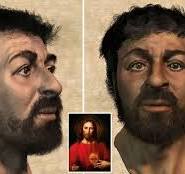
And what were those teachings? (This is the heart of liberation theology.) They were first of all those of a man recognized by the impoverished protagonists of liberation theology as someone like themselves. He looked like them. According to experts in the field of forensic archeology, he resembled poor mestizos everywhere in Latin America. He probably stood about 5’1’’ and weighed about 110 pounds. His skin was brown. He was a laborer, not a scholar; his hands were calloused.

Ironically, Jesus also possessed characteristics that mainstream Christians often find repulsive and ungodly. He was the son of an unwed teenage mother (Mt. 118-22; Lk. 1:26-38). He was homeless at birth (Lk.2:7).  If we are to believe Matthew’s account, Jesus became an immigrant in Egypt (Mt. 2:13-15). The good people of his day called him a drunkard and the companion of prostitutes. They expelled him from his synagogue because he didn’t seem to care about the 10 Commandments, especially the most important one – the Sabbath law. (For a Jew such excommunication and the shunning it entailed were like a death sentence.) The religious authorities said he was a heretic and possessed by the devil. The occupying Roman authorities identified him as a terrorist. They arrested him. And he ended up a victim of torture and of capital punishment carried out by crucifixion – a means of execution the Romans reserved specifically for insurgents. He was not the kind of person mainstream Christians usually admire. He was far too liberal to merit their approval.

Jesus was clearly a feminist. Many of his disciples were women. He spoke with them in isolated places. He actually forgave a woman caught in adultery, while implicitly criticizing the hypocrisy of patriarchal law which punished women for adultery and not men. And Jesus refused to recognize his contemporaries’ taboos around segregations. He crossed boundaries not only dividing men from women, but Jew from gentile, lepers from non-lepers, and rich from poor.     

He couldn’t have been more liberal. In a sense he was an anarchist. He honored no law that failed to represent the loving thing to do. His attitude towards the law is best summarized in his pronouncement about the Sabbath. “The Sabbath was instituted for human beings,” he said, “human beings weren’t made for the Sabbath.” This was pure humanism placing human beings above even God’s holiest law. Again, it was anarchistic.

Jesus’ teachings were politically radical as well. They centered on what today is called social justice. As such they infuriated his opponents but were wildly inspiring to the poor and oppressed. His proclamation was not about himself, but about what he called “The Kingdom of God.” That was the highly charged political image he used to refer to what the world would be like if God were king instead of Caesar. In that kingdom everything would be turned upside-down. The first would be last; the last would be first. The rich would be poor; the poor would be rich.

Subsequent reflection by followers of Jesus in the Book of Revelation teased all of that out and drew the conclusion that with the dawning of God’s kingdom, the Roman Empire would be destroyed and replaced by a new heaven and a new earth entirely unlike empire. There (as indicated in the Acts of the Apostles) wealth would be distributed from each according to his ability to each according to his need. There would be room for everyone. If that sounds like communism, it’s because, as the Mexican exegete Jose Miranda points out, the idea of communism originated with Christians, not with Marx and Engels.  

U.S. Opposition to LT

Those connections with Marxist analysis go a long way towards explaining resistance to LT by the U.S. government as well as within the Catholic Church.

That liberation theology dared to enter the mythological arena the right had long dominated virtually without rival astounded and infuriated the empire. Peasants throughout the subjugated world found the new explanations of God, Jesus and the gospels entirely empowering. Everywhere throughout Latin America they formed biblical circles, and those circles issued in social movements for justice.

In response, the Rockefeller Report of 1969 already identified liberation theology as a threat to the national security of the United States. By 1987, the Latin American Military Chiefs of Staff meeting in conference in Mar del Plata, Argentina, devoted several pages of their final report to liberation theology and the threat it posed to regional stability.  In between, in 1979 the first Santa Fe Document advised the incoming Reagan administration that it had to do something decisive about the threat posed by liberation theology. The administration heeded the advice, and responded both militarily and ideologically.

Reagan’s military strategy against liberation theology issued in a bloody war pitting the United States against the Catholic Church in Latin America whose bishops meeting in conference in Medellin Colombia had together dared to affirm a “preferential option for the poor” as their official position. To combat that commitment, the U.S. did exactly what Rome had done in the first three centuries of our era – and for the same reason: faithfully following Jesus who called empire into question and motivated the poor to assert their rights in this world as children of the God of life.

And both the Roman response and the U.S. response to Jesus and his followers resulted in blood baths. Many of us are well acquainted with the best-known martyrs: Camilo Torres, Archbishop Romero, the Salvadoran team of liberation theologians killed at San Salvador’s Central American University in 1989, the U.S. women religious murdered years earlier in that same country, and Che Guevara. (Yes, Che. His spirituality was secular, but it was no less spiritual or liberationist than any of the others.) And then the unending list of martyrs in this war against the Catholic Church – 200,000 in Guatemala, more than 100,000 in Nicaragua, 90,000 in El Salvador, and literally untold killings and disappearances in Honduras.

In every case, the carnage was a response to social movements inspired by liberation theology. Again, as Chomsky points out, official U.S. military documents show that liberation theology was a major target of those wars. In fact within those same official documents, the Army boasts specifically about defeating LT.

As for Reagan’s ideological response to liberation theology . . . .  On his accession to power, CIA psyops began funding conservative alternatives to liberation theology in Latin America and in the U.S. So did business concerns that saw the leftward drift of Latin America as a threat to their presence there. Domino’s Pizza and Coors Brewery were prominent among the cases in point. As a result, evangelicals throughout the region grew rapidly in number, and the recipients of those funds in the United States increasingly identified with Republicans, the “hand that fed them.”

So, the television programs of Jerry Falwell, Pat Robertson, Jim and Tammy Baker, Jimmy Swaggart, and others were beamed into every poor barrio, población, and favela. Right wing churches sprang up everywhere feeding and expanding an already robust evangelical presence in areas once completely dominated by the Catholic Church. The reactionary message was always the same – a depoliticized version of Christianity whose central commitment involved accepting Jesus as one’s personal savior and rejecting communism including the type allegedly represented by the theology of liberation.

All this points up the extreme importance of LT. including being indirectly responsible for the rise of the religious right in the United States.

On the other hand however, and on the other side of the aisle, so to speak, the Obama presidency represented the first U.S. president directly influenced by liberation theology. For 20 years, Barack Obama was part of the congregation of Jeremiah Wright – identified by James Cone, the father of black liberation theology, as the latter’s foremost contemporary embodiment.   

Nevertheless, Reagan’s two-front strategy (military and ideological) worked. Revolutionary gains in El Salvador, Guatemala, and most prominently, in Nicaragua were halted and reversed. Militarily, the “Guatemala Solution” was the template. It entailed using military and paramilitary death squads to kill everyone remotely connected with guerrilla movements. According to the Reagan strategy, that included priests, nuns, lay catechists and ministers of the word influenced by liberation theology. The theological strategy worked as well. The slogan promulgated by the Salvadoran military said it all, “Be a patriot; kill a priest.”

Our Debt to Gustavo Gutierrez 

Gustavo Gutierrez was by no means the founder of liberation theology. However, he is said to have coined the term in 1968 after the bishops of Latin America adopted as their own LT’s understanding of the Christ event as expressing God’s “preferential option for the poor.” The poor are God’s chosen people, liberationists explained, as testified by the divine choice to incarnate as the poor peasant earlier described.

In a sense then, Gutierrez and the movement he popularized represents a kind of “Critical Faith Theory” comparable to contemporary academia’s “Critical Race Theory.” Like the latter in relation to race, liberation theology seeks to reverse the traditional employment of religion and the Judeo-Christian tradition as tools of oppression meant to drug, pacify, infantilize, and depoliticize their adherents.

In that sense, LT is a kind of anti-theology.  

Thank you Saint Gustavo Gutierrez for your life and work.

U.S. Divide & Rule Strategy vs. China’s Unifying Belt & Road Initiative

Readings for Pentecost Sunday: Genesis 11: 1-9; Psalm 104: 1-2, 24, 35, 27-30; Romans 8: 22-27; Acts 2: 1-11.

Last week Russia’s Vladimir Putin got the red-carpet treatment when he and virtually his entire government leadership met with Xi Jingping and his governing counterparts for a two-day summit in Beijing.

The collective west was apoplectic in response.

What were these two villains up to? Surely, they’re conspiring to take over the world.

The Washington Post fretted about connections between Russia and China on the one hand and with Iran and North Korea on the other.

But of course, what transpired last week in China is far bigger than any of that. It’s not just a worrisome alliance between the countries just mentioned. Ultimately, it’s a question of pacts between China, Russia, and the entire Global South (aka the Global Majority) that’s now taking practical form in BRICS+. And the threat there is not primarily military. It’s economic.

It’s the fearful (to the west) specter of a world order of cooperation, mutual benefit, and majority rule replacing that of western neocolonial empire with its ancient “divide and rule” tactics.

In the context of this Pentecost Sunday homily, you might even call such replacement “spiritual,” “biblical,” or (yes) “Pentecostal.”

Let me show you what I mean by elucidating what the west can’t understand about Russia and China’s shared project, about the difference between that project and the one favored by the collective west, and finally about the connections between all of that and today’s readings for this Pentecost Sunday.

The Project of the Collective West 

What the collective west cannot understand about China is that its worldview is radically different from its own.

Especially since the Reagan-Thatcher era, the west has returned to the Hobbesian and social Darwinian superstition that human beings are primarily individuals constantly at one another’s throats.

They’ve become convinced that humans are basically selfish and locked in a “war of all against all.” Hence, “forever wars” are normal and the best we can do.

Westerners have also come to believe that government is somehow the enemy, that its size must be reduced to such an extent that it (as Grover Norquist said) can be drowned in a bathtub. This means that market regulation and taxation must be reduced to a minimum.

Even more importantly, the prevailing western belief system holds that its somehow natural and divinely ordained that just 4.2% of the world’s population (i.e. the United States) should run the world. White people are exceptional. In traditional terms, the DICTATORSHIP of the collective west’s bourgeoisie (of the G7) is part of the natural order.

As a result, any threat to such hegemony must be crushed.

Westerners take all that as self-evident truth forgetting that IT’S JUST A POINT OF VIEW – that btw happens to perfectly support huge wealth disparities and favorable profit margins of the military industrial complex. They forget that there are alternatives – other viewpoints that happen to be working far better than the positions just listed.

The Project of Russia and China

And that brings us back to Beijing.

China, Russia, and the Global Majority have a different approach to political economy. And virtually no one in the west gets it.    

And it is here that China leads the way. It is led by a workers’ party that as such seeks to replace the “divide and rule” dictatorship of the bourgeoisie with the leadership of working classes and their political representatives.

This simply means that the Chinese Communist Party (CCP} aspires to walk a fine line that prioritizes the welfare of the majority over that of corporations, billionaires, and of a state entirely beholden to their interests.  The CCP has the final word. It protects local currency. Without stifling private enterprise, it protects its majority from the dictatorship of the bourgeoisie.

Accordingly, the CCP for example easily exercises eminent domain to advance projects (e.g. high-speed rail) deemed necessary to serve the common good. The CCP recognizes and suppresses as “corruption” egregious exercise of power on the part of the billionaire classes.

In short, Chinese political theory rejects “divide and rule” in favor of common good, multi-polarity, national sovereignties, and international cooperation. It seeks a world with room for everyone, with abundance for all, and where independent nations trade freely for mutual benefit. It is a world governed by international law directed by the United Nations. That’s the vision of “socialism with Chinese characteristics.”

Pie in the sky, you say?

Not really. Witness China’s success in eliminating extreme poverty in record time. Witness the success of its Belt and Road initiative. Witness all the countries lining up to join BRICS +.

For China, the west’s “divide and rule” gives way to multipolarity and cooperation. In contrast to the United States’ forever wars and its 700 military bases throughout the world, China hasn’t fired a shot outside its borders in more than 40 years and has only one military base outside its borders.

Today’s Readings
And that brings us to the readings for this Pentecost Sunday. They too contrast “divide and rule” strategies with those of mutual understanding.

What follows are my “translations” of the readings. Check out the originals here to see if I’ve got them right.

Genesis 11: 1-9: So, you think the “divide and rule” principle came from the Romans? If so, you’re wrong. “Divide and rule” came from the mysterious “Powerful Ones” (the biblical Elohim) who once ruled this earth. Where they came from no one knows. Perhaps from another planet or from all those leagues under the sea. In any case, they were terribly threatened by the humans they needed to supply them with the beef, gold and young virgins. (Powerful Ones always seem to require those.) So, when the Elohim saw humans cooperating to build cities with skyscrapers reaching to the heavens, the Powerful Ones intervened. They somehow made it impossible for people to understand each other. Suddenly they were divided into incomprehensible language groups. Ever since, other Powerful Ones (yes, like the Romans and the “Americans”) have aggressively adopted their own “divide and rule” strategies. They invent borders along with cultural, religious, and racial identities to keep humans apart lest they discover the immense power of universal cooperation.

Psalm 104: 1-2, 24, 35, 27-30: Far from dividing humans, Yahweh’s Great Spirit wills a New Earth whose creatures share the same breath and live in complete harmony, not division. Yahweh’s earth provides abundance for all including food and every good thing imaginable. Everything belongs to humans as a gift from Yahweh. She is indeed to be praised.

Romans 8: 22-27: This abundant Spirit of God is on our side as we earthlings struggle to replace the results of the Powerful Ones’ “divide and rule” strategies with God’s New Earth and its abundance for all. That shared plenty is what we’re all hoping for even though it’s hard to see in this purposely divided world. Resist! Be strong! Believe! Hope! God’s New Earth is possible! Another world is on the horizon. It is necessary.

Acts 2: 1-11: Fifty days after Yeshua’s assassination, his Spirit of community replaced the Elohim’s “divide and rule” scheme. With the descent of Yeshua’s Spirit, all language barriers vanished. Parthians, Medes, and Elamites, inhabitants of Mesopotamia, Judea and Cappadocia, Pontus and Asia, Phrygia and Pamphylia, Egypt and the districts of Libya near Cyrene, as well as travelers from Rome, both Jews and converts to Judaism, Cretans and Arabs, all understood that they shared a single Spirit uniting them all. They vowed to resume building the City of God –TOGETHER.

Conclusion

Yes, today’s readings suggest that China, Russia, and the Global Majority represented by BRICS + are on the right track. The United States and the collective West are not.

If Planet Earth is to survive, something like China’s approach to government, national sovereignty, common good, abundance for all, international cooperation, and multipolarity must replace Hobbes, social darwinism, forever wars, minority dominance, and divide and rule.

Ironically, the CCP is closer to the spirit of Pentecost than the “Christian” west.

Marianne Williamson vs. Sean Hannity: the Radical Jesus vs. the Mainstream Christ

Readings for Ascension Sunday: Acts 1: 1-11; Psalm 47: 2-3, 6-9; Ephesians 1: 17-23; Matthew 28:16-20

The readings for this Seventh Sunday of Easter (Ascension Sunday) should be thought provoking for people with ethical concerns around our upcoming presidential election. In that context, they illustrate the mainstream tendency to domesticate the radical social justice teachings of Yeshua of Nazareth – a tendency vigorously resisted by candidate Marianne Williamson.

The tendency in question stemmed from an early church interested in softening Jesus’ identity as firebrand advocate of social justice who was executed by Rome as an anti-imperial insurgent.

Intent on making peace with Roman imperialism, Christianity’s early message sometimes bordered on “You have nothing to fear from us. We’re not troublemakers. The two of us can get along. We’re not interested in politics.”  

The process is especially noteworthy these days when social justice advocate, Marianne Williamson, raises questions of equity on specifically spiritual grounds.

As a longtime teacher of A Course in Miracles (ACIM) that centralizes the voice of Jesus, Ms. Williamson constantly does so in the context of her own insurgent campaign to unseat Joe Biden as president of the United States.

In that context too, Christians have domesticated Jesus. As a result, Ms. Williamson’s policy positions are portrayed as kooky and incomprehensible even by professed Christians who don’t understand Jesus’ program (Luke 4:14-22) as well as Williamson does.

That was illustrated two weeks ago when the candidate appeared on Sean Hannity’s Fox news program. (See video at the top of this posting.)

In their exchange Hannity ended up specifically advocating the domesticated Jesus. Meanwhile, Ms. Williamson (without directly referencing Jesus) proposed a political spirituality concerned with Spirit, love, equity, and social justice.

To show you what I mean, let me compare the Jewish Ms. Williamson’s understanding of faith with that of the professed Catholic Sean Hannity. Then I’ll show how the roots of the two versions are found in today’s readings. Finally, allow me to draw an important conclusion relative to the current presidential campaign.

Hannity’s Interview

To begin with, Hannity was completely rude. He hardly let his invited guest get a word in edgewise.

His questions were all gotcha queries. For instance, he tried to associate Ms. Williamson’s call for a wealth tax on Americans earning more than $50 million per year ($50 million!!) with Communism’s motto “From each according to his ability to each according to his need.” He said the concept came from Karl Marx. [Too bad Ms. Williamson hadn’t read my homily of a month ago. She would have been able to counter that the concept originates not from Marx, but from the Acts of the Apostles. (See ACTS 2: 45, 4: 35, 11: 29.)]

Of course, Hannity’s bullying style of constant interruption and talking over his guests was absolutely to be expected. That’s what he does.

However, in terms of today’s homily, what was most interesting was the exchange between the Fox News host and Ms. Williamson about faith.

To that point, Hannity ended by saying, “I gotta ask you about some of the weird stuff you’ve said. You have said, ‘Your body is merely your space station from whence you beam your love to the universe. Don’t just relate to the station, relate to the beams. Everyone feels on some level like an alien in this world because we are. We come from another realm of consciousness and are long way from home.’”

With his probably largely “Christian” audience laughing in the background, Hannity asked derisively, “What the hell does that mean?” Ha, ha, ha!

With admirable calm, Ms. Williamson replied, “I’m really surprised to hear you say that. I would think that you would realize that as a very traditional religious and spiritual perspective – that we are spirits, that God created us as spirits. And that is what we are and are here to love one another. And we don’t feel deeply at home on a spiritual level on this planet because this world is not based on love the way it should be. I believe that agrees with the teachings of Jesus.” (That last sentence is my guess. It was obscured by Hannity’s over-talking interruption.)

Then the ex-seminarian said, “That’s fair answer. I’m a Christian. I believe in God the Father, that God created every man, woman, and child on this earth. I believe in Jesus Christ, the Son, that died and resurrected (confused pause) – uh, came back from the dead – to save all of us from our sins. That’s what I believe.”

Do you see what I mean? Williamson’s faith is mildly in tune with the early church’s most radical ideal of “from each according to his ability, to each according to his needs.” In tune with Jesus’ teachings, she holds that we are primarily spiritual creatures called to love one another in a world that believes such idealism is “weird stuff.”

Accordingly, Williamson champions what she calls an “economic and political U-turn.” That involves (among many other policy positions) a wealth tax on the super-rich, something like a Green New Deal, and less of our money transferred to the military industrial complex. For her, all that is a practical expression of Ethics I01.   

Meanwhile, Hannity owns a Christianity whose belief supports (as he put it twice in the interview) limited government, more freedom, lower taxes, and energy independence. In his second iteration of his faith, he added “I want borders secure; I want law and order . . . and freedom from the climate alarmist religious cult.”

As a Republican, Hannity was really saying he wants lower taxes for the rich, fewer restrictions on fossil fuel extraction, the right to ignore international law around asylum for refugees, more policing of poor communities, and less environmental regulation. (He evidently hasn’t read Pope Francis eco-encyclical Laudato Si’ that intimately connects the following of Christ with that U-turn Williamson referenced.)

Today’s Readings

This Sunday’s selections describe Jesus’ ascension into heaven. However, taken together the readings indicate a struggle even in the early church between Hannity’s domestication of Christian faith contrasted with Williamson’s position that gently gestures towards Jesus’ radicalism.

According to the story about following Jesus as a matter of this-worldly justice, the risen Master is said to have spent the 40 days following his resurrection instructing his disciples specifically about “the Kingdom.” For Jews that meant discourse about what the world would be like if God were king instead of Caesar. Jesus’ teaching must have been strong. I mean why else in Jesus’ final minutes with his friends, and after 40 days of instruction about the kingdom, would they pose the question, “Is it now that you’ll restore the kingdom to Israel?” That’s a political and revolutionary question about driving the Romans out of the country.

Moreover, Jesus doesn’t disabuse his friends of their notion as though they didn’t get his point. Instead, he replies in effect, “Don’t ask about precise times; just go back to Jerusalem and wait for my Spirit to come.” Then he takes his leave.

The other story endorsed by Sean Hannity is conveyed by today’s reading from Ephesians. It emphasizes God “up there,” and suggests our going to him after death. In Ephesians, Jesus is less concerned about God’s kingdom, and more about “the forgiveness of sin.” For Ephesians’ Pseudo Paul (probably not Paul himself) Yeshua is enthroned at the father’s right hand surrounded by angelic “Thrones” and “Dominions.” This Jesus has founded a “church,” – a new religion; and he is the head of the church, which is somehow his body.

This is the story that emerged when writers pretending to be Paul tried to make Jesus relevant to gentiles – to non-Jews who were part of the Roman Empire, and who couldn’t relate to a messiah bent on replacing Rome with a world order characterized by God’s justice for an imperialized people.

So, they gradually turned Jesus into a “salvation messiah” familiar to Romans. This messiah offered happiness beyond the grave rather than liberation from empire. It centralized a Jesus whose morality reflected the ethic of empire: “obey or be punished.”

That’s the story that has prevailed for most Christians.

Conclusion

When Sean Hannity professed his faith that “Jesus died for our sins,” Marianne Williamson should have asked, “What sins are you referring to?”

As a traditionalist, Hannity was probably thinking about personal failings – especially anything to do with sex.

However, what actually killed Jesus was the Roman Empire and Jesus’ religious community that (like mainstream churches today) cooperated with empire by going along to get along. That sin accounted for Jesus’ death. It was the sin he died for.

Put otherwise, opposing his people’s cooperation with Rome led to Jesus’ crucifixion – a form of capital punishment reserved for insurrectionists, insurgents, and revolutionaries.

Following in Jesus’ footsteps led his early disciples to “weird” practices like wealth redistribution “from each according to his ability to each according to his need.”

Unlike Jesus’ earliest followers, our compromised contemporary (Christian) religious community as embodied in Sean Hannity finds such practices threatening, ridiculous, laughable, and “weird.”

In tune with today’s Ascension Sunday readings, Marianne Williamson’s candidacy reminds us that they shouldn’t be.


China’s More “Christian” Approach to Homelessness Than “America’s”

Readings for 5th Sunday of Easter: ACTS 6: 1-7; PS 33: 1-2, 4-5, 18-19; I PT 2: 4-9; JN 14: 1-12.

This will be a quick “homily” this week — largely to share with you the difference between China and the United States in terms of housing and feeding the hungry.

The point is to show that China’s system is superior to that of the United States relative to concerns of Jesus and the early church as described in today’s readings for the Fifth Sunday of Easter. (That’s why I embedded the above video about lack of homelessness in China.) In fact, care of the poor, hungry, and homeless has been a recurring theme in our Sunday liturgies of the word since Easter.

Previously we saw that the early Christians practiced a kind of “communism with Christian characteristics.” Remember that? I mean, we’re told that the Christians eliminated poverty in their communities by sharing their goods and property “from each according to their ability to each according to their need” (ACTS 2: 44-45 and 4: 32-35).

China, we saw, is doing something similar and as a result (unlike capitalist economies) it’s succeeded in eliminating extreme poverty for more than 700 million people. That’s unprecedented – and dare I say it, very Christian.

Today’s readings emphasize once again the importance Jesus’ early followers gave to feeding the hungry — specifically, the children of single moms. But the selections also emphasize the Christian ideal of providing decent (and even luxurious) homes for everyone. According to today’s pericope from the Gospel of John, everyone deserves a mansion.

Such provision, the readings tell us, is based on the direct example of Jesus, who, we’re reminded, is the very image of God. Or as John the Evangelist has Jesus say, “I and the Father are one. Whoever has seen me has seen the father.”

Traditionally, those words have been taken to mean simply that “Jesus is God.”

But I’d venture to say that that’s not the most accurate way of putting it. I mean, more penetrating reflection shows that it seems more consonant with Jesus’ words not to say that “Jesus is God,” but rather that “God is Jesus.”

What’s the difference?

Well, it goes like this. . .. Saying that Jesus is God presumes that we all know who God is. However, we don’t.

Oh, we can speculate. And theologians and philosophers throughout the world have done so interminably. Think of the Greeks and their descriptions of God as a Supreme Being who is all-knowing, omnipotent, and perfect. Such thinking applied to Jesus leads to a concept of him that is totally abstract and removed from life as we live it from day to day. The God in question is well removed from the problems of hunger and homelessness addressed in today’s readings.

Those selections do not say that Jesus is God, but that God is Jesus. It’s not that in thinking about God one understands Jesus. It is that in seeing Jesus, one understands God. Jesus says, “He who sees me, sees the Father.”

To repeat: the distinction is important because it literally brings us (and God) down to earth. It means that Jesus embodies God – inserts God into a human physique that we all can see and touch and be touched by.

If we take that revelation seriously, our gaze is directed away from “heaven,” away from churches, synagogues, and mosques. Our focus instead becomes a God found on the street where Jesus lived among the imperialized, and the despised – the decidedly imperfect. In Jesus, we find God revealed in the offspring of an unwed teenage mother, among the homeless and immigrants (as Jesus was in Egypt), among Jesus’ friends, the prostitutes, and untouchables, and on death row with the tortured and victims of capital punishment. That’s the God revealed in the person of Jesus. He is poor and despised, an opponent of organized religion and imperial authority.

Following the way and truth of that Jesus leads to the fullness of life.

Take, for instance, today’s first reading from the Acts of the Apostles. It shows us a faith community focused on providing food for those single moms and their children. The first Christians worship a God who (as today’s responsorial puts it) is merciful before all else. That God, like Jesus, is trustworthy, kind, and committed to justice.

So, we sang our response, “Lord, let your mercy be on us, as we place our trust in you.” In doing so, our thoughts should have been directed towards the corporal works of mercy which the church has hallowed through the ages. Do you remember them?  Feed the hungry, they tell us; give drink to the thirsty; clothe the naked; visit the sick and imprisoned, bury the dead, and shelter the homeless.

In fact, providing shelter – homes for the homeless – was so central for early Christians that it became a fundamental metaphor for the human relationship to God. So, today’s reading from First Peter describes the early community as a single house whose cornerstone is Jesus himself.

Then in today’s gospel, John refers to Jesus’ Father as the one who provides a vast dwelling with many luxurious apartments. You can imagine how such images spoke to impoverished early Christians who would have been out on the street without the sharing of homes that was so important to early church life.

So don’t be fooled by the upside-down version of Christianity that somehow identifies our land with its homelessness, hunger, and widespread poverty as somehow Godlier that China, where extreme poverty and homelessness have been eliminated.

Rather, remember that God is Jesus. God is the one reflected in the lives and needs of the poor, the ill, and despised. With Jesus, the emphasis is on this world – on eating together, feeding the hungry,
sheltering the homeless, on elimination of poverty, and sharing all things in common. That was Jesus authentic Way – the one followed so faithfully by the early church focused on God’s mercy and the merciful acts it inspires. It should be our Way as well.

So, look at the video above with the example of Jesus and the early church in mind. Notice the contrast (in the video itself) between China’s approach to poverty and homelessness and the laissez faire (i.e., unchristian) approach we have in this country.

Then reflect on the need for (Christian) revolution here in the United States. China shows it’s possible.

Communism with Christian Characteristics: China’s Good Example  

Readings for the Second Sunday of Easter: Acts 2: 42-47; Psalm 118: 2-4, 13-15, 22-24; First Peter 1: 3-9; John 20: 19-31

Today’s rich reading from Luke’s Acts of the Apostles shows how China’s socialist policies – relentlessly vilified by our political leaders, educators, mass media, and churches – are far more in accord with the spirit of Yeshua and the early church than the corresponding policies of the United States.

That shocking fact is born out by the results of measures that China has for decades identified with its drive towards “Common Prosperity.” Even since the time of Mao Zedong, the campaign’s goal has been to narrow the wealth gap between the country’s rich and poor.

And in a very short time, China has advanced towards its goal far beyond what Americans have been led to understand. That is while hunger, tent cities, ineffective schools, deteriorating infrastructure, and large population swaths without health care proliferate among us, things are quickly moving in the opposite direction under the aegis of the Chinese Communist Party (CCP).

Think, for instance, of the CCP’s verified announcement (vastly underreported in the United States) that it has virtually eliminated extreme poverty for over 800 million of its people.  No wonder that according to surveys sponsored by U.S. pollsters, the Chinese government boasts approval ratings of nearly 90% of its people.

One might think that such unprecedented accomplishments and support would be widely celebrated across the planet. You’d think that it would be taken as a sign that “socialism with Chinese characteristics” is superior to neoliberalism’s laissez-faire system.

However, China’s success is not even widely acknowledged or celebrated among Christians who (judging by the reading from Acts just referenced) would embrace such accomplishment as a sign of progress towards the North Star Yeshua proclaimed as the “Kingdom of God.” You’d think they’d embrace it because the early Christians practiced what might be called “communism with Christian characteristics.”

Let me show you what I mean. Take that reading from the Acts of the Apostles.

Today’s Reading

Think about what we read there – a description of life among Jesus’ first followers after the experience they called his “resurrection”:

“All who believed were together and had all things in common; they would sell their property and possessions and divide them among all according to each one’s need.”

Luke the evangelist repeats that refrain later in the same source when he writes:
“Now the whole group of those who believed were of one heart and soul, and no one claimed private ownership of any possessions, but everything they owned was held in common . . . There was not a needy person among them, for as many as owned lands or houses sold them and brought the proceeds of what was sold. They laid it at the apostles’ feet, and it was distributed to any as had need.” (Acts 4:32-36).

There you have it. The early Christians:

* Lived communally
* Rejected private property
* Including land and houses
* Instead held everything in common
* Pooling all their resources
* And distributing them “from each according to ability to each according to need.”
* As a result, they eliminated poverty from their midst.

Did you catch the operative words: they divided their property “among all according to each one’s needs?” As Mexican biblical scholar Jose Miranda points out in his Communism in the Bible, those are the words of the Bible not of Marx or Engels. In other words, the formula “from each according to his ability to each according to his need” comes straight from the Acts of the Apostles. They have nothing to do with atheism. On the contrary, they have everything to do with faith.

They have everything to do with following Jesus who himself might be called a communist. He’s the one who said, “Every one of you who does not renounce all he has cannot be my disciple” (Luke 14:3).

Jesus, not Marx, is the one who set concern for those in need as the final criterion for judging the authenticity of one’s life. He said, “I was hungry, and you gave me to eat; I was thirsty, and you gave me to drink, was a stranger and you took me in, was stripped naked and you clothed me; sick and you visited me, imprisoned and you came to see me” (MT 25: 35-36). Everything, Jesus insists, depends on recognizing his presence in the poor and oppressed and responding accordingly.

Common Objections

Of course, it’s often pointed out that the Christian experiment in communism was short-lived. Jesus’ followers soon backed off from their early idealism. That observation is supposed to invalidate their communistic lifestyle as impossibly utopian and therefore no longer applicable as Christians’ guiding North Star. In fact, this objection is taken as justifying the persecution of the communism the text idealizes and recommends!

But the same argument, of course, would apply to the Ten Commandments in general or to the Sermon on the Mount – or to the U.S. Constitution for that matter. In our day (and in the course of their histories) all those statements of ideals have only sporadically been lived out in practice. Should we then throw them all out? Should we persecute those espousing the Sermon on the Mount ideals or observance, for instance, of the Fourth Amendment? Few in the Christian community or in the U.S. political world would make that argument.

Others anxious to distance themselves from the communistic ideals of early Christianity would point out that the communal life adopted by Jesus’ first followers was voluntary not imposed from above. In doing so, they point to another passage in Luke’s Acts of the Apostles. That’s the one involving Ananias and Saphira – a couple whose life is exacted for claiming to have sold their property while keeping some of it back for themselves.

Referring to their property, Peter says to Ananias, “Was it not still yours if you kept it, and once you sold it was it not yours to dispose of?” (Acts 5:4) But (again as Miranda points out) what was optional was not selling their property – Christianity’s indispensable condition. What was optional was the choice to become a disciple of Christ. Choosing the latter option required practicing communism!

As for economic systems imposed from above. . .. Can you name one that isn’t?

How many of us have really chosen to live under capitalism? The answer is that none of us have. That’s because to make an informed choice, one must know the alternative. However, our families, schools, churches and civic organizations, our films and novels and news programs mostly conspire to vilify alternatives and keep them hidden.

Besides that, our government and military have made sure that experiments in alternatives (like the one implemented in China) are consistently portrayed as failures – lest their “bad example” undermine capitalist claims to be the only viable system.

Even worse, our church leaders (who should know better) jump on the anti-communist band wagon and present Jesus as a champion of a system he would despise. Church people speak and act as if Luke’s passage from Acts had read:

“Now the whole group of those who believed lived in fierce competition with one another and made sure that the rights of private property were respected. They expelled from their midst any who practiced communalism. Consequently, God’s ‘invisible hand’ brought great prosperity to some. Many however found themselves in need. The Christians responded with ‘tough love’ demanding that the lazy either work or starve. Many of the unfit, especially the children, the elderly and those who cared for them did in fact starve. Others however raised themselves by their own bootstraps and became stronger as a result. In this way, the industrious increased their land holdings and banked the profits. The rich got richer and the poor, poorer. Of course, all of this was seen as God’s will and a positive response to the teaching of Jesus.”

When are we going to stop this bastardization of Christianity?

Conclusion

The emphatic answer should be RIGHT NOW – beginning today on this Second Sunday of Easter!

To do so, we must before all else face it: Jesus’ followers practiced “communism with Christian characteristics!” Yes, they did!

Then as followers of Yeshua the Christ, we should:

* Read Jose Miranda’s manifesto, Communism in the Bible.
* If we can’t bring ourselves to sell what we have, give it to the poor, and live communally, at least conspire with like-minded people to share tools, automobiles, gardens – and perhaps even jobs and homes in an effort to reduce poverty and our planetary footprints.
* “Out” the “devout Catholic,” Joe Biden and other “Christians” in our government whose budgets attempt to balance federal accounts by increasing the ranks of the poor whose poverty the communism of the early Christian community (and of contemporary China) successfully eliminated.
* Pressure our government to get off China’s back and allow it to experiment in prophetic ways of living that can save our planet.
* I’m sure you can add to this list.

Please do so in your comments.

Economic Systems: Notes on My Conversation with My 13 year-old Granddaughter

Last evening, my granddaughter, Eva (who’s about to celebrate her 14th birthday) and I had a remarkable hour-long conversation about economic systems. The topic was the focus of one of the classes she’s taking here in Spain, where the government is run by a coalition of socialists and rechristened communists (in a party called “Podemos” (“Yes, We Can!”). Whereas in the United States one can hardly use the word “socialism” without suffering opprobrium, I’ve learned that it’s the opposite here in Spain. Discussing socialism in clear and objective ways is de rigueur in school.,

Since Eva’s classes are in Spanish (and she’s only been here a couple of months), she had a hard time understanding the thrust of her teacher’s remarks and of observations by her fellow students.

So, Eva asked me about the differences between capitalism and socialism — a topic I’ve taught about and have tried to simplify or years and years.

She was very attentive as I shared what I know. Afterwards, we promised to continue the discussion. And to that end, I made up the following notes on the similarities and differences between capitalism, socialism, mixed economies, Marxism, communism, and fascism. I promised Eva that if she just understood and memorized what appears below in bold, she’d be streets ahead of most college students (and many professors!).

I sent her the notes with the following message:

Dearest Eva,

Really enjoyed our discussion last evening. It drove me to compose the attached summary for you. Please study it. Bring your questions the next time we get together for a chat. Learn as much of it as you can. THERE WILL BE A QUIZ!  I’ll expect ready answers to my questions. 

Love,

Baba

Economic Systems

Key Terms

Means of production = what produces consumer goods, viz., land, mines, forests, factories, oceans

Markets: Places where goods are sold and bought

Free Markets: No regulation. Anything (including people) can be bought and sold

Open Markets: Anyone can be a buyer or seller regardless of age or other restrictions

Earnings: Profit, income, wages. . ..

I

Capitalism

(An Economic System comprising the following elements)

1.Private ownership of the means of production

2. Free and open markets

3. Unlimited earnings

[In its pure form, this type of “free market capitalism” exists only in the illegal black market, where the Mafia, for example, sells anything (or anyone) without regulation or paying taxes. Note also that the three points indicated above summarize the ENTIRE economic program of the U.S. Republican Party that always seeks PRIVATIZATION, DEREGULATION OF MARKETS, AND LOWER TAXES.]

II

Socialism

(The opposite of capitalism. It is an economic system comprising the following elements)

  1. Public ownership of the means of production
  2. Controlled or regulated markets
  3. Capped or otherwise limited earnings (e.g., by income taxes).

[In its pure form, socialism does not and never has existed. That’s because ALL economies represent mixtures of capitalism and socialism. That is, they are “mixed economies.” The question is, “mixed in favor or whom — the rich or the poor?”]

III

Mixed Economies

(Economic systems embodying some elements of free market capitalism and some of socialism featuring the following elements)

  1. Private ownership of some enterprises and public ownership of others [e.g., in the U.S. the government (i.e., the public through their elected representatives) is the country’s biggest landowner (through its national park system); it also owns the U.S. postal system, and the rail system. In many other “capitalist” countries, governments also own electrical grids, energy sources (such as oil), water supplies, and transportation systems (like airlines).
  2. Some free and open markets and some that are regulated. [For instance, in the U.S., regulations insist that minors cannot buy tobacco products or alcoholic drinks. Restaurants must maintain standards of cleanliness or risk being closed by government authorities. The same with food factories.]
  3. Limited earnings usually by a “progressive” income tax (meaning that those with larger incomes pay in taxes a higher percentage of their income).

Economies can be mixed in favor of entrepreneurs as in the United States (offering them government subsidies, tax breaks, and deregulation) or in favor of workers as for example in Cuba or China (offering them free healthcare, education, subsidized food and housing, etc.)

IV

Marxism

(The philosophy of Karl Marx, who was a socialist and a communist — see below.) His analysis held that

  1. Capitalism necessarily exploits workers and the environment [“Necessarily” because the market system has workers competing with one another for scarce jobs. They therefore bid one another down as they seek employment until they end up working for the lowest wage possible. Also, few entrepreneurs seeking to maximize profits will ever voluntarily add costs to their production by protecting the environment (e.g., by adding scrubbers to their smokestacks or filters cleansing any effluents pouring into nearby rivers). Those who do protect the environment voluntarily drive up their costs of production and will be undersold and driven out of business by competitors lacking environmental consciences.]
  2. The workers will inevitably rebel against such exploitation, replacing capitalism with socialism.
  3. Socialism will eventually evolve into communism.

V

Communism

(A vision of the future embraced by some socialists.) All communists are socialists; some socialists are communists, most are Marxists who envision a future with

  1. No classes (rich or poor)
  2. No state (because they see the state as enforcing dictatorships – either the “dictatorship of the capitalists” (whereby a small body on boards of directors decide unilaterally on what is produced, where it is produced, and what to do with the profits) or the “dictatorship of the proletariat” (Marx’s term for the working class). Under the envisioned proletariat’s dictatorship, workers, e.g., through their labor unions, and as co-op owners of the means of production decide what to produce, where to produce it, and what to do with the profits.
  3. Abundance for all

VI

Fascism

Police state capitalism. It is the form capitalism (or more accurately an economy mixed in favor of entrepreneurs rather than workers) tends to assume when it is threatened by socialist movements or by other malfunctions such as falling profits, widespread unemployment, high inflation, etc. It is:

  1. Capitalism in crisis
  2. Enforced on workers by police and military forces
  3. Blaming “the usual suspects” for capitalism’s malfunctions (e.g., Jews, Muslims, terrorists, socialists, labor unions, communists, immigrants, asylum seekers, non-whites, women, the disabled . . ..)

Remember: THERE WILL BE A TEST!!

Bernie Reminds Us that Christianity Is Communism & Jesus Was a Communist!

Bernie

Readings for the 1st Sunday after Easter: Acts 2:42-47; PS 118:2-4, 13-15, 22-29; I PT 1:3-9; JN 20:19-31

Recently, Mother Jones reported that self-identified socialist, Bernie Sanders, is the most popular politician in America. Almost 60 percent of Americans view the Vermont senator favorably.

Bernie’s even more popular among Democratic voters, blacks, and Hispanics. Eighty percent of Democrats, 73 percent of registered black voters, and 68 percent of registered Hispanic voters have favorable opinions of the 75 year old politician.

All of this signals an unbelievable achievement for an economic system we’ve been taught to hate. Long before the Second Inter-Capitalist War (1939-’45), and especially since then, Americans have been subjected to unrelenting anti-socialist propaganda from every side – school, church, media, politicians . . . And following the 1989 fall of the Soviet Union no one wanted to be even remotely associated with socialism, much less with communism.

But things have changed. Fifty-three percent of millennials now have a favorable view of socialism. Sixty-nine percent would cast their ballot for a socialist in a presidential election.

Again: in the light of all that negative indoctrination, that’s incredible. Even if poll-respondents are fuzzy about their understanding of socialism, the phenomena indicate that Americans are profoundly dissatisfied with socialism’s opposite, the reigning capitalist order.

All of that is relevant to today’s liturgy of the word, where the first reading reminds us that (as Mexico’s Jose Miranda says directly) socialism and even communism originated in Christianity. It doesn’t come from Marx and Engels.

In fact, Miranda goes further. He says Christianity is communism. And I think he’s right. Just look at today’s description of life among Jesus’ first followers after the experience they called his “resurrection”:

“All who believed were together and had all things in common; they would sell their property and possessions and divide them among all according to each one’s need.”

Luke the evangelist repeats that refrain later in his “Acts of the Apostles” when he writes:
“Now the whole group of those who believed were of one heart and soul, and no one claimed private ownership of any possessions, but everything they owned was held in common . . . There was not a needy person among them, for as many as owned lands or houses sold them and brought the proceeds of what was sold. They laid it at the apostles’ feet, and it was distributed to any as had need.” (Acts 4:32-36).

There you have it. The early Christians:

* Lived communally

* Rejected private property
* Including land and houses
* Instead held everything in common
* Pooling all their resources
* And distributing them “from each according to ability to each according to need.”
* As a result, they eliminated poverty from their midst.

Did you catch the operative words: they divided their property “among all according to each one’s needs?” To repeat, those are the words of the Bible not of Marx or Engels. In other words the formula “from each according to his ability to each according to his need” comes straight from the Acts of the Apostles. They have nothing to do with atheism. On the contrary, they have everything to do with faith.

They have everything to do with following Jesus who himself was a communist. He’s the one who said, “Every one of you who does not renounce all he has cannot be my disciple” (Luke 14:3).

Jesus, not Marx, is the one who set concern for those in need as the final criterion for judging the authenticity of one’s life. He said, “I was hungry and you gave me to eat; I was thirsty and you gave me to drink, was a stranger and you took me in, was stripped naked and you clothed me; sick and you visited me, imprisoned and you came to see me” (MT 25: 35-36). Everything, Jesus insists, depends on recognizing his presence in the poor and oppressed and responding accordingly.

Of course it’s often pointed out that the Christian experiment in communism was short-lived. Jesus’ followers soon backed off from their early idealism. That observation is supposed to invalidate their communistic lifestyle as impossibly utopian and therefore no longer applicable as Christians’ guiding North Star. In fact, this objection is taken as justifying the persecution of the communism the text idealizes and recommends!

But the same argument, of course, would apply to the Ten Commandments in general or to the Sermon on the Mount – or to the U.S. Constitution for that matter. In our day (and in the course of their histories) all of those statements of ideals have only sporadically been lived out in practice. Should we throw them out then? Should we persecute those espousing the Sermon on the Mount ideals or observance, for instance, of the Fourth Amendment? Few in the Christian community or in the U.S. political world would make that argument.

Others anxious to distance themselves from the communistic ideals of early Christianity would point out that the communal life adopted by Jesus’ first followers was voluntary not imposed from above. In doing so, they point to another passage in Luke’s Acts of the Apostles. That’s the one involving Ananias and Saphira – a couple whose life is exacted for claiming to have sold their property while actually keeping some of it back for themselves.

Referring to their property, Peter says to Ananias, “Was it not still yours if you kept it, and once you sold it was it not yours to dispose of?” (Acts 5:4) But (again as Miranda points out) what was optional was not selling their property – Christianity’s indispensable condition. What was optional was the choice to become a disciple of Christ. Choosing the latter option required practicing communism – and that under pain of death!

As for economic systems imposed from above. . .  Can you name one that isn’t?

How many of us have really chosen to live under capitalism? “None of us” is the answer. That’s because to make an informed choice, one must know the alternative. However, our families, schools, churches and civic organizations, our films and novels and news programs mostly conspire together to vilify alternatives and keep them hidden.

Besides that, our government and military have made sure that experiments in alternatives [like the one implemented in Cuba (1959) or Nicaragua (1979)] fail or are portrayed as failures – lest their “bad example” undermine capitalist claims to be the only viable system.

Even worse, our church leaders (who should know better) jump on the anti-communist band wagon and present Jesus as a champion of a system he would despise. Church people speak and act as if Luke’s passage from Acts had read:

“Now the whole group of those who believed lived in fierce competition with one another, and made sure that the rights of private property were respected. They expelled from their midst any who practiced communalism. As a consequence, God’s ‘invisible hand’ brought great prosperity to some. Many however found themselves in need. The Christians responded with ‘tough love’ demanding that the lazy either work or starve. Many of the unfit, especially the children, the elderly and those who cared for them did in fact starve. Others however raised themselves by their own bootstraps, and became stronger as a result. In this way, the industrious increased their land holdings and banked the profits. The rich got richer and the poor, poorer. Of course, all of this was seen as God’s will and a positive response to the teaching of Jesus.”

When are we going to stop this bastardization of Christianity?

First of all, we must face it: Jesus was a communist; so were his earliest followers after his death!

What then should are would-be followers of Yeshua the Christ to do? At least this:

* Read Jose Miranda’s manifesto, Communism in the Bible.

* If we can’t bring ourselves to sell what we have, give it to the poor, and live communally, at least conspire with like-minded people to share tools, automobiles, gardens – and perhaps even jobs and homes in an effort to reduce poverty and our planetary footprints.
* “Out” the “devout Catholic,” Paul Ryan and other congressional “Christians” whose budgets attempt to balance federal accounts by increasing the ranks of the poor whose poverty the communism of the early Christian community successfully eliminated.
* Pressure our government to get off Cuba’s back and allow it to experiment in prophetic ways of living that can save our planet.

I’m sure you can add to this list. Please do so below.

Critical Thinking: Mixed Economies Are All We Have

Mixed Economy

[This is the fourth blog entry in a series on critical thinking which lays out ten guidelines for critical thought. My previous two entries addressed the first rule of critical thought, “Think Systemically.” That rule holds that we can’t really remove our culture’s blinders unless (without prejudice) we’re clear about the meaning of the key systemic terms: capitalism, Marxism, socialism, communism, mixed economy, and fascism. So having already dealt with capitalism, the last installment tried to explain Marxism, socialism and communism in fewer than 1000 words. This week’s episode finishes Rule One by explaining mixed economy and fascism in just three points each. Next time we’ll move on to the second rule of critical thinking, “Expect Challenge.”]

MIXED ECONOMY

Following the Great Depression of the 1930s, the world as a whole has moved away from attempts to implement either pure capitalism or pure socialism. Instead, the trend virtually everywhere has been towards selecting the best elements from each system in a “mixed economy.” As the phrase implies, this involves (1) some private ownership of the means of production and some public ownership, (2) some free and open markets and some controlled markets, and (3) earnings typically limited by a progressive income tax.

Of course what we have in the United States is a highly mixed economy. The U.S. government is, after all, the largest land owner in the nation. Drug, alcohol, food, and medical care markets (and many others) are highly regulated. Following World War II, Americans earning more than $400,000 were taxed at a rate of 91%. Currently, the top income tax bracket is 34%. None of that would be possible under pure free market capitalism.

Similarly, countries claiming to be “socialist” (like Venezuela) or “communist” (like Cuba) have mixed economies. Private enterprise is a key part of both.

Does this mean that the economic systems of the United States and Cuba for example are the same? Not at all. True, both economies are “mixed.” But they differ in terms of whom they are mixed in favor of. The United States economy is mixed in favor of the wealthy and corporations. This is illustrated by consideration of the recipients of recent government bailouts – basically large corporations and Wall Street firms rather than middle or lower class people. The theory at work here is “trickle down.” That is, it is believed that if the wealthy prosper, they won’t hide their money under their mattresses. Instead they’ll invest. Investment will create jobs. Everyone will benefit. So mixing an economy in favor of the wealthy is not sinister; it’s done for the benefit of all.

Cuba, for instance, has a different approach. Its theoreticians observe that historically the wealth hasn’t trickled down – at least not to people living in the Third World (the former colonies). So, (the theory goes) the economy must be mixed directly in favor of the poor majority. The government must adopt a proactive posture and interfere directly in the market to make sure that everyone has free education (even through the university level), free health care, and retirement pensions. Food is subsidized to ensure that everyone eats. And the government is the employer of last resort to provide dignified employment for everyone, so that Cubans are not simply on the dole.

In summary, then, all we have in the world are “mixed economies.” Today, most of them are mixed in favor of the wealthy (once again, on the “trickle-down” theory). Some, like Cuba’s, prioritize the needs of the poor.

FASCISM

What about fascism then? Today the word is thrown around on all sides, and seems to mean “people I disagree with,” or “mean people,” or “those who force their will on the rest of us.” There’s talk of Islamo-fascists. President George W. Bush was accused of being a fascist. Recently President Obama has been similarly labeled.
None of those really capture the essence of fascism. Benito Mussolini, who claimed fascism as a badge of honor in the 1930s (along with Adolph Hitler in Germany, Antonio Salazar in Portugal, and Francisco Franco in Spain), called fascism “corporatism.” By that he meant an alliance between government and large business concerns or corporations.

In terms of Rule One of Critical Thinking, then, we might understand fascism as “capitalism in crisis” or “police state capitalism.” That is fascism is the form capitalism has historically taken in situations of extreme crisis, as occurred in the 1930s following the Great Stock Market Crash of 1929.

More accurately however (in the light of our previous section on mixed economies), we might call fascism police state economy mixed in favor of the wealthy. Fascists are always anti-socialist and anti-communist.

The three elements of fascism then include: (1) A police state (2) enforcing an economy mixed in favor of large corporations, (3) characterized by extreme anti-socialism and anti-communism, and by scapegoating “socialists,” “communists” and minorities (like Jews, blacks, gypsies, homosexuals . . .) for society’s problems.

HUMAN RIGHTS

Both economies mixed in favor of the rich and those mixed in favor of the poor claim to respect human rights. They also blame their opponents for not following suit. The truth is, however, that both types of economies both respect and disrespect human rights. That is, despite claims to the contrary, no system of political-economy has shown consistent respect for all human rights. Instead all systems prioritize them according to what they consider the most basic. This means that capitalism respects some human rights more than others. So does socialism.

Capitalism puts at the top of its list the rights to private property, the right to enter binding contracts and have them fulfilled, as well as the right to maximize earnings. These rights even belong to corporations which under capitalism are considered persons.

On the other hand, capitalism’s tendency is to deny the legitimacy of specifically human rights as recognized, for example, by the U.N. Declaration of Human Rights. For this reason, the United States has never ratified key protocols implementing the Declaration, or other key documents asserting rights beyond the corporate. Moreover, if capitalism’s prioritized rights are threatened, all others are subject to disregard, including the rights to free elections, speech, press, assembly, religion, and freedom from torture. Historical references in the blog entries which follow this one will support that observation.

Similarly, socialism heads its own list with the rights to food, shelter, clothing, healthcare and education. In the name of those rights, socialism relativizes rights to private ownership and the rights to enter binding contracts, and to maximize earnings. If the rights socialism considers basic are threatened, history has shown that it too, like capitalism, will disregard all others.

CONCLUSION

What’s the “take-away” from all of this? Simply this: capitalism is both a simple and complicated system; so is socialism. Both can be summarized quite simply, as can mixed economies, Marxism, communism, and fascism. Capitalism respects some human rights, while disregarding others. The same can be said of socialism and systems that call themselves “communist.”

Critical thinkers should remember those simple summaries and truths about human rights. Doing so will help cut through many of the misunderstandings and distortions that characterize discussion of today’s key issues.

Thinking Critically about Marxism, Socialism and Communism (All in fewer than 1000 words!)

cominternposter

[This is the third blog entry in a series on critical thinking which lays out ten guidelines for critical thought. Last week started a sub-series on the first rule of critical thought, “Think Systemically.” That rule holds that we can’t really escape Plato’s Cave unless (without prejudice) we’re clear about the meaning of the key systemic terms: capitalism, Marxism, socialism, communism, mixed economy, and fascism. Last week’s blog entry tried to explain capitalism in three simple phrases: (1) private ownership of the means of production, (2) free and open markets, and (3) unlimited earnings. This week’s episode turns to the main critique of capitalism (Marxism) and to the nature of its alternatives, socialism and communism. Again without judging, it will clearly explain these terms using just three points each and in fewer than 1000 words. I promise.]

MARXISM

Marxism represents the Western tradition’s most trenchant critique of capitalism. Marxism’s three points are as follows: (1) capitalism necessarily exploits workers and the environment, (2) workers will eventually rise up against such exploitation and replace capitalism with socialism, and (3) socialism will eventually evolve into communism. Let’s consider those points one-by-one.

First of all, Marxism’s critique of capitalism holds that the system necessarily exploits workers (and by extension, as we shall see, the environment). The adverb “necessarily” is emphasized here to show that, on Marx’s analysis, the destructive nature of capitalism is not dependent on the personal qualities of individual capitalists. Regardless of their personal virtue or lack thereof, the market mechanism itself forces capitalists to exploit workers (and the environment). This is because, for one thing, workers are forced to enter a labor market whose wage level is set by competition with similar workers seeking the same job. As a result, each prospective employee will bid his competitors down until what economists have called the “natural” wage level is attained. Marx found this “natural” level below what workers and their families need to sustain themselves in ways worthy of human beings.

For Marxists, the capitalist system does not merely exploit workers of necessity. It also necessarily exploits the environment. That is, the market’s supply and demand guidance dynamic punishes the presence of environmental conscience on the part of producers. Thus, for example, a conscientious entrepreneur might be moved to put scrubbers on the smokestacks of his factory and filters to purify liquid effluents from his plant entering a nearby river. In doing so, he will, of course, raise his costs of production. Meanwhile, his competitors who lack environmental conscience will continue spewing unmitigated smoke into the atmosphere and pouring toxins into the river. Their lowered costs will enable them to undersell the conscientious producer, and eventually drive him out of business. In this way, the market rewards absence of environmental conscience.

Marx’s second point is that the exploitation which the capitalist system necessarily fosters will cause rebellion on the part of workers. They will rise up against their employers and overthrow the capitalist system.

Marx’s third point is that the workers will replace capitalism with socialism. Socialism will eventually evolve into communism. So what do those terms mean?

SOCIALISM

For Marx capitalism’s replacement at the hands of workers is socialism. This economic system is capitalism’s opposite on each of the three points indicated earlier. First of all, whereas capitalism espouses private ownership of the means of production, socialism advocates public ownership. According to this theory, the workers themselves take over the factories and administer them, not for the profit of the few, but for the benefit of workers and their families.

Secondly, whereas capitalism demands free and open markets, socialism mandates controlled markets. Since socialism has the interests of the working majority at center, its pure theory will not allow, for instance, production of luxury crops (such as roses or coffee) if that production deprives workers of the food they need for subsistence.

Thirdly, whereas capitalism idealizes unlimited income, socialism calls for redistribution of income – for instance, through a progressive income tax. For socialism, greed is definitely not good. So it might also limit income by establishing ceilings beyond which personal incomes are not permitted to rise. Taxes and surplus earnings are then used for the common good, for example to fund schools, clinics, food subsidies, affordable housing, rents and health care.

COMMUNISM

As for Communism, it is a “vision of the future” which some, though not by any means all, socialists entertain as history’s end point. That is, while all communists are socialists, not all socialists are communists. This is because some socialists (along with all capitalists, of course) consider the communist vision of the future as unrealistic and unattainable. That vision, overly idealistic or not, is of a future where there will be (1) abundance for all, (2) no classes, as a result of such plenty, and (3) no need for a state.

To begin with, the vision of virtually unlimited abundance marks communists such as Marx and Engels as convinced industrialists. They were highly impressed by the unprecedented output of the factory system of the late nineteenth and early twentieth centuries. Shirts, for example, that would take a skilled seamstress days to produce, were turned out in minutes, once an assembly line based on “division of labor” was set in motion. Soon, communists theorized, the world would be filled with consumer goods. And in a context of such abundance “yours” and “mine” would cease to have meaning. Neither would it make sense for some to hoard goods to themselves at the expense of others. The result would be the disappearance of classes. There would be no rich and no poor. Everyone would have more than enough of what they need.

With the disappearance of classes would come the gradual “withering away” of the state. This is because “the state,” by communist definition is simply armed administrator of the affairs of society’s dominant class. As Marx and Engels put it in their Manifesto, “Political power, properly so called, is merely the organized power of one class for oppressing another.”

Thus the state’s job is to impose the will of a ruling class on others. Under capitalism, the state’s function is to oblige the working class to accept conditions profitable to the bourgeoisie (wealthy property owners). In other words, under capitalism, the state imposes the “dictatorship of the bourgeoisie.”

Meanwhile, under socialism, the function of the state is to impose the will of the working class on the bourgeoisie. It enforces the “dictatorship of the proletariat.” By way of contrast, under communism, in the absence of classes (eliminated by a condition of abundance) there remains no group whose will needs to be imposed on others. The state’s function thus ceases. It gradually disappears.

[Next week: Conclusion of Critical Thinking’s first rule (Think Systemically): Mixed Economy and Fascism]

Jesus Calls the Rich Man to Practice Wealth Redistribution (And “Communism”)

Today’s Readings: Wis. 7:7-11; Ps. 90: 12-17; Heb. 4: 12-13; Mk. 10:17-30 (http://www.usccb.org/bible/readings/101412.cfm)

On October 19th, 1998, President Barrack Obama speaking at Loyola University in Chicago said that he believed in wealth redistribution. In this campaign season, the president’s opponents have revived that statement and denounced it as “Marxist,” “socialist,” “communist” and “un-American.”  Opponents also characterized Mr. Obama’s words as inciting class warfare. Please keep that in mind as I speak.

­­­_____

It is very difficult to understand Jesus’ words in today’s gospel about the impossibility of rich people entering the Kingdom of God as long as we identify that kingdom with an after-life “heaven.” If we do that, then Jesus’ words about the exclusion of the rich from God’s kingdom seem very threatening, punitive, and almost unfair – as though a severe and angry God were unreasonably excluding the rich from the eternal happiness they desire and sending them all to hell. We’re all too familiar with that understanding of God. Most of us have had enough of it.

But Jesus wasn’t a punitive person; he was compassion itself. And the focus of his preaching was never the afterlife. His reference to “heaven” in today’s gospel is a circumlocution Jews of his time used to avoid pronouncing the unspeakable holy name YHWH. The “Kingdom of Heaven” was synonymous with the Kingdom of God — a vision of what life on earth would be like if God were king instead of Caesar.

According to that vision, everything would be reversed in God’s realm. The rich would see themselves as poor; the poor would be rich; the first would be last; the last would be first. Jesus’ was a vision of a world with room for everyone – where everyone had a decent share of the pie. He knew however that getting from here to there would require wealth-redistribution and a kind of communism. Hence Jesus’ words to the rich man in today’s gospel, “Sell what you have and give it to the poor.”

Just think about what Jesus meant in Jewish biblical terms.  He was asking the rich man to join the poor in a “Jubilee Year” as mandated in the Hebrew Scriptures. In fact, in his world characterized by extortionist creditors and money-lenders, in his world of extremes of wealth and poverty that “Year of Grace” became the central point of Jesus’ message.

Recall what Jubilee was. It was a divinely appointed time of wealth redistribution. Such a year occurred every fifty years (i.e. after every “seven weeks of years,” or once in a person’s lifetime). During that special year, the land was to be left fallow, slaves were to be set free, debts were to be cancelled, and land was to be returned to its original owner. This was not voluntary; it had been central to God’s law since the time of Moses as recorded in Leviticus 25:8-18. In other words, this type of communism had been essential to the Jewish tradition from the very beginning.

Jubilee was also a critical part of Jesus teaching from the outset. That’s what he was talking about in Luke’s version of Jesus’ first preaching in the synagogue of his hometown, Nazareth (Luke 4:18-19). There, using the words of Isaiah 61:1-2, he summed up the program that would characterize his entire public life: to “…proclaim release to the captives…to set at liberty those who are oppressed…to proclaim the acceptable year of the Lord.” Jesus’ proclamation of Jubilee was sanctioned in the prayer he taught his disciples: “Thy Kingdom come. Thy will be done on earth as it is in heaven. Forgive us our debts, as we forgive our debtors.”

Of course the rich don’t want to enter the kingdom of wealth redistribution and debt forgiveness. So they enthusiastically or sadly but almost inevitably exclude themselves. They prefer the poor enjoying pie in the sky after they die rather than here on earth. The rich don’t like wealth redistribution; they have no use for communism. So they willingly walk away from Jesus’ utopia just as the rich man did in today’s gospel. They enclose themselves in their gated communities and from their verandas judge the poor as unworthy – as their enemies instead of as God’s Chosen People. And so it’s nearly impossible for the rich to enter the Kingdom — by their own choice.

Nearly!  That is, Jesus leaves hope. When his disciples object, “Who then can be saved?” Jesus answers, “What is impossible for human beings is possible for God.”  That is, without God’s help, it is impossible for the rich to redistribute their wealth.  Jesus’ joke was that it’s about as impossible as a camel passing through the eye of a needle. Someone today might say, a rich man’s opting for wealth redistribution or communal sharing is about as unlikely as Warren Buffett squeezing through the night deposit slot in the Chase Manhattan Bank. But with God’s help, Jesus suggests, even old Warren could find the strength to actually sell his goods, give them to the poor, and follow Jesus. Metaphorically speaking, even W.B. could actually squeeze through.

Once inside, Jesus promises, the miraculous occurs: to their surprise, the rich discover that in giving all away, they end up with unlimited wealth, houses and possessions. That promise reflects the experience of the earliest Christian communities as recorded in the Acts of the Apostles. There they practiced a kind of Christian communism. Or in the words of Acts:

Now the whole group of those who believed were of one heart and soul, and no one claimed private ownership of any possessions, but everything they owned was held in common . . . There was not a needy person among them, for as many as owned lands or houses sold them and brought the proceeds of what was sold. They laid it at the apostles’ feet, and it was distributed to any as had need.”  (Acts 4:32-36).

Those are the words of the Bible not of Marx or Engels. In other words the formula “from each according to his ability to each according to his need” comes straight from the Acts of the Apostles. Yet, those critical of President Obama’s statement about wealth redistribution speak as though Jesus were a champion of capitalism. It’s almost as if the passage from Acts had read:

Now the whole group of those who believed lived in fierce competition with one another, and made sure that the rights of private property were respected. They expelled from their midst any who practiced communalism. As a consequence, God’s ‘invisible hand’ brought great prosperity to some. Many however found themselves in need. The Christians responded with ‘tough love’ demanding that the lazy either work or starve. Many of the unfit, especially the children, the elderly and those who cared for them did in fact starve. Others raised themselves by their own bootstraps, and became stronger as a result. In this way, the industrious increased their land holdings and banked the profits. The rich got richer and the poor, poorer. Of course, all of this was seen as God’s will and a positive response to the teaching of Jesus.

On a world scale, most of us hearing these words are rich. Jesus’ advice to the man in today’s gospel is actually addressed to us. In order to enter the kingdom, we are called to somehow redistribute our wealth and support wealth redistribution programs. How are we to do that? Some would say by strictly voluntary “charity.” Jesus Jubilee proclamation suggests something more structural – something demanded by law.

Does that have anything to do with Warren Buffet’s idea of the rich and the rest of us paying our fair share of taxes? If used to improve the life of the poor rather than to fight wars against them, could progressive taxation represent the contemporary way of fulfilling Jesus’ injunction?

Ironically, is Warren Buffet trying to show us the way to squeeze thorough that night deposit slot? What do you think?

(Discussion follows)