Puerto Ricans Pray “Forgive Us Our Debts:” The U.S. Says “Go to Hell!”

hurricane-maria-puerto-rico

Readings for 30th Sunday in ordinary time: EX 22: 20-26; PS 18: 2-4, 47, 51, I THES 1:5C-10; MT 22: 36-40.

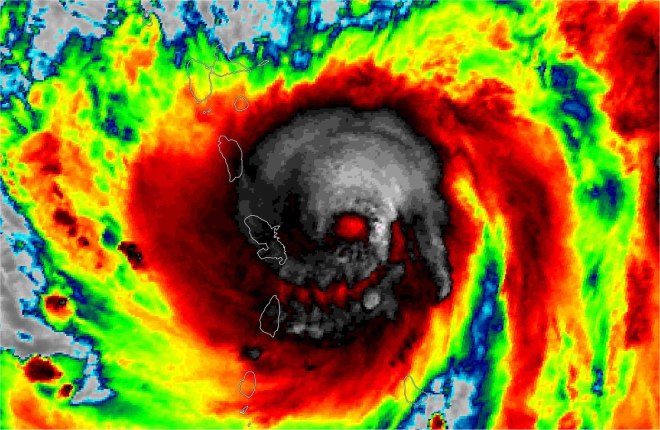
Have you been following Puerto Rico’s recent crisis? I’m talking about the aftermath of Hurricanes Irma and Maria and the apocalyptic damage the island has suffered.

On September 7th Irma just missed a direct hit on the U.S. colony, but it knocked out power for almost a third of its 3.5 million people. Then less than two weeks later, Maria finished the job. The whole country went dark.

And now after more than a month, 50% of the island still lacks electricity, and over a million people have no clean drinking water. Overflow from toxic Superfund sites is contaminating available water sources producing widespread gastrointestinal diseases. One in three sewage plants are still inoperable, and there is no cellphone service for 40% of the island.

Imagine yourself living there with our fellow Americans! (Remember, all Puerto Ricans are U.S. citizens.)

So, how do you think our government has responded to the crisis? The response is five billion dollars IN LOANS! We’re not talking grants here, but LOANS! And the $5 billion comes on top of the island’s previously existing $74 billion debt that all agree is completely unpayable – without even mentioning unfunded pension obligations that amount to an additional $49 billion.

Everyone in Puerto Rico knows that increasing the island’s debt does not spell relief. Instead, it represents a heartless tool for further enriching the already super-wealthy, and for exercising control of poor people while further impoverishing a colony that has served ever since its annexation as a source of valuable minerals including gold. As well, the island has provided a major production center for the U.S. pharmaceutical industry, a source of cheap labor, a dump for chemical waste, and a bombing range testing ground.

Puerto Rico has been effectively indemnified for none of this. Instead, rich U.S. banks and hedge funds are demanding austerity. They want islanders to sacrifice health, education, and social services including pensions, to pay back their creditors. This means that moneybags on Wall Street see misery in Puerto Rico as a business opportunity to further fill their coffers and perpetually control its destiny.

I bring all of this up, because it’s relevant to today’s liturgy of the word, which addresses the question of lending, debt and treatment of the poor.

Begin with a consideration of today’s gospel.

There Jesus is asked a question consistently addressed to rabbis and to wise persons in all traditions. “Which is the greatest of God’s commandments?”

The question is reminiscent of the familiar cartoon where the bedraggled seeker climbs up that mountain, confronts the guru sitting in front of his cave and asks him, “What’s the purpose of life?” That’s really the gist of the question presented to Jesus. What is life’s purpose?

Jesus’ response is not humorous as we’re always led to expect from those cartoons. His answer is not even surprising. Instead, it’s the standard one usually given by rabbis and wise people: “Look within,” he advises. “Find Ultimate Reality and devote yourself entirely to it. And then love that Reality’s every manifestation beginning with the people closest to you and finishing with the trees, soil, rocks, and cockroaches.”

That’s the meaning of Jesus’ response in today’s gospel. It mirrored perfectly the answer, for instance, of Rabbi Hillel, one of Jesus’ near contemporaries. Both of them said, “Love God with all your heart, mind, and spirit – and your neighbor as yourself. That’s the greatest commandment,” they agreed. “That’s the purpose of life. That summarizes all the content of humanity’s Holy Books. All the rest is commentary.”

We get a snippet of that commentary in today’s first reading from the Book of Exodus, which supplies practical content to the general answer about life’s purpose invariably given by the wise. (And it’s here that the business of debt enters the picture.) Today’s 16-line excerpt from Exodus focuses on two issues: (1) treatment of the most vulnerable in the community, and (2) prohibition of taking interest on loans. Obviously, the two matters are intimately connected to the situation in Puerto Rico.

The reading says that loving God and neighbor means taking care of society’s most vulnerable – beginning with immigrants and including single mothers and street children. Reality decrees that mistreatment of people like that will bring very negative karmic consequences.

The reading goes on. When dealing with immigrants, remember you were once in their position. So treat them the way you would have liked your great-grandmother to have been treated when she arrived at Ellis Island from the Old Sod.

The second part of the Exodus reading addresses the most common instrument oppressors employ for mistreating society’s vulnerable. You’ve guessed it: it’s debt.

When you heard it read this morning, you might have been surprised that God’s Covenantal Law as recorded in the Bible prohibits the taking of interest at all. The Law indicates that God considers interest sinful! It’s a form of “extortion,” says the book of Exodus. As the dictionary explains, extortion is the “criminal offense of obtaining money, property, or services from a person, entity, or institution, through coercion.” The definition goes on to say that extortion is commonly practiced by organized crime.

For more than a millennium, moral theologians within the Church agreed with our dictionary. Under pain of sin (as they put it), no interest could be charged on loans.

But then modern economists discovered the wonders of compound interest. That changed everything. Suddenly, charging interest became not only moral, but virtuous – including for Christians! Even the Vatican owns a bank whose underlying foundation is interest!

So times have indeed changed. Currently, moralists explain that the modern science of economics now understands what was not grasped in the ancient world of Exodus. So, morality had to change to keep up with the times and the advances of science. It’s a new world.

(Hmm . . .  Does that same reasoning apply to matters such as homosexuality in relation to the insights of the modern science of psychology? And what about abortion and what modern medicine has disclosed about the beginnings of specifically personal life? After all, the Bible has this clear and strong teaching about prohibiting interest and is silent about abortion. It also says nothing unambiguous about homosexuality.)

The suggestion here is that if we were truly a humanitarian nation and kept The Commandments as explained by Jesus and all the world’s great spiritual teachers:

  • We’d give grants, not loans, to our fellow citizens in Puerto Rico.
  • We’d forgive entirely the country’s unpayable debt, forcing banks to eat their bad loans – just as prescribed by Adam Smith’s capitalist theory.
  • We’d force U.S. polluters, not the U.S. government – much less Puerto Ricans – to clean up the mess they’ve made on the island.
  • We’d pay reparations for the gold and other minerals extracted (stolen!) since the U.S. colonial system was imposed.
  • Reparations would also be made for the destruction caused on those bombing ranges.

And more generally:

  • We’d demand that student loans be forgiven or refinanced at the prime rate.
  • We probably wouldn’t support “capitalism” as we know it.
  • We’d make usury as important a “Christian issue” as some make abortion.
  • We’d hear about that from the pulpit, at least occasionally.

We’d vote accordingly.

Jesus’ Teaching about Paying Taxes: It’s about “Slow Money,” Not What Your Pastor Says!

Slow Money

Readings for 29th Sunday in Ordinary Time: IS 45: 1, 4-6; PS 96: 1-5, 7-10; I THES 1: 1-5B; MT 22: 15-21.

Well, it’s time for your pastor to trot out those well-worn platitudes around Jesus’ famous “Render” riddle. So after reading this morning’s gospel about payment of taxes to Caesar, your priest or minister will say something about separation of church and state. Ho-hum. Caesar’s realm is the political, he’ll say; God’s is the religious. Caesar’s is less important than God’s, of course. But be sure to vote (Republican)  anyway – just to make sure that the anti-abortionists win. Never mind that their policies are pro-war, anti-life (apart, I suppose, from their single issue) and suicidal in terms of climate change. Those are merely political concerns. See ya next week.

Problem is: all that has nothing to do with today’s reading. In fact, it entirely misses the point of Jesus outwitting his questioners in their attempt to entrap him with a question about taxation that had no good answer – except the unforeseen one that Jesus gave.

Jesus is smarter than his opponents. That’s the obvious point.

The less obvious one is that Jesus’ response attacks the Roman Empire itself. It undercuts its economic base by rejecting Rome’s “fast money” in favor of the Jewish insurgency’s “slow money.”

Have you heard of that concept – I mean slow money? It’s explained in Woody Tasch’s book, Slow Money: Investing as if food, farms, and fertility mattered (White River Junction, Vermont: Chelsea Green Publishing 2008).

Building off Carlo Petrini’s idea of Slow Food, Tasch’s book presents the case for divesting from the haste of the global economy whose lightning fast computerized operations are necessarily devoid of thought about things that really matter. “Fast money,” as Tasch calls such transactions thinks of nothing but the corporate bottom line.

The outcomes of such inattention are evident for all to see. They include climate chaos, topsoil loss, water waste and pollution, as well as loss of jobs at home in favor of low labor costs abroad. Fast money causes inequalities which give 35 men as much wealth as half the world’s population. Fast money is like “fast food” which fills bellies but destroys health.

Slow money, on the other hand, invests locally, thoughtfully, and at a pace that imitates the very leisurely processes of nature. So Tasch’s book calls for a correspondingly paced economy. The slow money approach preserves family farms, encourages the growth of organic foods, and prevents waste of soil and water, while eliminating the contradiction of widespread hunger existing alongside fast-food induced obesity.

Once again, I bring that up because Jesus’ response to his interlocutors in today’s gospel represents rejection of Rome’s fast money. At the same time, it implicitly endorses a local form of slow money that almost everyone overlooks.

Recall the story’s pivotal question. “Is it lawful to pay the census tax to Caesar or not?”

If Jesus answered the way your pastor says, the Great Teacher would have fallen into the trap set by an unlikely alliance of Herodians (pro-Rome lackeys) and Pharisees (anti-Rome populists).

Saying “Yes, pay taxes to Caesar,” would have discredited Jesus in the eyes of the poor who comprised his main audience hanging on his every word. The hated Roman tax system cost them as much as 50% of their yearly income.

On the other hand, if Jesus had said “No,” that would be reason enough to have him arrested and turned over to the imperial authorities on charges of subversion. [In fact, that did become one of the charges at Jesus’ trial: “We found this man misleading our nation and forbidding to pay taxes to Caesar, and saying that He Himself is Christ . . . (LK 23:2)] Does that sound like Jesus ever said “Pay your taxes?”

So instead of saying “yes” or “no,” Jesus turns the tables on his questioners in a way that convicts them instead of himself.

“Show me an imperial coin,” Jesus asks; “I, of course, don’t carry any.”

One of the interrogators (probably from among Rome’s collaborating Herodians) obligingly reaches into his pocket and pulls out a shiny denarius. By that very act, he’s already fallen into Jesus’ trap. All bystanders can hear the cage door slam, as the insincerity of the Pharisees and Herodians stands exposed for all to see. Jesus’ follow-up question makes clear why.

“Whose image and inscription is on that coin, he asks?

“Caesar’s” his antagonists reply.

“Then give to Caesar what is Caesar’s,” Jesus says, “and to God what is God’s.”

Case closed.

You see, no good Jew would carry Roman money. (And here comes the part about slow money.) Instead, Jewish nationalists did business using coins minted by Jerusalem’s Revolutionary Provisional Government. On its face was the image of a palm branch – the Provisionals’ “flag.” Such money was of no use to the Romans and could only be used locally to support the Jewish economy.

In fact, the insurgents forbade using Roman currency at all. That’s because doing so benefitted the Romans by giving them control over the Jewish economy.

And besides, carrying Roman coin recognized Caesar’s claim to own Judea which in Jewish eyes belonged only to God. In fact for good Jews (as today’s first reading and responsorial make clear), EVERYTHING belongs to God. That leaves absolutely NOTHING for Caesar – except his own idolatrous servants clutching his pathetic coins in their bloated hands.

Even more, the face of Roman coins displayed a forbidden image – that of Augustus himself with the inscription surrounding the image identifying the emperor as “the Son of God.” The image and inscription made carrying the coin not only unpatriotic, but an act of idolatry. That in turn meant that the bearers of the coin themselves belonged to Caesar not Israel’s God, Yahweh.

Again, case closed.

All of this should remind us that our attitude towards money and its connection with imperialism is a spiritual matter of deep concern to those wishing to follow the Way of Jesus. As today’s readings remind us, everything belongs to God who (as Isaiah puts it in today’s first reading) is concerned about the welfare of “all nations” and not about the 1% or any abstract corporate bottom line. Empire’s God (as in “in God we trust”) is the God of fast money and not the God of Jesus who stood with those resisting the wholesale robbery that empire always represents.

So how do we avoid empire’s fast money when our wallets’ contents and those of our closets and garages convict us of idolatry? Here are a few of Tasch’s suggestions:

  • Imitate Nature and her pace.
    • Slow down everything – from your thinking processes to the way you walk and wash dishes.
    • Change thinking patterns from fast money’s quarter and years to slow money’s seasons and eons.
    • Where available (as with “Ithacash” in Ithaca, New York) use local currencies instead of greenbacks for local purchases.
    • Adopt role models like poet, Wendell Berry, and Amish farmer, Scott Savage, rather than Bill Gates and Jeff Bezos.
    • Change allegiances from institutions and organizations (like “America” and members of its military-industrial complex) to land, household, community and place.
    • Grow a garden and eat its produce.
    • Stay away from fast food and out of Wal-Mart’s and Lowes’ Big Boxes.
    • If you must invest in the stock market, “create a portfolio of venture investments in early-stage sustainability-promoting food companies.”

Like Jesus’ response to the Pharisees and Herodians, such practices undercut empire and its destructive haste.

What other strategies can you think of to subvert fast money structures and practices?

(Sunday Homily) Matthew’s God as Mafia Don: The Religion That’s Killing Us

Mafia Don

Readings for 24th Sunday in Ordinary Time: SIR 27: 30-28:7; PS 102: 1-4, 9-12; ROM 14: 7-9; JN 13:34; MT 18: 21-35

Today’s gospel is a confusing one. For me, it’s troubling. In fact, I’d go so far as to say that it illustrates what’s wrong with religion.

What’s wrong is that too often religion is made to justify violence, guilt, fear and economic exploitation. Its God is like a Mafia Don who intimidates, punishes, tortures, and never forgives. For the sake of money (!), He even engages in child trafficking and leg-breaking extortion.

That’s ironic, isn’t it? I mean, the gospel reading begins with Jesus’ comforting and challenging logion about forgiveness. How often should we forgive, he is asked? Jesus’ answer: “Always! In fact, you can’t put a number on it. But, if you insist, how about 490 times – 70 X 7?”

Jesus would surely say something like that. Seven times is not enough. Seventy times seven is more like it. That formula probably represents an authentic saying of the Master whose followers eventually saw as divine. His teaching: always forgive; that’s God’s way.

But then comes the confusing illustration that seems to contradict those comforting and challenging words. Matthew presents Jesus as identifying the God whom the Master embodied with a cruel king. The ruler’s actions contradict not only Jesus’ teaching about forgiveness, but everything the rest of today’s liturgy of the word says about Jesus’ compassionate God.

Think about it. In the first reading, Sirach says that anger and vengeance are hateful. Don’t cherish wrath or refuse mercy, we are told. Instead overlook the faults of others and heal, rather than punish.

In that respect be like God, the Responsorial Psalm tells us. God is always kind, merciful, slow to anger, and rich in compassion. The Divine One heals rather than punishes. In fact, in God’s eyes, we are for all practical purposes guiltless. He doesn’t even see our sins. As the psalmist puts it, the gap between us and guilt is infinite – as wide as that between east and west. That’s the way we should see each other too – entirely guiltless.

The alleluia verse continues in the same vein. It reminds us of Jesus’s words: “Love one another as I have loved you.” That means, as Paul says in the reading from Romans, living and dying as Jesus did – with a prayer of forgiveness for his executioners on his lips: “Father forgive them. They don’t know what they’re doing.” Jesus pardoned even his assassins and executioners.

But then comes that troubling illustration. Matthew presents Jesus as identifying his Father with a money lender – with a king whose first impulse towards his debtor is to sell him and his entire family – including his children – into slavery. That’s human trafficking. That’s trafficking in children.

Put otherwise, for the sake of recovering his money (!), no cruelty seems excessive. That’s evidently why the money lender employs torturers on retainer. Their job, as we see in the parable’s conclusion, is to squeeze blood from a turnip. If a debtor can’t pay with money, he’ll pay with pain. Here torture’s purpose is to intimidate – to send a message to others who might be tempted renege on their debts. Does that remind you of Mafia leg-breakers?

Nonetheless, at the end of the parable, Matthew has Jesus saying: “So will my heavenly Father do to you unless each of you forgives your brothers from your heart.” Contradictions, anyone? Silliness? Intimidation?

Yes!

In fact, Jesus could never have spoken these words because, as I said, they run counter to the instructions that precede them. They also contradict the descriptions of God exemplified in biblical teachings as found in today’s reading from Sirach, Psalms, Romans, and the Gospel of John.

Not only that. Jesus’ audience was filled with debtors whose lives were imiserated by Shylocks like the king in this morning’s story. They would never have listened to a teacher who identified God with such oppressors.

So what’s up with Matthew? Why does he insist on a punishing God who seems to support economic exploitation and Mafia ethics?

Fact is: right from the beginning it was difficult for Jesus’ followers (especially those like Matthew who never met him) to leave behind their religion’s overwhelming concept of a violent, punishing God. Moreover, despite Jesus’ teaching about the entirely new order represented by God’s Kingdom, they found it nearly impossible to distance themselves from the contradictory normality of economic exploitation, human trafficking, slavery, torture, war and violence.

So early on, all those elements crept back into Christianity – again, despite Jesus’ teaching and example. And those elements covered with a veneer of faith are precisely what is killing us today. Or, as Jack Nelson-Pallmeyer has put it: that’s why Religion is Killing Us:Violence in the Bible and Quran.

Christians have no trouble seeing that with Islam. But as Nelson-Pallmeyer has explained, it’s just as true of Christianity.

So, as I just said, Christianity like that presented in today’s gospel has been made to support everything Jesus stood against.

In the face of such contradictions, what are believers to do? My answer:

  • Be discerning.
  • Realize that Christianity is just as threatening to the world as we imagine religions like Islam to be.
  • Accordingly, embrace atheism before violent, exploitative images of God like the Mafia Don Matthew presents.
  • At the same time, embrace Jesus’ forgiving Father.
  • After the usual sermon today, question your priest or minister about the king in this morning’s gospel.
  • Most importantly, strive to act like that God as embodied in Jesus practice on the cross.

Seventy times seven is only the beginning!

(Sunday Homily) Jesus’ Promise: Despite Appearances, God’s Kingdom Will Ultimately Triumph

Arc of history

Readings for 21st Sunday in Ordinary time: IS 22: 19-23; PS 138:1-3, 6,8; ROM 11: 33-36; MT 16: 13-28.

Of course, you’re all following the news, I know. It’s so discouraging, isn’t it? Charlottesville, Syria, Yemen, and President Trump’s defense of Neo-Nazis.

It all reflects such one-dimensional thinking. I mean it gives the impression that in the eyes of public officials from the militarized cop in the street to the POTUS himself, the only solutions to social problems are found in shooting, tear gas, torture, and Hell Fire Missiles? In sum, “solutions” uniformly involve locking the people of color behind “the Gates of Hell” centralized in today’s Gospel reading.

In every case, diplomacy, social reform, and negotiation seem out of the question. In fact, diplomacy has become a vanished art. Who needs it? After all, those damn “others” – be they African Americans in Charlottesville, Houthis in Yemen, or ISIS militants in Syria – can’t possibly have legitimate grievances. They simply must be brought to heel by force – shooting, bombing, and killing their children and youth. We’re made to believe that alternatives such as dialog and working out problems by discussion and compromise are signs of weakness. So violence is the first resort, never the last. It’s the order of the day in a world ruled by machismo, revenge, violence, and the law of the strongest.

When we’re not bombing, we’re building walls with locked gates. Our “gated communities” and locked doors wall us off from unsightly ghettos and the realities of the world’s poor mostly non-white majority. Better to build a wall along the Mexican border and then lock the gates, throw away the key and pretend that such barriers solve the problem of farmers and their children driven off their land by globalization, poverty and gangs. Better to justify it all by invoking the Ultimate White Privilege: “I feared for my life!” (We whites are the only ones who can get away with that one.)

All that brings us to today’s Liturgy of the Word. It’s about God’s interest in matters like those just enumerated – about politics, oppression and the liberation of non-white people like Jesus, Houthis, Syrians, and residents of Chicago’s south side. It’s about breaking bonds and opening the gates of hell so that every Inferno can be transformed into the Kingdom of God. It’s about refusing to be discouraged even though the flow of history makes Jesus’ prayer, “Thy Kingdom come” seem like an impossible dream.

Start with today’s first reading. There the prophet Isaiah has God telling a courtier named Shabna to step down in favor of a man called Eliakim. Little is known about either one. The reason for including the reading today is apparently to establish today’s central point that God is concerned with the world of politics, and that (despite appearances) God is ultimately in charge of what happens in that sphere. There can be no separation of politics and religion in the divine dispensation.

The responsorial psalm continues the “this worldly” theme set by the first reading. It had us all singing “Lord, your love is eternal. Forsake not the work of your hands.” Once again, emphasis on “the work of God’s hands” reminds us of God’s commitment to this world – including ghettos, those living under endless bombing campaigns in Syria and Yemen, and rich people like Mr. Trump and Saudi Princes making life unbearable for the world’s largely non-white poor. The psalm goes on to praise Yahweh for divine kindness, truthfulness, encouragement of the weak, care for the impoverished, and God’s alienation from their proud oppressors – again all connected with life here and now.

Then in today’s Gospel selection, we find a reprise of the very reading we shared just two months ago on the “Solemnity of St. Peter and Paul.” We practically know this passage by heart.

The reading centers on three titles associated with Jesus of Nazareth – Son of Man, Son of God, and Christ. All three names are politically loaded – in favor of the poor rather than the privileged and powerful.

Jesus asks his friends, “Who is the Son of Man in history and for us today?” (Scripture scholars remind us that the “Son of Man” is a figure from the Book of Daniel. He is the judge of all those who oppress the People of God whether they’re Egyptians, Assyrians, Babylonians, Medes, Persians, Greeks or Romans. He is “the human one” as opposed to a series of monstrous imperial beasts which the author of Daniel sees arising from the sea against God’s poor.)

So Jesus’ question boils down to this: who do you think has taken the strongest stand against Israel’s oppressors? Jesus’ friends mention the obvious heroes, Elijah and Jeremiah. But in the end, they settle on a contemporary political prisoner in King Herod’s version of Abu Ghraib. He’s John the Baptist who was Jesus’ mentor. (According to Jesus, John was the greatest of all the prophets of Israel.) He’s the Son of Man, they say.

Having set that anti-imperial tone, Jesus then asks the question, “What about me? Who do you say that I am?” No question could be more central for any of us pretending to follow the Teacher from Nazareth. How we answer determines the character of the path we walk as Jesus’ would-be disciples in a world filled with Charlottlesvilles, Yemens, Raqqas, Hell Fire Missiles and militarized cops. Our answer determines whose side we are on – that of Mr. Trump, his friend Sheriff Arpaio, or with the innocent victims of U.S. bellicosity.

Matthew makes sure we won’t miss the political nature of the question. So he locates its asking in Caesarea Philippi – a city Herod obsequiously named for his powerful Roman patron. Herod had commemorated the occasion by minting a coin stamped with the emperor’s countenance and identifying him as “the Son of God.” Caesar was also called “the Christ,” God’s anointed. Good Jews saw all of that as idolatry.

So Peter’s answer, “You are the Christ, the Son of the Living God” has the effect of delegitimizing Caesar and his empire. It’s also a swipe at King Herod. Peter’s response couldn’t be more political. Jesus, not Caesar is king, God’s anointed, the Son of God.

Neither could Peter’s words be more spiritually meaningful and heartening for those of us discouraged by events in those places afflicted by permanent U.S. belligerence.

The encouragement is found in Jesus rejoinder about the “gates of hell” and the “keys of the kingdom.” Jesus says, “Blessed are you, Simon son of Jonah . . . I will give you the keys of the kingdom of heaven . . . whatever you bind on earth will be bound in heaven, and whatever you loose on earth will be loosed in heaven.”

What powerful words of encouragement! They say that the world’s ultimate decision-makers are poor people like the fisherman, Peter, and like the rest of Jesus’ followers – the beggars, prostitutes, and victims of Roman imperialism. It’s what they decide — what they bind on earth — that reflects God’s divine order. History is on their side, not on that of the apparently invincible.

For those who would join Jesus on “The Way” to God’s Kingdom, Jesus’ words disclose the very key to life’s meaning. In effect, Jesus says, “Here’s the key to opening ‘the gates of hell’ and transforming life’s Infernos into God’s kingdom: all our actions – even apparent failures like my coming crucifixion – have cosmic significance. Don’t be discouraged even when the agents of hell end up killing me – as they inevitably will.”

In other words, we may not be able to see the effect of resisting empire and its bloody agents in the short term. But each act has its effect. God’s Kingdom will finally come. That’s our faith! It’s what gives meaning to our lives of resistance.

In today’s second reading, Paul elaborates the point. He says it’s not always apparent what God is up to in the world. After all, the ways of Transcendent Reality are deep and beyond comprehension – even by the wisest human beings. We may not be able to see God’s (political and personal) purposes at close range. But ultimately their inscrutable wisdom will become apparent (ROM 11: 33-36).

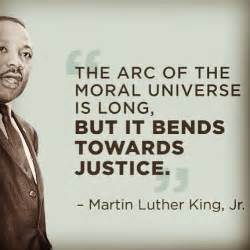
Or as Martin Luther King put it: “The arc of the moral universe is long, but it bends towards justice.”

All of us need to embrace that wisdom, refuse discouragement and continue doing what we can to resist the forces of empire and unlock those “Gates of Hell.”

A Chauvinist Jesus Gets Schooled by a Palestinian Mom

syrophoenician-woman

Readings for the 20th Sunday in Ordinary Time: IS 56:1, 6-7; PS 67: 2-3, 5, 6, 8; ROM 11: 13-15, 20-32; MT 15: 21-28.

“Have pity on me, Lord, Son of David! My daughter is tormented by a demon.” Those are the words addressed to Jesus in today’s gospel reading. They come from a woman whom the evangelist, Matthew, remembers as “Syrophonecian”

An uncharacteristically narrow-minded Jesus has his own name for the woman and her daughter. He calls them “dogs” – b_tches, really. That’s the term for female dogs, isn’t it?

We’ll come back to that in a moment.

For now, note that “Syrophonecian” meant the woman was not a Jew. She was a native or inhabitant of Phoenicia when it was part of the Roman province of Syria. She was living near the twin cities of Tyre and Sidon – a gentile or non-Jewish region of the Fertile Crescent where Matthew takes trouble to locate today’s episode. That would have made Jesus’ petitioner what we call a “Palestinian” today.

No doubt you’re surprised at Jesus’ rough and disrespectful language towards the woman and her child. I am.

As I said, at first he gives no reply at all; he ignores the two females completely. If Matthew’s account is accurate, in his silence Jesus showed himself to be captive to his own cultural norms. It was inconceivable in Hellenistic antiquity for a strange woman to directly approach a man the way the woman in this story did. Above all, it was so for a non-Jewish woman to directly address a Jewish man. In other words, Jesus’ silence shows him a captive to his patriarchal “honor culture.”

But then, as I said, it gets worse. When the woman insists, Jesus implicitly at least uses that term that women find so offensive. He says, “I have been sent for the lost children of Israel . . . it is not right to take the food of the children and throw it to a pair of b_tches.”

Is that a sneer I see on Jesus’ face?

In any case, the reply seems out of character for Jesus. In fact, such dissonance has led many scholars to reject the saying as inauthentic – or as though Jesus were only pretending to be hard to test the woman’s faith. Whatever the case, Jesus’ words only echo the rabbinic saying of the time, “He who eats with idolaters is like one who eats with a dog.”

Can’t get much more chauvinist than that, can you? Foreigners’ religions are nothing but “idolatry.” Foreigners themselves are filthy animals.

Do you know anybody that thinks like that? I mean, we still haven’t outgrown such narrowness, and disrespect any more than this stony Jesus apparently had.

But then the woman disarms the Master completely, even as he turns his back on her. Listen to her words. Unfazed in her desperation before this peasant faith healer, she blurts out, “Please, Lord, for even the dogs eat the scraps that fall from the table of their masters.”

Silence.

We can almost see Jesus stop in his tracks. He shakes his head ruefully and turns back. We can almost hear him stifle a laugh as he exclaims, “O woman, great is your faith! Let it be done for you as you wish.”

Can you believe it? This poor woman has just schooled Jesus – the Great Teacher. She successfully called him back from his self-identification as an ethnocentric patriarch to his better Self. So he concedes her argument. The one whom the gospels present as the invincible master of verbal riposte admits error and defeat at the hands this simple Palestinian mom.

What does the interaction between Jesus and the woman called “Syrophonecian” mean for us today?

I don’t know . . . Perhaps it means that:

  • If this story actually happened, it’s somehow comforting to know that Jesus was so human — more like us than we’ve been made to think.
  • Xenophobia and racial prejudice are powerful!
  • So is the patriarchal narrow-mindedness fostered by religion. It even captivated Jesus.
  • It continues to captivate most of us even as we speak — in the context of immigration controversy and Black Lives Matter.
  • Women’s voices, especially when defending their children, are often more perceptive than even the wisest of men.
  • For that reason, it’s simply wrong to exclude women from leadership roles in politics and legislation – especially when questions of children, health, women’s reproductive rights, and spiritual leadership are at stake.
  • Given our liturgical context today, it’s wrong to exclude women from the highest leadership posts in the Catholic Church.
  • Don’t let name-calling deter you from doing the right thing.
  • “Sticks and stones . . .”

A Courageous Pope Francis Knows about Walking on Water: He Calls Us to Do the Same

Francis & Trump

Readings for 19th Sunday in ordinary time: I KGS 19: 9A, 11-13A; PS 85: 9-14; ROM 9: 1-5; MT 14: 22-23

In today’s Gospel, we hear Matthew’s account of Jesus walking on water – and of his invitation to Peter to follow the Master’s example. The story is relevant to Pope Francis who believes he is Peter’s successor.

The walking-on-water episode is also relevant to Catholics in general trying to figure out how to comport ourselves in this age of Donald Trump with its renewed threats of nuclear war. Should we risk criticizing the president in the name of our faith, or not? The pope’s example says we should. Speak out, it says, against pre-emptive war, narrow fundamentalism, racism, rejection of immigrants, and environmental destruction. And don’t worry: it won’t kill you. Not speaking out may.

Just last month, the pope gave that message, showing, once again, his willingness to step out of his boat and follow Jesus’ symbolic example of fearlessly confronting the monstrous threats facing our world.

In case you missed it, I’m referring to Francis’ apparent endorsement of sentiments expressed in a controversial article that appeared last month in La Civiltà Cattolica – the Vatican’s quasi-official weekly publication. The article boldly criticized American Catholics who accommodate the Gospel to Trumpism.

More specifically, the Vatican weekly accused U.S. Catholic ultraconservatives of making an alliance of “hate” with evangelical Christians in their backing of President Trump. In doing so, the article warned, they have strayed dangerously into the turbulent waters of political polarization in the United States. According to the Civiltà Cattolica writers, the conservatives’ worldview and literal understanding of the Bible is “not too far apart’’ from that of jihadists.

The Pope’s apparent endorsement of the article showed once again his willingness to confront Monsters like Donald Trump himself along with Steven Bannon, and their Catholic supporters like Paul Ryan, Cardinal Raymond Burke, Archbishop Charles Chaput of Philadelphia, and Cardinal Gerhard Muller, the German conservative appointed by Benedict XVI (and recently fired by Francis) as the church’s chief judge of doctrinal orthodoxy.

The suggestion here is that the Pope’s courageous stands over the course of his papacy represent his acceptance of Jesus’ invitation to “walk on water” – to follow the example of Jesus in confronting fearful demons that life inevitably forces us to face.

To see the connection, first consider today’s Gospel reading.

The story goes that following Jesus’ feeding of the 5000 (last week’s Gospel focus), Jesus forces the apostles to get into their boat and row to the other side. [The text says, “Jesus made (emphasis added) the disciples get into a boat and precede him to the other side.” Perhaps these experienced fishermen (as opposed to the land lubber, Jesus) saw a storm was coming and were reluctant to set sail despite Jesus’ urgings.]

In any case, a storm does come up and the apostles fear they are all about to drown. You can imagine their cries for help.

Then they see a figure walking on the water in the midst of high threatening waves. At first they think it’s a ghost. Then they realize that it’s Jesus. He’s walking on the raging waters.

Peter, ever the impetuous leader of the apostles, doubts what he sees. So he says, “Prove to me that it’s you, Jesus; let me walk on the waves just as you’re doing.” Jesus says, “Join me then over here.” So Peter gets out of the boat and, like Jesus actually walks on water for a few steps.

Then, despite the evidence, he begins to doubt. And as he does so, he starts sinking below the water line. “Save me, Lord!” he cries out again. Jesus stretches out his hand and saves Peter. Then he asks, “Where’s your faith? Why is it so weak? Why did you doubt?”

Of course, this whole story (like last week’s “Loaves and Fishes”) is one of the dramatic parables Matthew composed. If we get caught up in wondering whether we’re expected to believe that someone actually walked on water, we’ll miss the point of this powerful metaphor. It’s about Jesus’ followers doing the unexpected and irrational in the midst of the seriously threatening crises life forces upon us.

You see, Matthew’s Jewish audience shared the belief du jour that the sea was inhabited by dangerous monsters – Leviathan being the most fearful. And courageously walking on water was a poetic way of expressing what Matthew’s community believed about Jesus, viz. that he embodied the courage and power to do the completely unexpected in the midst of crisis and subdue the most threatening forces imaginable – even the most lethal they could think of, the Roman Empire.

Jesus’ invitation to Peter communicates the truth that all of us have the power to confront monsters if we’ll just find the courage to leave safety concerns behind even in the most threatening conditions, to confront life’s monsters, and join Jesus in the midst of its upheavals.

Problem is: we easily lose faith and courage. As a result, we’re overcome by life’s surging waves and by the monsters we imagine are lurking underneath.

And that brings me back to Pope Francis and the stands he has taken against the secular orthodoxy of the day that accommodates itself to an emerging neo-fascism. Since the outset of his papacy, he has demonstrated unusual courage attempting to join Jesus on the world’s dangerous waves in contradiction to expectations established by his predecessors. Remember:

  • Unlike other popes, he’s adopted a comparatively simple, unpretentious lifestyle.
  • He’s lost no opportunity to condemn neo-liberalism, growing income inequality, and capitalism itself.
  • His apostolic exhortation, “The Joy of the Gospel” (largely unheeded) called for radical change in the church, and implicitly endorsed the liberation theology his two immediate predecessors had tried to kill.
  • More specifically, he adopted liberation theology’s “preferential option for the poor” as the leitmotif of his papacy.
  • In that spirit, his famous “Who am I to judge” gave hope to the LGBTQ community.
  • In 2014, his Vatican Peace Vigil helped head off President Obama’s plans to bomb Syria.
  • The following year, he addressed the U.S. Congress where he forthrightly called for an end to capital punishment, and urged divestment from the arms industry, whose profits he described as “soaked in blood.”
  • On that same occasion, he called his audience to imitate fierce critics of capitalism and United States policy, Martin Luther King, Dorothy Day, and Thomas Merton.
  • He helped shape and gave unequivocal endorsement to the Paris Climate Accords (recently repudiated by Mr. Trump) by publishing his radical eco-encyclical, Laudato Si’, also in 2015. It arguably remains the most important public document of the 21st  century.
  • His contextual approach to family issues (pre-marital sex, abortion, sexual orientation, same sex marriage, divorce . . .) recognized the sovereignty of individual conscience. In Amoris Laetitia, he admits that moral choices in family and other matters are inevitably conditioned by age, maturity, degree of moral development, economic necessity, and, yes, ignorance and religious misinformation. As a result, no one is anyone else’s judge.

True, his papacy has daringly left safe harbor and courageously sailed into the storm. Francis clearly sees Jesus as his role model in the face of today’s unprecedented winds and waves. Indeed, Francis has gotten out of the boat to trample underfoot the beasts and monsters roiling the seas all around us.

The question is, will we follow him? The monsters we fear can be intimidating:

  • The pro-war mainstream media
  • Those politicians and churchmen I mentioned earlier
  • The relatives, neighbors, friends, and fellow parishioners who might think us too political
  • Our own attachment to our petty reputations and self-conceptions
  • The militarized police at demonstrations
  • The emerging right wing, “brown shirt” thugs who might threaten our political expression

As the crisis this week over North Korea shows, this is no time for followers of Jesus to be silent, to remain in safety inside gated communities, behind our computers, TVs, sports fanaticism, and other entertainment addictions. This is the time for us to follow the example of Jesus and Pope Francis.

Today’s dramatic parable calls us to get out of the boat and confront the demons who keep us silent and compliant.

(Sunday Homily) Jesus’ Anti-Imperial Parables: How to Resist (State) Terrorism

ISIS & Jesus

Readings for the 16th Sunday in Ordinary Time.

Despite what you might hear in church today, this Sunday’s liturgy of the word is not about the end of the world and the condemned spending eternity in endless fire.

No, it’s much more relevant than that. It’s actually about non-violent resistance in a context of imperial aggression and war. It summons all of us to withdraw our support for the U.S. military and from Washington’s policy of state terrorism against impoverished Muslims in the Middle East.

More specifically, today’s gospel reading, on the one hand, calls those living in the belly of the beast to stop approving of our imperialist overlords who currently sow their weeds of destruction throughout the Middle East. This means actively opposing their wars of choice in Afghanistan, Iraq, Syria, Yemen, Somalia and elsewhere.

On the other hand, the three parables attributed to Jesus also suggest a message for Middle Eastern followers of Mohammed. The parables address them precisely as victims of imperialism and hence the closest analogue to what the Bible calls “the people of God.”

I mean: in today’s world, the situation of Muslims closely tracks that of Jesus’ audience in first century Palestine.  As such, all three of today’s readings call followers of Mohammed [who recognize Isa (Jesus) as the second greatest of the prophets (after Mohammed and before Abraham)] to lay down their arms in favor of Jesus’ own non-violent resistance.

To get my meaning, begin by considering our liturgy’s first selection from the Jewish Testament’s Book of Wisdom. It is particularly relevant to “Americans,” identified by Dr. King as the world’s “greatest purveyor of violence.” The reading says explicitly that God’s power is not expressed in violence but in leniency to all.

That theme is repeated in today’s responsorial psalm with equal relevance to USians. There God is described as belonging to all nations.

Similarly, in the second reading, St. Paul insists that the divine Spirit dwells within all humans regardless of nationality. It is slow to anger, good, forgiving, abounding in kindness.

From this, Jewish wisdom insists that believers must in turn be kind, lenient and forgiving to all – even (Jesus says elsewhere) to their worst enemies. This is directly pertinent for the U.S. described by Noam Chomsky as the one of the most extreme religious fundamentalist countries in the world. Those who claim to follow Christ (as 83% of Americans do) must be as pacifist as their Master.

The second theme of today’s liturgy is less easy for an outsider to comment upon. It implicitly addresses the victims of American aggression – most prominently the Muslim community and whether or not (as people of The Book) they should resist with violence.

I mean that Jesus’ parable of the weeds planted by an enemy in a landlord’s field can be read as addressing the Roman occupation forces encumbering Israel during Jesus’ lifetime. [According to John Dominic Crossan, Matthew’s allegorizing of Jesus’ parable – making it about the end of the world – is more reflective of the situation of the Jewish diaspora (following the destruction of Jerusalem in 70 CE) than of the actual revolutionary situation of Jesus’ own day.]

In Jesus’ occupied Israel, the suffocating Roman presence (like our own country’s in the Middle East) was as unwelcome, alien, and destructive as weeds in a garden or field.

The question was how to deal with such odious foreign occupation. Like ISIS and others today, Zealot revolutionaries had their answer: Uproot the weeds here and now. Take up arms; assassinate Romans and their collaborators; drive them out mercilessly. Be as cruel and vicious as the Romans.

Jesus’ response was different. As a non-violent revolutionary, he could surely understand such apocalyptic energy. After all, much of his teaching expressed sympathy to the Zealot cause which included land reform, debt forgiveness, and expulsion of the hated Roman occupation forces. Many scripture scholars even identify possibly five members of Jesus’ inner circle as Zealots themselves.

But Jesus’ Parable of the Weeds is more prudent and sensitive to civilian casualties than the strategy of the impatient Zealots – or that of ISIS.

When the landlord’s workers ask, “Should we uproot the weeds?” Jesus’ landlord answers: “No, if you pull up the weeds you might uproot the wheat along with them.”

In other words, Jesus agrees with El Salvador’s Oscar Romero and with Brazil’s Dom Helder Camara that revolutionary violence, though understandable (and justifiable on the grounds of just war theory), is imprudent at the very least.

This is because when faced with a vicious, overwhelmingly armed oppressor (like the United States) resistance inevitably leads to state terrorism – to the war crime of collective punishment impacting women, children, the elderly and disabled. At the very least, that’s why Jesus eschews Zealot violence.

How then respond to increasing American domination of the Middle East since the dissolution of the Ottoman Empire?

Jesus’ response? Be like mustard plant, he says. Be like yeast in flour. Both puzzling recommendations are relevant not just to Muslim victims of United States imperialism, but to Christians in our country who wish to dissent from their government’s policies of endless war.

First of all think of the puzzlement that must have struck Jesus’ listeners. Jews didn’t have much use for yeast. They preferred unleavened bread. Neither would any farmer sow mustard seeds in her field or garden. The mustard plant was like kudzu – itself a kind of weed that eventually can take over entire fields and mountainsides while choking out other plants weeds or not. The mustard plant was unstoppable.

So Jesus is saying:

* The Romans are enemy weeds in your garden.
* Don’t try to uproot them by force.
* That will only lead to slaughter of the innocent.
* Rather, become weeds yourselves – like the mustard plant which is much more powerful than simple Roman (or U.S.) weeds.
* Resist the Romans by embodying the Spirit of God that is slow to anger, good, forgiving, abounding in kindness.
* Only imitation of Wisdom’s God can defeat the evil of imperialism – or any evil for that matter.

What does that mean for Christians wishing to express solidarity with our Muslim brothers and sisters against their cruel “Christian” oppressors? At least the following:

* Reject U.S. militarism in general as counterproductive, since fully 90% of the casualties it inflicts in war are civilians.
* Be instead like the yeast a homemaker puts into 60 pounds of flour, “infecting” the greater culture by non-violent resistance rather than “supporting our troops.”
* Recognize and take sides with the real victims of terrorism – those plagued by U.S. policies of aggressive wars and regime-change – i.e. of state terrorism.
* Lobby against absurd proposals to increase U.S. military spending, when already “our” country spends more on “defense” than the next ten countries combined.

* Refuse to honor the military, and dissuade your children and grandchildren from entering that corrupt and corrupting gang of outlaws.

Surely Jesus’ Way of non-violent resistance, forgiveness and love of enemies will strike many (non-believers and believers alike) as unrealistic. But according to the faith we Christians (and Muslims) pretend to embrace, Jesus’ Way is God’s way.

But then perhaps we Christians think we’re smarter and more realistic than Jesus — or God?

What do you think?

God’s Abundance vs. the Greed, and Self- Interested Denial of the Rich : Jesus’ Parable of the Sower

Parable of Sower

Readings for 15th Sunday in Ordinary Time: IS 55:10-11; PS 65:10-14; ROM 8:15-23; MT 13: 1-23; http://www.usccb.org/bible/readings/071314.cfm

Not long ago, on the 4th of July, Amy Goodman replayed an interview with the legendary folk singer, Pete Seeger. In the course of the interview, Pete commented on today’s Gospel reading – the familiar parable of the Sower. His words are simple, unpretentious and powerful. They’re reminders that the stories Jesus made up were intended for ordinary people – for peasants and unschooled farmers. They were meant to encourage such people to believe that simple farmers could change the world – could bring in God’s Kingdom. Doing so was as simple as sowing seeds.

Seeger said:

“Realize that little things lead to bigger things. That’s what Seeds is all about. And there’s a wonderful parable in the New Testament: The sower scatters seeds. Some seeds fall in the pathway and get stamped on, and they don’t grow. Some fall on the rocks, and they don’t grow. But some seeds fall on fallow ground, and they grow and multiply a thousand fold. Who knows where some good little thing that you’ve done may bring results years later that you never dreamed of?”

Farmers in Jesus’ day needed encouragement like that. They were up against the Roman Empire which considered them terrorists. We need encouragement too as we face Rome’s counterpart headed by the U.S.

The obstacles we face are overwhelming. I even hate to mention them. But the short list includes the following – all connected to seeds, and farming, and to cynically controlling the natural abundance which is celebrated in today’s readings as God’s gift to all. Our problems include:

• Creation of artificial food scarcity by corporate giants such as Cargill who patent seeds for profit while prosecuting farmers for the crime of saving Nature’s free production from one harvest to the following year’s planting.
• Climate change denial by the rich and powerful who use the Jesus tradition to persuade the naïve that control of natural processes and the resulting ecocide are somehow God’s will.
• Resulting wealth concentration in the hands of the eight men who currently own as much as half the world’s (largely agrarian) population.
• Suppression of that population’s inevitable resistance by terming it “terrorism” and devoting more than half of U.S. discretionary spending to military campaigns against farmers and tribal Peoples scattering seed and reaping pitiful harvests in places like Afghanistan, Iraq, and Palestine.
• Ignoring what the UN has pointed out for years (and Thomas Picketty has recently confirmed): that a 4% tax on the world’s richest 225 individuals would produce the $40 billion dollars or so necessary to provide adequate food, water, shelter, clothing, education and health care for the entire world where more than 40% still earn livings by sowing seeds.
• Blind insistence by our politicians on moving in the opposite direction – reducing taxes for the rich and cutting programs for the poor and protection of our planet’s water and soil.

It’s the tired story of the rich getting richer and the poor getting poorer. In today’s Gospel, Jesus quotes the 1st century version of that old saw. In Jesus’ day it ran: “. . . to those who have, more will be given, and they will have an abundance; but from those who have nothing, even what they have will be taken away.”

Today’s liturgy of the word reminds us that such cynical “wisdom” does not represent God’s way. Instead the divine order favors abundance of life for all – not just for the 1%. as our culture would have it. For instance, today’s responsorial psalm proclaims that even without human intervention, the rains and wind plow the ground. As a result, we’re surrounded with abundance belonging to all:

“You have crowned the year with your bounty,
and your paths overflow with a rich harvest;
The untilled meadows overflow with it,
and rejoicing clothes the hills.
The fields are garmented with flocks
and the valleys blanketed with grain.
They shout and sing for joy.”

Because of God’s generosity, there is room for everyone in the Kingdom. The poor have enough; so poverty disappears. Meanwhile, the formerly super-rich have only their due share of the 1/7 billionth part of the world’s product that rightfully belongs to everyone.

To repeat: abundance for all is the way of Nature – the way of God.

Only a syndrome of denial – willful blindness and deafness – enables the rich and powerful to continue their exploitation. Jesus describes the process clearly in today’s final reading. He says:

“They look but do not see and hear but do not listen or understand.
Isaiah’s prophecy is fulfilled in them, which says:
You shall indeed hear but not understand,
you shall indeed look but never see.
Gross is the heart of this people,
they will hardly hear with their ears,
they have closed their eyes,
lest they see with their eyes
and hear with their ears
and understand with their hearts and be converted,
and I heal them.”

Those of us striving to follow Jesus’ Way hear his call to open our eyes and ears. Conversion – deep change at the personal and social levels – is our shared vocation. That’s the only way to bring in God’s Kingdom. Individually our efforts might be as small and insignificant as tiny seeds. But those seeds can be powerful if aligned with the forces of Nature and the Kingdom of God. That’s true even if much of what we sow falls on rocky ground, are trampled underfoot, eaten by birds or are choked by thorns. We never know which seeds will come to fruition.

Such realization means:

• Lowering expectations about results from our individual acts in favor of the Kingdom.
• Nonetheless deepening our faith and hope in the inevitability of the Kingdom’s coming as the result of innumerable small acts that coalesce with similar acts performed by others.

Once again, Pete Seeger expressed it best:

“Imagine a big seesaw. One end of the seesaw is on the ground because it has a big basket half full of rocks in it. The other end of the seesaw is up in the air because it’s got a basket one quarter full of sand. Some of us have teaspoons and we are trying to fill it up. Most people are scoffing at us. They say, “People like you have been trying for thousands of years, but it is leaking out of that basket as fast as you are putting it in.” Our answer is that we are getting more people with teaspoons every day. And we believe that one of these days or years — who knows — that basket of sand is going to be so full that you are going to see that whole seesaw going zoop! in the other direction. Then people are going to say, “How did it happen so suddenly?” And we answer, “Us and our little teaspoons over thousands of years.”

G 20, God’s Peace and the World’s Wars: 180° of Separation (Sunday Homily)

G20

Readings for the 14th Sunday in Ordinary Time: ZEC 9:9-10; PS 145: 1-2, 8-12; ROM 8:8, 11-13; MT 11: 25-30

So the G-20 is meeting this week in Hamburg, Germany. Isn’t it comforting?  Among other things, this privileged group of wealthy co-conspirators will choose the means by which the rich would ultimately destroy the planet. Will it be by nuclear holocaust or by ignoring climate change?

Or will it be by economic policies that enable eight (count ‘em – 8) individuals to possess as much wealth as 3.6 billion people, while 30,00 children die of starvation each day. President Trump prefers to end the world by climate change; Ms. Merkel’s leans towards nuclear weapons. However, in the spirit of irenic political compromise, both Merkel and The Donald could ultimately go either way. In any case, they both approve the reigning system’s math whose product is mass starvation.

It’s great to be rich, don’t you agree?

Think about it. According to today’s papers, our billionaire leaders have more or less out-of-the-blue decreed that Russia, North Korea, the Ukraine, and Syria represent urgent crises and causi belli nuclear. And this, even though using just 1% of the world’s 15,000 nuclear weapons of mass-destruction would likely render our planet completely uninhabitable.

Meanwhile, no one I know can even explain to me why Pakistan, India, and Israel should be allowed to possess nuclear weapons, but not North Korea or Iran. No one can help me understand why we’re even concerned about Ukraine or Syria – much less Yemen or Somalia. What dog do we have in those fights?

And, explain to me, pray-tell, why an ignoramus like Mr. Trump and his gang of Republican Know-Nothings should be able to determine the fate of the planet relative to climate change. Do their opinions represent yours? Not mine! What happened to democracy?

It’s all quite insane.

In contrast to all of this, today’s liturgy of the word celebrates peace unequivocally. All three of the day’s readings, plus the responsorial psalm emphasize the fact that peace, not war or planetary destruction is the way of God’s kingdom. That reign, where God is king instead of Caesar (or Mr. Trump or Ms. Merkel), turns out to be diametrically opposed to the world’s logic of war and disregard for Mother Nature. It contradicts ALL of the values of the planet’s “wise” and “learned” – ALL OF THEM! This means that if you want to do the right thing or support the right policy, you should do the exact opposite of what the politicians, pundits and professors tell you.

Yes, read the final communication from Hamburg. But then add the qualification “NOT!!” Like magic, then, you’ll arrive at God’s position.

That’s more or less what our readings today tell us!

Even before Jesus, and setting the tone for the day, the first reading from Zechariah describes God’s divine Spirit as completely anti-war. In the prophet’s words, it banishes chariots from Ephraim, and the warhorse from Jerusalem. It breaks the warrior’s bow in two not only in the holy city, but across the planet itself.

For St. Paul, in today’s second selection, such rejection of war manifests the very Spirit of Christ dwelling within us all. That Spirit gives life, not death, to the entire world. It is the Spirit of God himself. It is our own spirit – our true Self. So, if we choose to bomb, shoot or drone anyone, we’re committing suicide. That’s what it all means.

In his own phrasing, Paul describes the opposite of such divine rationale as “flesh,” “body,” “mortality,” “darkness,” and “death.” It is the logic of individuality and separation. In practice it all leads inevitably to war – to Zechariah’s horse, chariot, bow and spear – all of which the world’s “learned” consider “wise,” practical, and realistic.

Today’s responsorial psalm calls the contradicting World Soul “merciful” and “compassionate” towards all creatures, not just humans, much less exclusively towards those of a particular race or nation. Though “mighty,” it is gentle and non-violent (“meek”) especially towards the heavily burdened and crushed.

All of that represents the logic of God’s kingdom, which according to Jesus’ words today, emphasizes the unity of humankind – the fact that we and all of creation are linked by what Jesus calls his single easy “yoke.”

According to Jesus, his message or “burden” is not dark, heavy, or difficult to understand. Even the most unlearned (“the little ones”) can grasp it. Far from threatening our survival, it is light itself; its acceptance represents the epitome of enlightenment. Ironically, then, the simple, the unlearned, the nobodies of the world, appreciate Jesus’ proclamation better than their educated counterparts.

In practice, those wise men (including many church leaders) continue to dismiss God’s logic as somehow impractical, stupid, suicidal, utopian, unrealistic, and naïve. As I’ve already indicated, their wisdom instead dictates “wise” and “realistic” policies emphasizing separation, individuality, competition, nuclear weapons, and mutually assured destruction (MAD).

And how’s that wisdom working out for you, your children, grandchildren, and our world?

It’s time for followers of Jesus to finally embrace God’s word as expressed in today’s readings. Our very survival depends on it. It’s up to us to reject the world’s logic – the calculus of flesh, body, darkness, war, and violence.  Now is the hour for us to vote, take to the streets (like the hundreds of thousands in Hamburg), and begin living according to Spirit, light, peace, and non-violence.

That’s because we are Spirit, not flesh. So only the non-violence celebrated in today’s readings can save us. That’s not naive, my friends, it’s the realism of God.

The Reformers Were Right about the Lord’s Supper (Sunday Homily)

one loaf

Readings for the Solemnity of the Body and Blood of Christ: DT 8:2-3,14B-16A; PS 147 12-15, 19-20, ICOR 10: 16-17; JN 6:51-58

Recently, my beloved eight-year-old granddaughter received her First Holy Communion. The whole event had me worried. I mean her Sunday School teachers had filled her head with “Catholic” fundamentalist and literalist notions of Jesus’ “Real Presence” in the “Blessed Sacrament” that even St. Augustine rejected. In the 4th century he wrote: “Can Christ’s limbs be digested? Of course, not!”

Eventually, my granddaughter, I predict, will come to the same conclusion. And rather than see the beautiful symbolism of the Eucharist’s Shared Bread, which is specially celebrated in today’s liturgy, she’ll probably follow the example of so many young people I know and reject the ideas of “Holy Sacrifice” and “Real Presence” as childhood fantasy akin to belief in Santa Claus and the Tooth Fairy.

To my mind, that’s tragic. That’s because it represents a rejection of Jesus’ insightful and salvific teaching about the unity of all creation. In an era of constant global war, that teaching is needed more than ever. It’s contained in the Master’s words, “This is my body . . . this is my blood . . . Do this in remembrance of me?”

Let me explain.

To begin with, according to contemporary historical theologians like Hans Kung, the Great Reformers of the 16th century had it right: The Eucharist of the early church was no sacrifice. It was a commemoration of “The Lord’s Supper.” The phrase however does not refer to “The Last Supper” alone. Instead it references all the meals Jesus shared with friends as he made meal-sharing rather than Temple sacrifice the center of his reform movement, From the wedding feast at Cana (JN2:1-12), through his feeding of 5000 (MK 6:31-44) and then of 4000 (MK 8: 1-9), through his supper at the Pharisee’s home (LK 7:36-50), and with the tax collector Zacchaeus (LK 19:1-10), through the Last Supper (MK 14:12-26), and Emmaus (LK 24:13-35), and his post-resurrection breakfast with his apostles (JN 21:12). Jesus treated shared meals as an anticipatory here-and-now experience of God’s Kingdom.

But why? What’s the connection between breaking bread together and the “salvation” Jesus offers? Think about it like this:

Besides being a prophet, Jesus was a mystic. Like all mystics, he taught the unity of all life.

“Salvation” is the realization of that unity. In fact, if we might sum up the central insight of the great spiritual masters and avatars down through the ages, it would be ALL LIFE IS ONE. That was Jesus’ fundamental teaching as well. It was something uneducated fishermen could grasp. It’s a teaching accessible to any child: All of us are sons (and daughters) of God just as Jesus was. Differences between us are only apparent. In the final analysis, THERE IS REALLY ONLY ONE OF US HERE. In a sense, then we are all Jesus. The Christ-Self (or Krishna-Self or Buddha-Self) is our True Self. God has only one Son and it is us. When we use violence against one another, we are attacking no one but ourselves. What we do to and for others we literally do to and for ourselves. That’s a profound teaching. It’s easy to grasp, but extremely difficult to live out.

Buddhists sometimes express this same insight in terms of waves on the ocean. In some sense, they say, human beings are like those waves which appear to be individual and identifiable as such. Like us, if they had consciousness, the waves might easily forget that they are part of an infinitely larger reality. Their amnesia would lead to great anxiety about the prospect of ceasing to be. They might even see other waves as competitors or enemies. However, recollection that they are really one with the ocean and all its waves would remove that anxiety. It would enable “individual” waves to relax into their unity with the ocean, their larger, more powerful Self. All competition, defensiveness, and individuality would then become meaningless.

Something similar happens to humans, Buddhist masters tell us, when we realize our unity with our True Self which is identical with the True Self of every other human being. In the light of that realization, all fear, defensiveness and violence melt away. We are saved from our own self-destructiveness.

Similarly, Buddhists use the imagery of the sun. As its individual beams pass through clouds, they might get the idea that they are individuals somehow separate from their source and from other sunbeams which (again) they might see as competitors or enemies. But all of that is illusory. All are really manifestations emanating from the same source. It’s like that with human beings too. To repeat: our individuality is only apparent. THERE IS REALLY ONLY ONE OF US HERE.

In his own down-to-earth way, Jesus expressed the same classic mystical insight not in terms of waves or sunbeams, but of bread. Human beings are like a loaf of bread, he taught. The loaf is made up of many grains, but each grain is part of the one loaf. Recognizing the loaf’s unity, then breaking it up, and consuming those morsels together is a powerful reminder that all of life — all of us – are really one. In a sense, that conscious act of eating a single loaf strengthens awareness of the unity that otherwise might go unnoticed and uncelebrated.

Paul took Jesus’ insight a step further. In his writings (the earliest we have in the New Testament) he identifies Christ as the True Self uniting us all. Our True Self is the Christ within. In other words, what Jesus called “the one loaf” Paul referred to as the one Body of Christ.

All of Jesus’ followers, the apostle taught, make up that body.

Evidently, the early church conflated Jesus’ insight with Paul’s. So their liturgies identified Jesus’ One Loaf image with Paul’s Body of Christ metaphor. In this way, the loaf of bread becomes the body of Christ. Jesus is thus presented as blessing a single loaf, breaking it up, and saying, “Take and eat. This is my body.”

And there’s more – the remembrance part of Jesus’ “words of institution.” They are connected with Paul’s teaching about “The Mystical Body of Christ.” His instruction (found in I COR: 12-12-27) is worth quoting at length:

12 There is one body, but it has many parts. But all its many parts make up one body. It is the same with Christ. 13 We were all baptized by one Holy Spirit. And so we are formed into one body. It didn’t matter whether we were Jews or Gentiles, slaves or free people. We were all given the same Spirit to drink. 14 So the body is not made up of just one part. It has many parts.

15 Suppose the foot says, “I am not a hand. So I don’t belong to the body.” By saying this, it cannot stop being part of the body. 16 And suppose the ear says, “I am not an eye. So I don’t belong to the body.” By saying this, it cannot stop being part of the body. 17 If the whole body were an eye, how could it hear? If the whole body were an ear, how could it smell? 18 God has placed each part in the body just as he wanted it to be. 19 If all the parts were the same, how could there be a body? 20 As it is, there are many parts. But there is only one body.

21 The eye can’t say to the hand, “I don’t need you!” The head can’t say to the feet, “I don’t need you!” 22 In fact, it is just the opposite. The parts of the body that seem to be weaker are the ones we can’t do without. 23 The parts that we think are less important we treat with special honor. The private parts aren’t shown. But they are treated with special care. 24 The parts that can be shown don’t need special care. But God has put together all the parts of the body. And he has given more honor to the parts that didn’t have any. 25 In that way, the parts of the body will not take sides. All of them will take care of one another. 26 If one part suffers, every part suffers with it. If one part is honored, every part shares in its joy.

27 You are the body of Christ. Each one of you is a part of it.”

Here it’s easy to see the beauty of Paul’s image. We are all members of Christ’s body (Paul’s fundamental metaphor for that human unity insight I explained). As individual members, we each have our functions – as eye, ear, nose, foot, or private parts. However, the fact that we live separately can lead us to forget that we are all members of the same body. So it helps to RE-MEMBER ourselves occasionally – to symbolically bring our separate members together. That’s what “re-membering” means in this context.  That’s what the Eucharist is: an occasion for getting ourselves together – for recalling that we are the way Christ lives and works in the world today.

In the final analysis, that’s the meaning of Jesus’ injunction: “Do this to RE-MEMBER me.  And then afterwards – as a re-membered Christ, act together as I would.”

Do you see how rich, how poetic, how complex and mysterious all of that is – ocean waves, sunbeams, bread, Christ’s body, re-membering?

It’s powerful. The Eucharist is not a magic show where one thing becomes another. It’s a meal where the many and separate members of Christ’s body are re-membered so they might subsequently act in a concerted way in imitation of Christ.

That’s why it’s important to recover and make apparent the table fellowship character of The Lord’s Supper. It is not a Jewish or Roman sacrifice; it is a shared meal.

My granddaughter and the world she’ll inherit need everything that signifies. The Eucharist is not childish fantasy. It’s a counter-cultural challenge to our era’s individualism, ethnocentrism, and perpetual war.