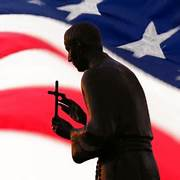
It is a warning I have sounded for more than two decades now, in essays, lectures, and conversations with anyone willing to listen: the United States government has long been engaged in a quiet but persistent war against the Catholic Church. Not against all forms of Catholicism, to be sure. But against one particular expression of the faith, the one most faithful to its own deepest traditions, the one most dangerous to empire.
That war, I submit, has now entered a new and more openly confrontational phase under the administration of Donald Trump. Recent reports that the Vatican’s ambassador was summoned to the Pentagon and subjected to threats over statements by Pope Leo XIV regarding U.S. policies in Iran, Venezuela, and immigration should not be dismissed as diplomatic routine. Even if the details remain partially obscured, the symbolism is unmistakable. Power is no longer content to operate quietly. It is now willing to bare its teeth.
For many American Catholics, such hostility may come as a surprise. They have either forgotten or never been told that this conflict has been unfolding for decades. Yet anyone familiar with the history of U.S. foreign policy in Latin America, or with the development of Catholic social teaching since the nineteenth century, will recognize the pattern immediately.
At the heart of the matter lies a fundamental contradiction. Catholicism, at its best, carries within itself a powerful critique of both capitalism and socialism, a critique rooted in the dignity of the human person and the demands of justice. This critique found its modern expression in Rerum Novarum, issued by Pope Leo XIII in 1891. That encyclical insisted on just wages, safe working conditions, the right to organize, and the moral obligation to ensure that all have access to the basic necessities of life. It was neither socialist nor capitalist. It was something far more unsettling: a moral challenge to both systems.
Over the next century, that teaching was deepened and reiterated in a series of papal encyclicals and episcopal statements. Its most radical and historically consequential development came in 1968 at the Latin American bishops’ conference in Medellín, Colombia. There, the bishops effectively endorsed what would come to be called liberation theology, a movement that insisted that faith cannot be separated from the struggle for justice, and that the Gospel demands a “preferential option for the poor.”
Liberation theology did not emerge in a vacuum. It drew deeply from biblical traditions: the Exodus story of enslaved people liberated from imperial Egypt, the prophetic denunciations of injustice, and the life of Jesus himself, a poor artisan executed by the Roman Empire. It also took seriously the lived reality of Latin America, a region marked by extreme inequality and systemic poverty. Gustavo Gutiérrez and others articulated a theology in which sin was not only personal but structural, embedded in unjust economic and political systems.
Such ideas were explosive. They suggested that the existing order was not merely imperfect but fundamentally unjust. They implied that true Christian discipleship might require radical transformation of that order. And they gave theological legitimacy to movements seeking such transformation.
It is here that the United States enters the story in a decisive way. As Noam Chomsky and many others have pointed out, Washington perceived liberation theology as a threat, not simply because of its religious content but because of its political implications. It aligned the Church, or at least significant parts of it, with the poor and against entrenched economic and political elites. That alignment was intolerable in a region long considered part of the U.S. sphere of influence.
The response was brutal. Throughout the 1970s and 1980s, the United States supported military regimes, coups, and counterinsurgency campaigns across Latin America. Priests, nuns, catechists, and lay leaders associated with liberation theology were targeted. Archbishop Óscar Romero was assassinated while celebrating Mass. Six Jesuit priests were murdered in El Salvador. Thousands of church workers and activists were killed.
This was not incidental. It was systematic. Strategies such as the CIA-linked Banzer Plan explicitly aimed to suppress “left-wing” Catholic dissent, including liberation theology, through surveillance, intimidation, and violence. The message was clear: a Church that sides with the poor will be treated as an enemy.
At the same time, a parallel strategy was unfolding. The United States actively supported the growth of conservative evangelical movements throughout Latin America. These movements emphasized personal salvation, individual morality, and, increasingly, a “prosperity gospel” that equated wealth with divine favor. This theological orientation aligned far more comfortably with neoliberal economic policies and with the broader goals of U.S. foreign policy.
The result was a kind of theological counterinsurgency. Liberation theology, with its insistence on structural change, was marginalized and often repressed. In its place grew forms of Christianity that focused on personal piety and acceptance of existing social arrangements.
This brings us to the present moment, and to the figure of Donald Trump. What we are witnessing now is not an isolated conflict between a particular administration and the Vatican. It is the latest phase of a long-standing struggle between two fundamentally different visions of Christianity.
On the one hand is what we might call imperial Christianity. This is the Christianity of power, wealth, and national destiny. It blesses military interventions, justifies economic inequality, and often merges seamlessly with nationalist ideology. It is comfortable with empire because it identifies God’s will with the success of the powerful.
On the other hand is the Christianity of the Gospel, the Christianity of liberation theology, the Christianity that insists that whatever you do to “the least of these,” you do to Christ himself. This is a Christianity that stands with migrants at the border, with victims of war in places like Gaza and Tehran, with workers denied just wages, and with all those pushed to the margins by systems of exploitation.
These two forms of Christianity are not merely different. They are, in a very real sense, at war with each other.
The tensions we now see between Washington and the Vatican reflect this deeper conflict. When a pope speaks critically of policies toward immigrants, or condemns war, or calls attention to economic injustice, he is not simply offering political commentary. He is invoking a tradition that stands in judgment over the structures of power. That is precisely what makes such statements intolerable to those who benefit from those structures.
Under Trump, this intolerance has become more explicit. His alignment with white evangelical leaders, his rhetoric about immigrants, his support for aggressive military policies, and his economic agenda all reflect a vision of Christianity that is fundamentally at odds with Catholic social teaching. The apparent willingness to confront the Vatican directly is simply the logical extension of that vision.
What makes this moment especially dangerous is the extent to which many Christians, including Catholics, fail to recognize the choice before them. They assume that all forms of Christianity are essentially the same, that differences are merely a matter of emphasis. But the reality is far more stark.
The Christianity of empire and the Christianity of the Gospel lead in opposite directions. One sanctifies the existing order; the other calls it into question. One aligns itself with the powerful; the other stands with the poor. One justifies violence in the name of security; the other proclaims peace even in the face of persecution.
There is no neutral ground between them.
This is why the current conflict must be understood not simply as a political dispute but as a theological crisis. It is a moment of decision. Believers must ask themselves which version of Christianity they will embrace.
Will they follow a Christianity that promises prosperity and power, that identifies God with the nation and with the market? Or will they follow a Christianity that calls them to solidarity with the oppressed, to critique of unjust systems, and to the costly work of justice?
The stakes could hardly be higher. For what is ultimately at issue is not only the future of the Church, but the moral direction of our world.
If the past half-century has taught us anything, it is that the suppression of liberation theology has come at an enormous human cost. The martyrs of Latin America testify to that cost. So too do the continuing realities of poverty and inequality that liberation theology sought to address.
And now, as new conflicts emerge, as old patterns of domination reassert themselves, and as voices of dissent are once again marginalized or attacked, the need for a prophetic Christianity becomes ever more urgent.
In the end, the question is unavoidable. Which Christianity will prevail? The one that serves empire, or the one that challenges it?
And perhaps more importantly, which one will we choose?


