Gustavo Gutierrez and Liberation Theology’s Critical Faith Theory

The Great Gustavo Gutierrez died this week. He transitioned as a 96-year-old giant whose A Theology of Liberation: History, Politics, and Salvation (1971) popularized and spurred the most important theological movement of the last 1700 years (i.e. since Constantine in the 4th century). In fact, liberation theology (LT) might well be described as responsible for the West’s most influential intellectual and social developments of the last 175 years (i.e. since the publication of the Communist Manifesto in 1848). United States and Vatican fierce opposition to LT testifies to its impact.

Think about it. Without liberation theology it is impossible to account for Salvador Allende’s rise to power in 1973 or the triumph of Nicaragua’s Sandinistas in 1979, or the power the FMLN in El Salvador had and continues to enjoy today. The Zapatista movement in Mexico is also intimately connected with liberation theology. Even more, without reference to liberation theology, it’s impossible to fully understand the rise of new left governments throughout Latin America. All of them are indebted to liberation theology and its power to motivate the grassroots.

Perhaps more surprisingly: apart from LT, one cannot fully understand the prominence of conservative evangelicals in the United States. That’s because (as we’ll see below) political support for their movement was part of the Reagan administration’s strategy to defeat liberation theology which the White House and the Pentagon termed a national security threat. Their fear of LT mirrored that of the Vatican which ended up cooperating with Washington’s war against it.

Many are convinced that Washington’s and Rome’s anti-LT war was successful. That’s because the U.S. systematically assassinated its prophets along with hundreds of thousands of its adherents in a massive conflict that Noam Chomsky called “the first religious war of the 21st century.”  The sheer terrorism of the U.S. response plus an equally systematic offensive against LT within the Catholic Church itself deprived liberation theology of its best leaders, misinformed and intimidated the grassroots, and silenced many more. Nonetheless LT has changed the world. It has changed the church and Christianity in general.

But what is liberation theology? And why was it so threatening to the powers-that-be, both political and ecclesiastical? What steps were taken to defeat it? And why should believers be so grateful to theologians like Gustavo Gutierrez?   

 Liberation Theology Defined

Simply put, liberation theology is reflection on the following of Jesus of Nazareth from the viewpoint of the poor and oppressed. More accurately, it is reflection on the following of Jesus the Christ from the viewpoint of those among the poor who are committed to their own liberation. That is, LT begins from a place of commitment – to a world with room for everyone. In itself, it represents a popular movement, a solidarity movement for social justice.

Liberation from what? In a word, from colonialism and from the neo-colonialism represented today by the forces of corporate globalization. Those forces have nearly half the world living on $2 a day or less. They’ve concentrated the world’s wealth in the hands of a sliver of 1% of the world’s population. According to UN statistics, eight billionaires own as much as 50% or humanity. As a result, at least 25,000 people including 10,000 children die of preventable starvation each day. In the eyes of liberation theology’s protagonists, that’s sinful and runs entirely contrary to the teachings of Jesus of Nazareth.

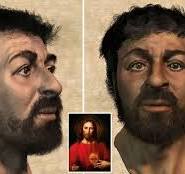
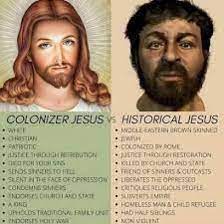
And what were those teachings? (This is the heart of liberation theology.) They were first of all those of a man recognized by the impoverished protagonists of liberation theology as someone like themselves. He looked like them. According to experts in the field of forensic archeology, he resembled poor mestizos everywhere in Latin America. He probably stood about 5’1’’ and weighed about 110 pounds. His skin was brown. He was a laborer, not a scholar; his hands were calloused.

Ironically, Jesus also possessed characteristics that mainstream Christians often find repulsive and ungodly. He was the son of an unwed teenage mother (Mt. 118-22; Lk. 1:26-38). He was homeless at birth (Lk.2:7).  If we are to believe Matthew’s account, Jesus became an immigrant in Egypt (Mt. 2:13-15). The good people of his day called him a drunkard and the companion of prostitutes. They expelled him from his synagogue because he didn’t seem to care about the 10 Commandments, especially the most important one – the Sabbath law. (For a Jew such excommunication and the shunning it entailed were like a death sentence.) The religious authorities said he was a heretic and possessed by the devil. The occupying Roman authorities identified him as a terrorist. They arrested him. And he ended up a victim of torture and of capital punishment carried out by crucifixion – a means of execution the Romans reserved specifically for insurgents. He was not the kind of person mainstream Christians usually admire. He was far too liberal to merit their approval.

Jesus was clearly a feminist. Many of his disciples were women. He spoke with them in isolated places. He actually forgave a woman caught in adultery, while implicitly criticizing the hypocrisy of patriarchal law which punished women for adultery and not men. And Jesus refused to recognize his contemporaries’ taboos around segregations. He crossed boundaries not only dividing men from women, but Jew from gentile, lepers from non-lepers, and rich from poor.     

He couldn’t have been more liberal. In a sense he was an anarchist. He honored no law that failed to represent the loving thing to do. His attitude towards the law is best summarized in his pronouncement about the Sabbath. “The Sabbath was instituted for human beings,” he said, “human beings weren’t made for the Sabbath.” This was pure humanism placing human beings above even God’s holiest law. Again, it was anarchistic.

Jesus’ teachings were politically radical as well. They centered on what today is called social justice. As such they infuriated his opponents but were wildly inspiring to the poor and oppressed. His proclamation was not about himself, but about what he called “The Kingdom of God.” That was the highly charged political image he used to refer to what the world would be like if God were king instead of Caesar. In that kingdom everything would be turned upside-down. The first would be last; the last would be first. The rich would be poor; the poor would be rich.

Subsequent reflection by followers of Jesus in the Book of Revelation teased all of that out and drew the conclusion that with the dawning of God’s kingdom, the Roman Empire would be destroyed and replaced by a new heaven and a new earth entirely unlike empire. There (as indicated in the Acts of the Apostles) wealth would be distributed from each according to his ability to each according to his need. There would be room for everyone. If that sounds like communism, it’s because, as the Mexican exegete Jose Miranda points out, the idea of communism originated with Christians, not with Marx and Engels.  

U.S. Opposition to LT

Those connections with Marxist analysis go a long way towards explaining resistance to LT by the U.S. government as well as within the Catholic Church.

That liberation theology dared to enter the mythological arena the right had long dominated virtually without rival astounded and infuriated the empire. Peasants throughout the subjugated world found the new explanations of God, Jesus and the gospels entirely empowering. Everywhere throughout Latin America they formed biblical circles, and those circles issued in social movements for justice.

In response, the Rockefeller Report of 1969 already identified liberation theology as a threat to the national security of the United States. By 1987, the Latin American Military Chiefs of Staff meeting in conference in Mar del Plata, Argentina, devoted several pages of their final report to liberation theology and the threat it posed to regional stability.  In between, in 1979 the first Santa Fe Document advised the incoming Reagan administration that it had to do something decisive about the threat posed by liberation theology. The administration heeded the advice, and responded both militarily and ideologically.

Reagan’s military strategy against liberation theology issued in a bloody war pitting the United States against the Catholic Church in Latin America whose bishops meeting in conference in Medellin Colombia had together dared to affirm a “preferential option for the poor” as their official position. To combat that commitment, the U.S. did exactly what Rome had done in the first three centuries of our era – and for the same reason: faithfully following Jesus who called empire into question and motivated the poor to assert their rights in this world as children of the God of life.

And both the Roman response and the U.S. response to Jesus and his followers resulted in blood baths. Many of us are well acquainted with the best-known martyrs: Camilo Torres, Archbishop Romero, the Salvadoran team of liberation theologians killed at San Salvador’s Central American University in 1989, the U.S. women religious murdered years earlier in that same country, and Che Guevara. (Yes, Che. His spirituality was secular, but it was no less spiritual or liberationist than any of the others.) And then the unending list of martyrs in this war against the Catholic Church – 200,000 in Guatemala, more than 100,000 in Nicaragua, 90,000 in El Salvador, and literally untold killings and disappearances in Honduras.

In every case, the carnage was a response to social movements inspired by liberation theology. Again, as Chomsky points out, official U.S. military documents show that liberation theology was a major target of those wars. In fact within those same official documents, the Army boasts specifically about defeating LT.

As for Reagan’s ideological response to liberation theology . . . .  On his accession to power, CIA psyops began funding conservative alternatives to liberation theology in Latin America and in the U.S. So did business concerns that saw the leftward drift of Latin America as a threat to their presence there. Domino’s Pizza and Coors Brewery were prominent among the cases in point. As a result, evangelicals throughout the region grew rapidly in number, and the recipients of those funds in the United States increasingly identified with Republicans, the “hand that fed them.”

So, the television programs of Jerry Falwell, Pat Robertson, Jim and Tammy Baker, Jimmy Swaggart, and others were beamed into every poor barrio, población, and favela. Right wing churches sprang up everywhere feeding and expanding an already robust evangelical presence in areas once completely dominated by the Catholic Church. The reactionary message was always the same – a depoliticized version of Christianity whose central commitment involved accepting Jesus as one’s personal savior and rejecting communism including the type allegedly represented by the theology of liberation.

All this points up the extreme importance of LT. including being indirectly responsible for the rise of the religious right in the United States.

On the other hand however, and on the other side of the aisle, so to speak, the Obama presidency represented the first U.S. president directly influenced by liberation theology. For 20 years, Barack Obama was part of the congregation of Jeremiah Wright – identified by James Cone, the father of black liberation theology, as the latter’s foremost contemporary embodiment.   

Nevertheless, Reagan’s two-front strategy (military and ideological) worked. Revolutionary gains in El Salvador, Guatemala, and most prominently, in Nicaragua were halted and reversed. Militarily, the “Guatemala Solution” was the template. It entailed using military and paramilitary death squads to kill everyone remotely connected with guerrilla movements. According to the Reagan strategy, that included priests, nuns, lay catechists and ministers of the word influenced by liberation theology. The theological strategy worked as well. The slogan promulgated by the Salvadoran military said it all, “Be a patriot; kill a priest.”

Our Debt to Gustavo Gutierrez 

Gustavo Gutierrez was by no means the founder of liberation theology. However, he is said to have coined the term in 1968 after the bishops of Latin America adopted as their own LT’s understanding of the Christ event as expressing God’s “preferential option for the poor.” The poor are God’s chosen people, liberationists explained, as testified by the divine choice to incarnate as the poor peasant earlier described.

In a sense then, Gutierrez and the movement he popularized represents a kind of “Critical Faith Theory” comparable to contemporary academia’s “Critical Race Theory.” Like the latter in relation to race, liberation theology seeks to reverse the traditional employment of religion and the Judeo-Christian tradition as tools of oppression meant to drug, pacify, infantilize, and depoliticize their adherents.

In that sense, LT is a kind of anti-theology.  

Thank you Saint Gustavo Gutierrez for your life and work.

Could Hamas Be the Unlikely Agent of God’s Revelation?

Readings for the Thirtieth Sunday in Ordinary Time: Exodus 22: 20-26; Psalm 18, 2-4, 47, 51; 1 Thessalonians 1: 5c-10; Matthew 22: 34-40

Thank God for Hamas.

Yes, thank God for Hamas. At least that’s what I’m thinking. Hamas could be the unlikely agent of God’s revelation.

That Hamas possesses such agency seems likely in the light of the Judeo-Christian and Islamic traditions in general and in that of the liturgical readings for this Thirtieth Sunday in Ordinary Time. All three can enable discerning people of faith to see past western propaganda to what Hamas is actually up to. Hamas is lifting the veil to help us identify who’s responsible for most of the world’s problems. It’s the United States and Israel. Both represent brutal criminal enterprises. 

That’s my two-point message for today. it’s one that we’d do well to let into our consciousness blinded by nonstop propaganda that hates Muslims and the poor, that hates non-whites, and those who dare to defend themselves against imperialists, colonialists, and racists.

So, don’t expect here the de rigueur denunciation of Hamas’ “atrocities.” In terms of freedom and justice for Palestine’s oppressed, that requirement is deceptively counterproductive. It creates a detestable false equivalency between the tactics of resistance fighters on the one hand and the infinitely worse barbarisms of their overlords on the other. Once again, it ends up justifying Israel’s slaughter of their concentration camp captives.

[By the way, Pakistan’s UN ambassador, Munir Akram, recently said something like that to the General Assembly. He refused to criticize Hamas unless Israel was also criticized as the root cause of the crisis in Israel-Palestine. But, of course, the U.S. and Israel refused to allow such critique. (Be sure to view Akram’s speech above.)]

No, my points for us living within a nearly impenetrable “veil of ignorance” are to affirm that (1) Hamas may well be the agent of God’s revelation, and (2) the scriptural traditions of the Judeo-Christian and Islamic traditions suggest that strongly.

Hamas  

To begin with what do we know of Hamas? I mean, what do we really know that’s not filtered through western (i.e., through imperial and colonial) propaganda machines?

The answer is, “almost nothing!”

Think about it. What we know of Hamas comes from its inveterate enemies. It’s like getting information from the Nazis about Jews in the 1930s. And we fall for it every time. I think Goebbels said something about that.

In other words, our information about Hamas comes from proven compulsive liars (like the colonialist Benjamin Netanyahu, the imperialist Joe Biden, and their lackey press corps). Uniformly, they tell us:

  • Hamas represents “pure unadulterated evil.”
  • Simply put, they are “terrorists.”
  • There is no distinction between them and the 2.3 million inhabitants of Gaza.
  • All of them (including women, children, and even infants) are guilty.
  • After all, they elected Hamas to govern them in 2006.
  • That proves that all Gazans are inhuman. They’re simply animals. They have no human rights. Yes, they’re beasts and can be treated as such.
  • The Hamas violence on October 7th provides further evidence.
  • It came out of the blue and was “unprovoked.”
  • Hamas cadres wantonly killed innocent young people spraying them down with machine gun bullets at a rave dance. (Nothing about crossfire.)
  • Unlike Apartheid-Israelis who hold more than a thousand Palestinians in custody (often without charge) Hamas has no right to take political prisoners.
  • After all, hostages and political prisoners are not the same.
  • Hamas militants even beheaded infants and children. Joe Biden said he saw the photos. (Later, his team “walked that back.”)
  • They raped women. (No evidence. Again, a claim “walked back.”)
  • Their rockets, not Apartheid-Israelis, destroyed a Gazan hospital. (Without investigation, Joe Biden believes that too – on the word of the highly principled Benjamin Netanyahu.)
  • They’re worthy of condemnation because they have chosen violence over the non-violent tactics so obviously favored by virtuous Apartheid-Israelis and Apartheid-Americans. [Nothing about Palestinians’ non-violent “Great March of Return” (2018), Apartheid-Israel’s brutal response killing hundreds, and the general lack of coverage in the west’s mainstream media.]

That’s what we know about Hamas. Am I right or wrong?

And every one of those allegations is a lie or at best a prevarication containing a tiny grain of truth. Every one of them!

I won’t waste my time or yours debunking them one-by-one. You can find that information elsewhere.

Instead, let me tell you briefly what we’re never told about Hamas. (You can find all this on Wikipedia):

  • To begin with, it is a political organization democratically elected by the people of Gaza in 2006.
  • It is also a religiously inspired social services collective that funds welfare projects helping people survive the hardships of hostile governments throughout the Middle East.
  • It represents a kind of Islamic theology of liberation that (in the name of the biblical and Koranic God of the poor) serves the impoverished and embraces the right to revolution recognized by Article 51 of the UN Charter.  
  • For instance, in Gaza, Hamas provides food, water, medical and rent assistance for residents. It funds nurseries, schools, orphanages, soup kitchens, women’s activities, library services, and sporting clubs. That’s the foundation of its popular support.
  • And, of course, Hamas also has a powerful military wing to defend Gazans from the atrocities that Apartheid-Israelis have routinely inflicted on Palestinians for the last 70 years.
  • As such, according to international law, it enjoys the legitimacy accorded those resisting illegal occupation by foreign powers. (As illegal occupiers and aggressors, Apartheid-Israelis have no such corresponding rights.)
  • With all that in mind, Hamas atrocities turn out to be no different (except in their lesser severity) from those of the Apartheid-Israelis which preceded and followed upon them.
  • In the Palestinian case, they are acts of anger and vengeance for a whole series of brutalities inflicted upon them by their oppressors for the last 70 years. Those acts are far more understandable and justifiable than the acts of Apartheid-Israel that preceded and followed them.

Agent of Revelation

Moreover, (and this is a principal point in this homily) whatever you might think of its tactics today, Hamas is functioning as the agent of God’s revelation as articulated in this Sunday’s readings.

And here I’m using the word “revealing” in its etymological sense – removing the veil.

That is, (according to Scott Ritter ) Hamas has forced Apartheid-Israel and Apartheid-America to show their true colors. As a result, we finally see the blood drenched palette every day on our TVs. Simply put, the colonizer and its imperial sponsor have revealed themselves as brutal reincarnations of that other genocidal European force whose name can barely be printed in the mass media. Apartheid-Israel and Apartheid-America are revealing themselves to be racist, white supremacist, and N*zis.

According to Ritter, such revelation is what Hamas’ strategy is all about. They desperately realized that the settler invasions and occupations of Palestinian lands coupled with Israel’s Abraham Accords with surrounding Arab nations signaled a window closing on any hopes for an independent Palestinian state.

So, Hamas decided to force Israel’s and America’s brutal hands. They took up arms against their concentration camp captors. And the captors reacted in exactly the way Hamas knew they would – by bombing the concentration camp itself. Their keepers responded with wholesale slaughter of women and children – with obvious war crimes, ethnic cleansing, and outright genocide.

And the world finally noticed. The Hamas tactic worked. Everyone (outside the western bubble) now sees Israel and the United States for the criminal enterprises they are.

Both the latter claim to embrace the Judeo-Christian tradition. But nothing could be further from the truth. It’s all hypocrisy.

Just read today’s first selection from the Book of Exodus. It’s so short and to the point that I risk quoting its first paragraph verbatim here:

“Thus says the LORD: ‘You shall not molest or oppress an alien, for you were once aliens yourselves in the land of Egypt. You shall not wrong any widow or orphan. If ever you wrong them and they cry out to me, I will surely hear their cry. My wrath will flare up, and I will kill you with the sword; then your own wives will be widows, and your children orphans.’” (Ex 22:20-26).

And then there’s today’s Gospel selection from Matthew. Confronting the upperclass Pharisees and Sadducees whom the Jewish Yeshua saw as blaming the victims of the Romans (in the case of the Pharisees) and directly cooperating with their imperial oppressors (in the case of the Sadducees) he reminds them that they must love those they despised. “Love your neighbor as yourself,” he says.

Those words expressed the Christ’s mystic insight that all humans are one single entity. We are all equally “chosen.” We are more than brothers and sisters. Our neighbor is Our Self. In killing Palestinian women and children, elders, teachers, doctors, nurses, first responders – and Hamas supporters – we are committing suicide. We’re killing our common indwelling Spirit.

All that promises to become even more apparent as Israel’s genocide of Palestinians continues while the whole world is watching. The horrific revelation will continue.

Conclusion

So, yes, I’ll dare to say it: thank God for Hamas. Yes, it’s removing our veil of ignorance. In that sense, it is the agent of God’s re-veil-ation. The thousands and thousands Apartheid-Israel is executing before our eyes are martyrs reminiscent of the early Christians. They are revealers too.

The world’s poor, the Global majority living in the West’s former colonies and current neo-colonies see that more clearly than any of us. While Israel and the U.S. scandalously oppose a cease fire, the Global South (i.e., the world’s vast majority) supports it.

It’s far past the time for westerners like us join their chorus demanding that the criminal Apartheid-Israel state and its criminal American counterpart STOP THEIR CRIMINAL OPPRESSION.

Like Scott Ritter, I find myself praying for the complete defeat and humiliation of Apartheid-Israel — and of the United States on every front.

Dan Brown’s “Origin”: Asking the Wrong Question about Religious Violence

Sadly, my nearly year-long saga in Spain is coming to an end. Today is my last full day here. Since last September, my wife, Peggy, and I have shared a sabbatical with my daughter and son-in-law and their family of five children (ages 4 to 15). Right now we’re in Mallorca.

The whole experience has been life changing – almost as important as my study of liberation theology in Brazil (1984), my frequent visits to revolutionary and post-revolutionary Nicaragua (beginning in 1985), all those times I’ve visited Cuba (starting in 1997), and my years of study and teaching in Costa Rica (1992-2013).

In Spain I’ve learned more and changed more than I could ever have anticipated.

Unexpectedly, I’ve entered an unusual community here – of street musicians, cave dwellers, hippies, and grassroots philosophers. I love them all, and as I said, it’s changed my life.

One of them, Simon (from Chile) introduced me to the great Chilean film director, Alejandro Jodorowsky, and to Ana Rodriguez Sotomayor and her milestone book, The Precursors of Printing.

My troglodyte friend, Simon

Those sources and my desire to improve my Spanish comprehension sent me back (via YouTube) to my early teachers from Chile, Costa Rica, Argentina, and Puerto Rico: Franz Hinkelammert (who died last week), Enrique Dussel, and (more recently) Ramon Grosfoguel. Together their drive to decolonize world history has rendered irrelevant my previous understandings (and teaching!) of Eurocentric universal history.

Simon and I also studied together the Mayan sacred book, The Popol Vuh. He introduced me to Tarot, marijuana, and mushrooms. At least once a week, we talked for hours.

Another dear friend, Francesco from Italy, showed me how to read tarot cards. Cesco’s a Bob Dylan scholar. My friend’s two long essays (in Italian) helped me appreciate Dylan more deeply and enthusiastically than ever.     

That made my attendance at Dylan’s Granada concert (with my 15-year-old granddaughter, Eva Maria) richer than I could ever have imagined. Eva and I had an artistic experience that night (in the Alhambra) that neither of us will forget. It was magical.

Eva Maria & I pose before entering the Alhambra’s General Life

So, I found it somehow fitting that just a few days ago, with my time in Spain running out, it was Eva who suggested that I read Dan Brown’s novel, Origin. Her suggestion was inspired by connections she saw between my recently published essay on artificial intelligence (AI) on the one hand, and our frequent conversations about faith and religion, along with our shared experience of Spain itself on the other.

Origin is a 2017 “who dunnit” that involves the biblical Book of Genesis, science and evolution, Christian fundamentalism, and artificial intelligence. All of it is set in Spain and many of the places my family and I have visited over the last year.

I’m talking especially about Bilbao and its Guggenheim Museum and Barcelona’s iconic Sagrada Familia cathedral created by Antoni Gaudi. Involved too is what I’ve learned here about Spanish politics, the enduring power of the Spanish Catholic Church, the dictatorship of Francisco Franco (1939-1975), the monarchy in Spain, and resistance to that apparently outmoded institution.  

Gaudi’s Sagrada Familia Cathedral in Barcelona

In short, Origin has Dan Brown’s perennial hero, Robert Langdon attempting to solve the murder of the brilliant futurist scholar, Edmund Kirsch. Kirsch claimed to have discovered definitive atheistic answers to religion’s two most persistent questions: (1) Where did we come from, and (2) where are we going?

Scholars from Christianity, Judaism, and Islam found Kirsch’s discoveries so threatening that the only solution to the problem he represented was to silence him permanently.

With the dastardly deed done, Langdon must locate the responsible forces.

Not surprisingly, doing so involves a stunningly beautiful heroine, several additional murders, frantic chases, and Brown’s usual long (sometimes pedantic) discourses on symbols, codes, architecture, history, mythology, science, and technology.

Also involved are long conversations with “Winston,” a computerized embodiment of the very artificial intelligence that my earlier-referenced essay had speculated might represent the next step in human evolution.

The whole thing was quite fascinating and even exciting from its opening interfaith exchanges to its cliffhanger conclusion.

Still however, the book’s central problem seemed somehow outdated. I found it difficult to imagine that in 2017 the “entire world” [actually, 250 million (of 8 billion) people with access to computers and iPhones] would still be interested in, much less threatened by long-resolved (or dismissed as irrelevant) questions of creationism vs. evolution explained in those pedantic screeds.

Except for a quickly shrinking cadre of Christian fundamentalists, that controversy was solved cinematically years ago by Spencer Tracy in “Inherit the Wind” (1960). Granted, the Scopes Monkey Trial (1925) did garner fevered national attention at least in America. But that was almost a century ago.

Since then, we’ve had the death of God movement, John XIII‘s Second Vatican Council, the Catholic Church’s pedophilia crisis, and the resulting general discrediting of organized religion that has all but emptied (Catholic) churches across the world. (Just go to Mass here in Spain on any given Sunday, and you’ll struggle to find anyone under 60 among the worshippers.)

Today (at least among Christians) only religious crazies (like bombers of abortion clinics) are willing to commit murder over differences about the Bible (in which btw, there’s no denunciation of abortion).

Yes, that’s true about questions of creationism vs. evolution, and believers who understand the Bible as:

  • A single divinely authored book with 73 chapters
  • Whose most important chapter is Genesis
  • Whose data conflicts with modern science
  • And whose meaning is confined to the personal sphere,
  • While supporting American patriotism
  • And “spiritual” questions
  • Of feeling good about oneself
  • And about life after death,
  • Punishment and reward
  • And an apocalyptic, God-willed
  • World destruction
  • As punishment for sin

To repeat: very few among Christians are willing to kill or die for such arcane beliefs.

But that’s not nearly so about the Bible and questions of social justice. Instead, as Noam Chomsky (a Jewish atheist) has shown, the U.S. government has shown itself quite willing to kill hundreds of thousands (including a whole team of liberation theologians in El Salvador in 1989) precisely over biblical interpretation that differs from that of the Christians whose irrelevant fundamentalism U.S. leadership approvingly identifies with Christianity.

On the other hand, the assassination-worthy theological enemies of the United States include those who ALONG WITH VIRTUALLY ALL OF MODERN BIBLICAL SCHOLARSHIP:

  • See the Bible as a library of books written by various authors in various historical periods for various reasons and from various theological (often conflicting) perspectives.
  • Within this canon, the Book of Genesis and its creation myths are peripheral,
  • While the Book of Exodus and Israel’s nation-founding story of the liberation of slaves from Egypt represents the Bible’s central focus
  • Reflecting ancient and modern conflicts between the world’s poor and its rich and powerful classes
  • Whose oppression of marginalized people stand in sharp contrast to the biblical God’s “preferential option for the poor,”
  • [And to “America’s” (and empires’ in general) preferential option for the rich],
  • While identifying the Book of Revelation’s “Apocalypse” as predicting not the end of the world, but the annihilation of the Roman Empire and (by extension) of empires in general.

With all of that in mind, it’s no wonder that Dan Brown chose a safer and less politically controversial approach to religious controversy than that pinpointed by Chomsky, biblical scholarship, and contemporary politics.

Instead, Brown chose to stick with worn out cliches and simplifications.

Regrettably, he steered far away from Chomsky’s advice: “Keep away from clichés, this world is much more complicated.”

So is faith and Sacred Scripture.   

“Indecent” Women Doing Liberation Theology Without Underwear: Saints Tina Turner & Chuck Berry

What is the connection between liberation theology and its feminist theologians refusing to wear underwear while writing their articles and books? That’s right: no underwear.

And what is the connection of their resulting theology with the poor lemon vendors in Buenos Aires who, also without underwear, squat defiantly in their full skirts and urinate on the sidewalks in front of watchful and disapproving city police? (Meanwhile, the lemon sellers complain about their “shi*ty priests”, “mafia politicians” and those “puta policia” – fu*kin’ cops).

And what about the mothers, grandmothers, and great-grandmothers, who proudly display their completely unrobed bodies on so many contemporary internet sites? Presumably many of them identify as Christians. But by religious standards, isn’t such display “indecent?”

And finally, is there any relationship between feminist theologians and those Argentine lemon sellers, on the one hand, and rock ‘n’ roll music, Tina Turner, and Chuck Berry on the other.

The late liberation theologian Marcela Althaus-Reid (1952-2009) provocatively raised and addressed questions like those during her brief career as Senior Lecturer in Christian Ethics, Practical Theology, and Systematic Theology at the University of Edinburgh in Scotland. In doing so, she shed light on women’s rebellions against oppressive patriarchal norms across the planet.

You know what I mean. Think about the reaction to the effective repeal of Roe v. Wade by the U.S. Supreme Court. Think of those Muslim women in Iran who cut their hair in public and refuse to obey the “morality police.” Even consider, if you can, the unspoken meaning behind those mature women around the world who provocatively display their unclothed bodies online for all to see.

Althaus-Reid argued that the above are all doing what she called “Indecent Theology.” Here the reference is to her thesis from her 2004 theological potboiler, From Feminist Theology to Indecent Theology: Readings on Poverty, Sexual Identity, and God.

Because of the important light the book sheds on the feminist rebellions just referenced, as well as on liberation theology itself, please consider with me what Althaus-Reid means. Consider the relevance of indecency to liberation theology and to issues like abortion, the morality police, what some might call “pornography,” as well as to patriarchy in general. Consider its connection to rock ‘n’ roll and to popular “saints” like the recently deceased Tina Turner (1939-2023) and Chuck Berry (1926-2017).

Female Indecency

Althaus-Reid begins by reminding readers that Christianity itself is a highly sexualized affair. It is claustrophobically decent. (In what follows, all references in parentheses are to the book just cited.)

She says it’s not that the morality of the Bible in any way endorses Victorian sexual standards. It does not. Instead, its main concerns are liberation in all the senses (economic, political, and spiritual) that the word “liberation” connotes.

That’s because the Biblical tradition was based on the freeing of slaves from Egypt. Its resulting concern was for the welfare of widows, orphans, and resident aliens. Its prophetic tradition boldly spoke radical truth to priests, kings, and other bosses who legislated against, ignored, and/or exploited the poor.

In general, the biblical tradition promised the latter a new and brighter future. The prophet Yeshua called that future the “Kingdom of God.” By that he meant what the world would be like if God were king instead of the world’s oppressive “Caesars.” Such a world would be turned upside down. Its standards of decency would be transgressed at every turn.

Yet despite such a clear emphasis on social justice, it was the biblical tradition itself that ended up doing a headstand instead of the imperial world order. The revolutionary thrust of “The Book’s” pivotal story was tamed by the kings, princes, and popes of the world (27, 28). Far from being scandalous and revolutionary, the Judeo-Christian tradition thus became the defender of the status quo. Its point became the social control of the revolutionary lower classes, with oppressive standards of decency, especially for women.

And why so much attention to women? It is because of their embodiment of the revolutionary energy that the Greeks called eros. As psychologists and philosophers such as Sigmund Freud and Herbert Marcuse have pointed out, eros represents the basic creative energy of the universe.

In a capitalist patriarchal order dependent on overwork, the powers of patriarchy identify eros in the form of female sexuality as the fundamental factor threatening to undermine their entire project. Hence the powers-that-be covertly vilify women for deliciously “tempting” men to find meaning, fulfillment, happiness, and joy in human (and sexual) relationships that undermine the system’s requirement of “surplus repression” in the form of overwork.

And so, repressive concepts of decency in general and of theological decency in particular emerge to dominate women and, by extension, their potential partners. Theological decency decrees that:

• The woman’s body is a source of temptation

• Therefore, it should be covered by layers of clothing.

• Women need men to regulate female bodies and behavior through special rules written by men and (depending on culture and historical period) governing the integrity of women’s sexual organs, their menstrual periods, and issues surrounding marriage, birth control, abortion, divorce, voting and the ability to own property.

• To do theology (i.e., to speak authoritatively about God even in relation to themselves and their bodily processes), women must earn professional degrees grudgingly bestowed by the patriarchal establishment of academia.

• Therefore, the “degrees” informally awarded by the “School of Life” with its deviant and indecent logic are invalid (14, 32, 137). So is the spirituality resulting from lemon vendors engaging in “witchcraft,” in the informal healing arts, working as midwives, abortionists, and spiritual guides.

Theological Indecency

With all this in mind, feminist liberation theologians like Althaus Reid insist on transgressing the limits of theological decency. They insist that:

• Doing theology is a profoundly sexual act (4, 76). To repeat: this is not because sex was central to Jesus’ preaching. Rather it is because the church has for centuries distorted the teachings of Jesus in the service of the empire, acting in the process as an instrument of social control as explained above. Therefore, theologians are forced to write endless pages refuting such distortions.

• Poor women provide the most radical view of theology (16). Their enforced “otherness” teaches us something new about life and about the Greater Queer that some still insist on calling “God” (19).

• Yes, God is Queer (9, 146) in the sense of exceeding all categories and definitions (175) while subverting decent bourgeois concepts like family. [For those who live on the peripheries of society – under bridges, in slums, favelas and shanty towns, “family” ends up being an oppressive category. It arrogantly invalidates alternative basic social groupings that are just as valid, functional (and dysfunctional) as their bourgeois counterparts (159, 160, 164).]

• Far from being a liberating model for Latin American women, the cult of the Virgin Mary ends up functioning as another instrument of social control, this one aimed directly at women (13, 23, 39, 55). After all, Mary is presented as “a gadget” (88) having sex with God without any pre-coital romantic relationship (85). She does not experience sexual pleasure or orgasm from the union (88). And then afterwards she enjoys no meaningful sex life with her husband, Joseph. Such factors are supposed to set an example for all Christian women.

• Similarly, Jesus himself is strangely asexual: a young Hebrew man with no compañera and no unambiguous sexual interests. He also serves as a model of sexual abstinence (45).

• Thus, Jesus was queer in the sense indicated above: an outcast who rejected and was rejected even by his own family. They thought he was crazy (Mark 3:21). He spent a lot of time in the desert. At least once he was tempted to commit suicide by jumping from the pinnacle of Jerusalem’s Temple itself (170).

• In addition, the evangelical representations of Jesus show him as a victim of the machismo of his own culture (45, 48, 51, 80). Yes, he comes to the aid of a woman considered “impure” because of a menstrual problem (Lk 8, 43-48); and yes, he rejects the male executioners of a woman sentenced to death for adultery (John 8: 1-11). However, Jesus never questions the misogynistic patriarchal laws that govern those situations. He does not reject the laws regarding the stoning of women caught in adultery, nor those that classified menstruating women as “unclean” (6, 13).

• In summary, if liberationists take Jesus’ poverty and otherness seriously along with Paul’s dictum that in Christ there is neither male nor female (Galatians 3:28), perhaps the best contemporary identification of “the Master” would be a twelve-year-old girl prostituted by two men in a public toilet in Buenos Aires (84).

Unclothed Theology in the U.S.

Those are just some of the reflections of Althaus-Reid operating as a professional theologian. Meanwhile, she points out, her less academically prepared Latinx sisters do their theology based on popular beliefs and practices. Their well-earned degrees come from the school of very hard knocks. Their insights, Althaus-Reid suggests, are no less valid than their sisters’ teaching in places like the University of Edinburgh.  

So, they defiantly continue to honor Santa Evita Perón. She, after all, secured voting rights for Argentine women over the objections of Argentine bishops (79). They also pray to Santo La Muerte (St. Death), Jesús Bandito, and local popular “gangster saints” who are seen as robbing and stealing from the real thieves and criminals who support those who run the government (161). They have “canonized” deceased popular singers like Rodrigo and Gilda offering them prayers and novenas in chapels dedicated to El Angel Rodrigo and La Santa Gilda (157). Those who honor such avatars kneel in church like Althaus-Reid herself without underwear, engulfed, she says, in the fragrance of female sex, and offering fervent prayers to rock stars no doubt considered “indecent” by church authorities.

All of which brings me to rock ‘n’ roll, Tina Turner, Chuck Berry, and those unclothed grandmas.

Take the grandmas first. Althaus-Reid I think would see them as doing a kind of negative theology protesting the false church-supported Victorian standards earlier referenced. They take indecency to the extreme not just rejecting underwear, but displaying their bodies completely unclothed — not for personal gain like strippers or aspiring models, but just for the hell of it.     

Their wordless indecency is consistent with Althaus-Reid’s identification of the female body as a privileged locus of rebellion against patriarchal systems of power (45). Such rebellion echoes the status of their sisters in the Global South as “single women” with no visible men (35).

After all, under patriarchy, the skirts that once signified femininity and even priesthood (37), now only convey a deep alienation (20). Set them all aside!

“Do you want indecency?” rebellious women seem to say. “Well, take a look at this! The patriarchs will not tell us how to behave and what to do with our bodies!”

As for rock ‘n’ roll, Tina Turner, and Chuck Berry. . ..  How much saintlier can you get?

During their lives, their music performed the basically feminine function of distracting millions from the overwork mandated by the reigning system denounced by Marcuse. In the process, they brought joy, fun, and happiness to millions of people who ended up attending and participating in the huge liturgies we call “concerts” – even over the protests and askance gazes of uptight Victorians and clergy.  

By the standards of Althaus-Reid nothing could be more constructively indecent and therefore holy. Thank you, Saint Tina! Thank you, holy Chuck! Thank you, dear Marcella.

Liberation Theology: the Answer to Tom Paine’s Prayers?

A recent OpEdNews article entitled “Jesus for the Left, Jesus for the Right” adopted the following lead, “The fact that the religious left and the religious right can both use the Bible to back up their opposing agendas shows us that the Bible is meaningless.”

I found the essay interesting, especially since it quotes me as a liberation theologian advocating a “Jesus for the left” position that (in my brother-author’s opinion) is no more well-founded than the “Jesus for the right” view. Both are simply matters of bias, he held. Each side merely chooses biblical texts that support its prejudices while ignoring problematic ones that contradict them. The left likes socialism and selects accordingly. The right opposes socialism and does the same thing.

As his remedy, my dialog partner argued for:

  • Reason not the Bible
  • Deism not religion
  • Thomas Paine not Jesus

This Article

What follows here attempts a largely appreciative response to my friend’s argument. In fact, I and most liberation theologians and biblical scholars agree with Paine’s critique of pre-Enlightenment religions founded on the naïve approaches to the Bible enumerated in the article under review.

Nonetheless, I found my friend’s critique did not go far enough. His equation of Jesus- for-the-left with Jesus-for-the-right remains mired in Thomas Paine’s pre-modern approach to biblical texts.

I wish it had gone further. 

I mean my friend’s piece ignored the fact that “Jesus for the left” theology takes seriously relevant discoveries in archeology, history, ancient languages, and in texts like the Dead Sea Scrolls. It wrestles with developments in literary analysis and critical studies involving recognition of diverse literary forms. It does the detective work of redaction criticism that traces down the historical and political reasons for editors’ changes in scrolls over centuries of revision with its additions, omissions, contradictions, and errors.

In other words, Jesus-for-the-left scholarship is founded on scientific method and advances unknown to Thomas Paine and other sons and daughters of the Enlightenment. Unfortunately, they are also largely ignored by Jesus-for-the-right advocates who as a result remain vulnerable to the criticisms of Paine and my brother author.

Without getting too far into the weeds of modern biblical scholarship, let me show what I mean by first expressing appreciation for Paine’s critique of religion, by secondly illustrating the advances in biblical science since Paine, and thirdly by reflecting on liberation theology as a politically powerful alternative to Paine’s 18th century Deism.

Paine’s Criticism  

A great deal of Thomas Paine’s criticism of traditional religion as understood before the Enlightenment was spot on. That approach to the Bible was unscientific. It understood the Bible as a single book inspired by a single author (viz., God). Before the advent of modern biblical scholarship, the Bible’s interpreters tended to read texts literally as though they were all infallible statements of historical fact. This led to the inanities and contradictions Paine struggled against and which my dialog partner rightly lampooned.

So, as a seeker of truth, Paine could write with reason:

“I do not believe in the creed professed by … any church that I know of . . . All national institutions of churches . . . appear to me no other than human inventions set up to terrify and enslave mankind and monopolize power and profit. . . Whenever we read the obscene stories . . . with which more than half the Bible is filled, it would be more consistent that we call it the word of a demon than the word of God. It is a history of wickedness that has served to corrupt and brutalize mankind. . .The Bible and the Testament are impositions upon the world. . . The fall of man, the account of Jesus Christ being the Son of God, and of his dying to appease the wrath of God, and of salvation, by that strange means, are all fabulous inventions, dishonorable to the wisdom and power of the Almighty.”

Harsh words, no?

However, I don’t know a single liberation theologian who would argue with Paine’s criticism. In fact, it is a principal purpose of liberation theology to free humans from what Paine rightly calls the terror and enslavement of religious forms meant to consolidate the power and profit of the professionally religious. Liberation scholars do so by basing their approach to the Bible on the discoveries of modern scientific scholarship.

Paine would have welcomed both their commitment to science and the revolutionary implications of their work.

Biblical Science

The discoveries in question are myriad and complex.

At the simplest level though, they tell us that what we call “The Bible” (The Book) is not a book at all, but a collection of books – an entire library written by different authors at different times, under vastly different circumstances, and for different and often contradictory purposes involving what we call today “class struggle.” No wonder then that we often find an upper-class God supporting the royal classes with their debaucheries, exploitation of the poor, and bloody wars all fought (as they are today) in the name of their deity.

All of that becomes even more complicated when we realize most of the literary forms within the Bible are far from history as we understand it. Yes, there are “Annals of Kings” (like Saul, David, and Solomon). But those represent the work of court historians whose job was to glorify their employers, not to tell the truth; all of them must therefore be taken with a grain of salt.

But besides such “histories” the Bible also contains myth, legend, debate, and fiction. There are letters. There are ancient laws that seem superstitious and ludicrous to moderns. There is poetry and song. There are birth stories and miracle accounts that all follow predetermined patterns. There are prophetic texts and wisdom literature including proverbs, jokes, and plays on words. And then there’s that strange literary form called “apocalypse” which, scholars tell us, was a form of resistance literature written in code during times of foreign occupation and oppression. If all of these are read as history, as statements of fact, or as somehow predicting the future, it’s easy to see how misunderstandings result.

What’s more, virtually all biblical scholars (even the most politically conservative like Josef Ratzinger, aka Benedict XVI) tell us that the Bible’s basic story is that of the formation of the Jewish people. And that account, the scholars say, begins not in Eden, but in Egypt and the deliverance of slaves from bondage there. It’s a story of liberation. All the rest is commentary.

The rest is also an account of the struggle between the poor and oppressed on the one hand against the royalty, generals, priests, and scribes on the other who consistently tried to wrest away from the poor a God the privileged wanted to support the elites’ status quo. It was a struggle between the establishment and the prophets who defended the poor as God’s favorites. What we find in the Bible then is a “battle of gods,” a kind of theogony.

According to the scholars I’m referring to, Jesus appeared in the Jewish prophetic tradition. He was a poor man himself – a prophet, a mystic, a storyteller, a healer, a social critic, an opponent of oppression by priests, kings, and emperors. And the one certain thing we know about him was that he offended the Establishment (Rome and its temple and court collaborators) to such an extent that they arrested, tortured, and killed him. Significantly, they used a form of execution reserved for rebels, revolutionaries, and terrorists.

Yes, Jesus was on the side of the poor and oppressed. But close examination of texts shows that even the evangelists (Mark, Matthew, Luke, and John) often altered the Master’s radical pronouncements to suit their own more conservative purposes. Scholars like those in the famous Jesus Seminar have developed criteria for (tentatively) separating the wheat of Jesus’ own words from the chaff of his editors. Liberation theologians avail themselves of such scholarship.  

Alternative to Deism

So, if it’s all so complicated, why not just pitch it all in favor of Paine’s reason and Deism which conceptualizes God as the Great Watchmaker in the sky who set the world spinning according to its own rules and hasn’t been heard from since? Why not just reason everything out abstractly?

To my mind, the answer is because we are human beings. And humans need stories. Perhaps some, like my dialog partner find abstract reason and an even more abstract concept of God more inspiring and helpful. If so, good on them.

But I repeat: most of the rest of us need stories. In fact, many like Nesrine Malik hold that with everything falling apart in our world, we need more not fewer stories.

My reply is that we already have the stories we need. And the ones found in the Bible are shared across the western world and by Islam. We all know those tales. They can bring us together and shed a penetrating transcendent light on issues that plague our world just as they did those of Jews living under foreign imperialism – including Jesus and the early Christians under Rome.

When those issues are confronted in the face of the liberating God of the Exodus or of Jesus and his pronouncements about God’s Kingdom, they can generate the power to move people to revolutionary action.

The experience inspired by liberation theology in Latin America during ‘70s and ‘80s is proof enough of that. Without liberation theology one cannot explain the Nicaraguan revolution, nor similar movements in El Salvador, Brazil, or Argentina. One cannot explain the pink tide that subsequently swept all of Latin America including the Bolivarian Revolution of Hugo Chavez.

What I’m saying is that liberation theology provides a scientifically based revolutionary potential that Tom Paine would have admired.

(However, it must also be acknowledged that without liberation theology, one cannot explain the rise of the religious right in America and elsewhere in the world. Its Jesus-for-the-right was instrumentalized for reactionary purposes by the Reagan administration precisely to combat liberation theology which was seen by the CIA and State Department as a threat to U.S. national security.

That is, besides inspiring social activism, liberation theology evoked the exact type of persecution and martyrdom suffered by the early church under Rome. Such parallels say a great deal about liberation theology’s authenticity.)    

Conclusion

I hope it is evident from the foregoing that I very much respect what my friend wrote in “Jesus for the Left, Jesus for the Right”. However, I worry about its call to surrender religion and spirituality to right-wing forces. To my mind, there is no more powerful or important ground to defend.

Like the Constitution and American history, spirituality has always been and remains contested terrain. The fact that the left and right have differing interpretations and narratives by no means proves anything about “meaninglessness.”

In fact, it’s quite the opposite. The struggle over history’s versions, over the Constitution’s interpretations, and especially over biblical texts only serves to illustrate their importance and the need to approach them with the scientific spirit of Thomas Paine.

Had he been exposed to modern biblical science, I believe Paine would have embraced liberation theology. He may have seen it as his counterpart, Noam Chomsky does in the film clip at the head of this essay. Paine may even have accepted liberation theology as the answer to his prayers.

I’m Interviewed about Liberation Theology & A Course in Miracles

At the beginning of April, I was interviewed on a podcast called “Sunday with Mundy” hosted by Jon Mundy, a leading light in Course in Miracles (ACIM) circles.

Jon was interested in my own podcast site, “A Course in Miracles for Social Justice Warriors.” He wondered about my thesis there that ACIM represents the channelled voice of Christ addressed to North Americans living in the belly of the United States Imperial Beast. In veiled terms, the Christ of ACIM, I contend, speaks against what my late colleague at Berea College, bell hooks, called the “white supremacist, imperialist, capitalist, patriarchy.”

In this episode of Jon’s show, Ted Kneupper, an emeritus ACIM scholar from Slippery Rock University is my dialog partner (along, of course with Dr. Mundy).

Too Much Christ, Not Enough Jesus

Recently, a friend (also a former priest) allowed me to read a master’s dissertation he wrote while in Rome 40 years ago. As a 34-year-old Kiltegan missionary with experience in Africa, my friend (now in his early 70s) was exploring the meaning of the term “conversion.” It was a query, I suspect, sparked by his personal struggle with questions raised by his own discomfort with missionary work aimed at converting “pagan” Africans to Christianity.

Reading my friend’s dissertation recalled my own similar struggles as a member of the Catholic missionary group, the Society of St. Columban. Like the Kiltegans, the Columbans emerged from Ireland in the first half of the 20th century. My group’s original work was converting Chinese rather than Africans. As I was completing my graduate studies in Rome, I too had my own doubts about the Columbans’ project.

So, for me reading my friend’s work was a trip down memory lane. His thesis addressed the work of theologians I remember admiring during the late 1960s.

I’m talking about the revered thinkers Bernard Lonergan, Karl Rahner, and a lesser-known Jesuit theologian, William Lynch. I recall so well puzzling over their dense prose as it tried to make sense of the Judeo-Christian tradition in the light of the Second Vatican Council (1962-1965). Who was Jesus, they asked, and what was his relationship to the “modern world?” As I said, my friend’s question to them was about their understanding of the term “conversion?”

Lonergan’s, Rahner’s, and Lynch’s answers to such questions revealed their developed world perspectives. Lonergan was a Canadian; Rahner a German; Lynch, an American. All three were heavily influenced by existentialist and Heideggerian philosophy that at the time contrasted so refreshingly with the Thomistic approach of pre-conciliar theology that heavily relied on Thomas Aquinas and medieval scholastic philosophy. 

However, I (and theologians in general, including, I presume, my friend) have long since moved beyond the impenetrable, abstract, thought of the three theologians in question. Influenced by Jesus scholarship and by liberation theology, the reflections of today’s scholars are much more biblically and historically grounded – much more reliant on concrete social analysis than on existential speculation.

Let me try to show what I mean.

Lonergan, Rahner & Lynch

Without venturing too far into the deeper weeds of their relevant speculations, here’s how Lonergan, Rahner and Lynch approach the question of conversion:

  • Lonergan: Conversion is acceptance of truth rather than the world’s falsehoods. Its end point is awakening from an uncomprehending slumber. Its heightened consciousness yields a changed attitude towards the problem of evil, which is ultimately theological before the world’s otherwise incomprehensible tragedies. Conversion emerges from one’s unique experience of God which is analogous to falling in love. It is not rational; it is not dependent on argument. Conversion simply happens as a gift from God to one inexplicably grasped by the reality of Christ crucified, dead, and risen.
  • Rahner: Conversion is the owning of one’s human nature which is absolute openness (potentia obedientialis) to ultimate reality (aka “God”). Conversion is the process of becoming receptive to what the world discloses about itself against the backdrop of the Ground of Being.  That receptivity is modeled in the person of Jesus the Christ.  
  • Lynch: Conversion represents a radically changed way of experiencing the world. The world of the convert revolves around a different center than it does for the unconverted. He or she perceives and embraces the fact that all of creation is driven by eros – by the basic life-force that informs everything that is. For Lynch, Jesus understood that fact and because of living its truth, represents the ultimate version of humanity. He reveals to human beings who they are.

All these insights are profound and helpful to academics seeking a deeper understanding of the term conversion. And, as I earlier indicated, I once found them to represent the apex of theological reflection. I agreed, that (1) human beings are basically asleep to life’s deeper dimensions, (2) conversion entails awakening and (3) finally embracing a shared human nature as fundamental openness to Ultimate Reality that some call “God.” (3) Accepting that reality involves perceiving the Life Force (eros) that informs and unites all of creation. (4) Such perception gives the lives of the converted a new center not shared by “the world,” but (5) embodied instead in the person of Jesus the Christ crucified, dead, and resurrected.

That’s what I once believed. But that was before I encountered Jesus-scholarship and liberation theology. It was before (precisely as a Global South advocate) I took seriously the imperative to change the world rather than explain it to intellectuals.

Jesus Scholarship & Liberation Theology

Jesus-scholarship and liberation theology agree that conversion involves awakening to a reality other than that generally accepted by “the wisdom of the world.” But it understands awakening as development of class consciousness. Theological awakening moves the center of reflection from imperial locations such as Rome, Canada, Germany, and the U.S. to the peripheries of neo-colonies and the slums of Sao Paulo, Managua, and Mexico City.  

For liberation theologians, reality is not fundamentally theological or philosophical, but historical, economic, political, and social. It has been created by phenomena that Raul Peck says summarize the last 500 years of western history. Three words, he tells us, encapsulate it all – civilization (i.e., white supremacy), colonialism, and extermination. Those terms and the bloodstained reality they represent rather than abstract theological speculation, summarize the real problem of evil. That problem is concrete, material, and historical, not primarily theological. It is not mysterious, philosophical, or even theological.

Accordingly, liberation theology’s reflections start with the real world of endemic poverty, climate change, and threat of nuclear war. Closer to home, they begin in biblical circles where poor slum dwellers ask why there’s no electricity or plumbing – why their children are threatened by gang members and drug dealers. Only as a second step does theological reflection enter the picture. In reading the Gospels, the poor (not developed world theologians) discover the fact that Jesus and his community faced problems similar to their own. In the process, they find new relevance in the narratives of Jesus’ words and deeds.

This leads to a third step in liberation theology’s “hermeneutical circle” – planning to address community problems and to the identification and assignment of specific tasks to members of the reflection group in question. Will we demonstrate in front of city hall? Who will contact the mayor? What about community policing?

Answering and acting on questions like those represent the third step in liberation theology’s circle of interpretation. They are a form of reinsertion into community life. That reengagement then begins the circle’s dynamic all over again.

In summary then, liberation theology begins with social analysis that defines the context of those who (regardless of their attitudes towards theology) would not merely understand the world but are intent on transforming it in the direction of social justice. That by the way is the purpose of liberation theology itself – highlighting the specifically biblical stories whose power can change the world. Accordingly, liberation theology is reflection on the following of Christ from the standpoint of the world’s poor and oppressed who are committed to the collective improvement of their lives economically, politically, socially, and spiritually.

And this is where Jesus enters the reflective process in ways that traditional theologians (even like Lonergan, Rahner, and Lynch) end up avoiding. For liberation theologians, Jesus is not merely crucified, dead, and risen. He also had a life (traditional theology’s “excluded middle”) including actual words and deeds before the eventuation of those culminating events.

In other words, Jesus is not primarily the transcendent Universal Christ. He is an historical figure who (as William Lynch correctly has it) relocates the center of the world and history. However, as just seen, he moves that center from the privileged terrain of Rome or the United States to their imperialized provinces and colonies. For liberation theology, kings and emperors are not the center of history, but people like the construction worker from Nazareth. That’s the astounding revelation of Jesus. It turns one’s understanding of the world upside-down.

Put still otherwise, (according to biblical stories whether considered historical or fictional) Jesus represents God’s unlooked-for incarnation in the earth’s wretched. He was the son of an unwed teenage mother, an infant refugee from infanticide, an asylum seeker in Egypt, an excommunicate from his religious tribe, a friend of drunks and street walkers, and a victim of torture and capital punishment precisely for opposing Rome’s colonial control of Palestine.

Conclusion   

Yes, I remember admiring the likes of Lonergan, Rahner, and Lynch. But they no longer speak to me. Their abstract words, tortured existential questions, and impenetrable grammar obscure the salvific reality so easily accessible and fascinating in the character of Jesus belonging to the Gospel stories – and to those impoverished and oppressed by what bell hooks calls the white supremacist, imperialist, capitalist patriarchy.

Unfortunately, however, the world and its theologians have always been reluctant to recognize that figure for what he was. The change he requires is too drastic. It would mean taking sides with the wretched of the earth.

Instead, theologians even like Lonergan, Rahner, and Lynch have preferred to focus on Christ crucified, dead and resurrected without the biblical narrative of the construction worker’s words and deeds that stand 180 degrees opposite truths taken for granted in the world’s imperial centers.

But it is precisely that down-to-earth Jesus that our world today needs more than an abstract Universal Christ. Conversion to that despised and rejected messiah means rejecting identification with empire’s pretensions and goals. It means taking to the streets with the  Sunrise and Black Lives Matter movements. It means running the risk of sharing with Jesus his own fate as a victim of arrest, torture, and even capital punishment.

That’s what Jesus meant by urging his followers to take up the cross and follow him.  

My “Sermon” @ My New Church — on Liberation Theology

For a couple of years now my pastor (Carter Via) at our newly-adopted non-denominational Talmadge Hill Community Church (THCC) has tried to find an opening for me to speak about liberation theology during one of our Sunday services. But Covid-19 as well as Peggy’s and my three months in Florida this winter made it difficult to arrange.

However, now that most of us are vaccinated, we’re back to in-person Sunday worship services. So, my opportunity to speak came over the Memorial Day weekend. The holiday made it possible for many members of my family to attend.

To illustrate liberation theology’s approach to the Bible, I selected for my remarks the strange story of The Healing of the Gerasene Demoniac that appears in the Gospel of Mark 5:1-20. It was read beautifully by our co-pastor (Jennifer McCleery).

Carter had asked me not only to explain liberation theology, but my personal journey towards accepting its approach to the following of Jesus.

What follows is the church service. If you watch the entire thing, it may give you an idea of why Peggy and I find ourselves drawn to this particular church community. Otherwise, of course, you can simply move the cursor to the point where my remarks begin (around the 22 minute mark). Find the link immediately below. Scroll down to the second video viewer.

https://www.talmadgehill.org/sunday-morning-live

Podcast Episode One (Take 2)

For real this time: Here’s the first official episode of my new podcast

A few days ago, I posted a trial balloon episode of my first podcast in a series called “A Course in Miracles for Activists: ACIM for social justice warriors.” It used one of those generic automatic “translations” from-text-to -voice. It featured a professional voice, but one that had predictable problems in phrasing and sometimes in pronunciation that often characterize disembodied automatic voice recordings.

My effort was a kind of place holder. I was looking for feedback. (I’ve since removed the posting.)

But with the responses I received in mind, I’m now posting “take two.” Its content is quite different from my first recording and its voice is my own. However, I’m still looking for feedback. (And please don’t pull any punches.)

I’m also looking for subscribers to my new podcast site which you’ll find here: https://acimforactivists.com/ Please use the “Follow” button towards the bottom of the page.

So, give a listen and sign up if you’re so inclined. I consider this project another step in my own spiritual pilgrimage. I’m learning as I go — both about podcasting and the meaning of life.

If That’s Religion, Good Riddance!

Religion is in extremis – on its deathbed; it’s breathing its last.

That’s the unmistakable conclusion reached by Dr. Ronald Inglehart, emeritus professor of political science at the University of Michigan. He was interviewed recently by OpEdNews editor-in-chief, Rob Kall.

Over the last 40 years, Inglehart has overseen a study of the worldwide viability of religious belief and practice in every inhabited continent on the planet. The work of his international World Values Research Team has covered the beliefs of 90% of our globe’s inhabitants.

The survey’s results have been published in Inglehart’s new book, Religion’s Sudden Decline: What’s Causing It and What Comes Next. And if Rob’s interview is any indication, it shouldn’t be missed.

I say that as a liberation theologian whose discipline has long anticipated the conclusions reached by the World Values Survey.

Let me explain.

Religion’s Sudden Decline

Personal experience (even with our own children) tells most of us that despite the dominance of white evangelicals over the Republican party, and despite the claim of most Americans to “believe in God,” religion has largely lost its power.

What’s surprising about Inglehart’s study, however, is its claim that the decline has reached a “tipping point” over the last ten years.

That is, after a post WWII surge in religious fervor from 1947 through the early 1950s, disaffection with religion has gradually increased not only within the U.S. population, but worldwide. Over the last decade, it has reached an epidemic point of no return. That’s what “tipping point” means.

All of that raises the question of the meaning Inglehart assigns “religion,” and (for me) that meaning’s relationship to liberation theology.

For Inglehart, religion represents a cross-cultural survival mechanism found in every human community on the planet. In the face of their overwhelming insecurity in the face of wild animals, famine, wars, unpredictable weather patterns, and high infant mortality rates, humans have traditionally sought refuge in religion’s moral order that ensured most prominently survival of the species. The resulting morality of survival mandated:

  • Large families
  • That women’s bodies be controlled as “baby factories”
  • That they stay at home and care for their offspring
  • That human morality adopt a prohibition of birth control, abortion, divorce, and unproductive sexual behaviors such as homosexuality

However, with the advent of modern medicine, decline in infant mortality, and the emergence of the welfare state, such restrictions became unnecessary. The role of women changed.

And with that mutation, the door almost imperceptibly began to swing open towards a world without religion. That new context even showed signs of accepting non-binary sexuality.

Another factor contributing to that liberation has been the progressive decline of authoritarian government and the spread of democracy. Inglehart recalls that ancient hunter-gatherer tribal societies were more egalitarian. (For more than 50,000 years they worshipped female goddesses.)

However, with the rise of agriculture about 10,000 years ago, power became increasingly centralized in palaces and manors while the majority of the world’s population remained disaggregated and relatively powerless.

To maintain that situation, kings, royal classes, emperors, popes, and priests emerged. They hijacked the more democratic popular religious beliefs and practices of matricentric societies. Increasingly, the divine was imagined as masculine.

The resulting patriarchy used religion to shore up its power and to justify the consequent wealth disparities. This entailed creating and invoking their “divine right” which enabled the minority of rich and powerful patriarchs not only to rule over their inferiors at the local level, but (where possible) to impose their sway over weaker neighboring peoples in the form of empires. The point of it all was to transfer wealth from the weak to the strong.  

Once again, on Inglehart’s analysis, the decline of empires following the Second Inter-Capitalist War simultaneously undermined the reigning political order and religious beliefs in the ideological remnants of that dispensation. No more divine right of kings.

Moreover, the decline in question was accompanied by new conceptualizations of governments’ very purpose and the emergence of the welfare state. No longer was the state’s raison d’etre to be defined from the top-down. Instead, (as Rob Kall says) it became a “bottom-up” affair.

Increasingly (and most successfully in Scandinavian countries) the point became (at least modest) wealth transfer from the top to the bottom and the provision of free health care and education, along with subsidized housing and transportation.  

In other words, as Inglehart would have it, the rapid decline of religion’s influence was due to liberation movements in general – most prominently, to the women’s liberation movement and anti-colonialism – that have swept the planet since the Second Inter-Capitalist War.

Liberation Theology

All of that brings us to liberation theology and its alternative reconceptualization of religion.

In its Christian form (and there are parallels in Judaism, Islam, engaged Buddhism, etc.) liberation theology is reflection on the following Yeshua the Christ from the viewpoint of the poor and oppressed committed to the collective improvement of their lives economically, politically, socially and spiritually.

Put otherwise, liberation theology is a champion of anti-imperialism, and anti-colonialism. It is pro-women’s liberation and stands on the side of the LGBTQ movement. In that sense, it is anti-religion as understood by Dr. Inglehart’s study. It welcomes the death of traditional faith.

Moreover, liberation theology’s critical approach to the Bible (along with 90% of biblical scholars over the last century) recognizes the “battle of the gods” implicitly described by the World Values Survey.

Its understanding of the Judeo-Christian tradition exposes the class struggle over the biblical God within the pages of the Bible itself. Fundamentally, the conflict pitted the God of Moses against the God of David and the royal classes.

More specifically, the Moses tradition celebrated the liberation of slaves from Egypt as its foundational event. Slave liberation led to a loose confederation of nomadic tribes whose decentralized religious “covenant” prioritized the rights of widows and orphans while mandating hospitality to strangers – just as Dr. Inglehart describes.

For its part, the Davidic tradition’s covenant had Israel’s God assuring dynasty to David and his sons – to Judah’s royal crime families with their wealth exploitation of disaggregated peasants along with imperial ambitions that sacrificed young men’s lives in pointless wars. To that end, the royals and their scribes advanced an idea of a blood-thirsty war God who delighted in the slaughter of “enemy” men, women, children and animals.

In the meantime, the biblical prophetic tradition stood on the side of the Mosaic covenant.

In the first place, the prophets opposed the creation of royalty at all (1 Samuel 8). In the second place, their social criticism advocated the interests of those widows, orphans and strangers (https://www.openbible.info/topics/widows_and_orphans). In the third place, they suffered the predictable consequences experienced by all (then and since) who speak truth to the patriarchy. They were ostracized, exiled, imprisoned, assassinated or formally executed https://bible.knowing-jesus.com/topics/Killing-Prophets

Yeshua the Christ appeared in the prophetic tradition. As such, his story emerges as profoundly anti-religious in Dr. Inglehart’s sense. His incarnation took place not in a palace or temple, but among the poorest of the poor – in a stable and on the banks of the Jordan river as a disciple of a harsh critic of the temple priesthood and its co-dominion with Rome’s imperialists.

All of that (and so much more) identifies Yeshua as a great prophet in the tradition of Moses, the liberator of slaves in Egypt, and of predecessors like Amos who defended the poor, criticized the rich, and scandalized everyone by condemning temple sacrifice and imposition of laws that penalized the poor and favored the rich.

And besides, Jesus was more than a prophet, social critic, and movement organizer. He was also an incisive mystic, a seer. He saw and taught the fundamental unity of all people and of all creation. He taught love of neighbor as oneself, because he evidently recognized that one’s neighbor is in fact oneself. There is really only one of us here. Or, as Paul of Tarsus put it, “There is neither Jew nor Greek, slave nor free, male nor female (Galatians 3:28).      

Conclusion

Nevertheless, if religion has been historically so retrograde and negative, why bother with it? Why continue reading something like the Bible? Why claim adherence to the teachings of Yeshua the Christ?

More personally, why should I continue to work as a theologian and contribute to an OEN series called “Homilies for Progressives”? Why not follow the implications of Dr. Inglehart’s study and jettison faith altogether along with its supporting documents?

For me, the answer to all these questions is threefold:

  • First of all, because though undeniably in decline, religion remains a potent source of meaning for the world’s majority. You might even say that its stories supply their popular “philosophy.” It organizes their experience. They might not know much about history, economics, or political parties, but they know what they’ve been told about the Bible, the Bhagavad-Gita, or the Holy Koran. To ignore this truism is to tragically surrender a potential tool of human liberation to its enemies.
  • Second and relatedly, because even in the face of encroaching irrelevance, patriarchal religion remains that powerful tool in the arsenal of the oppressors of women, widows, orphans, immigrants, gender nonconformists, and the current empire’s oppressed and slaughtered subjects. (Of course, I’m speaking here of the United States.) The servants of patriarchy invoke religion at every turn. They use it to justify their wars. They employ religion to rationalize massive theft of natural resources across the globe. They need it to explain the wholesale destruction of the earth as subject to God-endorsed human domination. Religion’s liberation potential therefore needs to be understood and exposed as a countervailing, in-kind force for good. In this context sound biblical theology is an indispensable instrument for dismantling “divinely sanctioned” structures of oppression.
  • And thirdly, because the mystical strain found in the Judeo-Christian tradition (as well as in all major religions) addresses life’s most fundamental questions –about the nature and meaning of life at its deepest level; about our relations with one another and with the environment, about those mistakenly perceived as foreigners and enemies, about power, love, money, and justice.