(Sunday Homily) Hurricane Harvey and Its Three Unspeakable Descriptors

Pope-Francis Harvey

As everyone knows, hurricane Harvey struck Houston, the 4th largest city in the United States, last week. Apart from its obvious devastation, initial reports said Harvey had caused at least 12 deaths across an area that is home to more than 6 million people.

What most don’t know is that on the other side of the world, in Bangladesh, India and Nepal people are currently experiencing 100 times the initially reported Houston death toll. There torrential rains have killed more than 1200 people and wreaked havoc in the lives of up to 40 million South Asians living in those countries. One third of Bangladesh is currently under water.

At the same time, researchers at the Massachusetts Institute of Technology have recently published a warning that the parts of Asia just referenced (as well as Pakistan) will soon become uninhabitable for its 1.5 billion residents because of rising temperatures. Incessant heat waves will soon make it impossible for peasant farmers to work their fields. The predictable result will be famine and unimaginable loss of life.

Despite such climate events and dire warnings, there are three terms Americans will scarcely hear mentioned in media reporting of these disasters. The first two are “climate change” and “profit.” The third is especially relevant to a Sunday homily like this. It is a person’s name. The name is “Pope Francis.” In fact, I’ll wager that this Sunday you’ll not hear him or his encyclical Laudato Si’ (LS) mentioned in connection with Hurricane Harvey even in most Catholic Churches. And that sad fact (despite Pope Francis’ brave efforts) simply underlines the irrelevance to which the church has been reduced.

Begin by considering the silence of our leaders and media about “climate change,” “global warming,” or “climate chaos.” Even during non-stop TV coverage of Harvey, the terms hardly crossed the lips of commentators. That’s because virtually alone in the world, the United States (and its media enablers) stand in aggressive denial of the obvious fact that the “American” economy and way of life remain the major causes of such disasters. (Even the Chinese contribution to climate chaos is largely induced by U.S. factories relocated there.)

In fact, far from admitting its criminal and willful ignorance, the Republican-controlled presidency and congress are moving in the exact opposite direction of that required to address super-hurricanes (like Katrina, Sandy, and now Harvey), as well as torrential flooding, disintegrating icebergs, rising sea levels, and soaring temperatures. Setting itself in opposition to the entire world, our country has withdrawn from the landmark Paris Climate Accord, and is doubling down on the production and use of the dirtiest fuels at human disposal (including coal) .

Additionally, hardly a day goes by without our president threatening nuclear war. As Jonathan Schell pointed out even before most of us were aware of climate change, that event would also have devastating effect on the earth’s atmosphere aggravating the climate syndrome already so well under way.

So you don’t hear much these days about climate chaos and the devastating effects of climate change denial. The reason? That brings me to the second culturally unpronounceable word: “profit.” In fact, as Noam Chomsky points out, that word is so unspeakable that it must now be pronounced and spelled as j-o-b-s. Nevertheless, we all know, the real reason for climate denial isn’t jobs, but capital accumulation. That is, corporations like Rex Tillerson’s Exxon are willing to destroy the planet, rather than respond appropriately to the climate impacts of their products that their own research uncovered decades ago.

Pope Francis has recognized the deception and hypocrisy of it all. And that’s why his name along with climate change and profit, is unmentionable in connection with Harvey. Yet, more than two years ago, Francis wrote an entire encyclical addressing the problem. (Encyclicals are the most solemn form of official teaching a pope can produce.) Still, his dire warnings remain largely ignored even by “devout Catholic leaders” such as Paul Ryan and his Republican cohorts. Even worse, the pope’s words generally go unreferenced by pastors in their Sunday homilies.

Yet the pope’s words are powerfully relevant to Harvey, Sandy, and Katrina – to Bangladesh, India, Nepal, and Pakistan. For instance, in section 161 of Laudato Si’ Francis says,

“Doomsday predictions can no longer be met with irony or disdain. We may well be leaving to coming generations debris, desolation and filth. The pace of consumption, waste, and environmental change has so stretched the planet’s capacity that our contemporary lifestyle, unsustainable as it is, can only precipitate catastrophes such as those which even now periodically occur in different areas of the world. The effects of the present imbalance can only be reduced by our decisive action here and now. We need to reflect on our accountability before those who will have to endure the dire consequences.”

And what are the “here and now” “decisive actions” the pope called for? Chief among them is the necessity for all nations of the world to submit to international bodies with binding legislative powers to protect rainforests, oceans and endangered species, as well as to promote sustainable agriculture (LS 53, 173-175).

That, of course, is exactly what the Exxons of the world fear most. Such submission threatens jobs profits. But realities much more important than jobs profits are at stake here. We’re talking about the survival of human life as we know it.

This is a matter of faith. It is a matter of basic decency and common sense.

In fact, Hurricane Harvey and the other climate disasters I’ve just mentioned remind us of the most dreadful papal observation of all. “God always forgives,” Pope Francis has said. “Human beings sometimes forgive. But nature never forgives.”

Last week’s events in Texas demonstrate that truth. Mother Nature is angry, and She’s coming after us.

Are we listening?

(Sunday Homily) Jesus’ Promise: Despite Appearances, God’s Kingdom Will Ultimately Triumph

Arc of history

Readings for 21st Sunday in Ordinary time: IS 22: 19-23; PS 138:1-3, 6,8; ROM 11: 33-36; MT 16: 13-28.

Of course, you’re all following the news, I know. It’s so discouraging, isn’t it? Charlottesville, Syria, Yemen, and President Trump’s defense of Neo-Nazis.

It all reflects such one-dimensional thinking. I mean it gives the impression that in the eyes of public officials from the militarized cop in the street to the POTUS himself, the only solutions to social problems are found in shooting, tear gas, torture, and Hell Fire Missiles? In sum, “solutions” uniformly involve locking the people of color behind “the Gates of Hell” centralized in today’s Gospel reading.

In every case, diplomacy, social reform, and negotiation seem out of the question. In fact, diplomacy has become a vanished art. Who needs it? After all, those damn “others” – be they African Americans in Charlottesville, Houthis in Yemen, or ISIS militants in Syria – can’t possibly have legitimate grievances. They simply must be brought to heel by force – shooting, bombing, and killing their children and youth. We’re made to believe that alternatives such as dialog and working out problems by discussion and compromise are signs of weakness. So violence is the first resort, never the last. It’s the order of the day in a world ruled by machismo, revenge, violence, and the law of the strongest.

When we’re not bombing, we’re building walls with locked gates. Our “gated communities” and locked doors wall us off from unsightly ghettos and the realities of the world’s poor mostly non-white majority. Better to build a wall along the Mexican border and then lock the gates, throw away the key and pretend that such barriers solve the problem of farmers and their children driven off their land by globalization, poverty and gangs. Better to justify it all by invoking the Ultimate White Privilege: “I feared for my life!” (We whites are the only ones who can get away with that one.)

All that brings us to today’s Liturgy of the Word. It’s about God’s interest in matters like those just enumerated – about politics, oppression and the liberation of non-white people like Jesus, Houthis, Syrians, and residents of Chicago’s south side. It’s about breaking bonds and opening the gates of hell so that every Inferno can be transformed into the Kingdom of God. It’s about refusing to be discouraged even though the flow of history makes Jesus’ prayer, “Thy Kingdom come” seem like an impossible dream.

Start with today’s first reading. There the prophet Isaiah has God telling a courtier named Shabna to step down in favor of a man called Eliakim. Little is known about either one. The reason for including the reading today is apparently to establish today’s central point that God is concerned with the world of politics, and that (despite appearances) God is ultimately in charge of what happens in that sphere. There can be no separation of politics and religion in the divine dispensation.

The responsorial psalm continues the “this worldly” theme set by the first reading. It had us all singing “Lord, your love is eternal. Forsake not the work of your hands.” Once again, emphasis on “the work of God’s hands” reminds us of God’s commitment to this world – including ghettos, those living under endless bombing campaigns in Syria and Yemen, and rich people like Mr. Trump and Saudi Princes making life unbearable for the world’s largely non-white poor. The psalm goes on to praise Yahweh for divine kindness, truthfulness, encouragement of the weak, care for the impoverished, and God’s alienation from their proud oppressors – again all connected with life here and now.

Then in today’s Gospel selection, we find a reprise of the very reading we shared just two months ago on the “Solemnity of St. Peter and Paul.” We practically know this passage by heart.

The reading centers on three titles associated with Jesus of Nazareth – Son of Man, Son of God, and Christ. All three names are politically loaded – in favor of the poor rather than the privileged and powerful.

Jesus asks his friends, “Who is the Son of Man in history and for us today?” (Scripture scholars remind us that the “Son of Man” is a figure from the Book of Daniel. He is the judge of all those who oppress the People of God whether they’re Egyptians, Assyrians, Babylonians, Medes, Persians, Greeks or Romans. He is “the human one” as opposed to a series of monstrous imperial beasts which the author of Daniel sees arising from the sea against God’s poor.)

So Jesus’ question boils down to this: who do you think has taken the strongest stand against Israel’s oppressors? Jesus’ friends mention the obvious heroes, Elijah and Jeremiah. But in the end, they settle on a contemporary political prisoner in King Herod’s version of Abu Ghraib. He’s John the Baptist who was Jesus’ mentor. (According to Jesus, John was the greatest of all the prophets of Israel.) He’s the Son of Man, they say.

Having set that anti-imperial tone, Jesus then asks the question, “What about me? Who do you say that I am?” No question could be more central for any of us pretending to follow the Teacher from Nazareth. How we answer determines the character of the path we walk as Jesus’ would-be disciples in a world filled with Charlottlesvilles, Yemens, Raqqas, Hell Fire Missiles and militarized cops. Our answer determines whose side we are on – that of Mr. Trump, his friend Sheriff Arpaio, or with the innocent victims of U.S. bellicosity.

Matthew makes sure we won’t miss the political nature of the question. So he locates its asking in Caesarea Philippi – a city Herod obsequiously named for his powerful Roman patron. Herod had commemorated the occasion by minting a coin stamped with the emperor’s countenance and identifying him as “the Son of God.” Caesar was also called “the Christ,” God’s anointed. Good Jews saw all of that as idolatry.

So Peter’s answer, “You are the Christ, the Son of the Living God” has the effect of delegitimizing Caesar and his empire. It’s also a swipe at King Herod. Peter’s response couldn’t be more political. Jesus, not Caesar is king, God’s anointed, the Son of God.

Neither could Peter’s words be more spiritually meaningful and heartening for those of us discouraged by events in those places afflicted by permanent U.S. belligerence.

The encouragement is found in Jesus rejoinder about the “gates of hell” and the “keys of the kingdom.” Jesus says, “Blessed are you, Simon son of Jonah . . . I will give you the keys of the kingdom of heaven . . . whatever you bind on earth will be bound in heaven, and whatever you loose on earth will be loosed in heaven.”

What powerful words of encouragement! They say that the world’s ultimate decision-makers are poor people like the fisherman, Peter, and like the rest of Jesus’ followers – the beggars, prostitutes, and victims of Roman imperialism. It’s what they decide — what they bind on earth — that reflects God’s divine order. History is on their side, not on that of the apparently invincible.

For those who would join Jesus on “The Way” to God’s Kingdom, Jesus’ words disclose the very key to life’s meaning. In effect, Jesus says, “Here’s the key to opening ‘the gates of hell’ and transforming life’s Infernos into God’s kingdom: all our actions – even apparent failures like my coming crucifixion – have cosmic significance. Don’t be discouraged even when the agents of hell end up killing me – as they inevitably will.”

In other words, we may not be able to see the effect of resisting empire and its bloody agents in the short term. But each act has its effect. God’s Kingdom will finally come. That’s our faith! It’s what gives meaning to our lives of resistance.

In today’s second reading, Paul elaborates the point. He says it’s not always apparent what God is up to in the world. After all, the ways of Transcendent Reality are deep and beyond comprehension – even by the wisest human beings. We may not be able to see God’s (political and personal) purposes at close range. But ultimately their inscrutable wisdom will become apparent (ROM 11: 33-36).

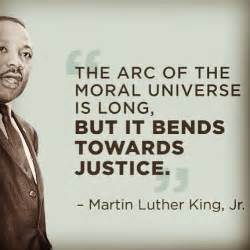
Or as Martin Luther King put it: “The arc of the moral universe is long, but it bends towards justice.”

All of us need to embrace that wisdom, refuse discouragement and continue doing what we can to resist the forces of empire and unlock those “Gates of Hell.”

A Chauvinist Jesus Gets Schooled by a Palestinian Mom

syrophoenician-woman

Readings for the 20th Sunday in Ordinary Time: IS 56:1, 6-7; PS 67: 2-3, 5, 6, 8; ROM 11: 13-15, 20-32; MT 15: 21-28.

“Have pity on me, Lord, Son of David! My daughter is tormented by a demon.” Those are the words addressed to Jesus in today’s gospel reading. They come from a woman whom the evangelist, Matthew, remembers as “Syrophonecian”

An uncharacteristically narrow-minded Jesus has his own name for the woman and her daughter. He calls them “dogs” – b_tches, really. That’s the term for female dogs, isn’t it?

We’ll come back to that in a moment.

For now, note that “Syrophonecian” meant the woman was not a Jew. She was a native or inhabitant of Phoenicia when it was part of the Roman province of Syria. She was living near the twin cities of Tyre and Sidon – a gentile or non-Jewish region of the Fertile Crescent where Matthew takes trouble to locate today’s episode. That would have made Jesus’ petitioner what we call a “Palestinian” today.

No doubt you’re surprised at Jesus’ rough and disrespectful language towards the woman and her child. I am.

As I said, at first he gives no reply at all; he ignores the two females completely. If Matthew’s account is accurate, in his silence Jesus showed himself to be captive to his own cultural norms. It was inconceivable in Hellenistic antiquity for a strange woman to directly approach a man the way the woman in this story did. Above all, it was so for a non-Jewish woman to directly address a Jewish man. In other words, Jesus’ silence shows him a captive to his patriarchal “honor culture.”

But then, as I said, it gets worse. When the woman insists, Jesus implicitly at least uses that term that women find so offensive. He says, “I have been sent for the lost children of Israel . . . it is not right to take the food of the children and throw it to a pair of b_tches.”

Is that a sneer I see on Jesus’ face?

In any case, the reply seems out of character for Jesus. In fact, such dissonance has led many scholars to reject the saying as inauthentic – or as though Jesus were only pretending to be hard to test the woman’s faith. Whatever the case, Jesus’ words only echo the rabbinic saying of the time, “He who eats with idolaters is like one who eats with a dog.”

Can’t get much more chauvinist than that, can you? Foreigners’ religions are nothing but “idolatry.” Foreigners themselves are filthy animals.

Do you know anybody that thinks like that? I mean, we still haven’t outgrown such narrowness, and disrespect any more than this stony Jesus apparently had.

But then the woman disarms the Master completely, even as he turns his back on her. Listen to her words. Unfazed in her desperation before this peasant faith healer, she blurts out, “Please, Lord, for even the dogs eat the scraps that fall from the table of their masters.”

Silence.

We can almost see Jesus stop in his tracks. He shakes his head ruefully and turns back. We can almost hear him stifle a laugh as he exclaims, “O woman, great is your faith! Let it be done for you as you wish.”

Can you believe it? This poor woman has just schooled Jesus – the Great Teacher. She successfully called him back from his self-identification as an ethnocentric patriarch to his better Self. So he concedes her argument. The one whom the gospels present as the invincible master of verbal riposte admits error and defeat at the hands this simple Palestinian mom.

What does the interaction between Jesus and the woman called “Syrophonecian” mean for us today?

I don’t know . . . Perhaps it means that:

  • If this story actually happened, it’s somehow comforting to know that Jesus was so human — more like us than we’ve been made to think.
  • Xenophobia and racial prejudice are powerful!
  • So is the patriarchal narrow-mindedness fostered by religion. It even captivated Jesus.
  • It continues to captivate most of us even as we speak — in the context of immigration controversy and Black Lives Matter.
  • Women’s voices, especially when defending their children, are often more perceptive than even the wisest of men.
  • For that reason, it’s simply wrong to exclude women from leadership roles in politics and legislation – especially when questions of children, health, women’s reproductive rights, and spiritual leadership are at stake.
  • Given our liturgical context today, it’s wrong to exclude women from the highest leadership posts in the Catholic Church.
  • Don’t let name-calling deter you from doing the right thing.
  • “Sticks and stones . . .”

A Courageous Pope Francis Knows about Walking on Water: He Calls Us to Do the Same

Francis & Trump

Readings for 19th Sunday in ordinary time: I KGS 19: 9A, 11-13A; PS 85: 9-14; ROM 9: 1-5; MT 14: 22-23

In today’s Gospel, we hear Matthew’s account of Jesus walking on water – and of his invitation to Peter to follow the Master’s example. The story is relevant to Pope Francis who believes he is Peter’s successor.

The walking-on-water episode is also relevant to Catholics in general trying to figure out how to comport ourselves in this age of Donald Trump with its renewed threats of nuclear war. Should we risk criticizing the president in the name of our faith, or not? The pope’s example says we should. Speak out, it says, against pre-emptive war, narrow fundamentalism, racism, rejection of immigrants, and environmental destruction. And don’t worry: it won’t kill you. Not speaking out may.

Just last month, the pope gave that message, showing, once again, his willingness to step out of his boat and follow Jesus’ symbolic example of fearlessly confronting the monstrous threats facing our world.

In case you missed it, I’m referring to Francis’ apparent endorsement of sentiments expressed in a controversial article that appeared last month in La Civiltà Cattolica – the Vatican’s quasi-official weekly publication. The article boldly criticized American Catholics who accommodate the Gospel to Trumpism.

More specifically, the Vatican weekly accused U.S. Catholic ultraconservatives of making an alliance of “hate” with evangelical Christians in their backing of President Trump. In doing so, the article warned, they have strayed dangerously into the turbulent waters of political polarization in the United States. According to the Civiltà Cattolica writers, the conservatives’ worldview and literal understanding of the Bible is “not too far apart’’ from that of jihadists.

The Pope’s apparent endorsement of the article showed once again his willingness to confront Monsters like Donald Trump himself along with Steven Bannon, and their Catholic supporters like Paul Ryan, Cardinal Raymond Burke, Archbishop Charles Chaput of Philadelphia, and Cardinal Gerhard Muller, the German conservative appointed by Benedict XVI (and recently fired by Francis) as the church’s chief judge of doctrinal orthodoxy.

The suggestion here is that the Pope’s courageous stands over the course of his papacy represent his acceptance of Jesus’ invitation to “walk on water” – to follow the example of Jesus in confronting fearful demons that life inevitably forces us to face.

To see the connection, first consider today’s Gospel reading.

The story goes that following Jesus’ feeding of the 5000 (last week’s Gospel focus), Jesus forces the apostles to get into their boat and row to the other side. [The text says, “Jesus made (emphasis added) the disciples get into a boat and precede him to the other side.” Perhaps these experienced fishermen (as opposed to the land lubber, Jesus) saw a storm was coming and were reluctant to set sail despite Jesus’ urgings.]

In any case, a storm does come up and the apostles fear they are all about to drown. You can imagine their cries for help.

Then they see a figure walking on the water in the midst of high threatening waves. At first they think it’s a ghost. Then they realize that it’s Jesus. He’s walking on the raging waters.

Peter, ever the impetuous leader of the apostles, doubts what he sees. So he says, “Prove to me that it’s you, Jesus; let me walk on the waves just as you’re doing.” Jesus says, “Join me then over here.” So Peter gets out of the boat and, like Jesus actually walks on water for a few steps.

Then, despite the evidence, he begins to doubt. And as he does so, he starts sinking below the water line. “Save me, Lord!” he cries out again. Jesus stretches out his hand and saves Peter. Then he asks, “Where’s your faith? Why is it so weak? Why did you doubt?”

Of course, this whole story (like last week’s “Loaves and Fishes”) is one of the dramatic parables Matthew composed. If we get caught up in wondering whether we’re expected to believe that someone actually walked on water, we’ll miss the point of this powerful metaphor. It’s about Jesus’ followers doing the unexpected and irrational in the midst of the seriously threatening crises life forces upon us.

You see, Matthew’s Jewish audience shared the belief du jour that the sea was inhabited by dangerous monsters – Leviathan being the most fearful. And courageously walking on water was a poetic way of expressing what Matthew’s community believed about Jesus, viz. that he embodied the courage and power to do the completely unexpected in the midst of crisis and subdue the most threatening forces imaginable – even the most lethal they could think of, the Roman Empire.

Jesus’ invitation to Peter communicates the truth that all of us have the power to confront monsters if we’ll just find the courage to leave safety concerns behind even in the most threatening conditions, to confront life’s monsters, and join Jesus in the midst of its upheavals.

Problem is: we easily lose faith and courage. As a result, we’re overcome by life’s surging waves and by the monsters we imagine are lurking underneath.

And that brings me back to Pope Francis and the stands he has taken against the secular orthodoxy of the day that accommodates itself to an emerging neo-fascism. Since the outset of his papacy, he has demonstrated unusual courage attempting to join Jesus on the world’s dangerous waves in contradiction to expectations established by his predecessors. Remember:

  • Unlike other popes, he’s adopted a comparatively simple, unpretentious lifestyle.
  • He’s lost no opportunity to condemn neo-liberalism, growing income inequality, and capitalism itself.
  • His apostolic exhortation, “The Joy of the Gospel” (largely unheeded) called for radical change in the church, and implicitly endorsed the liberation theology his two immediate predecessors had tried to kill.
  • More specifically, he adopted liberation theology’s “preferential option for the poor” as the leitmotif of his papacy.
  • In that spirit, his famous “Who am I to judge” gave hope to the LGBTQ community.
  • In 2014, his Vatican Peace Vigil helped head off President Obama’s plans to bomb Syria.
  • The following year, he addressed the U.S. Congress where he forthrightly called for an end to capital punishment, and urged divestment from the arms industry, whose profits he described as “soaked in blood.”
  • On that same occasion, he called his audience to imitate fierce critics of capitalism and United States policy, Martin Luther King, Dorothy Day, and Thomas Merton.
  • He helped shape and gave unequivocal endorsement to the Paris Climate Accords (recently repudiated by Mr. Trump) by publishing his radical eco-encyclical, Laudato Si’, also in 2015. It arguably remains the most important public document of the 21st  century.
  • His contextual approach to family issues (pre-marital sex, abortion, sexual orientation, same sex marriage, divorce . . .) recognized the sovereignty of individual conscience. In Amoris Laetitia, he admits that moral choices in family and other matters are inevitably conditioned by age, maturity, degree of moral development, economic necessity, and, yes, ignorance and religious misinformation. As a result, no one is anyone else’s judge.

True, his papacy has daringly left safe harbor and courageously sailed into the storm. Francis clearly sees Jesus as his role model in the face of today’s unprecedented winds and waves. Indeed, Francis has gotten out of the boat to trample underfoot the beasts and monsters roiling the seas all around us.

The question is, will we follow him? The monsters we fear can be intimidating:

  • The pro-war mainstream media
  • Those politicians and churchmen I mentioned earlier
  • The relatives, neighbors, friends, and fellow parishioners who might think us too political
  • Our own attachment to our petty reputations and self-conceptions
  • The militarized police at demonstrations
  • The emerging right wing, “brown shirt” thugs who might threaten our political expression

As the crisis this week over North Korea shows, this is no time for followers of Jesus to be silent, to remain in safety inside gated communities, behind our computers, TVs, sports fanaticism, and other entertainment addictions. This is the time for us to follow the example of Jesus and Pope Francis.

Today’s dramatic parable calls us to get out of the boat and confront the demons who keep us silent and compliant.

The Loaves & Fishes Story Is Not Just about Food: It’s about Just Food

loavesfish

Readings for 18th Sunday in Ordinary Time: IS 55: 1-5; PS 145: 8-9, 15-18; ROM 8: 35, 37-39 MT 14: 13-21

I’ve been vacationing in Michigan over the past three months. We’re living in the lovely cottage my wife, Peggy, inherited from her father in the northern part of the state.

The community there is called Canadian Lakes. It’s white, upper middle class, and very pretty. Peggy and I have spent large parts of our summers there ever since we we’ve been married. Our kids feel attached to the place. In a sense, they’ve grown up there.

In a word, life at Canadian Lakes is good. It’s water-centered and comfortable.

That makes today’s liturgy of the word (with its emphasis on the free gift of water) especially poignant for me. So does the fact that our lake home is located in Michigan with Detroit not so far away. Water’s a problem there.

You see, the relationship of Detroit’s poor to water is very different from ours in Canadian Lakes. Unlike our lakeside community, 44% of Detroit residents fall under the poverty line; 83% of the city’s population is African American. Unemployment in the former Motor City is well above 14.5%. Yet, Detroit’s (unelected) City Manager has been cutting off the water of poor people there. Regardless of your circumstances, if you’re an ordinary Detroit resident two months, behind on your bill, you will suddenly find yourself without water for drinking, bathing and flushing toilets.

If you’re rich, however, it’s a different story. Some of the city’s largest corporate water users are also behind on their water bills – even years behind. For instance high-end golf courses, the Detroit Red Wings, the city’s football stadium and more than half the city’s commercial and industrial users owe back water bills totaling over $30 million. No one is cutting off their water.

It’s also worth noting that the price of Detroit’s water system (administered by private contractors) is more than twice the national average and that the water cut-off plan is part of a scheme to move the city towards a completely privatized water system. Some see it as a measure intended to drive Detroit’s poorest from the city for purposes of gentrification.

Detroit’s water policy has gotten world-wide attention. A United Nations Human Rights office designated it a clear violation of fundamental human rights.

In the light of today’s liturgy of the word, we might also designate Detroit’s plan (and in general the commodification of God’s free gifts to all of creation) as a violation of God’s order. In fact, today’s liturgy of the word implies indictment of water privatization schemes and the market system’s practice of treating food itself as a commodity. These are gifts of God the readings say – part of God’s gift economy which is unbelievable in its generosity.

And why should we be surprised? The God celebrated in today’s responsorial is described as “answering all our needs.” According to the psalmist, that God is gracious, just, holy, merciful, slow to anger, hugely kind, and compassionate. S/he gives food to everyone and everything – without cost.

So why pay for water? Isaiah asks. “All you who are thirsty, come to the water!” he says. “You who have no money, come, receive grain and eat; come, without paying and without cost, drink wine and milk!”

The point of contrasting God’s “gift economy” with our exploitive “exchange economy” is driven home in today’s Gospel episode from Matthew the evangelist. The famous “miracle of loaves and fishes” is actually a dramatic parable about God’s Reign and its order. The event may even be factual in the way I’m about to explain.

In any case, the tale is symbolic. It’s about the way the world would work if God were king instead of Caesar. In God’s dispensation, the gifts of creation – food and drink – are given to all without payment. God’s order contradicts our own where food production and even water delivery reap huge profits for the rich.

You know the story. Jesus meets with 5000 men in the desert (“not to mention,” Matthew says, “the women and children”). It’s late in the day. People are hungry and no-doubt getting restless. Jesus’ disciples offer a market solution to the problem of the crowd’s hunger. They say, “This is a deserted place and it is already late; dismiss the crowds so that they can go to the villages and buy food for themselves.”

Jesus’ solution is different. He says. “There is no need for them to go away; give them some food yourselves.”

The disciples almost mock Jesus’ suggestion. They say, “Five loaves and two fish are all we have here.” We can imagine them rolling their eyes and smirking ironically in disbelief at Jesus’ naivety. Did he really think that the loaves and fishes they had would be enough to feed 5000 hungry men and their families?

Nevertheless, Jesus “ordered the crowds to sit down on the grass.” Mark adds the detail that he had them break up into small groups of 50 and 100. In those smaller groups, people could see each other’s faces. Inevitably, they must have introduced themselves and shared some personal background, a joke, laughter and human warmth. Friendships blossomed.

Then Jesus “said grace:” That is, with everyone’s eyes on him, the Master Teacher broke the bread, divided the fish and gave it to those around him. No doubt he did so with gestures inviting the crowd to do the same.

As a result, the “miraculous” happened. And it wasn’t a “popcorn miracle” where five loaves suddenly popped into 5000 or where two fish suddenly multiplied by 3000. Instead, the good mothers in the crowd must have followed Jesus’ example. (Can we imagine any good Jewish mamma leaving home for a day in the desert without packing a hearty lunch for her husband and children?) The mothers opened their picnic lunches and shared them with the people they’d just gotten to know.

It was a “miracle of enough.” Everyone shared. So even the improvident were able to eat with plenty left over – 12 baskets Matthew tells us.

No, I’m not saying the miracle of loaves and fishes was just about food. No. As John Dominic Crossan puts it, the “miracle of loaves and fishes” was not just about food; it was about just food – about just distribution where no one is left hungry. Why? Because that’s the way God and his order are. God gives food, drink – the earth itself – to everyone and everything without cost.

That’s the order Jesus’ followers are called to imitate here and now.

And it is Detroiters (as well as many others throughout the world) who doing just that. They’re busy not only sharing water, but gardening and eating free from their plots on vacant lots – taking grateful advantage of God’s free gifts. You might be surprised to know that Detroit has the largest number of urban gardens in the United States.

We would do well to follow the example of people there and expand on it, taking advantage of God’s free gifts by:

• Opposing water privatization schemes
• Supporting local farmers
• Gardening
• Composting
• Installing water catchment systems
• Heating water (and our homes) with solar energy
• Bicycling to work
• Getting to know our poor neighbors
• Sharing food with them
• Even paying their water bills
• Opposing military spending increases while U.S. citizens go without water.

To repeat: today’s readings are not just about food and drink; they’re about just food and drink. They’re about sharing God’s free gifts rather than turning them into commodities to benefit the 1%.

The Battle for the Bible: What God Do You Worship, Jesus’ or Mr. Trump’s?

Early Church

Readings for Seventeenth Sunday in Ordinary Time: I KGS 3: 5, 7-12; PS 119: 57, 72, 76-77, 127-130; ROM 8: 28-30; MT 13: 44-52; http://www.usccb.org/bible/readings/072714.cfm

Do you ever wonder how those claiming to be Christian can support rich billionaires like Donald Trump and those with whom he’s surrounded himself? How can they vote for those who would deprive them of health care, and give tax breaks to the already super-rich, especially when such policies end up being funded by cut-backs in programs that benefit non-billionaires like themselves — programs like Medicare, Medicaid and environmental protection?

Today’s liturgy of the word suggests an answer. It presents us with what Chilean scripture scholar, Pablo Richard, calls the “Battle of the Gods.” The conflict embodies contrasting ideas about the nature of God and God’s order as found within the Bible itself – as well as in today’s “America.”

One concept of God belonged to the rich such as Israel’s Kings, David and Solomon – ancient analogues of Donald Trump and his friends. The other belonged to the poor who surrounded Jesus, the prophet from Nazareth. They were working stiffs like you and me, along with n’er-do-wells: the unemployed, poorly-paid, sick, disabled, and underemployed. Many were homeless street people and street-walkers. To them Jesus embodied and spoke of a God unrecognizable to David, Solomon, or today’s right wing.

The contrast emerges as today’s readings juxtapose the dream of Solomon, the representative par excellence of Israel’s 1% in our first reading, over against Jesus’ own words about the contrasting nature of God’s Kingdom in today’s Gospel selection. In the latter, Jesus calls his would-be followers to a profound paradigm shift – away from one that lionized the imperial order to a divine kingdom in in which the poor prosper. The former was embodied not only in the Roman empire of Jesus’s day, but in Israel itself. Its leaders a thousand years earlier had hijacked the Mosaic Covenant that contradicted their New Imperial World Order.

In today’s first reading Solomon’s court historians mask the hijacking by predictably identifying their employer as “the wisest man ever,” just as before him they had identified Solomon’s cruel and womanizing father, David, as “a man after God’s own heart.” In this royally stolen form, the Covenant connected God and the royal family. It assured a royal dynasty that would last “forever.” It guaranteed God’s blessings on Solomon’s expansionistic policies.

The covenantal truth was much different. In its original Mosaic form (as opposed to the Davidic bastardization), the Covenant joined Yahweh (Israel’s only King) and escaped slaves – poor people all – threatened by royalty and their rich cronies.

The Covenant’s laws celebrated in today’s responsorial psalm protected the poor from those perennial antagonists.  For instance, “Thou shalt not steal,” was originally addressed to large landowners intent on appropriating the garden plots belonging to subsistence agriculturalists.

Despite such prohibitions, those who established Israel’s basic laws knew the power of money. The rich would inevitably absorb the holdings of the poor as did David and Solomon. So Israel’s pre-monarchical leaders established the world’s oldest “confiscatory tax.” It was called the “Jubilee Year” which mandated that every 50 years all debts would be forgiven and land would be returned to its original (poor) owners.

The advent of a Jubilee Year represented the substance of Jesus’ basic proclamation. No wonder the poor loved him. No wonder the refrain we sang together this morning repeated again and again, “Lord I love your commands.” That’s the refrain of the 99% locked in life-and-death struggle with the rich 1% represented by Solomon and his court.

In today’s Gospel selection, Jesus indicates the radical swerve necessary for establishing God’s kingdom understood in Jubilee terms. It involves “selling all you have” and buying into the Kingdom concept as if it were buried treasure or a pearl of great price.

That’s the kingdom – the world order we’re asked to believe in, champion, and work to introduce. It’s what the world would be like if God – not David or Solomon – were king.

In our own country, it’s what “America” would be like if our politics were shaped by God’s “preferential option for the poor,” instead of Mr. Trump’s preferential option for his dear 1%.

(Sunday Homily) Jesus’ Anti-Imperial Parables: How to Resist (State) Terrorism

ISIS & Jesus

Readings for the 16th Sunday in Ordinary Time.

Despite what you might hear in church today, this Sunday’s liturgy of the word is not about the end of the world and the condemned spending eternity in endless fire.

No, it’s much more relevant than that. It’s actually about non-violent resistance in a context of imperial aggression and war. It summons all of us to withdraw our support for the U.S. military and from Washington’s policy of state terrorism against impoverished Muslims in the Middle East.

More specifically, today’s gospel reading, on the one hand, calls those living in the belly of the beast to stop approving of our imperialist overlords who currently sow their weeds of destruction throughout the Middle East. This means actively opposing their wars of choice in Afghanistan, Iraq, Syria, Yemen, Somalia and elsewhere.

On the other hand, the three parables attributed to Jesus also suggest a message for Middle Eastern followers of Mohammed. The parables address them precisely as victims of imperialism and hence the closest analogue to what the Bible calls “the people of God.”

I mean: in today’s world, the situation of Muslims closely tracks that of Jesus’ audience in first century Palestine.  As such, all three of today’s readings call followers of Mohammed [who recognize Isa (Jesus) as the second greatest of the prophets (after Mohammed and before Abraham)] to lay down their arms in favor of Jesus’ own non-violent resistance.

To get my meaning, begin by considering our liturgy’s first selection from the Jewish Testament’s Book of Wisdom. It is particularly relevant to “Americans,” identified by Dr. King as the world’s “greatest purveyor of violence.” The reading says explicitly that God’s power is not expressed in violence but in leniency to all.

That theme is repeated in today’s responsorial psalm with equal relevance to USians. There God is described as belonging to all nations.

Similarly, in the second reading, St. Paul insists that the divine Spirit dwells within all humans regardless of nationality. It is slow to anger, good, forgiving, abounding in kindness.

From this, Jewish wisdom insists that believers must in turn be kind, lenient and forgiving to all – even (Jesus says elsewhere) to their worst enemies. This is directly pertinent for the U.S. described by Noam Chomsky as the one of the most extreme religious fundamentalist countries in the world. Those who claim to follow Christ (as 83% of Americans do) must be as pacifist as their Master.

The second theme of today’s liturgy is less easy for an outsider to comment upon. It implicitly addresses the victims of American aggression – most prominently the Muslim community and whether or not (as people of The Book) they should resist with violence.

I mean that Jesus’ parable of the weeds planted by an enemy in a landlord’s field can be read as addressing the Roman occupation forces encumbering Israel during Jesus’ lifetime. [According to John Dominic Crossan, Matthew’s allegorizing of Jesus’ parable – making it about the end of the world – is more reflective of the situation of the Jewish diaspora (following the destruction of Jerusalem in 70 CE) than of the actual revolutionary situation of Jesus’ own day.]

In Jesus’ occupied Israel, the suffocating Roman presence (like our own country’s in the Middle East) was as unwelcome, alien, and destructive as weeds in a garden or field.

The question was how to deal with such odious foreign occupation. Like ISIS and others today, Zealot revolutionaries had their answer: Uproot the weeds here and now. Take up arms; assassinate Romans and their collaborators; drive them out mercilessly. Be as cruel and vicious as the Romans.

Jesus’ response was different. As a non-violent revolutionary, he could surely understand such apocalyptic energy. After all, much of his teaching expressed sympathy to the Zealot cause which included land reform, debt forgiveness, and expulsion of the hated Roman occupation forces. Many scripture scholars even identify possibly five members of Jesus’ inner circle as Zealots themselves.

But Jesus’ Parable of the Weeds is more prudent and sensitive to civilian casualties than the strategy of the impatient Zealots – or that of ISIS.

When the landlord’s workers ask, “Should we uproot the weeds?” Jesus’ landlord answers: “No, if you pull up the weeds you might uproot the wheat along with them.”

In other words, Jesus agrees with El Salvador’s Oscar Romero and with Brazil’s Dom Helder Camara that revolutionary violence, though understandable (and justifiable on the grounds of just war theory), is imprudent at the very least.

This is because when faced with a vicious, overwhelmingly armed oppressor (like the United States) resistance inevitably leads to state terrorism – to the war crime of collective punishment impacting women, children, the elderly and disabled. At the very least, that’s why Jesus eschews Zealot violence.

How then respond to increasing American domination of the Middle East since the dissolution of the Ottoman Empire?

Jesus’ response? Be like mustard plant, he says. Be like yeast in flour. Both puzzling recommendations are relevant not just to Muslim victims of United States imperialism, but to Christians in our country who wish to dissent from their government’s policies of endless war.

First of all think of the puzzlement that must have struck Jesus’ listeners. Jews didn’t have much use for yeast. They preferred unleavened bread. Neither would any farmer sow mustard seeds in her field or garden. The mustard plant was like kudzu – itself a kind of weed that eventually can take over entire fields and mountainsides while choking out other plants weeds or not. The mustard plant was unstoppable.

So Jesus is saying:

* The Romans are enemy weeds in your garden.
* Don’t try to uproot them by force.
* That will only lead to slaughter of the innocent.
* Rather, become weeds yourselves – like the mustard plant which is much more powerful than simple Roman (or U.S.) weeds.
* Resist the Romans by embodying the Spirit of God that is slow to anger, good, forgiving, abounding in kindness.
* Only imitation of Wisdom’s God can defeat the evil of imperialism – or any evil for that matter.

What does that mean for Christians wishing to express solidarity with our Muslim brothers and sisters against their cruel “Christian” oppressors? At least the following:

* Reject U.S. militarism in general as counterproductive, since fully 90% of the casualties it inflicts in war are civilians.
* Be instead like the yeast a homemaker puts into 60 pounds of flour, “infecting” the greater culture by non-violent resistance rather than “supporting our troops.”
* Recognize and take sides with the real victims of terrorism – those plagued by U.S. policies of aggressive wars and regime-change – i.e. of state terrorism.
* Lobby against absurd proposals to increase U.S. military spending, when already “our” country spends more on “defense” than the next ten countries combined.

* Refuse to honor the military, and dissuade your children and grandchildren from entering that corrupt and corrupting gang of outlaws.

Surely Jesus’ Way of non-violent resistance, forgiveness and love of enemies will strike many (non-believers and believers alike) as unrealistic. But according to the faith we Christians (and Muslims) pretend to embrace, Jesus’ Way is God’s way.

But then perhaps we Christians think we’re smarter and more realistic than Jesus — or God?

What do you think?

God’s Abundance vs. the Greed, and Self- Interested Denial of the Rich : Jesus’ Parable of the Sower

Parable of Sower

Readings for 15th Sunday in Ordinary Time: IS 55:10-11; PS 65:10-14; ROM 8:15-23; MT 13: 1-23; http://www.usccb.org/bible/readings/071314.cfm

Not long ago, on the 4th of July, Amy Goodman replayed an interview with the legendary folk singer, Pete Seeger. In the course of the interview, Pete commented on today’s Gospel reading – the familiar parable of the Sower. His words are simple, unpretentious and powerful. They’re reminders that the stories Jesus made up were intended for ordinary people – for peasants and unschooled farmers. They were meant to encourage such people to believe that simple farmers could change the world – could bring in God’s Kingdom. Doing so was as simple as sowing seeds.

Seeger said:

“Realize that little things lead to bigger things. That’s what Seeds is all about. And there’s a wonderful parable in the New Testament: The sower scatters seeds. Some seeds fall in the pathway and get stamped on, and they don’t grow. Some fall on the rocks, and they don’t grow. But some seeds fall on fallow ground, and they grow and multiply a thousand fold. Who knows where some good little thing that you’ve done may bring results years later that you never dreamed of?”

Farmers in Jesus’ day needed encouragement like that. They were up against the Roman Empire which considered them terrorists. We need encouragement too as we face Rome’s counterpart headed by the U.S.

The obstacles we face are overwhelming. I even hate to mention them. But the short list includes the following – all connected to seeds, and farming, and to cynically controlling the natural abundance which is celebrated in today’s readings as God’s gift to all. Our problems include:

• Creation of artificial food scarcity by corporate giants such as Cargill who patent seeds for profit while prosecuting farmers for the crime of saving Nature’s free production from one harvest to the following year’s planting.
• Climate change denial by the rich and powerful who use the Jesus tradition to persuade the naïve that control of natural processes and the resulting ecocide are somehow God’s will.
• Resulting wealth concentration in the hands of the eight men who currently own as much as half the world’s (largely agrarian) population.
• Suppression of that population’s inevitable resistance by terming it “terrorism” and devoting more than half of U.S. discretionary spending to military campaigns against farmers and tribal Peoples scattering seed and reaping pitiful harvests in places like Afghanistan, Iraq, and Palestine.
• Ignoring what the UN has pointed out for years (and Thomas Picketty has recently confirmed): that a 4% tax on the world’s richest 225 individuals would produce the $40 billion dollars or so necessary to provide adequate food, water, shelter, clothing, education and health care for the entire world where more than 40% still earn livings by sowing seeds.
• Blind insistence by our politicians on moving in the opposite direction – reducing taxes for the rich and cutting programs for the poor and protection of our planet’s water and soil.

It’s the tired story of the rich getting richer and the poor getting poorer. In today’s Gospel, Jesus quotes the 1st century version of that old saw. In Jesus’ day it ran: “. . . to those who have, more will be given, and they will have an abundance; but from those who have nothing, even what they have will be taken away.”

Today’s liturgy of the word reminds us that such cynical “wisdom” does not represent God’s way. Instead the divine order favors abundance of life for all – not just for the 1%. as our culture would have it. For instance, today’s responsorial psalm proclaims that even without human intervention, the rains and wind plow the ground. As a result, we’re surrounded with abundance belonging to all:

“You have crowned the year with your bounty,
and your paths overflow with a rich harvest;
The untilled meadows overflow with it,
and rejoicing clothes the hills.
The fields are garmented with flocks
and the valleys blanketed with grain.
They shout and sing for joy.”

Because of God’s generosity, there is room for everyone in the Kingdom. The poor have enough; so poverty disappears. Meanwhile, the formerly super-rich have only their due share of the 1/7 billionth part of the world’s product that rightfully belongs to everyone.

To repeat: abundance for all is the way of Nature – the way of God.

Only a syndrome of denial – willful blindness and deafness – enables the rich and powerful to continue their exploitation. Jesus describes the process clearly in today’s final reading. He says:

“They look but do not see and hear but do not listen or understand.
Isaiah’s prophecy is fulfilled in them, which says:
You shall indeed hear but not understand,
you shall indeed look but never see.
Gross is the heart of this people,
they will hardly hear with their ears,
they have closed their eyes,
lest they see with their eyes
and hear with their ears
and understand with their hearts and be converted,
and I heal them.”

Those of us striving to follow Jesus’ Way hear his call to open our eyes and ears. Conversion – deep change at the personal and social levels – is our shared vocation. That’s the only way to bring in God’s Kingdom. Individually our efforts might be as small and insignificant as tiny seeds. But those seeds can be powerful if aligned with the forces of Nature and the Kingdom of God. That’s true even if much of what we sow falls on rocky ground, are trampled underfoot, eaten by birds or are choked by thorns. We never know which seeds will come to fruition.

Such realization means:

• Lowering expectations about results from our individual acts in favor of the Kingdom.
• Nonetheless deepening our faith and hope in the inevitability of the Kingdom’s coming as the result of innumerable small acts that coalesce with similar acts performed by others.

Once again, Pete Seeger expressed it best:

“Imagine a big seesaw. One end of the seesaw is on the ground because it has a big basket half full of rocks in it. The other end of the seesaw is up in the air because it’s got a basket one quarter full of sand. Some of us have teaspoons and we are trying to fill it up. Most people are scoffing at us. They say, “People like you have been trying for thousands of years, but it is leaking out of that basket as fast as you are putting it in.” Our answer is that we are getting more people with teaspoons every day. And we believe that one of these days or years — who knows — that basket of sand is going to be so full that you are going to see that whole seesaw going zoop! in the other direction. Then people are going to say, “How did it happen so suddenly?” And we answer, “Us and our little teaspoons over thousands of years.”

G 20, God’s Peace and the World’s Wars: 180° of Separation (Sunday Homily)

G20

Readings for the 14th Sunday in Ordinary Time: ZEC 9:9-10; PS 145: 1-2, 8-12; ROM 8:8, 11-13; MT 11: 25-30

So the G-20 is meeting this week in Hamburg, Germany. Isn’t it comforting?  Among other things, this privileged group of wealthy co-conspirators will choose the means by which the rich would ultimately destroy the planet. Will it be by nuclear holocaust or by ignoring climate change?

Or will it be by economic policies that enable eight (count ‘em – 8) individuals to possess as much wealth as 3.6 billion people, while 30,00 children die of starvation each day. President Trump prefers to end the world by climate change; Ms. Merkel’s leans towards nuclear weapons. However, in the spirit of irenic political compromise, both Merkel and The Donald could ultimately go either way. In any case, they both approve the reigning system’s math whose product is mass starvation.

It’s great to be rich, don’t you agree?

Think about it. According to today’s papers, our billionaire leaders have more or less out-of-the-blue decreed that Russia, North Korea, the Ukraine, and Syria represent urgent crises and causi belli nuclear. And this, even though using just 1% of the world’s 15,000 nuclear weapons of mass-destruction would likely render our planet completely uninhabitable.

Meanwhile, no one I know can even explain to me why Pakistan, India, and Israel should be allowed to possess nuclear weapons, but not North Korea or Iran. No one can help me understand why we’re even concerned about Ukraine or Syria – much less Yemen or Somalia. What dog do we have in those fights?

And, explain to me, pray-tell, why an ignoramus like Mr. Trump and his gang of Republican Know-Nothings should be able to determine the fate of the planet relative to climate change. Do their opinions represent yours? Not mine! What happened to democracy?

It’s all quite insane.

In contrast to all of this, today’s liturgy of the word celebrates peace unequivocally. All three of the day’s readings, plus the responsorial psalm emphasize the fact that peace, not war or planetary destruction is the way of God’s kingdom. That reign, where God is king instead of Caesar (or Mr. Trump or Ms. Merkel), turns out to be diametrically opposed to the world’s logic of war and disregard for Mother Nature. It contradicts ALL of the values of the planet’s “wise” and “learned” – ALL OF THEM! This means that if you want to do the right thing or support the right policy, you should do the exact opposite of what the politicians, pundits and professors tell you.

Yes, read the final communication from Hamburg. But then add the qualification “NOT!!” Like magic, then, you’ll arrive at God’s position.

That’s more or less what our readings today tell us!

Even before Jesus, and setting the tone for the day, the first reading from Zechariah describes God’s divine Spirit as completely anti-war. In the prophet’s words, it banishes chariots from Ephraim, and the warhorse from Jerusalem. It breaks the warrior’s bow in two not only in the holy city, but across the planet itself.

For St. Paul, in today’s second selection, such rejection of war manifests the very Spirit of Christ dwelling within us all. That Spirit gives life, not death, to the entire world. It is the Spirit of God himself. It is our own spirit – our true Self. So, if we choose to bomb, shoot or drone anyone, we’re committing suicide. That’s what it all means.

In his own phrasing, Paul describes the opposite of such divine rationale as “flesh,” “body,” “mortality,” “darkness,” and “death.” It is the logic of individuality and separation. In practice it all leads inevitably to war – to Zechariah’s horse, chariot, bow and spear – all of which the world’s “learned” consider “wise,” practical, and realistic.

Today’s responsorial psalm calls the contradicting World Soul “merciful” and “compassionate” towards all creatures, not just humans, much less exclusively towards those of a particular race or nation. Though “mighty,” it is gentle and non-violent (“meek”) especially towards the heavily burdened and crushed.

All of that represents the logic of God’s kingdom, which according to Jesus’ words today, emphasizes the unity of humankind – the fact that we and all of creation are linked by what Jesus calls his single easy “yoke.”

According to Jesus, his message or “burden” is not dark, heavy, or difficult to understand. Even the most unlearned (“the little ones”) can grasp it. Far from threatening our survival, it is light itself; its acceptance represents the epitome of enlightenment. Ironically, then, the simple, the unlearned, the nobodies of the world, appreciate Jesus’ proclamation better than their educated counterparts.

In practice, those wise men (including many church leaders) continue to dismiss God’s logic as somehow impractical, stupid, suicidal, utopian, unrealistic, and naïve. As I’ve already indicated, their wisdom instead dictates “wise” and “realistic” policies emphasizing separation, individuality, competition, nuclear weapons, and mutually assured destruction (MAD).

And how’s that wisdom working out for you, your children, grandchildren, and our world?

It’s time for followers of Jesus to finally embrace God’s word as expressed in today’s readings. Our very survival depends on it. It’s up to us to reject the world’s logic – the calculus of flesh, body, darkness, war, and violence.  Now is the hour for us to vote, take to the streets (like the hundreds of thousands in Hamburg), and begin living according to Spirit, light, peace, and non-violence.

That’s because we are Spirit, not flesh. So only the non-violence celebrated in today’s readings can save us. That’s not naive, my friends, it’s the realism of God.

(Sunday Homily) July 4th in the Land of the Regimented and Home of the Terrified

July 4th

Readings for the 13th Sunday in Ordinary Time: 2KGS 4: 5-11, 14-18A; PS 89: 2-3, 16-19; ROM 5: 3-4, 8-11; MT 10: 37-42.

Today’s liturgy of the word celebrates hospitality. It lauds the loving reception of prophets, social justice activists (the righteous), and the least among us. It invites us to grow up and offer such welcome despite what family members might think, when prophets like Elijah, Elisha, and Jesus contradict the culture’s received wisdom.  We are to embrace such critics despite the resulting rejection and threats (even death) of the larger community. The liturgy reminds us that openness to prophets, champions of social justice, and their victimized protégées imitates the generosity of Jesus and God himself.

Reflections like these prove especially apt on this Fourth of July weekend, at a time when our national circumstances stand in such sharp contradiction to the ideals we celebrate. To understand what I mean, first consider the occasion; then the liturgy’s sobering reminders about hospitable openness to prophetic insights which in Israel were often critical of the distance between the nation’s ideals and its historical, lived reality.

Let’s begin with our context.

Tuesday, of course, will be Independence Day. It’s an annual festival to laud the Founding Fathers, democracy, and American ideals of freedom, justice, and our “exceptional” Way of Life. It’s a time to remember that we’re a nation of immigrants – those famous “tired, poor, and huddled masses” – seeking better conditions in a land of unlimited possibilities. It’s when we sing the “Star Spangled Banner” recalling that we’re all free and brave.

Some of us will go to baseball games or watch the national pastime on T.V. There, war planes will fly in formation as we sing Francis Scott Key’s hymn that has always connected our banner to rockets and bombs. At the 7th inning stretch, we’ll cheer local servicemen and women just returned from current U.S. wars in Iraq, Afghanistan, Syria, where (it will be claimed) they’ve bravely defended our democracy and freedom.

We’ll wave flags, attend fireworks displays, and wear clothes with patriotic insignia. There will be parades with high school marching bands. Picnics will feature hot dogs, hamburgers, apple pie, potato salad, beer and Coke. At other gatherings, the Pledge of Allegiance will be recited proclaiming that our nation is one, indivisible and lives “under God.” In the spirit of it all, some will inevitably cheer “U.S.A., U.S.A.”

In short, we’ll celebrate life in America, where patriots are blessed and happy.

Unfortunately, none of that will ring true for me this year. In fact, it hasn’t in a long time.

That’s because as a nation (as in the Israel of Elijah, Elisha and Jesus) we’ve long since abandoned the ideals that supposedly underlie the garish and familiar outward display. In fact, it’s all been hijacked in a coup d’état – or several of them – that we don’t even recognize as having occurred. I’m referring to the assassination of J.F.K. in 1963, and to the selection of George W. Bush by the Supreme Court (rather than by voters) in 2000, and to the recent gradual and undemocratic seizure of all levers of public power by what Chomsky calls “the most dangerous organization in the history of the world,” viz. the Republican Party. Their anti-democratic power grab has been facilitated by:

  • Governmental refusal to abolish the Electoral College despite the fact that two of our last three presidents have been selected by bureaucrats rather than elected by a majority of voters
  • The SCOTUS Citizens United decision equating money with free speech
  • The Supreme Court’s partial repeal of the 1963 Voting Rights Act (in 2013)
  • General voter suppression and intimidation in poor, minority communities
  • Depriving convicted felons of voting rights
  • Insistence on using hackable voting machines with no paper trail
  • Exclusion of third and fourth party candidates from presidential debates
  • Ridiculous gerrymandering
  • Violation of the Constitutions’ mandate to fill a vacant Supreme Court seat until a right-wing extremist could occupy the post

All of that has made untenable any pretension of democracy. Ours is now an entrenched plutocracy, where the popular will doesn’t matter. Our wars have nothing to do with advancing democracy’s cause. In fact, few could even explain (much less defend) why “we” are fighting in Iraq, Afghanistan, Syria, or Yemen. Can you? I can’t.

So it turns out that our soldiers are not heroes. They are well-meaning, but systematically brain-washed by their “basic training.” That enables them to routinely torture and kill the innocent impoverished people whom they’re mobilized against for reasons the soldiers don’t even question, much less understand. (Isn’t it interesting that ALL our wars are fought against the desperately poor?) Supposedly, our military is fighting terrorists. But those simply wouldn’t exist absent their direct creation by the U.S. government – to defeat the Russians in Afghanistan (during the 1970s) and as a direct response to our country’s unprovoked invasion of Iraq in 2003. There is no doubt about it: ISIS was “made in America.” Most of our victimized and victimizing service people know none of this.

Far from being brave and free, the rest of us are all scared out of our wits and are constantly and resignedly monitored by a Big Brother whose unchanging mantra is “Be afraid. Be very afraid.” So we withdraw into our homes (some in literally gated communities) and distract ourselves with our T.V. shows, computers, IPads, and smart phones. We cheer an ignorant and mendacious Reality Show President as he proposes plans to build defensive walls against the immigrant successors of our own ancestors. We treat as normal an entire Know Nothing political party bent on depriving millions of health care and whose climate-change-denial will render the planet unlivable for our grandchildren. Without so much as a whimper, whites look on largely silent as skin-head police thugs are acquitted again and again, even after their neo-lynchings of unarmed black people are unambiguously caught on camera. The blue suited cowards’ unwavering self-defense is: “I feared for my life.”

We’ve become a land of the constantly surveilled and skittishly cowered.

All of that is called into question by today’s biblical readings. Together they celebrate “reception,” i.e. hospitality offered to prophets (social critics), the righteous (social justice champions), and the least among us. All of them, we’re told, are embodiments of the Christ Spirit and of God himself. The welcoming word “receive” appears eight times in today’s brief gospel selection.

And who is it that we’re receiving? As I’ve indicated, they are prophets to begin with. The first reading recounts an episode from Elijah’s successor, Elisha. Elijah, remember, was the fierce social critic of Israel for abandoning its identity as protector of widows, orphans, and immigrants. He excoriated palace sycophants who in the name of God optimistically, patriotically, and blindly proclaimed “peace, peace.” Instead, Elijah correctly predicted, Israel’s chickens would come home to roost. They’d be humiliated by Babylon – the ancient name of present day Iraq. Elijah’s successor, Elisha, continued his mentor’s mission after the latter was swept up to heaven in a fiery chariot.

Jesus of Nazareth as well as John the Baptist were identified as Elijah redivivus. They suffered accordingly. The people turned against them as they had done against all the prophets. Jesus was crucified as an enemy of the Roman Empire and its temple collaborators. According to Mark, the evangelist, the Master was thought insane by his mother and family.

So in today’s gospel, we find Jesus directing us to love God’s Kingdom more than family. (The Kingdom as embodied in Jesus’ person was a vision of what the world would be like if it were governed by God instead of Caesar and his successors.)  In today’s reading, Jesus calls us to damn the consequences of being as outspoken as were he and his prophetic predecessors.

We too must be ready, he says, to take up our cross and follow him. (Remember the cross was the instrument of torture and death reserved for opponents of Rome. His reported reference to “the cross,” then, is highly political.)

So on this Independence Day, perhaps our most patriotic action might be (at least in spirit) to spend the day in sackcloth, ashes, and mourning. It might be best to look critically at the fireworks, parades, ball games, picnics and family gatherings, as though they belonged to foreigners and to reinterpret them as a summons to resist. (In fact, any follower of Jesus, is a foreigner in this world, and a resister by definition.)

In other words, our call this day might be to speak the truth about our lost ideals, and then to endure patiently the fury of the family, friends, and community Jesus tells us to reject for his sake. Our true family, he reminds us, is not composed of “Americans,” but of the prophets, social activists, and “little ones” he, Elijah and Elisha championed so fearlessly.