Stephen Executed before Paul Falls asleep Envisioning God’s Kingdom While forgiving the ignorant Who cover their ears Against hearing The Human One Who substitutes God’s Reign Of compassion and love For religion’s insatiable Blood thirst.
PS 97: 1-2, 6,7,9
Yes, Jesus’ Kingdom rests Not on executioners’ haste To throw the first stone But on justice Joy and gladness For everyone It confers judgment Revealing The emptiness of Everything Killers venerate.
REV 22:12-14, 16-17, 20
May God’s Kingdom come! Even amid roadside missiles and martyrs’ gore. Hear the urgency! “Come, come, come, come, come, come” Six times over: Come Alpha and Omega First and Last Beginning and End Root and branch Starlight and Bride Water and Life.
JN 17: 20-16
It’s about Unity The Master assures Five times he says: One, one, one, one, one We are Close like Jesus and Abba. Foundationally coherent With them, Stephen, Paul And those myopic men Throwing rocks Powerful enough To awaken Prophet’s rage To know, know, know, know, know, know (Count them!) That God and We are One Rendering stones and blood Impotent To destroy Shared unity At divine core.
It’s Memorial weekend already – the unofficial beginning of summer, 2019. As usual, it’s a day when our country celebrates war and its heroes. That’s simply the American way of commemorating every patriotic occasion.
Appropriately however, this weekend’s liturgy of the word introduces a note of dissent. It centralizes peace as the content of Jesus last will and testament. In so doing, it implicitly contrasts Jesus’ concept of peace with that of Rome or any empire for that matter. The Roman Tacitus described his country’s understanding with the famous aphorism: “They create a desert and call it peace.” For me, Tacitus’ description applies just as well to the United States.
With that in mind, it also seems appropriate to connect
Memorial Day, the peace Jesus advocated and the presidential candidacy of
Marianne Williamson. I say “appropriate” this time because Williamson is the
only candidate in the crowded Democratic field who thematically centralizes the
need for change of specifically spiritual consciousness about all things
political – including matters of war and peace. Her attitude on those issues corresponds
closely with that of Jesus as expressed in today’s Gospel reading.
Marianne Williamson
and Peace
To begin with, Williamson is a harsh critic of the Pentagon
and the policy of perpetual war into which our country has increasingly fallen
since the Second Inter-Capitalist War (1939-’45) and especially since 9/11/01.
In fewer than 100 years, she points out, the real driving
force behind United States military posture has become the interests of Lockheed
Martin, Raytheon, Boeing and other defense contractors. That has Americans, for
instance, buying one hundred B-21 stealth bombers each costing $550 million and
each capable of carrying thermonuclear weapons. That’s $55 billion in total.
Such investment, Williamson says, is completely
over-the-top. Why 100 planes of that type? At the very least, it all seems
completely out-of-proportion to the danger posed by our perceived terrorist enemy.
Terrorists belong to no particular state. Very often they are home-grown. In
any case, their hit-and-run attacks cannot be effectively answered with
wholesale bombing, much less with nuclear weapons. Williamson writes:
“America today is like
the British Red Coats during the Revolutionary War – standing abreast in a straight
line waiting for someone to yell ‘Fire!’ while American colonists were hiding
behind trees like the early guerrilla fighters that they were. Our entire
notion of national security is like something out of another century.”
Instead of such waste and without neglecting legitimate
defense concerns, Williamson calls for effective recognition of the soul force
of peace building. She wants established a US Department of Peace that would
make peace-creation a central goal of national policy, both foreign and
domestic. It would use resources like
those now wasted on those B-21s to support diplomatic efforts with those currently
villainized in order to justify purchase of overpriced weapons systems.
Peace building would reconstruct the cities that US policy
has destroyed. It would support educational opportunities for children, expand
economic prospects for women, and in general alleviate human suffering across
the planet. “That would be the moral thing to do,” Williamson says. “That would
be the loving thing to do. And that would be the smart thing to do.” In summary
she says, “The best way to create a more peaceful world is to treat people with
greater compassion.”
Jesus and Peace
Williamson’s approach to peace-building is in sync with
Jesus last will and testament expressed in today’s liturgy of the word. There
he says: My peace I leave with you. My peace I give you. Not as the world
(meaning Rome) gives, do I give.”
Jesus words and ultimate fate remind us that Rome’s policies
created terrorists no less predictably than our own country’s way of creating “peace.”
It led the empire to identify Jesus as a terrorist and execute him accordingly.
Jesus, I’m sure, must have hated Rome. Like all his Jewish
contemporaries, he must have despised Rome’s imperial presence in Palestine –
especially since it was headed by a man who considered himself God, Savior,
Lord, and Prince of Peace. Scholars remind us that empire was the most
significant factor shaping Jesus’ life. We know for a fact that he opposed it
vigorously – especially its local collaborators personified in the Jewish high
priesthood of his day, along with the scribes, Pharisees and Jewish high court.
However, his resistance was non-violent.
Yes, Jesus’ peace is not what the world calls peace. It’s not Roman peace which was imposed by means of war. Rome’s, like the Pentagon’s, was peace through victory – always supported by Roman religion. In fact, as scripture scholar John Dominic Crossan, puts it in God and Empire: Jesus against Rome then and now, the exact sequence was religion – war – victory – peace. Sound familiar?
By contrast, the
peace Jesus bequeathed had nothing to do with Rome or empire in general. His
peace is brought not by victory, but by justice – especially for the poor. His
was not peace through victory, but peace through justice. As I noted last week,
that point was made in the programmatic sermon the Master gave in Nazareth at
the beginning of his public life. These are the words with which he described
his very purpose: “The Spirit of the Lord in on me, because he has anointed me
to preach good news to the poor. He has sent me to proclaim deliverance to the
captives and recovery of sight to the blind, to release the oppressed, to
proclaim the year of the Lord’s favor (LK 4: 17-19).
Jesus was about serving the poor, releasing the imprisoned,
caring for the disabled, liberating the enslaved, and ending debt servitude.
His peace had nothing to do with victory as the world understands it – as Rome
understood it or as the United States does. The sequence of Jesus’ gift to the
world was religion – nonviolence – justice – peace.
Conclusion
And that’s what Marianne Williamson’s national defense program
is about as well. It entails a spiritual conversion that takes its cue as well from
Gandhi, and Martin Luther King. It also takes heed of Republican Dwight
Eisenhower’s warning about the dangers of the military-industrial complex.
Williamson’s program would:
Have our country live within its means
Emphasize peace building rather than war-making
Rather than bombs and drones, it would rain down rebuilt homes,
schools, hospitals, factories, temples, mosques and churches on the enemies
created by our imperial philosophy of peace through victory
And to those who say that all of that won’t work or that it’s
totally unrealistic, Williamson is fond of responding, “And how’s that realism
working out for you?” In fact, it’s creating more terrorists and mayhem while
simultaneously destroying the planet.
We’ve got to try something different. And that means national spiritual conversion. It’s in that call for repentance, transformation and restorative justice that the campaigns of Jesus and Marianne Williamson coincide. And that coincidence has nothing to do with memorializing, much less glorifying our country’s ceaseless imperial wars.
(By the way, Marianne has not only achieved the 65,000 unique donors required for her to appear in the debates with other presidential candidates. As well, she has surpassed the minimum 1% support in 3 separate national polls. Nate Silver has identified her as a major candidate.)
Anti-abortion extremism is in the news again. (Does it ever disappear?) As everyone knows by now, it’s because right-wing lawmakers in Alabama have advanced a law banning abortion at every stage of pregnancy – from the moment that sperm fertilizes egg. The law makes no exceptions for rape or incest.
In
terms of logic, the law can easily be debunked as literally absurd. In terms of
theology (and remember, the question of abortion has been shaped by
theology, regardless of what we might think about that fact) the law makes God himself
(sic) deserving of capital punishment. Finally, in
terms of the U.S. Constitution, criminalizing abortion contradicts the First
Amendment which explicitly states that “Congress shall make no law respecting an establishment
of religion or prohibiting the free exercise thereof.”
To
clear the air of confusion and to clarify the concept of pro-life itself, let’s
consider each one of those points.
Logic
To begin with, consider the law’s logical
inconsistency. It begins by holding that abortionists are killers deserving
capital punishment. Its reasoning runs as follows: (1) Abortion is murder, (2)
But all murders are capital crimes; deserving capital punishment; (3) Therefore
abortion-providers should be punished by execution or life imprisonment.
Strangely, the woman who seeks an abortion finds no place in that logic. I
say “strangely,” because her exclusion doesn’t make sense according the
syllogism just referenced. Murder is murder. And legally speaking, employing a
hit-man to kill another person makes the employer guilty of conspiracy to
commit murder regardless of who actually pulled the trigger. Both contractor
and contractee deserve the same punishment. Since it’s the woman who employs
the murderer, why not execute her or imprison her for life, the same as the abortionist?
The answer is because doing so would be absurd. It would be
politically untenable.
Virtually no one in the electorate would support it – especially in the light of polls showing that 80% of Americans believe abortion should be legal. Seventy-one percent oppose overturning Roe v. Wade – including 52% of Republicans.
Imprisoning abortion-providers might be one thing. But imagine, if legislators proposed filling jail cells with all the soccer moms among those responsible for the at least 45.7 million abortions performed since 1973 and the passage of Roe. Hundreds of thousands of moms in prison for life wouldn’t make sense. It is patently absurd. It wouldn’t be acceptable to anyone.
But think a little further about those numbers. They are
familiar to us, because “pro-birthers” usually employ them to train focus on
the zygotes and fetuses in question. However, the numbers can also suggest
something else.
Exchange the viewpoint of zygotes and fetuses for that of our
mothers, wives, daughters and sisters who’ve undergone the procedure. If the
fundamentalists are right, the sheer numbers mean that millions of the women we
love are actually murderers. Millions of them over the last nearly 50 years
have committed murder and, according to fundamentalist logic, deserve capital
punishment – no less than the others on death row. Again, murder is murder. And
in the case of abortion, the scale of the slaughter collectively perpetrated by
the women we sleep with is beyond compare. It means that American women – women
throughout the world – women in general – cooperate in mass murderers dwarfing
the crimes of Hitler!
Logically speaking, all of that – treating abortion as
murder, punishing abortion providers as capital criminals, refusing to do the
same for the women employing them, and identifying millions of women throughout
the world as evil murderers (while saying not a word about the men who
impregnate them) – reduces to the absurd the position that abortion is murder.
In fact, it constitutes the very definition of logic’s reductio ad absurdum that proves the falsity of an argument by demonstrating that its conclusion is completely untenable. In other words, when you put words to it and draw the logical conclusions, the contentions of the pro-birthers sound absolutely crazy to almost everyone. Case closed.
Theology
And
that brings us into the field of theology.
For Catholic moralists, commonly shared perception like that just referenced is called the “sensus fidelium.” Sensus fidelium refers to ordinary people’s conclusions about matters of faith and morals (such as abortion). It refers to conclusions based on common sense rather than the arguments of the experts including theologians. Catholic doctrine regards such agreement as infallible.
But here I’m suggesting a
unique kind of sensus fidelium – one
accessible primarily to women and their special ways of knowing. After all,
male legislators cannot possibly understand women’s physiology, biological
processes, psychology, or moral sensitivities in the same way as women.
In other words, women are
a uniquely privileged reference group.However, because of the domination of
theology (and politics!) by men, the latter act as if they know better than
women. As a result, women are treated in effect as pre-rational children in
need of direction by the culture’s patriarchs. (This, perhaps, offers another
explanation of the disparate treatment of abortion-providers and women seeking
abortion. The women in question are not truly responsible moral agents.)
To correct such imbalance,
women of all faiths (and none) and not just Christian men should be in charge
of any reasoning about and regulations of abortion. At the very least, such women
deserve a decisive place at the table where theologians, ethicists and legislators
discuss the question. If that were the case, another reductio ad absurdum would soon come to light – this one
specifically theological. It would be that God Himself (sic) is the world’s
abortionist-in-chief responsible for filling sewers with aborted babies.
What I mean is that according to medical researchers spontaneous abortion is the “predominant outcome of fertilization.” At least half of fertilized eggs are simply flushed down the toilet without their “mothers” even aware of their presence. They never knew they were pregnant in the first place.
If
(as pro-birthers maintain) God is responsible for and cares about every
fertilized egg, the conclusion is inevitable. God is a wholesale abortionist.
Like all abortionists, he deserves the fate that death-of-God theologians
declared fifty years ago.
(As
a matter of fact, understanding God according to the absurdities just described
might well be responsible for the rejection of his existence by rational
adults. The fundamentalists themselves may have unwittingly but effectively
executed him!)
Constitutional Considerations
What all of
this means is that the recently passed Alabama law is unconstitutional, since imposes
on Christians and non-Christians alike a particular religious (and therefore
unproveable) theory about God’s role in the initiation of specifically personal
life.
As we’ve seen,
the particular theory arbitrarily holds that each fertilized egg is a unique
human person with an immortal soul wedded exclusively to that particular
fertilized ovum. The theory further holds that when the ovum in question dies,
the soul’s God-intended purpose is forever frustrated. The world is forever
deprived of the aborted-one’s unique gifts, which God cannot or will not supply
through another person.
The
idiosyncrasy of that position is unmistakable. As is the case with other
faiths, one could easily understand early abortion as not that important in
God’s grand scheme of things. A soul prevented from incarnating in one form
could just as easily be imagined as appearing in another – when its time is
right.
In other words,
and more specifically, the theory that life begins when sperm fertilizes egg is
not at all generally shared even across religions, much less by agnostics and
atheists. For instance, some locate the beginning
of personal life at the moment of “quickening” (when the mother first
feels her baby move), others identify it with viability outside the womb, still
others with actual emergence from the womb, or (as with some Native Americans)
with the “painting” of the emergent child to distinguish it from animals.
Given such differences, it seems clearly unconstitutional
to impose the view of one religion on an entire culture. We might expect such preference
of one religious view over others from the Taliban. But it has no place in a governed
by a constitution with the First Amendment quoted earlier in this essay.
Conclusion
The bottom line here is that in a diverse
country like our own, some form of legislation like Roe
v. Wade might be the best we can do. There it was
determined that the pregnant woman as moral agent can decide about abortion on
her own during the first trimester and in consultation with her physician
during the second. In the third trimester, however, the state asserts its
interest and can make laws restricting abortion to protect the woman’s health
and the potentiality of human life.
However,
a Roe v. Wade approach can never be sufficient for
genuine pro-life advocates. For them, abortion law must be complemented by
social programs that provide a welcoming atmosphere for all life forms. These
would provide free counselling and pre- natal care for pregnant mothers along
with post-natal services for their newborns. Job provisions would be available
for new mothers along with free daycare for their pre-school children. Programs
would also include low cost housing and (where necessary) help paying grocery
bills. All such measures are genuinely pro-life. They not only discourage
abortion; they also create a welcoming environment for new life.
However,
don’t expect Alabama politicians to endorse such measures. For them, pro-life
concern ends at birth. Afterwards, the burden must be assumed entirely by the
mothers in question.
Benedictine Sister Joan Chittister has
called such typically male attempts to evade responsibility by its true name.
She wrote:
“I do not believe that just because you’re
opposed to abortion, that that makes you pro-life. In fact, I think in many
cases, your morality is deeply lacking if all you want is a child born but not
a child fed, not a child educated, not a child housed. And why would I think
that you don’t? Because you don’t want any tax money to go there. That’s not
pro-life. That’s pro-birth. We need a much broader conversation on what the
morality of pro-life is.”
Readings for 5th Sunday of Easter: Acts 14: 21-27; PS 145: 8-13; REV 21: 1-5A; JN 13: 31-35
The readings for this fifth Sunday of Easter centralize Jesus’ New Commandment, to “Love one another as I have loved you.” He also identifies the criterion for distinguishing his true followers from those who are not. He says, “This is how all will know that you are my disciples, if you have love for one another” – again, “as I have loved you.”
So, the question becomes how exactly did Jesus love those he interacted with? Was his love confined to the inter-personal sphere, or was it somehow political? And even if it was, is a politics of love practical? Or are we condemned to the political status quo based on fear and greed which our “Christian” culture has ironically convinced us is much more realistic than the love and compassion that Jesus seems to recommend?
The answer to all of those questions was captured in our liturgical readings several weeks ago in Jesus’ first sermon as recorded by the evangelist called Luke. Jesus described his program in this way: “The Spirit of the Lord is on me, because he has anointed me to preach good news to the poor. He has sent me to proclaim deliverance to the captives and recovery of sight to the blind, to release the oppressed and to proclaim the year of the Lord’s favor.”
That final phrase “the year of the Lord’s favor” is key to answering the questions I just posed. It’s a reference to the Jubilee Year enshrined in Israel’s ancient tradition. That tradition, if nothing else, was highly political. As economist Michael Hudson has reminded us recently in his And Forgive Them Their Debts, Jubilee referenced a political and economic practice common not only in Israel, but throughout the ancient Middle East. It had kings and emperors (usually on the occasion of their assuming power) periodically creating a clean slate for everyone, especially the poor. During Jubilee, debts were cancelled, land was redistributed, slaves were freed, and amnesty was extended to prisoners. Jubilee prioritized the needs of the poor, not the rich. Its unfolding in Jesus’ public life involved non-violent resistance to temple authorities who had aligned themselves with Roman imperialism.
In other words, the unmistakable conclusion here is that if Christians are to love one another precisely in the way that Jesus loved them, their love must be unapologetically political and anti-imperial. They must practice a politics of love that prioritizes the needs of the poor, sick, indebted, imprisoned, and of those victimized by oppressors of all kinds.
In our own day, don’t you think that at least gestures towards the spirit of the Green New Deal as opposed to continuation of the status quo? I do.
But, you might ask, is a politics of love practical? Or given the fallenness of the human race, isn’t it more realistic to practice our familiar politics based on fear and greed – to run the country like a business instead of like a family. Isn’t it more sensible to appeal to self-interest, money and the bottom line?
In response, Marianne Williamson would ask, “Well, how’s that working out for you?”
In case we’ve forgotten, (and please notice the dollar figures in what follows) by prioritizing the values of fear and greed, our “leaders” have :
Committed to a program of perpetual war that’s costing us about $2 billion per day
Spent $2 trillion in just one of those wars (Iraq) while slaughtering hundreds of thousands of civilians (and perhaps more than a million) and creating ISIS in the process
Prevented refugees created by our wars and economic system from finding refuge in our country where all but a hand-full (Native Americans) are descended precisely from immigrants, refugees, and slaves forced by the rich to work here against their wills
Created a society in which 3 men own as much as the bottom 50% of the country
Given $2 trillion in additional tax breaks mostly to those men and their colleagues in the richest 0.1%
Decided to commit mass suicide by hanging on to an economic system that is destroying our planet despite our claims to love our children and grandchildren
Asserted proudly that, all evidence to the contrary, our system of political-economy somehow “works”
And that’s just the short list of the craziness of our
culture’s commitment to fear and greed rather than to a politics of love and
compassion that prioritizes (as did Jesus) the needs of the poor, education,
health care, debt forgiveness, and anti-imperialism.
Clearly, we can do better than that. Clearly, it’s time to
try something else.
But where, our culture asks, would the money come from to eliminate poverty and save the planet? Practically speaking, where would we find the money for a Green New Deal, for universal health care, for higher wages, for forgiving student loans, to remedy the epidemic of homelessness?
“Don’t make me laugh” says Marianne Williamson in her Politics of Love. She writes:
“How would we pay for all that education and culture, health and safety” ask those who have no problem whatsoever paying for ill-begotten wars and tax cuts for the extremely wealthy. Such a question should be met by laughter from those who were never consulted as to how we would pay for a $2 trillion war in Iraq (which, among other things created ISIS) or a $2 trillion tax cut for the wealthiest among us (which, among other things, is already adding tour wealth inequality).”
No doubt, the Jesus of Jubilee would join in Williamson’s ironic laughter. Where will we get the money?
Please go back to the dollar figures I asked you to note above. Then allow me to count the ways. They include moving quickly to an energy economy not based on fossil fuels, and then:
Saving trillions when the energy-switch enables us to stop fighting and threatening wars fought for oil (think Iraq, Iran, Venezuela). Stopping those energy wars would enable us to cut the Pentagon budget in half.
Revoking the recent tax gifts to the rich. That too would provide trillions
Revising the tax code’s highest bracket to 75% annually freeing up billions in the process
Cutting off all subsidies to oil companies. That as well would save millions each year
Imposing the death penalty on Exxon and seizing its assets as a penalty for concealing and lying about its climate research. That alone would go a long way towards paying for any Green New Deal
Returning to workers the wages stolen by their corporate employers who for the past 40 years have kept the fruits of skyrocketing labor productivity for themselves while practically stiffing their employees.
Recovering from corporations like McDonalds and Amazon the cost of food stamps and other federal aid programs accessed over the years by their underpaid workers.
Identifying the beneficiaries of 250 years of unpaid slave labor and assessing penalties on the families and corporations involved for the wages not paid for all that forced labor. The money could be used to build respectable housing and palatial schools in black communities.
And here I’m probably only scratching the surface.
According to my way of looking at things, implementation of the above policies would actually pay for the Green New Deal without raising taxes on any but the super-rich whose extravagant lifestyles will remain mostly unaffected.
In any case, the point is that the politics of love highlighted in today’s readings is the only realistic way of saving our planet. And Marianne Williamson is the only presidential candidate willing courageously to say so.
Again, as Marianne puts it, (just as in the past) love is the only answer to our current problems. “It was love that abolished slavery, it was love that gave women suffrage, it was love that established civil rights, and it is love that we need now.”
(P.S. Marianne Williamson recently achieved the 65,000 unique contributions required for her to appear on the debate stage with other Democratic presidential candidates. But now that more than 20 are running, it’s necessary for her to poll at 1% in national opinion polls. She’s close to achieving that goal too, but needs financial help to get her name and identity before the public. Please help her by donating here. She only has till June 12th to reach this goal.)
On Mothers’ Day, the immigrant invasion that Donald Trump has warned us about, finally reached my new hometown of Westport, Connecticut. It came in the form of Lin Manuel Miranda’s sparkling musical, “In the Heights.” My daughter and son-in-law generously took us to see the play.
At first glance, a
performance in Westport
might seem literally out-of-place. After all, it’s is one of the most
affluent cities in the country. By contrast, Miranda’s play is set in a poor
barrio located in Manhattan’s Washington Heights. However, “In the Heights”
succeeded in bringing two disparate communities together in a mutual
appreciation that should characterize all interactions between “Americans” from
the north and those from the south.
Let me
explain.
Westport is the home of Wall
Street investors, lawyers and insurance brokers. But the town of 26,000 clearly
has a social conscience. At least in part, that’s because in the 1930s it was
an artist colony animated by the horizon-widening presence of its venerable “Country Playhouse.”
A converted barn right
out of a Rooney and Garland movie, the Playhouse was later adopted by local residents,
Paul Newman and Joanne Woodward, who inspired its renovation. Over the years, many
famous authors, television personalities and actors from Hollywood and Broadway
have been drawn to Westport by the playhouse and its theatrical sprites. The
best-known personalities include F. Scott Fitzgerald, Bette Davis, Robert
Redford, Ann Hathaway, Keith Richards, Martha Stewart, Jim Nantz, Phil Donahue,
and Christopher Walken.
Miranda brought together Westporters proud of such lineage on
the one hand and immigrants far from such pedigree on the other. And guess
what: there was not even one of President Trump’s frightening rapists or gang
members among the latter. Instead, they included a street graffiti artist, a
snow-cone vender, a bodega proprietor, the owner of a small taxi service, his
dispatcher, a sassy beautician and her staff of three, and a college student
from Stanford University. Over a period of 90 minutes we came to know and care
about each one of them.
The characters came from
Puerto Rico, Cuba, and the Dominican Republic. Yet all of them had lived in New
York for years hardly even noticed as somehow out-of-place. Like many of their
real-life counterparts, those the Trumpists call “invaders” were marvelous
singers and dancers. Each had a story of family idiosyncrasy, love, economic
struggle and high aspiration.
Countering Trump’s cheap clap-trap,
“In the Heights” underlined the unmistakable gift-to-America brought by its
Latinix citizens. They are hard workers with lofty aspirations, and rich
cultures with enviable family values, joy, music, dance, colorful language,
resourcefulness, patience and faith. They love their children and grandparents.
They scrimp and scrape and help each other with their meager resources. With
patience and faith, they endure blackouts (recalling months without power in
post-Maria Puerto Rico) that render
them powerless in more ways than one, without diminishing their indominable
carnival spirits.
Capturing all of that,
and following the triumph of “Hamilton,” this earlier musical by Lin Manuel Miranda once
again displays the author’s unmistakable genius. (Its first draft was written
when he was only 19 years of age.) Its main storyline belongs to Nina Rosario,
the first in her family to attend college. Her whole barrio is proud of her and
her scholarship to Stanford. However, she disappoints herself and her parents
when she secretly drops out in March of her first year, because the work
necessary just to pay for her books cut so deeply into her study time. (By the
way, her bio reminded me of the students I taught over my 40 years of teaching
in Appalachia’s Berea College in Kentucky. Its familiarity brought tears
to my eyes.)
Returning home for summer
vacation, Nina causes a family crisis, when she finally informs her parents
that she has lost her scholarship. Initial parental chagrin and anger soon
turns into resolve to sell the family taxi cab business in order to finance their
daughter’s college costs.
Meanwhile, Nina falls in
love with Benny, an African-American who works for Nina’s father and the only
one in the story who does not speak Spanish. Nina’s parents’ own prejudice
doesn’t allow them to see Benny as worthy of their daughter. But Benny too has
his own aspirations. He wants to learn Spanish. He wants to start his own
business. He’s serious – and deeply in love with Nina. Their duet, “Sunrise,”
makes that touching point.
But in the end, it’s
elderly Claudia, the matriarch recognized as abuela by everyone
in the barrio who saves the day. Before her sudden passing, she wins the
lottery and immediately shares it with her grandson, who in turn shares it with
others. Her image and spirit rendered permanent by the barrio’s graffiti artist
prevents the neighborhood from disintegrating. Her memory successfully
overcomes the centrifugal force of poverty, crime, and economic hardship. The
strength of such family ties, memories and tradition hung like a bright shadow
over the entire performance.
Not surprisingly,
and thanks, I’m guessing, to their art-friendly context, Westporters accepted
all of that with open arms and a standing ovation. It was as if the audience
recognized themselves in these on-stage first- and second-generation
immigrants. And of course they did – precisely because that’s what all of our
families are or have just recently been.
Too easily we forget that. We’re all immigrants, aren’t we? At the most basic level, our ancestors were absolutely no different in any way from those we Westporters watched on stage. We’re no different from those our “leaders” fear and cage.
Yesterday’s audience thankfully realized that those Mr. Trump calls “invaders” deserve welcome, appreciation, and standing ovations reserved for the local “celebrities” whose families themselves were once immigrants like those now living in Washington Heights.
Everyone deserves the honor now given to Lin Manuel Miranda. Everyone merits the response we all gave the Country Playhouse yesterday afternoon. That’s the lesson my new neighbors taught me on Mothers’ Day in their hallowed theater.
I’m currently reading presidential candidate Marianne Williamson’s new bookA Politics of Love. As if I needed the reminder, it’s helping me see how completely off-base American politics is. Even more, it’s making me realize how necessary it is for Marianne to get on that debate stage. She is by no means a political lightweight. And she offers a deep philosophical (and, yes, spiritual) approach to politics beyond the capability of any other candidate. Her voice needs to be heard. It promises to shift the on-stage conversation to unexpectedly profound levels.
At its heart, Williamson’s deep politics identifies the gap between Americans’ professed beliefs in Christianity and democracy, and their de facto allegiance a system contradictorily rooted in fear, greed, dishonesty and violence. (If you doubt that, recall Mike Pompeo’s confession two weeks ago at Texas A&M.)
In any case, the system’s not working, is it? That’s
Williamson’s basic point recommending her infinitely deeper and spiritually
articulate approach to politics. Old style “experienced” politicians can’t address
our nation’s problems at that level, much less repair the damage caused by
their very experience. Or as Einstein put it, “The problems of the world will
not be solved on the level of thinking we were at when we created them.”
Think about those problems as described in the Politics of Love. Our economy actually
produces less and less. It maintains its patina of prosperity only by virtue of
financialization that rewards hedge funders who simply move money from one rich
man’s pocket to another’s. Corporation heads continue the cycle of fake prosperity
by using money gained through lowered taxes to buy back their own stock. That creates
a booming stock market whose artificially inflated stock prices allow those executives
to rake in millions or billions, while workers’ wages stagnate, and our streets
remain littered with homeless poor.
Internationally, vulture funds buy up poor countries’ debts and
force already starving children to pay by having their parents accept austerity
programs. Those who rebel against such policies are called “terrorists.” Automated
international death squads in the form of drones execute them without a second
thought.
To maintain such ironic “order,” the country’s military
budget wastes the billions that could otherwise be used to save a planet that’s
disintegrating before our very eyes. Life-expectancy at home shrinks and
children go to bed hungry in what’s supposed to be the richest country in the
world. And while we justify those never-ending wars against enemies we ourselves
have created, we can’t find resources to repair bridges, roads, and water
supply systems.
As for remedying such problems, Ms. Williamson offers the best justification of the Green New Deal (GND) that I’ve come across. Without specifically mentioning it, she succeeds in explaining the GND’s insistence on extending its provisions beyond environmental restoration to higher wages, universal education, college-debt forgiveness, health care for all, and support for the arts and culture. For Williamson, all of these represent engines of prosperity and job creation ignored in standard economic models which identify business as prosperity’s principal fountainhead. The fact is however, that educators are more important to prosperity than entrepreneurs. Teachers therefore deserve subsidies more than businesses, which are completely dependent on schools for preparing workers. Yes, education is an irreplaceable engine of prosperity, but so is health care, art and culture. Sick workers are not productive. Those insensitive to art and culture are far less creative.
Of course, none of this is new for readers of OpEdNews. What is new however, is a
presidential candidate who has the courage to name and address the fundamental spiritual
crisis at the root of the contradictions just listed.
However, when a candidate like Marianne Williamson appears
on the scene, even sympathetic progressives are likely to dismiss her insistence
on love and compassion as “new agey, soft, and unrealistic.” That only proves her
point: our country’s real belief has nothing to do with government of, by and
for the people. Much less is it connected with the politics of Jesus of
Nazareth who maintained that only a New Age (He called it the Kingdom of God)
can save us from our own self-destructiveness. Rolling our eyes at Marianne’s insistence
on love and compassion only proves our lack of faith and a fundamental belief
in death rather than in life. We’ve become authoritarian necrophiles.
But don’t get her wrong. Marianne’s not trying to shove
Christianity, new or old, down anyone’s throat. However, along with the Green
New Deal, Medicare for all, and cabinet-level offices for Peacemaking as well
as for Children and Youth, she’s advocating a change in attitude from national self-centeredness
and greed to international other-centeredness and generosity. Citizens of all
stripes – from Christians to Muslims, to Jews, Buddhists, Hindus and atheists –
should be able to support all of that.
But at this point, I’m not saying that it’s necessary for
any of us to support Ms. Williamson’s candidacy. What is necessary is for her voice
to be heard on the debate stage. As I said, she’s guaranteed to shift the
conversation to where it needs to go – towards discussion of America’s
spiritual crisis.
Currently, Marianne is about 1,485 individual contributions short of the 65,000 required for her to initiate that conversation. Even a contribution of $1.00 here will count. Please contribute now; her deadline is fast approaching. And please read Marianne’s Politics of Love. It might even convince you to support her candidacy in 2020.
Our whole family just returned from five days in Paris. We were there for the wedding of my son Brendan. He married Erin Pearson from Waco, Texas — a beautiful and brilliant young woman whom we’ve all grown to love over the last number of years. I co-officiated the ceremony with the Rev. Tom Pearson, Erin’s father. Here are some remarks inspired by the occasion:
Marriage Is a School for Character: Embrace Its Challenges
I’m so proud of this couple. It’s truly a marriage made in heaven. Both Erin and Brendan are hugely qualified public servants. Their shared passion is serving the world and changing it for the better.
Both partners
here have studied at Harvard. Erin is a Ph.D. researcher and public health
professional. She works across the Global South on women’s reproductive health
issues.
Brendan is
a career diplomat with our country’s State Department. Currently stationed in
Paris, he has previously worked in Mexico, D.C., Afghanistan, and Pakistan.
Knowing
just that much about them gives some idea about why I think of them as a truly
Dynamic Duo. For them, the sky’s the limit in terms of the impact for good that
their union promises to the planet.
Again, I
couldn’t be prouder of them or more honored to co-officiate with Erin’s father,
Tom, at this wedding ceremony.
But what
does a father and father-in-law tell two smart people that might help them in
their marriage which begins this momentous day?
There are
three things that come to mind – three reminders.
The first is simply that you two deserve heart-felt congratulations. Congratulations for having the courage to take this huge step in your personal growth. You’re both aware that the vows you exchange this day enroll you in what many have called “a school for character.”
The marriage curriculum is daunting. And even though you are both brilliant scholars, you’ll find that what you’ll be taught by married life will be far more challenging than anything you experienced in Cambridge MA. Despite knowing that (as I’m sure you do), it’s wonderful that you’re taking this giant step anyway. Doing so implies that at some level, your desire to join forces to serve others as a couple transcends personal gratification. Again, congratulations for such noble generosity.
Of course, it’s your deep love for each other that impels you to take this step which today seems relatively easy. And that brings me to my second reminder. It’s this: Never forget the vision of each other that you have this moment – the one you had when you first saw each other across a crowded room. Don’t listen to the world’s wisdom about that. The world will eventually try to persuade you that the person you saw across that room was a deceptive illusion and that the trying one you’ll experience in day-to-day living is the truth. However, it’s just the opposite. The one you saw when you first fell in love is the truth. The one you’ll eventually wonder about is the illusion. Your task as a married couple is to work towards that truth about each other you saw years ago and whom you see so lovingly today. Never forget the vision you now share. That’s the truth of this union. Hold on to it; work towards its daily realization. That’s your challenging task.
My third
reminder is about dealing with married life’s ups and downs. And here my
reminder is best brought out by telling a story. The great spiritual teacher, Eckhart Tolle, tells of a Zen master who communicated to
his student the secret of dealing with life’s
changes
good and bad.
The
student was about to leave on a year-long journey. Before going, he asked the
master for a practice he might use while on his trip. He complained, “Look,
I’ve been here in the monastery for five years. I’ve been a good monk and have
done everything according to the book. But I still haven’t achieved
enlightenment. Help me.”
“Well,”
the master said, “here’s something I’d recommend. . . No matter what
happens to you during the coming year, simply accept it with the words, ‘This
is good. It could not be better. Thank you. I have no complaints whatsoever.’”
The
student was surprised. “You mean that’s it?” he asked.
“Yes,”
the master said. “No matter what happens to you – good, bad, or indifferent,
wonderful or tragic – say, ‘This is good; it couldn’t be better. Thank you. I
have no complaints whatsoever.’”
With
that, the student left on his trip.
A
year later, he returned completely frustrated. He said, “Master, I did what you
said. No matter what happened to me, pleasant or unpleasant, I always said,
‘This is good; it could not be better; thank you; I have no complaints
whatsoever. But nothing has changed. I haven’t yet achieved
enlightenment.’”
The master paused a long time. “Hmm. . .,” he said. “Hmm
. . .” Finally, he broke the silence and said, “This is good; it could not be
better. Thank you. I have no complaints whatsoever.”
The student heard that . . . He pondered . . . And
at that moment, he achieved enlightenment.
In the light of that story, my recommendation is that you adopt the Zen master’s practice in your married life. No matter what happens to you good, bad, indifferent, tragic or incredibly wonderful, say to yourselves, “This is good; it could not be better. Thank you. I have no complaints whatsoever.” It’s a reminder that simply being alive is a gift. Simply having each other is a gift. Being challenged by the married-life curriculum is a gift.
So, Erin and Brendan, congratulations. Always work
towards the vision you had of each other across that crowded room. And always
be grateful for everything – even the difficult and painful.
With all of that in mind, we all wish you well. We join
you in saying of your marriage, of this wonderful day in Paris, and of life in
general “Thank you, Lord. This is incredibly good. It could be no better. We
have no complaints whatsoever.”
Readings for 2nd Sunday of Easter: Acts 5:12-16; Ps. 118: 2-4, 13-15, 22-24; Rev. 1: 9-11A, 12-13, 17-19; Jn. 20: 19-31.
By the time you see this, many of you will have been yet again outraged by the crude cynicism of Mike Pompeo, America’s Secretary of State and former head of the CIA. This time, I’m referring to his embarrassing throw-away line following a speech at Texas A&M last week. Secretary Pompeo said:
“. . . When I was a cadet,
what’s the first – what’s the cadet motto at West Point? You will not lie,
cheat, or steal, or tolerate those who do. I was the CIA director. We lied, we
cheated, we stole. (Laughter.) It’s – it was like – we had entire training
courses . . . (Applause.) It reminds you of the glory of the American
experiment.”
In this election season, Pompeo’s arrogant disregard for the disastrous effects of the actions he described (in terms of governments overthrown, innocents slaughtered, and our own democracy discredited) offers an instructive foil to recommend the contrasting approach of Marianne Williamson, whose presidential campaign is based on what she terms a “politics of love.” The contrast between Pompeo and Williamson is further illumined by the familiar story of Doubting Thomas which is the focus of today’s liturgy of the word. It locates divine presence precisely in a victim of the imperial double-dealing and cruelty Pompeo finds so amusing and that Williamson finds abhorrent.
But before I get to that, please watch the secretary’s remark for yourselves:
What I found noteworthy in
what you just saw was not so much what Pompeo said. (Anyone who knows anything
about the CIA would not find that surprising.) What I found amazing was the
audience laughter and applause. Both suggested not only rejection of U.S.
ideals, but of the faith Americans commonly claim. Pompeo’s words absolutely
contradict the Jewish tradition’s Ten Commandments. The laughter and applause also suggested that
Pompeo’s audience recognized that lying, cheating, and stealing somehow have
more power than the teachings of Jesus about the primacy of love and doing to
others what we would have them do to us. (Let’s face it: that’s the underlying reservation
many have about Marianne Williamson’s candidacy as well.) Even more, the
audience’s approval cynically endorsed Pompeo’s position that such actions
constitute something glorious about Americans and their country!
I suppose the secretary would
hasten to explain that we’re living in a dangerous world, where enemies lie,
cheat, and steal all the time; so, we must do the same. But just imagine if
Vladimir Putin or Venezuela’s Nicolas Maduro had uttered Pompeo’s words! We’d
never hear the end of it.
It’s principled response to such cynicism that fuels Marianne Williamson’s campaign for president. And in the light of today’s Gospel reading, which endorses miracles over “realism,” she should be taken seriously. More directly, and at a far deeper level than any of the other 20 (so far!) Democratic candidates, Williamson actually believes in a “Politics of Love,” and says so openly.
In fact, Williamson is
running on a platform that holds that there is no distinction between personal
and public morality. As she points out, the world and our country have a long
history of acknowledging that fact. Jesus himself embodied that teaching. So
did Gandhi. Abolitionists were Quakers, as were many of the suffragettes.
Martin Luther King was a Baptist preacher. The Berrigan brothers were Catholic
priests; so was Thomas Merton. None saw any distinction between the personal
and political.
However, it’s not that Ms. Williamson is any less aware of our world’s evils than Mr. Pompeo. She doesn’t claim that the Judeo-Christian tradition invites anyone to ignore immorality and violence. Quite the contrary. As she points out, the entire Jewish tradition stems from rebellion precisely against the horror of slavery (in Moses’ Egypt). And the Christian tradition is founded on the teachings of a prophet who was tortured and executed by one of history’s most brutal empires. To ignore such evils, Williamson says, is not transcendence; it’s denial.
And that thought brings us to today’s Gospel reading. It’s the familiar story of Doubting Thomas, whom in today’s context we might call “Realistic Thomas.” That’s because the story is finally about Christ’s call to recognize his own presence in the tortured victims of the kind of empire Pompeo’s audience applauded. It’s a parable told 80 years after Jesus’ death to encourage believers who, unlike Thomas, had not seen the risen Christ, yet believed anyway. The story is about the early Christian community coming to realize the truth of Jesus’ words, “Whatever is done to the least of my brethren, is done to me” (MT 25). Williamson recognizes all those truths. Evidently, Pompeo does not.
Recall the parable.
The disciples are in the Upper Room where they had so recently
broken bread with Jesus the night before he died. But Thomas is not present. Then
suddenly, the tortured one materializes there in their midst.
“Too bad Thomas is missing this,” they must have said to one
another.
Later on, Thomas arrives. Like the believers for whom the story
was written (at the end of the first century) he hasn’t met the risen Lord.
“Jesus is alive,” they tell him.
However, Thomas remains unmoved. He protests, “I simply cannot
bring myself to share your faith. Things like that don’t happen in the real
world.”
The words are hardly out of his mouth, when lightning strikes
again. Jesus suddenly materializes a second time in the same place. He tells
the realistic one to examine his wounds – to actually probe them with his
fingers. It’s then that Thomas recognizes his risen Lord. Yes, he realizes,
Jesus is present in the tortured and victims of capital punishment – in those
crucified by empire. The story invites hearers to join in Thomas prayer before
such victims, “My Lord and my God.”
And that brings me back to Marianne Williamson . . . Let’s be honest: when we heard Williamson’s phrase, “politics of love,” did any of us find ourselves rolling our eyes? If so, that probably means we’ve somehow joined Secretary Pompeo in his cynical realism – in his implicit denial of the power of today’s parable. It suggests that we too believe that lies are more powerful than truth, that cheating is more rewarding than acting justly, that might makes right, that violence represents a more effective strategy than love.
In summary, we’re in denial about the truth of Jesus’ teaching – and that of virtually all of history’s sages. Williamson asks: “How’s that been working out for you – and for the world?” It’s time for a change of heart and soul like that of “Realistic” Thomas and like that represented by the campaign of Marianne Williamson.
She needs about 10,000 more individual contributions to qualify for appearance on the debate stage with the other candidates. If you want to see her there, contribute $1.00 or more right now!
I didn’t feel good about my Lent this year – until Holy Week. I don’t know why, but my heart just wasn’t in it till then. However, beginning on what used to be called Holy Week’s “Spy Wednesday,” a whole series of events unfolded that returned me to the spirit that should have characterized the previous 40 days. Its highlight was experiencing an extraordinary film that I want to recommend here. It’s called simply “Mary Magdalene.” It raises questions about women’s leadership in today’s Catholic Church.
What I did just before seeing the film prepared me. It began on Wednesday when I watched an Italian production of “Jesus Christ, Superstar.” The next night brought a brief celebration of Maundy Thursday at our new non- denominational Talmadge Hill Community Church. The following morning, I took part in a two hour “way of the cross” through the town of nearby Darien. Immediately afterwards, came a “Tre Ore” observance at the town’s Episcopal Church. The recollection of Jesus’ three-hours on the cross was marked by long periods of silence broken by seven sermons delivered by ministers from a whole variety of area churches. (At times the latter seemed like a sermon slam, with the clear winner the entry delivered jointly in dialog by our own two pastors from Talmadge Hill.)
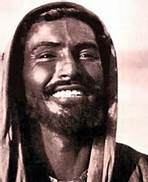
Then on Holy Saturday, Peggy and I took in “Mary Magdalene,” directed by Australian, Garth Davis. For me, it was Holy Week’s capstone. To begin with, Joaquin Phoenix embodied the best Jesus-representation that I’ve seen so far. It was understated, believable, sensitive, compassionate, and challenging. Phoenix’s mien and demeanor reminded me of the Jesus forensic archeologists have estimated looked like this:
But it is Mary Magdalene (played by an unglamorous, but beautiful Rooney Mara) who supplies the eyes through which viewers finally see the peasant from Galilee. She’s a midwife, we learn. Far from the one defined as a prostitute by Pope Gregory the Great in the late 6th century, she rejects intimate relationships with men. “I’m not made for marriage,” Mary explains to the shock of her scandalized father, brothers and suitor. “Then, what are you made for?” they demand. All of them join together and nearly drown her as they attempt to exorcise the demons responsible for her refusal to submit to marital patriarchy.
Nevertheless, Mary persists and eventually tags along with those following Jesus – the only woman among the band of men called apostles. She herself is baptized by Jesus. She also pays closer and more perceptive attention to Jesus’ words than the others. She even gently corrects her male companions, suggesting that their interpretation of the Kingdom of God entailing violent revolution might be mistaken. Peter’s comment about such impertinence is “You weaken us.” But in the end, Mary quietly retorts, “I will not be silenced.”
Soon Jesus commissions Magdalene to baptize women. As a result, they end up following the Master
in droves. From then on, we see Mary habitually walking next to Jesus as he treks
across Palestine’s barren landscape from Galilee through Cana and Samaria on
his way to Jerusalem. At the last supper, after washing Jesus’ feet, she sits
at his right hand. Clearly, she’s in charge and a leader of men nonpareil.
At one point in the journey to the Holy City, Mary unmistakably demonstrates her unique leadership. She implicitly reminds viewers of the words John the Evangelist attributes to Jesus, “The one who believes in me, the works that I do shall (s)he do also; and greater works than these shall (s)he do . . . (JN 14:12) For after witnessing Jesus restore a dead man to life, Mary herself emulates the healer’s ritual and restores to life a score of people left for dead by the brutal Roman occupation forces. None of the males among Jesus’ followers even dares such close imitation of Christ.
Then there is Magdalene’s relationship with a young smiling, cheerful, and very sympathetic Judas. He came to follow Jesus after his wife and child had been brutally killed by the Romans. So, he hears Jesus’ words about God’s Kingdom as a promise that Jesus will inspire and lead a retributive rebellion against Rome. But after Jesus’ participation in a direct-action demonstration in Jerusalem’s temple, Judas appears worried that Jesus is losing resolve and direction. So, in an evident effort to force Jesus’ hand, the apostle cooperates in Jesus’ arrest and collects the reward on his head. Judas fully expects that his teacher’s plight will mobilize his followers to the uprising Judas confidently anticipates. When that doesn’t happen, Judas is filled with despair. He returns home. The next we know, he’s hanging from the lintel of his hovel’s doorway.
Of course, there is no uprising. Jesus is arrested, tortured, and crucified. Afterwards, his limp body is placed in the lap of his mother. He’s then buried. While the other apostles flee, distancing themselves from the corpse, Magdalene faithfully sleeps on the ground outside the tomb. In the morning, she’s awakened by Jesus’ voice. He’s clothed in martyr’s white. Without uttering a word, she quietly sits on the ground next to him, convinced that he has come back to life.
So, she returns to the site of the last supper and tells Peter
and the others her good news. They refuse to believe her. It’s at this point that
Mary says those words, “I will not be silenced.”
According to Pope Francis, that refusal and her bringing of Good News to the apostolic leadership has merited for her the title of “apostle of apostles.” She is more important than any of them.
As you can see, I’m grateful to “Mary Magdalene” for salvaging my Lent. However, her story makes me wonder about the absence of female leadership in Francis’ church.
How about you? See the film and decide for yourself.
It was religion in flames. It was a reminder of the conflagration engulfing our very planet. It should have clarified the relevance of the resurrection story that Christians across the world defiantly celebrate this Easter Sunday. It made me think of female prophets like Alexandria Ocasio Cortez and presidential candidate Marianne Williamson.
Notre Dame in Flames
Of course, I’m referring to the recent conflagration within
the Cathedral of Notre Dame. Everyone’s heart went out to the people of Paris
as they sang hymns to Mary while helplessly watching her beloved basilica burning
on the other side of the Seine. We’re told that even the fire-fighters sang to the
Grande Dame while dousing the inferno
and risking their lives to rescue relics of Jesus’ true cross and crown of
thorns. The spectacle brought the world to tears.
How like the rest of us, I thought, as we witness the Catholic church (and religion in general) hopelessly ablaze! Pedophilia, patriarchy, the antipathy of our children towards the faith that we elders once embraced so fervently have all contributed to the disaster. So has the successful counter-revolution waged by two reactionary popes (John Paul II and Benedict XVI) against the hopes enkindled by the ecumenical movement and Vatican II. Then there’s the heresy of know-nothing religious fundamentalists attempting to counter the creative ferment of liberation theology and of science itself . . . They’ve all done their parts to bring down the new church that John XXIII (and so many of us) once hoped for. Instead, the institution now lies in ruins, in putrid irrelevance. The strewn ashes embody our bleak despair. Only a miracle on the scale of Jesus’ resurrection can save us now.
A World Burning
But the combustion of Notre Dame presents only the palest reflection of our despondency before our very world in flames. That too was imaged forth in the cathedral’s conflagration. The climate chaos caused by our mad consumerism and worship of mammon, weapons, and war has set the planet ablaze. So, we stand there on the opposite shore of our own Seine, our mouths agape, the flames flickering against our mirrored eyes as we stand witness in hopeless impotence and despair. The stench of the ruins, the loss of our treasure, the cost of rebuilding . . . It’s all too much to think about. Mary help us!
And she does! She along with her sister prophetesses bring news of resurrection – just as they did for the male followers of Jesus’ who wallowed in the despondency following that first Good Friday. Yes, the women are here once again to save us with their news of resurrection and its impossible future!
What seems dead can return to life, they all insist. Another America is possible shouts the infant terrible, Alexandria Ocasio-Cortez. Another world is possible Sweden’s teenaged Greta Thunberg repeats for all with ears to hear. Yet more: another God is possible proclaims Marianne Williamson with her invitation to a New Age characterized by the miracle of revisioning EVERYTHING. Naomi Klein, Maria Lopez Vigil, and (from their graves) Dorothy Day, Harriet Tubman, all those suffragettes, and Rosa Parks echo the message. In fact, an entire army of latter-day Jean D’Arcs broadcast the Good News that despite what the world tells us, resurrection – radically new life – is indeed possible. It’s the redivivus message of the goddess Miriam herself – of our Lady, of Notre Dame in flames.
If you want to actually see the hopeful vision of resurrection for America, watch again Alexandria Ocasio-Cortez’s video published just last week. Through the fascinating art of Molly Crabapple, AOC calls us to face head-on the sad facts of our planet’s Good Friday. Nearly 50 years ago those facts were researched, but cynically obscured and denied by Exxon and its supporting cast of male politicians. All that time they foresaw that without resurrection, disasters like Puerto Rico (devastated by a Hurricane named Maria!!) inevitably represents our common future.
AOC reminds us that devastation caused by an entire system requires systemic reform. That includes a new economy with decent salaries and the type of benefits the industrialized world once took for granted and aspired to – affordable schooling, healthcare for all, meaningful work, comfortable retirement – all in a context where polluters are assigned responsibility for the destruction caused by their decades-long denial allowing them to privatize profits while socializing costs. They owe us! Reparations are due!
Yes, the crisis of climate chaos changes EVERYTHING!
Moreover, it’s all been done before just as our young prophetess insists. In the face of the Great Depression’s and World War II’s lesser crises, FDR put together the original New Deal.
It changed the entire economy. It recognized that unions, full employment, environmental protection, decent jobs, recreation, art, music, dignified retirement, and strict regulation of greedy corporatists were all part of the clean slate the country and world needed to survive.
And it worked! Our
nation and the western economies prospered as never before, as countries across
the industrialized world implemented what came to be called the welfare state.
Religion Flaming Out
For her part, Marianne Williamson calls us to re-vision the God of resurrection who makes fundamental change possible. Like no other presidential candidate, she puts her finger exactly on the spiritual transformation required to change everything. We need another God, she says in effect. Not the imperial one foisted upon us since Constantine in the 4th century. That’s an idol. What we need is the God of Jesus: the champion of working people, widows, orphans, and immigrants. We need the God reflected in the teachings of the one who taught that whatever we do to the least of the brethren, we do to him.
Yes, that’s the God of the Bible – a divinity who remains foreign to most. It’s as if we have all been imprisoned in Plato’s Cave. Nothing that the world (and very little that the church) tells us is true, especially about God. Another God is possible, Williamson insists. That God’s vision is 180 degrees opposite that described by our desperate politicians through their media minions. It’s the direct opposite of most of the drivel we hear from the pulpit.
And it’s here that Williams joins Ocasio-Cortez. Insisting
that the resurrection we celebrate today is indeed real, Marianne calls us to
support something like the Green New Deal. It promises new life for us here and
now, including Medicare for all, gun control, higher minimum wages, the
overhaul of public education, criminal justice reform, raising taxes on the
rich, and repairing damage done by our history of racism.
Conclusion
“Impossible!!” the world shouts with one accord. “It’s too costly. Making changes like the GND proposed by our prophetesses would take decades. Such alterations could never be accomplished by 2030.”
And yet, when the world saw Notre Dame in flames, the money poured in. Already more than a billion dollars have been pledged. Artists and artisans from across the world have pledged their labor. And whereas initial estimates were that it would take 100 years to rebuild Notre Dame, France’s President Macron now assures us that the cathedral will be back to normal, even more beautiful than before in only five years!
That’s what happens when human beings commit themselves to
achieving the impossible. As Marianne continually repeats, “There is no order
of difficulty in miracles.” And she’s right. Miracles – fundamental changes in
perception – are indeed possible. Our times demand them.
Yes, resurrection can happen. Easter calls us to make it happen to save our planet – and our church.