Skip to content

About Things That Matter

For my students and other friends

  • Home
  • A Course in Miracles
  • Asian Journal
  • Book Reviews
  • Critical Thinking
  • Cuba
  • Current Issues
  • Pope Francis
  • Film Reviews
  • Hitler and Christianity
  • Islam
  • Liberation Theology
  • Personal
  • Retirement Reflections
  • Songs
  • Sunday Homilies
  • The Historical Jesus
  • Podcasts
  • Video
Follow About Things That Matter on WordPress.com

Enter your email address to follow this blog and receive notifications of new posts by email.

Join 296 other subscribers

Recent Posts

  • Liberation Theology as Critical Thinking: Why God Talk Still Matters
  • What Yet Another U.S. Surrender Looks Like — This Time in Ukraine
  • Writing a Novella with AI: Revelation, Resistance, and the Long Night of the Soul
  • Is AI a New Medium for Revelation — and Can We Keep It Out of the Hands of the Pharaohs?
  • The Mamdani Lesson: Break Completely with the Billionaire Model

OpEdNews Interview

https://youtu.be/18t705B0y9A

Mike’s Most Recent Book

Mike's Most Recent Book
Click to buy

Other Books by MIke

Understanding Laudato Si': A Discussion Guide
Click to buy
Click to buy
Click to buy
Click for more information

Archives

  • December 2025
  • November 2025
  • October 2025
  • September 2025
  • August 2025
  • July 2025
  • June 2025
  • May 2025
  • April 2025
  • March 2025
  • February 2025
  • January 2025
  • December 2024
  • November 2024
  • October 2024
  • August 2024
  • July 2024
  • June 2024
  • May 2024
  • April 2024
  • March 2024
  • February 2024
  • January 2024
  • December 2023
  • November 2023
  • October 2023
  • September 2023
  • August 2023
  • July 2023
  • June 2023
  • May 2023
  • April 2023
  • March 2023
  • February 2023
  • January 2023
  • December 2022
  • November 2022
  • October 2022
  • September 2022
  • August 2022
  • July 2022
  • June 2022
  • May 2022
  • April 2022
  • March 2022
  • February 2022
  • January 2022
  • December 2021
  • November 2021
  • October 2021
  • September 2021
  • August 2021
  • July 2021
  • June 2021
  • May 2021
  • April 2021
  • March 2021
  • February 2021
  • January 2021
  • December 2020
  • November 2020
  • October 2020
  • September 2020
  • August 2020
  • July 2020
  • June 2020
  • May 2020
  • April 2020
  • March 2020
  • February 2020
  • January 2020
  • December 2019
  • November 2019
  • October 2019
  • September 2019
  • August 2019
  • July 2019
  • June 2019
  • May 2019
  • April 2019
  • March 2019
  • February 2019
  • January 2019
  • December 2018
  • November 2018
  • October 2018
  • September 2018
  • August 2018
  • July 2018
  • June 2018
  • May 2018
  • April 2018
  • March 2018
  • February 2018
  • January 2018
  • December 2017
  • November 2017
  • October 2017
  • September 2017
  • August 2017
  • July 2017
  • June 2017
  • May 2017
  • April 2017
  • March 2017
  • February 2017
  • January 2017
  • December 2016
  • November 2016
  • October 2016
  • September 2016
  • August 2016
  • July 2016
  • June 2016
  • May 2016
  • April 2016
  • March 2016
  • February 2016
  • January 2016
  • December 2015
  • November 2015
  • October 2015
  • September 2015
  • August 2015
  • July 2015
  • June 2015
  • May 2015
  • April 2015
  • March 2015
  • February 2015
  • January 2015
  • December 2014
  • November 2014
  • October 2014
  • September 2014
  • August 2014
  • July 2014
  • June 2014
  • May 2014
  • April 2014
  • March 2014
  • February 2014
  • January 2014
  • December 2013
  • November 2013
  • October 2013
  • September 2013
  • August 2013
  • July 2013
  • June 2013
  • May 2013
  • April 2013
  • March 2013
  • February 2013
  • January 2013
  • December 2012
  • November 2012
  • October 2012
  • September 2012
  • August 2012
  • July 2012
  • June 2012
  • May 2012
  • April 2012

Meta

  • Create account
  • Log in
  • Entries feed
  • Comments feed
  • WordPress.com

Tag: Catholic Social Teaching

With “Dilexi Te,” Pope Leo Tips His Hand – Toward Liberation Theology

Ever since Chicago’s Robert Prevost became Pope Leo XIV, I’ve held back from judging the direction of his papacy. When people asked what I thought, I’d say, “I’m slow to comment. He hasn’t yet tipped his hand.”

Now, with the publication of the apostolic exhortation Dilexi Te, the cards are finally on the table. Though written by Pope Francis before his death, Pope Leo has fully endorsed and expanded it—embracing it as co-author and carrying forward its message with enthusiasm.

As a liberation theologian, I find this development deeply encouraging. Dilexi Te is a clear affirmation of liberation theology (LT)—which I define as “reflection on the following of Christ from the viewpoint of the poor and oppressed, committed to escaping their poverty and oppression.”

This essay will (1) review what liberation theology is, (2) explain why it so threatens Christian fundamentalists, and (3) show how Dilexi Te embodies its spirit.


Liberation Theology

Liberation theology reflects on Christian faith through the lived experiences of the poor and oppressed. Unlike Christian fundamentalism, it aligns with modern biblical scholarship while remaining accessible to ordinary people, many of them illiterate.

Following the Second Vatican Council (1962–65), liberation theology swept across the Global South—especially Latin America—where the Church turned decisively toward the poor. Small Bible study groups became the heart of parish life. Reading Scripture together, peasants and workers discovered their own struggles mirrored in those of the Hebrews oppressed by Egyptian, Assyrian, Babylonian, Greek, and Roman empires.

Most powerfully, they recognized themselves in Jesus of Nazareth: not white, but brown-skinned; not privileged, but working-class; the son of an unwed teenage mother, homeless at birth, a political refugee in Egypt, a friend of prostitutes and outcasts. He was marginalized by his religious community and executed by imperial authorities as a supposed terrorist.


The U.S. Reaction

Such readings of Scripture awakened the poor to the causes of their oppression—and infuriated the empires profiting from it. The United States, long dominant over its former colonies, perceived liberation theology as a national security threat.

What followed was, in Noam Chomsky’s words, “the first religious war of the twenty-first century”: a U.S.-backed campaign against the Latin American Church. Thousands of priests, nuns, catechists, union organizers, teachers, and social workers were murdered in Argentina, Brazil, Nicaragua, El Salvador, and elsewhere during the 1960s–80s.

Simultaneously, Washington funded fundamentalist televangelists such as Jimmy Swaggart, Jim and Tammy Bakker—and later, figures like Charlie Kirk—to counter liberation theology with “old-time religion.” Their broadcasts, bankrolled by U.S. dollars, saturated Latin America’s barrios, favelas, and poblaciones.

Unlike liberation theology, fundamentalism endorsed empire, patriarchy, white supremacy, and xenophobia. It rejected modern biblical scholarship—especially the historical studies that, ironically, reached many of the same conclusions as liberation theology.

For a time, these tactics succeeded. The CIA and U.S. military boasted of having defeated liberation theology. Christianity, in the public imagination, came to mean not liberation but obedience—focused on heaven and hell, nationalism, and protection of the imperial status quo.


Then Came Francis and Leo

That narrative began to change with the rise of Pope Francis and, now, Pope Leo XIV. Both hail from Latin America, where liberation theology was born anew. Pope Leo’s Peru, in fact, is the homeland of Gustavo Gutiérrez, the movement’s founder.

Francis, an Argentinian, initially distrusted liberation theology because of its use of Marxist social analysis. But over time, he came to embrace its core insight: God’s “preferential option for the poor.” He restored theologians like Gutiérrez—silenced under Pope Benedict XVI—to full standing within the Church.

As Joseph Ratzinger, head of the Congregation for the Doctrine of the Faith, Benedict had authored a cautious 1984 critique, Instruction on Certain Aspects of the Theology of Liberation. Even then, he conceded that the biblical God does indeed side with the poor—acknowledging that this preference is central to the Judeo-Christian tradition.

What troubled Ratzinger was liberation theology’s use of Marxist analysis. Because Marx was an atheist, he reasoned, any theology drawing on his work must be suspect. That argument was, at best, strained.


The Theology of Dilexi Te

Pope Leo’s Dilexi Te moves beyond such debates. It traces the theme of God’s love for the poor—from the liberation of Hebrew slaves in Egypt to its culmination in Jesus the Christ.

In Scripture’s only account of the Last Judgment, Jesus identifies completely with the marginalized:

“I was hungry and you gave me food; thirsty and you gave me drink; a stranger and you welcomed me; naked and you clothed me; sick and you cared for me; in prison and you visited me.” (Matthew 25: 35-40)

This, Leo explains, reveals where God is most fully present today: among the poor, the sick, the imprisoned, the immigrant, and the worker. It was to them that Jesus dedicated his mission:

“The Spirit of the Lord is upon me … he has anointed me to proclaim good news to the poor … to set the oppressed free.” (Luke 4: 18-19)

Pope Leo highlights a long lineage of Christian figures who embodied this vision—Saints Lawrence, Ambrose, Ignatius of Antioch, Justin, Chrysostom, Augustine, Benedict, Francis of Assisi, and in modern times, Mother Teresa and Saint Oscar Romero, the patron of liberation theology.

In Chapter Four, Leo draws attention to what some call “the best-kept secret of the Catholic Church”: its social doctrine. He recalls Rerum Novarum (Leo XIII’s defense of workers’ rights), John XXIII’s call for Vatican II, and that council’s mission to make the Church resemble “her Lord more than worldly powers.” Vatican II, he reminds us, urged concrete global commitment to eradicating poverty.

Leo also revisits the Latin American Bishops’ Conferences at Medellín (1968) and Puebla (1979), where the region’s bishops openly endorsed liberation theology. And strikingly, he quotes from Ratzinger’s 1984 document—not its condemnations, but the passages affirming the biblical foundation of God’s preferential option for the poor.


Conclusion

At a moment when the revolutionary heart of the Judeo-Christian tradition has been domesticated by figures like Charlie Kirk, Dilexi Te reawakens the Church’s original message: another Christianity is possible.

It is a faith that liberates rather than enslaves; that sides with the poor, the nonwhite, the oppressed, the immigrant, the refugee, and the imprisoned. It recalls Jesus the worker and outsider—and the God who dwells among those who suffer.

Thank you, Pope Leo, for reviving this liberating gospel. And thank you, Pope Francis, for lighting the path that made it possible.

Posted on October 17, 2025Categories Liberation Theology, Pope Francis, The Historical JesusTags Catholic Social Teaching, CELAM Medellin, CELAM Puebla, Charlie Kirk, Dilexi Te, Gustavo Gutierrez, Pope Francis, Pope Leo XIII, Pope Leo XIV, Preferential option for the poor, The historical Jesus, Vatican II2 Comments on With “Dilexi Te,” Pope Leo Tips His Hand – Toward Liberation Theology

Report from Rome: Leo XIV, First Impressions

Key predecessors of Leo XIV: Leo XIII, Francis, & John Paul II

Last evening, I was present just outside St. Peter’s Square for the first blessing of Pope Leo XIV, the former Augustinian Cardinal, Robert Prevost. Providentially, my wife Peggy and I just happen to be in Rome visiting my eldest son’s family now located here.

Around 7:00 Peggy had phoned me with news of seeing white smoke from the Vatican chimney. That traditional signal indicated the successful completion of Papal Conclave deliberations. Earlier in the day, the two of us had been together in St. Peter’s Square when black smoke revealed an inconclusive result of that morning’s process.

So, I raced off walking as fast as I could toward the Via Conciliazione, the long wide avenue extending from the papal basilica. My five years living and studying in Rome (1967-1972) told me that a huge overflow crowd would gather there spilling over from St. Peter’s Square and awaiting the introduction of the new pope.

Forty minutes later, I arrived just in time to hear and (barely) see him.   

I could hardly believe my ears.

Imagine: a second consecutive American pope! And this one from the United States as successor to the first American pope, Argentina’s Pope Francis! Not only that, but the new man also turns out to be a fellow Chicagoan. Like me as well, he entered the seminary as a 14-year-old intent already at that tender age on becoming a priest. I felt I knew him. (I also found myself wondering, could he also be a Cub fan? Probably not though. Prevost is a South-Sider which probably aligns him with the White Sox.)

More seriously, I wondered what could the cardinal electors have been thinking in selecting someone like Prevost – a dual citizen of the U.S. and Peru? And what could Prevost himself be signaling in choosing Leo XIV as his papal name? I also wondered what Leo’s election might portend for the Catholic Church and the world.

Along those lines, let me share some initial impressions.

The Significance of Prevost’s Election

Regardless of the Cardinal electors’ intentions, I find it noteworthy that the last two papal elections have shifted church focus from Europe to the Americas. They have directed attention away from the colonizers to the colonized, from the oppressed to the oppressors.

Could the cardinals’ appointment of Prevost be making a forceful statement about such dynamic?

I mean Francis was a product of United States’ oppression. Argentina’s U.S.-supported “dirty war,” led to the deaths and forced disappearances of more than 30,000 Argentinians. Whether by specific intention or by direction of the Holy Spirit, Francis’ election called attention to such tyranny over the Global South by an imperialistic United States.

Yes, Argentina’s Guerra Sucia (1974-’83) was the bloody expression of what Noam Chomsky and others identify as a more general U.S. war against the Catholic Church in Latin America. The conflict was sparked by implementation there of Catholic Church teachings on social justice and by the emergence of liberation theology, which Washington long considered and treated as a threat to national security.

With that in mind, the college of cardinals might be suggesting that new pope’s trajectory embodies the response Catholics should take to the United States’ cruel history of violence in what it has long considered its “backyard.”

Think about it: Prevost so identified with the oppressed that he became a citizen of Peru, the home of the great liberation theologian, Gustavo Gutierrez. Could Leo’s election be another affirmation of liberation theology and of “Americans” need to identify with the Global South? Whether intended or not, the attentive can make such connection.

Prevost & Social Justice

In any case, Prevost’s clear identification with the oppressed was further underlined by his papal name, Leo XIV.

The name suggests the new pope’s intention to continue his 19th century namesake’s landmark contribution to “the best kept secret of the Catholic Church,” viz., its social justice teachings which are rarely mentioned from North American pulpits.

Nevertheless, the Church’s constantly reiterated teachings on economic and political justice highlight themes of:  

  • Life and Dignity of the Human Person. …
  • Call to Family, Community, and Participation. …
  • Rights and Responsibilities. …
  • Preferential Option for the Poor. …
  • The Dignity of Work and the Rights of Workers. …
  • Solidarity. …
  • Care for God’s Creation.

Along these lines, in 1891, Leo XIII wrote perhaps the most important papal encyclical of all time. (Papal encyclicals are pastoral letters written by popes for the whole Roman Catholic Church on matters of doctrine, morals, or discipline.)  I’m referring to Rerum Novarum on “The Condition of the Working Class.”  While affirming the right to private property, Rerum Novarum even more centrally asserted the dignity of labor, and the right of workers to form labor unions. For its time, it was revolutionary.

The encyclical was so important that three popes have specifically repeated and updated its radical teachings.

In 1931 Pius XI did so in Quadragesimo Anno published in the middle of the Great Depression. Quadragesimo Anno began with the words, “Forty years have passed since Leo XIII’s peerless Encyclical, On the Condition of Workers, first saw the light, and the whole Catholic world, filled with grateful recollection, is undertaking to commemorate it with befitting solemnity.

Forty years later in 1971, Paul VI commemorated Rerum Novarum again with his own Octogesima Adveniens. It identified action in the political arena as an essential element of Christian faith. Paul VI’s document begins with the words, “The eightieth anniversary of the publication of the encyclical Rerum Novarum, the message of which continues to inspire action for social justice, prompts us to take up again and to extend the teaching of our predecessors, in response to the new needs of a changing world.”

A final specific reiteration of Rerum Novarum was promulgated by Pope John Paul II in his Centesimus Annus published in 1991. Its first words are “The Centenary of the promulgation of the Encyclical which begins with the words “Rerum novarum“,1 by my predecessor of venerable memory Pope Leo XIII, is an occasion of great importance for the present history of the Church and for my own Pontificate.”

Meanwhile, in 1965, the Second Vatican Council published what many consider its fundamental document, Gaudium et Spes, “The Church in the Modern World.” In what remains the official teaching of the Catholic Church, the Council document (like Rerum Novarum) declared the Church to be an agent of social transformation. It called on Catholics to constantly read “the signs of the times,” to denounce social injustices and contribute to identification of appropriate remedies. The church is humanist, the Council said, in that humanity itself is central to its philosophical and theological thinking. Moreover, human beings are not primarily individuals, but essentially members of communities.

In other words, Leo XIII remains an unforgettable giant in the history of the Catholic Church. Despite its not being acknowledged from U.S. pulpits, his teaching about social justice constitutes a central element of Roman Catholic official doctrine. Robert Provost’s assumption of his name represents yet another reiteration of Rerum Novarum’s centrality.

The New Pope’s Promise

So, what does all of this portend for Leo XIV’s reign?

It suggests:

  • A continuation not only of the tradition of Leo XIII, but of Prevost’s immediate predecessor and patron, Pope Francis.
  • Yet another encyclical in the spirit of Rerum Novarum
  • This time incorporating the environmental themes of Francis’ Laudato Si’ (2015) which remains perhaps the most important document of the 21st century on climate change.
  • Leo XIV as an outspoken voice concerning the climatic and imperial causes of Global South immigration to Europe and North America.
  • Denunciations of U.S. forever wars as responses to global crises.

In other words, amid of one of our planet’s darkest hours, the election of Leo XIV could signal a highly significant turning point towards the light.

Posted on May 9, 2025Categories Current Issues, Liberation Theology, Pope FrancisTags Catholic, Catholic Church, Catholic Social Teaching, Christianity, Gaudium et Spes, Gustavo Gutierrez, John Paul II, Laudato Si', Leo XIII, Leo XIV, Octogesima Adveniens, Paul VI, Pope Francis, Quadragesimo Anno, religion, Rerum Novarum, Robert Prevost, Second Vatican Council, Vatican IILeave a comment on Report from Rome: Leo XIV, First Impressions

American Politics Realigning? Walz and Vance Might Be More Similar Than You Think

Something important and promising might well be happening in American politics. At the popular level, working class folks are expressing their deep discontent with a system run by octogenarians who serve their donors rather than the American taxpayer. The latter has come to realize that Democrats and Republicans have formed a kind of Uni-party beholden to the rich and powerful rather than to their plebian electors.

Strange to say however, both parties have shown faint signs of perhaps recognizing that truth and its devastating consequences for them at the voting booth. The Republican Party has selected a presidential candidate (Donald Trump) who talks a good game in terms of rebellion against the status quo. At the same time, the Democrats have set aside their senile superannuated “leader” (Joe Biden) in favor of a much younger black woman (Kamala Harris).

The truth is however that the policies of neither Trump nor Harris promise much difference in terms of changing the given order as far as international relations are concerned. No matter who’s elected, genocidal support for Zionism will remain a cornerstone of our country’s foreign policy. The war in Ukraine will continue it seems “to the last Ukrainian.” And America’s “diplomacy” will still prioritize war, sanctions, and regime change over peace-seeking diplomacy and dialog. All of that will continue unabated.

Nevertheless, Kamala Harris’ selection of Tim Walz as her running mate and Donald Trump’s choice of J.D. Vance as his offer strong indications that something new might be afoot for 2028. Both Walz and Vance are far more thoughtful than Harris or Trump. In fact, both vice-presidential candidates might be more war averse and friendly to the working class than their mentors.

Tim Walz

That’s clear to most in the case of Tim Walz. As Minnesota governor, he has distinguished himself as a progressive. Among other legislative achievements, he signed bills that:

  • Made access to abortion easier
  • Provide free breakfast and lunch to all school children
  • Offer free college tuition for families with incomes of $80,000 or less
  • Curb greenhouse gas emissions
  • Moved towards establishing a public healthcare option within the MinnesotaCare system
  • Restored voting rights to decarcerated felons
  • Vastly increased Minnesota’s spending on housing to prevent homelessness, expand homeownership opportunities and provide rental assistance to thousands of households.

J.D. Vance

As for J.D. Vance, his populist credentials might be less evident.

Still, according to American lawyer and political commentator, Robert Barnes, J.D. Vance might well be “the most war-skeptical, pro-worker Republican office holder of the last 100 years.”

Barnes supports this contention by citing (among other considerations) Vance’s 2024 vote against a $95 billion Ukraine aid package. Vance was one of only 18 senators voting against it in a 79-18 tally. (Vance thinks Ukraine is Europe’s problem and not that of the United States.) Barnes also points out that the Teamsters regard Vance as an important working-class ally.

As for intellectual influences on Senator Vance, here is a list provided by Politico’s Ian Ward in his article “The Seven Thinkers and Groups That Have Shaped JD Vance’s Unusual Worldview.”

  1. Catholic Social Teaching: Catholic social justice teachings (the “best kept secret of the Catholic Church”) emphasize community, workers’ rights, and environmental protection. The most famous examples of such teachings are found in the encyclicals of Leo XIII (Rerum Novarum 1891), Pius XI (Quadragesimo Anno 1931), John XXIII (Mater et Magistra 1961), John XXIII (Pacem in Terris 1963), Vatican II (Gaudium et Spes, 1965), and Pope Francis (Laudato Si 2015).
  2. Sohrab Ahmari (co-editor of Compact Magazine): Also emphasizes Catholic teachings regarding social justice.
  3. Peter Deneen (University of Notre Dame): Deneen holds that unfettered free markets with their emphasis on competition have undercut not only the American family, but communitarian values and the collective basis of our national life. Neoliberal economics need not only restraint but replacement.
  4. Brad Wilcox (BYU): Wilcox argues that women’s entry into the workforce has been better for companies than for most women. The companies benefit from more and cheaper labor. Meanwhile many women end up hating their jobs. Too many also feel overworked because they typically retain responsibility for cooking, cleaning, and childcare when they return from the workplace.
  5. Peter Thiel (Hedge Fund Investor): Thiel warns against a technology that has too often shackled us as opposed to liberating us and building a better society. We need to get off our phones.
  6. Curtis Yarvin (American blogger): For Yarvin, American democracy has deteriorated into control by a corrupt oligarchy. Resolving such tendencies, he says, might entail installing a kind of dictator— a nationalist CEO who would run the country like a startup business.
  7. Rene Girard (French historian and theologian): Girard holds that Christianity must be reinterpreted to recognize that the Judeo-Christian tradition is on the side of the poor and oppressed rather than the rich and powerful.

Conclusion

It’s discouraging that American political discourse is overwhelmingly ad hominem rather than focused on the issues suggested by the policies of Tim Walz and the intellectual influences on J.D. Vance.

“Vance is weird.” “Walz is a communist.” “Trump’s a fascist.” “Harris is the product of DEI.” “My audience crowds are bigger than yours.”

Such immature schoolyard put-downs do nothing at all to address the real concerns of voters.  

Better to explore candidates’ stances on climate change and the threat of nuclear war. Why is America so beholden to Israel and cooperative with its clearly genocidal policies? And what is Ukraine to us?

What about street people and public housing? What about subsidized childcare, free post-secondary education, and debt relief for those with unrepayable student loans? Have the candidates thought about the issues of police violence and reparations to the black community? And do any of those seeking our vote recognize connections between immigration and U.S. wars, regime changes, and sanctions?

And at an even deeper level, are we primarily individuals in competition with one another or must we rediscover community and common good? Has technology become our master rather than our servant? And what are best practices for addressing issues of diversity, equity, and inclusion? What are the benefits and liabilities of universal healthcare and state-subsidized education?

Those are the issues that need addressing and serious debate. Those are the issues that require real discussion rather than the sound bites, slogans, and zingers.  

And while Harris and Trump offer little hope of going there, I’m suggesting here that their selection of running mates more serious and thoughtful than either main candidate perhaps offer some hope for the future.

Walz’s policy decisions as governor of Minnesota and the influences on Vance’s thinking seem to suggest that it does.

What do you think?

Posted on August 20, 2024Categories Current IssuesTags Brad Wilcox, Catholic Social Teaching, Curtis Yarvin, DEI, J.D. Vance, Joe Biden, Kamala Harris, Peter Deneen, Peter Thiel, Rene Girard, Sohrab Ahmari, Tim Walz3 Comments on American Politics Realigning? Walz and Vance Might Be More Similar Than You Think

Reparations: How Cuba Became the “Envy of the Third World” (Sunday Homily)

Cuba & Russia

Readings for the 31st Sunday in Ordinary Time: WIS 11: 22-12: 2; PS 145: 1-2, 8-11, 13-14; 2 THES 1: 11- 2: 2; LK 19: 1-10. http://usccb.org/bible/readings/110313.cfm

Today’s gospel selection, with its story of Zacchaeus, the tax collector, is about unjustly acquired wealth and reparation. As such it addresses a problem very close to the hearts of the world’s poor. With that in mind, consider the following:

In 1974, the U.N. endorsed what it called a New International Economic Order (NIEO) that would counter the poverty inflicted on the world’s former colonies by their European masters since the time of Columbus. Among other provisions the NIEO would (1) indemnify the former colonies monetarily by transferring large sums of capital to impoverished nations, (2) deliver advanced technology to the newly freed nations free of charge, and (3) index prices of raw materials produced in the “Third World” to those of finished products produced in the industrialized nations (so that, for instance, the price of grain would rise with that of tractors purchased from the former colonial masters).
_____

A few weeks ago, the Times of India reported that the World Trade Organization (WTO) was having difficulties with India’s Food Sovereignty Program. The program’s provisions provide guaranteed access at subsidized prices to flour and other essential items for India’s poorest families. The WTO finds such provisions problematic, since they interfere with its free trade ideology of “trickle down” economics. While sympathetic to the demands of hungry people, the WTO finds them impractical, since subsidies and market controls are counterproductive to the interests of the poor.
_____

About a month ago, Pope Francis addressed workers in Cagliari, Italy. Departing from his prepared text which centralized Jesus’ words about the contradiction of trying to serve two masters, God and Mammon, Pope Francis criticized free trade and globalization. He said free trade ideology had brought with it throw- away culture that victimized society’s weakest including the elderly whose neglect amounted to what he called a “hidden euthanasia” of those no longer considered productive. “We throw away grandparents, he said, “and we throw away young people. . . . We want a just system that helps everyone.” The pope added “We don’t want this globalized economic system that does us so much harm. At its center there should be man and woman, as God wants, and not money.”
_____

Please keep those thoughts in mind as we consider today’s reading from Luke’s gospel. I’ll come back to them shortly.

Once again, today’s gospel is about reparations. It centralizes an encounter between the tax collector, Zacchaeus, and Jesus. Jesus invites himself to Zacchaeus’ house for dinner. The tax collector is so overjoyed that he exclaims, “Behold, half of my possessions, Lord, I shall give to the poor, and if I have extorted anything from anyone I shall repay it four times over.” That is, Zacchaeus agrees to make reparations for past exploitation.

The first part of Zacchaeus’ promise seems to represent recognition on the tax collector’s part that his ill-gotten wealth constitutes a crime against poor people in general. So it calls for a general divestment of wealth on his part. He’s going to give away half of his property – half to the poor of Jericho where he’s been overseeing tax collection for years!

The second part of Zacchaeus’ promise is directed specifically to identifiable victims of his extortion. He’ll return to them four times what he defrauded – four times!

This seems to suggest that reparations for economic crimes are not only recommended for those deciding to join “The Way” of Jesus; they constitute a requirement of discipleship.

Do you think that applies to nations as well as to individuals?

As I noted: in 1974 the United Nations agreed that it did. That’s what the New International Economic Order was all about: reparations.

Of course, the U.S. and Europe saw to it that the provisions of the NIEO were never implemented. In fact beginning with the Reagan-Thatcher era in 1980, the industrialized nations moved in the exact opposite direction of the NIEO. They instituted a new regime of trade liberalization that came to be called “globalization.” It’s that process that the WTO is defending in objecting to India’s Food Sovereignty Program. Margaret Thatcher said there was no alternative to it.

U.S. trade representative, Carla A. Hill, helped see to it that Thatcher proved right. She and others in the George H.W. Bush and Clinton administrations used what Hill referred to as the “crowbar” of Third World debt not as reason to indemnify the exploited, but as a way to further exploit them. Hill argued that demanding debt repayment (instead of cancellation) would pry open the resistant economies of the former colonies and work against the kind of reforms the U.N. advocated with its NIEO plan.

The Carla Hill plan worked. As a result, the poverty of the world’s majority has not diminished at anything like the rate foreseen by NIEO authors.

It’s against that sort of globalization that Pope Francis spoke in Cagliari. According to the pope, the working class doesn’t want that economic system. As “harmful,” it represents further exploitation of the poor rather than their indemnification. It places money rather than human beings at its center.

The pope’s message represents a reiteration of Catholic Social Teaching, the “best kept secret of the Catholic Church.” At its best, those teachings are anti-war, resistant to unfettered capitalism, pro-labor, and generally favorable to social justice.

But are the market restrictions required by such considerations practical? Would the provisions of the NIEO work? Or is the WTO correct in advocating free trade and trickle-down economics as the only practical course? (And is the Christian Right correct in its uncritical support of the WTO approach?)

To answer directly: we know that the NIEO works.

Let me tell you what I learned about that in Brazil and Cuba. Let’s begin in Brazil.

Back in 1984 I attended a semester-long seminar on liberation theology. It was taught by Latin American scholars I had been reading for years. Enrique Dussel Sr., the great philosopher of liberation from Argentina played a prominent role in the seminar.

One day in the course of the seminar Dussel made a passing remark He referred to Cuba as “the envy of the 3rd World.”

Even at my age (then 44), the phrase came as a shock. In the U.S., of course, we not used to hearing even a single laudatory word about Cuba’s revolution or its leader, Fidel Castro.

However, years later, in 1997, when I made the first of my many trips to Cuba, Dussel’s remark was confirmed – by a Cuban who was no friend of the revolution. She observed that before the fall of the Soviet Union, the accompanying loss of 80% of Cuba’s trading partners, the cynical intensification of the U.S. embargo, and the subsequent onset of Cuba’s “Special Period” of hunger, poverty and emigration, Cubans had “lacked nothing.”

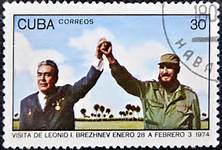
That was because the Soviet Union had adopted towards Cuba what amounted to the provisions of the New International Economic Order (NIEO) in its relations to the island nation just 90 miles off our Florida coast. Russia had transferred money and technology to Cuba. It had indexed the prices of its finished commodities to Cuba’s sugar.

And it worked. In fact it was the success of the Soviet program that had to be countered by U.S. embargoes, blockades, and trade policies. Otherwise Cuba’s success would become apparent to the rest of the Third World and Cuba’s “good example” would possibly incite similar revolutions among those former colonies.

In the light of that success story, in the light of the words of Pope Francis, and above all in the light of the example of Zacchaeus, those who would follow Jesus seem called to repudiate Christianity’s over-all practical support of free market capitalism and the type of globalization favored by developed nations over the last thirty-five years.

Isn’t it ironic that Cuba and Russia, our country’s designated enemies for all those years – communists and atheists at that (!)– end up demonstrating how to respond to the gospel call to restorative justice?

Posted on November 1, 2013December 18, 2020Categories Cuba, Liberation Theology, Sunday HomiliesTags Bible, Carla A. Hill, Catholic Social Teaching, Christianity, Cuba, Faith, God, Gospel, Homiletic helps, Homilies, Liberation theology, Luke, Luke 19: 1-10, New International Economic Order, New Testament, NIEO, religion, Reparations, Spirituality, Third World, ZacchaeusLeave a comment on Reparations: How Cuba Became the “Envy of the Third World” (Sunday Homily)
  • Subscribe Subscribed
    • About Things That Matter
    • Join 296 other subscribers
    • Already have a WordPress.com account? Log in now.
    • About Things That Matter
    • Subscribe Subscribed
    • Sign up
    • Log in
    • Report this content
    • View site in Reader
    • Manage subscriptions
    • Collapse this bar
 

Loading Comments...