Gustavo Gutierrez and Liberation Theology’s Critical Faith Theory

The Great Gustavo Gutierrez died this week. He transitioned as a 96-year-old giant whose A Theology of Liberation: History, Politics, and Salvation (1971) popularized and spurred the most important theological movement of the last 1700 years (i.e. since Constantine in the 4th century). In fact, liberation theology (LT) might well be described as responsible for the West’s most influential intellectual and social developments of the last 175 years (i.e. since the publication of the Communist Manifesto in 1848). United States and Vatican fierce opposition to LT testifies to its impact.

Think about it. Without liberation theology it is impossible to account for Salvador Allende’s rise to power in 1973 or the triumph of Nicaragua’s Sandinistas in 1979, or the power the FMLN in El Salvador had and continues to enjoy today. The Zapatista movement in Mexico is also intimately connected with liberation theology. Even more, without reference to liberation theology, it’s impossible to fully understand the rise of new left governments throughout Latin America. All of them are indebted to liberation theology and its power to motivate the grassroots.

Perhaps more surprisingly: apart from LT, one cannot fully understand the prominence of conservative evangelicals in the United States. That’s because (as we’ll see below) political support for their movement was part of the Reagan administration’s strategy to defeat liberation theology which the White House and the Pentagon termed a national security threat. Their fear of LT mirrored that of the Vatican which ended up cooperating with Washington’s war against it.

Many are convinced that Washington’s and Rome’s anti-LT war was successful. That’s because the U.S. systematically assassinated its prophets along with hundreds of thousands of its adherents in a massive conflict that Noam Chomsky called “the first religious war of the 21st century.”  The sheer terrorism of the U.S. response plus an equally systematic offensive against LT within the Catholic Church itself deprived liberation theology of its best leaders, misinformed and intimidated the grassroots, and silenced many more. Nonetheless LT has changed the world. It has changed the church and Christianity in general.

But what is liberation theology? And why was it so threatening to the powers-that-be, both political and ecclesiastical? What steps were taken to defeat it? And why should believers be so grateful to theologians like Gustavo Gutierrez?   

 Liberation Theology Defined

Simply put, liberation theology is reflection on the following of Jesus of Nazareth from the viewpoint of the poor and oppressed. More accurately, it is reflection on the following of Jesus the Christ from the viewpoint of those among the poor who are committed to their own liberation. That is, LT begins from a place of commitment – to a world with room for everyone. In itself, it represents a popular movement, a solidarity movement for social justice.

Liberation from what? In a word, from colonialism and from the neo-colonialism represented today by the forces of corporate globalization. Those forces have nearly half the world living on $2 a day or less. They’ve concentrated the world’s wealth in the hands of a sliver of 1% of the world’s population. According to UN statistics, eight billionaires own as much as 50% or humanity. As a result, at least 25,000 people including 10,000 children die of preventable starvation each day. In the eyes of liberation theology’s protagonists, that’s sinful and runs entirely contrary to the teachings of Jesus of Nazareth.

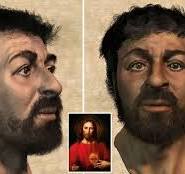
And what were those teachings? (This is the heart of liberation theology.) They were first of all those of a man recognized by the impoverished protagonists of liberation theology as someone like themselves. He looked like them. According to experts in the field of forensic archeology, he resembled poor mestizos everywhere in Latin America. He probably stood about 5’1’’ and weighed about 110 pounds. His skin was brown. He was a laborer, not a scholar; his hands were calloused.

Ironically, Jesus also possessed characteristics that mainstream Christians often find repulsive and ungodly. He was the son of an unwed teenage mother (Mt. 118-22; Lk. 1:26-38). He was homeless at birth (Lk.2:7).  If we are to believe Matthew’s account, Jesus became an immigrant in Egypt (Mt. 2:13-15). The good people of his day called him a drunkard and the companion of prostitutes. They expelled him from his synagogue because he didn’t seem to care about the 10 Commandments, especially the most important one – the Sabbath law. (For a Jew such excommunication and the shunning it entailed were like a death sentence.) The religious authorities said he was a heretic and possessed by the devil. The occupying Roman authorities identified him as a terrorist. They arrested him. And he ended up a victim of torture and of capital punishment carried out by crucifixion – a means of execution the Romans reserved specifically for insurgents. He was not the kind of person mainstream Christians usually admire. He was far too liberal to merit their approval.

Jesus was clearly a feminist. Many of his disciples were women. He spoke with them in isolated places. He actually forgave a woman caught in adultery, while implicitly criticizing the hypocrisy of patriarchal law which punished women for adultery and not men. And Jesus refused to recognize his contemporaries’ taboos around segregations. He crossed boundaries not only dividing men from women, but Jew from gentile, lepers from non-lepers, and rich from poor.     

He couldn’t have been more liberal. In a sense he was an anarchist. He honored no law that failed to represent the loving thing to do. His attitude towards the law is best summarized in his pronouncement about the Sabbath. “The Sabbath was instituted for human beings,” he said, “human beings weren’t made for the Sabbath.” This was pure humanism placing human beings above even God’s holiest law. Again, it was anarchistic.

Jesus’ teachings were politically radical as well. They centered on what today is called social justice. As such they infuriated his opponents but were wildly inspiring to the poor and oppressed. His proclamation was not about himself, but about what he called “The Kingdom of God.” That was the highly charged political image he used to refer to what the world would be like if God were king instead of Caesar. In that kingdom everything would be turned upside-down. The first would be last; the last would be first. The rich would be poor; the poor would be rich.

Subsequent reflection by followers of Jesus in the Book of Revelation teased all of that out and drew the conclusion that with the dawning of God’s kingdom, the Roman Empire would be destroyed and replaced by a new heaven and a new earth entirely unlike empire. There (as indicated in the Acts of the Apostles) wealth would be distributed from each according to his ability to each according to his need. There would be room for everyone. If that sounds like communism, it’s because, as the Mexican exegete Jose Miranda points out, the idea of communism originated with Christians, not with Marx and Engels.  

U.S. Opposition to LT

Those connections with Marxist analysis go a long way towards explaining resistance to LT by the U.S. government as well as within the Catholic Church.

That liberation theology dared to enter the mythological arena the right had long dominated virtually without rival astounded and infuriated the empire. Peasants throughout the subjugated world found the new explanations of God, Jesus and the gospels entirely empowering. Everywhere throughout Latin America they formed biblical circles, and those circles issued in social movements for justice.

In response, the Rockefeller Report of 1969 already identified liberation theology as a threat to the national security of the United States. By 1987, the Latin American Military Chiefs of Staff meeting in conference in Mar del Plata, Argentina, devoted several pages of their final report to liberation theology and the threat it posed to regional stability.  In between, in 1979 the first Santa Fe Document advised the incoming Reagan administration that it had to do something decisive about the threat posed by liberation theology. The administration heeded the advice, and responded both militarily and ideologically.

Reagan’s military strategy against liberation theology issued in a bloody war pitting the United States against the Catholic Church in Latin America whose bishops meeting in conference in Medellin Colombia had together dared to affirm a “preferential option for the poor” as their official position. To combat that commitment, the U.S. did exactly what Rome had done in the first three centuries of our era – and for the same reason: faithfully following Jesus who called empire into question and motivated the poor to assert their rights in this world as children of the God of life.

And both the Roman response and the U.S. response to Jesus and his followers resulted in blood baths. Many of us are well acquainted with the best-known martyrs: Camilo Torres, Archbishop Romero, the Salvadoran team of liberation theologians killed at San Salvador’s Central American University in 1989, the U.S. women religious murdered years earlier in that same country, and Che Guevara. (Yes, Che. His spirituality was secular, but it was no less spiritual or liberationist than any of the others.) And then the unending list of martyrs in this war against the Catholic Church – 200,000 in Guatemala, more than 100,000 in Nicaragua, 90,000 in El Salvador, and literally untold killings and disappearances in Honduras.

In every case, the carnage was a response to social movements inspired by liberation theology. Again, as Chomsky points out, official U.S. military documents show that liberation theology was a major target of those wars. In fact within those same official documents, the Army boasts specifically about defeating LT.

As for Reagan’s ideological response to liberation theology . . . .  On his accession to power, CIA psyops began funding conservative alternatives to liberation theology in Latin America and in the U.S. So did business concerns that saw the leftward drift of Latin America as a threat to their presence there. Domino’s Pizza and Coors Brewery were prominent among the cases in point. As a result, evangelicals throughout the region grew rapidly in number, and the recipients of those funds in the United States increasingly identified with Republicans, the “hand that fed them.”

So, the television programs of Jerry Falwell, Pat Robertson, Jim and Tammy Baker, Jimmy Swaggart, and others were beamed into every poor barrio, población, and favela. Right wing churches sprang up everywhere feeding and expanding an already robust evangelical presence in areas once completely dominated by the Catholic Church. The reactionary message was always the same – a depoliticized version of Christianity whose central commitment involved accepting Jesus as one’s personal savior and rejecting communism including the type allegedly represented by the theology of liberation.

All this points up the extreme importance of LT. including being indirectly responsible for the rise of the religious right in the United States.

On the other hand however, and on the other side of the aisle, so to speak, the Obama presidency represented the first U.S. president directly influenced by liberation theology. For 20 years, Barack Obama was part of the congregation of Jeremiah Wright – identified by James Cone, the father of black liberation theology, as the latter’s foremost contemporary embodiment.   

Nevertheless, Reagan’s two-front strategy (military and ideological) worked. Revolutionary gains in El Salvador, Guatemala, and most prominently, in Nicaragua were halted and reversed. Militarily, the “Guatemala Solution” was the template. It entailed using military and paramilitary death squads to kill everyone remotely connected with guerrilla movements. According to the Reagan strategy, that included priests, nuns, lay catechists and ministers of the word influenced by liberation theology. The theological strategy worked as well. The slogan promulgated by the Salvadoran military said it all, “Be a patriot; kill a priest.”

Our Debt to Gustavo Gutierrez 

Gustavo Gutierrez was by no means the founder of liberation theology. However, he is said to have coined the term in 1968 after the bishops of Latin America adopted as their own LT’s understanding of the Christ event as expressing God’s “preferential option for the poor.” The poor are God’s chosen people, liberationists explained, as testified by the divine choice to incarnate as the poor peasant earlier described.

In a sense then, Gutierrez and the movement he popularized represents a kind of “Critical Faith Theory” comparable to contemporary academia’s “Critical Race Theory.” Like the latter in relation to race, liberation theology seeks to reverse the traditional employment of religion and the Judeo-Christian tradition as tools of oppression meant to drug, pacify, infantilize, and depoliticize their adherents.

In that sense, LT is a kind of anti-theology.  

Thank you Saint Gustavo Gutierrez for your life and work.

My “Sermon” @ My New Church — on Liberation Theology

For a couple of years now my pastor (Carter Via) at our newly-adopted non-denominational Talmadge Hill Community Church (THCC) has tried to find an opening for me to speak about liberation theology during one of our Sunday services. But Covid-19 as well as Peggy’s and my three months in Florida this winter made it difficult to arrange.

However, now that most of us are vaccinated, we’re back to in-person Sunday worship services. So, my opportunity to speak came over the Memorial Day weekend. The holiday made it possible for many members of my family to attend.

To illustrate liberation theology’s approach to the Bible, I selected for my remarks the strange story of The Healing of the Gerasene Demoniac that appears in the Gospel of Mark 5:1-20. It was read beautifully by our co-pastor (Jennifer McCleery).

Carter had asked me not only to explain liberation theology, but my personal journey towards accepting its approach to the following of Jesus.

What follows is the church service. If you watch the entire thing, it may give you an idea of why Peggy and I find ourselves drawn to this particular church community. Otherwise, of course, you can simply move the cursor to the point where my remarks begin (around the 22 minute mark). Find the link immediately below. Scroll down to the second video viewer.

https://www.talmadgehill.org/sunday-morning-live

Dives & Lazarus: a primer on liberation theology

Readings for the 26th Sunday in Ordinary Time: AM 6: 1A, 4-7; PS 146: 7-10; I TM 6: 11-16; LK 16: 19-31 

Today’s liturgy of the word provides us with a virtual catechism of liberation theology – Christianity’s most important theological development in the last 1500 years, and the West’s most important social movement of the last 150 years.

I have come to those conclusions over a period of more than forty years studying liberation theology. My interest began in Rome during my graduate studies there, 1967 through 1972. There I first heard Peru’s Gustavo Gutierrez speak. (Fr. Gutierrez is considered the father of liberation theology.)

Subsequently I read Gutierrez’s bookA Theology of Liberation (1971) and was completely taken by it. Reading the book gave me the feeling that I was hearing Jesus’ Gospel for the very first time.

You might ask, what is liberation theology? To answer that question fully, please look at my blog entries under the “liberation theology” button. I’ve written a series on the question. In my blogs, you’ll find that I always define it in a single sentence. Liberation theology is reflection on the following of Christ from the viewpoint of the world’s poor and oppressed. That’s the class of people to which Jesus himself belonged. They constituted the majority of his first followers.

When read from their viewpoint, accounts of Jesus’ words and deeds – the entire Bible for that matter – take on depths of meaning and relevance to our contemporary world that are otherwise inaccessible to people like us who live in the heart of the wealthy world. From the viewpoint of the poor, God passes from being a neutral observer of earth’s injustices to an active participant with the poor as they struggle for justice here on earth. Jesus becomes the personification of that divine commitment to the oppressed. After all, he was poor and oppressed himself. The Roman Empire and its Temple priest collaborators saw to that.

My interest in liberation theology deepened as my teaching career developed at Berea College in Kentucky from 1974 to 2010. There I was encouraged to continue my study of liberation theology. So, I spent extended periods in Brazil, Nicaragua, Costa Rica, Honduras, Guatemala, Cuba, Mexico, Zimbabwe, South Africa, India and elsewhere studying under liberation theologians, dialoging and publishing with them. The poor in all of those countries were suffering from the aggression the United States directed against them.

Meanwhile at Berea, I found the conclusions of liberation theologians validated by the college’s very fine scripture scholars. They had almost no acquaintance with liberation theology, and yet what they were teaching perfectly harmonized with its central tenets. It’s just that they stopped short of drawing what seemed to me the obvious political conclusions from their work.

More specifically, Berea’s scholars identified the Exodus (Yahweh’s liberation of slaves from Egypt) as God’s original and paradigmatic revelation. The whole tradition began there, not in the Garden of Eden. Moreover, the Jewish prophetic tradition emphasized what we now call “social justice.” Even more, Jesus of Nazareth appeared in the prophetic tradition, not as a priest or king. Jesus directed his “ministry” to the poor and outcasts. The Gospel of Luke (4: 18-19) has Jesus describing his program in the following words:

“The Spirit of the Lord is upon me, because he has anointed me to bring good news to the poor. He has sent me to proclaim release to the captives and recovery of sight to the blind, to let the oppressed go free, and to proclaim the year of the Lord’s favor.”

After his death, Jesus’ followers continued along those lines. They lived communally, having sold all their worldly possessions and distributed the proceeds to the poor.

All of that finds vivid expression in today’s liturgy of the word. As I said, it’s a kind of catechism of liberation theology. The reading from Amos the prophet describes the sin that most offends God – wealth disparity in the face of extreme poverty. Amos decries a “wanton revelry” on the part of the wealthy that sounds like the “American Way of Life” or the “Lives of the Rich and Famous” that we Americans find so fascinating.

The prophet describes a rich class that lives like King David himself – in luxurious houses, overeating, drinking wine by the bowlful, and generally ignoring “the collapse of Joseph,” i.e. the poverty of their country’s most destitute. For that, Amos says, the rich will ultimately suffer. All their wealth will be confiscated and they will be driven into shameful exile.

In railing against the rich and defending the poor, Amos was calling Judah back to the worship of Yahweh whose attributes are described in today’s responsorial psalm. There God is depicted as loving the just and thwarting the ways of the wicked. The psalm describes Yahweh as securing justice for the oppressed, giving food to the hungry, and setting captives free. He gives sight to the blind and protects resident aliens, single mothers and their children.

Then today’s excerpt from 1st Timothy outlines the characteristics of those who worship that God by following in Jesus’ footsteps. They keep the commandment which is to do unto others as we would have them do unto us.

According to St. Paul, that means pursuing justice and living with devotion, faith, love, patience, and gentleness.

Finally, the gospel selection from Luke chapter 16 dramatizes the sinful relationship between rich and poor and the destinies awaiting both. Luke tells the story of the rich man and “St. Lazarus” who is honored by the poor throughout Latin America.

It is significant that Lazarus is given a name in Jesus’ parable. Usually we know the names of the rich, while it is the poor that remain anonymous. Here matters are reversed. To remedy this anomaly, tradition has assigned the wealthy man a name. He’s called Dives, which is simply the Latin word for rich man.

For his part, Lazarus is quintessentially poor, hungry, and lacking medical care. His sores are open and the only attention they receive are from dogs that lick his wounds. Meanwhile, Dives seems completely unaware of Lazarus’ presence, though the beggar is standing at his very doorstep. Within the sight of Lazarus, the wealthy one stuffs himself with food to such a degree that the scraps falling from his table would be enough to nourish the poor beggar. But not even those crumbs are shared. How could Dives share? He doesn’t even know that Lazarus exists.

So, the two men die, and things are evened out. The rich man goes to hell. We’re not told why. Within the limits of the story, it seems simply for the crime of being rich and unconsciously blind to the presence of the poor. For his part, Lazarus goes to the “bosom of Abraham,” the original Hebrew patriarch.

Lazarus is rewarded. Again, we’re not told why. Within the story, it seems simply because he was poor and Yahweh is partial to the poor, just as he was to the slaves God intervened to save when they were starving in Egypt.

Seated with Abraham, Lazarus feasts and feasts at the eternal banquet hungry people imagine heaven to be. Dives however is consumed by flame in the afterlife. Fire, of course, is the traditional symbol of God’s presence, or purification, and of punishment. This seems to suggest that after death, both Dives and Lazarus find themselves in the presence of God. However what Lazarus experiences as joyful, Dives experiences as tormenting.

And why? Simply, it seems, because Dives was rich, and Lazarus was poor.

Does the parable tell us that what awaits us all after death is a reversal of the economic conditions in which we now find ourselves? The first will be last; the last first. The rich will be poor, and the poor will be rich. That in itself is highly thought-provoking.

In any case, Yahweh is presented as champion of the poor in this parable, just as in the reading from Amos, in today’s responsorial psalm, and in Paul’s letter to Timothy. And according to liberation theologians, that’s the central characteristic of God throughout the Judeo-Christian tradition. God is on the side of the poor and hates obscene wealth disparity.

You can well imagine how such insight inspired the poor and oppressed throughout the world when it emerged as “liberation theology” following the Second Vatican Council. Poor people everywhere (and especially in Latin America) took courage and were inspired to demand social justice from the rich who had been ignoring them in the New World since the arrival of Columbus 500 years earlier. In fact, Liberation theology motivated social movements more powerfully than any thought current since the publication of the Communist Manifesto in 1848.

And that’s why the reigning empire, the United States of America took action against liberation theology. It initiated what Noam Chomsky calls “the first religious war of the 21st century.” It was a war of the United States against the Catholic Church in Latin America – yes against the Catholic Church. The war killed hundreds of thousands of priests, nuns, lay catechists, social workers, union organizers, students, teachers, and journalists along with ordinary farmers and workers.

Today’s liturgy of the word reminds us not to let the United States have the final word. We are called to divest ourselves of our wealth and to take notice of St. Lazarus at our gates. God is on the side of the poor, not of the rich.

Fidel & Religion: in His Own Words

fidel-on-rel

“I don’t understand why Fidel doesn’t allow free elections in Cuba. After all, he’d win hands down every time.”

I remember how astonished I was when the young spokesperson at the U.S. Intersection in Havana pronounced those words about 20 years ago. But I had heard her correctly. Despite being a U.S. diplomat, she was admitting that Fidel Castro was extremely popular with Cubans. Her concession contradicted the official U.S. position repeated incessantly since 1959 – and regurgitated mindlessly by U.S. commentators last weekend on the announcement of the comandante’s passing.

The young diplomat’s recognition of Fidel’s popularity was confirmed for me again and again as I visited Cuba repeatedly since 1997. That was the year of my first trip there with the Greater Cincinnati Council of World Affairs. Two years later, I and a colleague led a group of Berea College students to the island for a month-long January Short Term study of the African Diaspora in Cuba. Subsequently, while teaching in a Latin American Studies program sponsored by the Council of Christian Colleges and Universities, I visited the island perhaps eight times as the term-abroad program for U.S. students brought them there each fall and spring. Then three years ago, I returned to Cuba to teach a Berea College summer term there. I’ll return with a similar program next May.

All that experience has given me a love for Cuba and Cubans – and a deep appreciation for the Fidel Castro as one of the most important political figures of the 20th century. Few (outside the United States) would disagree with that evaluation.

But there’s another dimension of Fidel’s person that strikes me as important in these days of widespread religious fundamentalism. As a theologian, I have come to see him as the era’s most theologically sensitive political leader. (My evaluation includes people like Jimmy Carter. Of the two, Fidel was far better informed.) As such he calls friends of revolution everywhere to take theology seriously as an instrument of human liberation from narrow Christian supremacist understandings of faith.

That particular observation is based on a close reading of Dominican Friar, Frei Betto’s book Fidel and Religion (F&R) published in 1987. The volume was a product of interviews between Betto and Fidel carried on over a period of 23 hours in the 1980s. On its publication, F&R sold more copies in Cuba than any previous publication.

In Betto’s work, Fidel highlights the convergence of communism and Christian doctrine. He also expresses his appreciation of liberation theology, and explains the superiority of Cuban democracy to that practiced in the United States. His observations give the lie to our young diplomat’s claim that Cuba lacks free and democratic elections.

Fidel on Communism & Christianity

Read for yourself what the comandante says about coincidences between communism and Christianity. (All page references are to Frei Betto’s F&R. New York: Simon and Shuster, Inc. 1987).

  • “There are 10,000 times more coincidences between Christianity and communism than between Christianity and capitalism” (33).
  • “I believe that Karl Marx could have subscribed to the Sermon on the Mount” (271).
  • “. . . (F)rom the political point of view, religion is not, in itself, an opiate or a miraculous remedy. It may become an opiate or a wonderful cure if it is used or applied to defend oppressors and exploiters or the oppressed and the exploited, depending on the approach adopted toward the political, social or material problems of the human beings who, aside from theology or religious belief, are born and must live in this world” (276).
  • “. . . (I)f (the Catholic bishops) organized a state in accord with Christian precepts, they’d create one similar to ours. . . All those things we’ve fought against, all those problems we’ve solved, are the same ones the Church would try to solve if it were to organize a civil state in keeping with its Christian precepts” (225).
  • (Referring to Catholic nuns) “The things they do are the things we want Communists to do. When they take care of people with leprosy, tuberculosis and other communicable diseases, they are doing what we want Communists to do. . . In fact, I’ve said it quite publicly. . . that the nuns were model Communists. . . I think they have all the qualities we’d like our Party members to have” (227-8).

Fidel on Liberation Theology

  • “I now have almost all of Boff’s and Gutierrez’s works” (214).
  • “I could define the Liberation Church, or Liberation Theology, as Christianity’s going back to its roots, its most beautiful, attractive, heroic and glorious history.” (245)
  • “It’s so important that it forces all of the Latin American left to take notice of it as one of the most important events of our time” (245).
  • “We can describe it as such because it can deprive the exploiters, the conquerors, the oppressors, the interventionists, the plunderers of our peoples, and those who keep us in ignorance, illness, and poverty of the most important tool they have for confusing, deceiving and alienating the masses and continuing to exploit them” (245).
  • “He who betrays the poor betrays Christ” (274).

Fidel on Cuban Democracy

  • (Referring to the U.S. system) “I think that all that alleged democracy is nothing but a fraud, and I mean this literally” (289).
  • “It cannot be said of the so highly praised Western governments that they are generally backed by the majority of the people. . . Let’s take Reagan, for example. In his first election, only about fifty percent of the voters cast their votes. There were three candidates, and with the votes of less than 30 percent of the total number of U.S. voters, Reagan won the election. Half the people didn’t even vote. They don’t believe in it” (289).
  • “An election every four years! The people who elected Reagan . . . had no other say in U.S. policy . . . He could cause a world war without consulting with the people who voted for him, just by making one-man decisions” (290).
  • “In this country . . . the delegates who are elected at the grass-roots level are practically slaves of the people, because they have to work long, hard hours without receiving any pay except the wages they get from their regular jobs” (290).
  • “Every six months they have to report back to their voters on what they’ve done during that period. Any official in the country may be removed from office at any time by the people who elected him” (291).
  • “All this implies having the backing of most of the people. If the Revolution didn’t have the support of most of the people, revolutionary power couldn’t endure” (291).
  • “In other words, I believe – I’m being perfectly frank with you – that our system is a thousand times more democratic than the capitalist, imperialist system of the developed capitalist countries. . . really much fairer . . .” (292).
  • “I’m sorry if I’ve offended anybody, but you force me to speak clearly and sincerely” (292).

Conclusion

But what about Fidel’s nearly 50-year reign as President of Cuba? And what about the puzzle of my diplomat-friend? If he’s so popular, why didn’t Castro run for president the way U.S. candidates do?

I asked my friend Dr. Cliff Durand about that when he recently visited our home. Cliff is emeritus Professor of Philosophy at Morgan State University, and the founder of the Center for Global Justice in San Miguel de Allende, Mexico. He has been leading trips to Cuba every year for the last twenty years, and holds an honorary doctorate from the University of Havana. He’s the most informed USian I know about things Cuban.

Here’s what Cliff said:

  • The diplomat was correct: Castro was extremely popular with the majority of Cubans. He was regarded as the father of his country – like George Washington.
  • More accurately, he’s like Franklin Roosevelt who was elected four times here in the U.S.
  • Who can say how many times Roosevelt would have been re-elected had he not died, but had come to power as Castro did at 33 years of age?
  • Moreover, (as noted above) the U.S. electoral system doesn’t work so well. Most people don’t even vote. Campaigns are interminable and extremely costly and wasteful. And (as indicated by the recent U.S. election) their results often don’t even reflect the will of the majority of voters.
  • Cuba’s conclusion: there’s got to be a better way.
  • Cuba’s way (like that of Great Britain – and of the U.S. for that matter) is not to elect the head of state directly, but to have electors make the choice.
  • So elected members of parliament appoint Cuba’s president.
  • And (as my diplomat-friend indicated), they (election cycle after election cycle) chose their equivalent of Franklin Roosevelt.

My own conclusion is that Fidel Castro was one of the greatest figures of the 20th century. He was an insightful (atheist) theologian of liberation. As a true Communist, he was more Christian than many popes. He was more democratic than most USians can begin to understand.

Studying Liberation Theology in Brazil: Realizing Hitler Won WWII (Personal Reflections XVI)

Nazis Won

Last week I wrote about Paulo Freire and the friendship Peggy and I formed with him in Brazil in 1984. Paulo had a huge influence on Liberation Theology which I first met during my graduate studies in Rome (1967-’72). There I had written my doctoral dissertation on Jurgen Moltmann, the great Reformed theologian who was the doyen of the Theology of Hope. As a member of a missionary society (Society of St. Columban) I tried to connect Moltmann’s concept of “mission” with the same category in the Second Vatican Council’s  Ad Gentes.

While finishing my work on that topic (at the Academia Alfonsiana – with Bernard Haring on my committee), I heard Gustavo Gutierrez speak. At the time, Gustavo was the leading voice in the theology of liberation, which emerged to prominence following the 1968 Medeillin Conference of Latin American Bishops in Colombia. Immediately I could see the connections between the two.

I got the opportunity to explore those connections while Peggy was working on her own dissertation with Freire. I enrolled in a seminar at the Santa Maria de Asuncao seminary in San Paulo. It had me sitting at the feet of a series of liberation theologians I had by that time been reading for years. Prominent among them was Enrique Dussel; so was Chilean scripture scholar, Pablo Richard who (because of the U.S.-supported Pinochet coup) was living in exile in Costa Rica. Dussel was an Argentinian philosopher of liberation. His home had been bombed by the Argentine military during its infamous “dirty war” supported by the United States. So he was then living in exile in Mexico.

He was a dynamic lecturer, but I found him puzzling. He used terms and made references that were new to me. For instance, instead of referring to World Wars I and II, he spoke of the First and Second Inter-capitalist Wars. I had never heard that before. But the phrases caused me to do some research. And sure enough: those wars were between capitalist powers who were struggling for supremacy and to achieve a position in the world very like the one enjoyed by the United States today.

How had I missed that, I wondered? The answer, of course, was that I had learned my history in the United States which conceals such obvious facts. I did more research and eventually wrote a long essay that I published in Spanish in Pasos, the journal of the Ecumenical Research Institute in Costa Rica – a liberation theology think tank. The essay was called “How Hitler Saved Capitalism and Won the War.”

Here it is summarized in the “Easy Essay” form coined by Peter Maurin, the founder (with Dorothy Day) of the Catholic Worker newspaper:

Following Germany’s defeat

in “the First Inter-Capitalist War,”

the system was in trouble in das Vaterland.

It also foundered world-wide

after the Crash of ‘29.

So Joseph Stalin

convoked a Congress of Victory

to celebrate the death of capitalism

and the End of History —

in 1934.

Both Hitler and F.D.R.

tried to revive the corpse.

They enacted similar measures:

government funds to stimulate private sector production,

astronomically increased defense spending,

nationalization of some enterprises,

while carefully keeping most in the hands of private individuals.

To prevent workers from embracing communism,

both enacted social programs otherwise distasteful to the Ruling Class,

but necessary to preserve their system:

legalized unions, minimum wage, shortened work days, safety regulation, social                     security . . .

Roosevelt called it a “New Deal;”

Hitler’s term was “National Socialism.”

Roosevelt used worker discontent

with their jobs and bosses

to get elected four times.

Meanwhile, Hitler successfully directed worker rage

away from the Krupps and Bayers

and towards the usual scapegoats:

Jews, communists, gays, blacks, foreigners and Gypsies.

He admired the American extermination of “Indians”

and used that model of starvation and internment

to guide his own program for eliminating undesirables

by hunger and concentrated slaughter.

Hitler strictly controlled national unions,

thus relieving the worries of the German elite.

In all of this,

he received the support of mainline churches.

Pius XII even praised der Führer  as

“an indispensable bulwark against the Russians.”

Dietrich Bonhoeffer and the German “Confessing Church”

resisted Hitler’s program

of social Darwinism, patriotism and persecution of the undeserving.

Confessing faithful were critical of “religion”

which combined anti-Semitism, white supremacy, patriotism and xenophobia

with selected elements of Christianity.

They insisted on allegiance

to Jesus alone

who stood in judgment over soil, fatherland, flag and blood.

They even urged Christian patriots

to pray for their country’s defeat in war.

Bonhoeffer participated in a plot to assassinate Hitler

and explored the promise of

Christianity without “religion.”

Hitler initially enjoyed great popularity

with the powerful

outside of Germany,

in Europe and America.

He did!

Then as baseball magnate and used car saleswoman, Marge Schott, put it,

“He went too far.”

His crime, however, was not gassing Jews,

but trying to subordinate his betters in the club

of white, European, capitalist patriarchs.

He thus evoked their ire

and the “Second Inter-Capitalist War.”

Following the carnage,

the industrialists in other countries

embraced Hitlerism without Hitler.

They made sure that communists, socialists and other “partisans”

who bravely resisted German occupation

did not come to political power,

but that those who had cooperated with Nazis did.

Today, the entrepreneurial classes

still support Nazis, whenever necessary.

The “Hitlers” they championed have aliases

like D’Aubisson (El Salvador), Diem (Vietnam), Duvalier (Haiti), Franco (Spain),

Fujimori (Peru), Mobutu (Zaire), Montt (Guatemala), Noriega (Panama), Peron                         (Argentina), Pinochet (Chile), Resa Palavi (Iran), Saddam Hussein (Iraq), Somoza                     (Nicaragua), Strossner (Paraguay), Suharto (Indonesia). . . .

The list is endless.

The global elite deflect worker hostility

away from themselves

towards communists, blacks, gays, immigrants and Muslims,

towards poor women who stay at home

and middle class women who leave home to work.

Today, Christians embrace social Darwinism

while vehemently rejecting evolution.

Standing on a ground of being

underpinning the world’s most prominent culture

of religious fundamentalism,

they long for Hoover,

and coalesce

with the right.

In all of this

is forgotten the Jesus of the New Testament

who was born a homeless person

to an unwed,

teenage mother,

was an immigrant in Egypt for a while,

came from the working poor,

was accused of being a drunkard,

a friend of sex workers,

irreligious,

possessed by demons

and condemned by the state

a victim of torture

and of capital punishment.

Does this make anyone wonder about Marge Schott,

the difference between Hitler’s system

and our own,

and also about “religion”

and how to be free of it,

about false Christs . . . .

And who won that war anyway?

(Next week: more about our experience in Brazil)

Dives & Lazarus: a liberation theology catechism (Sunday Homily)

Lazarus

Readings for the 26th Sunday in Ordinary Time: AM 6: 1A, 4-7; PS 146: 7-10; ITM 6: 11-16; LK 16: 19-31 http://usccb.org/bible/readings/092913.cfm

Today’s liturgy of the word provides us with a catechism of liberation theology – Christianity’s most important theological development in the last 1500 years, and the West’s most important social movement of the last 150 years.

I have come to those conclusions over a period of more than forty years studying liberation theology. My interest began in Rome during my graduate studies there, 1967 through 1972. There I first heard Peru’s Gustavo Gutierrez speak. (Fr. Gutierrez is considered the father of liberation theology.)

Subsequently I read Gutierrez’s book, A Theology of Liberation (1971) and was completely taken by it. Reading the book gave me the feeling that I was hearing Jesus’ Gospel for the very first time.

You might ask, what is liberation theology? To answer that question fully, please look at my blog entries under the “liberation theology” button. I’ve written a series on the question. In my blogs, you’ll find that I always define it in a single sentence. Liberation theology is reflection on the following of Christ from the viewpoint of the world’s poor and oppressed. That’s the class of people to which Jesus himself belonged. They constituted the majority of his first followers.

When read from their viewpoint, accounts of Jesus’ words and deeds – the entire Bible for that matter – take on depths of meaning and relevance to our contemporary world that are otherwise inaccessible to people like us who live in the heart of the wealthy world. From the viewpoint of the poor, God passes from being a neutral observer of earth’s injustices to an active participant with the poor as they struggle for justice here on earth. Jesus becomes the personification of that divine commitment to the oppressed. After all, he was poor and oppressed himself. The Roman Empire and its Temple priest collaborators saw to that.

My interest in liberation theology deepened as my teaching career developed at Berea College in Kentucky from 1974 to 2010. There I was encouraged to continue my study of liberation theology. So I spent extended periods in Brazil, Nicaragua, Costa Rica, Honduras, Guatemala, Cuba, Mexico, Zimbabwe, South Africa, India and elsewhere studying under liberation theologians, dialoging and publishing with them. The poor in all of those countries were suffering from the aggression the United States directed against them.

Meanwhile at Berea, I found the conclusions of liberation theologians validated by the college’s very fine scripture scholars. They had almost no acquaintance with liberation theology, and yet what they were teaching perfectly harmonized with its central tenets. It’s just that they stopped short of drawing what seemed to me the obvious political conclusions from their work.

More specifically, Berea’s scholars identified the Exodus (Yahweh’s liberation of slaves from Egypt) as God’s original and paradigmatic revelation. The whole tradition began there, not in the Garden of Eden. Moreover, the Jewish prophetic tradition emphasized what we now call “social justice.” Even more, Jesus of Nazareth appeared in the prophetic tradition, not as a priest or king. Jesus directed his “ministry” to the poor and outcasts. The Gospel of Luke (4: 18-19) has Jesus describing his program in the following words:

“The Spirit of the Lord is upon me, because he has anointed me to bring good news to the poor. He has sent me to proclaim release to the captives and recovery of sight to the blind, to let the oppressed go free, and to proclaim the year of the Lord’s favor.”

After his death, Jesus’ followers continued along those lines. They lived communally, having sold all their worldly possessions and distributed the proceeds to the poor.

All of that finds vivid expression in today’s liturgy of the word. As I said, it’s a kind of catechism of liberation theology. The reading from Amos the prophet describes the sin that most offends God – wealth disparity in the face of extreme poverty. Amos decries a “wanton revelry” on the part of the wealthy that sounds like the “American Way of Life” or the “Lives of the Rich and Famous” that we Americans find so fascinating. The prophet describes a rich class that lives like King David himself – in luxurious houses, overeating, drinking wine by the bowlful, and generally ignoring “the collapse of Joseph,” i.e. the poverty of their country’s most destitute. For that, Amos says, the rich will ultimately suffer. All their wealth will be confiscated and they will be driven into shameful exile.

In railing against the rich and defending the poor, Amos was calling Judah back to the worship of Yahweh whose attributes are described in today’s responsorial psalm. There God is depicted as loving the just and thwarting the ways of the wicked. The psalm describes Yahweh as securing justice for the oppressed, giving food to the hungry, and setting captives free. He gives sight to the blind and protects resident aliens, single mothers and their children.

Then today’s excerpt from 1st Timothy outlines the characteristics of those who worship that God by following in Jesus’ footsteps. They keep the commandment which is to do unto others as we would have them do unto us. According to St. Paul, that means pursuing justice and living with devotion, faith, love, patience, and gentleness.

Finally, the gospel selection from Luke chapter 16 dramatizes the sinful relationship between rich and poor and the destinies awaiting both. Luke tells the story of the rich man and “St. Lazarus” who is honored by the poor throughout Latin America.

It is significant that Lazarus is given a name in Jesus’ parable. Usually we know the names of the rich, while it is the poor that remain anonymous. Here matters are reversed. To remedy this anomaly, tradition has assigned the wealthy man a name. He’s called Dives, which is simply the Latin word for rich man.

For his part, Lazarus is quintessentially poor, hungry, and lacking medical care. His sores are open and the only attention they receive are from dogs that lick his wounds. Meanwhile, Dives seems completely unaware of Lazarus’ presence, though the beggar is standing at his very doorstep. Within the sight of Lazarus, the wealthy one stuffs himself with food to such a degree that the scraps falling from his table would be enough to nourish the poor beggar. But not even those crumbs are shared. How could Dives share? He doesn’t even know that Lazarus exists.

So the two men die, and things are evened out. The rich man goes to hell. We’re not told why. Within the limits of the story, it seems simply for the crime of being rich and unconsciously blind to the presence of the poor. For his part, Lazarus goes to the “bosom of Abraham,” the original Hebrew patriarch.

Lazarus is rewarded. Again, we’re not told why. Within the story, it seems simply because he was poor and Yahweh is partial to the poor, just as he was to the slaves God intervened to save when they were starving in Egypt.

Seated with Abraham, Lazarus feasts and feasts at the eternal banquet hungry people imagine heaven to be. Dives however is consumed by flame in the afterlife. Fire, of course, is the traditional symbol of God’s presence, or purification, and of punishment. This seems to suggest that after death, both Dives and Lazarus find themselves in the presence of God. However what Lazarus experiences as joyful, Dives experiences as tormenting.

And why? Simply, it seems, because Dives was rich, and Lazarus was poor.

Does the parable tell us that what awaits us all after death is a reversal of the economic conditions in which we now find ourselves? The first will be last; the last first. The rich will be poor, and the poor will be rich. That in itself is highly thought-provoking.

In any case, Yahweh is presented as champion of the poor in this parable, just as in the reading from Amos, in today’s responsorial psalm, and in Paul’s letter to Timothy. And according to liberation theologians, that’s the central characteristic of God throughout the Judeo-Christian tradition. God is on the side of the poor and hates obscene wealth disparity.

You can well imagine how such insight inspired the poor and oppressed throughout the world when it emerged as “liberation theology” following the Second Vatican Council. Poor people everywhere (and especially in Latin America) took courage and were inspired to demand social justice from the rich who had been ignoring them in the New World since the arrival of Columbus 500 years earlier. In fact, Liberation theology motivated social movements more powerfully than any thought current since the publication of the Communist Manifesto in 1848.

And that’s why the reigning empire, the United States of America took action against liberation theology. It initiated what Noam Chomsky calls “the first religious war of the 21st century.” It was a war of the United States against the Catholic Church in Latin America – yes against the Catholic Church. The war killed hundreds of thousands of priests, nuns, lay catechists, social workers, union organizers, students, teachers, and journalists along with ordinary farmers and workers.

Today’s liturgy of the word reminds us not to let the United States have the final word. We are called to divest ourselves of our wealth and to take notice of St. Lazarus at our gates. God is on the side of the poor, not of the rich.