Readings for the Third Sunday of lent: Exodus 17:1–7, Romans 5:1–2, 5–8, John 4:5–42.
The readings for this Third Sunday of Lent deal with the very human question of thirst. They raise the question, what are we thirsting for — ultimately?
Our politicians give us a glib answer. They tell us that our thirst is for security — from the threatening humans that surround us. The nation is dying we are told. We have lost our greatness. We are being overrun. Scarcity is closing in.
“Make America Great Again” is not just a slogan; it is an appeal to a deep anxiety — the fear that there is not enough: not enough jobs, not enough cultural cohesion, not enough safety, not enough control.
And so we are offered a diagnosis: the crisis is immigration. The problem is those people (who happen to be the poorest in the world!). The solution is walls, expulsions, exclusion. We are invited to believe that national greatness depends on tightening the circle.
But step back for a moment. The United States has 4 percent of the world’s population and consumes roughly a quarter of its resources. The “crisis” is narrated as though the most powerful nation in human history were a fragile victim of desperate families crossing deserts.
That story itself deserves scrutiny. It feels eerily similar to another story we heard today.
Thirst in the Desert
In Exodus 17, the people have escaped Egypt — escaped forced labor, escaped imperial extraction, escaped brick quotas. But once in the wilderness, they panic. There is no water. And fear rewrites memory. “Why did you bring us out of Egypt?” they ask. “Were there not enough graves there?”
Notice what is happening. A people freed from empire begin to long for the security of empire. Scarcity produces nostalgia. Anxiety produces accusation. Moses becomes the problem. Freedom itself becomes suspect.
And they ask the piercing question: “Is the Lord in our midst or not?”
That question echoes beneath our own political rhetoric. Is God present in pluralism, in equity, in inclusion? Is God present in demographic change? Is God present in movements of displaced people seeking survival? Or is God only present in the imagined stability of a past we have sanctified?
At Massah and Meribah, the people’s fear does not disqualify them. Yahweh brings water from rock. Not from Pharaoh’s storehouses. Not from a border wall. From a rock in the desert. The provision comes not through renewed control, but through trust in a God who sides with vulnerable people.
The biblical tradition has always insisted that this is the decisive revelation: God is known in history through concrete acts of sustenance for those escaping bondage. Not through slogans of greatness, but through water in the wilderness.
The Woman at the Well
Then we move to John’s Gospel, and the political charge intensifies.
Jesus is in Samaria — enemy territory. Centuries of ethnic hatred stand between Jews and Samaritans. Purity codes, historical grievances, competing temples. If ever there were a border crisis, this was it. And yet Jesus does not reinforce the boundary. He crosses it.
He asks a Samaritan woman for a drink.
It is astonishing. The one who will speak of “living water” begins by placing himself in need before someone religiously and socially marginalized. He does not begin with a lecture about law and order. He begins with vulnerability.
And this woman — doubly stigmatized as Samaritan and as female — becomes the first missionary in John’s Gospel. She leaves her jar and runs to her town: “Come and see.”
Our Real Thirst
What if the real thirst in our society is not for greatness, but for encounter? What if the deeper crisis is not immigration, but isolation? What if we have mistaken demographic change for existential threat because we have forgotten how to sit at wells with strangers?
“Living water,” Jesus says, becomes a spring within — not hoarded, not policed, not weaponized. It flows outward.
The irony is painful. The people who once wandered as refugees in the desert now fear refugees at their gates. The descendants of immigrants fear immigration. The community that drinks from a rock fears sharing water.
And beneath it all is that ancient question: “Is the Lord in our midst or not?”
If God is only with the secure, then fear makes sense. But if God is the One who hears slaves, who provides water for rebels, who speaks across enemy lines, then perhaps the presence of the stranger is not a threat but a test.
Paul, in Romans, says that “the love of God has been poured into our hearts.” Poured. Abundance language. Not scarcity language. Not zero-sum logic. Poured out while we were still estranged, still flawed, still confused.
Conclusion
Lent invites us to examine our thirst honestly. Are we thirsty for justice — or for dominance? For community — or for control? For security — or for solidarity?
Greatness, in the biblical sense, is never about territorial assertion. It is about fidelity to the God who brings water from rock and who offers living water at a contested well.
The wilderness is frightening. Demographic change is unsettling. Empires promise certainty. But the Gospel suggests that life springs up not from walls, but from wells.
The bush still burns. The rock still flows. The well is still there.
The only question is whether we will drink — and whether we will let others drink too.
I am back in Rome — a city that once formed me more deeply than I knew at the time. This time Peggy and I will be here for three months visiting our diplomat son, his wife, and our three little granddaughters.
More than fifty years ago, as a young priest, I walked these same streets believing I stood near the center of the Christian world. Rome felt solid, ancient, authoritative. Theology here carried the weight of centuries. I absorbed its categories, its rhythms, its confidence. That was soon after Vatican II (1962-’65). I was only beginning to question the map I had inherited.
Now, decades later, I find myself returning not as a defender of that center nor as its adversary, but as someone who has been slowly reshaped by teachers, students, and experiences far from these stones. Being here again has stirred gratitude — and reflection. I see more clearly how much of my life has been an apprenticeship in learning to redraw the map I once took for granted.
Learning to Turn Things Over
To begin with, my teachers here in the Eternal City were dynamite in terms of creatively upsetting my theological and even political certainties. I think especially of Magnus Lohrer and Raphael Schulte at the Atheneum Anselmianum on Rome’s Aventine hill. That first year in Rome, lectures at the Anselmo were in Latin. Regardless, Lohrer and Schulte called all my categories into question. They had me seriously reading non-Catholic theological giants for the first time. I brought it all home to unending lunch and dinner debates with the fifteen or so young priests (who were also pursuing terminal degrees in Rome) at our Columban house on Corso Trieste 57.
But the deepest fissures in my theological and political certainties came after Rome – in Brazil, Nicaragua, Cuba, and especially in Costa Rica, where Peggy and I became fellows at the Departamento Ecumenico de Investigaciones, a liberation theology think tank. The center of it all was Franz Hinkelammert who became not only my teacher, but colleague and friend. As an economist and theologian, he adopted critical thinking as his own central category.
I remember telling him, somewhat playfully, that I thought I had figured out the method behind his approach to the discipline: he seemed always to take what passed as “common sense” and quietly invert it with exquisite historical, philosophical, and theological insight. Markets are described as free. Economic growth is described as necessary. Sacrifice of the vulnerable is described as realistic. He would simply ask: who benefits? who suffers? what “god” is being served?
He smiled when I said that — a smile that felt less like approval and more like invitation. He was not urging me toward cynicism. He was urging me toward attentiveness.
Under his influence, I began to recognize how easily societies sanctify their own arrangements. The market can become providence. National security can become destiny. Even theology can become a cloak for power. What I once called realism I learned to approach more cautiously.
That habit of questioning did not make me certain. It made me slower to accept easy answers.
Learning to Relocate the Center
Another teacher, Enrique Dussel, unsettled me in a different way. I first met him in Brazil during a seminar specifically on liberation theology. The cream of the crop – theologians I had been reading for years – were there.
I still see Dussel at a whiteboard, sketching a world map from memory. He did not begin in Athens, as my education had. He began in Egypt. He traced the movement of civilizations across Asia. He lingered over China’s long intellectual and cultural history before Europe entered the frame at all.
“Wherever I lecture,” he would say, “people repeat the same historical story: ancient, medieval, modern.” Then he would perceptively add, “That story is not universal. It is European.” Leonardo da Vinci’s futuristic drawings were lifted straight from Chinese engineers.
I felt enlarged listening to him. The world was older and more intricate than the timeline I had inherited. Europe’s achievements remained real, but they were no longer singular or central in the way I had assumed.
After his lectures, I found myself trying to reproduce his map — not because I wished to argue, but because I wanted to see as he saw. His point was not so much to diminish Europe, as to free history from provincial boundaries.
That lesson stayed with me. Once you realize that a “center” may simply be a perspective, you become cautious about every center — political, economic, even theological.
Encounters in the Global South
My years of teaching in the United States and traveling in Latin America and other parts of the Global South deepened that reorientation. Theology in Brazil, Nicaragua, El Salvador, Honduras, Cuba, and Mexico was not an abstract discipline. It was bound up with hunger, repression, resilience, hope.
Through thinkers like Pablo Richard and Elsa Tamez, I saw how scripture could sound different when read from below rather than from established centers of power. Through Rosemary Ruether, I came to see how deeply gendered our language about God and authority has been. Helio Gallardo showed how The United States’ regime change policies prevented human development throughout the Global South. Vandana Shiva widened my awareness of how economic systems scar both land and people in the name of progress. And Dom Hélder Câmara reminded me, in his gentle way, that charity without justice leaves underlying structures intact. He famously said, “‘When I give food to the poor, they call me a saint. When I ask why the poor have no food, they call me a communist.’
None of these encounters destroyed my faith. They complicated it. They forced me to acknowledge that what I had once regarded as neutral theology was often shaped by social location and power.
Over time, I began to describe myself not simply as Catholic, bus as belonging to the Church’s “loyal opposition.” I still claim that designation. I did not wish to abandon the Church. I owed it too much. But I could not ignore its entanglements with empire or its silences in the face of suffering.
I learned that loyalty without critique can drift toward idolatry. But critique without love can harden into bitterness. Holding both has never been simple.
The God I Was Taught — and the God I Pray To
Returning to Rome has also stirred memories of the God-image that accompanied my early formation.
God was Creator, Lawgiver, Judge, Punisher (even Torturer!). Sin was pervasive. Conscience was vigilant. That framework gave me seriousness and discipline. It also sometimes fostered fear and self-scrutiny that felt heavier than grace.
Over the years, influenced by the teachers I have named and by the communities I have encountered, that image loosened. I began to see how easily our political imaginations shape our theology. A hierarchical society imagines a hierarchical heaven. An imperial culture imagines a commanding deity.
Genesis says something simpler and perhaps more daring: we are clay, animated by breath. Clay is not flawless. It is vulnerable, shaped by experience, capable of cracking and reforming. The problem in Eden is not embodiment but mistrust — the suggestion that God is withholding, that God is threatened by human growth.
Slowly, I found myself praying less to a divine Auditor and more to a Life-Giver. Paul’s contrast between Adam and Christ came to sound less like courtroom procedure and more like two ways of being human: hiding in shame or standing in trust.
That shift did not happen overnight. It came through study, mistakes, conversations, disappointments, and, occasionally, grace.
Trastevere was once a district of the marginal — dockworkers, Jews, early Christians. Yet the Church that took root among them eventually learned to speak the language of empire. The basilica’s golden mosaics shimmer above centuries of compromise and devotion alike.
The Church, I realized again, is both clay and gold.
So am I.
If my children sometimes experience my positions as strong or unsettling, I understand. They did not sit in those classrooms. They did not travel in those communities. They did not hear those lectures. My convictions were not born of sudden rebellion. They accumulated slowly, sometimes against my own initial resistance.
I do not claim to see perfectly now. If anything, these teachers made me more cautious about certainty. They taught me to ask whose voices are missing, whose suffering is hidden, which assumptions have gone unquestioned.
Returning to Rome does not feel like a triumph. It feels like a reminder. A reminder of where I began. A reminder of how much I was given. A reminder of how much I had to unlearn. And a reminder that any map — even the one I now hold — remains partial.
Clay, Breath, and Ongoing Revision
The longer I live, the less interested I am in appearing marble. Marble is impressive, but rigid. Clay is humbler, more exposed, more capable of change. Genesis names us clay. The Spirit breathes.
If there has been a “crime,” it was never Rome itself. It was the temptation to mistake any center — any institution, any system, any theology — for the whole.
The teachers who shaped me did not hand me a new dogma. They handed me a way of seeing: turn the claim over, redraw the map, listen to the margins, be wary of sanctified power, hold loyalty and critique together.
Rome, with all its beauty and ambiguity, is a fitting place to remember that.
I return not to condemn, nor to congratulate myself for having moved beyond something, but to give thanks for the long, unfinished work of being reshaped.
The map has been redrawn more than once in my life. It may yet need redrawing again.
For now, I remain grateful — for Rome, for the margins, for the teachers who widened my world, and for the breath that continues to animate clay.
I recently found myself in conversation with a young activist—brilliant, earnest, morally serious—who made a claim that was both understandable and unsettling. Young people, he said, simply don’t want to hear from old people like me, especially old white men. We’ve had our turn. We made a mess. And whatever we call “wisdom,” grounded in our long lives and accumulated experience, feels to them less like insight and more like obstruction.
I understood immediately why he would feel that way. My generation was born during the Great Depression and its aftermath; the boomers who followed presided over imperial wars, environmental devastation, runaway capitalism, and the hollowing out of democratic institutions. Zoomers have every reason to be suspicious of elders who lecture them about patience, realism, or incremental change. The house is on fire. Who wants to hear a sermon about proper etiquette?
And yet, something about the conversation troubled me—not because I felt personally dismissed, but because of the assumptions beneath the dismissal. In particular, the identification of “young people” with young Americans struck me as dangerously parochial. Outside the United States, especially in the Global South, students and young intellectuals are often strikingly comprehensive in their critical thinking. They do not imagine that wisdom expires with age, nor that critique began with TikTok.
Across Latin America, Africa, and parts of Europe, young activists routinely engage figures who are not only old, but long dead: Marx, Engels, Gramsci; Frantz Fanon, Simone de Beauvoir, W.E.B. Du Bois, Mary Daly, and Malcolm X. They read these thinkers not out of antiquarian curiosity, but because the structures those thinkers analyzed—capital, empire, race, class—remain very much alive. Ideas endure because oppression endures.
Nowhere is this more evident than in the tradition known as liberation theology.
Liberation Theology
Liberation theology is often caricatured in the United States as a quaint Latin American experiment, a left-wing theological fad that peaked in the 1980s and was later disciplined by Rome. That caricature misses the point entirely. Liberation theology is not primarily a set of doctrines; it is a method. More precisely, it is a disciplined form of critical thinking rooted in the lived experience of the poor. (In this connection, see my book, The Magic Glasses of Critical Thinking: seeing through alternative fact and fake news.)
At its core lies a deceptively simple question: From whose point of view are we interpreting reality? Classical theology asked what God is like. Liberation theology asks where God is to be found. And its answer—radical then, still radical now—is among the poor, the exploited, the colonized, and the discarded.
This shift has enormous epistemological consequences. It means that theology is not done from the armchair, nor from the pulpit alone, but from within history’s conflicts. Truth is not neutral. Knowledge is not innocent. Every analysis reflects interests, whether acknowledged or denied.
This is why liberation theologians insist on what they call praxis: reflection and action in constant dialogue. Ideas are tested not by elegance but by their consequences. Do they liberate, or do they legitimate domination?
That is critical thinking in its most rigorous form.
Beyond the American Youth Bubble
In Latin America, thinkers such as Gustavo Gutiérrez, Elsa Tamez, Leonardo Boff, Jon Sobrino, and figures like Franz Hinkelammert, Enrique Dussel, Paulo Freire, and Helio Gallardo pushed this method far beyond church walls. They integrated history, economics, philosophy, pedagogy, and political theory into theological reflection. They read the Bible alongside dependency theory and Marxist political economy, not because Marx was a prophet (he was!), but because capitalism is a religion—and a deadly one.
Freire’s Pedagogy of the Oppressed remains one of the most influential works of critical pedagogy worldwide. Its central insight—that education is never neutral, that it either domesticates or liberates—could easily be applied to theology, media, or political discourse. What Freire called “conscientization” is nothing other than the awakening of class consciousness.
Contrast this with much of American youth culture, where “critical thinking” is often reduced to identity signaling or stylistic rebellion, easily co-opted by market logic. The phenomenon of Charlie Kirk and similar figures is instructive here. Kirk’s appeal to college students is not an aberration; it is a symptom. Young people are starving for meaning, for narrative coherence, for moral seriousness. Into that vacuum rush slick, biblically uninformed ideologues like Kirk who weaponize Scripture in service of hierarchy and exclusion.
The Bible as Popular Philosophy
For millions of Americans, the Bible remains the primary source of moral reasoning—and often of historical understanding as well. This is frequently mocked by secular intellectuals, but mockery is a luxury we can no longer afford. The Bible functions in the United States as a form of popular philosophy. People may know little about economics, geopolitics, or climate science, but they believe they know what the Bible says.
And what they believe it says shapes their views on Israel and Palestine, abortion, feminism, sexuality, immigration, and race.
The tragedy is not that the Bible matters, but that it has been systematically stripped of its prophetic core and repackaged as an ideological weapon. White, patriarchal, misogynistic, anti-gay, xenophobic, and racist forces have successfully co-opted a tradition that is, at its heart, a sustained critique of empire, wealth accumulation, and religious hypocrisy.
This is not accidental. Empires have always sought divine sanction.
Yeshua of Nazareth & Class Consciousness
What liberation theology insists upon—and what American Christianity has largely forgotten—is that the Judeo-Christian tradition is saturated with class consciousness. From the Exodus narrative to the prophets, from the Magnificat to the Beatitudes, the Bible relentlessly sides with the poor against the powerful.
Yeshua of Nazareth did not preach generic love or abstract spirituality. He announced “good news to the poor,” warned the rich, overturned tables, and was executed by the state as a political threat. His message was not “be nice,” but “another world is possible—and this one is under judgment.”
Liberation theology takes that judgment seriously. It refuses to spiritualize away material suffering or postpone justice to the afterlife. Salvation is not escape from history but transformation of it.
To say this today is not to indulge in nostalgia. It is to recover a critical tradition capable of resisting the authoritarian, nationalist, and theocratic currents now surging globally.
The Need for More God Talk, Not Less
Here is where my disagreement with my young interlocutor becomes sharpest. The problem is not that there is too much God talk. The problem is that there is too little serious God talk.
When theology abdicates the public square, it leaves moral language to demagogues. When progressives abandon religious discourse, they surrender one of the most powerful symbolic systems shaping mass consciousness. You cannot defeat biblical nationalism by ignoring the Bible.
Liberation theology offers an alternative: God talk grounded in history, class analysis, and the lived experience of the oppressed. It exposes false universals. It unmasks ideology. It insists that faith, like reason, must answer to reality.
This is not theology for clerics alone. It is a way of thinking—rigorous, suspicious of power, attentive to suffering—that belongs at the heart of any emancipatory project.
Old Voices, Living Questions
Perhaps young Americans are right to be wary of elders who speak as if experience itself confers authority. It does not. But it is equally short-sighted to assume that age disqualifies insight, or that the past has nothing left to teach us.
Outside the United States, young people know better. They read old texts because the structures those texts analyze persist. They mine ancient traditions because myths and stories carry truths that statistics alone cannot.
Liberation theology stands at precisely this intersection: ancient scripture and modern critique, myth and materialism, faith and class struggle. It reminds us that critical thinking did not begin with social media, and that wisdom does not belong to any generation.
If we are serious about liberation—real liberation, not branding—then we must reclaim every tool that helps us see clearly. Theology, done rightly, is one of them.
Not because God solves our problems.
But because the question of God forces us to ask, relentlessly: Who benefits? Who suffers? And whose side are we on?
Ever since Chicago’s Robert Prevost became Pope Leo XIV, I’ve held back from judging the direction of his papacy. When people asked what I thought, I’d say, “I’m slow to comment. He hasn’t yet tipped his hand.”
Now, with the publication of the apostolic exhortation Dilexi Te, the cards are finally on the table. Though written by Pope Francis before his death, Pope Leo has fully endorsed and expanded it—embracing it as co-author and carrying forward its message with enthusiasm.
As a liberation theologian, I find this development deeply encouraging. Dilexi Te is a clear affirmation of liberation theology (LT)—which I define as “reflection on the following of Christ from the viewpoint of the poor and oppressed, committed to escaping their poverty and oppression.”
This essay will (1) review what liberation theology is, (2) explain why it so threatens Christian fundamentalists, and (3) show how Dilexi Te embodies its spirit.
Liberation Theology
Liberation theology reflects on Christian faith through the lived experiences of the poor and oppressed. Unlike Christian fundamentalism, it aligns with modern biblical scholarship while remaining accessible to ordinary people, many of them illiterate.
Following the Second Vatican Council (1962–65), liberation theology swept across the Global South—especially Latin America—where the Church turned decisively toward the poor. Small Bible study groups became the heart of parish life. Reading Scripture together, peasants and workers discovered their own struggles mirrored in those of the Hebrews oppressed by Egyptian, Assyrian, Babylonian, Greek, and Roman empires.
Most powerfully, they recognized themselves in Jesus of Nazareth: not white, but brown-skinned; not privileged, but working-class; the son of an unwed teenage mother, homeless at birth, a political refugee in Egypt, a friend of prostitutes and outcasts. He was marginalized by his religious community and executed by imperial authorities as a supposed terrorist.
The U.S. Reaction
Such readings of Scripture awakened the poor to the causes of their oppression—and infuriated the empires profiting from it. The United States, long dominant over its former colonies, perceived liberation theology as a national security threat.
What followed was, in Noam Chomsky’s words, “the first religious war of the twenty-first century”: a U.S.-backed campaign against the Latin American Church. Thousands of priests, nuns, catechists, union organizers, teachers, and social workers were murdered in Argentina, Brazil, Nicaragua, El Salvador, and elsewhere during the 1960s–80s.
Simultaneously, Washington funded fundamentalist televangelists such as Jimmy Swaggart, Jim and Tammy Bakker—and later, figures like Charlie Kirk—to counter liberation theology with “old-time religion.” Their broadcasts, bankrolled by U.S. dollars, saturated Latin America’s barrios, favelas, and poblaciones.
Unlike liberation theology, fundamentalism endorsed empire, patriarchy, white supremacy, and xenophobia. It rejected modern biblical scholarship—especially the historical studies that, ironically, reached many of the same conclusions as liberation theology.
For a time, these tactics succeeded. The CIA and U.S. military boasted of having defeated liberation theology. Christianity, in the public imagination, came to mean not liberation but obedience—focused on heaven and hell, nationalism, and protection of the imperial status quo.
Then Came Francis and Leo
That narrative began to change with the rise of Pope Francis and, now, Pope Leo XIV. Both hail from Latin America, where liberation theology was born anew. Pope Leo’s Peru, in fact, is the homeland of Gustavo Gutiérrez, the movement’s founder.
Francis, an Argentinian, initially distrusted liberation theology because of its use of Marxist social analysis. But over time, he came to embrace its core insight: God’s “preferential option for the poor.” He restored theologians like Gutiérrez—silenced under Pope Benedict XVI—to full standing within the Church.
As Joseph Ratzinger, head of the Congregation for the Doctrine of the Faith, Benedict had authored a cautious 1984 critique, Instruction on Certain Aspects of the Theology of Liberation. Even then, he conceded that the biblical God does indeed side with the poor—acknowledging that this preference is central to the Judeo-Christian tradition.
What troubled Ratzinger was liberation theology’s use of Marxist analysis. Because Marx was an atheist, he reasoned, any theology drawing on his work must be suspect. That argument was, at best, strained.
The Theology of Dilexi Te
Pope Leo’s Dilexi Te moves beyond such debates. It traces the theme of God’s love for the poor—from the liberation of Hebrew slaves in Egypt to its culmination in Jesus the Christ.
In Scripture’s only account of the Last Judgment, Jesus identifies completely with the marginalized:
“I was hungry and you gave me food; thirsty and you gave me drink; a stranger and you welcomed me; naked and you clothed me; sick and you cared for me; in prison and you visited me.” (Matthew 25: 35-40)
This, Leo explains, reveals where God is most fully present today: among the poor, the sick, the imprisoned, the immigrant, and the worker. It was to them that Jesus dedicated his mission:
“The Spirit of the Lord is upon me … he has anointed me to proclaim good news to the poor … to set the oppressed free.” (Luke 4: 18-19)
Pope Leo highlights a long lineage of Christian figures who embodied this vision—Saints Lawrence, Ambrose, Ignatius of Antioch, Justin, Chrysostom, Augustine, Benedict, Francis of Assisi, and in modern times, Mother Teresa and Saint Oscar Romero, the patron of liberation theology.
In Chapter Four, Leo draws attention to what some call “the best-kept secret of the Catholic Church”: its social doctrine. He recalls Rerum Novarum (Leo XIII’s defense of workers’ rights), John XXIII’s call for Vatican II, and that council’s mission to make the Church resemble “her Lord more than worldly powers.” Vatican II, he reminds us, urged concrete global commitment to eradicating poverty.
Leo also revisits the Latin American Bishops’ Conferences at Medellín (1968) and Puebla (1979), where the region’s bishops openly endorsed liberation theology. And strikingly, he quotes from Ratzinger’s 1984 document—not its condemnations, but the passages affirming the biblical foundation of God’s preferential option for the poor.
Conclusion
At a moment when the revolutionary heart of the Judeo-Christian tradition has been domesticated by figures like Charlie Kirk, Dilexi Te reawakens the Church’s original message: another Christianity is possible.
It is a faith that liberates rather than enslaves; that sides with the poor, the nonwhite, the oppressed, the immigrant, the refugee, and the imprisoned. It recalls Jesus the worker and outsider—and the God who dwells among those who suffer.
Thank you, Pope Leo, for reviving this liberating gospel. And thank you, Pope Francis, for lighting the path that made it possible.
Readings for the 20th Sunday in Ordinary Time: JER 38: 4-10; PS 40: 2-4, 18; HEB 12:1-4; LK 12: 49-53
Today’s gospel excerpt presents real difficulties for a thoughtful homilist. That’s because it shows us an apparently confrontational Jesus — one who sounds completely revolutionary. It raises an uncomfortable question: why would the Church choose such a passage for Sunday worship? What are we supposed to do with a Jesus who doesn’t sound like the soft-focus “Prince of Peace” in our stained-glass windows?
In the context of Zionist genocide and starvation of Palestinians, perhaps this is providential. Maybe this gospel can help us understand a truth that polite Christianity often avoids: people living under the heel of settler colonialism supported by empire — even people of deep faith — sometimes find themselves pulled toward resistance that is anything but gentle.
We forget that Jesus and his community were not free citizens in a democracy. They were impoverished, heavily taxed subjects of an occupying army. Roman power loomed over their fields, their marketplaces, their synagogues. By today’s international standards, they were an occupied people with the legal right to resist.
And in Luke’s gospel today, Jesus says, without apology:
“I have come to set the earth on fire, and how I wish it were already blazing… Do you think that I have come to bring peace on earth? No, I tell you, but rather division.”
In Matthew’s parallel account, the language sharpens:
“Do not suppose that I have come to bring peace. I did not come to bring peace, but a sword.”
These are not the soundbites that make it into Christmas cards. They make us ask: what happened to “Turn the other cheek” and “Love your enemies”?
Some scholars, like Reza Aslan, suggest that Jesus’ nonviolence applied primarily within his own oppressed community, while his stance toward the Roman occupiers was far less accommodating. Others, like John Dominic Crossan, argue that Jesus was unwaveringly committed to nonviolent resistance, and that later gospel writers softened or altered his message to make it more palatable in times of war.
Either way, the backdrop remains the same: an occupied land, a foreign military presence, a people dispossessed. In that context, fiery words about “division” and “swords” are not abstract theology. They are the language of a people under siege, the language of survival.
This is where the parallels to our world are hard to miss. Today, in the land we call Israel-Palestine, we see a modern occupation with its own walls, checkpoints, home demolitions, and armed patrols. We see Palestinian families pushed off their land in the name of “security.” We see the weight of military might pressing down on those who have little power to push back.
This is not to glorify violence but to say that this kind of daily humiliation, dispossession, and threat inevitably breeds anger, desperation, and — for some — the temptation to meet force with force. The gospel today, like the headlines from Gaza and the West Bank, confronts us with the messy, often tragic choices that emerge under occupation.
As Christians, we have to wrestle with this. Would we cling to a nonviolent ethic, like the Jesus Crossan describes? Or, living under bulldozers and armed patrols, would we find ourselves understanding — perhaps even empathizing with — those who choose other paths?
Jesus’ words today refuse to let us take the easy way out. They call us to name the real causes of conflict — not some vague “ancient hatred,” but the concrete realities of military domination, settler colonialism, and American imperialism. They challenge us to imagine what peace would require: not simply the silencing of the oppressed, but the dismantling of systems that oppress them in the first place.
Because if we only condemn the flames without questioning the spark, we miss the deeper gospel truth: that justice is the only soil in which true peace can grow.
Key predecessors of Leo XIV: Leo XIII, Francis, & John Paul II
Last evening, I was present just outside St. Peter’s Square for the first blessing of Pope Leo XIV, the former Augustinian Cardinal, Robert Prevost. Providentially, my wife Peggy and I just happen to be in Rome visiting my eldest son’s family now located here.
Around 7:00 Peggy had phoned me with news of seeing white smoke from the Vatican chimney. That traditional signal indicated the successful completion of Papal Conclave deliberations. Earlier in the day, the two of us had been together in St. Peter’s Square when black smoke revealed an inconclusive result of that morning’s process.
So, I raced off walking as fast as I could toward the Via Conciliazione, the long wide avenue extending from the papal basilica. My five years living and studying in Rome (1967-1972) told me that a huge overflow crowd would gather there spilling over from St. Peter’s Square and awaiting the introduction of the new pope.
Forty minutes later, I arrived just in time to hear and (barely) see him.
I could hardly believe my ears.
Imagine: a second consecutive American pope! And this one from the United States as successor to the first American pope, Argentina’s Pope Francis! Not only that, but the new man also turns out to be a fellow Chicagoan. Like me as well, he entered the seminary as a 14-year-old intent already at that tender age on becoming a priest. I felt I knew him. (I also found myself wondering, could he also be a Cub fan? Probably not though. Prevost is a South-Sider which probably aligns him with the White Sox.)
More seriously, I wondered what could the cardinal electors have been thinking in selecting someone like Prevost – a dual citizen of the U.S. and Peru? And what could Prevost himself be signaling in choosing Leo XIV as his papal name? I also wondered what Leo’s election might portend for the Catholic Church and the world.
Along those lines, let me share some initial impressions.
The Significance of Prevost’s Election
Regardless of the Cardinal electors’ intentions, I find it noteworthy that the last two papal elections have shifted church focus from Europe to the Americas. They have directed attention away from the colonizers to the colonized, from the oppressed to the oppressors.
Could the cardinals’ appointment of Prevost be making a forceful statement about such dynamic?
I mean Francis was a product of United States’ oppression. Argentina’s U.S.-supported “dirty war,” led to the deaths and forced disappearances of more than 30,000 Argentinians. Whether by specific intention or by direction of the Holy Spirit, Francis’ election called attention to such tyranny over the Global South by an imperialistic United States.
Yes, Argentina’s Guerra Sucia (1974-’83) was the bloody expression of what Noam Chomsky and others identify as a more general U.S. war against the Catholic Church in Latin America. The conflict was sparked by implementation there of Catholic Church teachings on social justice and by the emergence of liberation theology, which Washington long considered and treated as a threat to national security.
With that in mind, the college of cardinals might be suggesting that new pope’s trajectory embodies the response Catholics should take to the United States’ cruel history of violence in what it has long considered its “backyard.”
Think about it: Prevost so identified with the oppressed that he became a citizen of Peru, the home of the great liberation theologian, Gustavo Gutierrez. Could Leo’s election be another affirmation of liberation theology and of “Americans” need to identify with the Global South? Whether intended or not, the attentive can make such connection.
Prevost & Social Justice
In any case, Prevost’s clear identification with the oppressed was further underlined by his papal name, Leo XIV.
The name suggests the new pope’s intention to continue his 19th century namesake’s landmark contribution to “the best kept secret of the Catholic Church,” viz., its social justice teachings which are rarely mentioned from North American pulpits.
Nevertheless, the Church’s constantly reiterated teachings on economic and political justice highlight themes of:
Along these lines, in 1891, Leo XIII wrote perhaps the most important papal encyclical of all time. (Papal encyclicals are pastoral letters written by popes for the whole Roman Catholic Church on matters of doctrine, morals, or discipline.) I’m referring to Rerum Novarum on “The Condition of the Working Class.” While affirming the right to private property, Rerum Novarum even more centrally asserted the dignity of labor, and the right of workers to form labor unions. For its time, it was revolutionary.
The encyclical was so important that three popes have specifically repeated and updated its radical teachings.
In 1931 Pius XI did so in Quadragesimo Anno published in the middle of the Great Depression. Quadragesimo Anno began with the words, “Forty years have passed since Leo XIII’s peerless Encyclical, On the Condition of Workers, first saw the light, and the whole Catholic world, filled with grateful recollection, is undertaking to commemorate it with befitting solemnity.
Forty years later in 1971, Paul VI commemorated Rerum Novarum again with his own Octogesima Adveniens. It identified action in the political arena as an essential element of Christian faith. Paul VI’s document begins with the words, “The eightieth anniversary of the publication of the encyclical Rerum Novarum, the message of which continues to inspire action for social justice, prompts us to take up again and to extend the teaching of our predecessors, in response to the new needs of a changing world.”
A final specific reiteration of Rerum Novarum was promulgated by Pope John Paul II in his Centesimus Annus published in 1991. Its first words are “The Centenary of the promulgation of the Encyclical which begins with the words “Rerum novarum“,1 by my predecessor of venerable memory Pope Leo XIII, is an occasion of great importance for the present history of the Church and for my own Pontificate.”
Meanwhile, in 1965, the Second Vatican Council published what many consider its fundamental document, Gaudium et Spes, “The Church in the Modern World.” In what remains the official teaching of the Catholic Church, the Council document (like Rerum Novarum) declared the Church to be an agent of social transformation. It called on Catholics to constantly read “the signs of the times,” to denounce social injustices and contribute to identification of appropriate remedies. The church is humanist, the Council said, in that humanity itself is central to its philosophical and theological thinking. Moreover, human beings are not primarily individuals, but essentially members of communities.
In other words, Leo XIII remains an unforgettable giant in the history of the Catholic Church. Despite its not being acknowledged from U.S. pulpits, his teaching about social justice constitutes a central element of Roman Catholic official doctrine. Robert Provost’s assumption of his name represents yet another reiteration of Rerum Novarum’s centrality.
The New Pope’s Promise
So, what does all of this portend for Leo XIV’s reign?
It suggests:
A continuation not only of the tradition of Leo XIII, but of Prevost’s immediate predecessor and patron, Pope Francis.
Yet another encyclical in the spirit of Rerum Novarum
This time incorporating the environmental themes of Francis’ Laudato Si’ (2015) which remains perhaps the most important document of the 21st century on climate change.
Leo XIV as an outspoken voice concerning the climatic and imperial causes of Global South immigration to Europe and North America.
Denunciations of U.S. forever wars as responses to global crises.
In other words, amid of one of our planet’s darkest hours, the election of Leo XIV could signal a highly significant turning point towards the light.
The Great Gustavo Gutierrez died this week. He transitioned as a 96-year-old giant whose A Theology of Liberation: History, Politics, and Salvation (1971) popularized and spurred the most important theological movement of the last 1700 years (i.e. since Constantine in the 4th century). In fact, liberation theology (LT) might well be described as responsible for the West’s most influential intellectual and social developments of the last 175 years (i.e. since the publication of the Communist Manifesto in 1848). United States and Vatican fierce opposition to LT testifies to its impact.
Think about it. Without liberation theology it is impossible to account for Salvador Allende’s rise to power in 1973 or the triumph of Nicaragua’s Sandinistas in 1979, or the power the FMLN in El Salvador had and continues to enjoy today. The Zapatista movement in Mexico is also intimately connected with liberation theology. Even more, without reference to liberation theology, it’s impossible to fully understand the rise of new left governments throughout Latin America. All of them are indebted to liberation theology and its power to motivate the grassroots.
Perhaps more surprisingly: apart from LT, one cannot fully understand the prominence of conservative evangelicals in the United States. That’s because (as we’ll see below) political support for their movement was part of the Reagan administration’s strategy to defeat liberation theology which the White House and the Pentagon termed a national security threat. Their fear of LT mirrored that of the Vatican which ended up cooperating with Washington’s war against it.
Many are convinced that Washington’s and Rome’s anti-LT war was successful. That’s because the U.S. systematically assassinated its prophets along with hundreds of thousands of its adherents in a massive conflict that Noam Chomsky called “the first religious war of the 21st century.” The sheer terrorism of the U.S. response plus an equally systematic offensive against LT within the Catholic Church itself deprived liberation theology of its best leaders, misinformed and intimidated the grassroots, and silenced many more. Nonetheless LT has changed the world. It has changed the church and Christianity in general.
But what is liberation theology? And why was it so threatening to the powers-that-be, both political and ecclesiastical? What steps were taken to defeat it? And why should believers be so grateful to theologians like Gustavo Gutierrez?
Liberation Theology Defined
Simply put, liberation theology is reflection on the following of Jesus of Nazareth from the viewpoint of the poor and oppressed. More accurately, it is reflection on the following of Jesus the Christ from the viewpoint of those among the poor who are committed to their own liberation. That is, LT begins from a place of commitment – to a world with room for everyone. In itself, it represents a popular movement, a solidarity movement for social justice.
Liberation from what? In a word, from colonialism and from the neo-colonialism represented today by the forces of corporate globalization. Those forces have nearly half the world living on $2 a day or less. They’ve concentrated the world’s wealth in the hands of a sliver of 1% of the world’s population. According to UN statistics, eight billionaires own as much as 50% or humanity. As a result, at least 25,000 people including 10,000 children die of preventable starvation each day. In the eyes of liberation theology’s protagonists, that’s sinful and runs entirely contrary to the teachings of Jesus of Nazareth.
And what were those teachings? (This is the heart of liberation theology.) They were first of all those of a man recognized by the impoverished protagonists of liberation theology as someone like themselves. He looked like them. According to experts in the field of forensic archeology, he resembled poor mestizos everywhere in Latin America. He probably stood about 5’1’’ and weighed about 110 pounds. His skin was brown. He was a laborer, not a scholar; his hands were calloused.
Ironically, Jesus also possessed characteristics that mainstream Christians often find repulsive and ungodly. He was the son of an unwed teenage mother (Mt. 118-22; Lk. 1:26-38). He was homeless at birth (Lk.2:7). If we are to believe Matthew’s account, Jesus became an immigrant in Egypt (Mt. 2:13-15). The good people of his day called him a drunkard and the companion of prostitutes. They expelled him from his synagogue because he didn’t seem to care about the 10 Commandments, especially the most important one – the Sabbath law. (For a Jew such excommunication and the shunning it entailed were like a death sentence.) The religious authorities said he was a heretic and possessed by the devil. The occupying Roman authorities identified him as a terrorist. They arrested him. And he ended up a victim of torture and of capital punishment carried out by crucifixion – a means of execution the Romans reserved specifically for insurgents. He was not the kind of person mainstream Christians usually admire. He was far too liberal to merit their approval.
Jesus was clearly a feminist. Many of his disciples were women. He spoke with them in isolated places. He actually forgave a woman caught in adultery, while implicitly criticizing the hypocrisy of patriarchal law which punished women for adultery and not men. And Jesus refused to recognize his contemporaries’ taboos around segregations. He crossed boundaries not only dividing men from women, but Jew from gentile, lepers from non-lepers, and rich from poor.
He couldn’t have been more liberal. In a sense he was an anarchist. He honored no law that failed to represent the loving thing to do. His attitude towards the law is best summarized in his pronouncement about the Sabbath. “The Sabbath was instituted for human beings,” he said, “human beings weren’t made for the Sabbath.” This was pure humanism placing human beings above even God’s holiest law. Again, it was anarchistic.
Jesus’ teachings were politically radical as well. They centered on what today is called social justice. As such they infuriated his opponents but were wildly inspiring to the poor and oppressed. His proclamation was not about himself, but about what he called “The Kingdom of God.” That was the highly charged political image he used to refer to what the world would be like if God were king instead of Caesar. In that kingdom everything would be turned upside-down. The first would be last; the last would be first. The rich would be poor; the poor would be rich.
Subsequent reflection by followers of Jesus in the Book of Revelation teased all of that out and drew the conclusion that with the dawning of God’s kingdom, the Roman Empire would be destroyed and replaced by a new heaven and a new earth entirely unlike empire. There (as indicated in the Acts of the Apostles) wealth would be distributed from each according to his ability to each according to his need. There would be room for everyone. If that sounds like communism, it’s because, as the Mexican exegete Jose Miranda points out, the idea of communism originated with Christians, not with Marx and Engels.
U.S. Opposition to LT
Those connections with Marxist analysis go a long way towards explaining resistance to LT by the U.S. government as well as within the Catholic Church.
That liberation theology dared to enter the mythological arena the right had long dominated virtually without rival astounded and infuriated the empire. Peasants throughout the subjugated world found the new explanations of God, Jesus and the gospels entirely empowering. Everywhere throughout Latin America they formed biblical circles, and those circles issued in social movements for justice.
In response, the Rockefeller Report of 1969 already identified liberation theology as a threat to the national security of the United States. By 1987, the Latin American Military Chiefs of Staff meeting in conference in Mar del Plata, Argentina, devoted several pages of their final report to liberation theology and the threat it posed to regional stability. In between, in 1979 the first Santa Fe Document advised the incoming Reagan administration that it had to do something decisive about the threat posed by liberation theology. The administration heeded the advice, and responded both militarily and ideologically.
Reagan’s military strategy against liberation theology issued in a bloody war pitting the United States against the Catholic Church in Latin America whose bishops meeting in conference in Medellin Colombia had together dared to affirm a “preferential option for the poor” as their official position. To combat that commitment, the U.S. did exactly what Rome had done in the first three centuries of our era – and for the same reason: faithfully following Jesus who called empire into question and motivated the poor to assert their rights in this world as children of the God of life.
And both the Roman response and the U.S. response to Jesus and his followers resulted in blood baths. Many of us are well acquainted with the best-known martyrs: Camilo Torres, Archbishop Romero, the Salvadoran team of liberation theologians killed at San Salvador’s Central American University in 1989, the U.S. women religious murdered years earlier in that same country, and Che Guevara. (Yes, Che. His spirituality was secular, but it was no less spiritual or liberationist than any of the others.) And then the unending list of martyrs in this war against the Catholic Church – 200,000 in Guatemala, more than 100,000 in Nicaragua, 90,000 in El Salvador, and literally untold killings and disappearances in Honduras.
In every case, the carnage was a response to social movements inspired by liberation theology. Again, as Chomsky points out, official U.S. military documents show that liberation theology was a major target of those wars. In fact within those same official documents, the Army boasts specifically about defeating LT.
As for Reagan’s ideological response to liberation theology . . . . On his accession to power, CIA psyops began funding conservative alternatives to liberation theology in Latin America and in the U.S. So did business concerns that saw the leftward drift of Latin America as a threat to their presence there. Domino’s Pizza and Coors Brewery were prominent among the cases in point. As a result, evangelicals throughout the region grew rapidly in number, and the recipients of those funds in the United States increasingly identified with Republicans, the “hand that fed them.”
So, the television programs of Jerry Falwell, Pat Robertson, Jim and Tammy Baker, Jimmy Swaggart, and others were beamed into every poor barrio,población, and favela. Right wing churches sprang up everywhere feeding and expanding an already robust evangelical presence in areas once completely dominated by the Catholic Church. The reactionary message was always the same – a depoliticized version of Christianity whose central commitment involved accepting Jesus as one’s personal savior and rejecting communism including the type allegedly represented by the theology of liberation.
All this points up the extreme importance of LT. including being indirectly responsible for the rise of the religious right in the United States.
On the other hand however, and on the other side of the aisle, so to speak, the Obama presidency represented the first U.S. president directly influenced by liberation theology. For 20 years, Barack Obama was part of the congregation of Jeremiah Wright – identified by James Cone, the father of black liberation theology, as the latter’s foremost contemporary embodiment.
Nevertheless, Reagan’s two-front strategy (military and ideological) worked. Revolutionary gains in El Salvador, Guatemala, and most prominently, in Nicaragua were halted and reversed. Militarily, the “Guatemala Solution” was the template. It entailed using military and paramilitary death squads to kill everyone remotely connected with guerrilla movements. According to the Reagan strategy, that included priests, nuns, lay catechists and ministers of the word influenced by liberation theology. The theological strategy worked as well. The slogan promulgated by the Salvadoran military said it all, “Be a patriot; kill a priest.”
Our Debt to Gustavo Gutierrez
Gustavo Gutierrez was by no means the founder of liberation theology. However, he is said to have coined the term in 1968 after the bishops of Latin America adopted as their own LT’s understanding of the Christ event as expressing God’s “preferential option for the poor.” The poor are God’s chosen people, liberationists explained, as testified by the divine choice to incarnate as the poor peasant earlier described.
In a sense then, Gutierrez and the movement he popularized represents a kind of “Critical Faith Theory” comparable to contemporary academia’s “Critical Race Theory.” Like the latter in relation to race, liberation theology seeks to reverse the traditional employment of religion and the Judeo-Christian tradition as tools of oppression meant to drug, pacify, infantilize, and depoliticize their adherents.
In that sense, LT is a kind of anti-theology.
Thank you Saint Gustavo Gutierrez for your life and work.
Yes, thank God for Hamas. At least that’s what I’m thinking. Hamas could be the unlikely agent of God’s revelation.
That Hamas possesses such agency seems likely in the light of the Judeo-Christian and Islamic traditions in general and in that of the liturgical readings for this Thirtieth Sunday in Ordinary Time. All three can enable discerning people of faith to see past western propaganda to what Hamas is actually up to. Hamas is lifting the veil to help us identify who’s responsible for most of the world’s problems. It’s the United States and Israel. Both represent brutal criminal enterprises.
That’s my two-point message for today. it’s one that we’d do well to let into our consciousness blinded by nonstop propaganda that hates Muslims and the poor, that hates non-whites, and those who dare to defend themselves against imperialists, colonialists, and racists.
So, don’t expect here the de rigueur denunciation of Hamas’ “atrocities.” In terms of freedom and justice for Palestine’s oppressed, that requirement is deceptively counterproductive. It creates a detestable false equivalency between the tactics of resistance fighters on the one hand and the infinitely worse barbarisms of their overlords on the other. Once again, it ends up justifying Israel’s slaughter of their concentration camp captives.
[By the way, Pakistan’s UN ambassador, Munir Akram, recently said something like that to the General Assembly. He refused to criticize Hamas unless Israel was also criticized as the root cause of the crisis in Israel-Palestine. But, of course, the U.S. and Israel refused to allow such critique. (Be sure to view Akram’s speech above.)]
No, my points for us living within a nearly impenetrable “veil of ignorance” are to affirm that (1) Hamas may well be the agent of God’s revelation, and (2) the scriptural traditions of the Judeo-Christian and Islamic traditions suggest that strongly.
Hamas
To begin with what do we know of Hamas? I mean, what do we really know that’s not filtered through western (i.e., through imperial and colonial) propaganda machines?
The answer is, “almost nothing!”
Think about it. What we know of Hamas comes from its inveterate enemies. It’s like getting information from the Nazis about Jews in the 1930s. And we fall for it every time. I think Goebbels said something about that.
In other words, our information about Hamas comes from proven compulsive liars (like the colonialist Benjamin Netanyahu, the imperialist Joe Biden, and their lackey press corps). Uniformly, they tell us:
Hamas cadres wantonly killed innocent young people spraying them down with machine gun bullets at a rave dance. (Nothing about crossfire.)
Unlike Apartheid-Israelis who hold more than a thousand Palestinians in custody (often without charge) Hamas has no right to take political prisoners.
After all, hostages and political prisoners are not the same.
Hamas militants even beheaded infants and children. Joe Biden said he saw the photos. (Later, his team “walked that back.”)
They raped women. (No evidence. Again, a claim “walked back.”)
Their rockets, not Apartheid-Israelis, destroyed a Gazan hospital. (Without investigation, Joe Biden believes that too – on the word of the highly principled Benjamin Netanyahu.)
They’re worthy of condemnation because they have chosen violence over the non-violent tactics so obviously favored by virtuous Apartheid-Israelis and Apartheid-Americans. [Nothing about Palestinians’ non-violent “Great March of Return” (2018), Apartheid-Israel’s brutal response killing hundreds, and the general lack of coverage in the west’s mainstream media.]
That’s what we know about Hamas. Am I right or wrong?
And every one of those allegations is a lie or at best a prevarication containing a tiny grain of truth. Every one of them!
I won’t waste my time or yours debunking them one-by-one. You can find that information elsewhere.
Instead, let me tell you briefly what we’re never told about Hamas. (You can find all this on Wikipedia):
To begin with, it is a political organization democratically elected by the people of Gaza in 2006.
It is also a religiously inspired social services collective that funds welfare projects helping people survive the hardships of hostile governments throughout the Middle East.
It represents a kind of Islamic theology of liberation that (in the name of the biblical and Koranic God of the poor) serves the impoverished and embraces the right to revolution recognized by Article 51 of the UN Charter.
For instance, in Gaza, Hamas provides food, water, medical and rent assistance for residents. It funds nurseries, schools, orphanages, soup kitchens, women’s activities, library services, and sporting clubs. That’s the foundation of its popular support.
And, of course, Hamas also has a powerful military wing to defend Gazans from the atrocities that Apartheid-Israelis have routinely inflicted on Palestinians for the last 70 years.
As such, according to international law, it enjoys the legitimacy accorded those resisting illegal occupation by foreign powers. (As illegal occupiers and aggressors, Apartheid-Israelis have no such corresponding rights.)
With all that in mind, Hamas atrocities turn out to be no different (except in their lesser severity) from those of the Apartheid-Israelis which preceded and followed upon them.
In the Palestinian case, they are acts of anger and vengeance for a whole series of brutalities inflicted upon them by their oppressors for the last 70 years. Those acts are far more understandable and justifiable than the acts of Apartheid-Israel that preceded and followed them.
Agent of Revelation
Moreover, (and this is a principal point in this homily) whatever you might think of its tactics today, Hamas is functioning as the agent of God’s revelation as articulated in this Sunday’s readings.
And here I’m using the word “revealing” in its etymological sense – removing the veil.
That is, (according to Scott Ritter ) Hamas has forced Apartheid-Israel and Apartheid-America to show their true colors. As a result, we finally see the blood drenched palette every day on our TVs. Simply put, the colonizer and its imperial sponsor have revealed themselves as brutal reincarnations of that other genocidal European force whose name can barely be printed in the mass media. Apartheid-Israel and Apartheid-America are revealing themselves to be racist, white supremacist, and N*zis.
According to Ritter, such revelation is what Hamas’ strategy is all about. They desperately realized that the settler invasions and occupations of Palestinian lands coupled with Israel’s Abraham Accords with surrounding Arab nations signaled a window closing on any hopes for an independent Palestinian state.
So, Hamas decided to force Israel’s and America’s brutal hands. They took up arms against their concentration camp captors. And the captors reacted in exactly the way Hamas knew they would – by bombing the concentration camp itself. Their keepers responded with wholesale slaughter of women and children – with obvious war crimes, ethnic cleansing, and outright genocide.
And the world finally noticed. The Hamas tactic worked. Everyone (outside the western bubble) now sees Israel and the United States for the criminal enterprises they are.
Both the latter claim to embrace the Judeo-Christian tradition. But nothing could be further from the truth. It’s all hypocrisy.
Just read today’s first selection from the Book of Exodus. It’s so short and to the point that I risk quoting its first paragraph verbatim here:
“Thus says the LORD: ‘You shall not molest or oppress an alien, for you were once aliens yourselves in the land of Egypt. You shall not wrong any widow or orphan. If ever you wrong them and they cry out to me, I will surely hear their cry. My wrath will flare up, and I will kill you with the sword; then your own wives will be widows, and your children orphans.’” (Ex 22:20-26).
And then there’s today’s Gospel selection from Matthew. Confronting the upperclass Pharisees and Sadducees whom the Jewish Yeshua saw as blaming the victims of the Romans (in the case of the Pharisees) and directly cooperating with their imperial oppressors (in the case of the Sadducees) he reminds them that they must love those they despised. “Love your neighbor as yourself,” he says.
Those words expressed the Christ’s mystic insight that all humans are one single entity. We are all equally “chosen.” We are more than brothers and sisters. Our neighbor is Our Self. In killing Palestinian women and children, elders, teachers, doctors, nurses, first responders – and Hamas supporters – we are committing suicide. We’re killing our common indwelling Spirit.
All that promises to become even more apparent as Israel’s genocide of Palestinians continues while the whole world is watching. The horrific revelation will continue.
Conclusion
So, yes, I’ll dare to say it: thank God for Hamas. Yes, it’s removing our veil of ignorance. In that sense, it is the agent of God’s re-veil-ation. The thousands and thousands Apartheid-Israel is executing before our eyes are martyrs reminiscent of the early Christians. They are revealers too.
The world’s poor, the Global majority living in the West’s former colonies and current neo-colonies see that more clearly than any of us. While Israel and the U.S. scandalously oppose a cease fire, the Global South (i.e., the world’s vast majority) supports it.
It’s far past the time for westerners like us join their chorus demanding that the criminal Apartheid-Israel state and its criminal American counterpart STOP THEIR CRIMINAL OPPRESSION.
Like Scott Ritter, I find myself praying for the complete defeat and humiliation of Apartheid-Israel — and of the United States on every front.
Sadly, my nearly year-long saga in Spain is coming to an end. Today is my last full day here. Since last September, my wife, Peggy, and I have shared a sabbatical with my daughter and son-in-law and their family of five children (ages 4 to 15). Right now we’re in Mallorca.
The whole experience has been life changing – almost as important as my study of liberation theology in Brazil (1984), my frequent visits to revolutionary and post-revolutionary Nicaragua (beginning in 1985), all those times I’ve visited Cuba (starting in 1997), and my years of study and teaching in Costa Rica (1992-2013).
In Spain I’ve learned more and changed more than I could ever have anticipated.
Unexpectedly, I’ve entered an unusual community here – of street musicians, cave dwellers, hippies, and grassroots philosophers. I love them all, and as I said, it’s changed my life.
One of them, Simon (from Chile) introduced me to the great Chilean film director, Alejandro Jodorowsky, and to Ana Rodriguez Sotomayor and her milestone book, The Precursors of Printing.
My troglodyte friend, Simon
Those sources and my desire to improve my Spanish comprehension sent me back (via YouTube) to my early teachers from Chile, Costa Rica, Argentina, and Puerto Rico: Franz Hinkelammert (who died last week), Enrique Dussel, and (more recently) Ramon Grosfoguel. Together their drive to decolonize world history has rendered irrelevant my previous understandings (and teaching!) of Eurocentric universal history.
Simon and I also studied together the Mayan sacred book, The Popol Vuh. He introduced me to Tarot, marijuana, and mushrooms. At least once a week, we talked for hours.
Another dear friend, Francesco from Italy, showed me how to read tarot cards. Cesco’s a Bob Dylan scholar. My friend’s two long essays (in Italian) helped me appreciate Dylan more deeply and enthusiastically than ever.
That made my attendance at Dylan’s Granada concert (with my 15-year-old granddaughter, Eva Maria) richer than I could ever have imagined. Eva and I had an artistic experience that night (in the Alhambra) that neither of us will forget. It was magical.
Eva Maria & I pose before entering the Alhambra’s General Life
So, I found it somehow fitting that just a few days ago, with my time in Spain running out, it was Eva who suggested that I read Dan Brown’s novel, Origin. Her suggestion was inspired by connections she saw between my recently published essay on artificial intelligence (AI) on the one hand, and our frequent conversations about faith and religion, along with our shared experience of Spain itself on the other.
Origin is a 2017 “who dunnit” that involves the biblical Book of Genesis, science and evolution, Christian fundamentalism, and artificial intelligence. All of it is set in Spain and many of the places my family and I have visited over the last year.
I’m talking especially about Bilbao and its Guggenheim Museum and Barcelona’s iconic Sagrada Familiacathedral created by Antoni Gaudi. Involved too is what I’ve learned here about Spanish politics, the enduring power of the Spanish Catholic Church, the dictatorship of Francisco Franco (1939-1975), the monarchy in Spain, and resistance to that apparently outmoded institution.
Gaudi’s Sagrada Familia Cathedral in Barcelona
In short, Origin has Dan Brown’s perennial hero, Robert Langdon attempting to solve the murder of the brilliant futurist scholar, Edmund Kirsch. Kirsch claimed to have discovered definitive atheistic answers to religion’s two most persistent questions: (1) Where did we come from, and (2) where are we going?
Scholars from Christianity, Judaism, and Islam found Kirsch’s discoveries so threatening that the only solution to the problem he represented was to silence him permanently.
With the dastardly deed done, Langdon must locate the responsible forces.
Not surprisingly, doing so involves a stunningly beautiful heroine, several additional murders, frantic chases, and Brown’s usual long (sometimes pedantic) discourses on symbols, codes, architecture, history, mythology, science, and technology.
Also involved are long conversations with “Winston,” a computerized embodiment of the very artificial intelligence that my earlier-referenced essay had speculated might represent the next step in human evolution.
The whole thing was quite fascinating and even exciting from its opening interfaith exchanges to its cliffhanger conclusion.
Still however, the book’s central problem seemed somehow outdated. I found it difficult to imagine that in 2017 the “entire world” [actually, 250 million (of 8 billion) people with access to computers and iPhones] would still be interested in, much less threatened by long-resolved (or dismissed as irrelevant) questions of creationism vs. evolution explained in those pedantic screeds.
Except for a quickly shrinking cadre of Christian fundamentalists, that controversy was solved cinematically years ago by Spencer Tracy in “Inherit the Wind” (1960). Granted, the Scopes Monkey Trial (1925) did garner fevered national attention at least in America. But that was almost a century ago.
Since then, we’ve had the death of God movement, John XIII‘s Second Vatican Council, the Catholic Church’s pedophilia crisis, and the resulting general discrediting of organized religion that has all but emptied (Catholic) churches across the world. (Just go to Mass here in Spain on any given Sunday, and you’ll struggle to find anyone under 60 among the worshippers.)
Today (at least among Christians) only religious crazies (like bombers of abortion clinics) are willing to commit murder over differences about the Bible (in which btw, there’s no denunciation of abortion).
Yes, that’s true about questions of creationism vs. evolution, and believers who understand the Bible as:
A single divinely authored book with 73 chapters
Whose most important chapter is Genesis
Whose data conflicts with modern science
And whose meaning is confined to the personal sphere,
While supporting American patriotism
And “spiritual” questions
Of feeling good about oneself
And about life after death,
Punishment and reward
And an apocalyptic, God-willed
World destruction
As punishment for sin
To repeat: very few among Christians are willing to kill or die for such arcane beliefs.
But that’s not nearly so about the Bible and questions of social justice. Instead, as Noam Chomsky (a Jewish atheist) has shown, the U.S. government has shown itself quite willing to kill hundreds of thousands (including a whole team of liberation theologians in El Salvador in 1989) precisely over biblical interpretation that differs from that of the Christians whose irrelevant fundamentalism U.S. leadership approvingly identifies with Christianity.
On the other hand, the assassination-worthy theological enemies of the United States include those who ALONG WITH VIRTUALLY ALL OF MODERN BIBLICAL SCHOLARSHIP:
See the Bible as a library of books written by various authors in various historical periods for various reasons and from various theological (often conflicting) perspectives.
Within this canon, the Book of Genesis and its creation myths are peripheral,
While the Book of Exodus and Israel’s nation-founding story of the liberation of slaves from Egypt represents the Bible’s central focus
Reflecting ancient and modern conflicts between the world’s poor and its rich and powerful classes
[And to “America’s” (and empires’ in general) preferential option for the rich],
While identifying the Book of Revelation’s “Apocalypse” as predicting not the end of the world, but the annihilation of the Roman Empire and (by extension) of empires in general.
With all of that in mind, it’s no wonder that Dan Brown chose a safer and less politically controversial approach to religious controversy than that pinpointed by Chomsky, biblical scholarship, and contemporary politics.
Instead, Brown chose to stick with worn out cliches and simplifications.
Regrettably, he steered far away from Chomsky’s advice: “Keep away from clichés, this world is much more complicated.”
What is the connection between liberation theology and its feminist theologians refusing to wear underwear while writing their articles and books? That’s right: no underwear.
And what is the connection of their resulting theology with the poor lemon vendors in Buenos Aires who, also without underwear, squat defiantly in their full skirts and urinate on the sidewalks in front of watchful and disapproving city police? (Meanwhile, the lemon sellers complain about their “shi*ty priests”, “mafia politicians” and those “puta policia” – fu*kin’ cops).
And what about the mothers, grandmothers, and great-grandmothers, who proudly display their completely unrobed bodies on so many contemporary internet sites? Presumably many of them identify as Christians. But by religious standards, isn’t such display “indecent?”
And finally, is there any relationship between feminist theologians and those Argentine lemon sellers, on the one hand, and rock ‘n’ roll music, Tina Turner, and Chuck Berry on the other.
The late liberation theologian Marcela Althaus-Reid (1952-2009) provocatively raised and addressed questions like those during her brief career as Senior Lecturer in Christian Ethics, Practical Theology, and Systematic Theology at the University of Edinburgh in Scotland. In doing so, she shed light on women’s rebellions against oppressive patriarchal norms across the planet.
You know what I mean. Think about the reaction to the effective repeal of Roe v. Wade by the U.S. Supreme Court. Think of those Muslim women in Iran who cut their hair in public and refuse to obey the “morality police.” Even consider, if you can, the unspoken meaning behind those mature women around the world who provocatively display their unclothed bodies online for all to see.
Althaus-Reid argued that the above are all doing what she called “Indecent Theology.” Here the reference is to her thesis from her 2004 theological potboiler, From Feminist Theology to Indecent Theology: Readings on Poverty, Sexual Identity, and God.
Because of the important light the book sheds on the feminist rebellions just referenced, as well as on liberation theology itself, please consider with me what Althaus-Reid means. Consider the relevance of indecency to liberation theology and to issues like abortion, the morality police, what some might call “pornography,” as well as to patriarchy in general. Consider its connection to rock ‘n’ roll and to popular “saints” like the recently deceased Tina Turner (1939-2023) and Chuck Berry (1926-2017).
Female Indecency
Althaus-Reid begins by reminding readers that Christianity itself is a highly sexualized affair. It is claustrophobically decent. (In what follows, all references in parentheses are to the book just cited.)
She says it’s not that the morality of the Bible in any way endorses Victorian sexual standards. It does not. Instead, its main concerns are liberation in all the senses (economic, political, and spiritual) that the word “liberation” connotes.
That’s because the Biblical tradition was based on the freeing of slaves from Egypt. Its resulting concern was for the welfare of widows, orphans, and resident aliens. Its prophetic tradition boldly spoke radical truth to priests, kings, and other bosses who legislated against, ignored, and/or exploited the poor.
In general, the biblical tradition promised the latter a new and brighter future. The prophet Yeshua called that future the “Kingdom of God.” By that he meant what the world would be like if God were king instead of the world’s oppressive “Caesars.” Such a world would be turned upside down. Its standards of decency would be transgressed at every turn.
Yet despite such a clear emphasis on social justice, it was the biblical tradition itself that ended up doing a headstand instead of the imperial world order. The revolutionary thrust of “The Book’s” pivotal story was tamed by the kings, princes, and popes of the world (27, 28). Far from being scandalous and revolutionary, the Judeo-Christian tradition thus became the defender of the status quo. Its point became the social control of the revolutionary lower classes, with oppressive standards of decency, especially for women.
And why so much attention to women? It is because of their embodiment of the revolutionary energy that the Greeks called eros. As psychologists and philosophers such as Sigmund Freud and Herbert Marcuse have pointed out, eros represents the basic creative energy of the universe.
In a capitalist patriarchal order dependent on overwork, the powers of patriarchy identify eros in the form of female sexuality as the fundamental factor threatening to undermine their entire project. Hence the powers-that-be covertly vilify women for deliciously “tempting” men to find meaning, fulfillment, happiness, and joy in human (and sexual) relationships that undermine the system’s requirement of “surplus repression” in the form of overwork.
And so, repressive concepts of decency in general and of theological decency in particular emerge to dominate women and, by extension, their potential partners. Theological decency decrees that:
• The woman’s body is a source of temptation
• Therefore, it should be covered by layers of clothing.
• Women need men to regulate female bodies and behavior through special rules written by men and (depending on culture and historical period) governing the integrity of women’s sexual organs, their menstrual periods, and issues surrounding marriage, birth control, abortion, divorce, voting and the ability to own property.
• To do theology (i.e., to speak authoritatively about God even in relation to themselves and their bodily processes), women must earn professional degrees grudgingly bestowed by the patriarchal establishment of academia.
• Therefore, the “degrees” informally awarded by the “School of Life” with its deviant and indecent logic are invalid (14, 32, 137). So is the spirituality resulting from lemon vendors engaging in “witchcraft,” in the informal healing arts, working as midwives, abortionists, and spiritual guides.
Theological Indecency
With all this in mind, feminist liberation theologians like Althaus Reid insist on transgressing the limits of theological decency. They insist that:
• Doing theology is a profoundly sexual act (4, 76). To repeat: this is not because sex was central to Jesus’ preaching. Rather it is because the church has for centuries distorted the teachings of Jesus in the service of the empire, acting in the process as an instrument of social control as explained above. Therefore, theologians are forced to write endless pages refuting such distortions.
• Poor women provide the most radical view of theology (16). Their enforced “otherness” teaches us something new about life and about the Greater Queer that some still insist on calling “God” (19).
• Yes, God is Queer (9, 146) in the sense of exceeding all categories and definitions (175) while subverting decent bourgeois concepts like family. [For those who live on the peripheries of society – under bridges, in slums, favelas and shanty towns, “family” ends up being an oppressive category. It arrogantly invalidates alternative basic social groupings that are just as valid, functional (and dysfunctional) as their bourgeois counterparts (159, 160, 164).]
• Far from being a liberating model for Latin American women, the cult of the Virgin Mary ends up functioning as another instrument of social control, this one aimed directly at women (13, 23, 39, 55). After all, Mary is presented as “a gadget” (88) having sex with God without any pre-coital romantic relationship (85). She does not experience sexual pleasure or orgasm from the union (88). And then afterwards she enjoys no meaningful sex life with her husband, Joseph. Such factors are supposed to set an example for all Christian women.
• Similarly, Jesus himself is strangely asexual: a young Hebrew man with no compañera and no unambiguous sexual interests. He also serves as a model of sexual abstinence (45).
• Thus, Jesus was queer in the sense indicated above: an outcast who rejected and was rejected even by his own family. They thought he was crazy (Mark 3:21). He spent a lot of time in the desert. At least once he was tempted to commit suicide by jumping from the pinnacle of Jerusalem’s Temple itself (170).
• In addition, the evangelical representations of Jesus show him as a victim of the machismo of his own culture (45, 48, 51, 80). Yes, he comes to the aid of a woman considered “impure” because of a menstrual problem (Lk 8, 43-48); and yes, he rejects the male executioners of a woman sentenced to death for adultery (John 8: 1-11). However, Jesus never questions the misogynistic patriarchal laws that govern those situations. He does not reject the laws regarding the stoning of women caught in adultery, nor those that classified menstruating women as “unclean” (6, 13).
• In summary, if liberationists take Jesus’ poverty and otherness seriously along with Paul’s dictum that in Christ there is neither male nor female (Galatians 3:28), perhaps the best contemporary identification of “the Master” would be a twelve-year-old girl prostituted by two men in a public toilet in Buenos Aires (84).
Unclothed Theology in the U.S.
Those are just some of the reflections of Althaus-Reid operating as a professional theologian. Meanwhile, she points out, her less academically prepared Latinx sisters do their theology based on popular beliefs and practices. Their well-earned degrees come from the school of very hard knocks. Their insights, Althaus-Reid suggests, are no less valid than their sisters’ teaching in places like the University of Edinburgh.
So, they defiantly continue to honor Santa Evita Perón. She, after all, secured voting rights for Argentine women over the objections of Argentine bishops (79). They also pray to Santo La Muerte (St. Death), Jesús Bandito, and local popular “gangster saints” who are seen as robbing and stealing from the real thieves and criminals who support those who run the government (161). They have “canonized” deceased popular singers like Rodrigo and Gilda offering them prayers and novenas in chapels dedicated to El Angel Rodrigo and La Santa Gilda(157). Those who honor such avatars kneel in church like Althaus-Reid herself without underwear, engulfed, she says, in the fragrance of female sex, and offering fervent prayers to rock stars no doubt considered “indecent” by church authorities.
All of which brings me to rock ‘n’ roll, Tina Turner, Chuck Berry, and those unclothed grandmas.
Take the grandmas first. Althaus-Reid I think would see them as doing a kind of negative theology protesting the false church-supported Victorian standards earlier referenced. They take indecency to the extreme not just rejecting underwear, but displaying their bodies completely unclothed — not for personal gain like strippers or aspiring models, but just for the hell of it.
Their wordless indecency is consistent with Althaus-Reid’s identification of the female body as a privileged locus of rebellion against patriarchal systems of power (45). Such rebellion echoes the status of their sisters in the Global South as “single women” with no visible men (35).
After all, under patriarchy, the skirts that once signified femininity and even priesthood (37), now only convey a deep alienation (20). Set them all aside!
“Do you want indecency?” rebellious women seem to say. “Well, take a look at this! The patriarchs will not tell us how to behave and what to do with our bodies!”
As for rock ‘n’ roll, Tina Turner, and Chuck Berry. . .. How much saintlier can you get?
During their lives, their music performed the basically feminine function of distracting millions from the overwork mandated by the reigning system denounced by Marcuse. In the process, they brought joy, fun, and happiness to millions of people who ended up attending and participating in the huge liturgies we call “concerts” – even over the protests and askance gazes of uptight Victorians and clergy.
By the standards of Althaus-Reid nothing could be more constructively indecent and therefore holy. Thank you, Saint Tina! Thank you, holy Chuck! Thank you, dear Marcella.



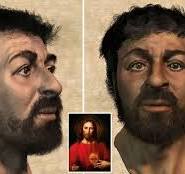


 About Things That Matter