Give Up Devil-Worship for Lent:Reject U.S. Imperialism

Temptation

Readings for First Sunday of Lent: Dt. 26: 4-10; Ps. 91: 1-2; 10-15; Rom. 10: 8-13; Lk. 4: 1-13.

Today is the first Sunday of Lent. Lent is a time of renewal – of getting back to basics – to asking questions about what we really believe and what God we truly worship. Today’s liturgy of the word helps us to do both. Deuteronomy 26 directs us to the authentic faith of Jesus – in the God who liberates the enslaved. Today’s reading from Luke’s Gospel calls us to worship that God rather than devil – the evil one that our culture and church (!) have been worshipping for centuries – ever since they first embraced imperialism in the 4th century C.E. Let me explain.

Start with that reading from Deuteronomy 26. It’s a key text if we want to understand the God in whom Jesus placed his faith. Jesus, remember, was a Jew, not a Christian. And Deuteronomy 26 provides us with the creedal statement that the Jewish Jesus accepted as did all Jews of his time. I mean, for them, Deuteronomy 26 functioned much like our Nicene Creed does for us each Sunday. It was a reminder of their basic belief. As such, it can be summarized in the passage’s seven points:

  1. Our father (Abraham) was a wandering Aramean (a Syrian).
    2. “Abraham” (i.e. his descendents) went down into Egypt.
    3. There we became a great people.
    4. But the Egyptians enslaved us.
    5. We cried out to our God, Yahweh, who raised up the rebel prophet, Moses.
    6. He led us out of Egypt, across the sea, through the desert, and to this land “flowing with milk and honey.”
    7. This land is our gift from Yahweh; Thanks be to God!

That’s it! That was the faith that Jesus, the Jewish prophet, inherited from his ancestors. It was a tribal faith centered on the ownership of a God-given piece of land (Palestine) which (despite its dryness and desert character) the descendents of Jacob saw as rich and productive (flowing with milk and honey).

Notice that this Jewish faith had nothing to do with an afterlife, heaven or hell. (In fact, belief in the afterlife was a very late development among the Jews; it didn’t emerge even for debate until about 200 years before Jesus’ birth.) Instead, as among all hunter-gatherers, herds people and agriculturalists, Jewish faith was centered on land. Obviously then, it had little tolerance for colonial military forces like the Assyrians, Babylonians, Persians, Greeks or Romans all of whom at various times occupied Palestine. Colonialism and foreign occupation contradicted Jewish faith in a fundamental way. It was intolerable.

That was true for Jesus too. As a prophet, his fundamental proclamation was not about himself or about a new religion. Much less was it about the after-life or “going to heaven.” Instead, Jesus proclaimed the “Kingdom of God.” That phrase referred to what the world would be like without empire – if Yahweh were king instead of Rome’s Caesar. In other words, “Kingdom of God” was a political image among a people unable and unwilling to distinguish between politics and religion.

In God’s Kingdom, everything would be reversed and guiding principles would be changed. The first would be last; the last would be first. The rich would weep, and the poor would laugh. Prostitutes and tax collectors would enter the Kingdom, while the priests and “holy people” – all of them collaborators with Rome – would find themselves excluded. The world would belong not to the powerful, but to the “meek,” i.e. to the gentle, humble and non-violent. It would be governed not by force and “power over” but by compassion and gift (i.e. sharing).

The creedal account of Deuteronomy 26 sets the stage for today’s gospel narrative about Jesus’ temptations in the desert. (And it’s here that the devil-worship connected with empire enters the picture. Listen closely.) In a context of Roman occupation, Luke’s account raises the question of whom to worship. The choice he presents is stark: one can worship the devil the author of empire or Yahweh, the opponent of imperial power of all types.

That clear choice becomes apparent in Luke’s version of Jesus’ second temptation. From a high vantage point, the devil shows Jesus all the kingdoms of the earth. Then he says,

“I shall give to you all this power and glory;
for it has been handed over to me,
and I may give it to whomever I wish.
All this will be yours, if you worship me.”

Notice what’s happening here. The devil shows Jesus an empire infinitely larger than Rome’s – “all the kingdoms of the world.” Such empire, the devil claims, belongs to him: “It has been handed over to me.” This means that those who exercise imperial power do so because the devil has chosen to share his possession with them: “I may give it to whomever I wish.” The implication here is that Rome (and whoever exercises empire) is the devil’s agent. Finally, the tempter underlines what all of this means: devil-worship is the single prerequisite for empire’s possession and exercise: “All this will be yours, if you worship me.”

But Jesus responds,
“It is written:
You shall worship the Lord, your God,
and him alone shall you serve.”

Here Jesus quotes the Mosaic tradition summarized in Deuteronomy 26 to insist that empire and worship of Yahweh are incompatible. Put otherwise, at the beginning of his public life, Jesus declares his anti-imperial position in the strongest possible (i.e. scriptural) terms.

Now fast forward to the 4th century – 381 CE to be exact. In 313 Constantine’s Edict of Milan had removed from Christianity the stigma of being a forbidden cult. From 313 on, it was legal. By 325 Constantine had become so involved in the life of the Christian church that he himself convoked the Council of Nicaea to determine the identity of Jesus. Who was Jesus after all – merely a man, or was he a God pretending to be a man, or perhaps a man who became a God? Was he equal to Yahweh or subordinate to him? If he was God, did he have to defecate and urinate? These were the questions.

However, my point is that by the early 4th century the emperor had a strong hand in determining the content of Christian theology. And as time passed, the imperial hand grew more influential by the day. In fact, by 381 under the emperor Theodosius Christianity had become not just legal, but the official religion of the Roman Empire. As such its job was to attest that God (not the devil) had given empire to Rome in exchange for worshipping him (not the devil)!

Do you get my point here? It’s the claim that in the 4th century, Rome presented church fathers with the same temptation that Jesus experienced in the desert. But whereas Jesus had refused empire as diabolical, the prevailing faction of 4th century church leadership embraced it as a gift from God. In so doing they also said “yes” to the devil worship as the necessary prerequisite to aspirations to control “all the kingdoms of the world.” Christians have been worshipping the devil ever since, while calling him “God.”

No, today’s readings insist: all the kingdoms of the world belong only to God. They are God’s Kingdom to be governed not by “power over,” not by dominion and taking, but by love and gift which leave people like the liberated daughters and sons of Abraham free to live in control of their own God-given piece of earth. Or in the words of Jesus, the earth is meant to belong to those “meek” I mentioned – the gentle, humble, and non-violent.

All of this has implications for us as would-be followers of Jesus and as citizens of a country whose “leaders” (supported by their “Christian” counterparts) increasingly embrace empire as the inevitable and fitting destiny of the United States.

In fact, in 2003, then vice-president, Dick Cheney sent out a Christmas card on which was inscribed the words, “And if a sparrow cannot fall to the ground without His notice, is it probable that an empire can rise without His aid?” Cheney’s implication was that the United States is God’s new chosen people. Empire as practiced by the United States represents God’s will.

Instead, today’s Liturgy of the Word tells us the opposite. Empires arise only with the devil’s aid.

Does this mean that faithful followers of Jesus must pray for the defeat of the United States in its imperial conquests? Must we discourage our sons and daughters from joining the military?
(Discussion follows)

What if We Imagined God as a Woman?

mother-cradling-baby

Readings for 5th Sunday in Ordinary Time: Is. 6:1-2a, 3-8; Ps. 138: 1-5, 7-8; I Cor. 15: 1-11; Lk. 5: 1-11. 

Have you ever seen Eve Ensler’s “Vagina Monologues?” A few years ago that series of dramatic readings was presented at Berea College where I taught for 40 years. The readings were as provocative as the play’s title. All of them reflect the unique experience of being woman that most of us Christian males find so difficult to understand, especially after so many years of brain-washing at the hands of predominantly male clergies.

I bring that up because today’s liturgy of the word is so obviously male-centered in a very misleading way. The readings of the day suggest that God is male and that Jesus’ and Paul’s closest collaborators were exclusively men. And that in turn explains why Christian pastors of so many denominations participate so enthusiastically in what has been called a 21st century “War on Women.” It explains why the Catholic Church is so afraid of women priests.

Significantly, Ensler refers to that particular male prejudice in the prologue to her Vagina Monologues text. There she quotes Gloria Steinem who recalls:

“In the sixties, while I was doing research in the Library of Congress, I found a little known treatise about the history of religious architecture which blithely stated a thesis, as it were known by everybody, to the effect that the traditional shape of most patriarchal buildings of worship imitates the female body. Thus, there is an external entrance and another internal one, the labia majora and the labia minora; there is a vaginal central nave, which leads to the altar; there are two curved ovarian structures on either side; and finally, in the sacred center is the altar or uterus, where the great miracle takes place: men give birth.

“Though this comparison was new for me, it opened my eyes with a shock. Of course, I thought. The central ceremony of the patriarchal religions is nothing else but the ceremony in which men take control of the “yoni” power of creation by giving birth symbolically. It is no wonder that male religious leaders state so often that we human beings are born in sin … because we are born from female tummies. Only by obeying the rules of the patriarchy can we be “reborn” through men. It is no wonder that priests and pastors decked out in long vestments sprinkle our heads with a fluid that mimics the waters of birth. It is no wonder that they give us new names and promise us we will be reborn in eternal life. It is no wonder that the male priesthood attempts to keep women far removed from the altar, just as we are kept far removed from control of our own powers of reproduction. Whether symbolic or real, everything is aimed at controlling the power that resides in the female body.”

Talk about provocative! Here Ms. Steinem is claiming that creative power is focused chiefly in the female body, though men obviously have an ancillary role in the begetting of life. Because their role is so obviously secondary, a primary patriarchal purpose in organized religion, Ms. Steinem says, is for men to alienate or steal the vastly superior womanly power of life and to control it – against women themselves.

Patriarchal religion accomplishes its task by dressing men up like women. It has them sprinkling their congregations with the waters of birth introducing them to “eternal life.” This form of life is held to be more important than physical life, and male pastors claim to control it to the exclusion of women. The prerequisite for women’s access to life eternal is that they adopt the rules of the exclusively male priesthood especially those connected with female powers of reproduction centered in the woman’s body whose architecture the male priestly domain of church actually mimics.

Ms. Steinem’s analysis suggests why someone even like our beloved Pope Francis seems skittish about women priests.

After all, female priests might inspire women to recognize their inherent superiority over men in terms of centrality to the life processes (both physical and spiritual) that the patriarchy struggles so mightily to control. If women were allowed the leadership that their biology suggests, what would become of the male-centered church – of the male-centered world?

Today’s liturgy of the word tries to keep us from asking such questions. It begins with a description of God in highly masculine terms centered in the macho realm of palace and court. God is depicted as “king.” He (sic!) is “Lord.” He inspires fear and awe. He dwells in a smoke-filled room surrounded by all the trappings of power and might. Like the prophet Isaiah, those who appear before him feel small and ashamed of the very words that come from their lips.

This, of course, is the image of God we’ve been offered from the cradle. (Can you imagine how different we’d feel personally, ecclesiastically, nationally and internationally if the familiar image of God were a mother nursing her child? Would you feel any different towards such a Mother God? – Remember, it’s all just symbolism. And the image of God that’s come to dominate arises from one of the most patriarchal traditions in the history of the world.)

The male-centeredness of today’s readings continues in the selection from Paul’s first letter to Christians living in Corinth. It’s a key passage because Paul is trying to establish his identity as an “apostle,” even though he never met Jesus personally. Paul bases his claim on the fact that Jesus appeared to him just as he did to the other apostles. So he says “Remember what I preached to you:” Christ died for our sins. He was buried and raised on the third day. He appeared to the 12, then to 500 “brothers” at once, then to all of the apostles, and finally to Paul himself.

There is so much interesting in this summary of Paul’s preaching. What, for instance, happened to Jesus’ words and deeds? Paul’s gospel begins with Jesus’ death! What about Jesus’ life which revealed the character of God as compassionate and “womb like?” (See Marcus Borg, Meeting Jesus again for the First Time, chapter 3.)

However, even more to the point is Paul’s omission of the fact that according to ALL of the accounts of Jesus’ resurrection appearances in the canonical gospels, Jesus’ first appearances were to women, not to men!! (Remember Jesus’ appearance to Mary Magdalene in John 20:1-18?) Using Paul’s logic, doesn’t that establish the primacy of women in the church – and in the priesthood? The Paul of First Corinthians doesn’t want to go near that question. And neither do most church officials.

And then we have today’s gospel selection from Luke. It’s the call of the first apostles. According to Luke, Peter, James, and John are the first to follow Jesus. That leaves us with the usual impression that Jesus called only men.

Omitted from our vision is the fact that according to Luke himself (8:3) there were “many women” taking an active part in the Jesus Movement. Besides Jesus’ mother Mary, we know the names of some of them: Mary Magdalene, several other Marys, Suzanne, Salome, Martha and Mary of Bethany, Joanna. . And the roles of these women weren’t confined to preparing food and washing clothes.

In the first Christian communities, men and women met and worshiped together. Both men and women preached the message of Jesus with the same authority, and both men and women presided at the celebration in remembrance of their crucified Master. Like the men, the women had representation and decision-making power in the communities as priests and bishops.

That was even true of the communities of Paul. Paul himself taught that “In Christ there is no male or female” (Galatians 3,28). With this claim he legitimized the active participation of women in the first Christian communities. Also, he makes emphatic mention of many women in his letters and lavishly praises their work. For example, he mentions by name the deaconess Phoebe (Romans 16,1), Junia (Romans 16,7), Prisca, Julia, Evodia and Sintece, all of whom he called his “collaborators” (Philippians 4,2). He also mentions Claudia, Trifena, Trifosa, Prisca, Lyida, Tiatira and Nympha of Laodicea. Of the 28 persons to whom Paul accords special praise in his letters to the early churches, 10 are women!

All of that changed in the 4th century, when Christianity lost its soul and became the official religion of the Roman Empire. Then Christianity adopted for good the courtly vision today’s first reading affirmed: macho-kings, courts, palaces, smoke-filled rooms, men dressed like women, denigration of women’s bodies, men trying desperately to affirm their superiority against all the evidence – of biology, life’s processes, Jesus’ own example, and women’s traditional roles as nourishers, healers and spiritual counselors.

Let’s talk about how women might take back those roles both in church and in politics. How do we help transform people as closed as today’s church patriarchs – or as open as Pope Francis? How do we facilitate changes in our bishops and priests? How do we let go of our own acquiescence to the misogyny of our church and culture?
(Discussion follows)

Marx and Jesus: The Trouble with Prophets

 00-art-young-jesus-wanted-poster-he-stirreth-up-the-people-1913

Readings for 4th Sunday in Ordinary Time: Jer. 1: 4-5, 17-19; Ps. 71: 1-6, 15-17; I Cor. 12: 31-13; Lk. 4: 21-30

I remember when my ideas about prophecy changed – when I really began to understand the term’s implications. I was a graduate student in Rome – already a priest – and completing my doctoral studies at the Academia Alfonsiana on the Via Merulana there in the “Holy City.” I was taking a class in I’ve forgotten what. But my professor (a German Redemptorist as I recall) got my attention during one of his lectures by referring to Karl Marx as “the last of the great Jewish prophets.” That was in 1970 at the height of the Cold War, and I had been reading Marx and about the then-flourishing Marxist-Christian dialog. I realized that my professor was right.

Marx of course was a Jew like Jesus, and Jeremiah who are centralized in today’s liturgy of the word. Like them, Marx was totally absorbed by questions of social justice for the poor and exploited. He was pretty much penniless, like most prophets, and spent his time thinking, writing, speaking, and organizing workers against exploitive employers. He was also highly critical of organized religion and its idols.

Marx’s insight (shared with the biblical prophets) was to realize that both Judaism and Christianity worshipped idols more often than the God of Israel. And by that he meant “gods” who not only justified an oppressive status quo, but who anesthetized the workers and unemployed to the fact that they were indeed oppressed by the capitalist system. Marx called such idols “the gods of heaven.”

We’re all familiar with what he meant. These idols are worshipped each Sunday – usually from 11:00 to 12:00 in what a theologian friend of mine used to call the “be kind to God hour.” You can encounter the “gods of heaven” any day at any hour on Cable television’s Channel 3 or in most Catholic Churches any Sunday morning. “God” there is concerned with correct worship, with bows, genuflections, and with correct terms such as “consubstantial,” “chalice,” “with thy spirit,” “under my roof” and so on. The stories or mythology upholding such idols have to do with “Jesus as your personal savior,” with “going to heaven,” and with avoiding hell.

Marx was also critical of what he called the “gods of earth.” They’re what people worship all those days and hours when they’re not in church. They include Capitalism, “America,” Nationalism, National Defense, Homeland Security, the Military, Money, and Profit. The issues of this God focus on sexuality: contraception, abortion, and same-sex marriage. This God is a War God – always on the side of “America.” He’s celebrated in songs like “The Battle Hymn of the Republic” and “Proud to Be an American.” He is the protector of “religious freedom” understood as privileging Christianity over other faiths while preserving tax exemptions worth billions each year. He blesses the bishops’ “Fortnight for Freedom” concerned as it is with protecting such benefits.

Marx’s prophetic work made him extremely popular with working classes. It was not uncommon for a worker to request that he be buried with a copy of “The Communist Manifesto” placed on his chest.

At the same time, Marx was vilified as the devil himself by factory owners, businessmen, bankers, and the professors and politicians representing their interests. Defenseless against such “education,” most of us have accepted such defamation of this last of the great Jewish prophets.

You see, that’s the trouble with prophets like Marx, Jesus and Jeremiah. They have to take on the “powers and principalities” of their cultures. They must swim against the torrential stream of public opinion.

In today’s first reading, Jeremiah is informed of his lot. But he must “man-up,” he’s told. He must steel himself to confront the “whole land,” along with kings and princes, priests and people. All of these, he’s warned, will fight against him. Nevertheless, God will make of Jeremiah a ‘fortified city,” a “pillar of iron,” and a “wall of brass.”

I suppose God followed through on those promises. But that didn’t prevent Jeremiah from being imprisoned, tortured, and left for dead.

Of course, the same thing happened to Jesus from the beginning to the end of his public ministry. He was vilified, demonized (literally!) and defamed.

That process begins for Jesus in today’s selection from Chapter 4 of Luke’s gospel. As we saw last week, he returns to his hometown of Nazareth and criticizes his neighbors’ narrow nationalism. In today’s episode his neighbors try to kill him. Later on, of course, Jesus goes more public. Like Jeremiah, he takes on his nation’s priests and scribes, princes and king. Ultimately his words and deeds threaten the Roman Empire itself which classifies him as a terrorist. Together those powers and principalities (national and international) not only defame Jesus the way Jeremiah and Marx were defamed; they actually kill him just as so many prophets have been killed from John the Baptist and Paul to Martin Luther King and Gandhi.

All of them – Jesus, Jeremiah, Gandhi, King, Paul and Marx – followed the same “prophetic script” whose inevitable directive prescribes that no prophet is accepted in her or his native place. It’s easy to see why. It’s because their “native place” bears the brunt of their prophetic words.

Meanwhile, it’s easier for outsiders to recognize prophets. The “outsiders” who concerned Jesus were the uneducated, poor, and unclean. However, even those seem to turn against him this morning. It’s unlikely that there were any rich or powerful resident in Nazareth – a place scripture scholar Ched Myers describes as “Nowheresville.”

Few of us are rich and powerful. Yet we’ve been schooled by those entities to reject prophets who speak in our name and defend our interests – those belonging to our “native land” to use the words of this morning’s gospel. It’s as though we’re looking at reality in that “darkened mirror” Paul wrote about in today’s excerpt from his letter to Corinth. The darkened mirror not only turns things backward, but it’s smudged with the fingerprints and dirt of ignorant and/or perverse propagandists.

The trouble – the trouble with prophets – is that most of us have bought into all that anti-prophet propaganda. So we hate Karl Marx without realizing that he’s on our side and speaks for us. We honor the Martin Luther King who has been reduced to a “dreamer,” but not the MLK who described the United States as the most violent and destructive country in the world. We don’t remember the King who was slandered as a communist and encouraged to commit suicide by the FBI and the COINTELPRO program.

We’re willing to stand by while Wikileaks journalist Julian Assange is persecuted by the governments of Great Britain and the United States. We presume that Chelsea Manning is guilty of treason because our government, (despite its record of lies and heinous crimes) says so. We wonder what all the fuss is about Aaron Swartz and Edward Snowden.

These are the prophets of our time who, like Jesus, do not find a sympathetic hearing in their native place. It might be time to embrace them as our own and see what difference that makes in the way we look at the world and our country. The examples of Jeremiah, Jesus, and Paul — and the hopes of the world’s poor and victims of U.S. wars — beg us to do so.

The Dysfunctional Holy Family

Readings for Holy Family Sunday: Sir. 3: 2-6, 12-14; Ps. 128: 1-5; Col. 3:12-21; Lk. 2: 41-52 

Today is the feast of the Holy Family. We’re used to thinking of it as a cozy group of 3, Jesus, Mary and Joseph living in ideal circumstances, the way we picture them in our nativity crib scenes. Or we imagine Jesus’ early life as we find it depicted in medieval paintings of the carpenter Joseph’s workshop. There we often find a loving haloed and elderly foster-father instructing Jesus in his trade while Mary smiles in the background.

However, if we take seriously the “infancy narratives” coming from Matthew and Luke, we must draw the conclusion that Jesus’ home life was more complicated than that. You might even say that it was “troubled” right from the beginning. So for the moment, let’s suspend disbelief surrounding the historicity of the narratives about Jesus’ early years. Let’s try instead to unpack the stories at face value. Doing so, I think, shows them to be quite relevant to our own experiences – especially to that of our family dysfunctions and to our own experiences of being no one, without face, identity, or power before the world’s problems.

To begin with, think about Jesus’ family, the focus of today’s liturgy of the word.  It wasn’t perfect. The holy family was larger than we’re accustomed to imagine. Joseph and Mary probably had 7 or 8 children. According to the gospels, Jesus’ brothers’ names were James, Joseph, Judas, and Simon. Jesus is also said to have had at least 2 unnamed sisters. On the one hand, a large family like that would have been helpful to peasant farmers, if Mary and Joseph had any land. On the other hand, a family of 9 or 10 people would have been hard to maintain for rural peasants living in a backwater like Nazareth. It is likely then that hunger and struggling to make ends meet was a major part of Jesus’ early experience.

Jesus’ country was also war-torn at the time when he was born, and that certainly impacted his family. At approximately the moment of his conception, the Romans had razed the city of Sepphoris, located just an hour’s walk from Nazareth. Sepphoris was the capital of Galilee where Nazareth was located. Galilee was a hotbed of resistance to Rome’s occupation of Palestine. And a rebellion had erupted in Sepphoris about the year 4 BCE. That meant that the countryside would have been crawling with Roman soldiers at the time of Jesus’ conception. Inevitably, many young Jewish girls would have been raped by the occupying forces. Some see that fact as lending credence to an anti-Christian tradition claiming that Jesus was the product of rape of Jesus’ mother, Mary by a Roman soldier called Panthera.

In any case, Mary’s out-of-wedlock pregnancy would have raised many eyebrows in the rural village of Nazareth. Town gossips would have snickered and talked behind their hands about the young girl’s “virginal conception.” We know for certain that Mary’s mysterious pregnancy put Joseph in crisis. According to tradition, he suspected she had been unfaithful and thought her condition reason enough to break off their engagement. We also know that Mary chose to leave town “in haste” and travel to the hill country of Judah to her Cousin Elizabeth’s home – possibly to get some distance from small village talk.

Once that problem was resolved, the holy family’s troubles continued.  There was the matter of Jesus’ homelessness at the time of his birth. For the occasion, Joseph and Mary had to make do with a filthy stable with all of its animal droppings, noises, smells, vermin, rodents and cold.

And things got worse after that. The story goes that the local king Herod ordered an infanticide of all children under the age of 2 in the area surrounding the place of Jesus’ birth.  For Mary and Joseph, avoiding such unspeakable violence meant fleeing to Egypt in the middle of the night. It also meant trying to survive as immigrants in that far-off country – not speaking the language or knowing the customs, or feeling at home among those prejudiced against foreigners.

Once back in Palestine, things apparently settled down. However, the episode in today’s gospel reveals tension in the holy family that will resurface later in the gospels.

“The Finding in the Temple” is a coming of age story. At the age of 13, all Jewish boys would accompany their parents for the first time as a “genuine Israelite.” Each would then become a man, “one who goes up to the temple.” In Jesus’ time, the 13th year was anticipated by a year as a kind of preparation for the “big step” into adulthood.  Coming from a place like Nazareth, the boy from the country would have been dazzled by the splendor of the Temple with its colonnades, precious woods, unending polished steps, gold and silver candelabra. It would have been easy for him to wander away with other boys and become lost in it all.

His parents find him, we are told, easily conversing with learned men from the city whose manners, accents and clothing would have been intimidating to Jesus’ simple parents. And yet here was the country boy Jesus astounding the city people with the incisiveness of his questions and the wisdom of his answers. No doubt, the rural parents waited till they were out of earshot of their “betters” till they gave Jesus the dressing down they thought he deserved. The scolding may have lasted the entire three-day journey back to Nazareth.

His parents, we’re told in this morning’s reading, did not understand their son. We find out later on that the lack of understanding continued. At one point in Mark’s gospel, his mother and his siblings are described as thinking Jesus was out of his mind (Mk. 3: 34-35). This led to a formal estrangement between Jesus and his family. He more or less disowned them. When Jesus was told that his family has come to rescue him from his madness, he said in effect, “My mother – my family? That’s not who those people are. Instead, you (the outcasts, beggars, insurrectionists, prostitutes, unemployed, and ne’er do wells, who were his companions) – you are my real family, my real people.”

And yet today’s gospel concludes that Jesus went back to Nazareth with them. He advanced, Luke tells us in age and wisdom and grace before God and his neighbors. And that’s it. We hear no more about him for 20 years or so. He disappears. He becomes nobody.

And that brings me to the other part of today’s reflection – being a nobody. What does Jesus’ disappearance, his “hidden life,” tell us about the human condition?  According to our faith, Jesus was the full embodiment of God. Presumably, then, he had infinite power at his disposal. His world was as filled with problems as ours. There was Roman imperialism and the occupation of Palestine with its brutality, torture, rape, exploitation and oppression. There was political corruption among Jesus’ own people as the leaders of his time climbed into bed with the Romans. There was extreme poverty alongside obscene wealth. There was religious corruption. There was disease and ignorance.  And yet as far as the record is concerned, this embodiment of God did nothing.  For 97% of his life, Jesus did absolutely nothing!

Why? Do you think it might have been because, like us, he could do nothing significant about all those problems? And even when around the age of 30 he did finally emerge as a more or less public figure, what did he really do? He spoke some inspiring words, healed a few people, and worked some miracles that his contemporaries dismissed as parlor tricks. He provoked the authorities in a temple demonstration for religious purity and social justice, was arrested, tortured and executed as an insurrectionist.  That was pretty much it as far as his “public life” was concerned. Afterwards, the world mostly continued as it had before his arrival.

I somehow find comfort in both Jesus’ family dysfunctions and in his “nobodiness.”  None of our families is perfect. Unexpected pregnancies, suspicions and jealousies dividing couples, financial struggles, problems with neighbors and gossip, displacement, lost and alienated children – it all seems about par for the course. I’m not even sure that Mary and Joseph didn’t wonder at times where they went wrong. There was a lot for them to process in their pillow talk as they saw their son hanging out with the wrong crowd, apparently losing his faith, and then getting into political problems they didn’t understand. My God, he finally ended up on death row! The black sheep of the family . . . .

And then there are our own little lives and their apparent lack of meaning. In the end, we’re nobodies, all of us. That’s what death makes apparent as we lose our physical form and minds and all that we worked for. We’re nobodies.  Few will remember us or think of us after we’re gone. We’re born, get married, have children, buy and sell a few items, and then die. And what became of all our hopes and dreams? What does it all mean?

Does it mean that it’s all O.K.; it’s all good? Does it mean “that’s life” – what it’s about? In fact, our vocation is to be precisely nobody instead of constantly striving to be Somebody. In the end, death discloses the truth about our vocation. It is the same as Jesus’ vocation. And that is to be open, faceless channels that disclose the presence of God in our very ordinary lives with their family dysfunctions and personal failures. It is to rise above such limitations or rather to use them to express the unbounded love of an apparently powerless God to those around us – especially to our family members who might not even understand.

(Sunday Homily) Massacre in Paris: The Apocalypse Is upon Us

Readings for 33rd Sunday in Ordinary Time: Dn. 12: 1-3; Ps. 16:5, 8-11; Heb. 10:11-14; Mk. 13:24-3.

The entire world was shocked by yesterday’s brutal attacks on innocent civilians in Paris. President Obama accurately expressed consensus in the West that the attacks “were not just on Paris, but on all of humanity and the universal values we share.”

Early reports have France’s President Hollande attributing the slaughter in Paris to ISIL forces. French police have said that one of the terrorists was carrying a Syrian passport. Such attributions make the attacks part of the war in the Middle East that has been raging since 2001.

France, of course, is a close ally of the United States in its global war on terror. It is a founding member of the coalition which (under U.S. leadership) has been bombing Iraq and Syria for over a year. In fact, hundreds of civilians have been killed in coalition attacks which as of last August had rained 17,000 bombs on Syrian and Iraqi targets and claimed more than 600 civilian lives. Most casual observers don’t know that. Those living under the ’round-the-clock air raids, of course, do.

If Syrians are responsible, it is reasonable to assume their intent is to make the French and their coalition partners (the U.S., Britain, the Netherlands, Denmark, Belgium, and Australia) feel the pain of civilians in Syria and Iraq. President Obama’s words show the point has been made.

_____

It is a sad coincidence that today’s readings centralize apocalyptic texts found in the Book of Daniel and in the Gospel of Mark. Both are war documents. That is, contrary to insistence by evangelical fundamentalists, apocalypse is not about the end of the world. Instead contemporary scholarship identifies it as a literary form always associated with war and resistance to empire. As such (it may shock us to know) the form is more sympathetic to the cause of ISIL and other “terrorists” than to the efforts of the U.S. and its close ally, France, to control their imperial outposts. Nonetheless, apocalypse in no way condones terror — neither the wholesale terror of empire exhibited in its incessant bombings, nor the retail version we witnessed yesterday in France.

The Book of Daniel originates from Israel’s resistance to the Hellenistic empire of Antiochus IV Epiphanes. In the year 168 C.E., he invaded Palestine and devastated Jerusalem. He hated Judaism and went out of his way to offend Jews at every level. He slaughtered them mercilessly. But he also defiled the Jerusalem Temple by offering a pig on its altar. He even erected a monument to Jupiter in the Temple. Patriotic Jews called it “the abomination of desolation.” While occupying Palestine, Antiochus destroyed all the copies of Scripture he could find, and made it a capital offense to possess such manuscripts. It was against Antiochus and the Greek occupation of Palestine that the Book of Daniel was written. It assures the Jewish resistance (which the Greeks saw as a “terrorist force”) that the Seleucid Empire, like all those preceding it, would fall in ignominy.

Something similar is happening in today’s reading from the Gospel of Mark. Written around 70 C.E., its context is a six-month siege of Jerusalem by the Roman Emperor Titus. On September 8th of that year four Roman legions finally captured the city of Jerusalem from its Zealot defenders (whom the Romans considered “terrorists”). Moving from house to house (like U.S. soldiers in Iraq), the legionaries destroyed everything within reach, including the City’s Temple. Palestine would not again belong to the Jews until 1948. It was the destruction of Jerusalem by the Romans that Jesus predicts in today’s Gospel excerpt from Mark.

But the excerpt also calls for a complete end to the politics of violence and domination. That meant not only obeying the command of Jesus to reject empire, but also to refuse alignment with the Zealots and Sicarii — the resistance assassins who specialized (like Palestinian resisters today) in knifing occupation soldiers.

Though sympathetic to the resistance, Mark’s Jesus evidently saw the counter-productivity of tit-for-tat violence. He exhibits no sympathy for the Zealot recruiters who between 66 and 70 traveled throughout Palestine calling on Jewish patriots to defend their homeland by joining guerrilla forces. Instead, Mark’s Jesus counsels his followers to flee to the mountains (Mark 13:14-16). They were to do so not out of cowardice, but from apocalyptic conviction that God’s order of justice could not be established by the sword. Obeying Jesus’ direction meant that Christians were not only threatened by Romans but by Jews who accused Jesus’ followers of treason.

How should today’s Liturgy of the Word affect people of faith whose Commanders-in-Chief repeat the crimes of the Seleucid Antiochus IV and the Roman Titus — both of whom thought of themselves as doing God’s work in destroying what they despised as a superstitious, primitive, tribal, and terrorist religion? (Yes, that’s what they thought of Judaism!)

Today’s readings recommend that we adopt an apocalyptic vision. That means attempting to grasp the worldview of empire’s victims rather than of its agents — i.e. attempting to understand the reasons behind acts of terrorism like those which unfolded yesterday in Paris.

More basically adopting apocalyptic vision means rejecting defense of the present order and allowing it to collapse. It entails total rejection of U.S. and French imperial ambitions and practices. It signifies refusing to treat as heroes those who advance the policies of destruction and desecration inevitably intertwined with imperial ambition. It means letting go of the privileges and way of life that depends on foreign conquest and vilification as “terrorists” patriots desperately defending their countries from invasion by imperial forces. It means determining what such rejection might signify for our consumption patterns and lifestyles, and supporting one another in the counter-cultural decisions such brainstorming will evoke.

Missing the insights of contemporary scripture scholarship, fundamentalists routinely teach that apocalypse is about the end of the world — not about the end of particular empires. In a sense, they are right. Apocalypse is about the end of the world. The entire Jewish universe was anchored in the temple. Its defilement by the Greek Antiochus IV, its complete destruction by the Roman Titus seemed like the end of the world to the Jews. The threat of westernizing the Arab world might seem that way to the occupied Muslim world today. And the end of the American Way of Life premised on resource wars under cover of a “war on terrorism” might strike us as the end of everything we hold dear.

However, the apocalyptic message of hope is that the passage of empire and nationalism is not really the end. Instead it represents an opportunity for a new beginning. In the words Mark put in Jesus’ mouth this morning, “Do not be alarmed . . . This is but the beginning of the birth-pangs.”

Ironically, tragic events like yesterday’s massacre remind followers of the Judeo-Christian tradition to abandon a past based on dominion and violence and to create the entirely new reality based on the apocalyptic visions of Daniel and Jesus.

Sunday Homily: Pope Francis’ Address to Congress Was Much More Stinging than You Thought

Blood Money

Readings for 32nd Sunday in Ordinary Time: IKgs. 17: 10-16; Ps. 146:7-10; Heb. 9: 24-28; Mk. 12: 38-44

It has been more than a month since Pope Francis visited the United States and gave his stinging address to the U.S. Congress.

No doubt you recall the occasion. The pope used his time to call for the end of capital punishment. He identified the motivation behind the U.S.-led arms industry simply as “money” – “money drenched in blood.”

The pope also lionized:

  • Abraham Lincoln who described capitalists as those who “generally act harmoniously and in concert to fleece the people.”
  • Martin Luther King who called the United States the greatest purveyor of violence in the world.
  • Dorothy Day who rejected capitalism a “rotten putrid system” and
  • Thomas Merton who described American politicians as a bunch of gangsters.

It was a masterful critique filled with irony – polite, but devastating for anyone who was listening closely.

Unfortunately, few commentators were tuned in sufficiently to pick up the subtlety. For them Francis was a nice old man praising “the land of the free and the home of the brave,” and closing with “God bless America” – without the pundits realizing, of course, that “America” pointedly includes the pope’s beloved Argentina devastated for decades by U.S. policy, and an entire continent oppressed by the United States for Francis’ entire life. Like everyone in Latin America, Francis knows all of this very well.

The lesson here is that when prophets speak, we’d best be alert to nuance and implication.

That lesson is applicable to today’s familiar story of the “widow’s mite.” It’s easy to miss the point, since it’s obscured by interpretations of homilists with no stomach for subtlety.

The episode comes right after Jesus and his disciples had all taken part in (and perhaps led) a demonstration against the temple priesthood and the thievery of their system from the poor. I’m talking about Jesus’ famous “cleansing of the temple.” That event sealed Jesus’ fate. The temple priesthood would soon be offering the reward for his capture that Judas would accept.

Following the assault on the temple, Jesus continues instructing his disciples on the corruption of the Temple System. To do so, he takes a position, Mark says, “opposite” (i.e. in opposition to) the temple treasury. The treasury was the place where Jews paid the tithe required by the law as interpreted by the priesthood Jesus despises. It was a “flat tax” applying the same to rich and poor.

Ever class-conscious, Mark points out that “many rich people” somehow made it clear to all that they were putting in large sums. Then a poor widow came along and furtively put in a penny. Jesus calls attention to the contrast: “large sums” vs. “two small copper coins, which are worth a penny.”

“It’s all relative,” Jesus says.  “Truly I tell you, this poor widow has put in more than all those who are contributing to the treasury. For all of them have contributed out of their abundance; but she out of her poverty has put in everything she had, all she had to live on.” Jesus then leaves the temple in disgust.

There are two ways for homilists to explain this incident in the context of today’s Liturgy of the Word. Remember, it began with a reading from I Kings and its story of the great prophet Elijah and the widow of Zarephath.

Elijah was hungry. He encountered a single mom gathering sticks to make a fire to eat her last meal with her son. They were starving, and she had only a handful of flour and a few drops of oil to make some bread before she and her son would die of hunger. The prophet asks that instead she make him some food. Obediently, she does so. And strange to say, after feeding Elijah, the widow discovers that her flour and oil never run out. She somehow has an endless supply. She and her son are saved.

Then in today’s second reading, Jesus is contrasted with the temple priesthood. The temple priests, the author of Hebrews says, were required to repeatedly offer sacrifices in the Temple year after year. In contrast, Jesus entered the heavenly “Holy of Holies” but once, offering there not the blood of bulls and lambs, but his own blood. Jesus is the true high priest.

The standard way of treating these readings runs like this: (1) The widow of Zarephath gave the Holy Man all she had to live on and was materially rewarded as a result; (2) the widow in the temple donated to the temple priests “all she had to live on” and was rewarded with Jesus’ praise; (3) follow the examples of the widow feeding Elijah and the widow giving her “mite;” (4) donate generously to your priest (a successor of the Great High Priest in Hebrews) and you will be richly rewarded either here, in heaven, or in both places.

That’s a standard treatment we have all heard. However, it has severe problems. To begin with, it ignores the liturgical response to the Elijah story taken from Psalm 146. That excerpt from Psalms sets a back-drop for the entire Liturgy of the Word and provides a key for interpreting not only today’s readings, but the entire Bible. The psalm reminds us that the poor are God’s Chosen People. God’s concern for the poor is not with their generosity towards God but with God’s securing justice for them. As the psalm says, God gives food to the hungry, sets captives free, gives sight to the blind, protects immigrants, and sustains the children of single moms. God loves those concerned with justice for the poor, the Psalm says. God loves prophets like Elijah and Jesus. On the other hand, God thwarts the ways of the wicked – those who, like the scribes and high priests (as well as members of the U.S. Congress), exploit God’s favored poor.

All of that represents a “red thread” running through the entire Judeo-Christian tradition. It offers us a key for interpreting the story of Elijah as well. It changes the emphasis of the story from the widow’s generosity, to God’s provision of food for the hungry and God’s concern for the children of single mothers.

With that key in mind, we are alerted to circumstances in today’s gospel story that summon us to interpret it differently from the standard treatment.

We are reminded that the episode takes place in an elaborate context of Jesus’ assault on the temple system. In effect, the context is Jesus’ symbolic destruction of the temple itself. Yes, there was that “cleansing” I referenced. But there was also Jesus’ prediction of the deconstruction of the building itself. “Not one stone will be left here upon another; all will be thrown down” (13:1-2). Then there was that strange incident of Jesus cursing a fruitless fig tree as he was entering the temple precincts (11:12-14; 20-24).  The fig tree was the symbol of Israel. Here again Jesus pronounces a judgment on an entire system that had become corrupt and forgetful of the poor who are so central to God’s concern.

That judgment is extended in Jesus’ teaching immediately before the episode of the widow’s mite.  Again, Jesus takes a position “opposed” to the temple treasury and says, “Beware of the scribes . . . They devour widows’ houses and for the sake of appearance say long prayers.” As scripture scholar, Ched Myers points out, Jesus was probably referring to the practice of turning over to scribes the estates of deceased husbands. The surviving wives were considered incapable of administering a man’s affairs. For his troubles, the scribe-trustee was given a percentage of the estate. Understandably fraud and embezzlement were common. In this way, religion masked thievery from society’s most vulnerable.

With Jesus’ accusation ringing in their ears, a case-in-point, a poor widow, arrives on the scene. She pays her tithe – the flat tax – and leaves penniless. Jesus can take no more. He storms out of the temple.

According to this second interpretation, Jesus is not praising the generosity of the widow. Instead, he is condemning the scribes, the priests, the temple and their system of flat taxation. Jesus’ words about the widow represent the culminating point in his unrelenting campaign against hypocrisy and exploitation of the poor by the religious and political leadership of his day.

That was Pope Francis’ point too in his address to the U.S. Congress: In effect he came to the defense of the widow’s impoverished counterparts on death row or living under the threat of bombs and drones proliferated by an arms industry motivated by worship of money drenched in blood.

In effect, Pope Francis berated the gangsters arrayed before him – every one of them guilty of fleecing the poor, destroying their homes and fields – all to support a system as rotten and putrid as the one Jesus symbolically deconstructed.

As Mark has Jesus saying, “Whoever has ears to hear, let them hear!” (MK 4:9)

George Will: Pope Francis Is UnAmerican (Sunday Homily)

George Will

Readings for the Twenty-sixth Sunday in Ordinary Time: NM 11: 25-29; PS 19:8, 10, 12-14; JAS 5: 1-6; JN 17: 17B, 17A; MK 9: 38-43, 45, 47-48

Since the pope’s arrival in the U.S. last Tuesday, it’s been all Francis all the time on television and in the newspapers. He’s charmed us all, and even somehow inveigled Republican lawmakers to applaud ending capital punishment, protecting the environment, opening borders to immigrants, and ending arms sales of all kinds.

Washington Post columnist, George Will, however is holding out. On the eve of the pontiff’s arrival, Will called the pope an over-the-top consumer, distant from the poor, flamboyant, sanctimonious, unscientific, wooly-headed, reactionary, and un-American. He isn’t smart or honest enough, Will suggested, to know that the capitalism he criticizes has pulled the masses from their poverty, extended life expectancy, and has the power to clean up the environment without burdensome regulations. Fossil fuels have saved the world. Without it we’d all be starving. The wealth is indeed trickling down.

So the pope is wrong when he speaks of “the excluded.” Capitalism-as-we-know-it is blameless and excludes no one. We need do nothing but forge ahead (like lemmings), intimated Will, an ultimate Beltway insider.

I bring all of that up because this week’s readings are about insiders and outsiders and how the Judeo-Christian tradition, like Pope Francis, stand firmly on the side of those insiders feel compelled to protect themselves against. Unlike Will, the readings say, the Jesus tradition stands against the rich, and on the side of the poor – especially children. The tradition calls us to transformation, not defense of the status quo.

In Will’s defense, however, it must be said that he stands in good company. Like him, the very disciples of Moses and Jesus were exclusivists. As they show in today’s readings, they too felt compelled to protect their privilege and turf and to turn away those they perceived as threatening interlopers.

On the other hand, both Moses and Jesus are like Pope Francis. They take a Big Tent approach to matters of the Spirit, wealth distribution and protection of the vulnerable. Both recognize the Divine Spirit of prophecy and healing wherever they are effective. Where that Spirit works, the rich are denounced as in today’s reading from the Letter of James.  Meanwhile, the poorest of the poor are defended in uncompromising terms – as happens at the end of today’s Gospel.

Consider the content of the readings themselves.

In today’s first selection from the Book of Numbers, Moses’ chief of staff, Joshua, is jealous when he hears that Eldad and Medad claimed Moses’ Spirit. They did so even though they had “missed the meeting” where that spirit was conferred. “Tell them to stop!” he demands of Moses.

“What are you talking about?” Moses replies. “They’re on our side. No one can control the gifts of God.  I wish everyone could share my spirit of resistance to oppression.” (That’s what the Spirit of Moses is in the Jewish Testament.)

Evidently, Mark has the Numbers account in mind when, in today’s Gospel reading, he structures a dialog between Jesus and his “beloved disciple,” John. (Only, John doesn’t come out very loveable in this story.) Mark parallels Joshua and John, Moses and Jesus perfectly.

John complains to Jesus that an exorcist who “does not follow us” is casting out demons in Jesus’ name. He wants Jesus to stop the fraud.

(John’s remark itself proves interesting. That is, by Mark’s account, none of Jesus’ inner circle really “follows” Jesus. Actually, they understand almost nothing of what Jesus says. They just don’t get it. They argue about who is the greatest, completely missing Jesus’ point about leadership “from below.” And they even prove themselves unequal to the task of casting out evil spirits.)

Like Joshua, John is jealous of an exclusive position and of powers that don’t really belong to him – certainly not in Jesus’ eyes.

So, like Moses, the Master replies “Let them be,” he says. “Whoever is not against us is with us.”

Other contents of today’s readings clarify the polarities Jesus refers to. According to the selection from the Letter of James the rich are against Jesus; exploited agricultural workers and little children are with him.

As a result, James predicts that the rich will soon be reduced to tears and misery. Their crime: living in the lap of luxury and pleasure while building up personal retirement funds at the expense of the defenseless field workers the landlords have underpaid.

For their crimes, the wealthy will see their gold and silver rot away. It will devour their flesh like a searing fire. They’ll end up wearing moth-eaten rags worse than those of the people they’ve exploited.

In the Gospel reading Jesus has even worse things to say about those who mistreat the absolute lowest of the low in the first-century Mediterranean hierarchy, viz. children.  As scripture scholar, Ched Myers, points out, for Jesus’ contemporaries children were victims of a “circle of contempt” within the family. They were treated as worse than slaves – as absolute non-entities.

Mark has Jesus contradict that culture in shocking terms. In fearfully poetic language he says that those who mistreat children will be treated worse than James’ exploitative rich. Jesus talks about amputated hands and feet and plucked-out eyes. His words cannot contain his rage.

In the end, George Will’s words barely contain his own rage in the face of Pope Francis embodiment of the Spirit Jesus exhibits in today’s gospel. In this the columnist mirrors would-be “followers” of Jesus — churchgoers who understand nothing of what their masters taught them. They are the rich who would have us ignore and despise the cries not only of children in general but of their own grandchildren and of their own Mother Earth.

In the end, it is they who are the over-the-top consumers, distant from the poor, flamboyant, sanctimonious, unscientific, wooly-headed, reactionary, and un-American.

George Will was more correct than he knew when he finished his screed about Pope Francis saying, “Americans cannot simultaneously honor him and celebrate their nation’s premises.”

Yes, we are called to change!

A Baptismal Homily: Markandeya Lehnerd-Reilly, May You Be Like Markendeya, the Mystic; May We All Be

547185_10151150646285342_1926906639_n[1]

Last Friday (July 3rd), our family had the joy of baptizing our daughter’s and son-in-law’s fourth child, Markandeya Jackson Lehnerd Reilly. I had the privilege of performing the baptism – as I have for each of Maggie and Kerry’s children:  Eva (6 years old), Oscar (4), and Orlando (3). I performed the baptism (with its readings, songs, litany, profession of faith, and rich symbols of water, oil, fire, and new clothes) just off the dock in front of our house in Canadian Lakes, Michigan.

Twenty-five people (all relatives from Peggy’s side of the family) were present. The event was part of a mini-family reunion for Peggy’s siblings and their families. We were all together for about a week celebrating the Fourth of July.

It was great fun.

Here is a brief reflection I gave after reading about Jesus’ own baptism at the hands of his cousin, John,  as described in the first chapter of the Gospel of Mark:

Today we celebrate the baptism of Markandeya Lehnerd-Reilly. He has that name because he comes to us from India, where he spent his earliest moments of in utero life.

I first came across the name, Markandeya in the writings of my meditation teacher, Eknath Easwaran a native of the Kerala State in India – which many of us here visited not long ago.

Easwaran says that each morning, his grandmother – his spiritual teacher – would go to the temple for Morning Prayer and return with a flower. She’d put it behind her grandson’s ear and pray, “May you be like Markandeya.”

Markendeya is the legendary mystic from ancient India who achieved enlightenment at the age of 16.

Mystics, of course, are spiritual masters. They have realized that: (1) we all have within us a spark of the divine, (2) that spark can be realized (i.e. we can live from that place of divinity); (3) it’s the purpose of life to do so, and (4) once we’ve realized the divine within ourselves, we’ll see it in every other human being and in all of creation.

In any case, Markandeya was one of those mystics. His story goes like this: His parents longed for a child and prayed to God (under the name Shiva) for a son.

Their prayer was granted.

But they had a choice, they could either have a son who would be a great devotee of Shiva and live a short life, or have a less-devoted son who would live a long life. Markandeya’s parents chose the former. As a result, they were told their son would achieve enlightenment, but would die on his 16th birthday.

Markandeya, of course, became a great devotee of Shiva whose name he lisped from his very first days in his cradle. Early on he became enlightened – capable of reaching uncommon depths of meditative unity with the divine.

But then his 16th birthday came.  His parents tearfully told him of the conditions of his birth. Yama, the king of death would soon come for him. On hearing this, Markandeya sat down and entered into deep meditation.

Soon Yama came seeking his victim. But when he entered the room, Shiva rose up from within Markandeya. With one hand on the youth’s head and the other pointing his trident at Yama, he commanded, “Don’ you know that I am Mrityunjaya, the conqueror of death? You have no power over me or over those devoted to me. Markandeya will never die!  Be gone!”

Trembling like a leaf, Yama returned to the underworld.

Today we baptize Markandeya Lehnerd-Reilly. With baptism he enters the community of those who would follow another great mystic, Jesus the Christ. According to our faith, Jesus is our Mrityunjaya, the Great Conqueror of death. Death, we believe, has no dominion over Jesus or over us, his followers.

Jesus’ teaching included the mystical truths that, like him, we are all daughters and sons of God and that the Kingdom of God is within us. His disciple, Paul of Tarsus taught that we are all temples of the Holy Spirit – that Jesus’ Spirit lives within each of us. It is our purpose in life to be channels of the Holy Spirit and bring about the kingdom of God in this world.

Today we’re here to embrace that vocation on Markandeya’s behalf and to re-embrace it for ourselves.

So our prayer for this child today is that he might be like Jesus with whom he is identified in this baptismal ceremony.

May he be like Markandeya.

May we all be like Jesus and Markandeya.

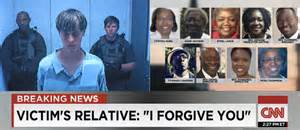
(Sunday Homily) Dylann Roof Will Surely Go to Heaven

Dylan Roof

Readings for 13th Sunday in Ordinary Time: WIS 1:13-15; 2: 23-24; PS 30: 2, 4-6, 11-13; 2COR 8: 7, 9, 11-13-15; 2 TM 1: 10; MK 5: 21-43.

Today’s readings are about death. They contain claims that are absolutely astounding, challenging, and almost too good to be true – especially in the light of last week’s massacre of nine black church goers during a Bible Study class at the historic Emanuel AME church in Charleston, South Carolina.

There the twenty-one year old perpetrator, Dylann Roof, slaughtered the people with whom he had been discussing the Bible just moments before. He had to kill them, he told a survivor, because “You rape our women and you’re taking over our country. And you have to go.”

Immediately, the entire country responded with horror. Many vilified the shooter as they found out about his racist Facebook postings, his easy access to firearms, and his flaunting of the Confederate Battle Flag. They argued about whether he should be executed as a terrorist or as a hate crime killer.

South Carolina, Alabama and other states flying the Confederate Battle Flag talked about removing it from their State Houses. Some discussed honoring the victims by passing omnibus legislation to address South Carolina’s racist structures involving health care, voting rights, housing and education.

President Obama got more personal. He said racism is in our DNA – an inheritance from our past that is difficult to erase.

Surviving families went deeper still. They forgave Dylann Roof choking as they did so through their tears of mourning.

Others asked, “What have we become as a nation?”

All of these reactions are familiar. We witnessed similar phenomena after Sandy Hook and Columbine.

It’s what human beings do in the face of brutality, violence and massacre. We blame; we soul-search. And sometimes forgive. Sometimes we even recognize complicity in the crime and resolve to change.

Those last reactions – forgiveness, soul-searching, and conversion – are justified by today’s readings. As I say, they address the astounding Judeo-Christian belief about death. Few of us can truly accept them. Once again: they seem too good to be true.

The first reading from the Jewish Testament’s Book of Wisdom startles us immediately by proclaiming: “God did not make death.” Instead he fashioned all things to have being. Specifically, human beings were formed imperishable by God. Death is experienced only by those who believe in the devil.

What? God did not make death? We are imperishable? Belief in death comes from the devil? Hold on; there’s more.

Today’s Alleluia verse becomes more specific still. It tells us to cheer up because “Christ has destroyed death” entirely. It has no reality at all.

Then in today’s Gospel, Jesus illustrates that truth. He equates death with mere sleep. There is nothing to cry about he tells those mourning the “tragic,” “premature” death of a 12 year old girl. She is merely sleeping. And then he grabs her by the hand and shows he’s right.

Do we really believe such statements? Is that Jesus story a child’s tale? Do we really believe that God did not make death? Do we believe that Christ has destroyed it?  Is death no more than sleep? Is death a mere illusion – moving from one room to another?

Those who are Christians routinely claim say yes. We even go further. Our belief says that “death” is not the end. Instead it is the greatest, happiest moment in life. For with it, life does not end. It goes on in ways so magnificent, so full of peace and wisdom and joy as to make it difficult to describe and impossible to comprehend.

That’s the faith we claim. Again, it seems too good to be true.

But if that’s what we believe, our faith has practical consequences regarding Dylann Roof and others like Dzhokhar Tsarnaev, Richard Speck, and even Adolf Hitler. The conclusions are these (as inspired by Neale Donald Walsch’s Conversations with God):

  • All those killers did no harm or damage to the ones whose deaths they caused. The souls of those they killed were released from earthly bondage, like butterflies emerging from a cocoon.
  • Their deaths are thought to be “untimely” only by those who believe that anything in God’s universe can happen when it is not supposed to. Given who God is, nothing can possibly be untimely.
  • The people left behind mourn the dead only because they do not know the joy into which those souls entered.
  • The killers themselves remain loved by God and will go to heaven, whatever that means. (There is no other place for them to go. Dante’s inferno was his creation, not God’s. To repeat the metaphor: death itself is the “devil’s” creation.)
  • Their actions were mistakes, those of unevolved human beings. The proper faith-inspired response to them is not punishment, but God’s response: forgiveness, healing, correction, re-education, and eventual reintegration back into the fullness of life.
  • None of them acted alone. Germany produced Adolf Hitler; millions thought he was right. South Carolina and the United States created Dylan Roof; many sympathize with his racism. We all bear responsibility for his actions. In a sense, we are all Dylann Roof. Killing innocents is killing innocents whether it’s in Charleston, Baghdad, Ferguson, or Guantanamo.
  • In God’s perfect universe, the function of Dylann Roof, Dzhokhar Tsamaev, Richard Speck, and even Adolf Hitler is to force us to face who we are and what we want to become. We claim we live in the land of the free, home of the brave, in a democracy where all are equal. Some even hold that we are a Christian nation. Few of us admit subscribing to racism. But then a Dylan Roof forces us to look in the mirror and reassess. Suddenly Confederate Battle Flags come down and politicians are discussing omnibus legislation.

From a faith perspective, Dylann Roof has become our teacher.  His lesson is the reverse of what Jesus, the Buddha, Krishna and Pope Francis have taught. The latter all reveal to us the splendid human beings every one  of us (even Dylann Roof) can become. The former shows us where we are headed if we refuse to change course.

(Sunday Homily) Why Listen to Pope Francis on Climate Change? He’s A Prophet in Our Midst

Readings for 12th Sunday in Ordinary Time: JB 38: 1, 8-11; PS 107: 23-26, 28-31; 2COR 5: 14-17; LK 7:16; MK 4: 35-41.

Thursday Pope Francis published his long-awaited encyclical on the environment and climate change. The document is called Praised Be: on the Care of Our Common Home (PB).

Today’s liturgy of the word is perfectly synchronized with the encyclical’s release. Its elements emphasize God’s sovereignty over nature, its overwhelming beauty and might, the power of Christ-Consciousness to save from nature’s fury, and the new order of God’s Kingdom proclaimed and embodied in the Master from Galilee. Moreover, in articulating today’s themes, the humble Pope Francis distinguishes himself as a “great prophet,” in whom “God has visited his people” – the refrain in today’s Alleluia Verse.

Begin by considering the readings; afterwards we’ll turn to the encyclical and to Pope Francis’ prophetic status.

In our first reading, God speaks to Job sitting on a dung hill like the “pile of filth” into which, the pope says humans are turning the earth (PB 21). Like us, Job is trying desperately to figure out why bad things are happening to his world. Significantly, the Divine One speaks out of a storm and declares God’s sovereignty over nature – its seas with its threatening waves, the sky with its dark clouds, storms with their winds, thunder and lightning.

That theme of God’s sovereignty over nature is picked up in today’s responsorial which emphasizes the fearful might of the world’s oceans. Psalm 107 calls the sea an “abyss” – a threatening black hole. It is the work of the Lord who on the one hand causes storms to arise, but on the other restores calm to the waves and brings relieved travelers back to safe haven. Again, it is God, not humans who controls nature – a major theme of Praised Be.

Then in today’s Gospel selection Jesus calms the sea when it threatens to sink the boat he and his friends are using to travel to the “other shore.”

It’s the identity of Jesus’ followers as “Other Christs” called to do what Jesus did that is emphasized in today’s reading from Second Corinthians. There the apostle identifies Jesus as the herald of a completely new reality. The old order is no longer relevant, Paul says; it has entirely passed away. It’s that reality that followers of Jesus’ Way are to embody and usher in.

All of the themes in today’s liturgy of the word find echo in Pope Francis’ encyclical. Consider them one-by-one:

  • God’s Sovereignty over nature: Here Francis bluntly states that the pervasive understanding that God gave humans power of dominion or destruction over the earth “is not a correct interpretation of the Bible” (67). According to Francis, God denies any pretense of absolute ownership: “The land shall not be sold in perpetuity, for the land is mine; with me you are but aliens and tenants.” (Leviticus 25:23).
  • Nature’s overwhelming beauty and might: The very title of the pope’s encyclical reflects this point. “Laudato Si” are the first words of a prayer composed by Francis’ namesake, the great Italian mystic, Francis of Assisi, identified by the pope as the patron of ecology (10). Of St. Francis the pope writes, “Like it happens when we fall in love with someone, every time that Francis looked at the sun, the moon, the smallest animals, his reaction was to sing, sharing in the glory of all the other creatures. . . he entered into communication with all of creation.” At the same time the Pope Francis argues that today’s climate chaos with its fearful storms, droughts, and extreme temperatures represents the earth protesting against “the violence that exists in the human heart, wounded by sin.”
  • The power of Christ-consciousness to save us from nature’s fury: St. Francis, the pope notes, was a mystic like Jesus of Nazareth (98). He had Christ-consciousness. It allowed him, like Jesus, to speak to elements that most humans understand as impersonal (98). So like Jesus speaking to the wind and waves in today’s Gospel, Francis conversed with animals and regarded the sun as his brother and the moon as his sister. Only the adoption of such sensitivity and reverence, the pope says, can restore balance to our planet (11).
  • The new reality to which we are called: “An economic and technological development that does not leave the world a better place and with an integral superior quality of life cannot be considered progress” (194). So Francis proposes a new model beyond the worship of the “free market.” Its exact shape must be worked out through a process of international dialog (180). However it necessarily includes an international body with legislative power to control excesses of production and consumption connected with unfettered capitalism.”

In providing such clear direction, Pope Francis’ encyclical solidifies his identity as a “great prophet.” As it turns out, he is the only world leader capable of turning the planet around. His power combines the exact virtues required for such a herculean task:

  • Consciousness: Pope Francis’ consciousness is unique. Virtually alone among world leaders, he sees climate change, poverty, morality and spirituality as inextricably interconnected.
  • Courage: Among his peers, Francis’ courage is unparalleled. By comparison the “leader of the free world” (not to mention climate change denialists) looks like a timid child bowing and scraping before the world’s wealthy few – indecisive about Keystone XL and arctic drilling. Moreover, the pope intends to take his message of interconnection directly to the lion’s den. He will speak not only to the United Nations, but will confront a U.S. Congress largely hostile to his position on climate chaos.
  • Credibility: As a scientist with an advanced degree in chemistry and as titular head of the Pontifical Academy of the Sciences, Francis has access to the world’s finest scientific minds. He has done his homework. He addresses not just climate change, but problems undeniably caused by human activity – “water poverty,” food waste, waste in general, overfishing, destruction of coral reefs, human trafficking, income gaps between the global north and south, the rampant elimination of innumerable species, and war.
  • Charisma: The world loves Pope Francis. No other world leader more widely admired or more capable of influencing people regardless of nationality or creed. It is interesting to see Catholic politicians like Jeb Bush, Rick Santorum, Paul Ryan, John Boehner, and Bobby Jindal speak condescendingly about a religious leader’s forays into fields “beyond his expertise” – as if they were better informed and could out-Catholic the pope. This is a battle they cannot win.
  • Constituency: Pope Francis is the leader of 1.2 billion Roman Catholics. There are more than 70 million Catholics in the United States – not to mention the millions of non-Catholics who admire the pope. Can you imagine what would happen world-wide (politically and environmentally) if even a small percentage of them took the pope’s words to heart? What if they radically changed their behavior (and voting) patterns to save the planet for future generations and prevent the poor from suffering the worst effects of industry-induced environmental degradation?

Praised Be leaves none of us off the hook. Rather the virtues just enumerated provide guidelines for each of us. As Paul’s “other Christs” and as humans in general (62) we are called to “Franciscan”:

  • Consciousness: Each of us can become expert. Just reading Praised Be will take us a long way in that direction. Do your part for the planet; read the encyclical now. It is the best, most comprehensive and accessible text available on the most important issue facing our world. (Good supplemental reading is This Changes Everything by Naomi Klein.
  • Courage and credibility: Good information breeds these qualities. Like the pope we all need to fearlessly confront our uninformed, misinforming, head-in-the-sand politicians and demand that they serve us, our planet, children and grandchildren. Enough of letting them confuse us with their obfuscations.
  • Charisma: Few in the world can claim anything like Pope Francis’ charisma. But his fearless outspoken truth-telling is contagious and can infect us all by association. We must follow his example and use our innate talents to spread the message of Praised Be.
  • Constituency: Whether Catholic or not each of us needs to join Pope Francis’ constituency. In my own parish, our Peace and Social Justice Committee plans to buy copies of his encyclical for every parishioner over the age of 16. Beginning in September (about the time of the pope’s visit to the U.S.) we’ll initiate a parish-wide study of the encyclical. We’ll gather to watch Francis’ speeches to the U.N. and our Congress. Praised Be provides a foundation for turning every Catholic Church into a peace and social justice dynamo.

Again, today’s Alleluia Verse proclaims “A great prophet has risen in our midst. God has visited his people.” Today Pope Francis is that prophet. That’s why we should listen to him and follow his example.