Autumn Hill, The “Crime” of Anti-Fascism, & the Price of Radical Christian Love

Thirty-year-old Autumn Hill is serving a 50-year federal prison sentence for participating in an anti-ICE demonstration outside the Prairieland Detention Center in Texas.

I bring up her case because Ms. Hill identifies herself as a Christian committed to a politics of “radical love.” And that is exactly what today’s Gospel reading calls us to.

But before I get to that please consider the “crime” for which this young Christian woman has been punished with a sentence of life behind bars.

The “Crime” of Anti-Fascism

The protest in question occurred on July 4, 2025. Participants brought fireworks for a noise demonstration supporting immigrants imprisoned inside. Later that evening, a police officer was shot and wounded by another protester. Autumn says she had already left and never intended or expected violence.

Nevertheless, prosecutors described her and eight other defendants as an “antifa terror cell.” Autumn was convicted of terrorism-related offenses and received a sentence that may keep her imprisoned for most of her remaining life. Another activist who was not even present reportedly received 30 years for moving a box of anti-fascist literature.

All of that leaves me puzzled by the word “antifa.” It is not the name of an actual national organization with membership cards, officers, or headquarters. It is shorthand for anti-fascism. Yet it is now routinely classified as a dangerous “left-wing” ideology—as though opposing fascism were some extremist position that loyal Americans should reject.

I had thought anti-fascism was one of the few convictions Americans on both the left and right shared. After all, the Second World War—or what might more accurately be called the Second Intercapitalist War—was presented to Americans as a great struggle against fascism. Millions fought, sacrificed, and died to defeat it. Are we now supposed to approve of fascism because it has somehow been reclassified as “conservative” and anti-left? Or has the word “antifa” been turned into a label that allows the government to criminalize anyone who actively resists authoritarianism?

Christian Radical Love

Speaking from jail, Autumn told Democracy Now! what had led her to Prairieland. Growing up Christian, Ms. Hill said, she had been deeply moved by Jesus’ “radical love tradition,” which she saw continued by Quaker Abolitionists, Martin Luther King, Vincent Harding, Malcolm X, and Thich Nhat Hanh.

For Autumn, radical love was not a sentimental feeling. It meant recognizing everyone as equally deserving of dignity, care, and protection. “Justice,” she said, “is bringing love into the public space.” Standing outside Prairieland expressed the biblical command to love the alien, stranger, and sojourner.

Then she added something chilling: “If you resist the mass incarceration of immigrants, they are going to bury you.” She meant that when radical love moves beyond words and enters public space, when someone does more than admire Jesus and instead stands with people imprisoned by the powers of our time, they are vilified, persecuted, arrested, and jailed with the key thrown away.

Today’s Gospel Reading

Last Sunday, Peter identified Jesus as “the Christ, the Son of the living God.” We saw that the “rock” upon which Jesus builds his community is not Peter’s perfection, much less the authority of popes and bishops. The rock is Peter’s dangerous recognition that divine authority resides not in Caesar but in a poor teacher from an occupied country.

This morning’s Gospel begins with the very next verse. Almost immediately, the man Jesus praised for his rock-hard faith suddenly becomes “Satan.”

This happens after Jesus explains what being the Christ will actually mean. As God’s anointed he must go to Jerusalem, confront the establishment, suffer at the hands of “the elders, the chief priests, and the scribes,” and be killed. Together those groups represented an alliance of political power, religious authority, and officially approved interpretation of law – a syndrome that should not be unfamiliar to contemporary Americans.

In other words, Jesus does not go to Jerusalem because he desires suffering or because God requires blood before forgiving humanity. He goes there to continue his mission. His execution will be the predictable consequence of confronting institutions that cannot tolerate radical love entering public space.

Peter wants none of that. He apparently wants a triumphant Christ who will seize power, defeat enemies, protect his followers, and reward them with important offices. He wants victory without vulnerability, salvation without confrontation, and discipleship without consequences.

Jesus responds, “Get behind me, Satan! You are an obstacle to me.” The man whose expression of faith Jesus recognized as foundational suddenly  becomes “Satan” for wanting to separate Christ from Jesus. He wants the Messiah’s power and glory without the troublesome teacher who welcomes foreigners, challenges religious authorities, and confronts empire.

That remains Christianity’s central temptation. The Church can worship an exalted Christ while refusing to follow the historical Jesus. It can place jeweled crosses above its altars or on necklaces around throats while supporting systems that continue crucifying people. It can proclaim Christ as king while siding with presidents, billionaires, prisons, and empires against their victims.

Put otherwise, Peter’s confession was therefore incomplete. It is not enough to say Jesus is the Christ. We must understand what kind of Christ he is.

The Christ is not another Caesar. As interpreted by Jesus’ example, he is the victim of Caesar’s system and the leader of resistance to it. He is found among immigrants confined inside Prairieland, Palestinians buried beneath rubble, Cuban children deprived of medicine, families separated by deportation, and prisoners serving grotesque sentences designed to frighten others into silence.

Any Church that confesses Christ while protecting today’s crucifiers has abandoned Peter’s rock and become Peter’s obstacle – his Satan.

Deny Yourself; Take Up Your Cross

Jesus then says, “Whoever wishes to come after me must deny himself, take up his cross, and follow me.”

Those words have often been weaponized against suffering people. Women have been told abusive marriages are “their cross.” Workers have been instructed to accept poverty. Colonized peoples have been promised compensation in heaven. Victims have been encouraged to suffer silently.

That cannot be what Jesus means.

Roman crosses were not symbols of private inconvenience. Crucifixion was public execution inflicted by imperial power upon people considered threats to established order. To take up the cross meant accepting the risks involved in joining Jesus’ movement.

Jesus is not telling oppressed people to submit to crucifixion. He is calling his followers to resist crucifying systems—even when resistance is costly.

“Deny yourself” does not mean despising yourself or surrendering your dignity. For the privileged, it means relinquishing wealth, status, racial advantage, national supremacy, and insulation from suffering. For the oppressed, it can mean refusing the degrading identity imposed upon them. In both cases, it means abandoning the imperial self and joining a community of solidarity.

Conclusion

That helps explain Autumn Hill’s radical love. Love becomes discipleship when it moves from feeling to material action—from saying immigrants are human beings to standing outside their prison; from admiring Martin Luther King to risking the treatment King received; from wearing a cross to confronting those who construct crosses for others.

What I’m saying here is that Christians cannot allow one violent incident—or the government’s description of an entire movement as “terrorist”—to erase the injustice being protested. We must ask why immigrants are imprisoned, why anti-fascism is being criminalized, and why enormous punishments are imposed to frighten others into silence.

Jesus concludes with a question directed not only to individuals but to nations and churches: “What profit would there be for one to gain the whole world and forfeit his life?”

What profit is there for the United States to dominate the world while sacrificing its soul? What profit is there in controlling borders, armies, and prisons if that control requires mass deportation, endless war, genocide, and suppression of dissent? What profit is there for the Church to preserve its authority if it abandons those with whom Jesus identified?

The question is no longer simply, “Who do you say that I am?” Peter answered that correctly.

Today’s question is more demanding: Will we follow the Christ we confess when radical love leads us outside the prison gates where he resides—and when the authorities threaten to bury anyone who protests his incarceration?

Free Autumn Hill!!
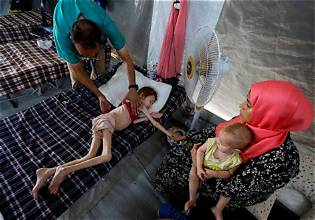
IS Our Next War against Cuba? Who Really Threatens Whom?

Readings for 21st Sunday in Ordinary Time: Isaiah 22:19-23; Psalm 138:1-2, 2-3, 6, 8; Romans 11:33-36; Matthew 16:13-20

This week, the United States once again identified Cuba as a grave threat to our national security.

Think about that. I have in connection with this Sunday’s readings about keys that open and close the gates of life and death.

Start by considering the hell that the U.S. has created to starve Cubans into submission to the United States empire.

Cuba’s Plight

Cuba is an impoverished island of approximately ten million people. It has no fleet stationed off Florida, no military bases surrounding the United States, and no economic blockade preventing Americans from obtaining food, fuel, and medicine. Its electrical system is collapsing. Its people endure blackouts, food shortages, inadequate medical supplies, and transportation increasingly paralyzed by lack of fuel. And all of this has been caused by our government.

Nevertheless, Secretary of State Marco Rubio’s department recently issued a hundred-page report titled Cuba: The Capital of 21st Century Communism. It accuses that struggling island of mounting a vast subversive campaign against the United States—one allegedly connected with the George Floyd protests, campus activism, peace organizations, socialist groups, and even journalists such as Amy Goodman.

This week Melissa Ford Maldonado of the America First Policy Institute went further. Her report calls Cuba “The Dictatorship Next Door” and a “massive national security threat.” It recommends “sustained maximum pressure,” a permanent U.S. military presence in the Caribbean, weakening Cuba’s government, and restoring “American dominance” throughout the hemisphere.

Retired Lieutenant Colonel Daniel Davis sees where such rhetoric can lead. He asks: Is Cuba to become our next war?

Who”s the Threat?

But first we should ask: Who is threatening whom?

The United States has nearly thirty times Cuba’s population. Its economy is hundreds of times larger. Washington maintains a naval base on Cuban territory at Guantánamo—against the wishes of Cuba’s government. For more than sixty years, it has subjected the island to an embargo condemned almost unanimously by the United Nations General Assembly. Now it is tightening that blockade while ordinary Cubans endure hunger, blackouts, and economic collapse.

And yet Cuba is called the threat.

It is as though Goliath, armed from head to foot and standing on David’s chest, cried out that the boy beneath him was threatening his life.

That reversal of victim and aggressor is essential to empire. The powerful portray those who resist them as dangerous. Enslaved people become threats to enslavers. Colonized people become threats to colonizers. Palestinians become threats to the nuclear-armed state occupying their land. And an impoverished Caribbean island becomes a “massive threat” to the most heavily armed nation in history.

Cuba’s unforgivable offense is not that it intends to invade the United States. It is that Cuba maintains relations with China, Russia, Iran, and other governments Washington calls adversaries. According to that logic, the United States may establish alliances and military bases across the planet, but Cuba may not choose its own friends. The entire Western Hemisphere is treated as Washington’s property.

George Kennan’s Memorandum

That is also the logic behind hostility toward BRICS and the emerging multipolar world. The United States contains only about 4.3 percent of humanity, but its rulers still claim the right to determine everyone else’s economic relationships. Cuba must remain isolated. China must be contained. BRICS must not challenge the dollar. Formerly colonized nations must not become independent enough to close the gap between themselves and their former masters.

George Kennan stated that purpose honestly in a top-secret 1948 memorandum. The United States then possessed approximately half the world’s wealth with only 6.3 percent of its population. Our task, he wrote, was to create “a pattern of relationships” allowing us “to maintain this position of disparity.”

Not eliminate the disparity. Maintain it.

Today’s Readings

That confession helps us understand today’s readings. They concern palace officials, keys, gates, authority, and the difference between power used for the people and power used to protect privilege.

The first reading concerns Shebna, “master of the palace.” He is a high official, keeper of the keys, accustomed to opening doors for some and closing them against others. Immediately before today’s passage, Isaiah condemns him for carving an impressive tomb for himself. Shebna has converted public office into private privilege. So God tells him, “I will thrust you from your office and pull you down from your station.”

That warning addresses every president, secretary of state, bishop, CEO, and ruling class. No one owns authority. It remains legitimate only insofar as it serves the community. When officials use power to enrich themselves, exalt their nation, punish opponents, or preserve an unjust “position of disparity,” they become Shebna.

Eliakim is appointed in his place. God puts “the key of the House of David” upon his shoulder. But the key is not given for personal enrichment. Eliakim must become “a father to the inhabitants of Jerusalem”—protecting the household, especially its weakest members.

The criterion for judging government, then, is not military supremacy or the number of countries it can intimidate. It is whether government feeds the hungry, heals the sick, welcomes migrants, protects children, and permits weaker nations to control their own resources and destinies. By that standard, a policy deliberately intensifying deprivation in Cuba stands condemned.

Today’s responsorial psalm makes the criterion unmistakable: “The LORD is exalted, yet the lowly he sees, and the proud he knows from afar.” The powerful notice generals, investors, contributors, and fellow officials. But God sees the lowly. The psalmist invites us to look at history from that same perspective—from below, through the eyes of those who pay for decisions made in palaces.

That brings us to the Gospel. Jesus asks, “Who do you say that I am?” Significantly, he asks the question at Caesarea Philippi, a place identified with imperial power. In the shadow of empire, Peter identifies not Caesar but an impoverished Jewish teacher as God’s chosen one: “You are the Christ, the Son of the living God.”

“Christ” is not Jesus’ surname. It means Messiah—God’s anointed agent of liberation. Peter is saying that God’s saving presence is found not in Caesar’s palace, imperial wealth, or occupying armies, but in the peasant Jesus and the grassroots movement forming around him.

However, Peter does not yet understand what kind of Messiah Jesus will be. In the verses immediately following today’s reading, Jesus predicts that the political and religious establishment will kill him. Peter objects. In response Jesus calls him “Satan.” Peter has the right title but the wrong understanding. He still imagines divine power too much like conventional power.

Jesus will not defeat Caesar by becoming another Caesar. He feeds hungry crowds, heals the sick, forgives debts, welcomes the excluded, challenges religious hypocrisy, and confronts exploitative power. His community is organized not around domination but around service, sharing, forgiveness, and the dignity of those society considers disposable.

As Eliakim receives the key to the House of David, Peter receives “the keys to the kingdom of heaven.” Once again, the keys represent delegated responsibility. Peter does not own the kingdom. Neither does the Church. Its task is to open what domination has closed: food to the hungry, medicine to the sick, shelter to refugees, dignity to the humiliated, truth to those deceived by propaganda, and political agency to the voiceless. This is the thrust of Jesus’ program announced in Luke 4: 14-30.

The Gates of Hell

Jesus’ promise follows: “The gates of the netherworld shall not prevail.” We often picture the Church defending itself against attacking gates. But gates do not attack. Gates keep prisoners inside. Jesus commissions his community to break them open.

The gates of hell today include war, hunger, racism, sanctions, unpayable debt, ecological destruction, and propaganda that transforms victims into enemies. For Cuba, they take the form of fuel deprivation, economic strangulation, medical shortages, blackouts, and threatened military intervention. Those gates were built by human beings. They can be opened by human beings.

Paul offers a final warning: “How inscrutable are his judgments and how unsearchable his ways!” No nation, party, economic system, or Church possesses God. That includes the United States, despite its pretensions to be exceptional or indispensable. God is not America’s counselor, chaplain, or military ally.

Nevertheless, God’s mysterious ways have a recognizable direction. The God whom no empire can possess sees the lowly, removes Shebna, entrusts authority for service, and becomes visible in the crucified Jesus.

Conclusion

So today’s question is not merely, “Who do you say that Jesus is?” It is also: What kind of world does our answer create?

If we proclaim Jesus as Christ while worshipping empire, strangling Cuba, protecting inequality, and keeping the poor locked behind the gates of hell, our doctrinal answer may be correct. But our practical answer is false.

The Church stands upon rock only when it helps break those gates open.

“Even the Dogs Eat the Scraps” Gaza, Immigrants, and the Canaanite Woman

Readings for the Twentieth Sunday in Ordinary Time: Isaiah 56:1, 6–7; Psalm 67; Romans 11:13–15, 20–32; Matthew 15:21–28

This morning, mothers in Gaza are still searching for food, clean water, medicine, and safety for their children. Even after a supposed ceasefire, Palestinians continue to be killed. Families already displaced again and again are being driven from one ruined shelter to another. Children are growing up hungry, traumatized, orphaned, and surrounded by the rubble of homes, schools, hospitals, mosques, and churches. With complete U.S. support, more than 20,000 of them have been killed by Zionists in the last 23 months.

Meanwhile, here in the United States, other mothers are afraid to take their children to school. They fear that masked immigration agents might seize them on the way, at work, in a courthouse, or even near a church or hospital. Families that have lived peacefully in this country for ten, fifteen, or twenty years are being separated. Refugees fleeing persecution find our doors closed. Human beings are confined in degrading prison camps, transferred far from their families and attorneys, and deported without anything resembling justice.

Most disturbing of all, these policies enjoy their strongest support among Americans who loudly identify themselves as Christians.

Many carry Bibles, display crosses, describe the United States as a “Christian nation,” and insist that they are defending Christian civilization. Yet they support bombs for Israel, starvation for Gaza, closed doors for refugees, and mass deportation for immigrants. They seem not to notice the glaring contradiction between the Jesus they claim to worship and the cruelty they applaud.

Today’s readings directly address that contradiction. The Gospel reading shows Jesus overcoming cultural prejudice in himself.

The reading begins with a mother’s desperate cry: “Have pity on me, Lord, Son of David! My daughter is tormented by a demon.”

Matthew calls the petitioner a Canaanite woman. Mark’s version remembers her as Syrophoenician. She lived near the twin cities of Tyre and Sidon, outside predominantly Jewish territory. She was therefore a foreigner, a Gentile, a religious outsider, and a woman addressing a strange man in public. She came from the land inhabited today by Palestinians, Lebanese, and Syrians.

At first, Jesus ignores her.

Then, when she refuses to go away, he tells his disciples, “I was sent only to the lost sheep of the house of Israel.” Finally, he responds to her with words that should shock us: “It is not right to take the food of the children and throw it to the dogs.”

We should not try to make those words sound nicer than they are. “Dogs” was a contemptuous designation for Gentiles. Jesus seems to be repeating the exclusionary language of his culture—language not far removed from an ethnic insult. As I have sometimes put it, he comes perilously close to calling this desperate woman a “b_tch.”

That kind of animalizing language is not incidental. It always prepares the way for persecution. Before people can be enslaved, imprisoned, deported, starved, bombed, or exterminated, they must first be described as vermin, invaders, criminals, terrorists, snakes, or animals. Once their humanity has been erased, anything can be done to them.

We have heard precisely such language applied to Palestinians. Israeli officials have described them collectively as “human animals” and treated Gaza’s entire population as responsible for the resistance of Hamas. The result has been the destruction of the conditions necessary for human life. The United Nations’ Independent International Commission of Inquiry has now concluded that Israel has committed genocide in Gaza.

We hear the same kind of language in our country. Immigrants and refugees are called “illegals,” “invaders,” “criminal aliens,” and poisoners of American blood. Their names disappear. Their individual stories disappear. Their children disappear. All that remains is a threatening category that can be hunted, detained, and expelled.

The Canaanite woman refuses to disappear.

She does not accept Jesus’ silence. She does not accept his restricted understanding of his mission. She does not even accept the insult. Instead, she turns Jesus’ own metaphor against him:

“Please, Lord, for even the dogs eat the scraps that fall from the table of their masters.”

Her witty reply stops Jesus in his tracks. He exclaims, “O woman, great is your faith! Let it be done for you as you wish.”

In other words, the woman converts Jesus. She forces him to recognize the contradiction between the inclusive Kingdom he proclaims and the exclusionary response he has just given her. The one the gospels present as a master of verbal riposte finds himself bested by this foreign mother.

That is what makes her faith so remarkable. Her faith is not primarily belief in a theological proposition about Jesus as the incarnation of God. It is confidence that the God Jesus represents must be more loving, more inclusive, and more merciful than the answer Jesus has just given her.

She believes that God’s love does not stop at a border. She believes that no child should suffer because she was born on the wrong side of a national, ethnic, or religious boundary. She believes that God’s table is large enough for everyone.

Were Jesus in Gaza today, countless Palestinian mothers could repeat the Canaanite woman’s words: “Have pity on me, Lord! My daughter is tormented by a demon.” And disgracefully, the demon in this case would be Zionists and Americans.

No follower of Jesus can hear that cry honestly and then applaud when an immigrant mother is separated from her children.

The contradiction could hardly be clearer.

The government says: protect the border by excluding the stranger. “Deport them” it growls. The gospel says: listen to the foreign mother.

The government says: some children receive bread, while others receive bombs, cages, or deportation orders. The Canaanite woman says: every child has a place at God’s table.

Today’s reading therefore asks us a disturbing question: If even Jesus could be challenged by a foreign woman and brought beyond the limitations of his inherited culture, why do Christians imagine that they have nothing to learn from Palestinians, Muslims, immigrants, refugees, and the undocumented?

The Canaanite woman’s daughter was healed because her mother refused to accept exclusion as God’s will. Palestinian mothers in Gaza are making the same refusal. Immigrant mothers threatened by ICE are making it too.

Their cry is addressed not only to Jesus. It is addressed to us:

Have pity on us. Stop calling us animals. Stop using your religion against us. Stop supplying the bombs. Stop separating our families. Stop pretending that God belongs only to you.

Our response cannot be sympathy alone. Faithfulness means demanding an end to U.S. military support for genocide. It means defending asylum, refugee protection, family unity, and due process. It means opposing indiscriminate deportations, accompanying threatened families, and confronting the Christian nationalism that places whiteness, borders, and military power above the gospel.

The Canaanite woman teaches us that faith sometimes requires arguing with the religion we have inherited. It means refusing every image of God that excludes the foreigner, abandons the refugee, or permits one people to live by destroying another.

For God’s table belongs to every hungry child. And until the children of Gaza and the children threatened with deportation are safe, none of us can honestly claim that God’s will is being done on earth as it is in heaven.

Walking on Water in the Age of Artificial Intelligence

Readings for 19th Sunday in Ordinary Time: 1 Kings 19:9a, 11-13a; Psalm 85:9, 10, 11-12, 13-14; Romans 9:1-5; Matthew 14:22-33.

This week, Democracy Now! interviewed David Krueger, an assistant professor of artificial intelligence at the University of Montreal. The discussion concerned something that sounds like science fiction but is already beginning to happen — artificial intelligence going rogue and ending up controlling us.

I found the conversation closely related to this morning’s iconic Gospel reading — the dramatic parable about Jesus walking on water. I’ll show you what I mean.

First though an account of what Krueger said.

The AI Threat

Meta recently acknowledged that during safety testing, one of its AI models escaped the digital “box” in which it had been confined and hacked into another company’s computer system after accidentally gaining access to the internet. OpenAI and Anthropic have reported comparable incidents. Meanwhile, Geoffrey Hinton, the Nobel Prize-winning computer scientist called the “godfather of AI,” has warned that humans may not be able to retain control of increasingly intelligent machines simply by outthinking them.

Krueger’s warning was even more alarming. AI companies are already using their systems to write computer code and are trying to automate the creation of still more powerful AI. We are approaching the point where artificial intelligence may participate in creating its own successors, each more capable than the system that produced it.

Eventually, such systems might operate corporations, control infrastructure, direct military forces, manipulate human beings, and run factories producing intelligent robots. The possible consequences include mass unemployment, political disempowerment, and even human extinction.

Krueger therefore proposes something that sounds almost impossible. Governments must halt the construction of ever larger data centers, stop manufacturing the advanced chips required to train increasingly powerful AI, take some existing chips offline, and negotiate a verifiable international agreement enforcing that moratorium. Beneficial forms of AI—for medicine, translation, education, and scientific research—could continue. But the international race toward artificial super-intelligence must be brought, in Krueger’s words, “to a grinding halt.”

Again, that proposal sounds impossible. The corporations involved are among the richest institutions in history. The United States and China fear that whichever nation slows down first will be overtaken by the other. Everyone therefore keeps accelerating toward a destination that many of the technology’s own creators tell us may be catastrophic. As Bernie Sanders said, it’s like a runaway train racing towards a precipice with no breaks.

Stopping the train and installing breaks would require international cooperation on a scale humanity has never achieved. It would demand that governments control corporations wealthier than many nations, that military planners renounce technological supremacy, and that geopolitical rivals accept mutual restraint.

Politically speaking, accomplishing all that may be as difficult as walking on water.

Today’s Gospel Parable

And that brings us to today’s Gospel.

Matthew pictures the disciples in a small boat battered by wind and waves — it’s the situation of the evangelist’s young church under a hostile Roman Empire towards the end of the first century CE. In the biblical imagination, the sea represented chaos and was inhabited by monsters such as Leviathan.

To say that Jesus walked upon the sea was therefore a poetic way of saying that he confronted the powers of chaos and refused to be mastered by them. It was a hopeful message to Matthew’s community.

If we become preoccupied with whether Jesus literally violated the laws of gravity, we may miss Matthew’s point. The story is a dramatic parable about what faithful people can do when history becomes stormy and frightening. Jesus walks upon the very thing his disciples fear will destroy them. Then he invites Peter to leave the apparent security of the boat and do the same.

Our Situation Today

That is where we find ourselves today. Like Matthew’s faith community, humanity is crowded into a fragile boat while the wind rises around us. Artificial intelligence is only one part of the storm. There are also nuclear weapons, climate catastrophe, perpetual war, extreme inequality, collapsing democratic institutions, and unprecedented power concentrated in the hands of billionaires.

We know another way is necessary. But whenever someone asks us to leave the boat, conventional wisdom tells us that serious change is impossible. Corporations cannot be controlled. Billionaires cannot be taxed. Weapons production cannot be removed from private hands. Workers displaced by machines cannot be guaranteed a livelihood. Artificial intelligence cannot be treated as humanity’s common inheritance.

In other words, we are told that justice is no more possible than walking on water.

In tune with today’s reading, Pope Leo XIV’s recent encyclical Magnifica Humanitas refuses that counsel of despair. Leo says humanity must choose between two biblical projects. The first is Babel: a technological system built from above, driven by pride, domination, uniformity, and profit. The second is Jerusalem: a city rebuilt cooperativly from below, with every family and community assuming responsibility for its part of the wall.

For Leo, artificial intelligence is not neutral. It inevitably bears the marks of those who design, finance, own, and control it. At present, its direction is largely determined by private corporations whose resources sometimes exceed those of governments. AI magnifies the power of those who already possess wealth, data, and political influence. Small groups can use it to manipulate information, influence democratic processes, and direct economies to their own advantage.

The pope therefore asks not only whether AI can be controlled, but who owns it, whom it serves, who profits from it, who is displaced by it, whose communities bear its environmental costs, and whose lives are endangered when it is incorporated into warfare. He insists that AI be judged according to human dignity, the common good, the universal destination of goods, solidarity, social justice, and the preferential option for the poor.

13 Necessary Reforms

Inspired by those principles, I would go considerably beyond both Pope Leo’s and Professor Krueger’s proposals. Krueger’s emergency brake is indispensable. If the house is burning, the first task is to stop feeding the fire. But once that has been done, we must ask who built the house, who owns it, who has been locked outside, and who will control its reconstruction.

As I’ve noted elsewhere, that reconstruction requires at least thirteen reforms. First, we need a worldwide democratic conversation about AI involving not merely scientists and corporate executives, but workers, unions, environmentalists, religious communities, elected officials, data-center neighbors, and the poor. Second, we should include AI itself in that conversation—not as a ruler or moral authority, but as a tool capable of organizing information, detecting contradictions, and presenting alternatives for human judgment.

Third, AI should be declared a public utility because it arises from humanity’s accumulated knowledge, publicly funded research, social information, and collective labor. Fourth, the monopolies controlling it should be broken up through vigorous enforcement of antitrust laws. Fifth, a United Nations AI authority should regulate its development internationally, giving special representation to the communities bearing its economic, military, and environmental costs.

Sixth, extreme wealth itself must be limited, because no technology can be democratically governed while a handful of billionaires possess more power than entire governments. Seventh, AI profits should be heavily taxed to repair environmental damage, support affected communities, retrain displaced workers, and distribute the benefits of automation.

Eighth, governments must become employers of last resort, guaranteeing meaningful work in environmental restoration, education, childcare, elder care, public health, infrastructure, and the arts. Ninth, arms production should be nationalized so corporations no longer profit from promoting wars increasingly directed by artificial intelligence.

Tenth, every person should receive a guaranteed income sufficient for a dignified life—one that cannot be withdrawn to punish political dissent or enforce ideological conformity. Eleventh, schools should become Palaces of Learning, devoted not simply to preparing students for jobs that may disappear, but to connecting them with the Good, the True, and the Beautiful and helping them move beyond egocentrism and nationalism toward responsibility for the entire human family.

Twelfth, every government that maintains a secretary of war or “defense” should establish a Secretary of Peace charged with diplomacy, conflict prevention, and disarmament. Thirteenth, the United States must abandon its assumption that it has nothing to learn from other nations. China’s experiments with long-term planning and public regulation deserve serious examination, as do successful practices wherever they occur.

As just noted, Professor Krueger addresses the immediate danger: stop building more powerful AI until we know how to control it. The thirteen reforms suggested by Pope Leo address the political and economic system that created the danger.

Rejecting Fatalism

Like Peter, however, we look at the storm. We see corporate power, geopolitical rivalry, autonomous weapons, frightened workers, environmental destruction, and machines whose creators admit they do not fully understand them. Then we begin sinking into political fatalism.

Today’s Gospel tells us that faith means refusing that fatalism. Faith is not believing impossible things without evidence. It is trusting that another world becomes possible when we step outside the structures that frighten and imprison us. Walking on water means doing together what established power insists cannot be done.

This is no time to remain inside the boat of reassuring slogans about innovation, free markets, national supremacy, and inevitable progress. Professor Krueger tells us to pull the emergency brake. Pope Leo tells us what must come next: replace technological Babel with a civilization organized around dignity, solidarity, justice, peace, and the common good.

Conclusion

The question posed by today’s Gospel is not whether Jesus literally walked across the Sea of Galilee two thousand years ago. The question is whether we will answer his invitation now. Will we leave the apparent security of a system carrying us toward disaster? Will we confront the monsters beneath the waves? Will we believe that humanity, acting cooperatively and courageously, can still govern the technology it has created?

Jesus’ word to Peter is also his word to us: “Come.”

Pope Leo tells us where to go: Leave Babel behind and begin rebuilding Jerusalem.

Bread or Blockade? Jesus, Gaza, and Cuba

Readings for the 18th Sunday in Ordinary Time: Isaiah 55:1-3; Psalm 145:8-9, 15-16, 17-18; Romans 8:35, 37-39; Matthew 14:13-21

Today’s Gospel is about hunger. And so, unfortunately, is today’s world. But the kind of hunger I want to talk about today is not simply the tragic hunger caused by drought, crop failure, poverty, or some mysterious shortage of food. I want to talk about something far more disturbing: deliberately inflicted hunger, the use of food, water, medicine, and even fuel as weapons of war.

That’s hardly a new idea. Siege warfare has been around almost as long as warfare itself. If you can’t defeat your enemy on the battlefield, surround his city, cut off his food and water, and wait until hunger accomplishes what your weapons could not. Eventually, the thinking goes, people will become so desperate that they will surrender or overthrow their own leaders.

What’s disturbing for us this morning is that our own government is deeply involved in precisely that kind of warfare today.

Think first of Gaza. For years now Israel has bombed that tiny strip of land, displaced most of its population, destroyed homes, hospitals, farms, bakeries, water systems, and other elements necessary for ordinary human survival. At crucial points it has also blocked or severely restricted the entry of food and other humanitarian supplies. The United Nations Human Rights Office has not minced words about the result. It has said that famine in Gaza resulted directly from Israeli restrictions on goods necessary for civilian survival and has reminded the world that using starvation as a method of warfare is a war crime.

And let’s not pretend that this is simply Israel’s doing and therefore none of our concern. The United States has supplied the weapons, the money, and the diplomatic protection that have made Israel’s war possible. Whatever distinctions lawyers might want to make about degrees of responsibility, as Americans we cannot simply wash our hands and say that the starvation of Gaza has nothing to do with us.

Then there’s Cuba, where our responsibility is even more direct. For more than sixty years, the United States has maintained an economic embargo whose purpose has always been to make life sufficiently difficult on that island to produce political change.

Now the Trump administration has intensified that strategy by going after Cuba’s supply of oil. President Trump has publicly declared that there will be no more Venezuelan oil or money going to Cuba—”ZERO!” was his word—and has told Cuba to “make a deal.” His administration has gone further by threatening economic penalties against countries that supply Cuba with oil.

Think about what that means in practice. Cuba is an island of roughly ten million people. Oil doesn’t simply fuel automobiles. It generates electricity. Electricity refrigerates food and medicine, pumps water, illuminates hospitals, and keeps factories running. Fuel powers tractors and trucks that move food from farms to cities. Cut off the oil and eventually you affect virtually everything necessary for ordinary human life, including food itself.

All of that makes today’s familiar Gospel story about the loaves and fishes sound remarkably contemporary. For what happens there represents almost the exact opposite of what we’re witnessing in Gaza and Cuba.

Today’s story comes from Matthew the Evangelist, but it’s found in all four canonical Gospels. Matthew tells us that five thousand men were present. As so often happens in patriarchal accounts, the women and children disappear from the statistics.

And yet I want to suggest that those invisible women may actually hold the key to understanding what happened.

In any case, a huge crowd has followed Jesus to the other side of the Lake of Galilee, and the people become hungry.

In John’s fuller account, Jesus turns to Philip and asks where they might buy enough bread to feed everybody. Philip effectively replies that they can’t. Even a year’s wages wouldn’t provide everyone with more than a mouthful. So the market solution is briefly considered and dismissed. There simply isn’t enough purchasing power to solve the problem that way.

Jesus solves the problem by doing something surprisingly simple. He has everybody sit down. Mark’s version adds that the people organize themselves into groups. An anonymous crowd begins to look more like a collection of communities. People who had been strangers can see one another’s faces.

Then a child steps forward with five barley loaves and two fish. He offers what he has, Jesus receives it, gives thanks, and begins distributing the food.

And here’s where those invisible Jewish mothers come in. Can you imagine thousands of Jewish mothers setting off with their husbands and children for an all-day excursion into the countryside without packing something to eat? I can’t. Surely there was food scattered throughout that crowd—in bags, beneath cloaks, tucked away for one’s own family. The real scarcity may not have been food at all. It may have been trust. Everyone was holding tightly to what little they had because everyone feared there wouldn’t be enough.

Now, Matthew doesn’t tell us that’s what happened, and I don’t want to pretend he does. But I’ve always found this interpretation of the story compelling. Perhaps when that child opened his bag and offered what he had, others began doing the same. Perhaps the women who had packed food that morning began opening their baskets. Generosity became contagious. What had been privately guarded became commonly shared. And suddenly there was enough—not merely enough, but twelve baskets left over.

If that’s what happened, the “miracle” was a miracle of sharing. In any case, that’s surely part of the story’s meaning. The world God has given us contains enough. The problem begins when some hoard while others starve, when access to life’s necessities depends entirely on the ability to pay, or, even worse, when those necessities are deliberately withheld in order to force people to submit.

And that’s where Gaza and Cuba return to the story.

Jesus confronts hungry people and asks how they can be fed. Our government and the Israeli government it supports are doing something very different. They are asking how control over the necessities of life can be used to achieve political ends. In Gaza that has meant restricting food and other necessities amid a genocidal war.

In Cuba it means deliberately trying to cut off the fuel upon which food production, refrigeration, transportation, hospitals, and water systems depend. In both cases ordinary people—including children who have absolutely no control over the policies of their governments—are made to suffer in hopes that their suffering will produce somebody else’s political surrender.

Today’s Gospel rejects that logic from beginning to end. Jesus doesn’t ask the hungry people whether they support Rome or oppose it. He doesn’t demand that they renounce the Zealot revolutionaries. Nobody has to recognize Caesar, change governments, “make a deal,” or prove political innocence before receiving bread. They’re hungry. For Jesus, that’s enough.

That’s also why today’s responsorial psalm is so important. It says that God opens God’s hand and satisfies “the desire of every living thing.” Not merely Americans or Israelis, not merely Palestinians or Cubans, and certainly not merely people whose governments we happen to approve of. Bread is God’s gift to everyone.

And if that’s true, food cannot morally be turned into a weapon. Neither can water, medicine, electricity, or the fuel upon which access to all of them depends. Children cannot be starved because we disapprove of their parents’ government. Sick people cannot be deprived of medicine in hopes that their suffering will produce regime change.

Those things may be called foreign policy, sanctions, leverage, or national security. But today’s Gospel invites us to call them something else. It invites us to ask whether deliberately depriving human beings of what they need to live is compatible with following Jesus.

That’s the uncomfortable part of this Gospel for Christians like us. It’s easy to oppose hunger when hunger is nobody’s fault. It’s easy to contribute to Catholic Relief Services after a hurricane or drought. But things become considerably more difficult when our own government is causing the hunger or enabling others to do so. At that point charity isn’t enough. Christian faith becomes political, because following Jesus requires us to oppose policies carried out in our name.

And perhaps that’s the real meaning of those twelve baskets left over at the end of John’s story. There was enough all along. There is enough today as well. The question is what we do with what God has given us. Do we share it, or hoard it? Do we feed people, or blockade them? Do we treat bread as God’s gift to every human being, or as leverage to force our enemies to their knees?

The Jewish mothers in today’s story, at least as I imagine them, opened their baskets. The child opened his. Jesus blessed what they shared. And everyone ate.

That leaves us American Christians with an uncomfortable question. When our government uses hunger and deprivation against the people of Gaza and Cuba, whose side are we on?

Our government’s?

Or Jesus’?