Vipassana Reflections (Dec. 4-15, 2013): Alur, Karnataka State, India

dhamma_paphulla_vipassana

Here are 18 little reflections on the 10 day meditation retreat I finished about a week ago. It was extremely intense — a real immersion experience both in meditation and in Indian culture. The living circumstances and diet were Spartan. No talking or even eye contact for 10 days. No cell phones or computers, newspapers or TV. We meditated for 10 hours each day using a method that will be explained below. It was one of the most unforgettable experiences of my life. I feel so privileged to have had the opportunity. India is wonderful!

I
“Arrival”

Here at last.
This is what brought me to India, I’m convinced.
But how did I get here?
Did I die?
I can’t remember doing that
Or how.
I recall saying goodbye to my loved ones – a wonderful hug from Maggie,
A goodbye kiss from Peggy . . . .
“May you find what you’re looking for,”
She whispered.
“I think you already have.”
So here I am – dead to the world.
Is this what heaven is like?
Or am I in hell or in prison?
I’m determined to find heaven here,
And wherever I land
From now on . . . .

II
“The Vipassana Community”

So many people here,
(about 80 I’d guess)
Young, old, men, women,
Tall, short, slim, heavy,
All but 5 of us brown,
All seeking God.
I am not alone.

III
“The Setting”

It’s quiet here.
Green, brown and dusty,
Run-down, like India,
And very slow.
But there’s a well-kept garden space,
In front of the Meditation Hall.
No golf course beauty though
Or slick railings, winding staircases or polished floors.
Instead there are large patches of dirt,
Stoney paths, chirping birds,
Blood-thirsty mosquitoes,
And sunshine all around.

IV
“Where I Sleep”

I sleep in one of the “Gents Dormitories,”
In bed # 22.
Fifteen cots, each two feet apart.
The beds are pieces of slate,
With a mattress on top, just 2 inches thick,
And a small hard pillow.
A piece of canvas suspended from a rod
Separates each bed.
But nothing filters
The farting, snoring, throat-clearing, belching, spitting, coughing and sneezing.
Still, we somehow manage to sleep
From 9:30 till 4:00.
Already by 3:30
Alarms go off.
Fluorescent tubes ignite.
The farting and throat-clearing begins in earnest,
And the race to the outdoor washstands.
By 4:30 we’re in the meditation hall.
Following our breathing – till 6:30.

V
“Be Happy”

“Be Happy”
That’s the mantram here.
Every notice ends with those words:
“Be Happy!”
It’s a strange, forbidden thought for me
Who fears happiness,
(I’ve been told)
Who’s blind to the happiness already bestowed
Here,
And who longs for the pains of hell.
What if I realized heaven is indeed already mine,
Surrendered to it,
Luxuriated in my body, mind and spirit,
And spurned the hell
The saints have sold me?
What then?
Would I actually see God?
Why this terror before heaven all around?

VI
“The Reason for Unhappiness – and Its Cure”

All life is suffering
Says the Buddha.
But why?
What’s the cause?
Gotama went deep inside
To find out.
It’s because of craving,
He discovered.
Senses encounter sense objects.
Attachments and aversions form.
When inevitably thwarted
Suffering results.
To overcome suffering,
Simply detach!
Become a dispassionate watcher of sensations
Pleasant and unpleasant,
Knowing that each
Is governed by
The Universal Law of Impermanence.
“This too will pass”
Is the salvific mantram.
“I am the Happiest of mortals,”
the Enlightened, Unattached Buddha insisted.

VII
“Where I Eat”

Our mess hall has red concrete floors.
We eat on narrow shelves
Each facing a dingy white wall
Whose Scotch Tape wounds
Cry out for soap or paint.
Thousands have sat here before us
Clattering teaspoons
On stainless steel plates.
Rice and dal
And a sweet thick drink
I can’t identify.
No one speaks or makes eye contact.
Afterwards
We line up to wash our cups and plates
At stone pilas.
Then one by one
We melt back into the darkness
Whence we came
Like moths seeking light.

VIII
“The Menu”

Breakfast
Upma (millet mush)
Or biryani rice
Sprouts
Idles (twice)
Pickled green peppers (available at every meal)
Chai

Lunch:
White rice
Biryani rice
Iragi balls (black millet)
Dal
Chapattis
Sliced cucumbers
2 vegetables: green beans, diced beets, squash, okra, or bitter gourd
Sauce: spinach, tomato and onion,
Buttermilk

Supper/Snack:
Fruit (one piece): watermelon, papaya, or banana
Salted and peppered “puffed rice” with peanuts and cilantro
Chai

IX
“Take Things Hard”

I love living like this
(My kids will laugh)
When I was a Columban
The motto was
“Take things hard.”
I bought into that,
I guess,
And still do.
I like the predictable daily routine,
The rock-hard bed,
Cold “showers” from a bucket,
The same meals repeated.
But time to think,
And meditate
And pray.
What more could I ask?
(Well, maybe not the cold showers.)

X
“How to Meditate”

“Narrow your focus,”
The teacher said,
“To the triangle
Whose base is your upper lip,
With its apex, the top of your nose.
Now do nothing
But breathe.
Just observe your natural breath
For 15 hours.
That’s step one.”

“Step 2 is to spend 10 hours
Focusing on sensations
In the same triangular space –
An itch, a pain, a tingling, throbbing – anything.
Work diligently, ardently, patiently.
This was the Buddha’s path
To enlightenment and liberation,”
The teacher advised.
“It can be yours as well
If you follow his technique.
Doing so, you are bound to succeed,
Bound to succeed.”

“Step 3 is to narrow focus still further.
The triangle shrinks.
Its base remains your upper lip.
But its apex becomes the bottom of your nostrils.
Focus on that mustache area.
Identify the feelings there,
And contemplate it – for 10 hours.”

Now you’re ready for Vipassana itself.
The word means “seeing things as they are,
Not as you want them to be.”
You scan your body
From head to toe
For changing sensations,
For 5 hours in the morning
And 4 in the afternoon.
The point is
To experience life’s impermanence
Where it cannot be denied
Within the framework of your own body,
And so be liberated
From cravings and aversions.
Which like all bodily sensations
Always pass.
Do that for 65 hours.

XI
“The Lotus Position”

The lotus position
Is killing me.
After 15 minutes
The fronts of my thighs
Are throbbing uncontrollably
Like waves on a rough sea
I can actually see the turbulent ripples.
And I still have 45 minutes
(Sometimes and hour and 45 minutes!)
To go!
Towards the end,
Each 60 seconds seems like an hour.
Is this what I must do
For the rest of my life
To achieve enlightenment?
“It’s not about torturing yourself,”
The teacher tells me.
“It’s about self-discipline,
And purification of mind.”
I review my life:
For 16 years I’ve gotten up each day at 4:45
For half an hour of meditation.
For 25 years
I’ve run 4 miles every morning
In cold and snow, heat and rain.
“No pain, no gain,” I’ve always believed.
Then a half hour of spiritual reading.
Three vegetarian meals
When I’d rather eat meat.
Another half hour of meditation at night.
What I need is not more pain.
What I need is the Buddha’s understanding
That the pain already here
And the abundant joy
Are both temporary
Subject to the universal law of impermanence
And destined to pass.
Don’t be attached
To either pain or pleasure.
That’s the lesson
And the purification of mind
My teacher was talking about.
But pardon me;
I’m using a chair.

XIi
“I Hate Vipassana”

It’s day four of our course.
During the last half hour of morning meditation (4:30-6:30)
Something snapped.
I felt like screaming,
“This is just bullshit!”
The chanting had started,
Making it impossible for me
To concentrate on my body scan.
All of a sudden,
I hated everything:
India, Indians, Vipassana Meditation, the chanting,
My hard bed
The food
That’s making me gag.
I don’t understand Vipassana!
Yes, I know it’s about
Facing up to life’ impermanence.
But how many times can you survey your body
For changing sensations
Without screaming about bullshit –
From sheer boredom?
It’s a good thing I still have nearly a week
To recover,
Make sense of this,
And find heaven
Here.

XIII
“I Love Vipassana”

The crisis passed
As quickly as it had come.
This morning
After 3 hours
Of fruitless, distracted, infuriating “meditation,”
A conference with our dour, laconic teacher
Helped me see. . . .
He spoke of the importance of posture
For disciplining the mind.
He asked about mine.
“No problem,” I said,
“I’m old,
I don’t do the lotus position;
I sit in a chair.”
“Hmm . . .” was his pitiless response.
Chastened,
I adopted the lotus configuration
For the next hour.
My legs absolutely throbbed.
At one point
I couldn’t tell my right from my left.
But then I saw:
The Buddha based everything,
I realized,
On what was certain,
From the experience of his own body.
Since that body perfectly mirrored
The entire universe,
And the laws of nature,
Reading it
Was better than reading a whole library of books.
So scanning the body
From crown to toe
Is like journeying among the planets,
Like a history lesson,
Like a review of my own life.
Bodily sensations
Pleasant and painful
Were like all the crises of life
Like all its joys – destined to pass.
The point is however
To awaken the body completely,
To make every single cell
Sensational.
And to do the same
With every moment of life.
“Just observe it all objectively
With perfect equanimity,
Without craving or aversion
Everything will soon pass,”
The teacher said.
“Everything is changing,
Changing
Changing.”
I can hardly wait for this afternoon’s
4 hours of “work.”

XIV
“A Meditation High”

This afternoon
December 11 , 2013
At 2:15
I had a unique experience – for me.
(My teacher would later tell me it’s quite common.)
During the last 15 minutes of meditation (1:00-2:30)
I had been sweeping through
My Vipassana survey of my body,
And had done so quickly
Perhaps 6 times in a row.
I stopped.
And all of a sudden
My entire body was tingling
From head to toe
In mild vibration.
I felt my body was filled with light.
The vibration continued for 15 minutes.
This, I believe,
Was the experience
Of the “Inner body,”
The immanence of the divine
That Eckhart Tolle describes
In The Power of Now.
My Indian teacher however
Warns
Not to treat such experiences
With any more preference
Than dryness, distraction or frustration.
All – the pleasant and the unpleasant –
Are merely sensations.
The point of Vipassana is
To treat all sensations the same:
“With perfect equanimity.”
It’s the nature
Of both pleasant
And unpleasant sensations
In meditation
And in life
To arise and then subside.
It’s fatal to crave and form attachment to the pleasant
And to fear and cultivate aversions to the unpleasant.
(Still, the experience was nice!)

XV
“Outta Gas – again!”

Today – the 7th of the course—towards the end
Of our 7th hour of meditation
(with 3 ½ to go)
I just ran out of gas.
My back ached.
I couldn’t bring myself
To scan my body even one more time,
“From the top of your head, to the tips of your toes;
From the tips of your toes
To the top of your head.”
And then those aversions kicked in again –
To meditation, Indian accents,
Endless translations into Kanada and Pali
And our teacher’s chanting
In that artificially deep voice,
With the weird tones, melodies and cadences
I don’t understand.
Then I realized
My aversions are the point.
It’s sensations like this I’m supposed to identify
And observe objectively.
Life is full of them,
And they are merely feelings – at least until I own them
(as I mistakenly have done again!),
Making them mine
And creating new “samskaras”
(Negative behavior patterns)
In the process.
“Just observe the sensations,
The teacher intoned.
View them objectively
With equanimity
And patience.
Like all sensations,
They will arise
And then disappear.
Don’t attach to them.”
Lesson learned . . .
For now.

XVI
“The Problem with Pleasure”

My teacher says that
Pleasure is good
When it’s shared with others:
A good meal with friends
A game of golf with my sons. . .
But not when it’s sought
For its own sake,
Especially in isolation
(Drinking alone,
That bowl of ice cream for a midnight snack).
Those sorts of “pleasures”
Give rise to craving
And attachment
Which the Buddha teaches are the causes of unhappiness.
I’m afraid all of that is true.
My experience shows:
Unsought pleasures
Have filled my life to overflowing.
The pleasures I’ve sought – for me –
Have been the problem:
Craving when they’re absent,
Disappointment when over.
And then there are those samskaras . . .
So give others pleasure in abundance.
And let life shower you with gifts unsought.
(It always will.)
Otherwise, live simply
Your cup will overflow
Even if nothing extraordinarily delightful
Ever happens again.

XVII
“Self-Denial”

All my life
It’s been preached to me,
“Deny yourself.”
And what a burden it’s been!
Now I see
That responding (not reacting) to impulses
Is intimately connected to
The Universal law of Impermanence
And to my anger and defensiveness.
Impulses are impulses
Whether to take that 2nd piece of cake
Or to make a smart retort.
As sensations they arise and pass away.
Recognizing self-indulgence
As a passing impulse
Helps me identify angry sensations
As impulses too –
To be recognized
And given time to pass –
In order to escape misery.

XVIII
“Conclusion”

This has been
A 10 day
100 hour Meditation
On the Universal Law of Impermanence.
(I.e. on reality’s changing nature
As events constantly rise and pass away),
On the need to face
And accept
The present moment
As it is
and not
As we would like it to be,
With equanimity and calmness.
It has been about
Eradicating (uprooting)
The causes of unhappiness
Located in the sensations
Our bodies constantly produce
As our senses meet
Sense objects.
Eradication happens when
We don’t react or become attached to such sensations,
But simply observe them
With heightened awareness –
Objectively, calmly,
Equanimously.
To accomplish that feat,
We must practice
An hour of mediation
Each morning and evening
Scanning our bodies
“from the top of our heads
To the tip of our toes”
And back,
This establishes a pattern
(Based on experience)
For facing the vicissitudes of daily life
Which is constantly
Changing,
Changing,
Changing.
Remember:
The two wings of the Vipassana bird are
Awareness and
Equanimity.
Guest Blog: My Daughter Maggie’s Report on India

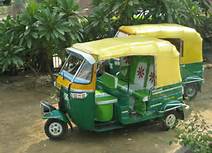
Rickshaw

Today marks our 2-week anniversary in India and it feels like our sabbatical experience has really begun in earnest. As expected, India is a radical departure from the elegant Tuscan countryside we so enjoyed for the last two months. But it’s exciting to be here! India is absolutely teeming with life. Kerry and I are already firing on more cylinders. And the kids are thriving–marveling at the cultural kaleidoscope and relishing inter-generational living (with my parents just downstairs).

It’s not perfect, of course. We miss some creature comforts; but we’re hammering out solutions every day. If you’ve checked our blog lately, you know that we don’t love the house we’ve ended up in. Also, our ears are ringing from the constant street noise. This weekend we took a trip out-of-town, and the silence was actually unnerving. Finally, the kids brought lice(!) home after just one week at school, which was appalling. (And of course Kerry and I did not escape unscathed). All five of us did a round of medical shampoo last week, and we’ll do the second round tomorrow to catch the remaining eggs that will have hatched. But Oscar is still itching his scalp and saying he has “ants in his hair,” so the situation is definitely not resolved. The crazy thing is, Indians don’t seem to think lice is a big deal at all; no need to even keep the kids home from school! We’re going to move to braids every day for Eva. And hopefully get some kind of preventative spray shipped to us from home that we can spray on their heads every day before school for the next six months!

Kerry and I started a daily Mysore-style yoga class last week at a shala called Yoga Indea, and it’s everything we hoped for. Our teacher, Pratima, is very strict in an exhilarating way. She scolds us when something is not just right. And she’s constantly telling us to “feel the work.” Kerry is doing great, even though it’s all so foreign to his body. And this is definitely the most serious and frequent yoga I’ve ever done. Most importantly, we’re both moved by the opportunity to engage in this project together, side-by-side. Our class meets each weekday morning from 11:15-12:15. Afterwards, we stop by the coconut stand for some electrolyte-rich coconut water, and then head over to the kids’ school to pick them up. It’s been really lovely so far. And how great that it’s only just beginning!

We are all in near-constant awe as we walk the streets of Mysore. As time passes, I think we’ll stop noticing how “other” this all is. But for now, here’s a little taste of some things that have grabbed our attention as we move about town:
-Children playing on an improvised swing hanging from scaffolding; the swing seat was made of a bound pile of recycled diaper boxes.
-A whole valley full of white sheets and towels drying on lines–stretching over at least a full city block. (In theory, air-drying clothes is kind of romantic. But not on the side of a busy road in a polluted city).
-Our security guard burning (presumably our) trash on the side of the road, not 50 feet from our front gate.
-An incredible funeral procession that started in front of the children’s school and passed right by our house. In it, a dead body, clothed in a loincloth, sat upright, tied to a throne, covered by a canopy of hundreds of yellow marigolds. The throne rested on a litter, carried by four men. A group of mourners encircled the body, wailing and moaning with a somber drumbeat accompaniment. After about 15 minutes, the procession began to move around the neighborhood before heading across town to the burial ground. (Kerry commented that the tradition couldn’t be great for public health).
-I don’t think we’ve seen a single stop sign here. Instead, every vehicle (double or triple) honks at every intersection; this explains a lot of the noise pollution.
-There are so many animals roaming the streets, especially cows. Someone told my mother that cows are Mysore’s “speed bumps.” That’s actually quite lovely, isn’t it?
-Because there are so many animals, it is imperative to walk with your eyes down at all times to navigate the animal dung, which is everywhere. (This even though Mysore is India’s second cleanest city).
-Rickshaws are our main mode of transportation and the children think they’re pretty great. They’re not at all safe, of course. They’re open on both sides and they weave in and out of traffic, tailgate to the extreme and barrel the wrong way down one-way streets without hesitation. They’re designed for two adults to fit very comfortably. And we can technically fit our whole immediate family in one if the boys sit on our laps. Even that seems like a bit of a stretch to us. But our jaws drop regularly when we pass rickshaws literally dripping with people. 4 adults. Even 5 adults. 10 children. Crazy.
-Everyone seems to litter here, without a second thought. It’s pretty mind-blowing, since littering feels unthinkable in the United States.
-Mysore’s world-famous Dasara festival just ended. We mostly avoided the celebratory events because of the crowds. But we attended a purportedly “less-crowded” dress rehearsal of the Torchlight Parade one night. We found ourselves in a shocking crush of people trying to push through a narrow gate into the stadium where the parade would take place. A line would have worked well, but instead it was a stampede. It’s not at all hard to imagine the fatal scene on the bridge in northern India last week. Definitely not a situation we’re hoping to repeat–especially with kids.

Eva turns five next month. It’s a big birthday and we wish she felt more settled socially. She has made a friend at school from Ohio, and she’s happy about that. But she’s generally (and understandably) a little intimidated by the language gap. (As a side-note, recently Oscar refused to ask an Indian waiter for more water. “I don’t speak Spanish!” he insisted). But back to Eva. She really misses the community and sense of belonging she feels at home. She vacillates between saying she wants to go home immediately, (because she misses ALL her friends), and wishing we could stay in India forever (because it’s so exciting and colorful here!) All things tolled, this is not actually a bad mental place for her to be in right now. But if anyone out there feels moved to send a birthday card her way in the next week or so, I know she would really appreciate it. Little connections to home feel extra-important while we’re still getting settled here. Our new address is:

The Lehnerd-Reilly Family
No. 2639/1, II Main, Valmiki Road
V.V. Mohalla
Mysore, Karnataka 570002
India

Thanks so much to everyone who’s keeping us in your thoughts. We’re happy to report that all is well and we’re on our way to creating a full life here. Kerry made a rather profound “sabbatical observation” just the other day: “People without kids don’t understand that ‘doing nothing’ is possibly doing too much.” And so we keep going.

Love,
Maggie, Kerry, Eva, Oscar and Orlando

Why Am I Here in India? (Sunday Homily)

Religion in India

Readings for 28th Sunday in Ordinary Time: 2 KGS 5: 14-17; PS 98: 1-4; 2TM 2”8-13; LK 17: 11-19. http://usccb.org/bible/readings/101313.cfm

My wife and I have been in India now for six weeks. Peggy’s working as a Fulbright researcher at the University of Mysore here in the country’s south. I’m here . . . I’m only now realizing why.

To tell the truth, I had come to India more or less reluctantly. I mean since retirement I had traveled a great deal including six months in Costa Rica, five months in South Africa, and now the prospect of 4 ½ months here in India. So perhaps understandably, I was feeling tired of living out of a suitcase.

I wondered then, why Life, why life’s circumstances had brought me here to what many consider the “Soul of the World” – an ancient culture with deep, deep spiritual roots?

I thought about that for a long time. Then I concluded that the opportunity here is absolutely golden for spiritual growth.

That’s why I’m here then, I concluded. Life is telling me I need to grow and break away from patterns of living and thought that have unconsciously become too comfortable and stifling.

And what resources there are in India for assisting in that project! There are spiritual masters here, teachers of meditation and yoga. (For example, Sunday I have an appointment with a Past Life Review teacher.)

In addition, Indian food (not my favorite) challenges me to adjust my palate. Cows walk the streets. Dress is different as well. Music too seems completely foreign (but delightful), as Peggy and I have discovered in attending a kind of “Indian Woodstock” festival of traditional Indian chanting, drumming, flute and violin playing during the two-week festival of the god Ganesh. And the traffic. . . . I’ve never seen anything as wild. No rules at all that I can see. I doubt if I could learn to drive here.

All of this is forcing me to expand my horizons and break away from what spiritual masters here call “samskaras” – habitual patterns of perceiving, thinking and living.

That’s what spiritual masters do for a living – they challenge old ways of thinking. It’s what the prophet Elisha did in this morning’s first reading, and what Jesus does in today’s gospel selection. Both readings reveal God’s love for those our cultural norms classify as strange and even evil.

Our first reading centralizes the prophet, Elisha, who worked in Samaria for 60 years in the 9th century BCE. That, of course, was a full 100 years or more before Samaritans emerged as Israel’s bête noir.

Nonetheless, it is true that Naaman may have been even more detestable to Elisha’s contemporaries than Samaritans eventually became to the Jews. That’s because Naaman was a captain in the army of the King of Aram who at the very time of the officer’s cure was attacking Elisha’s homeland. Elisha’s cure of Naaman would be like extending free healthcare to a known al-Qaeda “terrorist” today.

In other words, Naaman is a foreigner and an enemy of Elisha’s people. On top of that he’s a leper, which supposedly further marks him as an object of God’s disfavor. Despite all these disqualifications, the greatest prophet in Israel cures him.

The narrative’s point: there is indeed only one God, and that God loves everyone, even our designated enemies. That was a stretch for the people of Elisha’s time. It’s a stretch for us.

Still, the point is picked up in today’s responsorial psalm. Remember the refrain we sang together this morning: “The Lord has revealed to all the nations his saving power.” According to the psalmist, then, God is not tied to one land. God’s saving power is evident in every place on earth. As the psalmist put it, “All the ends of the earth have seen God’s salvation.”

God belongs to everyone. Everyone belongs to God.

By Jesus’ time, nearly 800 years after Naaman’s cure, Israel still wasn’t buying that message. In fact, they had narrowed God’s presence to particular locations within the land of Israel. Orthodox Jews believed God was present on the Temple Mount in Jerusalem, and could only be really worshipped in the Temple there. Samaritans, on the other hand, believed that the place to worship Yahweh was on Mt. Gerizim, where they said Abraham had nearly sacrificed his son, Isaac.

In other words, Samaritans embodied a sectarian battle among the descendants of Abraham over where to worship God – was it on the Temple Mount or on Mount Gerizim?

Jesus completely ignores the debate. He cures a Samaritan along with nine other lepers – presumably all Jews.

The story is simple: the lepers approach Jesus. He tells them to “show yourselves to the priests.” It’s not clear what Jesus had in mind. Some say there was a law requiring cured lepers to be certified by the priests. Others say Jesus’ intention was to confront the priests, to assert his identity (as his mentor, John the Baptist had done) as the people’s high priest.

In any case, the lepers leave in search of the priests, and on the way are cured. As we well know, only the Samaritan leper returns to thank Jesus. Why? Was it that the priests had persuaded the others not to return, since they were convinced that Jesus was possessed?

On the other hand, the priests would probably have refused to see the Samaritan, because of their deep prejudice.

So the Samaritan turns out to be the hero of the story, not the priests or those who listen to them. Just like Naaman, the one in the story most open to God was the character most alienated from reigning cultural norms.

And that brings me back to my opening point – to my hopes about India. Recently I was reading an article by an Indian scholar of religion who identified Jesus as an Indian yogi. The author suggested that the reason the priests and the people of Jesus’ time and culture could not understand him was that his approach to life and God was completely alien to them.

It was a mystical philosophy more akin to the Far East – to India – than to Middle Eastern Palestine. Put briefly Jesus’ mystical philosophy can be summarized in the words “Aham Sarvum! Sarvum Aham!” –“I AM ALL. ALL is ME.” In fact, Jesus’ basic approach can be summarized as follows:

1. There is a spark of the divine within every human being.
2. That spark can be realized, i.e. energize every aspect of our lives in the here and now.
3. It is the purpose of life to live from that place of divine presence.
4. Once we do so, we will recognize God’s presence in every human being and in all of creation.

Or as John the Evangelist has Jesus say:

1. “I am in the father, and the father in me.” [John 14.10]
2. “I am in my father, and ye in me, and I in you.” [John 14.20]
3. “I and my Father are One.” [John 10.30]

In other words, the guru (Jesus), the disciple, and God are all One. Separation of God and Her creation is nothing but illusion (MAYA). ALL IS ONE.

All of this confirms for me what I’ve learned from Eknath Easwaran, my Indian teacher of meditation over the last 15 years: at their summit all the world’s Great Religions come together in the mystical vision just articulated.

If all of this is true, what does all of this mean for us today? I think this at least:

• There are many ways to understand God.
• Sectarianism is foreign to the Divine Reality.
• God loves our mortal enemies and performs miracles on their behalf just as God did in the example of Naaman.
• More specifically, God loves al-Qaeda fighters and the ones we call “terrorists” just as much as (S)he does us. Our enemies represent God’s presence and so do we. We should treat them as though this were true.
• God loves those we classify as unclean, unworthy, ungodly, and untouchable.
• More specifically, God loves people with AIDS; God loves the foreigner, the outcast. They represent the presence of God and so do we. And because of our tendency to reject them, they are somehow closer to God than we are.
• It’s good to step outside the reach of our culture’s categories, at least once in a while.

Rearranging the Deck Chairs on the Titanic: Reflections on a Reunion of Former Priests

806

The Catholic Church is a sinking ship. So are its orders of priests and nuns. The “reforms” presaged by the election of Pope Francis are like rearranging the deck chairs on the Titanic. They’re busy work for those whom history has rendered superfluous.

Similarly, for all the good will behind them, efforts at reforming orders, congregations and societies of priests and religious are doomed from the start. Typically they endorse the hierarchy’s negligence by failing to address the substantive causes of the crises that afflict the sinking church and its semi-submerged sub-organizations.

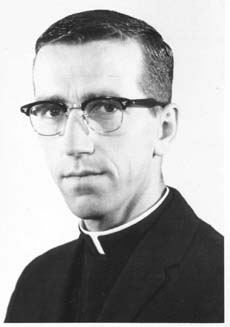
These are the conclusions I drew after attending a joyous reunion of priests and former priests (and their wives) belonging to the Society of St. Columban. That’s the Irish-founded missionary group I joined in 1954 (when I entered the minor seminary at the age of 14) and which I left in 1976. I had been ordained in 1966 (ordination photo above — taken by my classmate, Tom Shaugnessy).

The reunion took place in Bristol, Rhode Island over a three-day period just last week (July 21st-23rd). It was great getting together with friends, colleagues, teachers, former priests and their spouses. It was wonderful to see so many of my one-time missionary friends with their beautiful wives from Ireland as well as Japan, Korea, Chile and other “fields afar” (as the title of one missionary magazine used to put it). Several men’s spouses were former nuns. I can only imagine the wonderful love stories each of those couples might tell.

As with all reunions, there were the usual reminiscences from years long past. We made wisecracks about how all of us have aged, and observations about how quickly time has flown. There was catching up to do about retirement, children, grandchildren, illnesses, deaths of former colleagues, and plans for our declining years – and always in a light-hearted spirit. We even went for a cruise around the Newport Harbor. Great fun!

On the final day, things turned more serious. The newly-elected Regional Director of the Columbans spoke to us about the Society of St. Columban today. After introducing himself, this comparative youngster of 51 years informed his appreciative audience of recent efforts to update the Society in the face of zero vocations over the last number of years in Ireland, the U.S., England, and Australia. The situation is aggravated by the advancing ages of the 400 or so priests who remain in the Society – so many of them over the age of 75.

In response, we were told, the Columbans have made efforts at recruiting seminarians from the “mission” territories. As a result, Columban ordinations have taken place in the Pacific Rim – in Korea, Fiji, the Philippines, and also in Latin America. The Society’s directorate has changed accordingly. With its headquarters now located in Hong Kong instead of Ireland, the current directing council is a rainbow blend of Irish, Latin American, and Philippine “superiors.” Additionally lay associates, both men and women have become more prominent in the Columban scheme of things.

Besides such developments, there have been efforts at dialog with Muslims, especially in Pakistan and the Philippines. Social justice for the poor and ecological concerns have become central themes of documents recently authored by Society “chapters” or long-range planning sessions. Above all continued emphasis on brotherly love and legendary Columban hospitality continue as hallmarks of this group about to celebrate the 100th anniversary of its founding as the “Maynooth Mission to China” in 1918. (“Maynooth” was the name of the Irish National Seminary back then.) With China now open, Columbans are currently making efforts to reintroduce themselves into that continent-sized country thus reclaiming the Society’s original focus.

All of that seemed encouraging. Such updating demonstrates the good will, generosity and continued vitality of men and women still intent on doing good in the world and serving the God their faith envisions. Columbans remain for me the most inspiring community of its kind I’ve ever known.

However questions surfaced for me about the reforms just mentioned. And unfortunately there was little time to raise – much less probe – them during the discussion period that followed the new Regional Director’s fine presentation. For instance:

• What does it mean that Pacific Rim Catholics are more open to the priesthood and mission than Europeans and North Americans? Is faith stronger in the former colonies? Are candidates European wannabes? Or has a pre-Vatican II brand of Christianity been introduced in the Pacific Rim that avoids the crises of the celibate priesthood that emerged following that historic Council whose 50th anniversary we’re currently celebrating?
• Does the incorporation of women and laymen as associates give them equal voice and vote in Society matters? Will there soon be a woman Superior General governing the Society of St. Columban?
• What is the point of Columban-Muslim dialog? Is it conversion of the Muslim dialog partners? Is it enrichment of all conversation participants? Is it collaboration and cooperation? If so, what is the shared project?
• For that matter, what’s the point of missionary work itself? After all, Vatican II recognized the value in God’s eyes of Hinduism, Buddhism, Islam and other faiths. Are missionaries still trying to convert faithful people whose culture seems so distant from a Christianity so long and fatally associated with empire and exploitation?
• What specifically are Columbans doing about ecology and care for the planet? It’s easy for organizations nowadays to claim “green” commitment, but where does the rubber meet the road? Are Columbans encouraging vegetarianism as spiritual and ecological discipline? Are they cutting back on air-conditioning? Are they mandating that their cars be hybrids or have targeted miles-per-gallon ranges? Are they mounting campaigns focused on global warming and the introduction of genetically modified seeds in Latin America and Asia?

Those are some key questions that necessarily remained un-discussed at our Columban reunion. But I did get the opportunity to pose one whose answer led me to draw the conclusions I shared at the beginning – about the Columbans, organizations like them, and the Catholic Church itself being sinking ships. I asked:

• The great Catholic theologian, Karl Rahner, has observed that the Holy Eucharist is constitutive of the church. Without Mass, he said, there simply can be no church. Therefore it is positively sinful on the part of church leadership to deprive Catholics of Eucharist because of an artificial priest shortage caused by blind commitment to mandatory celibacy and an all-male clergy. What are the Columbans doing to lobby for fundamental change in the church to make the Eucharist more available to the communities Columbans serve?

Understandably, the Regional Director gave the expected answer – the only one possible, I think. “Of course,” he said, “where 2 or 3 Columbans get together those questions are always discussed. However, we’re such a small and relatively insignificant organization, we have so little clout. So, no, we haven’t discussed petitions or protests on those matters.”

In other words, the sin of mandatory celibacy for priests, the sin of an all-male clergy will continue until the Vatican repents. But even Francis I is not about to don sack cloth and ashes in that regard.

That institutional obstinacy was underlined for me in the Mass that concluded our magnificent reunion. Two male priests stood before a congregation of “priests forever” – the latter adopting subservient positions in the pews instead of concelebrating. No woman had any role in the Mass. Additionally, the recently mandated pre-Vatican II Latinisms reminded me that the church is actually regressing:

• “Consubstantial” (instead of “one in being”)
• “And with thy spirit” (rather than “also with you”)
• “Shed for you and for many” (not “all”)
• “It is right and just” (instead of “fitting”)
• “Come under my roof” (rather than “receive you”)

The Latinisms are not trivial. They represent subtle messages that the signature liturgical reform of Vatican II is over. In the context of the Columban reunion, they demonstrated how hemmed in good people are by decisions from above.

Talk about rearranging deck chairs . . . . I could almost hear the water bursting through the Ship’s gaping hull.

What Is Retirement (and Life) for Anyway?

retirement

Last night Peggy and I had some dear friends over for drinks and conversation. Our friends retired two years ago – about a year after I did so myself. So more or less naturally, our conversation turned to retirement and its ups and downs – and to Florida and warmer climes.

The ups of retirement are obvious. They include not having to show up at the office any more. They entail being free each day to decide what to do. Travel, movies, hobbies like golf and tennis can be pursued freely in retirement. There’s more time to spend with children and grandchildren. And there’s space to think, write, study and pray. All of that is what people dream about doing in their golden years.

And so far, even though Peggy has not yet retired (and probably won’t for 3 or 4 years), my first years of retirement have been filled to overflowing with more of the expected ups than I can count. I’ve spent parts of 3 semesters in Costa Rica teaching in a Latin American Studies Program that was completely enjoyable and fun. The program served North American students from a large number of Christian colleges and universities. It was their “term abroad.” And it introduced them to the realities of the underdeveloped world, taking them to impoverished parts of Costa Rica, living with local families in Nicaragua and investigating first-hand the successes and shortcomings of socialist revolution in Cuba.

My part in the program was to introduce our Evangelical (and Republican) students to liberation theology. On the whole, the students were surprisingly open and receptive. And though I’ve always loved teaching, I’ve never found it as enjoyable as in Costa Rica.

Then last spring Peggy and I used her sabbatical to spend five months in Cape Town, South Africa – or, as they say, in the heart of “whitest Africa.” We were completely captivated by Cape Town which we agreed is the most beautiful city we’ve ever seen. We loved Table Mountain and the beautiful sea vistas everywhere we traveled. We also learned a great deal in South Africa, not only about politics and history, but about African spirituality and the powerful energy of rock formations subtly transformed by the San and Koi-Koi Peoples to track the movements of the heavens.

We traveled South Africa’s “Wine Route” and visited game parks with our grandchildren and their parents. I played golf with my son Brendan on a few of South Africa’s best courses. We passed a day on Robben Island, where Nelson Mandela was imprisoned for 17 of his 28 years of punishment in South African jails. We also spent weeks with Ann Hope and Sally Timmel, colleagues of Steve Biko with a life-long commitment to activism and the struggle against apartheid. We compared notes with them about common experiences, shared friendships, theology and spirituality. What a privilege that was!

With South Africa behind us, we’re now looking forward to five months in India. Can you imagine that? My Peggy has won her second Fulbright Fellowship (the other having brought us to Zimbabwe for a year back in ’97-’98). During this Fulbright term, Peggy will be teaching in Mysore. This will be our second trip to India. In 2004 we attended the World Social Forum in Mumbai.

This time we’ll be living in India with our daughter Maggie, our son-in-law, Kerry, and their three small children, Eva (4), Oscar (2), and Orlando (10 months). Kerry is taking his own sabbatical from his work in finance. So this will be an extraordinary opportunity not only to learn from a deeply spiritual culture, but to bond deeply with our grandchildren.

And then there’s this blog. It’s been unexpectedly fulfilling. I’ve never written as much as I have over these past three years, not only on my blog site, but on OpEdNews and in our local newspaper. Writing a homily each week has kept me grappling with my life-long commitment to spirituality, faith and theology. It’s all helped me think more clearly about life and its purpose.

Actually I’ve thought of the blog as a vehicle for reclaiming the formal priesthood I left more than 36 years ago – as has my involvement in the planning committee of a local Ecumenical Table Fellowship. I’ve seen this new work as a demonstration of the fact that Christian faith isn’t synonymous with fundamentalism. Approaching faith historically and contextually can recover the authentic teaching of Yeshua the Nazarene (the opposite of fundamentalism) and engage and animate radicals and progressives in the process.

How are those for retirement ups? At some level, I couldn’t ask for more.

But then there have been unexpected downs. With retirement comes a loss of identity. With my particular work as a college teacher, I had one of the best jobs I could think of. Imagine getting paid to read, study, write, and travel – all so that you might have hours of interesting conversations with young people?

Yes there was drudgery involved – papers to grade, committees, endless meetings, “administrivia.” But there was no heavy lifting. And there were those long vacations – three weeks at Christmas, three months in the summer, and mid-term breaks fall and spring. The “pay” for teaching went way beyond a monthly check. It involved those conversations I mentioned, but also the resulting life-long friendships, “turning on” students to life’s big questions, seeing that “light” go on, and watching students take their places as agents of transformation in the world.

Most of that (except the now-endless vacation) disappeared with retirement. And whereas previously I could walk across Berea’s campus and meet my students and former students at virtually every turn, I now find students (and myself!) largely anonymous. I miss the interactions with young people. I even have to show my identity card when I enter the Seabury Athletic Center to do my morning exercises. “Mike who. . .?”

On the one hand I find the question liberating, but also a little depressing. It means my identity is gradually slipping away. It all reminds me of the inevitable: the final slipping away, and the complete loss of identity and of any conscious trace of having been here at all. That’s not a morbid thought. It’s simply a fact. Following our deaths and within a generation or less, virtually anyone I know will disappear entirely from everyone’s memory.

And that brings me to my question: what is life for anyway? Truth is: I don’t know for sure.

And that’s where faith comes in. I’ve come to understand faith as taking a leap into what we don’t know for sure. I mean life might be just about family, travel, good food and drink, getting strokes from grateful students, breaking par or watching movies. However, I don’t think it is.

Instead, I’ve come to agree with the great mystics of all traditions – Hindu, Buddhist, Muslim, and Christian. At their highest peak, all of those traditions come together on the following points:

1. There’s a spark of the divine within each of us – our deepest identity.
2. Each human being is called to live from that divine place – to actualize God’s love in the world.
3. And that’s the purpose of life.
4. Gradually, as one strives for such actualization, s/he begins to see divine presence in everything, in all of creation.

So that’s what life is about for me – seeing God everywhere and responding accordingly. That’s what retirement is about. Sixteen years ago I decided to leap in that direction. My jump has involved the daily practice of meditation, repetition of my mantram, training the senses, spiritual reading from the mystics, spiritual companionship, slowing down, and one-pointed attention – the eight-point program of Eknath Easwaran, the great meditation teacher from Kerala state in India. In retirement I finally have time to follow Easwaran’s program more wholeheartedly than ever.

None of this excludes the other activities I’ve mentioned. Peggy and I will still travel, and spend time with our children and grandchildren. I’ll still hack around on the golf course, study, write, and give the occasional class. And I’ll continue learning to grapple with and mostly enjoy my anonymity and nobody-ness.

But meditation and its allied disciplines puts all those things in perspective. And it gets me ready for my next incarnation. [Oh yes, I’ve come to agree with the mystics (including Yeshua) that life won’t end for me or anyone else when those last memories fade . . . .]

Do you agree?

ReFirement Not Retirement

I have a friend who like me walked away from his job in 2010. Here in Kentucky, where people talk about retirement as being “retarred,” my friend likes to refer to himself as “retarded.” Despite its political incorrectness, his line usually draws a laugh or at least a smile.

Last week when he was speaking at Berea College, the great spiritual theologian, Matthew Fox, had a better line. He said the adjective “retired” should itself be retired. It should be replaced, Fox said, with the word “refired.” Of course, he meant that the “third age” should not be characterized by withdrawal from the struggle for peace and justice. Rather it should represent a time for refocusing, re-evaluating and re-committing.

Matthew’s redefinition reminded me of another friend of mine (also a former priest and one of my colleagues in the Columban ordination class of 1966). A few years ago when we were both attending a reunion of former members of the Society of St. Columban, I had made a couple of public remarks – I forget about what. Afterwards my classmate said, “I can see you still have ‘the fire;’ I just don’t feel it anymore.” And yet as I spoke with him and his wife, it was clear to me that they both had as much “fire” as I did. They were both engaged, reading, thinking, discussing, and trying to be the change we’d all like to see in the world and in the church. They were refired but didn’t see it.

The fire in their bellies and in mine could be called “enthusiasm” in its etymological sense. The word comes from the Greek phrase “en Theos” – being “in God.”  A person who lives “on fire” lives in God; she or he is enthusiastic. She or he recognizes the spark of the divine in herself, in others, and in all of creation. As a result, she lives accordingly. To do so as never before is my refirement aspiration.

So I’m going to stop thinking of myself as retired. Instead I’m now thinking in terms refirement. It’s a time when as never before I’m free to go where the spirit leads me. Doing this blog is part of it. So is being faithful to the daily practice of meditation which by definition is immersion en Theos. Through both the blog and meditation I’m trying do my small part to rescue Jesus’ radical vision of a world with room for everyone (he called it the Kingdom of God).

My Wife’s First Mass

My wife, Peggy, said her first Mass last Sunday.

I remember my own “first Mass.” It was at the beginning of January in 1967. Strictly speaking, it wasn’t really my first Mass. I had been ordained a priest in the Missionary Society of St. Columban on December 22, 1966. So it was maybe my 12th Mass. But it was a Big Deal anyway – on a par with a wedding reception.

All my relatives were there – at some country club dining room in Downers Grove, Illinois just after New Year’s. There I was at the head table, the uncomfortable focus of all the attention. I was sitting there with my mom and dad and with Fr. Stier, my pastor. As I recall some Columbans were present as well.

As I said, it was a big deal – speeches and everything. Of course, I was the final speaker. I don’t remember what I said – except one phrase where I thanked my mom and dad, brother, Jim, and sisters, Rosanne and Mary for “virtually praying me through the seminary.” That was true. In retrospect, I don’t understand how I made it through all those years from the time I entered the seminary at 14 till I was ordained at 26. It’s enough to make you believe in the power of prayer – or something.

The miraculous nature of it all stands out because for all practical purposes, the training all those years was without women. Can you imagine that – during the most formative years in a person’s life? Thank God for my mother and sisters and for the summer vacations which brought me into (very guarded) contact with women. How can men become human without them?

In any case, I somehow overcame all of that too. So here I was a couple of weeks ago and after 37 years of marriage at my bride Peggy’s First Mass. No Big Deal. No head table. No speeches. Just Peggy standing there, hands extended the way we’ve all seen priests do, and leading us all in the Eucharistic Prayer that both of us had composed for the occasion. It was beautiful.

I say “no big deal” because the context is an ecumenical community of Catholics, Lutherans, Presbyterians, Baptists, and others who have taken seriously the idea of “priesthood of the faithful.” So if “the faithful” are priests, women are priests – or at least the priesthood should be open to them.  Why shouldn’t they officiate at the Eucharist in this community seeking to break free from the bondage of patriarchal church traditions?

Even Catholics in the group didn’t blink when they saw Peggy there. We’re ready for change. Despite our best efforts, most of us have become alienated both from our local church and from the Church of Rome. And it hasn’t been just one issue – not simply the patriarchy or the absence of women in church leadership positions. It wasn’t just the pedophilia crisis, not just the Vatican’s put-down of progressive sisters, or the “Republicanization” of the hierarchy, the amnesia about Vatican II, the silly liturgical language changes that no one understands (e.g. “consubstantial” has replaced “one in being”), not just the childish sermons. It’s all of that and the general irrelevance of the church whose hierarchy despite Vatican II is hundreds of years behind the post-modern curve. It’s surprising we haven’t just written it all off as b.s.  In fact, of course, many have

On the other hand, Peggy’s First Mass was a huge deal. It and our ecumenical community represent an awakening of “the faithful” and the fruition of seeds sown at the Second Vatican Council whose 50th anniversary we are about to celebrate.

The Spirit still moves and cannot be contained.

Next Wednesday: the “Table Prayer” Peggy and I composed

Retirement Notes II

I had a revealing dream last night. It woke me up with a start and gave me the clearest feeling that I’ve got to finally grow up! There I was 72 years of age and trying out for the basketball team at the local high school all three of our children attended years ago.

Now, in “real life” (as they say), I used to be a pretty good basketball player. And in my dream, I was thinking that I still was, even though I was having trouble making my jump shot.

Then the moment of truth came. The coach was selecting the starting five. I was sure I’d be picked. To my surprise, I wasn’t. Next he started calling out names to fill out the roster. You guessed it; my name wasn’t called. So there I was at 72 left on the bench all alone and watching very inept, out-of-shape high schoolers taking “my place.”

All of a sudden I found myself wearing a suit and tie instead of my basketball stuff. Now, I hardly ever wear a suit. And one of the next times I do, I’ll probably be laid out in a coffin. Hmm.

I think the dream depicted my feelings about retirement – and perhaps life’s approaching end. I feel I’ve been told in several different and important (to me) venues that I’m not really wanted the way I used to be, and that the world can get along quite well without me.

Well, duh!

But even if it’s obvious, I’m the sort that has a hard time stomaching the message and accepting the gift of retirement and “declining years” with the grace, gratitude, and relief most people associate with leaving formal employment behind.

It’s what I have to work on. I suspect there’s a lot of “Catholic guilt” lurking somewhere here. And there’s a whole lot of “letting go” that I’ll have to work through. I’ll be reflecting on such issues here over the coming weeks.

Retirement Reflections: Lots of Travel So Far …

I turned 72 the other day. I’ve been officially “retired” for about 26 months. It’s time to assess my new status. I’ll try to do that in a series of postings on retirement. No doubt there are few who will care. And why should they? No, I don’t expect that many will read these postings.  I’m thinking of them more or less as therapy for me.

To begin with, I can’t tell you how many times friends and former colleagues have asked me “. . . and how do you like retirement?” The lilt of their question and the look on their faces suggests that they expect me to say “It’s been terrific. I’ve never been happier.”

However, it’s been more complicated than that. For one thing, I don’t think my retirement really began till about two months ago. That’s because since my end-of-career party in May of 2010 I’ve been teaching off and on in Costa Rica – in a Latin American Studies Program. Even apart from that, my bride of 36 years, Peggy, and I have been traveling almost non-stop. So I feel the jury’s still out on my particular retirement – at least if you think of it as kicking back, slowing down and withdrawing from the fray.

Let me get more specific. Travel-wise, here’s the way I’ve been spending my time for the past 26 months:

  • Three eight-week stints in Costa Rica teaching in a Latin American Studies program = 6 months
  • Five months in South Africa accompanying Peggy on her sabbatical in Cape Town.
  • Ten weeks with Peggy in Mexico while she researched her forthcoming book.
  • Three weeks in Costa Rica for Christmas with our entire immediate family (2011)
  • Two weeks with our daughter Maggie’s family on a Mexico vacation (2010)
  • Two weeks with Maggie’s family on a Mexico vacation (2011)
  • Five day visit with our eldest son, Brendan in Ciudad Juarez, Mexico where he’s stationed in the U.S. Embassy (2011)
  • Four visits with Maggie in her home in Westport, CT = 2 ½ months total
  • Three visits with our youngest son, Patrick in New Orleans where he taught first grade in the Teach for America program = 1 week total
  • Two summers in Canadian Lakes, MI – in the lake cottage we purchased from the estate of Peggy’s recently deceased father = 3 months.

TOTAL TRAVEL TIME: about 21.25 of 26 months or well more than the majority of my first two years + of retirement has been spent on the road.

I’m feeling it’s about time to settle down and find out what leaving employment behind is really like.

But so far It hasn’t been all travel. At the beginning, I set some definite goals for myself that covered areas of my life I wanted to grow in. Looking back, I can see that I’ve met some of those goals. Others . . . not so much. . . .  More about that in my next retirement posting.