Shenzhen and Christ the King: Who Gets the Last Word?

Readings for the Feast of Jesus Christ King of the Universe: Ezekiel 34:11–12, 15–17 · Psalm 23 · 1 Corinthians 15:20–26, 28 · Matthew 25:31–46

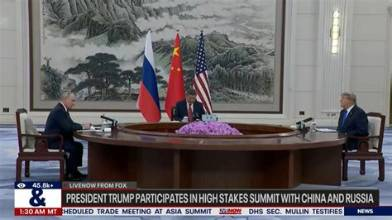
Last week witnessed an extraordinary reversal in Shenzhen, China. At the Asia-Pacific Economic Cooperation summit, Xi Jinping, Vladimir Putin, and Donald Trump sat down together at a large round table. Whatever agreements eventually emerge from their encounter, the meeting itself made a statement. Washington had to sit with two governments it has spent years trying to contain and acknowledge that the future would have to be negotiated among them.

I read that picture as another public admission that the unipolar moment following the Soviet Union’s collapse has run its course. For decades, our leaders behaved as though the United States could decide which governments were legitimate, which economies could trade, and which countries needed bombing into submission. Shenzhen brought a different picture into focus. China was hosting. Russia was at the table. The American president had to talk to both.

All this gives us something to think about as the Catholic Church celebrates a working man, tortured and executed by an occupying empire, under the astonishing title “King of the Universe.” There’s a great reversal for you. The man the authorities disposed of gets to judge the authorities. And in today’s Gospel, he tells us exactly whose treatment will determine the verdict.

But first, consider the histories those three men brought to the table. China continues to identify itself with the Global South. Its leaders repeatedly invoke the “Century of Humiliation,” beginning with the nineteenth-century Opium Wars. British merchants profited from selling an addictive drug to Chinese people. When Chinese authorities tried to stop the trade, Britain went to war. France joined Britain in the second war. Defeat brought China unequal treaties, concessions, and foreign interference in its affairs. Complete humiliation.

Think about that whenever Western leaders lecture the world about a “rules-based order.” Chinese people have reason to remember who wrote earlier versions of the rules and how they were enforced. At Shenzhen, the country once compelled at gunpoint to accommodate foreign merchants was welcoming the American president on its own ground. Anyone interested in understanding China should at least try to appreciate what that means.

Though Russia arrived with a different memory, it still finds itself connected to the Global South. After the Soviet Union collapsed in 1991, Boris Yeltsin’s government embraced market reforms welcomed and supported in the West. Russians endured economic collapse including ruined savings, lost pensions, healthcare, education, subsidized housing, and the transfer of public wealth into private hands. In the notorious “loans for shares” scheme, well-connected bankers acquired stakes in valuable enterprises at a fraction of their worth. The resulting oligarchs helped finance Yeltsin’s reelection. Ordinary people paid for a transformation that was supposed to make their lives better.

Russia’s humiliation of the 1990s helps explain why Moscow’s demand for equal standing resonates with countries accustomed to receiving orders from Washington and Western financial institutions. People who have lived through structural adjustment can recognize what happens when public assets become bargains for the wealthy and everyone else is told to tighten their belts.

China and Russia are also founding members of BRICS, alongside Brazil, India, and South Africa. The expanded grouping includes Egypt, Ethiopia, Iran, Indonesia, and other countries with varied histories of colonial rule, occupation, and foreign domination. Together they are building ways to cooperate and exercise influence beyond institutions long dominated by the West. Shenzhen gave that wider change a memorable image. Two major participants in that effort were sitting with the American president as powers whose agreement he needed.

For those accustomed to seeing their countries treated as problems to be managed, that carries enormous symbolic force. The powerful can be made to negotiate. Arrangements presented as permanent can change. Those who have been humiliated can acquire the means to insist on respect. Christians ought to recognize something familiar in that possibility. Jesus kept talking about reversals of just that kind.

Now listen again to the title of today’s feast. “Our Lord Jesus Christ, King of the Universe.” Say it slowly while remembering the man involved. He worked with his hands. He lived among people under occupation. He spoke about good news for the poor and a kingdom that belonged to them. He ended up in the custody of men who could have him tortured and killed. Rome displayed him on a cross with a royal title over his head, “King of the Jews.”

The soldiers could enjoy that joke. What sort of king hangs helpless while they divide up his clothes? What happened to his followers, his kingdom, his God? An empire knows how to make an example of somebody who gets ideas above his station. Yet Christians gather two thousand years later and announce that this executed man is king over everything. Imagine what that claim sounded like to people who still lived under Roman rule.

Over the centuries, Christians became accustomed to royal versions of Jesus. Artists dressed him in splendid robes. Popes, calling themselves his vicars, acquired courts, palaces, elaborate ceremonial, and the trappings of monarchy. A person could look at all that and conclude that Jesus had finally joined the class that once condemned him. The poor carpenter had been promoted, and his representatives on earth were enjoying the benefits.

Today’s Gospel makes that arrangement difficult to defend. Matthew’s king identifies himself with hungry people, strangers, sick people, people without adequate clothing, and prisoners. When the nations stand before him, their treatment of those people comes back to them as their treatment of him. The king has spent his time among the people who needed a meal, a welcome, or a visit. Their experience supplies the evidence in his court.

Here the joke turns on everyone who thought the prisoner could simply be forgotten. The dismissed, the despised, and the expendable turn out to matter more than the people making the decisions ever imagined. Jesus had promised that the last would be first. This feast invites us to imagine what happens when the people at the bottom finally have authority over the conditions of their lives.

Imagine workers having the decisive voice in how the wealth they produce is used. Imagine families whose homes have been bombed determining what reconstruction requires. Imagine prisoners and torture survivors being heard when governments explain what they did in the name of security. Imagine immigrants helping write the laws that govern their lives. That would give “Christ the King” a meaning people could recognize in their paychecks, their neighborhoods, and their children’s chances of surviving.

That brings me back to Shenzhen and to the people whose futures are discussed at such tables. A wider distribution of international power can give countries room to resist coercion and pursue their own development. The Gospel asks what they will do with that room. Will ordinary people gain security and a voice? Will hungry people eat? Will the displaced return home? Will smaller nations be able to make their own decisions?

I welcome the prospect of Washington having to negotiate with countries it once expected to obey. I also want the reversal to reach the people outside the conference room. Matthew gives them a claim on every leader seated there. Xi, Putin, and Trump will all have to answer the same question about the people whose lives their decisions shape.

The irony of calling Jesus “King of the Universe” comes home when we realize who has been entrusted with the judgment. The tortured working man gets the last word. The hungry, the stranger, and the prisoner have his ear because he has made their cause his own. Every government that expects a favorable verdict has been told where to begin.

Hopes for Shenzhen: China & Russia As Champions of the Global Majority

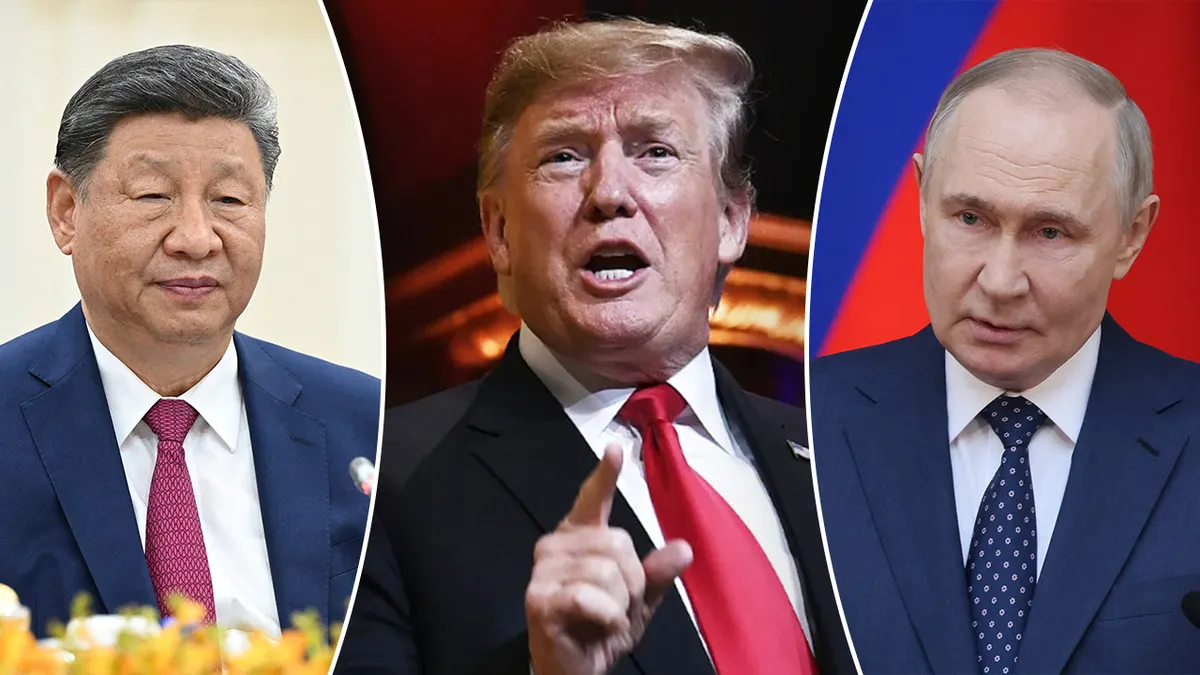
Though sometimes dismissed as a mere photo-op, the upcoming meeting in Shenzhen between Xi Jinping, Vladimir Putin, and Donald Trump represents a hopeful triumph for the global majority.

Think about what that signifies. It means that the world’s principal imperial power and the leader of white-world colonialists is finally meeting as a co-equal with heads of the two major members of the global majority organization called BRICS+ [Brazil, Russia, India, China, South Africa plus (so far) Egypt, Ethiopia, Indonesia, Iran, Saudi Arabia, and the United Arab Emirates.].

It’s one of the most hopeful developments in global politics that I’ve witnessed over my 86 years on this planet.

My optimism is inspired by the sea change such meeting represents – transition from past colonial exploitation, and present forever wars, to a possible future characterized by dialog, diplomacy, and reparations for all that colonial and neo-colonial exploitation.

Colonial Exploitation

For more than 500 years, Europe and European settlers have built up vast fortunes and have created “developed world” ways of life by invading and conquering by force, divide-and-rule strategies, and the establishment of obedient local monarchs. That’s what colonialism is.

It’s a system of plunder whereby “civilized” armies invade weaker “uncivilized” territories to steal their goods and govern them by force of arms often taking the form of outright genocide (as happened in what eventually became the United States of America). Often, it’s all been justified on religious grounds – to save the souls of the “natives.”

Typically, the colonized countries are balkanized by imposition of arbitrary borders drawn up by colonizers grossly ignorant of the impositions’ effects separating extended families, allied tribes, and cultural sites such as temples, and community burial grounds. In Exterminate All The Brutes, Raoul Peck summarizes the dynamic in three words: civilization, colonialization, and extermination.

In China, the exploitation in question took the form of events that unfolded during that civilizational state’s “Century of Humiliation.” The most disgraceful events during those hundred years were the two Opium Wars waged by Great Britain against China (1839-1842 and 1856-1860). Till those wars, China had been the world’s most productive rival of the British Empire. China was largely self-sufficient without need of British products. As described by Enrique Dussel, it had long since anticipated the great achievements of Europe’s Industrial Revolution – including printing press, paper money, the steam engine and steel production. The forced import of English opium changed all that reducing China to comparative passivity, dependency, and yes, humiliation.

Following the triumph of its revolution in 1949 Chinese leaders beginning with Mao Zedong realized that such disgrace was made possible by their country’s military weakness. They resolved never again to replicate such debility.

For its part, Russia’s association with the colonized Global Majority came much later.

More than ever, it incurred the wrath of the collective west by the success of its October Revolution in 1917. That groundbreaking workers’ rebellion introduced into Eurasia at a national level a country and its satellites that refused to conform to the standard capitalist system of exploitation. Though constantly accused by the west of merely exchanging one form of colonialism for another, it successfully endured invasions by European and American colonialists along with subsequent continuous threats and an extended Cold War to protect the undeniable gains of its revolution that with unprecedented speed transformed Russia from what Marxist economist Richard Wolff calls Eurasia’s most backward country in a world superpower.

All of that changed in the early 1990s when a series of socio-economic reforms by Russian president Mikhail Gorbachev introduced reforms mirroring the values of his western adversaries. He termed them glasnost (openness) and perestroika (restructuring).

Such changes opened the door to the unexpected deterioration of the Soviet system.

Very quickly Russian anti-communists cooperating with the anti-Russian collective west saw their opening to finally end any alternative to their system of control. Overwhelming western funding and propaganda inserted themselves into the electoral process that followed on the heels of Gorbachev’s reforms. This led to the replacement of the president himself with a more-malleable head of state, Boris Yeltsin.

Yeltsin oversaw what his virulently anti-communist successor Vladimir Putin called “the greatest geopolitical catastrophe of the 20th century.” He was evidently referring to the sale of Russian national assets at fire-sale prices to western investors and local oligarchs. He was referring to the eruption of widespread poverty – the consequence of lost employment following on the “restructuring” of Russia’s economy, to the disappearance of socialist programs including the disappearance of pensioners’ income. According to Putin, Yeltsin’s reforms impoverished ordinary people and enriched foreign investors and their local allies in ways completely reminiscent of IMF “structural adjustments” imposed on the west’s former colonies. In this way, Russia was reduced to Third World status.

Putin himself was seen by the west as a worthy successor of Boris Yeltsin when he succeeded the latter in the year 2000. However, in his famous Munich Speech of 2007, Putin shocked his western supporters by a kind of declaration of independence. He decried the unipolar system that he described as the root of the world’s problems. He denounced the rise of oligarchical classes and declared his intention to redirect his presidency accordingly. He also expressed concerns over NATO’s expansion and advocated for a multipolar global structure.

As far as the collective west was concerned, Putin’s election and that Munich speech marked a break in Russia’s reform trajectory. It identified Russia’s president as an enemy to be vilified and as an object of regime change efforts.

The point here is that under Yeltsin, Russia was reduced to Third World status. It became the victim of IMF structural adjustment policies. However, by playing a leading role in the formation of BRICS Putin transformed Russia into a powerful leader and champion of the Global Majority.

War vs. BRICS

All of that, in summary goes a long way towards explaining the current wars in Ukraine and Iran. Arguably, both are really wars against BRICS – against the united Global Majority. Both can be seen as wars to reassert the unipolar authority of the United States along with the subservient, impoverished, and dependent status of the Global Majority. The wars represent steps to the dethronement of Russia and China as champions of the former colonies. Or, as expressed by Secretary of Defense Lloyd Austin, United States goals in Ukraine were to weaken Russia and to remove Vladimir Putin from office. According to Secretary of State Marco Rubio Ukraine is a proxy war between the United States and Russia.

Facing up to such realities is no doubt difficult for most Americans to accept. After all, isn’t the United States a benefactor of the former colonies? Isn’t a major point of its foreign policy to alleviate poverty and spread democracy throughout the world?

Apparently not, if we are to believe the words of President Trump. He sees not only the “developing world” united in BRICS as inimical, but in addition any country that does trade with them. 

And this anti-poor position is not peculiar to Donald Trump. In 1949, it was recommended as official U.S. policy by George Kennan, the author of the U.S. policy of containing the Soviet Union during the Cold War. Kennan wrote: “We have about 50 percent of the world’s wealth, but only 6.3 percent of its population, In this situation, we cannot fail to be the object of envy and resentment. Our real task in the coming period is to devise a pattern of relationships which will permit us to maintain this position of disparity without positive detriment to our national security. To do so we will have to dispense with all sentimentality and daydreaming and our attention will have to be concentrated everywhere on our immediate national objectives. We need not deceive ourselves that we can afford today the luxury of altruism and world benefaction. We should cease to talk about vague and unreal objectives such as human rights, the raising of living standards and democratization. The day is not far off when are going to have to deal in straight power concepts. The less we are hampered by idealistic slogans, the better.”

According to Kennan, a very key player in the formation of U.S. policy, the purpose of it all is to maintain (not alleviate) the extreme wealth-disparity between the United States and the rest of the world. The United States is not about making life better for others or about acting unselfishly. Rather, human rights, democratization, and improving the living standards of other nations are considered ill-defined and even unreal. Such considerations are not to be factored into decision-making. Mouthing slogans to the contrary may be fine, but their content must be ignored in favor of unadulterated power relationships – i.e. in favor of forcing others to conform. As President Trump has put it, the only acceptable slogan is “America first.”

In contrast to such convictions, the unabashed stated point of BRICS is to foster respect for human rights, democratization, and improving the living standards of all. This makes the leaders of BRICS, Russia and China, as well as BRICS members such as Iran, enemies of the unipolar state.

The contrast also lends added color and deeper importance to the upcoming Shenzhen meeting.

Hopes for Shenzhen

As I indicated at the beginning, it might be a grave mistake to consider the coming Shenzhen meeting as a mere photo op for heads of state concerned about advancing their own self-interests and those of their nations similarly seeking world dominance. While such concerns are self-admittedly true for the North American participant, the considerations I’ve just shared indicate something else for the Russian and Chinese presidents.

All indications are that besides seeking what’s best for their own countries, Presidents Xi and Putin are internationalists whose national experience enables them to identify with the Global South and the exploitation that the former colonies have experienced over the last 500 years.   

While it might be true that nothing substantial is likely to occur at Shenzhen, simply understanding the meeting as an encounter of equals – between the exploited and their principal exploiter – is more than enough to justify its success even before the principals shake hands. The meeting puts many things into perspective including borders, immigration, reparations, and internationalism itself. It also helps transcend narrow Overton windows concerning Putin, Xi and the wars in Ukraine and Iran.

In the perspective just shared, the two Global South leaders potentially emerge as statesmen representing the interests of the world’s historically oppressed. Their policies as embodied in BRICS and in China’s Belt and Road Initiative become understandable as departures from the cruel orientations of “diplomats” like George Kennan. The installation of high-speed rail across the planet and the construction of ports, bridges, highways and dams can be seen as extremely generous acts of what the U.S. once called “foreign aid.” 

Moreover, considered in this way, Shenzhen reminds all concerned that borders are not sacred; they change all the time, and colonizers not only drew them (often haphazardly) to satisfy their larcenous interests, but even once drawn, their authors assumed permission to cross and violate their demarcations with abandon.

This puts into salvific perspective the immigration of the colonized into the countries of their exploiters. Turn-about is fair play. And whether they realize it or not, immigrants from the Global South are peacefully voting with their feet to exact reparations for the crimes of would-be civilizers who wantonly colonized and cruelly exterminated the inhabitants of the lands they ravaged. The “invasions” of immigrants across the “developed world” call into question the legitimacy of all the planet’s borders.  

None of these profound realizations is likely to register in the presses of the colonial powers.

But keep them in mind as events in Shenzhen unfold. Their day will come.

The New “Matthew 25” Christian Politicians

Readings for 33rd Sunday in Ordinary Time: Proverbs 31:10-13, 19-20, 30-31; Psalm 128:1-2, 3, 4-5; 1 Thessalonians 5:1-6; Matthew 25:14-30.

A recent New York Times article brings some welcome news. Progressive Democrats are finally discovering that Jesus has something to say about politics. And what he says has more to do with feeding hungry people and welcoming immigrants than with the religious right’s familiar obsessions.

The article describes a new crop of politicians who, like Senator Raphael Warnock, call themselves “Matthew 25 Christians.” They take their cue from Jesus’ identification with the hungry, thirsty, naked, sick, imprisoned and unwelcome. They connect those words with health care, immigration and our responsibility to care for one another. Good for them. It’s about time someone challenged the Republican Party’s claim to own Christianity. (See what Presbyterian seminarian and senator elect from Texas, James Talarico, says about this in the video above.)

However, the article also shows how easily Jesus’ teaching can lose its bite. It describes the final section of Matthew 25 as “softer and more soaring” than what precedes it. And it presents today’s gospel selection, the Parable of the Talents, as a lesson about making good use of our money and abilities. The writer even jokes that it teaches compound interest.

Apparently, Jesus wants us to make a killing in the market and then remember the poor. That interpretation should please J.D. Vance and his billionaire benefactor, Peter Thiel. But I doubt it would please Jesus. And Pope Leo XIV has been saying things that make that comfortable arrangement harder to defend.

To see why, let’s look again at today’s familiar parable. It’s about economics—about investment, profit-taking and a boss who expects other people to make him richer. It’s also about a servant who refuses to cooperate and suffers the predictable consequences.

Usually, we’re told that the boss represents God. The successful servants represent people who develop their God-given gifts. And the servant who buries his money represents the rest of us when we fail to live up to our potential. We should work harder, take some risks and stop wasting our talents.

But there’s another way to hear the story. Listen to it from the position of the people doing the work rather than the man collecting the profits. Then notice what the third servant says about his employer: he harvests where he hasn’t planted and gathers where he hasn’t scattered. In plain English, the boss lives off other people’s labor. He’s a hard-ass who expects his underlings to make him money while he’s away.

The first two servants go along. They double what he gives them, and he rewards them handsomely. They’re successful because they accept the arrangement and do what it takes to keep it going. The third servant refuses. He buries the money, gives it back and tells his boss to his face what kind of man he is.

Naturally, the boss throws him out. He also takes the servant’s money and gives it to the man who already has the most. Those who have get more. Those with little lose even that. We hardly need a Bible commentary to recognize that arrangement. We live with it every day.

Now, I realize this isn’t the interpretation most of us heard in Sunday school. But why should we automatically identify this particular rich man with God? Jesus told stories about unjust judges and dishonest managers too. We don’t have to turn every powerful character in his parables into God. Especially when the character admits that he expects to collect where others have done the planting.

Read this way, the third servant is the story’s troublemaker. He refuses to help the rich get richer. Worse still, he says aloud how the system works. Like Jesus and John the Baptist, he discovers that telling the truth about powerful people can cost you dearly.

And that brings us back to the Times article and its Matthew 25 Christians. The chapter’s concluding scene has Jesus judging people by what they’ve done for those at the bottom. But shouldn’t that lead us to ask how so many people got there? Who took their land? Who kept their wages low? Who made their health care unaffordable? Who benefited while they lost their homes?

Otherwise, we end up praising the successful servants for enriching the master and then congratulating ourselves for feeding some of the people his system leaves hungry. Surely Jesus is asking more of us than that.

Pope Leo seems to think so. In Dilexi Te, the document begun by Francis and completed and issued by Leo, the pope insists that Christians confront the causes of poverty. He repeats the condemnation of the “dictatorship of an economy that kills.” He refuses to leave human well-being at the mercy of markets and financial speculation. The poor need justice now. They cannot eat promises that prosperity will eventually trickle down.

That teaching creates problems for a Christianity tied to billionaire power. Consider Vance’s relationship with Peter Thiel. Vance worked for Thiel’s investment firm. Thiel later put $15 million into a super PAC supporting Vance’s Senate campaign. He also helped shape Vance’s religious thinking. That’s quite a combination: the boss, the political benefactor and an influence on the convert’s Christianity.

Thiel, for his part, once wrote, “I no longer believe that freedom and democracy are compatible.” Think about that. Ordinary people might use democracy to raise wages, tax fortunes or stop corporations from doing whatever they please. Apparently, that creates a problem for freedom—at least freedom as understood by a man with billions to protect.

Leo approaches things differently. In his encyclical on artificial intelligence, Magnifica Humanitas, he asks what happens to the people whose work makes the new technology possible and whose livelihoods it may destroy. He calls for worker protections, participation and rules governing the changes. Investors don’t get to decide everything simply because they own the machinery.

That sounds like a reasonable application of Matthew 25. Before celebrating another technological fortune, ask who did the work and who will pay the price. Before praising the harvest, find out what happened to the people who planted it.

House Speaker Mike Johnson has found another way around the chapter’s demands. Asked about Leo’s appeal to Matthew 25 on behalf of immigrants, Johnson said the obligation to welcome strangers applies to individuals rather than civil authorities. Apparently, Jesus can tell us how to treat the immigrant next door, but he has nothing to say about what we authorize our government to do to that same person that he specifically identifies with. We shouldn’t mistreat Jesus, but governments can.

How convenient. We can offer a family groceries with one hand and support policies that tear it apart with the other. We can call the first act Christian charity and the second responsible government. Somehow, Jesus is supposed to approve of both.

But Matthew’s judgment scene begins by gathering “all the nations” before the Son of Man. That doesn’t give us a detailed immigration bill. It does make it hard to imagine that governments have been excused from treating people humanely. Where does Jesus say that kindness stops being obligatory when we enter public office?

And where does the Times get the idea that this is the chapter’s softer part? Jesus identifies himself with people we would rather ignore and makes our treatment of them the measure of our lives. Religious credentials don’t get us off the hook. Neither do patriotic speeches or claims that we were simply enforcing the law.

The new Matthew 25 Democrats should take that seriously too. I’m glad they’re talking about Jesus. But the test will come when feeding the hungry requires confronting the people who profit from keeping wages low. It will come when providing health care means challenging those making fortunes from sickness. It will come when their wealthy donors discover that these Christians mean what they say.

That’s when they’ll need the courage of the third servant. He doesn’t give a speech about compassion while continuing to enrich his boss. He refuses to cooperate. He tells the truth and accepts the cost.

The master calls that failure and throws him into the darkness. The wider gospel gives us reason to question the master’s verdict. Jesus himself was rejected by the powerful. And he promised God’s kingdom to people the powerful had pushed aside.

So yes, let’s welcome the return of Matthew 25 to our political conversation. But let’s hear the whole challenge. Feed hungry people, welcome strangers and care for the sick. Then ask why so many of our neighbors need rescuing in the first place—and why the people who benefit from their suffering keep getting richer.

Jesus wasn’t blessing the billionaires. It’s time his would-be followers stopped doing it for him.

Wisdom Is A Woman: Patriarchal Billionaires Like Peter Thiel Aren’t Listening.

Readings for 32nd Sunday in Ordinary Time: Wisdom 6:12-16; Psalm 63:2, 3-4, 5-6, 7-8; 1 Thessalonians 4:13-18; Matthew 25:1-13

Last Tuesday’s resounding Democratic victory over Trumpism has given us reason to hope. It suggests that Americans can recognize the connection between their daily struggles and a government that serves the wealthy while encouraging everyone else to blame immigrants, racial minorities, and one another. People struggling to pay for groceries, housing, and medical care have begun directing their anger upward. For those accustomed to ruling through division, that is dangerous.

The election hardly means that Democrats have become champions of liberation. Far from it! Too many remain beholden to the same donors, military interests, and corporate priorities as their Republican counterparts. However, voters have opened a door. The question now is whether those elected will walk through it —or once again squander this opportunity by prioritizing the interests of their wealthy sponsors.

Biblical Wisdom

That is where this Sunday’s readings enter the picture. Their theme is wisdom: the ability to recognize what is happening, receive instruction from unexpected sources, and make provision for the work ahead. And the first thing they tell us is that Wisdom is a woman. In a world whose most powerful men seem increasingly certain that their wealth entitles them to govern the rest of us, that deserves our attention.

Consider Peter Thiel. According to Christopher Hale’s account of a secretly recorded October 19 lecture, the billionaire concluded his Nashville series on the Antichrist by calling the city “arguably the global capital of Protestantism.” He urged his listeners to involve themselves in finance, technology, politics, and the battle of ideas. His final instruction was blunt: “get over your inferiority complex and fight.”

Fight whom? Read alongside Thiel’s attacks on Pope Leo XIV and his advocacy of safeguards for artificial intelligence, the appeal suggests a struggle over Christianity itself. Nashville’s Protestant constituency becomes a potential counterweight to Rome’s insistence that technological power must answer to human dignity. A billionaire whose interests are affected by public oversight is recruiting believers for a battle over the moral legitimacy of that oversight.

Theology Centralized

I never expected theology to become quite so openly relevant to our political struggles. Yet Thiel seems to understand something many Christians have forgotten: what we believe about God affects what we permit powerful people to do. A Christianity centered on private salvation can leave economic arrangements largely undisturbed. A Christianity that takes seriously Jesus’ good news to the poor eventually asks who owns everything, who makes the decisions, and who pays for the mistakes.

That second Christianity is troublesome for billionaires. It refuses to assume that the ability to develop a technology confers the right to impose its consequences on everyone else. It asks workers about displacement, parents about their children, and communities about surveillance and computerized warfare. From a liberation theology perspective, Leo’s demand for accountability belongs here. Those exposed to technological power deserve a voice in governing it.

Feminine Wisdom

Now listen to the alternative offered in today’s first reading. Wisdom comes looking for us. She waits at the gate, travels the roads, and meets those willing to receive her. She does not require an invitation to a closed-door lecture or admission to an exclusive circle. But she does require something that great wealth can make difficult: the willingness to be taught.

Her femininity matters. For centuries, churches have overwhelmingly pictured divine authority as male while restricting women’s authority to interpret it. Yet here Scripture places a woman before us as the embodiment of the understanding we need. She is active, searching, and persistent. Our task is to become receptive to her. That means surrendering the assumption that we already know because we hold the office, possess the money, or occupy the pulpit.

Liberation theology makes this receptivity concrete. It begins by listening to people whose experience prevailing arrangements teach us to dismiss. Ask a mother facing eviction whether the economy is working. Ask an immigrant harvesting our food what freedom means. Ask a Palestinian parent what our politicians mean by security. Ask a survivor of sexual exploitation how institutions protect their reputations while leaving children unprotected.

The poor and oppressed do not know everything. They do know things that their employers, landlords, generals, and benefactors can afford to ignore. That is the basis of their hermeneutical privilege—their particular ability to help us understand what is happening. The view from beneath the system exposes features that remain invisible from the boardroom. Wisdom requires allowing that testimony to change our minds and our policies.

Americans Not Hopelessly Divided

This is also why I question the endless insistence that Americans are hopelessly divided. Our disagreements are real, sometimes bitter. Nevertheless, most of us need the same basic things: affordable homes, adequate food, medical care, meaningful work, and a future for our children. There is also ground for solidarity in opposition to war, the destruction of Palestinians, sexual exploitation, and corruption. An election cannot prove agreement on all those questions. It can reveal an opening for bringing people together around them.

Divide-and-conquer politics works by concealing those possibilities. The immigrant becomes the explanation for low wages. The poor family becomes the explanation for public debt. Meanwhile, fortunes accumulate, weapons contracts multiply, and the people making the decisions present themselves as our protectors. Wisdom asks us to examine that diversion. Who benefits when the underpaid worker blames another underpaid worker?

The Epstein scandal gives this question a particularly ugly form. What I call the “Epstein Establishment” is the culture of access, deference, and protection surrounding people whose influence makes others reluctant to ask obvious questions. Association alone does not establish criminal guilt. But neither money nor political usefulness should shield anyone from investigation. Survivors deserve protection, the public deserves lawful disclosure, and credible evidence must be followed wherever it leads. The demand applies as firmly to church leaders as to financiers and presidents.

Here, too, wisdom is receptive. She listens to people whom institutions have trained themselves to disbelieve. She asks why a child’s account encounters so many obstacles while an influential man’s denial travels so easily. A church that preaches the social gospel must submit itself to that same scrutiny. Otherwise, its denunciations of worldly power become another exercise in protecting its own.

But today’s Gospel warns that recognizing injustice and welcoming an electoral victory are insufficient. Ten young women await a bridegroom. Five bring enough oil for a prolonged delay; five do not. All ten fall asleep. The wise women are as tired as the foolish ones. What distinguishes them is that they have made provision for a night longer than they expected.

That detail seems especially appropriate after Tuesday. Defeating Trumpism at the polls does not dismantle the interests that sustained it. They still possess money, institutions, media access, and the patience to wait for public enthusiasm to fade. Thiel’s appeal to fight should remind us that those interests are organizing. They intend to shape what comes next.

Our lamps need oil for that long night: organized communities, political education, independent sources of information, and habits of holding our own representatives accountable. We need people prepared to insist on affordable housing after the victory speeches end, to oppose war when their party supports it, and to defend immigrants when doing so becomes inconvenient. Those capacities develop through practice. They cannot be borrowed at midnight.

The psalm brings us back to thirst. Our souls thirst for God like dry earth thirsting for water. That image keeps spirituality close to the body and the land. People need actual water, actual bread, actual shelter. A religious language that turns those needs into mere metaphors allows us to feel spiritually nourished while our neighbors go hungry. The God for whom we thirst meets us in their demand to live.

Finally, Paul speaks to people grieving their dead. He assures them that those who have died will not be forgotten or left behind. For anyone struggling for liberation, that hope matters. The dead of war, exploitation, and preventable poverty are more than yesterday’s statistics. Their lives continue to make a claim on us. No election can bring them back, but the world we build can honor them or repeat the arrangements that killed them.

Conclusion

So let us welcome Tuesday’s victory and insist on what it makes possible. Let us listen before the consultants explain away the voters’ anger and the donors narrow the agenda. Wisdom is already at the gate. She may arrive as a woman whose testimony powerful men would rather dismiss, a worker they would rather replace, or a grieving parent they would rather keep off television. We will show that we have received her when their experience begins to govern our decisions. Until then, billionaires like Thiel will keep their hands on the switches—and call the arrangement Christian.

Democrats Have Won. Now Make the Powerful Answer

Tuesday’s historic Democratic victories have opened the possibility of holding powerful people accountable and making government answer to ordinary Americans. Democrats must seize that opportunity. Their new congressional majorities must produce something more than changes in committee leadership, congratulatory speeches, and preparations for the next election.

They should begin with an issue whose moral stakes require little explanation: the sexual exploitation of children and the possibility that wealth and political power have protected those responsible. People may find arguments about monetary policy or congressional procedure difficult to follow. They understand child abuse. They understand the difference between investigating an accusation and concealing the evidence needed to investigate it.

That makes the Epstein files a defining test of the new Democratic majority. Will Democrats pursue the evidence wherever it leads, including toward people within their own political and financial circles? Will they protect survivors while exposing powerful adults? Or will accountability once again stop where influence begins?

The same question runs through the broader program Bernie Sanders has urged Democrats to embrace: Whom does government serve? Drawing on his proposals together with priorities of my own, here is the agenda I believe Democrats should pursue.

  1. Release the Epstein files and begin serious hearings. Demand immediate disclosure of all records required by law. Committees should begin available investigative work now and prepare hearings backed by subpoena power as soon as the new majority takes office. Require preservation of records, obtain missing documents, and investigate any unlawful withholding, destruction of evidence, or intimidation of witnesses. The House Judiciary Democrats’ October 26 staff report provides a concrete starting point. It assembles accounts involving eleven women, including five who accuse Trump of rape or sexual assault in Epstein’s company or presence, and calls for an independent investigation. These are allegations and committee findings requiring examination, rather than judicial determinations of guilt. Congress should follow the report’s documentary references, question relevant witnesses, and establish what investigators pursued, abandoned, or withheld. The circulating video attributed to a woman identifying herself as Dr. Larissa Portnoff also warrants careful follow-up. In it, she alleges abuse beginning around age eight, continuing through approximately twelve, and renewed targeting at sixteen or seventeen. The reporting located about the recording acknowledges that its authenticity had not been independently confirmed. Investigators should establish its origin, seek her testimony with appropriate protections, and examine any corroborating evidence and allegations of intimidation. Due process must govern the investigation, and accusations must be tested against evidence. That is precisely why full lawful disclosure and serious hearings are necessary. Neither presidential office nor party affiliation should place anyone beyond investigation.
  2. Establish Medicare for All. Make comprehensive health care a right available to everyone. While pursuing universal coverage, protect Medicaid, lower prescription drug costs, and prevent people from losing access to treatment. No one should have to choose between medicine and groceries or remain in an abusive workplace to retain insurance. Medical care should follow human need.
  3. Make public higher education tuition-free. Open state universities, community colleges, and public vocational programs to qualified students without imposing decades of debt. Address existing student debt and the living expenses that keep poorer students from completing their education. An educated population is a public good, and preparing young people for useful, fulfilling lives is a public responsibility.
  4. Raise the federal minimum wage to $20 an hour and empower unions. Establish a clear timetable and automatic adjustments for rising living costs. Make union organizing easier, strengthen penalties for retaliation, and help workers secure first contracts. Add paid sick leave, paid family leave, and protections for workers excluded from effective labor safeguards. People who create society’s wealth deserve both a fair share and a meaningful voice.
  5. Tax concentrated wealth and strengthen Social Security. Enact a carefully designed wealth tax on billionaires, close tax shelters, and enforce tax laws against wealthy evaders. Remove the ceiling on earnings subject to Social Security payroll taxes. Guarantee retirees a monthly income floor of at least $1,200, protect higher existing benefits, and adjust that floor for inflation. A lifetime of work should lead to security.
  6. Make housing affordable. Build and rehabilitate public and nonprofit housing, expand rental assistance, protect tenants against displacement, and help first-time buyers. Confront speculative practices that treat entire neighborhoods as cash cows. A government capable of mobilizing enormous resources for military purposes can mobilize resources to keep its people housed.
  7. Act on climate change. Commit the country to the Paris Agreement’s goals and adopt enforceable measures consistent with them. Invest in renewable energy, public transportation, efficient buildings, and a reliable electrical grid. Guarantee good jobs and transition assistance for affected workers. Communities with the fewest resources should receive protection first, while the greatest financial obligations fall on those most responsible and most able to pay.
  8. Put artificial intelligence under democratic control. Impose a moratorium on new AI data centers until enforceable safeguards address electricity costs, water consumption, environmental harm, privacy, and employment. Bernie Sanders and Alexandria Ocasio-Cortez have already proposed legislation establishing such a pause. Stop the development of artificial superintelligence and develop a public utility framework for essential AI infrastructure. Decisions capable of transforming human livelihoods must answer to democratic institutions.
  9. Provide a workable path to citizenship for undocumented immigrants. Recognize immigrants’ labor, family relationships, and contributions to community life. Protect asylum, due process, and workplace rights. Hold exploitative employers accountable. We cannot honestly celebrate the people who harvest our food, build our homes, and care for our relatives while treating those same people as disposable.
  10. End unauthorized wars and reduce excessive military spending. Reassert Congress’s authority over war and appropriations. Pursue diplomacy and negotiated settlements, scrutinize weapons programs, and demand credible accounting from the Pentagon and its contractors. Redirect substantial savings toward water systems, bridges, schools, housing, and climate resilience. Provide transition investment for workers and communities dependent on military production.
  11. End American support for Israel’s destruction of Palestinian life. Stop funding and arming Israel’s genocidal assault on Palestinians. Suspend assistance to the Israeli government until it ends the abuses and withdraws from illegal settlements in accordance with international law. Support humanitarian relief, reconstruction, accountability, and Palestinian self-determination.
  12. Protect democracy against manipulation and purchased influence. Establish fair redistricting standards, strengthen voting rights, expand ballot access, require disclosure of political spending, and pursue public campaign financing. Oppose partisan gerrymandering even where it benefits Democrats. Representatives should face meaningful electoral competition, and citizens should have political influence independent of their wealth.
  13. Defend reproductive freedom and equal citizenship. Protect abortion, contraception, and reproductive health care. Defend LGBTQ people against discrimination and uphold religious liberty for believers and nonbelievers alike. Resist Christian nationalism’s effort to turn a particular religious interpretation into everyone else’s legal obligation. Government must protect the equal standing of people with different convictions and identities.

Conclusion

This program will encounter formidable obstacles. Trump remains president, retains veto power, and can block legislation unless Congress assembles the votes to override him. Democrats must explain those limits honestly while exercising their own powers over investigations, appropriations, legislative debate, and public accountability. Their new majorities take office in January; preparation should begin immediately.

The party should publish a legislative timetable, hold substantive hearings, and make every member’s votes readily understandable. Seek agreements that improve people’s lives. Where proposals are blocked, identify who blocked them and whose interests that decision serves. Keep organizing after the vote.

The Epstein investigation belongs at the center of this effort because it asks whether powerful adults can escape scrutiny when children have been harmed. The economic program asks whether those same structures of privilege will continue to determine who receives health care, education, housing, and security. Each requires a government willing to confront concentrated power.

From the perspective of liberation theology, the measure of this new majority is the experience of those with the least protection: abused children, frightened witnesses, poorly paid workers, displaced families, and people living beneath bombardment.

Democrats have won the opportunity to act. Those people must now become the measure of what victory means.