New Zealand Prime Minister Ardern’s Example of Lenten Repentance

Readings for 3rd Sunday of Lent: Ex. 3:1-8A, 13-15; Ps. 103: 1-4, 6-8, 11; I Cor. 10:1-6, 10-12; Lk. 13: 1-9

The entire world was shocked last week when a right-wing gunman and admirer of Donald Trump slaughtered at least 50 worshippers in two mosques in Christchurch, New Zealand.

At the same time, the world edified when the New Zealand prime minister, Jacinda Ardern, the world’s youngest head of state, donned a hijab in a sign of solidarity with the Muslim community. The Muslim worshippers, she said “are us.”  She resolved immediately to change her country’s gun laws (in defiance of the international gun lobby) including a ban on assault weapons.

Her response contrasted sharply with that of President Trump following a similar massacre in Pittsburgh’s Tree of Life Synagogue last October. Then, instead of calling for solidarity and disarmament, the president famously advised placing armed guards at synagogue doors.

Prime Minister Ardern’s words and symbolic action were a demonstration of the very type of repentance to which the non-violent Jesus called his own community (and us!) in the puzzling episode recounted in today’s Gospel reading for this third Sunday of Lent.

To make his point, Jesus comments on two contemporary tragedies that were “in the news of the day” as prominently as last week’s New Zealand catastrophe. Then he adds an explanatory parable underlining the time-urgency of his summons to non-violence. All three elements are highly relevant to Christchurch and our president’s and our culture’s tendency to solve everything with violence.

The similarities between Christchurch and the Gospel’s first-mentioned tragedy are undeniable. Like what happened in New Zealand, it involved the slaughter of worshippers by reactionary outsiders who despised their victims’ religious faith. Some Galileans (no doubt identified as insurgents) were killed by Roman soldiers while offering sacrifice in the temple.

Jesus asks, “Do you think that because these Galileans suffered in this way because they were greater sinners than all other Galileans?” Then he answers his own question, “By no means! But I tell you, if you do not repent, you will all perish as they did!”

The second tragedy had eighteen people killed by the collapse of a tower located in the section of East Jerusalem called Siloam. In this case, it seems that a tower had fallen by chance and killed some innocents.

Regarding that second tragedy, Jesus asks, “Or those eighteen people who were killed when the tower at Siloam fell on them— do you think they were guiltier than everyone else who lived in Jerusalem? By no means! But I tell you, if you do not repent, you will all perish as they did!”

But what does Jesus expect his audience to repent from? Does he want them to stop being insurgents against Rome? Does he want them to be more faithful to the Ten Commandments or something?

As Jesus would say, “By no means!”

How then do these two events connect?

To get the connection, put the incidents in context. There they become statements about violence, counter-violence and the need for non-violent resistance. Again, that contextualization sheds light on the Christchurch tragedy and our own culture’s worship of guns, as well as the permission it gives our military to kill people in their mosques and schools, at their funerals and weddings.

This approach takes seriously the political intent of the news item shared with Jesus at the very outset. Luke tells us, “Some people told Jesus about the Galileans whose blood Pilate had mingled with the blood of their sacrifices.”

No doubt, this was not news to Jesus. The opening words of today’s gospel were not meant to communicate news but to complain about the Roman occupiers. Those introducing the topic were looking for sympathy and agreement. Jesus does not disappoint.

Pilate, of course, would have claimed that his temple victims were insurgents against the Roman occupation; they were “guilty” as terrorists, he would have said. That was his official line.

Jesus says, “Don’t believe it” – as if his audience were tempted to believe Roman lies. “Do you think they were guilty?” Jesus asks. “By no means,” he answers.

Here Jesus is agreeing with his Galilean compatriots. If the ones Pilate killed were terrorists, he says, so are all Galileans; we’re all guilty in Pilate’s eyes. None of us wants the Romans here, Jesus implies. After all, it wasn’t the Galileans who threw the first stone; it was Pilate and the Roman soldiers who did so by invading Israel’s sovereign territory.

But then Jesus suddenly takes another tack. He connects Pilate’s butchery with another headline of his day – an act of counter-violence taken by the “Zealot” forces Pilate was attempting to punish. (Zealots were the revolutionary force committed to ousting the Roman occupiers from Palestine.) Pilate’s action, Jesus suggests, started the cycle of violence that evoked a disaster at Siloam at a spot near the Fountain of Ezekias. Siloam was the location of a small arsenal, where the Romans kept their swords, shields, battering rams and other weapons.

According to Maria and Ignacio Lopez-Vigil, a group of Zealot insurgents had tried to dig a tunnel up to the tower with hopes of seizing the weapons and turning them against the Romans. But the tower’s foundation was already in a state of decay, and the tunnel caused the entire construction to suddenly collapse. The falling tower claimed the lives of several Galilean families who had built their houses near the arsenal.

Jesus point: Pilate is certainly a bloodthirsty man. None of us want him or his armies on our soil. However, those who resist the hated Romans by resorting to arms are bloodthirsty too. And if we follow their example, we’ll all drown in a bloody deluge. Or as Jesus put it, “I tell you, if you do not repent, you will all perish as they did!”

And time is running short, he adds with his parable about a fig tree. The bloody deluge has been building for at least three years. We have maybe another twelve months before the chickens of the deadly cycle of violence come home to roost. Without repentance, without replacing violent resistance to Roman butchery with non-violent tactics, we’ll all be cut down like a barren fig tree. (Later on, remember, Jesus himself demonstrates the kind of non-violent direct action he had in mind, with his “cleansing” of Jerusalem’s temple.)

Jesus’ prediction of bloodbath, of course, eventually came true, but not as soon as he thought. The Romans would defeat the Zealot uprising in the year 70, and definitively squash all Jewish rebellion in 132. Jesus was right however about the extent of the slaughter. It was horrific resulting in the deaths of more than a million Jews. Such disaster is inevitable, Jesus teaches for all who “live by the sword.”

What does all of this say to us today? The message is quite relevant. It reminds us first of all that empire represents the systematized oppression of the poor and defenseless by the rich and powerful. That was true of Rome; it’s true of U.S. empire today. We’re still killing those identified as insurgents in their churches and mosques. In fact, our soldiers do it every day. And far from being outraged, we applaud them as heroes.

Secondly, this passage calls us to non-violence and warns us about where the cycle of violence will inevitably lead. Christchurch NZ provides a window into the world created by the worship of guns. Another window is provided by Afghanistan and Iraq, Vietnam, Hiroshima, the Cold War, and the general impoverishment of our country and world brought on by so-called “defense” spending. All of it has us drowning in a deluge of blood. And it promises to get worse and eventually destroy us all. How much time do we have before our chickens come home to roost – three years, one year. . .?

Christians represent about 30% of the world’s inhabitants. There are more than two billion of us. Imagine the world we’d create if we insisted on following the call to non-violence represented by Jesus’ words in this morning’s gospel!

Imagine the country we’d create if our politicians followed the example of Jacinda Ardern ‘s identification with the Muslim community instead of following the divisive policies of Donald Trump and endorsing the genocidal violence of our armies.

Americans Love Jesus, but Hate His Politics

Readings for 7th Sunday in Ordinary Time: 1 SM 28: 2, 7-9, 12-13, 22-23; PS 103: 1-4, 8, 10, 12-13; I COR 15: 45-49; LK 6: 27-38

This Sunday’s instruction from Jesus stands on its own. Comment seems hardly necessary.

Instead, Jesus’ unadorned words should turn bright red the faces of all in our country who claim to be his followers. For they contradict our economic system and entire way of life driven as it is by the military-industrial complex, unending wars, and an economic system that victimizes the poorest among us, while enriching beyond belief a tiny minority.

Moreover, Jesus’ teachings call entirely into question the “realism” of mainstream politicians. Such realism ridicules anyone (like Marianne Williamson) who might have us adopt Jesus’ approach before it’s too late.

Think about that in the light of our readings from the Gospel of Luke these past few weeks. In case you’ve forgotten, here’s a summary of Jesus’ absolutely radical, highly political program found in the passages we’ve read. To begin with, he describes his entire purpose in this way:

“The Spirit of the Lord is upon me,
because he has anointed me 
to bring glad tidings to the poor.
He has sent me to proclaim liberty to captives
and recovery of sight to the blind,
to let the oppressed go free,
and to proclaim a year acceptable to the Lord.”

Notice the undeniable political thrust of Jesus’ teaching. He emphasizes bringing good news to the impoverished. He wants to clear out the prisons, to cure the disabled and liberate those oppressed (by the Roman empire that controlled Israel in Jesus’ day). Notice he is proclaiming a Jubilee Year with its debt forgiveness, release of slaves, and radical land reform. That’s Jesus’ agenda. It’s undeniably political; it’s directed towards the poor.

And just in case we might miss the point, our readings of just last week had Jesus continue like this:

“Blessed are you who are poor,
for the kingdom of God is yours.
Blessed are you who are now hungry,
for you will be satisfied.
Blessed are you who are now weeping,
for you will laugh . . .
But woe to you who are rich . . .
Woe to you who are filled now,
for you will be hungry.
Woe to you who laugh now,
for you will grieve and weep.
Woe to you when all speak well of you,
for their ancestors treated the false
prophets in this way.”

As I indicated last week, those words should shock us. Jesus’ words turn everything upside-down. It’s the poor who are God’s favored, not the rich. According to his promise, the poor will govern God’s Kingdom (a highly politicized image for what the world would be like if God were king instead of Caesar). By contrast, the rich, well-fed, the apparently happy and admired stand in God’s disfavor.

Read those words again. Imagine if our leaders insisted that they instead of the Ten Commandments be posted in front of our court houses and on school walls! “Blessed are you poor! Woe to you rich!”

But the evangelist still isn’t finished. Here’s what he has Jesus say in today’s Gospel selection:

“To you who hear, I say, love your enemies, do good to those who hate you, bless those who curse you, pray for those who mistreat you. To the person who strikes you on one cheek, offer the other one as well, and from the person who takes your cloak, do not withhold even your tunic. Give to everyone who asks of you, and from the one who takes what is yours do not demand it back. Do to others as you would have them do to you . . .  (L) end expecting nothing back . . .”

And yet, despite such clear instruction, here’s what our “Christian” criminals in Washington do (with scarcely a whimper of objection from us “believers”):

  • They spend more on war than the next 12 countries combined.
  • They’re currently fighting wars against poor people in Afghanistan, Iraq, Syria, and Ethiopia – having just destroyed Libya and previously most of the countries in Central America.
  • Against all the principles of international law, they’re tightening the screws on Venezuela causing hunger and shortages of medicine in order to spark rebellion against a government that has not attacked the United States.
  • They have their eyes set on regime change in Nicaragua and Cuba which have harmed the U.S. in no way at all.
  • They’re cooperating with Saudi Arabia in bombing to smithereens Yemen, the poorest country in the Middle East. (And virtually none of us can explain exactly why. Can you?)

With that in mind, doesn’t it seem true to say U.S. policy (especially towards the world’s poor) is 180 degrees opposed to what Jesus is reported to have said? It’s as if Jesus taught:

“To you who hear I say, hate your enemies. Annihilate those who disagree with you. Curse those who speak ill of you. Condemn those who retaliate against you. If someone defends himself by striking you back, waste him. And take everything from the person who tries to recover what you yourselves have stolen; put them in prison and throw away the key. Ignore those who seek alms from you; they’re just lazy freeloaders. And jail the one who takes what your system denies him making sure he pays back every cent with interest. Do others before they can do you. Lend at the highest rate of interest the market will bear – even if it causes women and children to starve.”

Just look at the world such departures from Jesus’ wisdom have produced!

Still, when someone (e.g. like Marianne Williamson) comes forward calling the nation to a radical spiritual change based on the elementary teaching found not only in Christianity but in all religions – viz. “Do unto others as you would have them do unto you” – she’s dismissed as “impractical,” “unrealistic,” and “new age”

No, that teaching is “old age.” It comes from Jesus! It represents his political program.

Isn’t it time for politicians to reverse course and follow the teachings of the spiritual Master they claim as the Savior of the world? For starters, truly following Jesus’ political program that we’ve reviewed these past few weeks would have us:

  • Assume leadership in the fight against climate change
  • Cut our defense budget by at least two-thirds
  • Withdraw from all foreign wars
  • Repair the damage done by those conflicts
  • Close our country’s military bases across the world
  • Forgive the debt of the former colonies
  • Completely reform our prison system from one dominated by punishment to one centered on rehabilitation
  • Make reparation to the descendants of former slaves
  • Renounce interference in foreign elections (as we would have others do in relation to our own voting system)
  • And so much more

You get the idea. I get the idea. Or maybe we can’t . . .

Billionaires Threaten a Hostile Takeover of the Catholic Church

Readings for 6th Sunday in Ordinary Time: JER 17:5-8; PS 1: 1-5; I COR 15: 12, 16-20; LK 6: 17, 20-21;

There’s a plot going on to neutralize Pope Francis. Even worse, it’s about neutralizing Jesus and his “preferential option for the poor” that has dominated our liturgical readings for the past several weeks.

This week’s readings are no exception. In fact, in today’s Gospel selection, that option for the poor receives its starkest expression so far. There, Luke the evangelist has Jesus say clearly that the poor are the object of God’s special favor, while the rich are not. In Luke’s version of the Sermon on the Mount, Jesus speaks frankly: “You poor are blessed.” He tells the rich just as clearly, “you are cursed.” And he does so for no other apparent reason than that the objects of Jesus’ blessing and cursing are poor and rich respectively.

Before I get to that, let me say a word about the plot I just mentioned.

What I’m talking about was reported in January’s Sojourner’s Magazine – the progressive Christian Evangelical monthly published by Jim Wallis. It all appeared there in a piece authored by Tom Roberts, the executive editor of the National Catholic Reporter. The article was entitled “How Right-Wing Billionaires Are Attempting a Hostile Takeover of the Catholic Church.”

There, Roberts described an aggressive project to establish what I would call an ecclesiastical “shadow administration” bent on usurping the authority of the church’s U.S. Conference of Catholic Bishops (USCCB). The undertaking is “financed by the Koch brothers, by Domino Pizza founder Thomas Monaghan, and a slew of other billionaires linked to the Knights of Columbus and conservative Catholic Cardinals – all of whom enjoy favor with Breitbart’s Steve Bannon and the Trump administration.

Seeking to replicate the rise of the Evangelical right in the 1980s, the group advocates a Catholic version of the prosperity gospel described by Roberts as “a hybrid of traditional pieties wrapped in American-style excess and positioned most conspicuously in service of free-market capitalism.” It is “. . . ‘in your face Catholicism’ . . . often expressed amid multi-course meals followed by wine and cigar receptions, private cocktail parties for the especially privileged, traditional Catholic devotionals, Mass said in Latin for those so inclined, ‘patriotic rosary’ sessions that include readings from George Washington and Robert E. Lee, and the occasional break for a round of golf.”

Doctrinally, the goal is to bury more deeply than ever what many have called “the best kept secret of the Catholic Church,” viz. its progressive social teachings. Since Pope Leo XIII’s 1891 encyclical, Rerum Novarum, those teachings have repeatedly criticized the abuses of both capitalism and socialism while advocating workers’ rights, labor unions, fair wages, social security, and (especially with Pope Francis) care for the earth in the face of human-caused climate chaos.

The billionaire cabal in question finds especially offensive not just Francis’ emphasis on social justice themes, but the 1983 pastoral by the USCCB questioning the morality of modern warfare and of nuclear weapons. They resent above all the bishops’ 1986 letter entitled “Economic Justice for All” which disagreed specifically with the economic policies of the group’s great hero, Ronald Reagan.

In place of such teachings, the billionaires in question think that the Catholic social narrative should focus exclusively on sexual issues: abortion, contraception, gay rights, and the rights of divorced and remarried people within the Catholic Church. They want the church to be more celebratory of individualism, entrepreneurship, and of free market fixes for society’s problems. Their goal is to shrink government in general and diminish its services to the poor and marginalized in particular.

Doesn’t that sound completely like the Republican agenda?

And with the Catholic Church currently weakened and reeling from its sex-abuse scandals, the billionaire conspirators are convinced that the time is completely ripe for their hostile takeover.

But could anything be further from the teachings of Jesus which a few weeks ago, our Gospel reading summarized as “good news to the poor?”

There, Jesus announced his program with the following words: “The Spirit of the Lord is upon me, because he has anointed me to bring glad tidings to the poor. He has sent me to proclaim liberty to captives and recovery of sight to the blind, to let the oppressed go free, and to proclaim a year acceptable to the Lord.”

This was a proclamation of a new order (what Jesus called “the Kingdom of God”) directed towards improving the lot of the poor, the imprisoned, the ill and oppressed. It was the proclamation of the Jewish “Jubilee Year,” where debts would be forgiven, slaves freed, and wealth redistributed.

Now in today’s Gospel reading, the Master expresses the same sentiment, only this time in even a more in-your-face manner. Here, it’s worth quoting the words Luke attributes to Jesus.

“Blessed are you who are poor,
for the kingdom of God is yours.
Blessed are you who are now hungry,
for you will be satisfied.
Blessed are you who are now weeping,
for you will laugh.
Blessed are you when people hate you,
and when they exclude and insult you,
and denounce your name as evil
on account of the Son of Man . . .
But woe to you who are rich,
for you have received your consolation.
Woe to you who are filled now,
for you will be hungry.
Woe to you who laugh now,
for you will grieve and weep.
Woe to you when all speak well of you,
for their ancestors treated the false
prophets in this way.”

Shocking words – all of them, don’t you agree? They are part of the great reversal in the new order proclaimed by Jesus. There, the values of the world will be turned on their heads. The poor will be in charge. They will have food to eat. Laughter will replace their tears.

But the rich will experience great misery (woe).  That’s because they have been led astray by false prophets like those cardinals participating in the billionaire hostile takeover of the Catholic Church. Those fake prophets console the super-rich with honeyed words about their specialness

But according to Luke’s Jesus, the rich may be enjoying those multi-course meals, private cocktail parties, cigar receptions and rounds of golf now. But when the Kingdom’s new order comes, they will find themselves hungry. They may be laughing now, but then they will weep and cry. Their false prophets may praise them now but come the new order, the wealthy will be cursed as the most wretched of men.

Obviously, Jesus’ teaching contradicts our culture’s worship of the rich. We think of the rich as heroic entrepreneurs. Jesus sees them as worthless wretches. We see the poor as losers. Jesus sees them as objects of God’s special favor.

In other words, Jesus turns our thinking upside down. As Marianne Williamson puts it: Jesus’ truth (God’s truth) is 180 degrees opposed to what our culture values and teaches.

That realization should be Christians’ fundamental guide in reading the news and thinking about world events. It should be the confident guide of our activist efforts.

Everything is the opposite of what our culture claims!

Lexington (KY) Bishop Questions Catholic Support of Donald Trump: He’s Brutally Vilified

Readings for 4th Sunday in Ordinary Time: JER 1:4-5, 17-19; PS 7:1-6, 15-17; I COR 12:31-13:13; LK 4:21-30

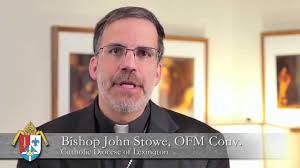
Last week, the bishop of Lexington, Kentucky, profoundly sharpened the recent controversy involving a student from Covington Catholic High School who confronted a Native American elder after this year’s pro-life march in Washington, D.C.

Writing an op-ed in the Lexington Herald-Leader, Bishop John Stowe attempted to deepen the entire conversation. He suggested changing it from superficial wrangling about the apparent disrespect the student displayed to a discussion of whether or not Catholics can support the current occupant of the White House and still be true to their faith.

Bishop Stowe said “no.” It’s a matter of faith, he said.

By taking that position, the Lexington bishop created what I would call a much-needed Dietrich Bonhoeffer moment for the church at a time when Mr. Trump exhibits traits and policies reminiscent of Adolf Hitler during his rise to power in the 1930s. (In the name of their faith, Bonhoeffer and members of his Confessing Church separated themselves from German Christians who supported der Fuhrer.)

The bishop’s words also incurred the wrath of Catholic Trump supporters much as Jesus in today’s Gospel selection sparked anger in his own hometown when he called his neighbors’ faith into question.

Let me explain.

First, recall the context of the bishop’s words. Then connect them to our reading and finally to Bonhoeffer and his church of resistance.  

As for context, a video of the stand-off between the high school student, Nick Sandman and the Native American, Nathan Phillips, had just gone viral. Initial viewings led many to condemn the student’s apparent disrespect.

Then, Sandman’s parents hired a P.R. firm to spin his side of the story. As a result, public commentary quickly changed from blaming the adolescent for his apparently offensive smirk. It centered instead on whose version of the story was correct. Was the student (as the PR firm put it) merely smiling in an attempt to deescalate a threatening situation? Or was he making fun of the Native elder by placing his grin inches from the old man’s face?

In an op-ed published in the Lexington Herald-Leader, Bishop Stowe reframed the debate by adopting the prophetic tack I just mentioned. He focused on the fact that the young student and many of his companions were wearing red “Make America Great Again” hats. That’s what the bishop found incompatible with Catholic faith and its comprehensive approach to life-issues.

He wrote:   

“Without engaging the discussion about the context of the viral video or placing the blame entirely on these adolescents, it astonishes me that any students participating in a pro-life activity on behalf of their school and their Catholic faith could be wearing apparel sporting the slogans of a president who denigrates the lives of immigrants, refugees and people from countries that he describes with indecent words and haphazardly endangers with life-threatening policies.”

In other words, Bishop Stowe was broadening the concept of being “pro-life” – the reason many Catholics back President Trump – to question that support itself. Catholic faith, the bishop implied, cannot tolerate Trump’s policies on immigration, refugees or other words or actions that disrespect Global South countries and endanger life (think capital punishment, drone assassinations, bombings, and illegal wars). Such behavior offends core Catholic beliefs about the inviolable sanctity of human life.

Specifically in reference to abortion, the Lexington bishop added:

“As the leader of the Catholic Church in the 50 counties of Central and Eastern Kentucky . . . I believe that U.S. Catholics must take a look at how our support of the fundamental right to life has become separated from the even more basic truth of the dignity of each human person. . .  While the church’s opposition to abortion has been steadfast, it has become a stand-alone issue for many and has become disconnected to other issues of human dignity.”

Still referencing the abortion issue, Bishop Stowe concluded:

“The pro-life movement claims that it wants more than the policy change of making abortion illegal but aims to make it unthinkable. That would require deep changes in society and policies that would support those who find it difficult to afford children. The association of our young people with racist acts and a politics of hate must also become unthinkable.”

Notice how these words unabashedly connect President Trump with racism and policies that embody hatred. They also recognize that many women are driven to abortion by government policies that make unplanned pregnancies problematic.

Now, that brings me to this Sunday’s Gospel reading and to Jesus’ words that “No prophet is accepted in his hometown.” I make the connection because dozens of people chose to comment very harshly on the bishop’s op-ed. Instead of dealing with the more comprehensive understanding of the phrase “pro-life,” they called Bishop Stowe vile names, brought up the pedophilia issue, and defended Donald Trump as God’s servant. I was surprised that some of the on-line language was actually permitted by the Herald-Leader’s editors.

It was like what happened to Jesus in today’s reading. There the Master himself is pilloried by his neighbors in Nazareth for challenging (like Bishop Stowe) their narrow religious prejudices. When Jesus reminds the people from Nazareth that God cares as much about Syrians and Lebanese as about Jews, they actually try to murder him.

As I said, that proved the truth of his saying that “No prophet is accepted in his hometown.” After all, prophets are those who speak for God. They connect God’s word to events of the day. And that’s what John Stowe did in his op-ed. He made the connection not only between the teaching of Jesus on the one hand and the event in Washington on the other. Echoing Dietrich Bonhoeffer and his Confessing Church, he also used the occasion to denounce Catholic support for latter-day fascism.

In similar circumstances 85 years ago, Bonhoeffer and the German Confessing Church courageously published their famous Barmen Declaration. It held that no one professing to follow Jesus could possibly accept Hitler as their Fuhrer; only Christ could hold that position.

In response, both Protestants and Catholics denounced Bonhoeffer and the others as traitors. Pope Pius XII would even persist in endorsing Hitler as “an indispensable bulwark against the Russians.”

The words of Bishop Stowe seem intent on preventing Catholics in his diocese from recommitting a similar error.

As a long-time Kentuckian and member of the loyal opposition within the Catholic Church, I’m proud of his courage. It’s time for Catholics and the rest of us to take Bishop Stowe’s words seriously.

Simply put, people of faith cannot support Donald Trump and still be authentic followers of Jesus. We must do all we can to frustrate Trump’s policies and see that he is not elected to a second term.

Yes, Bishop Stowe is correct: it’s a matter of faith!

Don’t Buy What Israel’s Selling: Support BDS

Readings for Third Sunday in Ordinary Time: NEH 8; 2-6, 8-10; Ps. 19: 8-10, 15; I Cor. 12: 12-30; Lk. 1:1-4; 4: 14-21 

In these days of rising right-wing fascism, a dangerous religious alliance has emerged. I’m talking about the supportive relationship between Christian Evangelicals and Israeli Zionists. For many, the basis of the support is the belief that Israel represents God’s Chosen People.

However, today’s liturgy of the word suggests something quite different for Christians honoring the Bible as God’s word. It underlines the point that the phrase “God’s Chosen People” does not primarily refer to a national entity, but to the poor and oppressed in general. It even implies that in our present historical context, the phrase “God’s Chosen” applies more aptly to the Palestinians than to the Zionists who kill Palestinians on a daily basis – without the least objection from our government or from most U.S. Christians. (In fact, since last March, Zionist soldiers have shot with impunity peaceful protestors in Gaza. They’ve killed more than 200 and wounded more than 18,000 — with many crippled for life — since the Palestinian rallies around the “Great March of Return” started on March 30th.)

Right now, this point about the identity of God’s People needs to be underlined because so many religiously-motivated people, and legislators in particular have taken such a strong stance against the Boycott Divest and Sanction Movement (BDS) that activists have directed against Israel to stop the slaughter in Gaza, which has been described as the world’s largest open-air prison camp. The conviction behind the divestment campaign is that a Zionist version of apartheid rivals South Africa’s hated system that economic boycotts, divestment and sanctions helped to bring down in 1994. (President Jimmy Carter’s book on the topic, Peace Not Apartheid, supports that conviction. So do the words I’ll soon quote of Dr. Martin Luther King.)

However, in response, anti-BDS legislators in Congress and in 26 of our states have proposed and/or passed legislation forbidding support of the movement. Anti-BDS legislation prohibits government investments, for example, in companies or in pension funds that support BDS. In some cases, anti-BDS laws even require employees (e.g. public-school teachers) to, in effect, pledge allegiance to Israel despite its genocidal policies.

Nonetheless, (as I said earlier) today’s liturgy of the word calls all of that into question.

Biblically speaking, it’s true that Israel did fit the “God’s Chosen” profile at the time of its origin – in Egyptian slavery (13th century B.C.E.) – and later during its captivity in Babylon (6th century B.C.E.). As poor and oppressed, they were “chosen” as well as when Israel was under the control of the Assyrians (8th century), Persians (6th century), Greeks (2nd century), and Romans (1st century). In all those instances, precisely as oppressed, Israel was the paradigmatic object of the biblical God’s special love and protection. In fact, at Mt. Zion, Moses enshrined in Israel’s law protection of people like them – slaves, widows, orphans, immigrants, the imprisoned, and the poor.

That’s the Law that the scribe, Ezra is remembered as reading to the people for hours in today’s first reading. They had just returned from exile in Babylon. For them “The Law” (the first five books of the Jewish Testament) was a source of joy and strength. After all, those books recounted what for Jews was the liberation of all liberations – from Egypt under the leadership of the great rebel hero, Moses. Now in the 6th century BCE, with Ezra in charge, they were celebrating the end of a long and painful Babylonian Captivity in the geographical area that is now “Iraq.” Ezra reminded the assembled people that in their return to the Promised Land, they were experiencing Exodus all over again. Indeed, he said, it was a time for celebration – for eating, as he put it, rich meats and drinking sweet drinks.

Today’s second and third readings pick up on Ezra’s theme – that God favors the poor and oppressed. However, both Jesus and Paul do so emphasizing the point that Yahweh’s favored ones are not always Jews.

When Jesus said that in his hometown synagogue (in the verses immediately following today’s excerpt), it enraged his former neighbors. “Who does this guy think he is?” the Nazarenes asked indignantly. “We know his family; he’s nothing special. Yet here he is speaking critically about his own people! He must be one of those ‘self-hating Jews’.” Luke says Jesus’ hometown citizens were so outraged that they tried to kill him.

Jesus’ words before the Nazarene’s attempted assassination do not merely underline the identity of God’s chosen as the poor and oppressed rather than exclusively the Jews. The words are also central in terms of Luke’s definition of Jesus’ entire project. In fact, they connect that project with God’s very identity as described throughout the Jewish Testament particularly by the prophet Isaiah whose words Jesus quotes: “The Spirit of the Lord is upon me, because he has anointed me to bring good news to the poor. He has sent me to proclaim release to the captives and recovery of sight to the blind.”

Did you notice the importance of the word “because?” It absolutely identifies the “Spirit of the Lord” with Ezra’s good news to the poor about release from captivity and recovery of sight. Jesus is saying we know that “The Spirit of the Lord is upon” him because he brings good news to the poor, those in captivity and the blind. Jesus goes on to say that his commitment to the poor is what will define his entire mission.

Today’s excerpt from Paul’s letter to the Greeks in Corinth continues that theme of Isaiah, Ezra, and Jesus. Only Paul does so in terms of a familiar yet powerful metaphor – what he calls the “Body of Christ” enlivened by the “One Spirit” of God. For Paul followers of Jesus constitute the way the Master is present today long after Jesus’ death. As that presence, we are Jesus’ hands, feet, eyes, ears, and tongue. And elsewhere Paul specifically says it makes no difference whether one is Jew or Greek, slave or free, male or female (GAL 3:28-29).

What does make a difference though is one’s social standing. Paul goes out of his way to say that the “less honorable” and the “less presentable” in Christ’s body are to be more honored and cared for than the more presentable and more honorable according to the standards of the world. The weaker parts, he says are somehow “more necessary” than the stronger parts. This could hardly be a clearer reference to the poor and those who are normally neglected and looked down upon. Here Paul is following the thrust of Jesus’ words and deeds by turning the social order upside-down. The poor and oppressed come first in God’s order.

Today, part of that revolutionary inversion is recognizing that Zionists have nothing positive to do with God’s preferences. Quite the contrary: as the Palestinians’ oppressors, they are the imperial analogues of the Egyptians, Babylonians – and yes, fascists – who persecute God’s Chosen.

Meanwhile, because they side with the poor to whom Jesus brought Good News, the BDS activists stand with Jesus – and Gandhi and Martin Luther King.

With last week’s MLK celebrations still fresh in our minds, and with today’s readings ringing in our ears, we do well to recall Dr. King’s words spoken on December 7th, 1964 – just days before he received the Nobel Peace Prize in Oslo. In a major address in London, he said,

“If the United Kingdom and the United States decided tomorrow morning not to buy South African goods, not to buy South African gold, to put an embargo on oil, if our investors and capitalists would withdraw their support for that racial tyranny that we find there, then apartheid would be brought to an end. Then the majority of South Africans of all races could at last build the shared society they desire.”

King’s words (and those of Jesus, Paul, and Ezra in today’s readings) are as true in relation to Zionist Israel as ever they were of South Africa. Today, the Palestinians not the Zionists are God’s chosen and should be treated as such.

Jesus’ Baptism: His Wasted Life — and Our’s

Readings for Feast of Baptism of the Lord: IS 42:1-4, 6-7; PS 29: 1-4, 9-10; ACTS 10: 34-38; LK 3: 15-16, 21-22

Today is the Feast of the Baptism of the Lord. In that context, let’s think about baptism and the differences between the understandings we’ve inherited and those reflected in the practice of John the Baptist and Jesus of Nazareth. Those differences hold practical implications for our own lives as we wrestle with a faith that may have lost meaning for us, and as we struggle with the relative smallness and insignificance of our lives.

To begin with, think about traditional beliefs about baptism. If you’re like me, you may find them hard to swallow. A friend of mine, theologian Tony Equale, has recently pointed out that theology doesn’t really determine worship patterns. Instead superstitious temple and church rituals have shaped our beliefs. Practice determines belief, not the other way around. (See http://tonyequale.wordpress.com/2013/01/03/the-religiosity-of-the-people/)

What my friend means is that theology’s job has traditionally been to rationalize what people actually do in their efforts to tame life and achieve contact with the numinous, the mysterious, and the transcendent. They sacrifice chickens, behead bullocks, or vivisect lambs and then burn the animals’ carcasses. The smoke thus ‘feeds’ the Gods who are believed to need nourishment, placation, and cajoling in order to do the will of the people and their priests. Those congregations actually turn out to be more intelligent than the God who must be informed of their needs and what is best for their welfare. That’s superstition.

Catholic beliefs around baptism and the “sacrifice of the Mass” are cases in point. They were actually formed by the People’s credulous practice of baptism which was informed more by ancient ideas of all-powerful angry Gods than by Jesus’ radical teaching that God is Love. I mean early on, in a time of very high rates of infant mortality, popular belief came to see infant baptism as necessary to somehow save deceased children from a hell created by a threatening God.

This practice of the people rather than reflection on the words and deeds of Jesus led St. Augustine at the beginning of the 5th century to theorize that people have been born guilty – at enmity with God. Augustine thought that since children were condemned even before any personal sin on their parts, they must be born in sin. And that must be, Augustine reasoned, because they had inherited sin from their forebears and ultimately from the first human beings, Adam and Eve. Because of that “original sin,” God is justly angry with humans.

Now, as I said, the ancients believed that sacrifice was necessary to placate an angry God like that. So, in the Roman world, where sacrifice was understood in the terms I’ve just explained, Jesus’ death eventually became to be seen as a sacrifice whose primary purpose was to secure God’s approval of the Roman state. In this way, the “Mass” was transformed from a memorial meal to a re-enactment of Jesus’ sacrificial death. It was moved from a table with friends gathered around sharing food, to a “sacrifice” performed at an “altar” by a priest with his back turned to the people who watched the show from afar.

This Mass differed very little from what Romans were used to before Christianity became the state’s official religion in 381. In fact, it is entirely possible that ordinary people saw no difference between the “Mass” and the religious ritual they had been accustomed to when Jupiter or Mithra were worshipped as the official Gods of Rome. In other words, Christianity was transformed by the Roman Empire rather the empire being transformed by Christianity. There was a “theogony,” a battle of the Gods, between Jupiter and the Bible’s Yahweh; and Jupiter won. We’ve been worshipping him ever since.

How different all this is from what happens to Jesus at the baptism which today’s liturgy of the word celebrates! (And that brings me to my point about meaning in our seemingly wasted lives.) In today’s gospel, there is nothing suggesting “original sin.” Nor is Jesus presented as the incarnation of a God who needs to be mollified by sacrifice. Rather, Jesus comes as a disciple of John. (Scripture scholars tell us that John’s words about his inferiority before Jesus were inventions of the early church in a Jewish context where many still believed that John rather than Jesus was the long-awaited Messiah.)

So at the age of 30 or so, this young peasant from Nazareth presents himself for a ritual washing at the prophet’s hands in the legendary Jordan River. In Israel’s idealized past, that river had been crossed by slaves escaped from Egypt who on the river’s opposite shore found the “Promised Land” that became their national home. Eventually that crossing came to be understood as transforming a motley horde of renegade slaves into a unified nation of free people at the service of the God who had liberated them from demeaning servitude.

John’s practice of baptism in the Jordan (far from the corruption of the priests’ Temple and its endless sacrifices) summoned his Jewish contemporaries to reclaim their ancient identity that had been lost by the priests and scribes who had sold out to Roman re-enslavement of a once proud and liberated people.

John’s was a revivalist movement of Jewish reform. Those presenting themselves for baptism were expressing a desire to return to their religious roots and to alter their lives in a profound way.

Evidently, that’s why Jesus came to be baptized too. This country boy who (according to Luke’s “infancy narratives”) had begun his life with such promise is now about 30 years old. Perhaps in view of his parents’ expectations of him, his life so far seemed wasted. Perhaps he had resolved to finally make a difference. In any case, by approaching John in the Jordan’s waters, he expresses an intense need for change in his life. He wants to be John’s follower.

So John performs his baptismal ritual. And the miraculous happens. An epiphany occurs for Jesus. He hears a voice. It informs him that he is a child of God. Immediately he sets out on a vision quest to discover what those words might mean. Forty days of prayer and fasting bring on the visions – of angels and devils, of temptations, dangers and possibilities.

In the light of his desert experience, Jesus chooses not only to follow John as the leader of a reform movement. He chooses as well to follow Moses as the liberator of an enslaved people. He has truly crossed the Jordan. So he brings his message to the captive poor. Like him, they too are children of God — God’s specially chosen people. God’s kingdom belongs to them, he says, not to their rich oppressors. The poor must not allow themselves to be misled by the stultifying and domesticating doctrines of the priests and scribes. That was the thrust of Jesus’ teaching.

Coherent acts follow Jesus’ words. He discovers wondrous healing powers within himself. By touch, by faith, by his friendship, he cures stinking lepers, dirty beggars, street walkers who have lost their self-respect, the deaf, the dumb, the blind and lame. Jesus eats food with the social outcasts and street people of his day, sharing nourishment the way God does – without cost or expectation of reciprocation. Jesus finds himself explaining the mysterious, transcendent and ineffable in unforgettable stories that capture the imaginations of simple people hungry for the spiritual sustenance that he offers – that he embodies. No wonder his early followers tried to imitate Jesus by choosing John’s baptism as a sign of membership in their community and by following the Master’s example of sharing food the way God does in their re-enactment of the Lord’s Supper.

That was the understanding of baptism and Lord’s Supper that the first generations of Christians embraced. But it didn’t last long. Within a few generations (and especially after Christianity became the official religion of the Roman Empire at the end of the 4th century) the superstitions I referenced earlier had replaced the understanding and practice of Jesus and the Baptist. Soon baptism became an instrument for saving babies from original sin and hell. Soon the Lord’s Supper became the “Holy Sacrifice of the Mass” differing very little in ritual and spirit from offerings to Jupiter and Mithra.

Today’s liturgy of the word calls us beyond all of that. It summons us to follow Jesus who shows us the way to truly change our lives. Change comes by leaving behind the superstitious faith that supports empires past and present. Transformation comes when we share our food with each other and with the poor. It happens by committing ourselves to the “other world” represented by God’s Kingdom that has room for everyone, not just for the 1% served by our own churches, priests, scribes and their superstitious rituals.

Today’s liturgy of the word summons us to the banks of the Jordan to stand with Jesus and to hear God’s voice calling us from what has been so far wasted in our lives. Like Jesus, we are daughters and sons of God. We are beloved by the God of Love. Jesus’ example reminds us that It’s not too late to change our commitments and way of life.

After all (if we take our tradition literally) Jesus redeemed the insignificance of his own life in a single meaningful year – or maybe it was three.

Jesus Was against Machismo Not Divorce

Today’s readings: Gn. 2:18-24; Ps. 128:1-6; Heb. 2:9-11; Mk 10:2-16 http://www.usccb.org/bible/readings/100718.cfm

I shared Tammy Wynette’s award-winning song “D-I-V-O-R-C-E” because it captures the pain that more than half of married people go through when they decide to divorce. Tammy’s opening words, “I want to sing you a song that I didn’t write, but I should have,” as well as the way she sings capture the very sad experience that divorce is for couples who all started out so full of love and hope. As all of us know, divorce is often characterized by regret and feelings of failure especially relative to the children involved. The irony is that many divorced people will come to church this morning and find their pain compounded by today’s readings and no doubt by sermons they will hear.

However today’s liturgy of the word is surprising for what it says about Jesus and his teachings about divorce. The readings tell us that Jesus wasn’t really against divorce as we know it. Instead as the embodiment of compassion, he must have been sympathetic to the pain and abuse that often precede divorce. As a champion of women, he must have been especially sensitive to the abandonment of divorced women in his highly patriarchal culture.

What I’m suggesting is that a sensitive reading shows that what Jesus stands against in today’s Gospel is machismo not divorce as such. Relative to failed marriages, he implicitly invites us to follow his compassionate example in putting the welfare of people – in his day women specifically – ahead of abstract principles or laws. Doing so will make us more understanding and supportive of couples who decide to divorce in the best interests of all.

By the way, the gospel reading also tells us something important about scripture scholarship and its contributions towards understanding the kind of person Jesus was and what he taught on this topic.

First of all consider that scholarship and its importance relative to the topic at hand.

To begin with, it would have been very unlikely that Jesus actually said “let no one” or (as our translation went this morning) “let no human being” put asunder what God has joined together. That’s because in Jesus’ Palestine, only men had the right to initiate a divorce. So in prohibiting divorce, Jesus was addressing men.  The “no one” or “no human being” attribution comes from Mark who wanted Jesus’ pronouncement on divorce to address situations outside of Palestine more than 40 years after Jesus’ death. By the time Mark wrote his Gospel, the church had spread outside of Palestine to Rome and the Hellenistic world.  In some of those communities, women could initiate divorce proceedings as well as men.

Similarly, Jesus probably did not say, “and if she divorces her husband and marries another, she commits adultery.” Such a statement would have been incomprehensible to Jesus’ immediate audience. Once again, in Palestine no woman could divorce her husband. Divorce was strictly a male right. Women could only be divorced; they couldn’t divorce their husbands.

So what did Jesus say? He probably said (as today’s first reading from Genesis puts it) “What God has joined together let no man put asunder. “ His was a statement against the anti-woman, male-centered practice of divorce that characterized the Judaism of his time.

And what was that practice?

In a word, it was highly patriarchal. Until they entered puberty, female children were “owned” by their father. From then on the father’s ownership could be transferred to another male generally chosen by the father as the daughter’s husband. The marriage ceremony made the ownership-transfer legal. After marriage, the husband was bound to support his wife. For her part however the wife’s obedience to her husband became her religious duty.

Meanwhile, even after marriage, the husband could retain as many lovers as he wanted provided he also able to support them. Additionally the husband enjoyed the unilateral right to demand divorce not only for adultery (as some rabbis held), but also according to the majority of rabbinical scholars for reasons that included burning his food, or spending too much time talking with the neighbors. Even after divorce, a man’s former wife needed his permission to remarry. As a result of all this, divorced women were often left totally abandoned. Their only way out was to become once again dependent on another man.

In their book Another God Is Possible, Maria and Ignacio Lopes Vigil put it this way: “Jesus’ saying, ‘What God has joined together, let no man put asunder’ is not the expression of an abstract principle about the indissolubility of marriage. Instead, Jesus’ words were directed against the highly patriarchal marriage practices of his time. ‘Men,’ he said, should not divide what God has joined together. This meant that the family should not be at the mercy of the whimsies of its male head, nor should the woman be left defenseless before her husband’s inflexibility. Jesus cut straight through the tangle of legal interpretations that existed in Israel about divorce, all of which favored the man, and returned to the origins: he reminded his listeners that in the beginning God made man and woman in his own image, equal in dignity, rights, and opportunities. Jesus was not pronouncing against divorce, but against machismo.”

Here it should be noted that Mark’s alteration of Jesus’ words is far less radical than what Jesus said. Mark makes the point of the Master’s utterance divorce rather than machismo. Ironically, in doing so and by treating women the same as men, Mark’s words also offer a scriptural basis for legalists who place the “bond of marriage” ahead of the happiness (and even safety) of those who find themselves in relationships which have become destructive to partners and to children.

Traditionally that emphasis on the inviolability of the marriage bond has represented the position of the Roman Catholic hierarchy. It is very unlikely that the historical Jesus with his extremely liberal attitude towards law and his concern for women would have endorsed it.

Instead however, it never was Jesus position that any law should take precedence over the welfare of people. In fact, his refusal to endorse that precedence – his breaking of religious laws (even the Sabbath law) in favor of human welfare – was the main reason for his excommunication by the religious leaders of his own day. In other words, Jesus was the one who kept God’s law by breaking human law.

So instead of “Anti-Divorce Sunday,” this should be “Anti-Machismo Sunday.” It should remind us all of what a champion women have in Jesus.

Sometimes feminists complain that Christian faith finds its “fullness of revelation” in a man. But as one Latin American feminist theologian put it recently, the point of complaint shouldn’t be that Jesus was a man, but that most of us men are not like Jesus. Today’s Gospel calls us men to take steps towards nullifying that particular objection.

Ephphata: Jesus Challenges Our Culture’s Silence about Poverty

Readings for the 23rd Sunday in Ordinary Time: Is. 35:4-7a; Ps. 146:7-10; Jas. 2:1-5; Mk. 7:31-37

Poverty is an uncomfortable topic for Americans. So, we ignore it at home and abroad. When was the last time you heard a politician even refer to the poverty as a pressing problem in the United States or in the world at large?

Today’s liturgy of the word forces us to face God’s quite divergent attitude on the subject.

But before we get to that. Think about our culture’s attitude. For instance, rather than recognize poverty as human-caused, our politicians go in the opposite direction. They actually blame the world’s problems on the poor. They ask us to believe that impoverished immigrants and war refugees rather than the politicians themselves (and their rich sponsors) are responsible for our nation’s problems.

The reality, however, is that the refugees are the product of U.S. wars against the poor in our own hemisphere and beyond. Throughout the 1980s, we fought the poor in Guatemala, Nicaragua, El Salvador, and Honduras. Besides those causes, refugees and immigrants are the direct result of trade policies like the North American Free Trade Agreement. They come from our current bombing campaigns in Iraq, Afghanistan, Libya, Somalia, Syria, and Yemen.

Take the case of Yemen. It’s the poorest country in the Middle East. And yet we’re cooperating with the Saudis, the richest people in the region, in their genocidal attack on Yemenis. Together we and the Saudis are starving to death people who were already barely hanging on to life. We’ve started a cholera epidemic among them that the World Health Organization says has already claimed 1.1 million lives.

And then there’s the poor among us here in the United States. The numbers of U.S. poor are actually growing by leaps and bounds. According to the federal government, a family of four making less than $28,800 is considered poor. The number of Americans at or below that level has reached more than 50 million. And yet, while reducing taxes on the super-rich, our current government is bent on cutting unemployment benefits, further restricting food stamps, eliminating Medicaid as we know it, and “reforming” Social Security to the point of cancelling its effectiveness.

And it’s worse than that as well. The poorest people in the world live on less than $1.90 per day. Incredibly (according to a recent report from the UN) there are 5.3 million such people in the United States. They’re living in poverty like that usually associated with Bangladesh!

Yet most of us remain completely unaware of such conditions. To repeat: our politicians ignore them at best and deny them at worst. So do our media. Consequently, we pay no attention to the poor and to U.S. aggression directed against them — customarialy masked as a “war on terror.”

Today’s liturgy of the word addresses the question of blindness to poverty, of deafness to the voices of the poor, and the inability to speak with or about them. Taken together, our readings implicitly and explicitly call us to open our eyes and ears and to be the voice of the voiceless. Jesus’ healing Aramaic word “Ephphata” (be opened) is central here. We’re called to open ourselves to the poor.

The first reading from 2nd Isaiah addresses the captives in Babylonia in the 6th century before the Common Era. Following their defeat in 581 the cream of Israel’s society were held captives by their Babylonian conquerors. Speaking as one of them, and acting as a prophet of hope, Isaiah promises that the “Babylonian Exile” will soon come to an end. Then everything will be wonderful, he assures his readers. The desert will bloom. The blind will see; the deaf will hear, and the mute will speak. The inclusion of this reading in today’s liturgy implies that Jesus and his works of healing on behalf of the poor is the fulfillment of Isaiah’s prophecy.

Isaiah’s sentiments are reinforced by the responsorial psalm. To Isaiah’s insight it adds the specific identification of Yahweh as the God of the poor and oppressed. According to the psalm, Yahweh sets captives free, secures justice for the oppressed, feeds the hungry, and protects immigrants, widows and orphans. Yahweh is on the side of the poor, the psalmist says. Hard as the words might sound to us, God prefers the poor to the self-satisfied rich – to people like us.

Today’s second reading – from the Letter of James continues the theme of the responsorial psalm. James warns against showing partiality for the rich. “Don’t be judgmental about the poor,” he warns. They after all are the ones God is partial towards. “God chose the poor,” James says, “to be heirs of the kingdom.”

All of this celebration of the poor as the People of God reaches its zenith in today’s Gospel selection. There Jesus cures a poor man who is deaf and who cannot speak. There are at least three noteworthy elements to this cure. Considered as a whole, all three are connected with the topic of poverty and its absence from public perception and discourse.

The first thing to note is that this episode is almost certainly an accurate reflection of something Jesus actually did. The detail about Jesus’ curing ritual – his use of spit, his loud sigh, and the quasi-magical Aramaic word he used (ephphatha) to effect the cure indicate the account’s authenticity. In this passage, the healer Jesus is acting like what indigenous Mayans in Guatemala call a “curandero” – a traditional healer, or what unsympathetic outsiders might term a “witch doctor.”

The second noteworthy element of today’s story is where it occurred – in the Gentile region of Palestine. Here we have Jesus (and this is one of the recurring themes of Mark’s Gospel) treating non-believers – people outside the Jewish community – the same as those inside. Jesus constantly crossed such boundaries. And he usually got in trouble for doing so. But he continued those boundary-crossings because he found more receptivity among non-believers than among would-be people of faith.

The third noteworthy element of this story goes along with the previous one. It’s the response of the non-believers to the Jesus’ cure of the deaf-mute. Tremendous enthusiasm. Despite his best efforts, Jesus couldn’t keep quiet the people who witnessed the cure. Once again, this reaction stands in sharp contrast to Jesus’ own disciples who in Mark’s account never quite “get it.”

The rich liturgical context for the account of Jesus cure of the deaf-mute including Isaiah’s promise to the exiles and James’ words about God’s preferential option for the poor directs our attention towards the social meaning of Jesus healing action in chapter 7 of Mark’s Gospel. It indicates what curing blindness, deafness and impediments to speech might mean for us today.

We are called, the liturgy suggests, to be opened to the invisible poor among us and to cross forbidden boundaries to meet them. We are summoned not only to see them, but to hear what they are saying. They, after all, possess what theologians call a “hermeneutical privilege,” i.e. the most reliable and accurate insight into what really ails our society, our culture, the world.

This means that if we truly listen, we can learn more about the world from the homeless person on the street than from all the learned tomes in our libraries or from the pop-sociology we find on the New York Times best-seller list – or for that matter from our politicians, bishops and popes. [Isn’t it ironic that Christians today should be the ones downgrading the poor implying (with atheist Ayn Rand, the hero of the religious right) that they are “lazy,” “moochers,” and “useless eaters?”]

On top of that, the suggestion today is that as followers of Jesus, we have to recognize poverty and God’s poor as specifically biblical categories. Following Jesus means putting our priorities aside so the poor may be served. This means trying to be the voice of the poor in the places from which they are excluded, but to which we have access. We are being directed to overcome our reluctance (inability?) to break the silence about poverty. Here I’m not just talking about letters to the editor, attending public meetings, phoning our President, senators and congressional representatives. I’m also speaking about conversations around our family dinner tables, at the water cooler, in the locker room, and in our schools.

Following Jesus, we can’t allow the enemies of the poor and those who are indifferent to them to twist the Gospel. We can’t allow them to carry the day as if Jesus and the Biblical tradition so well reflected in today’s liturgy shared our culture’s prejudice against the poor.

Today in response to our biblical readings let our prayer be “Ephphatha! Lord, open our eyes, our ears, and our hearts. Loosen our tongues” — not only to speak the truth about poverty, but to act on that truth ourselves and stimulate our elected leaders to do their part.

Please consider these thoughts as you listen again to the beautiful prayer-song, “Ephphatha.”

Don’t Worry about Russians Rigging Our Elections: Long Ago, U.S. Politicians Beat Them to the Punch!

Steele.jpg
Readings for 16th Sunday in Ordinary Time: Jer. 23:1-6; Ps. 23: 1-3, 3-4, 5, 6; Eph. 2: 13-18; Mk. 6: 30-34

Everyone’s talking about election hacking these days. In the country’s latest reprise of “the Russians are coming,” we’re all in turmoil about Putin’s interference in U.S. elections.

However, don’t you find it highly ironic politicians on all sides are so worried about “Russian hacking,” while virtually none of them is addressing much more significant forms of election rigging? I’m talking about the criminal fixes arranged by the U.S. officials themselves?

More specifically, these include the retention of the outdated electoral college itself, outrageous gerrymandering of voting districts, super delegates at nominating conventions, voter suppression’s many forms (from voter IDs to felony disenfranchisement laws), Koch brother funding of candidates’ election campaigns (as in Citizens United), and the use of highly hackable computerized technology that miscounts and discounts millions of votes each election cycle. (No wonder so many of us decide on election day, “Why bother?”)

The upshot of it all is that we end up with a system controlled at all levels by a minority party that doesn’t want everyone to vote. That’s because its members could never be elected to the presidency (and its control of the judiciary) if voters exercised their franchise in anything like the numbers in other industrially-developed countries.

And so, we end up with a crisis of political leadership with one-percenters like Donald Trump and George W. Bush running things – and with corporate-funded Barrack Obama trailing not very far behind.

I bring all of this up because the theme of today’s Liturgy of the Word is political leadership.

The liturgical image for doing so is shepherding. That pastoral metaphor brings to mind characteristics of presence, watchfulness, protection, and overriding concern for the sheep of the flock. I’m confident you’d agree that the political leaders I mentioned earlier in no way embody those qualities.

The first reading from the Prophet Jeremiah joins us in lamenting the absence of political leaders with the qualities just mentioned. Instead of uniting people, and drawing them together, the would-be leaders even in Jeremiah’s day (all men, of course) were dividing and scattering them as effectively as our own. Through Jeremiah God promises to appoint new governance to reverse that syndrome.

Today’s reading from the Gospel of Mark elaborates the theme. It focuses on Jesus’ own practice of spiritual shepherding. Jesus fulfills the promise of Jeremiah by drawing his apprentice shepherds from an entirely new class of people – not from the tribe of Levi and its inherited priesthood, not from the royal palace – not from the one-percenters of his day – but from the marginalized and decidedly unroyal and unpriestly in the traditional sense. Jesus chooses illiterate fishermen, day-laborers, and possibly real working shepherds. By all accounts women also prominently filled shepherding roles in Jesus’ practice.

Finally, the responsorial psalm and Paul’s letter to the Christian community at Ephesus remind us of the reason for shepherds at all – not the preservation of tradition, much less of patriarchy. Rather, shepherds are there to embody compassion. They exist for the welfare of the sheep.

In Paul’s words, leaders are to foster the emergence of a new kind of person. In the familiar phrasing of Psalm 23, that new version of humanity is not over-worked, but rested, and lives in pleasant surroundings, without fear, lacking nothing, with plenty to eat and drink. Shepherds are there for the sake of righteousness, justice, and compassion. (Read Psalm 23 again with that in mind.)

So, given our broken electoral system, how do we get from here to there – to something approaching the biblical vision just described?

Well, I’ve just read a wonderful book that suggests the path ahead. But, get ready: it involves hard work for all of us. The book is called Grassroots, Geeks, Pros, and Pols. It’s written by OpEdNews editor, Marta Steele, and is a magisterial study of the corruption of our electoral system.

To begin with, Steele suggests that we must face up to the facts that:

• The Founding Fathers rejected the notion of democracy (cf. Federalist Paper # 10).
• Their assertion that “all men are created equal” was meant to establish their right to expropriate Native Americans and African slaves of their land and resources. (This is documented in Chapter 13 of my new book, The Magic Glasses of Critical Thinking).
• Instead, the Founders believed (as John Jay said) that the country should be run by those who own it.
• Both the anti-democracy and elite-ownership traditions find their clearest contemporary expression in Paul Weyrich’s statement in 1980 about Republicans not wanting everyone to vote based on their realization that if everyone did cast a ballot, a Republican president would never again darken the White House door (cf. Steele 233).
• Computerized voting machines overwhelmingly favor that minority otherwise unelectable party by miscounting and discounting thousands of votes in each state and millions nation-wide (Steele passim).
• Knowledge of such purposeful malfunctions tempts citizens (like me) to eschew voting itself. And this, of course, plays right into the minority’s hands.
• The only way to restore voter confidence is to revert to paper ballot technology (because it’s better and works) with safeguards against traditional ballot box stuffing methods.
• More specifically, the answer is to:

* Eliminate the electoral college in favor of direct popular vote (Why is virtually no one even discussing this?)
* Abolish gerrymandering by making redistricting a bi-partisan process subject to the approval of an effective Federal Election Commission (see below).
* Establish uniform, nation-wide electoral standards and procedures overseen, not by the states, but by the previously-referenced and truly empowered bi-partisan Federal Commission whose goal is maximizing voter turn-out as well as increasing voter confidence in the electoral process by its transparent certification process.
* Get private money out of the electoral process in favor of public funding.
* Outlaw voting machines altogether and replace them with paper ballots.
* More specifically, implement a system of automatic and verifiable voter registration; revert to the practice of universal hand-counted paper ballots; establish a national voting holiday period (from Saturday to Tuesday), with ballots hand-counted by senior Boy Scouts and Girl Scouts on Wednesday.

All of this should remind us that according to Jesus’ highly political metaphor, the Kingdom of God meant “a political system as God would arrange it.” Today’s readings call attention to the fact that such arrangement centralizes human welfare, grassroots leadership, and ardent compassion for all. It places the welfare of “the sheep” at center and includes provision of food, drink, healthy environment, and needed rest. Those are not the goals of our political minority. However, to attain goals like that, “shepherds” must be present, watchful and caring.

To repeat, today’s electoral system gives us nothing similar. And that’s not Mr. Putin’s fault. It’s the fault of our broken system and its unbiblical discouragement of grassroots focus. To fix it will require great commitment and work by all of us.

Marta Steele’s Grassroots, Geeks, Pros, and Pols complements today’s readings by thoroughly describing the problem and by offering suggestions about how to fix it.

Do yourself a favor: follow up on today’s readings by consulting the book.

Jesus Was a Radical Feminist: Homily for 13th Sunday in Ordinary Time

Bleeding Woman

Sunday’s Readings: Wisdom 1:13-16, 2:23-24; Ps. 30:2, 4-6, 11-13; 2Cor. 8:7, 9, 13-16; Mk. 5:21-43

My wife, Peggy, is a radical feminist. As director of the Women and Gender Studies Program at Berea College in Kentucky, she has always been so.

Whenever we discuss world issues, my tendency is to trace their roots to capitalism. Peggy’s is to find their origins in patriarchy. Capitalism itself, she says, is founded on patriarchy. Until we realize that and address the influence of patriarchy, nothing can really change.

She goes on. Ironically, patriarchy has men making decisions for women on issues that impact females much more directly than males – matters such as contraception, maternity leave, funding for childcare, abortion, wage disparity between men and women, the Equal Rights Amendment, and wages for housework. All of that, she adds, has to change.

I find Peggy’s logic and criticism compelling. This morning’s gospel reading indicates that Jesus would too.

In fact, the gospels in general show Jesus himself to be a radical feminist. In addressing specifically female issues, he favored women who spoke for themselves and courageously exercised their own initiative. Jesus even praised women who disobeyed laws aimed against them precisely as women. He ended up preferring the disobedient ones to females who were passive captives of the religious patriarchy. To repeat: we find an example of such radical feminism on the part of Jesus in today’s reading from the Mark’s gospel.

First of all, consider Mark’s literary strategy. In today’s reading he creates a “literary sandwich” – a “story within a story.” The device focuses on two kinds of females within the Jewish faith of Jesus’ day. In fact, Mark’s gospel is liberally sprinkled with doublets like the one just described. When they appear, both stories are meant to play off one another and illuminate each other.

In today’s doublet, we find two women. One is just entering puberty at the age of 12; the other has had a menstrual problem for the entire life span of the adolescent girl. (Today we’d call her condition a kind of menorrhagia.) So, to begin with the number 12 is centralized. It’s a literary “marker” suggesting that the narrative has something to do with the twelve tribes of Israel – and in the early church, with the apostolic leadership of “the twelve.” The connection with Israel is confirmed by the fact that the 12-year old in the story is the daughter of a synagogue official. As a man in a patriarchal culture, he can approach Jesus directly and speak for his daughter.

The other woman in the doublet has no man to speak for her; she has to approach Jesus covertly and on her own. She comes from the opposite end of the socio-economic spectrum from the 12-year old daughter of the synagogue leader. The older woman is without honor. She is poor and penniless. Her menstrual problem has rendered her sterile, and so she’s considered technically dead by her faith community.

Her condition has also excluded her from the synagogue. In the eyes of community leaders like Jairus, the petitioning father in the story, she is “unclean.” (Remember that according to Jewish law, all women were considered unclean during their monthly period. So, the woman in today’s drama is exceedingly unclean. She and all menstruating women were not to be touched.)

All of that means that Jairus as a synagogue leader is in effect the patriarchal oppressor of the second woman. On top of that, the older woman in the story has been humiliated, exploited, and impoverished by the male medical profession which has been ineffective in addressing her condition.

In other words, the second woman is the victim of a misogynist religious system which, by the way, saw the blood of animals as valuable and pleasing in God’s eyes, but the blood of women as repulsively unclean.

Nonetheless, it is the bleeding woman who turns out to be the hero of the story. Her faith is so strong that she believes a mere touch of Jesus’ garment will suffice to restore her to life, and that her action won’t even be noticed. So, she reaches out and touches the Master. Doing so was extremely bold and highly disobedient to Jewish law, since her touch would have rendered Jesus himself unclean. She refuses to believe that.

Instead of being made unclean by the woman’s touch, Jesus’ being responds by exuding healing power, apparently without his even being aware. The woman is cured. Jesus asks, “Who touched me?” The disciples object, “What do you mean? Everybody’s touching you,” they say.

Finally, the unclean woman is identified. Jesus praises her faith and (significantly!) calls her “daughter.” (What we therefore end up finding in this literary doublet are two Jewish “daughters” – yet another point of comparison.)

While Jesus is attending to the bleeding woman, the first daughter in the story apparently dies. Jesus insists on seeing her anyhow. When he observes that she is merely asleep, the bystanders laugh him to scorn. But Jesus is right. When he speaks to her in Aramaic, the girl awakens and is hungry. Mark records Jesus’ actual words. The Master says, “Talitha Kumi,” i.e. “Wake up!” Everyone is astonished, and Jesus has to remind them to feed her.

What does all the comparison mean? The doublet represented in today’s Gospel addresses issues that couldn’t be more female – more feminist. The message here is that bold and active women unafraid of disobeying the religious patriarchy will save our world from death. It will awaken us from our death-like slumber.
“Believe and act like the bleeding woman” is the message of today’s Gospel. “Otherwise our world will be for all practical purposes dead.”

Could this possibly mean that feminist faith like that of the hero in today’s Gospel will ultimately be our salvation from patriarchy? Is our reading calling us to a world led by women rather than the elderly, white, out-of-touch men who overwhelmingly claim hold elective office?

My Peggy would say yes.

Today’s Gospel, she would say, suggests that it’s time for men to stop telling women how to be women – to stop pronouncing on issues of female sexuality whether it be menstruation, abortion, contraception, same-sex attractions, or whether women are called by God to the priesthood.

Correspondingly, it’s time for women to disobey such male pronouncements, and to exercise leadership in accord with their common sense – in accord with women’s ways of knowing. Only that will save our world which is currently sick unto death.

Talitha Kumi! It’s time to wake up.