My Experience in Cuba (13th in a series on critical thinking)

Cuba

My first trip to Cuba took place in 1997. Berea College sent me there as a delegate with The Greater Cincinnati Council of World Affairs. Two years later, I and a Cuban specialist from our college spent a month on the island teaching a January Short Term course for Berea students. It focused on “The African Diaspora in Cuba.” Years later, I attended a two-week Conference of Radical Philosophers in Havana. Then there were those trips I earlier referenced with students from the Latin American Studies Program I taught with in Costa Rica. My wife and I also co-taught a summer semester course in Cuba three years ago – just before President Obama began lifting travel restrictions for Americans.

To repeat, those experiences gave me the chance to examine a culture and system of political economy attempting mightily to implement Marx’s critical theory. The efforts have continued for more than 50 years, even in the face of fierce and often terroristic opposition from the most powerful country in the world, located not 90 miles from Cuba’s shores.  Despite those impediments, and since 1959 Cuba has largely succeeded in providing for itself what human beings care most about.

(And here, I’m sorry to say, my time on the island has made evident the real “fake news” and analysis into which Americans have been indoctrinated for more than 50 years. For I am about to present a series of “alternative facts” that illustrate the need for critical thinking beyond the Propaganda Model Noam Chomsky exposed in Manufacturing Consent and Necessary Illusions.)

So what do human beings really care about? Most would probably say that they care about their health and that of their families. Education would also be important. They want safety in the streets. They even desire some years of retirement toward the end of their lives. Most also care about the well-being of the planet they’d like to leave to their grandchildren.

In all of those terms – addressing what most humans truly care about – my trips to Cuba show that Marx’s critical theory has guided Cuba to provide a way of life that far outstrips even the United States. That’s right. Consider the following:

* Education in Cuba is free through the university and graduate degree levels.

* Health care and medicine are free.

* Cuban agriculture is largely organic.
* 80% of Cubans are home-owners.
* Cuban elections are free of money and negative campaigning. (Yes, there are elections in Cuba – at all levels!)
* Nearly half of government officials are women in what some have called “the most feminist country in Latin America.”
* Drug dealing in Cuba has been eliminated.
* Homelessness is absent from Cuban streets.
* Streets are generally safe in Cuba
* Gun violence is virtually non-existent.

But what about Cuba’s notoriously low incomes for professional classes? They have doctors and teachers earning significantly less than hotel maids and taxi drivers who have access to tourist dollars. Professionals, it is often said, earn between $20 and $60 per month. Taxi drivers can earn as much in a single day.

Of course, there’s no denying, the growing income gap is a problem. It’s one of the most vexing issues currently under discussion by the Renewal Commission that is now shaping Cuba’s future after years of consultation with ordinary Cubans nation-wide.

And yet the income gap has to be put into perspective. That’s supplied by noting that Cubans do not live in a dollar economy, but in a peso arrangement where prices are much lower than they are for tourists. One also attains perspective by taking the usually cited $20 monthly wage and adding to it the “social wage” all Cubans routinely receive. And here I’m not just talking about the basket of goods insured by the country’s (inadequate) ration system. I’m referring to the expenses for which “Americans” must budget, but which Cubans don’t have. That is, if we insist on gaging Cuban income by U.S. dollar standards, add to the $20 Cubans receive each month the costs “Americans” incur monthly for such items as:

* Health insurance
* Medicines
* Home mortgages or rent
* Electricity and water
* School supplies and uniforms
* College tuition and debt
* Credit card interest
* Insurances: home, auto, life
* Taxes: federal, state, sales
* Unsubsidized food costs

The point is that those and other charges obviated by Cuba’s socialist system significantly raise the wages Cubans receive far above the level normally decried by Cuba’s critics – far above, I would say, most Global South countries.

None of this, however, is to say that Cuba (like our own country) does not have serious problems. Its wealth-gap though infinitely less severe than in the United States holds potential for social unrest. And hunger (as in the U.S.) is still a problem for many.

To address such challenges and to responsibly integrate itself into today’s globalized economy, Cuba is embracing reforms that include:

* A reduction of the government bureaucracy.
* Changing the state’s role from that of owner of the means of production to manager of the same.
* Increasing the role of cooperatives in all sectors of the economy (see below).
* Connecting wages with productivity.
* Expanding the private sector in an economy based on the general principle, “As much market as possible, and as much planning as necessary” (to insure a dignified life for all Cubans).
* Elimination of subsidies to those who don’t actually need them.
* Establishing income “floors” and “ceilings” rendering it impossible for Cubans to become excessively rich or poor.
* Introducing an income tax system in a country that has no culture of taxation – itself a tremendous challenge. (So tremendous, a Cuban friend told me, that a tax system is “impossible” for Cubans even to contemplate.)
* Perhaps even more difficult: establishing some kind of “wealth tax.”
* Incentives to repopulate the countryside with a view to ensuring Cuba’s food sovereignty.

And don’t think that after the implementation of Obama’s new strategy for overthrowing Cuba’s government, that the island is about to descend to the levels of other countries in the former colonial world. Yes, the island has opened itself to capitalist investment, but it’s been doing that with European countries at least since 1989. But the opening is taking place on Cuba’s own terms – tightly controlled by government regulation. At the same time, Cuba is vastly expanding its already strong cooperative sector, while reducing its state-run monopolies. Fostering cooperatives means that workers collectively own the enterprises that employ them. They receive the same kind of aid from the Cuban government as that extended to capitalist enterprises in the United States and elsewhere in the Neo-liberal world. In Cuba, the aid takes the form, for instance, of tax breaks, subsidies, holidays for workers, vacations, etc. The idea is to have co-ops enter into competition not only with other cooperatives, but with private sector concerns on a level playing field.

The hoped-for response from workers isn’t hard to imagine. All of us prefer being our own bosses and controlling our own workdays, rather than taking orders from Starbucks in Seattle.

As I write, my wife, Peggy is in Cuba for three weeks with another class of Berea College students. It will be interesting to hear her report when she returns.

(Next week: Zimbabwe)

Peggy & I Study with Franz Hinkelammert in Costa Rica (12th in Series on Critical Thinking)

Franz & Peggy

The next stop on the critical thinking odyssey I’m outlining here was Costa Rica. There I finally met Franz Hinkelammert, whose Global South approach to critical thinking provided the theory I sought to make everything I had learned in Brazil come together. Recall that I had encountered his latest work while in Brazil. (Franz is pictured above with Peggy and me in 1992.)

Franz Hinkelammert is a German economist and theologian. After coming to Latin America in 1976, he lived and worked mostly in Chile. But then the 1973 U.S.-sponsored coup removed the democratically-elected Socialist president of the country (Salvador Allende). The subsequent installation of a brutal dictatorship under General Augusto Pinochet, made Chile extremely dangerous for people like Hinkelammert. So he fled to Costa Rica, where he, liberation theologian giant, Hugo Assmann and biblical scholar, Pablo Richard founded the Department of Ecumenical Research (DEI), a liberation theology think tank. The DEI specialized in preparing grassroots organizers to work for social change throughout Latin America. However, its emphasis was not on “training” for activism, but specifically on analysis and critical thought.

My opportunity to study with Franz came with my second sabbatical in 1992. Peggy and I applied and were accepted as the first North American participants in the DEI’s annual Workshop for Invited Researchers. The eight-week course hosted about 20 scholars from across Latin America. Each of us had a research project whose goal was publication in the DEI’s quarterly, Pasos. Not surprisingly, mine was on critical thinking.

During the workshop, Franz, Pablo Richard, and fellow Chilean, Helio Gallardo were the principal presenters and discussion leaders. In his own lectures, Franz emphasized what is for him an enduring key idea about critical thinking. It is expressed most clearly in his Critique of Utopic Reason and also in his Critique of Mythic Reason. In both, he highlighted the essentially utopian nature of critical thought. Its point, he says, is not simply to analyze arguments for logical fallacies. Instead, it is political. It is essentially utopian – to create a better world by imagining the best possible world. Hinkelammert’s argument runs as follows:

  1. If politics is the art of the possible,
  2. Then a utopian idea of the impossible, but at the same time desirable, is required
  3. Not necessarily as a goal to be implemented
  4. But as a “North Star”
  5. Guiding critical thought and action towards what indeed can be practically accomplished.
  6. No such goal can be arrived at without utopian ideas towards which critical thinking gestures.
  7. Utopian thought comes naturally to human beings.
  8. In fact, critical thought without utopian concepts is itself unconsciously utopian.

Franz illustrates his idea by pointing out that utopias are not at all merely the province of starry-eyed idealists. They are essential for any critical thought intent on beneficial social change. In that sense, Franz’s own North Star for critical thought is the simple idea later articulated by the Zapatista rebels in Mexico as a world with room for everyone. Meanwhile, the capitalist utopian ideal is of a completely free market governed only by Adam Smith’s “Invisible Hand.” That is the guiding constellation under whose direction all mainstream economic theory is fabricated.

Hinkelammert’s argument highlights the difference I’ve been trying to describe between critical thinking as taught in the United States and what I discovered in the Global South. In the Global South, critical thinking is concerned with the big picture – with entire systems, with social analysis of economic and political structures. As explained by Franz and others, it is by no means a matter ferreting out what is now called “alternative facts” or “fake news.” Such concern glosses over the lies embedded in the very parameters of perception which act as blinders for both students and their teachers. In that sense, the critical thinking I had become used to had been literally partial in its ignorance and denial of the experience of the world’s majority who live in the former colonies. From that viewpoint concentrating on logical inconsistencies or falsehoods in arguments divorced from the unexamined socio-economic matrix of capitalism only serves to normalize what should be completely unacceptable to human beings.

For Hinkelammert, that was the insight of Hegel, Feuerbach, and Marx. Marx in particular was a humanist who saw critical thought as focusing on human emancipation from the chains imposed by capitalism and the colonialism on which it depended. Critical thinking, in Marx’s estimation, involved identifying those chains and the steps necessary to humanize all relationships between persons and with nature itself. In theological terms, the mandate is: “Do what God did; become a human being!” That is the project of the type of critical thinking I was now encountering.

That, in fact, became what I subsequently attempted to communicate my students. And I began right there in San Jose. There, by mere coincidence and chance, I began teaching in a Latin American Studies Program (LASP). It was a term abroad for Evangelical students from the United States whose institutions were affiliated with the Council for Christian Colleges and Universities (CCCU). Teaching fundamentalist Evangelicals about colonialism, U.S. intervention in the Third World, and the history of capitalism was a wonderful challenge. Even more so was helping them understand liberation theology.

We clashed, especially at the beginning of our semester-long encounters. And (in terms of the topic at hand) that was because I was coming from the world-centric perspective of liberation theology, while their standpoint was almost exclusively ethnocentric. For them, the United States could do no wrong, and the Bible was to be taken at face value. To criticize the U.S. or to interpret parts of the Bible as myth, legend, or poetry was simply unacceptable.

I, on the other hand, owned the world-centric approach I’m describing here. I took to heart international polls that consistently identified the United States as the greatest threat to world peace.[1] Moreover, my approach to the Bible was informed by the historical critical methodology of modern scripture scholarship.[2]

Such challenges however were mitigated by the reality check the LASP program provided each semester’s cadre of students. I’m referring to four days among the descendants of African slaves in Limon on Costa Rica’s Caribbean coast, as well as two weeks each in Nicaragua, Guatemala, and Cuba. In each of those cases, we more or less followed the practice I had experienced in Nicaragua. In the midst of their studies, students lived with local families and received on-site presentations from indigenous tribal leaders, union organizers, politicians, historians, and church officials – most of whom were not ethno-centrists. Students uniformly described it all as life-transforming. And I’m sure that direct contact with the victims of what bell hooks calls “white-supremacist imperialist capitalist patriarchy” made them more thoughtful about their reactions to world-centric perspectives.

Additionally, at least for me, those LASP trips – especially to Cuba – provided opportunities to observe and judge attempts to implement what Hinkelammert would call critical utopian theory.

(Next week: My learnings in Cuba)

[1] Bennett-Smith, Meredith. “Womp! This Country Was Named the Greatest Threat to World Peace.” The Huffington Post. TheHuffingtonPost.com, 02 Jan. 2014. Web. 16 Feb. 2017.

[2] “What Is the Historical-Critical Method?” The Historical-Critical Method. N.p., n.d. Web. 16 Feb. 2017.

My Experience in Nicaragua (11th in a Series on Critical Thinking)

Ortega

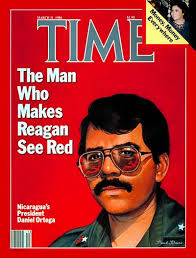
Nicaragua taught me so much about the world and critical thinking. All during the 1980s it was the center of news reports every day. President Reagan was obsessed with the country and its president, Daniel Ortega (pictured above). Reagan continually referred to the Sandinista government there as a “Marxist, Leninist, repressive totalitarian regime.” However, he neglected to apply his lofty standards to what preceded it, viz. the Somoza dynasty of three dictators who governed the country brutally with the full support of the United States.

Reagan’s obsession took the form of support for an equally brutal counter-revolutionary force of terrorists called “the Contras” – whose base was the exiled National Guard of the Somoza regime. Reagan famously referred to those killers and drug runners as “the moral equivalent of our Founding Fathers.”

My experience in Brazil along with careful reading of the press and some history had convinced me that the Reagan administration was disseminating what a Great Man would later term “fake news.”  But I wanted to find out for myself.

So in 1985 I found myself in Managua for six weeks. My specific purpose in going was twofold. The first was fact-finding; I wanted to experience life in a revolutionary situation. I also needed to learn Spanish, which was increasingly necessary for my work in liberation theology. That was my second aim. Languages, by the way, are nearly universally recognized as powerful aids to critical thinking. They expand awareness of other cultures, different points of view and ways of expression.

Along those lines, one of the strengths of my training for the priesthood had been language study. In high school it began with Latin my freshman year. Then came French and Greek. All of those studies continued through my sophomore year in college. Next, of course, I had to learn Italian for my years in Rome. Just before that I needed a semester of Hebrew to qualify for theological studies there; so I took a summer course at Harvard. Once in Rome, it became apparent that German would be essential for my doctoral thesis on Jurgen Moltmann and his Theology of Hope. That led to two summers’ study at the University of Vienna. Then I needed Portuguese for my sabbatical in Brazil. And finally, in ’85 it was Spanish in Managua.

For two summers, I studied at Casa Nicaraguense de Español. It had students living with Nicaraguan families, leaving for Spanish class every morning and then studying the Revolution every afternoon. We visited prisons, farming co-ops, and offices of both the Sandinistas and their political opponents. We attended political rallies and demonstrations. The experience was difficult, but invaluable in terms of expanding my horizons and acquainting me with revolutionary thought and practice. Over the next 20 years I would return to the country a dozen or more times. In 1990 I would do so as an Official Observer of the election that defeated the Sandinistas, replacing them with a U.S.-supported party. I edited a book on the topic.

On that first visit, however, I was amazed by the range of books available in Managua that I would never have otherwise encountered. They covered all aspects of Marxism, socialism, history, education, liberation theology – and critical thinking. It was a treasure trove for me. Reading those books acquainted me with a line of thinking “forbidden” to most Americans.

As I said, this first experience in Central America made an extremely important contribution to my political education. It brought me into further contact with the living conditions of working-class people on the receiving end of extremely destructive US Third World policy. The contrast between what I observed in Nicaragua and what our government said about the country was astounding. It pointed to the fundamentally dishonest character of our national leadership. In addition, those books I mentioned underscored the one-sided bias of our mainstream press, scholarship and teaching.

What I learned from all this, along with the other experiences I’ve outlined here so far, has made me terribly suspicious of our government. Revelations connected with the Iran-Contra scandal heightened the suspicion exponentially. I saw clearly that the lies told about the Sandinistas were only the latest in a long string of misleading stories, cover-ups, and paper-overs foisted upon the North American public. Contra-gate, Vietnam and Watergate were the rule, not the exception. Sad to say, they represent the way our government does business.

In the end, I concluded that the burden of proof will always rest with our officials, rather than with our country’s designated Third enemies, including those currently identified as “terrorists.”

(Next Week: Costa Rica and Franz Hinkelammert)

My Journey towards World-Centric Consciousness Continues (9th in a series on critical thinking)

Berea College

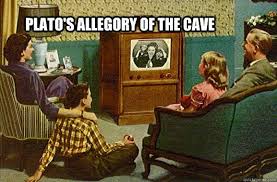
 (In this series, I’ve been trying to explain my approach to “critical thinking” in a world of “fake news” and “alternative facts.” I addressed the fake news first, showing how it’s really an old problem well-addressed by Chomsky in the mid-80s in his “Necessary Illusions.” The question of alternative facts was suggested even longer ago by Plato in his “Allegory of the Cave.” Currently, I’m tracing my own experience with alternative facts, showing how my own set of convictions has changed from childhood, through my education in preparation for entry into the priesthood, and later during my graduate studies in Rome. This week, let me tell you about changes in consciousness that took place after I left the priesthood, working first for the Christian Appalachian Project, then teaching my first few years at Berea College, and via my first sabbatical in Brazil in 1984.The changes, I’m alleging, brought me through development stages identified by Ken Wilber as egocentrism, ethnocentrism, and world-centrism. This week I continue my description of my evolving world-centric understanding. The hope is that my story might help you reflect on your own similar development as a critical thinker.)

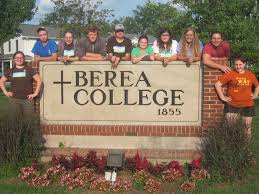
After returning to the United States, with my doctoral degree in hand, I spent a “year of discernment” to decide whether or not to remain a Columban priest. Working as a priest for The Christian Appalachian Project in the foothills of Kentucky’s Cumberland mountains gave me first-hand experience of the poverty I had read about in Michael Harrington’s The Other America. It also introduced me to Berea College, where I would eventually spend the next 40 years teaching. Berea had been founded by Christian abolitionists in 1855. It retained its commitment to inter-racial justice, to the Appalachian region, and gradually accepted a revised and remarkably open understanding of Christian faith.

Those commitments required me to teach a first-year General Studies course called “Issues and Values.” And that meant learning about black history, women’s liberation, world religions, the environmental crisis, and the issue of world hunger. Faculty development seminars helped prepare us to teach texts including The Autobiography of Malcolm X, “The Seneca Falls Resolutions,” the Club of Rome’s Limits to Growth, The World’s Religions by Huston Smith, and Food First by Frances Moore Lappe and Joseph Collins. The course was life-changing for my students – and for me.

Even more so was a two semester Great Books course, “Religious and Historical Perspectives” (RH&P) which I began teaching my third year at Berea. Required of all sophomores, the course had a dozen or so sections staffed by professors recruited from across the curriculum. The unspoken rule among them seemed to be “Never admit that you don’t know everything.” This put me at a considerable disadvantage. For the truth is, though I had taken innumerable courses in (mostly Church) history, I still didn’t really understand it. I couldn’t see the pattern. To me, history was quite boring; it seemed like one damn thing after another – most of which I couldn’t remember.

All of that changed with RH&P. Like “Issues and Values,” the course centralized faculty development seminars in which colleagues from the fields of history, English, sociology, economics, biology, physics, religion, and political science spent the first three weeks of our summer vacations reading, studying, and discussing topics like the medieval period, the scientific revolution, Marxism, apocalyptic literature, and evolution. That prepared us to teach our students primary sources including the Bible and authors like Hesiod, Homer, Tacitus, Cicero, Augustine, Luther, Calvin, Dante, Copernicus, Galileo, Newton, Locke, Jefferson, Kant, Adam Smith, Ricardo, Marx, Swift, Mary Shelly, Einstein, and Dietrich Bonhoeffer. It was the best educational experience of my life. For the first time, I found myself understanding history and its patterns. In particular, my study of Marx and “The Communist Manifesto” made even clearer to me the ethnocentrism of my previous education. I began to realize that I had spent my life studying the rationalizers and defenders of the elite capitalist establishment. I had been taught to despise the philosophers and historians of the working class like Marx himself. My long years in the classroom had given me an understanding of the world alien to my own class roots.

I was gaining distance from my ethnocentrism. As I later would put it in my Ten Rules of Critical Thinking, I finally saw the value of respecting history. I was already nearly 30.

Brazil

My insights from R&HP were deepened when in 1983-84 (at the age of 43) I took my first sabbatical and traveled to Brazil. My studies there did wonders for my personal growth and unfolding understanding of facts, truth and critical thinking as essentially relative to one’s stage of personal development.

My chosen task in Brazil had been to pursue post-doctoral studies in the field of liberation theology, which had become a central interest of mine. In Rome I had been introduced to the topic. It was part of what had begun broadening my horizons there.  I discovered it to be a strain of discourse about God as imagined by impoverished Christians in the former European colonies especially in Latin America, but also in Africa and South Asia. Liberation theology emerged from peasants, factory workers, students and housewives who found in the Bible a reflection of their own lives and an inspiration to work for social change. In the stories of the ancient Hebrews they saw people enslaved and colonized as they had been. They discovered in the Book of Exodus a God whose concern was to liberate such slaves and install them in a land “flowing with milk and honey.”

Similarly, in Jesus the exploited found a champion who promised them a place in this-worldly Kingdom of God, where everything would be turned upside-down. The poor would become solvent, while the rich would be dethroned; the first would be last, while the last would be first. For liberation theologians, the Kingdom of God is what the world would be like if God were king instead of Caesar. Moreover, in Jesus Latin America’s beggars, street people, women, peasants, factory workers, and students recognized a kindred spirit. Like them, he was poor and born under a cruel colonizing power. He was the son of an unwed teenage mother, brown-skinned and a friend of prostitutes and sinners. He was homeless at birth and an immigrant in Egypt in his early years. Later he became an enemy of the state. He experienced constant surveillance, and was considered a terrorist. Jesus finished, like so many of Brazil’s poor during the ‘60s, ‘70s and ‘80s, a victim of torture and capital punishment.

As we’ll see next week, liberation theology profoundly changed the “facts” of my spirituality. Joined with what I had learned about Appalachia and western history, it readied for even more profound transformations in consciousness that yet awaited me. My Third World travels had just begun. They would provide the catalyst.

(Next week: I sit at the feet of the liberation theologians I had been reading for years.)

My Personal Journey from Ethnocentrism towards World Centrism (8th in series on critical thinking)


worldcentrism

[In this series, I’ve been describing my personal development as a critical thinker. I’ve been using the matrix supplied by Ken Wilber who understands human growth as advance through the stages of egocentrism to ethnocentrism and (for some) to world centrism and even cosmic centrism. Each one of these stages, I’ve been arguing, recognizes its own set of “alternative facts.”]

My ethnocentrism grew alongside the first stage in personal development described here last week as “egocentrism.” Ethnocentrism meant that I was fiercely Catholic. For me, that was my primary group identification, my tribe. At this stage, in terms of critical thinking, no other denomination, and certainly no other religion had anything to do with truth that really mattered. All Protestants were simply wrong and destined for hell. For me, that was a fact.

Such conviction stuck with me and grew after I entered St. Columban’s Minor Seminary in Silver Creek, New York (40 miles west of Buffalo) at the age of 14. The seminary belonged to the Society of St. Columban – a missionary group founded in Ireland in 1918 as the Maynooth Mission to China. Its calling involved converting Chinese “pagans” who without our ministries, we all believed, would themselves be bound for hell – another fact.

At this stage, my second ethnocentric form of allegiance was to my country. I remember being confused during a “day of recollection” that our entire seminary (about 100 students) attended at a corresponding institution run by the Passionist Fathers in nearby Dunkirk, New York. That was around 1955, only 10 years after the conclusion of World War II. A rather elderly priest from the host seminary gave some kind of keynote talk. In its course, he described the dropping of atomic bombs on Hiroshima and Nagasaki as “the most immoral acts in history.” I was shocked and entirely confused. Was this man a communist or what?

My suspicions were aroused by the fact that missionaries on leave from assignments in the “Far East” often regaled us with stories of the evil communists who had by then driven our men and other foreigners from China following Mao Tse-Tung’s revolution in 1949. Communist Marxists hated the Blessed Virgin, we were told. That was enough for me. Communists were evil incarnate.

Similarly, those who opposed them at home were correspondingly virtuous. One evening in 1957 during study hall, one of my most admired professors who was proctoring the session, passed by my desk and whispered, “A great man died today.” He was referring to Senator Joseph McCarthy who died on May 2nd of that year.

In 1964, at the age of 24 I cast my first ballot for president. I voted for Barry Goldwater. That shows how ethnocentric I was. In terms of critical thinking, my proud and sincere guideline was “My country right or wrong.” My facts were those of Mr. Goldwater, the Catholic Church, Joseph McCarthy, and J. Edgar Hoover.

World Centrism Emerges

My horizons started broadening in 1962. It was then that I began accepting “alternative facts” soon after Pope John XXIII convened the Second Vatican Council (1962-’65).  

That represented the thin end of a wedge that would gradually change forever what I considered true. The Second Vatican Council seemed to call my most cherished beliefs into question. It recognized that Protestants were “Separated Brethren” rather than enemies surely destined for hell. The notion of priesthood was widened to include their notion of priesthood of the faithful. Council theologians also problematized conceptions of church as the “perfect society” as well as papal infallibility. That in turn led to conclusions about an “ecclesia semper reformanda” (i.e. a church in need of continual reformation). Mandatory celibacy was criticized as an impediment to personal growth among the clergy. Seminary curricula like the one I was following in St. Columban’s Major Seminary were disparaged for their narrowness and tendencies to indoctrinate rather than educate.

Initially I resisted all of that in the name of my faith and tradition. But my ethnocentrism was under assault.

Rome

My resistance though couldn’t last. Following ordination, I was sent to Rome to secure my doctoral degree in moral theology. So I left the seminary hot house, where I had spent my formative teen age and early adult years. Suddenly, I found myself in an international atmosphere that in every dimension was so much more sophisticated than anything I had previously experienced. Rome’s context was still electric in the immediate aftermath of Vatican II. And the Council’s spirit was reflected in the courses I took at the Athenaeum Anselmianum and Academia Alfonsiana. In their light, my secure notions of theological truth underwent continual challenge.

Gradually I found it all quite liberating.

However, on the political front, it was shocking and embarrassing. Remember, these were the late ‘60s. The anti-war movement was in full swing, along with the struggle for Civil Rights and women’s liberation. It was the era of “Troubles” in Ireland. Martin Luther King and Bobby Kennedy were both assassinated in 1968. My last year in Rome (1972), George Wallace was shot, and the Palestinian group, Black September, terrorized the Olympic games in Munich.

Meanwhile, I was living in the Columban residence on Corso Trieste with about 15 other young priests all pursuing graduate work. Two of us were American. The others came from Ireland, England, Scotland, and Australia. Our conversations over meals revealed to me my narrowness of perspective. All my colleagues were better informed than me. They even had a superior grasp of U.S. history.

I resolved to remedy that and gave myself a crash course in current events courtesy of Time Magazine. I even ended up winning our small community’s annual political literacy contest. However, that sort of knowledge turned out to be quite superficial.

Gradually, especially because of my theological studies, I was drifting more and more leftward.  In the field of theology, I frequently challenged my colleagues about the humanity of Jesus, the faults of the church, and the whole idea of trying to convert “pagans” from Buddhism, Hinduism and Islam to Christianity.

None of that sat well with superiors in the Society of St. Columban. Towards the end of my stay in Rome, I was informed that plans had changed. Whereas the whole purpose of sending me to Rome had been to prepare me to teach in our major seminary, I was now considered too “dangerous” for that. I would be sent to Mindanao in the Philippines instead.

For the first time, I considered leaving the priesthood.

Politically, I became similarly alienated. It stemmed from my thought that if what I had been taught about God, the Church and even Jesus were untrue, if I could question the pope, whom I had always considered infallible, why not the U.S. government? Daniel Ellsberg’s publication of The Pentagon Papers in 1971 sealed the deal. Now I strongly opposed the War in Vietnam. I became a McGovern Democrat.

My journey towards world-centrism advanced. In terms of my evolving criteria for critical thought, I could already see that leaving ethnocentrism behind would mean expecting challenge.

Step One in My Own Escape from Plato’s Cave (7th in a series on critical thinking)

altar boys

Let me put some flesh on the abstractions I’ve shared so far in this series on critical thinking. I include this autobiographical material to explain the origins of the conclusions and principles I intend to share later on. They all came to me quite gradually and despite my sometimes fierce resistance.

I also present this segment to raise questions for the reader about issues connected with the Global South and its relationship to the United States and its policies. Questions similar to your own, I’m guessing, arose for me in the course of my travels. Hopefully, the rules for critical thinking to be elaborated later on will suggest answers about colonialism, capitalism and socialism, poverty, U.S. policy itself, violence, terrorism, and war. In the contemporary world, those, after all, constitute the topics worthiest of critical thought.

The odyssey I’ll describe has taken me across five continents – from Chicago to Delhi. My journeys had me gathering wisdom from my earliest school teachers, and later from world-renowned philosophers and theologians, as well as from revolutionary fighters, community organizers, gurus, teachers of meditation, and as-yet-to-be-canonized saints. As the story unfolds, I hope you can witness my horizons expand. There is nothing like language study, travel, and challenges from outside one’s cultural cave to stimulate critical thinking. Watching my process may make you aware of your own.

Like everyone else’s, my horizons were highly constricted at first. To be perfectly honest, I did not start thinking in truly critical ways till perhaps the age of 25. Yet before then, I was extremely concerned with thinking and truth. As a candidate for the Catholic priesthood from the age of 14, I studied Catholic “apologetics” and took it all quite seriously. Apologetics meant rational, logical “defense of the faith.” Later as a philosophy major in the Catholic seminary, my whole academic orientation dealt with rational approaches to subjects such as metaphysics, cosmology, and logic itself.

Yet despite such emphasis on rationality, I was not really thinking critically. Instead, my thought processes remained limited by what philosopher, Ken Wilber and others describe as those early stages of consciousness through which every human being must pass. As previously noted, they begin with ego-centrism, pass through ethnocentrism, and finally (for some) arrive at global and possibly even cosmic-centrism.[1]

Reflection has shown me how each stage of my own growth along those lines suggested to me one or more of the ten rules for critical thinking that I mentioned in previous postings.

Egocentrism

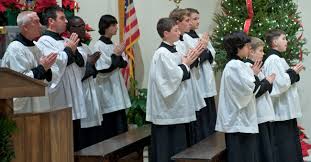
I was always a very religious boy. Living on Chicago’s northwest side, my working class parents (my father was a truck driver) had sent me to St. Viator’s Catholic Grammar School from kindergarten through 8th grade. Every grade there was taught by a Sister of St. Joseph of Carondelet. I have nothing but fond memories of them. They enhanced my spiritual sensitivities. Under their tutelage, I attended Mass every day, went to confession each Saturday, and became a “Knight of the Altar” (altar boy) advancing to the rank of “Vice Supreme Grand Knight.” I prided myself in learning the associated and complex Latin prayers perfectly. I loved all of that and wanted to be like Father Burke, the young but strict disciplinarian who was in charge St. Viator’s School.

With that sort of background, it comes as no surprise that my first worries in life were about the salvation of my eternal soul. That’s the form my egocentrism took. I needed to secure heaven and avoid hell at all costs. Nothing else mattered.

So seriously did I take the task that I found myself afflicted early on with a case of scruples that recurred for me periodically till my early 20s. Scruples meant that I worried about and feared as sinful what other saner people would not – especially anything that might be associated with sex.

So I became obsessed with confessing my “sins,” lest I die in mortal sin and lose my eternal soul forever. That form of obsessive-compulsive behavior was very painful for me. But with help from various spiritual directors, I gradually gained the courage to think for myself (even about God and sin). I remember thinking: “I can’t go on like this. If I’m going to hell, I’m going to hell. But I’m trusting that God is not that fearful Being “up there” looking for the least excuse to condemn me. I’ll take my chances.”

That in itself was a step away from ego-centrism and a nascent expression of critical thinking, at least in the religious sphere. I was somehow unconsciously employing the principle, “Connect with your deepest self.”

(Next week: Ethnocentrism expands my egocentric concerns)

[1] It should be noted that I am about to describe my development of intellectual, spiritual, and political awareness. Wilber refers to such dimensions as “lines” of development. Other lines include physical=kinetic, psychological, artistic, emotional, etc. One might be well-developed in some of these lines, and less advanced in others. For example, a person might be quite advanced intellectually, but less so emotionally and artistically.

Testing Chomsky’s Propaganda Model (6th in a series on critical thinking)

Propaganda Model

Last week in this series on critical thinking, I attempted to connect Plato’s Allegory of the Cave with the work of Noam Chomsky and Edward Herman in Necessary Illusions. There they alleged that the function of the mainstream media (MSM) is and has always been the dissemination of propaganda. It’s purpose is to create a shadow world far removed from reality. In other words, President Trump is largely correct: fake news is the rule, not the exception. So, for instance, is fake history, fake economics, and fake religion.

Chomsky and Herman don’t expect readers of Necessary Illusions to simply accept their allegations. Instead, they propose testing the model’s predictions (enumerated in last week’s posting).  The first step in doing so identifies “paired examples.” These involve similar controversial actions, performed by the United States or its client states on the one hand, and by “designated enemies” on the other.

In Necessary Illusions many such pairings are provided – all of them, of course, taken from the 1980s, when the book was published. Then U.S. involvement in Central American wars (especially in Nicaragua) dominated the news. While historically “dated,” the examples still communicate what the authors mean by paired examples. In addition, even dated case studies can prove useful to research in order to broaden one’s historical knowledge, while at the same time testing the model’s predictions. (More current examples will be suggested below.) Those given by Chomsky and Herman include[1]:

  • Celebration of elections in (client state) El Salvador (widely criticized for their meaninglessness in Europe) vs. media adoption of the U.S. official account that the 1984 elections in (designated enemy) Nicaragua either never occurred or were hopelessly rigged, even though the Nicaraguan elections were praised internationally for their freedom and fairness (66-67).
  • The defense and rationalization of the U.S. downing of the Iranian air bus in 1988, vs. the furor over the earlier Soviet destruction of KAL 007 (34).
  • The lack of comment on Indochinese injuries and fatalities caused by U.S. mines left behind after the Vietnam war, and on the refusal of the United States to supply minefield maps to civilian mine-deactivation squads, vs. the denunciation of the Soviet Union for the civilian casualties caused by their mines in Afghanistan, where they did provide maps to assist mine clearing units (35).
  • Media indignation aroused in 1988 over alleged plans to build chemical weapons factories in Libya, vs. the media’s lack of concern for the extensive civilian casualties in Indochina caused by U.S. chemical warfare there through its use of Agent Orange (38-39).
  • The sympathetic support given Israel for its repeated invasions and bombings in Lebanon even in the absence of immediate provocation, vs. the identification of Nicaraguan “hot pursuit” of Contras across its unmarked border with Honduras as an “invasion” of a sovereign state (54-55).
  • The press position that Soviet provision of MIG fighter planes to Nicaragua would legitimate a U.S. invasion of that country, vs. media acceptance of the threat posed to Nicaragua by U.S. shipment of F-5 fighter planes to neighboring Honduras (55-6).
  • Portrayal of the World Court as the culprit, when the United States was condemned for its support of the Nicaraguan Contras in 1986, vs. press astonishment over Iran’s lawlessness when it refused to recognize the Court’s adverse decision during the hostage crisis of 1979 (82).
  • Portrayal of the World Court as the culprit, when the United States was condemned for its support of the Nicaraguan Contras in 1986, vs. press astonishment over Saddam Hussein’s lawlessness when he refused to recognize the Court’s jurisdiction, when it ordered him to cease his occupation of Kuwait in 1990.
  • Press outcry over the genocide of the Pol Pot regime in Cambodia, vs. its silence about the proportionately larger-scale slaughter in East Timor at the hands of U.S.-backed Indonesian invaders (156).
  • Criticism of Soviet failure to pay its U.N. dues, vs. silence about U.S. debts in the world body (222).
  • Focus on Nicaragua’s alleged failures to live up to the Esquipulas II accords, vs. relative silence about the much worse records of client states, El Salvador, Honduras and Guatemala (239).
  • The extensive media coverage given the 1984 murder of Fr. Jerzy Popieluszko in (designated enemy) Poland by policemen who were quickly apprehended, tried, and jailed, vs. the comparatively little space given the murder of 100 prominent Latin American religious martyrs, including the Archbishop of San Salvador and four raped American churchwomen, victims of the U.S.-backed security forces (137, 146-47).

Paired examples with more contemporary relevance might include:

  • The San Bernardino shooting on December 2, 2015 by Muslim, Rizuan Farook and Tashfeen Malik vs. the January 29th, 2017 shooting in a Quebec City mosque by white nationalist and supporter of Donald Trump, Alexandre Bissonette.
  • The U.S. nuclear weapons modernization program announced by President Obama vs. suspicions that Iran might have initiated a program to acquire nuclear weapons.
  • Iran’s nuclear weapons program vs. Israel’s.
  • Monroe Doctrine justifications for U.S. attempts to overthrow the Sandinista government of Nicaragua during the 1980s vs. Russian justifications for its invasion of the Ukraine beginning in 2014.
  • Russian and Syrian atrocities in the Battle for Aleppo in 2016 vs. similar acts by the U.S. and Iraq in the Battle for Mosul that same year.
  • Stories on Cuban political prisoners vs. stories on U.S. political prisoners.
  • Islam as an inherently violent religion vs. Christianity as an inherently violent religion.
  • The Jewish Holocaust at the hands of Germans vs. the Native American Holocaust at the hands of European settlers.
  • Alexander Putin as a “murderer” vs. Barack Obama as a “murderer.”

Testing such paired examples involves

  • Locating news reports of both incidents in the mainstream media, e.g. The New York Times.
  • Counting the number of articles devoted to each incident.
  • Measuring the column inches devoted to each
  • Comparing the reporting of each incident, noting:
    • The source-bases of the articles in question and whether they conform to Chomsky’s predictions as earlier described.
    • Whether there are significant language differences in the reports of the “paired examples.”
    • The significance of the differences.
    • How the quality of evidence advanced or demanded in each case differs. (E.g. Is a “smoking gun” required for alleged U.S. crimes, while something less is tolerated as proving the crimes of designated enemies?)
    • Whether conclusions are drawn or implied about evil intent on the part of “designated enemy” leaders, while similar actions by the U.S. or its clients are excused or rationalized.
    • Whether conclusions are drawn or implied about the corruption and unworkability of the “designated enemy’s” system, while similar actions by the U.S. or its clients are explained in terms of exceptional crimes by officials at the lowest level possible.
    • Whether arrests, trials or convictions are accepted as indications that the system in question does work or that it doesn’t.

Conclusion:

Both Plato’s Allegory of the Cave and Chomsky’s propaganda model suggest that the problem of fake news has been with us for a long time. Even more importantly: critiquing it goes much deeper than merely analyzing what appears in the newspapers, on television or online. Instead, critical thinking often challenges its practitioners to make a 180 degree turn away from accepting what we’ve been told by beloved parents, teachers, priests, ministers, politicians, other public figures and friends.

No wonder it’s so intimidating to walk through our prison’s open cell door!

(Next week: My own journey from egocentrism towards Cosmo-centrism)

[1] Here all page references are to Chomsky, Noam. Necessary illusions. Toronto, ON: CBC Enterprises, 1990.

Noam Chomsky & Plato’s Allegory: It’s All Fake News (5th in a series on critical thinking)

Plato TV

Last week I reviewed Plato’s Allegory of the Cave in an attempt to show that problems of “alternative fact” and “fake news” have been with us a long time.

In their book, Necessary Illusions, Noam Chomsky and Edward Herman in effect, connect Plato’s parable to contemporary controversy about truth in reporting. The authors do so by explaining what they call the Propaganda Model of information dissemination through ethnocentric political discourse, education, and especially the mainstream media.

For Chomsky and Herman, such information sources create for us an unreal shadow world that fails to take into account the realities of the world’s unseen majority whose lives are shaped by U.S. domination. Besides explaining that theory, the authors offer a way of testing its veracity. This week let me explain the propaganda model and its predictions. Next week I’ll show how to test both.

To begin with, the propaganda model holds that the mainstream media function as vehicles of propaganda intended to “manufacture consent” on the part of our culture’s majority – often described within the cave as “special interests.” The majority includes workers, labor unions, the indigenous, family farmers, women, youth, the elderly, the handicapped, ethnic minorities, environmentalists, etc. The MSM and those they represent seek to secure the latter’s consent for policies favoring what is termed “the national interest.” This, according to propagandists, is the province of corporations, financial institutions and other business elites. Such interests in turn are served not only by the media, but by elected officials, educational institutions, churches, and so on. These latter often represent resistant grassroots movements as threats, since such movements actually seek greater influence on national life.

To control such tendencies, the media in the United States defines the limits of national debate within boundaries set by a two party system of wealthy government officials, by unquestioned patriotism, support for the free market, vilification of designated enemies (e.g. ISIS, Russia, China, Cuba, Syria, Iraq, Iran, North Korea . . .) and support for official friends (e.g. Israel, Saudi Arabia, Great Britain . . .). Support for such “client states” ignores their objectionable actions that often parallel and even surpass similar acts committed by designated enemies.

None of this means that “liberal” criticism is excluded from the national media. On the contrary, such criticism of either government officials (like Donald Trump) or the corporate elite is common. However, the media never allow serious criticism of either the free enterprise system as such, nor of the American system of government.

Testing this model involves comparing its predictions with specific stories as reported, for instance, in the New York Times often referred to as the nation’s “paper of record.” The predictions include the following:

  • More articles will be devoted to the “atrocities” of designated enemies than to similar actions by the U.S. or its clients.
  • Less space (column inches) will be similarly allocated for reporting the alleged crimes of the U.S. or its clients.
  • In either case, story sources will tend to be American government officials and intellectuals (university professors, think tank experts, conservative churchmen) friendly to U.S. policy.
  • The reporting of “enemy” crimes will devote comparatively little space to the “official explanations” of the governments in question.
  • It will depend more heavily U.S. government spokespersons, on opposition groups within the offending countries concerned and on grassroots accounts.
  • The crimes and “atrocities” of designated enemies will be explained in terms of a corrupt and unworkable system.
  • On questionable evidence or with none at all, the crimes and atrocities of “designated enemies” will be attributed to the highest levels of government.
  • Meanwhile the crimes of the U.S. or its client states will be denied, rationalized or otherwise excused.
  • Incontrovertible proof (a “smoking gun”) will be demanded to prove the “crimes” of the U.S. or its friends.
  • If admitted, these crimes and atrocities will be explained as exceptional deviations by corrupt individuals (at the lowest level possible).
  • The ultimate conclusion drawn from the discovery of crimes along with any resulting trials and convictions will be that the “system works.”

This bias will be revealed not only in the ways noted above, but by differences in language (words, phrases, allusions) employed in writing the articles in question.

Again, next week I’ll show how Chomsky and Herman suggest testing this model and its predictions.

“Magic Glasses:” The Marginalized Know Better (Pt. 3 in a series on critical thinking)

magic glasses March

These past two weeks (see here and here), I’ve been addressing the question of critical thinking in a post-fact age of “fake news.”

So far, my argument has invited readers to recognize a hierarchy of truths, viz. that ethnocentrism is superior to egocentrism, world-centrism is superior to ethnocentrism, and cosmic-centrism ranks above world-centrism. Most academics are reluctant to recognize that hierarchy. As thorough post-moderns, they advocate what Ken Wilber calls “aperspectival madness.” It holds that every perspective is as good as any other.

By rejecting such insanity, the task of critical education becomes helping people move from one stage of awareness to a higher one – specifically from ethnocentrism and its invalid dominator hierarchies to world-centrism with its more valid growth hierarchy, and to (at least) acquaintance with the notion of cosmic-centrism.

And it’s here that I find the concept of “magic glasses” (which will figure in the title of my book) relevant to the task at hand. Baba Dick Gregory uses the phrase to refer to the perspective conferred by movement from ethnocentrism to world-centrism. According to Gregory, such advance is like donning special eyewear that enables one to perceive what is invisible or absurd to those without them.

Magic glasses, the Baba warns, are both a blessing and a curse. The blessing is that eyesight through magic glasses is fuller, and more evolved – more worthy of human beings. The curse is that those without the glasses will consider their wearers insane or worse. The hell of it is that glassless folk cannot be persuaded unless their independent growth cycle enables them to do so.

So, Gregory points out, the magic glasses come with three inviolable rules: (1) once you put them on, you may never take them off, (2) afterwards, you can never see things as your tribe says they’re supposed to be, but only as they truly are, and (3) you can never force anyone else to wear them.

My own experience confirms Gregory’s insight. It suggests that our lives’ journeys, our lived experiences, achieving critical distance from families and cultures, along with our encounters with great teachers, can all help us gain higher levels of consciousness better able to grasp more evolved levels of critical thinking.

In my own case, exposure to critical thought as explained, practiced and stimulated outside the U.S. during my graduate studies in Rome and across Europe helped me gain distance from U.S.-fostered ethnocentrism.

But so did what I learned in former European colonies like Brazil, Nicaragua, Guatemala, Costa Rica, Honduras, Zimbabwe, South Africa, Israel, and India. Thinkers and activists there gradually raised my critical awareness that the Global South’s “alternative facts” about economics and history underpin any critical thought worthy of the name. I was actually privileged to meet directly with people like  Paulo Freire, Desmond Tutu, Maria Lopez Vigil, Dom Helder Camara, Miguel D’Escoto, bell hooks, Franz Hinkelammert, Helio Gallardo, and Enrique Dussel, and Rubem Alvez.

All of them taught me that the Global South and impoverished perspective tends to be fuller than its developed world counterpart.

Think about that for a moment. Those of us who are rich and/or comfortable actually have very limited experience and awareness.  Our communities are pretty much siloed and gated. As a result, we can live without consciousness of the poor at all. Wall Street executives rarely really see them. The poor are located in other parts of town. Most even in the middle class never enter their homes or schools. The comfortable have no immediate experience of hunger, coping with rats, imminent street crime, living on minimum wage, or cashing in Food Stamps. Even if they notice the poor occasionally, the comfortable can quickly dismiss them from their minds. If they never considered the poor again, the rich and middle class would continue their lives without much change. In sum, they have very little idea of the lived experience of the world’s majority.

That becomes more evident still by thinking of the poor outside the confines of the developed world who live on two dollars a day or less. Most in the industrialized West know nothing of such people’s languages, cultures, history, or living conditions, whose numbers include designated “enemies” living in Syria, Iraq, Somalia or Yemen.  Even though our governments drop bombs on the latter every day, they can remain mere abstractions. None of us knows what it really means to live under threat of Hellfire missiles, phosphorous bombs or drones. Similarly, we know little of the actual motives for “their terrorism.” Syria could drop off the map tomorrow and nothing for most of us would change.

None of this can be said for the poor and the victims of bombing. They have to be aware not only of their own life’s circumstances, but of the mostly white people who employ them, shape their lives, or drop bombs on their homes. The poor serve the rich in restaurants. They clean their homes. They cut their lawns. They beg from them on the streets. The police arrest, beat, torture and murder their children.

If the U.S., for example, dropped off the planet tomorrow, the lives of the poor would be drastically altered – mostly for the better. In other words, the poor and oppressed must have dual awareness. For survival’s sake, they must know what the rich minority values, how it thinks and operates. They must know more about the world than the rich and/or comfortable.

Even in practical spheres of daily living, the marginalized and poor know more. They typically can grow their own food, repair their machines, take care of animals, and just “make do” and survive in ways that would soon become apparent to all of us if the electricity stopped working for a few days.

That’s why when the poor develop “critical consciousness,” their analysis is typically more comprehensive, inclusive, credible, and full. They have vivid awareness not only of life circumstances that “make no difference” to their comfortable counterparts; they also have lived experience of life on the other side of the tracks.

For me, benefitting from the perspective of the world’s conscientized majority, and reading their philosophers, theologians, activists, and social analysts has turned my own perspective upside-down. It has changed my understanding of history, economics, politics – and especially of theology and God-talk.

Such upside-down vision will be the heart of my book on critical thinking. It has suggested the following truth criteria: (1) Reflect Systemically, (2) Expect Challenge, (3) Reject Neutrality, (4) Suspect Ideology, (5) Respect History, (6) Inspect Scientifically, (7) Quadra-sect Violence, (8) Connect with your deepest self, (9) Detect Silences, and (10) Collect Conclusions.

Over the next weeks, I’ll try and develop each of those “rules for critical thinking.” But before I get there, I want to tell you more about “fake news” and my own journey.

(Next week: Plato’s Fake World)

There Really Are Alternative Facts (2nd in a Series on Critical Thinking)

wilbers-stages

Clearly our culture and the world have entered uncharted territory with the announcement from multiple sources that we’ve entered a post-fact world of fake news. Nowadays, it seems, one person’s truth is another’s propaganda. In such a world, critical thinking is either essential or irrelevant.

I hold for the former.

I believe that truth is relevant, that facts exist, and that the facts of some are truer than those of others. At the same time, however, I recognize that my own understanding of “fact” has changed drastically over the course of my life. What I once fervently embraced as truth, I no longer accept. Something similar, I think, is true for all of us. As Paul of Tarsus put it in his letter to Christians in Corinth 2000 years ago: “When I was a child, I talked like a child, I thought like a child, I reasoned like a child. When I became a man, I put the ways of childhood behind me.” (ICOR 13:11)

Paul’s insight holds for western culture as well, including the scientific community. It readily admits that facts change. For instance, scientists once universally accepted as absolute fact that the earth was the center of the universe. Galileo changed all of that.

And that brings me to what I wrote last week about those essential elements of critical thinking: world-centrism, evidence, comprehensiveness, and commitment.

As for world-centrism, the argument here begins by noting that truth is largely relative. Our perception of it often depends on our stage of personal development – on the degree of evolution we’ve attained. What’s true for children (think Santa Claus and the Tooth Fairy) is not true for adults. This by no means invalidates what children think. Their insights are often more acute than grownups’.

On the other hand, however, there are hierarchies of truth. While honoring children’s perceptions, adults cannot generally operate on the basis of what youngsters believe about the world. Neither do all (even very sincere) adults enjoy the same credibility. Some of them are more mature than others – more highly evolved at least in their chosen fields. Einstein, for instance, enjoyed high credibility in the field of physics. He also played the violin. However, his credibility in the field of music didn’t begin to approach that of Jascha Heifetz. It’s the same with other endeavors. Expertise matters.

Recognizing such relativity makes us realize that we do actually inhabit a world of “alternative facts.” But not all fact-claims have the same value. To separate true from less true and truth from falsehood, we must exercise extreme care. Recognizing the previously mentioned truth-hierarchies associated with universal stages of personal development is part of that process.

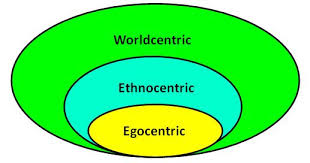
Philosopher Ken Wilber identifies four major stages of personal development or evolution. The perceptions of higher stages are superior to their lower-stage counterparts. Children, Wilber notes, tend to be egocentric. As such, their world and judgments tend to revolve around themselves, their feelings, needs and naïve beliefs.

In early adolescence or sooner, their scope of concern begins to widen towards group identification or ethnocentrism. They identify with their family, church, school, town, teams, and country. Relative to nation, the attitude here can be as narrow as “My country, right or wrong.” Many people never move beyond ethnocentrism. And in practice, their tribal superiority complex often leads to what Wilber calls “dominator hierarchies,” where control extends beyond the abstract realm of “truth” and “facts” to the politics of imperialism, war, and even slavery.

Those who move beyond ethnocentrism advance to the next evolutionary stage, world-centrism. Here allegiance shifts from my tribe and country to the world and human race. At this stage it becomes possible to criticize even habitually one’s tribe and country from the viewpoint of outsiders, “foreigners,” and independently verifiable data. Dominator hierarchies become less acceptable.

A final (as far as we can tell) stage of development is cosmic-centrism or what Wilber terms “integral thinking.” The cosmic-centric thinker is a mystic, who realizes the unity of all reality, animate and inanimate. (S)he holds that separation between human beings and their environment is only apparent. As many of them put it, “There is really only one of us here.”

The crucial point to note in this context, is that each of these developmental stages has its set of “alternative facts.”

Take the question of Donald Trump’s inauguration audience. According to many observers, Mr. Trump has largely been fixated at the stage of egocentrism (with, no doubt, ethnocentrism rising). Accordingly, he evidently thinks that because of his exceptionality, brilliance, and importance, his crowd must have been larger than that of President Obama, because the latter isn’t nearly as important or smart as Mr. Trump. At Trump’s stage of development, his perception constitutes a fact, pure and simple. Those who disagree are disseminating fake news.

For their parts, the dissenters – reporters, for instance – are usually ethnocentric. In the United States, they typically report from an “American” point of view. They regard Mr. Trump’s statements about crowd size as lies, since his assertions do not agree with readily available independent data information. As previously noted, the D.C. police, for instance, say that Mr. Obama’s crowd was four times larger than Mr. Trump’s. Moreover, ethnocentric reporters regard Mr. Trump’s lies as particularly egregious, because the falsehoods bring discredit and shame on the United States, which they consider the greatest and most virtuous country in the world.

Those with world-centric consciousness subscribe to yet another set of alternative facts. While agreeing that independent data is important for “fact checking,” they emphatically disagree with the premise that the United States is exceptional in its greatness or virtue. Simply put, it is not the greatest country in the world. Instead, for many (especially in the Global South with its history of U.S.-supported regime changes, wars, and dictatorships), fact-checked data show that the United States is the cause of most of the world’s problems. In the words of world-centric Martin Luther King, it is the planet’s “greatest purveyor of violence.” That recognition shapes and relativizes every other judgment of fact.

Cosmic-centered thinkers profoundly disagree with the so-called “facts” of all three previous stages of development. Nonetheless, they recognize that all human beings – and they themselves – must pass through the stages of egocentrism, ethnocentrism, and world-centrism before arriving at cosmic-centrism. That is, though most humans do not surpass ethnocentrism, no stage can be skipped. One cannot become world-centric without having previously been ethnocentric. One cannot adopt a cosmic-centered viewpoint, without first having traversed the world-centric stage. So, instead of anger, those with cosmic consciousness experience great compassion, for instance, towards Donald Trump and his critics both patriotic and more cosmopolitan.

Nonetheless, mystics approaching “facts” from their particular altitude insist that antecedent stages of awareness, though true in ways appropriate for those phases, are at best incomplete. All of them are incapable of discerning the Universe’s single most important truth that renders all else highly misleading. And that’s the fact is that all consciousness of separation is itself an illusion. Hence the size of Donald Trump’s inauguration audience is completely irrelevant. But so are questions about “the greatest country in the world.” No country is greater than any other. In the end, the only truth is God and divine love. Nationalist separation, fear, war, hatred, and associated attitudes are all false. They remain without factual support.

What I’m saying here is that ethnocentrism is superior to egocentrism, world-centrism is superior to ethnocentrism, and cosmic-centrism ranks above world-centrism. In that light, the ultimate task of critical thinking is to help practitioners move from one stage of awareness to a higher one – specifically from ethnocentrism and its invalid dominator hierarchies to world-centrism with its more valid growth hierarchy, and to at least acquaint them with the notion of cosmic-centrism.

In the terms just explained, what stage of evolutionary development are you?  Where do you think most of your friends are located?

(Next week: Why the world’s impoverished know more than Americans)