The Church’s Disastrous Domestication of Jesus (Sunday Homily)

King of the Universe

Readings for the feast of “Our Lord Jesus Christ, King of the Universe”: 2 SM 5: 1-3, PS 122: 1-5; COL 1: 12-20; LK 23: 35-43. http://usccb.org/bible/readings/112413.cfm

Today the Catholic Church celebrates the feast of “Our Lord Jesus Christ, King of the Universe.” The contrast between the feast’s grandiose title and the readings prescribed for the occasion illustrate a basic reason behind the irrelevance of the church (and Jesus) to the post-modern world. It’s irrelevant to the social and economic transformations necessary to redeem the church’s overwhelmingly Third World membership from globalized oppression.

The contrast I’m referring to involves the great makeover of Jesus of Nazareth changing him from the leader of an anti-imperial revolutionary movement into a pillar of the exploitative status quo.

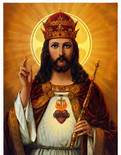
Let me put it this way: through 4th century sleight of hand, the Jesus who sided with the poor and those oppressed by empire – the one who promised a new heaven and earth belonging to the simple and poor, and who was executed as a terrorist by Rome – was made to switch sides. He was co-opted and domesticated – kicked upstairs into the royal class. He became not only a patron of the Roman Empire, but a “king” complete with crown, purple robes, scepter and fawning courtiers.

Following that transformation, kings and popes (now themselves transformed into gaudy temporal rulers) claimed to govern by divine right on behalf of Jesus as his representatives and vicars. In this way, the poor and oppressed (who then and now constitute the world’s majority) lost their paradigmatic leader, example and advocate. Jesus became instead a key part of the apparatus oppressing them.

Reza Aslan’s recent best-seller, Zealot, attempts to rescue the revolutionary historical Jesus from the distortions of the royal classes just mentioned. Aslan connects his salvage project specifically with today’s account of Jesus’ crucifixion in Luke, Chapter 23. In doing so, the author pays particular attention to Jesus’ cross, to the Roman inscription identifying Jesus as “King of the Jews,” and to the dialog between Jesus and the two “thieves” presented as sharing his fate.

According to Aslan, all three – cross, inscription and dialog – mark Jesus as a dangerous revolutionary “terrorist” rather than a domesticated upholder of the given order. That terrorist remains as threatening to today’s dominant empire, the U.S.A., as he was to imperial Rome. So he continues to be erased from history and by “feasts” like today that mask his true identity.

Take the cross first. It was the mode of execution reserved primarily for insurrectionists against the Roman occupation of Palestine. The fact that Jesus was crucified indicates that the Romans believed him to be a revolutionary terrorist. How could it have been otherwise, Aslan asks? After all, Jesus was widely considered the “messiah” – i.e. as the one, like David in today’s first reading, expected to lead “The War” against Israel’s oppressors.

Moreover, he proclaimed the “Kingdom of God,” a highly politicized metaphor which could only be understood as an alternative to Roman rule. It would return Israel, Jesus himself promised, to Yahweh’s governance and accord primacy to the poor and marginalized. The Romans drew logical conclusions. Put otherwise, the Roman cross itself provides bloody testimony to the radical threat the empire saw personified in Jesus.

That threat was made specific in the inscription the Romans placed over the head of the crucified Jesus. It read, “King of the Jews.”

Typically, those words are interpreted as a cruel joke by the Roman procurator, Pontius Pilate – as if he were simply poking fun at those who saw Jesus as the worthy successor of Israel’s beloved King David.

However, according to Reza Aslan, nothing humorous was intended by the inscription. Instead it was a titulus. Every victim of crucifixion had one – a statement of the reason for his execution. The motive for Jesus’ crucifixion was the same as for the many others among his contemporaries who were executed for the same crime: aspiring to replace Roman rule with home rule – with an Israel governed by Jews instead of Romans. The titulus on Jesus’ cross, along with the cross itself identify him as the antithesis of what he eventually became, a Roman tool.

And then there are those two thieves. Aslan says they weren’t “thieves” at all. That’s a mistranslation, he points out. A better translation of the Greek word, lestai , would be “bandits” – the common designation in the first century for insurrectionists. And there probably weren’t just two others crucified the day Jesus was assassinated. There may have been a dozen or more.

And, no, the whole world wasn’t watching either. As scripture scholar John Dominic Crossan observes, Jesus would have represented hardly a blip on the screen of Pontius Pilate. And Jews would have averted their eyes from the spectacle depicted in this morning’s gospel. They wouldn’t want to see “one more good Jew” suffering the fate of so many heroic patriots.

In this context the dialog between Jesus and two of the terrorists crucified with him takes on great significance. Actually, it documents the beginning of the process I described of changing Jesus’ image from insurrectionist to depoliticized teacher.

Think about it. Luke’s account of Jesus’ words and deeds was first penned about the year 85 or 90 – 20 years or so after the Roman-Jewish War (66-70 C.E.). By then the Romans had utterly defeated the Jews, destroyed Jerusalem and its temple as well as slaughtered the city’s population including practically all of the eyewitnesses of Jesus’ messianic campaign. Virtually the only Christians left standing were foreigners – gentiles living in population centers like Rome, Alexandria and Antioch. Few of these had any understanding of or sympathy for Judaism much less for Jewish politics and its liberation movements.

Besides that, in the war’s aftermath, both Jews and Christians sought to distance themselves from the socio-political expectations that had brought on the disaster of the Jewish War. So Judaism tried to transform itself from a Temple-centered religion to one focused on the local synagogue and rabbinic teaching – both overwhelmingly concerned with simply preserving the culture and identity of a people in diaspora.

For their part, Christians became anxious to show the Roman world that it had nothing to fear from their membership.

One way of doing that was to distance the dying Jesus from the Jewish insurgents and their terrorist actions against their oppressors. So in Luke’s death-bed dialog among three crucified revolutionaries, one of the terrorists admits that Jesus is “under the same sentence” as he and his comrade in arms. Given what Aslan said about crucifixion, that fact was undeniable. All three had been sentenced as insurrectionists.

But now comes the distancing between Jesus and Israel’s liberation movements. Luke has the “good thief” (read good terrorist) say, “. . . indeed we have been condemned justly, for the sentence we received corresponds to our crimes, but this man has done nothing criminal.”

In other words, Luke (writing for a post-war Roman audience) dismisses insurrection as “criminal,” and removes Jesus from association with such crime – a fact endorsed, Luke asserts, by insiders like the honest lestai crucified with Jesus. Luke’s message to Rome: the killing of Jesus was a terrible mistake; he meant no harm to Rome. And neither do we, his followers.

Loss of the radical revolutionary Jesus is not a trivial matter in terms of Christianity relevance to a world ruled by a nation that styles itself as Rome’s worthy successor. Like its ancient archetype, the U.S. (and a majority of first-world Christians) found the historical Jesus so threatening, that it determined that Jesus’ followers deserved the same fate as their crucified Master. For this we have the evidence of the war that the U.S. fought against liberation theology when it first emerged following the conclusion of the Second Vatican Council (1963-65).

Liberation theology committed the unforgiveable sin represented by this homily. It was guilty of connecting the Jesus of history described by scholars like Aslan to post-colonial independence movements and struggles against the neo-colonialism spearheaded by the U.S. and its oligarchical clients in the Third World.

In that struggle Pope John Paul II and his henchman, Josef Ratzinger, threw in their lot with a neo-imperial Ronald Reagan. It was deja-vu all over again: Reagan as Pilate and J.P.II and Ratzinger as the temple priesthood. It was the deja-vu of the church melding its interests with Rome towards the end of the 4th century.

More specifically, the two reactionary popes looked the other way and actively supported Reagan’s policies that assassinated hundreds of thousands of Christians (200,000 in Guatemala alone!) who found the radical Jesus threateningly relevant to their struggles in Latin America, Africa, and South Asia.

To balance liberation theology’s threat, Reagan patronized Evangelical Christians who eventually morphed into the Tea Party. It finds Aslan’s understanding of Jesus anathema. Meanwhile, John Paul II and Ratzinger “cleaned house,” eliminating every single progressive bishop from the hierarchy and transforming seminaries into hot houses to nurture a pre-Vatican II reactionary clergy.

Recently Pope Francis delivered a long-winded, very general and content-less speech to the National Council of Bishops in Brazil. That group used to head a church that was a hot-bed of liberation theology I’ve been describing here. The term was never mentioned in the new pope’s remarks. Instead, he presented John Paul II and Pope Ratzinger as champions of Vatican II.

He’ll have to do better than that to fulfill his aspiration towards making the church relevant to the poor he professes to care so much about.

He’ll have to confess the Church’s sins against liberation theology and revive the cult of the historical Jesus – instead of the depoliticized imperial “King of the Universe” today’s feast calls to mind.

If They Won’t Work, Let the Rich Starve! (Sunday Homily)

Work Eat

Readings for 33rd Sunday in Ordinary Time: MAL 3: 19-20A; Ps. 98: 5-9; 2 THES 3: 7-12; LK 21: 5-9. http://www.usccb.org/bible/readings/111713.cfm

Today’s readings appear to centralize “the end of the world.” So you can expect your preacher this morning to focus on the after-life, pie-in-the-sky, and all the “Left Behind” nonsense that has become the staple of Christianity ever since the 4th century.

Expect them to point to natural disasters, “plagues” like the AIDs pandemic, and the wars of choice so near and dear to our politicians – as signs that the end is near, that God is pissed, and we’d better repent and accept Jesus as our personal Lord and savior.

And, Oh yes, there’s Paul’s dictum in today’s reading from Second Thessalonians “. . . if anyone was unwilling to work, neither should that one eat.” Expect that one to evoke anti-welfare themes of bootstrap self-sufficiency, references to God-helps-those-who-help-themselves, and easy references to “welfare queens.”

I’m not kidding, 2 Thessalonians 3: 10 is a favorite of the Christian right. North Dakota congressman, Kevin Cramer, used it recently to justify his vote to cut nearly $40 billion from the Food Stamp program that keeps the children of poor families from starvation, along with the elderly and disabled. Tea Part darling, Michelle Bachman, did the same thing. When trying to get her party’s nomination for president, she said, “Our nation needs to stop doing for people what they can and should do for themselves. Self-reliance means, if anyone will not work, neither should he eat.”

It’s all so tiresome and predictable.

The right loves embracing Paul’s out-of-context remark. Tea Baggers love ignoring Jesus’ feeding thousands free of charge. It’s as if Jesus’ parable about sheep and goats in Mt. 25 didn’t base everything on a practical recognition of his identification with the hungry, thirsty, homeless, imprisoned, and ill-clad. The right loves “tough love.” It loves apocalypse.

But, of course, there’s not a trace of “tough love” in Jesus’ treatment of the poor. And “apocalypse” is not about the end of the world. It’s about unsustainability. The word apocalypse means “unveiling.” It’s about “revelation” in that sense – making evident what’s hidden about the world and who’s in charge. Apocalypse affirms the unsustainability of empire. Radical change is inevitable.

Apocalypse emerged a few centuries before the birth of Jesus. To convey its message of impending radical change, it employed stock images of natural catastrophe, plagues, wars, earthquakes, and portents involving the sun, moon, and stars. The change would be cosmic.

The audience of this strange literary form was empire’s victims. It was meant to encourage the poor and dispossessed, the unemployed, sick, widowed and orphaned – not the rich and well-off. Apocalypse assured the poor that all systems of oppression end in flames whether they’re Egyptian, Assyrian, Babylonian, Persian, Greek, or Roman. (Those are the global giants that oppressed Israel at one time or another in its history.) Where are they today? They’ve been swept away by the tide of history. And the apologists for “Eternal Rome” find themselves somewhere in antiquity’s dustbin.

So it’s ironic that apocalypse should be embraced by conservatives and their rich patrons – by those who want to keep things as they are. Things do not have to be that way. And “by God,” they won’t be! That’s the message of apocalypse. A new era is dawning, and you’d better be on the right side of history or you’ll lose out. Being “left behind” means supporting the old order that’s doomed.

The problem is that right from the beginning, believers took literally the cosmic and highly poetic symbolism of apocalypse. (We always get in trouble for being too literal.) That’s the attitude that caused Paul to tear his hair out in today’s second reading. Some in the early Christian community took the imminence of this expectation so seriously that they even stopped working.

What was the point of work, they reasoned? Everything was about to change profoundly by God’s intervention. That made human work meaningless. All believers had to do was sit back and wait for Jesus’ triumphant arrival. Eat, drink, be merry, and whistle past the graveyard in the meantime.

Those are the people Paul addresses in this morning’s excerpt from Second Thessalonians. He’s clearly exasperated. He says, “Look I’m working. And I’m the one responsible for your believing in Jesus’ Second Coming! Get real, people. Go back to work. Stop sponging off the community. Instead, be like me and do your part to bring about the new order we all expect. “

Paul’s words bring to mind the people who refuse to work today because they deem apocalyptic expectations divinely ordained or “natural.” And I’m certainly not referring to welfare queens.

Instead, I’m talking about people so committed to the old order that (with Margaret Thatcher) they’re convinced that “There is no alternative,” even though the “inevitable order” they support threatens the very survival of their own grandchildren. So they do what must be done to perpetuate what in God’s eyes is unsustainable.

Such “busy-bodies” refer to their endeavors as “work,” but in reality, their occupations represent a refusal to work. That is, if we identify that term with what contributes to life and the establishment of the Kingdom community Jesus proclaimed.

On this understanding, involvement in the military and the military-industrial complex is certainly not work. Neither is labor in financial market casinos or in the health-insurance and fossil fuel industries and their nuclear power counterparts. Advertising, fashion, professional sports, or much of what we refer to as “education” and journalism might also qualify as anti-work. Such occupations are not only highly questionable in terms of building up human community and protecting the planet. They are often positively destructive. Their purpose is to ward off or distract from the impending Big Change promised by the great unveiling.

Do I mean followers of Jesus should renounce such “work?” Yes I do. Or at least, we need to work to bring about a world where such occupations are not rewarded with pay – i.e. with a ticket to overconsumption even in terms of food and drink. And, to quote St. Paul, if arms manufacturers want to continue their anti-work as inevitable, let them starve! The world will be better off.

What about the unemployment caused by such radical change? It’s simple: share the remaining work. Make sure everyone is working – say for four hours each day, or three days a week, or six months each year. Get everyone to work building or rebuilding infrastructure, paving highways and covering rooftops with solar cells, and cleaning up the dump sites where all our toxic waste has been buried.

Think of the freedom such changes would create for building up God’s kingdom – to play, to garden, write, converse, make love, raise our children, and do all the things that make us human!

“Totally unrealistic” you say? Precisely! Apocalypse is by nature unrealistic. It calls us to work for an entirely different order we can hardly imagine. It calls us to reclaim our humanity from the insanity of destructive anti-work.

I’ll bet you won’t hear much of that from your preacher today!

What “Terrorists” Think while Being Tortured (Sunday Homily)

Terrorist

Readings for 32nd Sunday in Ordinary Time: 2 MC 7: 1-12, 9-14; PS 17:1, 5-6, 3, 15; 2 THES 2:11-3:5; LK 20: 27-38. http://usccb.org/bible/readings/111013.cfm

One of the wonderful aspects of the Judeo-Christian tradition is how so much of it reflects the consciousness of the poor and oppressed, while at the same time giving expression to a “preferential option for the poor.” That’s a gift for us in a culture that generally despises poor people, oppresses the world’s impoverished majority, and spins the news in ways that ignore the poor and reflect a decided “preferential option for the rich.”

This morning’s first reading is especially valuable for us who live in under the torture regime of American Empire. It actually invites us inside the heads of tortured “terrorists.” It raises the question, who are the real terrorists – the forces of empire or those who resist them? In doing so, the reading from Second Maccabees sheds light on the contemporary debate about torture in service of empire. It also highlights parallels between the mentalities of “terrorists” then and now. The reading calls us to question our support for the entire War on Terror.

For starters, consider torture itself. Our culture actually debates torture’s use, its effectiveness and morality! It does!

Previously, that would have been unthinkable. Torture used to be considered one of those intrinsic evils about which there simply could be no debate.

However, ever since Abu Ghraib gave the lie to George W. Bush’s famous prevarication, “The United States doesn’t do torture” – ever since our government’s redefinition of the word to exclude even waterboarding – it has become apparent that Bush (and so many others of our “thought-leaders”) was lying. So today, many prominent “court intellectuals” have been pushed to actually defend torture’s permissibility.

But what do tortured terrorists actually think about having limbs removed and tongues cut out? Read today’s selection about the Maccabee brothers and find out.

The Maccabees were members of a heroic family of guerrilla fighters who in the mid- 2nd century BCE terrorized the invading Greek forces of Antiochus IV Epiphanes. (Actually, “Maccabee” wasn’t the family’s name; it was more a nom de guerre for an entire resistance movement. The word meant “Hammer” – the Hammer Gang – so-called because of its delight in pounding to mincemeat the invaders of their beloved homeland. The term “Maccabee” was similar to “al Qaeda,” when it simply meant “the list” – a reference to the Rolodex of assets the CIA used when it employed al Qaeda back when they were “freedom fighters” against the Russians in Afghanistan.)

For his part, the Seleucid king, Antiochus, was anti-Semitic. He considered the Jews historically and culturally backward. For him and his empire’s advancement, Jews had to be brought into the 2nd century BCE even if it meant their kicking and screaming the whole way.

Today we might understand Antiochus’ project as “modernizing” the Jews – as Hellenizing them for purposes of imperial control. Evidently the Seleucid king subscribed to the position that if empire can persuade conquered peoples to adopt its patterns of thinking and especially of imagining God, the task of imperial administrators is made that much easier.

Many Jews agreed with the program of Antiochus. After all, the Greeks’ empire seemed invincible. If the empire couldn’t be beat, it was better to join it willingly. So these “Hellenized Jews” stopped circumcising their sons, and changed their diets even to include eating pork. They became more Greek than the Greeks.

They also became the targets of Maccabee “terrorist” attacks. In today’s terms, such Hellenized Jews would be the targets blown up by Maccabee suicide bombers in marketplaces located in Jewish but Greek-loving neighborhoods. (Even if the Maccabee targeting may have been more selective than that, it is certain that Hellenized Jews were as much the objects of Maccabee terror as were the Seleucid forces themselves.)

In countering such extremism, Antiochus IV proscribed the Jewish religion as itself criminal and illegitimate. This was very similar to the way many “Americans” consider Islam. So Greek troops burnt and otherwise desecrated copies of the Torah in much the same way as our “Christian” troops are frequently caught burning or urinating on the Holy Koran and on corpses of Muslim resistance fighters.

Though the Greeks considered the Maccabean forces to be terrorist, faithful Jews admired them as national heroes and servants of God. They understood that the Maccabees were fighting a Holy War against the much more powerful Seleucids. It was David against Goliath all over again.

In any case, according to today’s selection from Second Maccabees, seven brothers of the gang’s leadership were finally arrested (along with their mother) by the Greek invaders. (This would have been reported to Greeks “back home” as a great triumph – “Senior Leaders” captured making “our troops” and “our world” much safer.)

Then the torture and the screaming start.

To begin with all eight are beaten with whips and instruments designed to tear open their flesh. Then following standard operating procedures still practiced today, other enhanced interrogation techniques were used to torture the brothers one after the other in the presence of their blood-drenched mother, herself near death. The purpose here, of course, was to induce the woman to divulge names, places, and plans that she was privy to as the wife of the one who started the Jewish resistance to the Seleucids.

But what does she do? And what about her sons?

In a word, they are all – mother as well as her sons – completely defiant.

“What do you expect to achieve by questioning us” one of the brothers shouts? “We are ready to die rather than transgress the laws of our ancestors.”

Even at the point of death he spits out the words: “You accursed fiend” (I wonder what expletive he really used!), “you are depriving us of this present life, but the King of the world will raise us up to live again forever. It is for his laws that we are dying.”

Another of the brothers sees that his torturers are actually enjoying their work. (The text refers to cutting out his tongue and amputating his hands as “cruel sport.” Does that remind you of Abu Ghraib?) So he sticks out his tongue and stretches out his hands inviting them to do their work. “It was from Heaven that I received these,” he says. “I’d rather lose them than offend Yahweh” (read Allah).

“Even the king and his attendants marveled at the young man’s courage,” the text says. Far from being intimidated, the freedom-fighter “regarded his suffering as nothing.”

Just before dying, another of the tortured brothers undergoing the very same cruelties says: “It is my choice to die at the hands of men with the hope God gives of being raised up by him; but for you, there will be no resurrection to life.” As indicated by those words, conviction of a happy eternity moved these guerrilla fighters to embrace death willingly. (Seventy-two virgins, anyone?)

So what goes on in the heads of the tortured? Disdain for their torturers. Defiance. Show of courage. Love for the motherland. Hope.

And what goes on for the people they die for? Admiration. Elevation of martyrs and the tortured to sainthood. Motivation to follow their example.

And ultimately victory for the tortured and assassinated. . . . I mean, against all odds, the Jewish resistance – the Hammer Terrorists – did succeed in evicting the Greeks from their homeland.

As I was saying, this reading should cause us to reevaluate our attitude towards terrorism, terrorists, and the scandal of debating the pros and cons of torture.

Muhammad: Cars, Burkas, Lechery, Pedophilia, and Gold-Digging

Women in Islam

(This is the fourth in a series on Islam as liberation theology and on Muhammad as a prophet for our times. It is based on Karen Armstrong’s book, Muhammad, prophet for our times: London, Perennial Books, 2006.)

Have you noticed how champions of women’s liberation come out of the woodwork and suddenly materialize in the unlikeliest of places to justify wars against Muslims? After all, they argue, Sharia Law won’t even let women drive automobiles. How shocking! This contravenes (rich) women’s unalienable right to drive cars the same as men! Let’s go to war to liberate women!

And then there are those awful burkas and veils imposed by Islam. How cruel! Women should be allowed to wear mini-skirts and bikinis if they want. They should be allowed to coif themselves according to the West’s latest fashions, and to show their faces in public. Hell, if they want to be pole dancers, that’s their right! Those not recognizing it are worthy of death!

As we all know, such arguments have actually been used to mobilize support for wars in places like Afghanistan, Libya and Iran. And they’ve often been advanced by Republicans who like Rush Limbaugh, otherwise despise Women’s Liberation movements, and ridicule feminists as Femi-Nazis. But if it means killing Muslims, GOP Tea Partiers are happy to display pink ribbons. Whatever. Or as a Great Man once put it, “Bomb, bomb, bomb . . . Bomb, bomb Iran

These are the same people, by the way, who downplay the seriousness of rape. They blame it on men’s “understandably” uncontrollable impulses in the presence of women “provocatively” attired. After all women’s bodies are so programmed that pregnancy hardly ever results from rape. Or as another Great Man once said, “When rape is inevitable, just lie back and enjoy it.”

Can you spell “hypocrisy?”

Actually, according to Karen Armstrong, burkas, driving prohibitions, and veils have little to do with the Holy Qur’an and the spirit of the prophet Muhammad. Armstrong argues that he was a champion of women far ahead of his time. In general, women recognized in Muhammad a prophet on their side. In the face of cultural prohibitions, he allowed his wives to express their opinions freely and even to confront and disagree with him in front of others.

Muhammad also advocated complete equality of the sexes, with men and women sharing the same duties and responsibilities. Women were no longer to be treated as property bequeathed from one male to another. They could inherit estates, initiate divorce suits, and hang on to their dowries even following dissolution of marriage. As a result of such revolutionary teachings, women located themselves prominently among the prophet’s earliest and most enthusiastic followers.

Still, however, the western enemies of Islam insist on vilifying Muhammad as a lecher, pedophile, and gold digger. But these accusations turn out to be invidious calumnies. They stem from a failure to appreciate Arab culture 1400 years ago. It was an ethos that encouraged polygamy, just as had been the case among Israel’s patriarchs like Abraham and kings like David and Solomon.

In particular, Arab custom recommended the incorporation of vulnerable widows into the harems of those who could afford them, in order to protect the women from starvation and abuse. Additionally, treaties between tribes and nations were customarily sealed by marriage – again just as they had been in the culture of ancient Israel as described in the Hebrew Testament.

Acting in accord with such norms, Muhammad eventually assembled his own harem which came to include “child brides.” These were often part of the treaties just referenced. In such cases, cohabitation was postponed until the bride’s coming of age.

As for “gold-digging,” this accusation stems from Muhammad’s first marriage to Khadija, a distant relative who as a widow inherited a fortune from her first husband. She was a shrewd trader and employed a twenty-five year old Muhammad as one of her traveling merchants. This eventually led to a proposal of marriage on the part of the older woman. Muhammad accepted.

However, far from providing evidence of gold-digging on the prophet’s part, the history of the subsequent union offers ample proof of sincere love and respect between Muhammad and Khadija. She became his principal confidant as his revelations began to unfold. She encouraged him when they ceased for over two years. Following Khadija’s death, Muhammad continually upset his other wives by regularly singing her praises in their presence.

No, like other calumnies uttered against Muhammad and Islam, the ones about his repression of women contradict a reality that runs in quite the opposite direction.

It was men whose patriarchal instincts caused them to resist Muhammad’s leadership in this field. It was men who following Muhammad’s death interpreted one of the Qur’an’s surahs as requiring women to be segregated and veiled in public.

The surah in question (Number 33) was spoken by Muhammad during the reception following one of his late marriages. There some of his enemies acted passive-aggressively by overstaying their welcome, speaking disrespectfully to Muhammad’s wives, and generally preventing the newly weds from retiring for the night.

In response, after admonishing his guests about good manners, Muhammad gave Surah 33 the following expression:

“And as for the Prophet’s wives, whenever you ask them for anything that you need, ask them from behind a screen; this will but deepen the purity of your hearts and theirs.”

It was not until three generations after the prophet’s death that those controversial words were used to justify the veiling and segregation of Muslim women in general, as though they applied to all of them and not just to Muhammad’s wives.

Still even those late interpretations are understandable in the light of threats to Muslim culture, including those of our own day. As Karen Armstrong puts it,

“In times of vulnerability, women’s bodies often symbolize the endangered community, and in our own day, the hijab (veiling) has acquired new importance in seeming to protect the ummah (community) from the threat of the West (170).” (Parenthetical translations my addition)

In other words, Muslims are not blind. They see clearly the disrespect, abuse, and violence to which western women are routinely subjected. Evidently, it’s their judgment that such repression and negativity can best be avoided by eschewing mini-skirts, bikinis, fashionable hairdos, pole dancing, and even driving.

As another Great Man has said, “Who are we to judge?”

A Pope and a Pimp Went into St. Peter’s to Pray (Sunday Homily)

Pharisee_and_the_Publican
Readings for 30th Sunday in Ordinary Time: SIR 35: 12-14, 11-18; PS 34: 2=3, 17=18, 19, 28; 2 TM 4: 6-8, 16-18; LK 18: 9-14. http://usccb.org/bible/readings/102713.cfm

“A pope and a pimp went into St. Peter’s to Pray.” That’s the way scripture scholar, John Dominic Crossan, conveys the shock that must have been felt by Jesus’ audience when he opened this morning’s gospel parable by even joining the words “Pharisee” and “tax collector” in the same sentence. It’s like putting “pope” and “pimp” together. It jars the ear. And why would a pimp be praying at all?

Nevertheless, Jesus begins: “A Pharisee and a tax collector went up to the Temple to pray.” Customarily homilists use this parable to reinforce conventional wisdom about pride and humility. The Pharisee was proud, they say. The tax collector was humble. Be like the tax collector.

I however think there’s something much more challenging and fundamental going on in this parable. The focus of Jesus’ story is not pride vs. humility. It’s about rejecting the Pharisee’s conventional morality. The parable even calls us to scrap conventional wisdom about pride and humility.

More positively, the story is a summons to enter God’s Kingdom by identifying with the poor and despised. It also explains why the conventionally good simply cannot enter the Kingdom of God.

Let me explain.

Think in terms of popes and pimps. Popes are generally respected people. They’re religious leaders. Wherever they go, crowds flock around them just to get a glimpse, a blessing, or possibly even a smile or touch.

Pharisees in Jesus’s time enjoyed similar respect with the common people. Pharisees were religious teachers and textbook examples of conventional morality. They usually did what the one in today’s gospel said he did. They kept the law. The Pharisee in today’s reading was probably right; chances are he wasn’t like most people.

Generally Pharisees, were not greedy, dishonest, or adulterers. Or as their exemplar in Luke put it, he was not like the tax collector alongside him in the Temple. Pharisees gave tithes on all they possessed – to help with Temple upkeep.

On the other hand, tax collectors in Jesus’ day were notorious crooks. Like pimps, they were usually despised. Tax collectors were typically dishonest and greedy. They were adulterers too. They took advantage of their power by extorting widows unable to pay in money into paying in kind.

In other words, the Pharisee’s prayer was correct on all counts.

But, we might ask, what about the tax collector’s prayer: “O God, be merciful to me, a sinner?” A beautiful prayer, no?

Don’t be so quick to say “yes.”

Notice that this tax collector doesn’t repent. He doesn’t say, like the tax collector Zacchaeus in Luke’s very next chapter, “Look, half of my possessions, Lord, I will give to the poor; and if I have defrauded anyone of anything, I will pay back four times as much (LK 19:8). There is no sign of repentance or of willingness to change his profession on the part of this particular crook.

And yet Jesus concludes his parable by saying: ”I tell you, the latter (i.e. the tax collector) went home justified, not the former. . .” Why?

I think the rest of today’s liturgy of the word supplies an answer.

Look at those readings again. They’re all about God’s partiality towards the poor, oppressed, orphans, widows and the lowly – those who need God’s special protection, because the culture at large tends to write them off or ignore them. Typically, they’re the ones conventionality classifies as deviant. The Jewish morality of Jesus time called them all “unclean.”

However all of them – even the worst – were especially dear to Jesus’ heart. And this not because they were “virtuous,” but simply because of their social location. Elsewhere, Jesus specifically includes tax collectors (and prostitutes) in that group. In MT 21: 38-42, he tells the Pharisees, “Prostitutes and tax collectors will enter God’s Kingdom before you religious professionals.”

More specifically, in this morning’s first reading, Sirach says that the poor, oppressed, orphans, widows and the lowly are the ones Yahweh fittingly pays attention to. That same theme appears in the refrain we all sang together in today’s responsorial psalm, “The Lord hears the cry of the poor.”

As a result, those who simply belong to that category – the poor and oppressed – are “justified” in virtue of their social (non) status. The word “justified” means “made just” – or fit to enter God’s Kingdom where justice is the order of the day.

Similarly justified are the non-poor who imitate Sirach’s “God of Justice” by conscious identification with those considered “sinners” by the prevailing culture. Those who humble themselves in that way are like Sirach’s “God of justice” who hears the cry of the oppressed, the wail of the orphan, the prayer of the lowly. Or (again) as our responsorial psalm put it today: “The Lord hears the cry of the poor.”

But why would a good person like the Pharisee be excluded from God’s Kingdom? Does God somehow bar his entry? I don’t think so. God’s Kingdom is for everyone.

Rather it was because men like the Pharisee in the temple don’t really want to enter that place of GREAT REVERSAL, where the first are last, the rich are poor, the poor are rich, and where (as I said) prostitutes and tax collectors are rewarded.

The Pharisee excludes himself! In fact, the temple’s holy people wanted nothing to do with the people they considered “unclean.” In other words, it was impossible for Pharisees and the Temple Establishment to conceive of a Kingdom open to the unclean. And even if there was such a Kingdom, these purists didn’t want to be there.

Let’s put that in terms we can understand in our culture.

Usually rich white people don’t want to live next door to poor people or in the same neighborhood with black people – especially if those in question aren’t rich like them.

Imagine God’s Kingdom in terms of the ghetto. Rich white people don’t want to be there.

But ironically, according to this morning’s readings – according to Jesus – the “undesirables” who live there are the ones to whom the Kingdom of God belongs. They are the favorites of the God who Sirach says is “not unduly partial to the weak.” Rather God is fittingly partial to them as the Sirach reading itself and the rest of today’s liturgy of the word make perfectly clear!

This means that any separation from God’s chosen poor amounts to excluding oneself from the Kingdom white Christians spend so much time obsessing about.

So today’s readings are much more radical than usually understood. The parable of the Pharisee and the tax collector – of the pope and the pimp in St. Peter’s – is not an affirmation of conventional morality. It rejects such ethnocentric hypocrisy! Jesus’ parable is not even about approving conventional wisdom concerning pride and humility.

As always with Jesus’ teachings, it is about the Kingdom of God – about those who belong and those who exclude themselves.

In practice, this realization suggests for starters that:

• It’s no badge of honor to subscribe to conventional morality or conventional wisdom.
• Christians are called to be counter-cultural – more in solidarity with those we associate with pimps than with popes.
• For “Americans” this means discounting middle class morality and (white) “family values” as criteria of faith.
• According to Jesus, by itself such conformity actually excludes one from participation in God’s promised future.
• Instead authentic faith means living a life of solidarity with the poor – making their issues our own.
• Hence Christians should be in the forefront of movements on behalf of the poor.
• For example, rather than joining “devout Catholics” like Paul Ryan in leading crusades to cut back food stamp programs, we should be applying pressure to expand them.
• The same holds true for public housing, Medicaid, Social Security, and voting rights.

The U.S. Is Indeed the Great Satan (Shaytan): Muhammad as Liberationist Prophet

Satan

(This is the second in a series on Islam as liberation theology and Muhammad as a prophet for our time. The series is inspired by Karen Armstrong’s “Muhammad: Prophet for Our Time” (London: Harper Perennial, 2006)

To understand Islam as liberation theology, it is important to place Muhammad in his historical and economic context. That setting shares important elements with the world’s current socio-economic circumstances shaped by an ethic of corporate globalization which ignores responsibilities for the world’s most vulnerable. Contextualizing Muhammad also helps us understand why Muslims consistently describe the United States as “the Great Satan,” or more accurately as the Great Shaytan.

Begin by trying to understand early seventh century Mecca. By the time the prophet had received his call, Mecca was already a prosperous focal point for Arabian culture. It had remained independent of control by both the Byzantine and Persian Empires which were then fighting for regional supremacy.

However, both empires found the hostile desert terrain of the Arabian Peninsula too forbidding for them to concern themselves with the area’s mostly Bedouin population. Moreover those constantly moving herds-people resisted domination in virtue of their fierce independence and absolute commitment to their tribes and ancestral ethos.

Bedouin culture lionized the karim – the tribal hero who was courageous, arrogant, violent and vengeful.The karim ideal was absolutely generous (not to say profligate) in dealing with his own people, but ruthless with others who were always considered inferior and expendable. Mired in chronic circumstances of scarcity, the karim economy required periodic wealth-redistribution in the form of “acquisition raids” on neighboring clans. Those attacks considered normal and necessary by the standards of the time, were careful to pillage but not kill – if only to avoid reprisals and vendettas.

In the 7th century, all of this was changing with the emergence of a strong commercial class interested in maintaining inter-tribal peace for purposes of facilitating business interactions. Hence, the merchant class developed a culture and ethos markedly different from the Bedouins’. Peace and order became much more important to doing business than they had been to Bedouin tribes struggling over scarce pastures. So conflict, violence, vendetta and vengeance were outlawed. Acquisition raids were particularly taboo.

This need for pragmatic peace was intensified by new technology related to commerce. The recent invention of a saddle for camels had dramatically increased the volume of goods capable of being transported. Consequently the quantity of foods, sandalwood, fabrics, spices and other products sold throughout the Arabian Peninsula increased dramatically. This impacted Muhammad’s birthplace (Mecca) in especially powerful ways.

Long since, Mecca had been important to Arab merchants. A “miraculous” water source (Zamzam) had been discovered there making it a natural stopping point for caravans circulating among a series of markets set up around the periphery of the Arabian Peninsula. A temple (Kabah) identifying the spring as a divine gift had been erected and included representations of all tribal deities from across Arabia. The final market of the year was held in Mecca and tribal merchants celebrated with inclusive “ecumenical” religious rites at the Kabah. There circumambulations of the Kabah helped the pilgrims integrate their mercantile journeys around the Arabian Peninsula into the divine scheme of things.

With all of this, Mecca became the logical location for a new religion emphasizing an empire-resistant trans-tribal Arab unity focused on peace and non-violence. At the time of Muhammad’s birth, there was great expectation of an Arabian prophet to crystalize such often-unspoken religious aspirations coherent with Mecca’s commercial and religious standing.

Before that would happen however, a downside to cultural dominance by the commercial class emerged. Slowly but surely tribal ties with their ancillary ethos were weakened. Ancestrally established obligations towards the widow, orphan, and infirm members of the community became less pressing and even rejected. Tribal arrogance reasserted itself in a new form of self-sufficiency that implicitly (and at times explicitly) denied the need for what we today would call “social justice.”

All of this strongly impacted the young Muhammad. True, he was born into one of Mecca’s leading commercial families. However, it had recently fallen on hard times. Muhammad himself had been orphaned early on. He was handed over to a series of clan care-takers who lovingly trained him in the ways of business and commerce. Though able strong and charming, Muhammad struggled to find his place in Mecca’s bustling marketplace. He would never forget those early struggles or his (non) status as an orphan. The poor would be centralized in his new religion.

At last, Muhammad improved his economic life by marrying a wealthy widow and businesswoman called Khadija. (In a culture that encouraged polygamy, she always remained his favorite wife.) It was Khadija who served as the prophet’s main support, confidante and advisor as he experienced his surprising call to become the prophet his culture generally expected.

Muhammad’s vocation story is reminiscent of similar accounts of Jewish Testament prophets. In a cave, he’s seized by God’s Spirit experienced (in Rudolf Otto’s terms) as fascinans et tremenda. The Spirit commands him to “recite.” (Qur’an means “recitations”).

Muhammad objects; he is unworthy. He is no orator or poet; he can’t even read or write. Yet he is literally pressed into the service of Allah and begins reciting sutras of extraordinary beauty and depth of meaning – even by exalted Arab standards of poetry. After an initial experience of this type, he is abandoned by the Spirit for a period of two years, only to have it return with even greater insistence and frequency. It would remain with him for 23 years, leading him to speak out on all manner of community problems.

The thrust of the prophet’s revelations was profoundly counter-cultural. It contradicted not only tribal arrogance, but also the ostentatious profligacy of the karim as well as the self-sufficiency of the commercial classes. Instead, Muhammad’s faith called for humility, service of others, complete submission (the very meaning of the word “Islam”), and care for the poor and weak.

Belief was to be backed up by action – almsgiving was centralized. But there were also ritual reminders of Islamic commitment. Five times each day Muslims were to adopt the position of a slave before Allah – on believer’s knees, prostrate, with forehead touching the ground. With all of this, it is no wonder that the first Muslims (like the first Hebrews and Christians) came from the poorer classes, with women more receptive than men.

Islam as conceived by Muhammad was inclusive and tolerant of other faiths – especially the ones just mentioned. Along with the rest of the Arab world, Muhammad deeply admired Judaism and Christianity for having their own Sacred Scriptures. Now with the emergence of the Qur’an, Islam joined that club as well. The notion of converting sisters and brothers in faith was a foreign concept for Islam’s great prophet.

Because of its counter-cultural thrust, the rest of Muhammad’s story is one of rejection and persecution by the guardians of the status quo. Muhammad is driven into exile in Medina. But eventually he returns to Mecca. His trans-tribal faith succeeds in uniting the Arab world conferring upon it a unifying power that is subsequently used by others the way Christianity was used by Christendom’s “Holy Roman Empire.” Islam becomes the unifying force behind an Islamic order that stretches from the Himalayas to the Pyrenees.

All of this is to say that imperial Islam (like the imperial Christianity that began under Constantine in the 4th century) is out-of-keeping with the faith of its founding prophet. Social justice, care for the poor, and recognition of transcendent human community, are not.

In the eyes of contemporary Muslims, all of this makes Muhammad particularly relevant to their situation in a world dominated by corporate globalization. As in the prophet’s day, globalization’s celebration of self-sufficiency contradicts Islam’s basic values of community, compassion and care for society’s most vulnerable.

As the leader and embodiment of the values that run so counter to Islam’s basic thrust, the United States is viewed as “Shaytan” (which is often translated for us simply as “Satan”). For Muslims however, Shaytan is not the prince of demons as he appears, for instance, in Dante’s Inferno. Instead, Shaytan is “the great deceiver,” whose promises mislead, corrupt and immiserate those who believe them.

In fact, while promising peace, prosperity, and happiness, the elevation of commercial values to a position of supremacy in the moral hierarchy could not be (in Muslim eyes) more deceptive and disastrous. Without care for society’s poor and vulnerable, commercial values lead to individualism, competition, war and unhappiness.

No wonder the U.S. is identified with Satan!

(Next: Islam and Violence)

Why Am I Here in India? (Sunday Homily)

Religion in India

Readings for 28th Sunday in Ordinary Time: 2 KGS 5: 14-17; PS 98: 1-4; 2TM 2”8-13; LK 17: 11-19. http://usccb.org/bible/readings/101313.cfm

My wife and I have been in India now for six weeks. Peggy’s working as a Fulbright researcher at the University of Mysore here in the country’s south. I’m here . . . I’m only now realizing why.

To tell the truth, I had come to India more or less reluctantly. I mean since retirement I had traveled a great deal including six months in Costa Rica, five months in South Africa, and now the prospect of 4 ½ months here in India. So perhaps understandably, I was feeling tired of living out of a suitcase.

I wondered then, why Life, why life’s circumstances had brought me here to what many consider the “Soul of the World” – an ancient culture with deep, deep spiritual roots?

I thought about that for a long time. Then I concluded that the opportunity here is absolutely golden for spiritual growth.

That’s why I’m here then, I concluded. Life is telling me I need to grow and break away from patterns of living and thought that have unconsciously become too comfortable and stifling.

And what resources there are in India for assisting in that project! There are spiritual masters here, teachers of meditation and yoga. (For example, Sunday I have an appointment with a Past Life Review teacher.)

In addition, Indian food (not my favorite) challenges me to adjust my palate. Cows walk the streets. Dress is different as well. Music too seems completely foreign (but delightful), as Peggy and I have discovered in attending a kind of “Indian Woodstock” festival of traditional Indian chanting, drumming, flute and violin playing during the two-week festival of the god Ganesh. And the traffic. . . . I’ve never seen anything as wild. No rules at all that I can see. I doubt if I could learn to drive here.

All of this is forcing me to expand my horizons and break away from what spiritual masters here call “samskaras” – habitual patterns of perceiving, thinking and living.

That’s what spiritual masters do for a living – they challenge old ways of thinking. It’s what the prophet Elisha did in this morning’s first reading, and what Jesus does in today’s gospel selection. Both readings reveal God’s love for those our cultural norms classify as strange and even evil.

Our first reading centralizes the prophet, Elisha, who worked in Samaria for 60 years in the 9th century BCE. That, of course, was a full 100 years or more before Samaritans emerged as Israel’s bête noir.

Nonetheless, it is true that Naaman may have been even more detestable to Elisha’s contemporaries than Samaritans eventually became to the Jews. That’s because Naaman was a captain in the army of the King of Aram who at the very time of the officer’s cure was attacking Elisha’s homeland. Elisha’s cure of Naaman would be like extending free healthcare to a known al-Qaeda “terrorist” today.

In other words, Naaman is a foreigner and an enemy of Elisha’s people. On top of that he’s a leper, which supposedly further marks him as an object of God’s disfavor. Despite all these disqualifications, the greatest prophet in Israel cures him.

The narrative’s point: there is indeed only one God, and that God loves everyone, even our designated enemies. That was a stretch for the people of Elisha’s time. It’s a stretch for us.

Still, the point is picked up in today’s responsorial psalm. Remember the refrain we sang together this morning: “The Lord has revealed to all the nations his saving power.” According to the psalmist, then, God is not tied to one land. God’s saving power is evident in every place on earth. As the psalmist put it, “All the ends of the earth have seen God’s salvation.”

God belongs to everyone. Everyone belongs to God.

By Jesus’ time, nearly 800 years after Naaman’s cure, Israel still wasn’t buying that message. In fact, they had narrowed God’s presence to particular locations within the land of Israel. Orthodox Jews believed God was present on the Temple Mount in Jerusalem, and could only be really worshipped in the Temple there. Samaritans, on the other hand, believed that the place to worship Yahweh was on Mt. Gerizim, where they said Abraham had nearly sacrificed his son, Isaac.

In other words, Samaritans embodied a sectarian battle among the descendants of Abraham over where to worship God – was it on the Temple Mount or on Mount Gerizim?

Jesus completely ignores the debate. He cures a Samaritan along with nine other lepers – presumably all Jews.

The story is simple: the lepers approach Jesus. He tells them to “show yourselves to the priests.” It’s not clear what Jesus had in mind. Some say there was a law requiring cured lepers to be certified by the priests. Others say Jesus’ intention was to confront the priests, to assert his identity (as his mentor, John the Baptist had done) as the people’s high priest.

In any case, the lepers leave in search of the priests, and on the way are cured. As we well know, only the Samaritan leper returns to thank Jesus. Why? Was it that the priests had persuaded the others not to return, since they were convinced that Jesus was possessed?

On the other hand, the priests would probably have refused to see the Samaritan, because of their deep prejudice.

So the Samaritan turns out to be the hero of the story, not the priests or those who listen to them. Just like Naaman, the one in the story most open to God was the character most alienated from reigning cultural norms.

And that brings me back to my opening point – to my hopes about India. Recently I was reading an article by an Indian scholar of religion who identified Jesus as an Indian yogi. The author suggested that the reason the priests and the people of Jesus’ time and culture could not understand him was that his approach to life and God was completely alien to them.

It was a mystical philosophy more akin to the Far East – to India – than to Middle Eastern Palestine. Put briefly Jesus’ mystical philosophy can be summarized in the words “Aham Sarvum! Sarvum Aham!” –“I AM ALL. ALL is ME.” In fact, Jesus’ basic approach can be summarized as follows:

1. There is a spark of the divine within every human being.
2. That spark can be realized, i.e. energize every aspect of our lives in the here and now.
3. It is the purpose of life to live from that place of divine presence.
4. Once we do so, we will recognize God’s presence in every human being and in all of creation.

Or as John the Evangelist has Jesus say:

1. “I am in the father, and the father in me.” [John 14.10]
2. “I am in my father, and ye in me, and I in you.” [John 14.20]
3. “I and my Father are One.” [John 10.30]

In other words, the guru (Jesus), the disciple, and God are all One. Separation of God and Her creation is nothing but illusion (MAYA). ALL IS ONE.

All of this confirms for me what I’ve learned from Eknath Easwaran, my Indian teacher of meditation over the last 15 years: at their summit all the world’s Great Religions come together in the mystical vision just articulated.

If all of this is true, what does all of this mean for us today? I think this at least:

• There are many ways to understand God.
• Sectarianism is foreign to the Divine Reality.
• God loves our mortal enemies and performs miracles on their behalf just as God did in the example of Naaman.
• More specifically, God loves al-Qaeda fighters and the ones we call “terrorists” just as much as (S)he does us. Our enemies represent God’s presence and so do we. We should treat them as though this were true.
• God loves those we classify as unclean, unworthy, ungodly, and untouchable.
• More specifically, God loves people with AIDS; God loves the foreigner, the outcast. They represent the presence of God and so do we. And because of our tendency to reject them, they are somehow closer to God than we are.
• It’s good to step outside the reach of our culture’s categories, at least once in a while.

Dives & Lazarus: a liberation theology catechism (Sunday Homily)

Lazarus

Readings for the 26th Sunday in Ordinary Time: AM 6: 1A, 4-7; PS 146: 7-10; ITM 6: 11-16; LK 16: 19-31 http://usccb.org/bible/readings/092913.cfm

Today’s liturgy of the word provides us with a catechism of liberation theology – Christianity’s most important theological development in the last 1500 years, and the West’s most important social movement of the last 150 years.

I have come to those conclusions over a period of more than forty years studying liberation theology. My interest began in Rome during my graduate studies there, 1967 through 1972. There I first heard Peru’s Gustavo Gutierrez speak. (Fr. Gutierrez is considered the father of liberation theology.)

Subsequently I read Gutierrez’s book, A Theology of Liberation (1971) and was completely taken by it. Reading the book gave me the feeling that I was hearing Jesus’ Gospel for the very first time.

You might ask, what is liberation theology? To answer that question fully, please look at my blog entries under the “liberation theology” button. I’ve written a series on the question. In my blogs, you’ll find that I always define it in a single sentence. Liberation theology is reflection on the following of Christ from the viewpoint of the world’s poor and oppressed. That’s the class of people to which Jesus himself belonged. They constituted the majority of his first followers.

When read from their viewpoint, accounts of Jesus’ words and deeds – the entire Bible for that matter – take on depths of meaning and relevance to our contemporary world that are otherwise inaccessible to people like us who live in the heart of the wealthy world. From the viewpoint of the poor, God passes from being a neutral observer of earth’s injustices to an active participant with the poor as they struggle for justice here on earth. Jesus becomes the personification of that divine commitment to the oppressed. After all, he was poor and oppressed himself. The Roman Empire and its Temple priest collaborators saw to that.

My interest in liberation theology deepened as my teaching career developed at Berea College in Kentucky from 1974 to 2010. There I was encouraged to continue my study of liberation theology. So I spent extended periods in Brazil, Nicaragua, Costa Rica, Honduras, Guatemala, Cuba, Mexico, Zimbabwe, South Africa, India and elsewhere studying under liberation theologians, dialoging and publishing with them. The poor in all of those countries were suffering from the aggression the United States directed against them.

Meanwhile at Berea, I found the conclusions of liberation theologians validated by the college’s very fine scripture scholars. They had almost no acquaintance with liberation theology, and yet what they were teaching perfectly harmonized with its central tenets. It’s just that they stopped short of drawing what seemed to me the obvious political conclusions from their work.

More specifically, Berea’s scholars identified the Exodus (Yahweh’s liberation of slaves from Egypt) as God’s original and paradigmatic revelation. The whole tradition began there, not in the Garden of Eden. Moreover, the Jewish prophetic tradition emphasized what we now call “social justice.” Even more, Jesus of Nazareth appeared in the prophetic tradition, not as a priest or king. Jesus directed his “ministry” to the poor and outcasts. The Gospel of Luke (4: 18-19) has Jesus describing his program in the following words:

“The Spirit of the Lord is upon me, because he has anointed me to bring good news to the poor. He has sent me to proclaim release to the captives and recovery of sight to the blind, to let the oppressed go free, and to proclaim the year of the Lord’s favor.”

After his death, Jesus’ followers continued along those lines. They lived communally, having sold all their worldly possessions and distributed the proceeds to the poor.

All of that finds vivid expression in today’s liturgy of the word. As I said, it’s a kind of catechism of liberation theology. The reading from Amos the prophet describes the sin that most offends God – wealth disparity in the face of extreme poverty. Amos decries a “wanton revelry” on the part of the wealthy that sounds like the “American Way of Life” or the “Lives of the Rich and Famous” that we Americans find so fascinating. The prophet describes a rich class that lives like King David himself – in luxurious houses, overeating, drinking wine by the bowlful, and generally ignoring “the collapse of Joseph,” i.e. the poverty of their country’s most destitute. For that, Amos says, the rich will ultimately suffer. All their wealth will be confiscated and they will be driven into shameful exile.

In railing against the rich and defending the poor, Amos was calling Judah back to the worship of Yahweh whose attributes are described in today’s responsorial psalm. There God is depicted as loving the just and thwarting the ways of the wicked. The psalm describes Yahweh as securing justice for the oppressed, giving food to the hungry, and setting captives free. He gives sight to the blind and protects resident aliens, single mothers and their children.

Then today’s excerpt from 1st Timothy outlines the characteristics of those who worship that God by following in Jesus’ footsteps. They keep the commandment which is to do unto others as we would have them do unto us. According to St. Paul, that means pursuing justice and living with devotion, faith, love, patience, and gentleness.

Finally, the gospel selection from Luke chapter 16 dramatizes the sinful relationship between rich and poor and the destinies awaiting both. Luke tells the story of the rich man and “St. Lazarus” who is honored by the poor throughout Latin America.

It is significant that Lazarus is given a name in Jesus’ parable. Usually we know the names of the rich, while it is the poor that remain anonymous. Here matters are reversed. To remedy this anomaly, tradition has assigned the wealthy man a name. He’s called Dives, which is simply the Latin word for rich man.

For his part, Lazarus is quintessentially poor, hungry, and lacking medical care. His sores are open and the only attention they receive are from dogs that lick his wounds. Meanwhile, Dives seems completely unaware of Lazarus’ presence, though the beggar is standing at his very doorstep. Within the sight of Lazarus, the wealthy one stuffs himself with food to such a degree that the scraps falling from his table would be enough to nourish the poor beggar. But not even those crumbs are shared. How could Dives share? He doesn’t even know that Lazarus exists.

So the two men die, and things are evened out. The rich man goes to hell. We’re not told why. Within the limits of the story, it seems simply for the crime of being rich and unconsciously blind to the presence of the poor. For his part, Lazarus goes to the “bosom of Abraham,” the original Hebrew patriarch.

Lazarus is rewarded. Again, we’re not told why. Within the story, it seems simply because he was poor and Yahweh is partial to the poor, just as he was to the slaves God intervened to save when they were starving in Egypt.

Seated with Abraham, Lazarus feasts and feasts at the eternal banquet hungry people imagine heaven to be. Dives however is consumed by flame in the afterlife. Fire, of course, is the traditional symbol of God’s presence, or purification, and of punishment. This seems to suggest that after death, both Dives and Lazarus find themselves in the presence of God. However what Lazarus experiences as joyful, Dives experiences as tormenting.

And why? Simply, it seems, because Dives was rich, and Lazarus was poor.

Does the parable tell us that what awaits us all after death is a reversal of the economic conditions in which we now find ourselves? The first will be last; the last first. The rich will be poor, and the poor will be rich. That in itself is highly thought-provoking.

In any case, Yahweh is presented as champion of the poor in this parable, just as in the reading from Amos, in today’s responsorial psalm, and in Paul’s letter to Timothy. And according to liberation theologians, that’s the central characteristic of God throughout the Judeo-Christian tradition. God is on the side of the poor and hates obscene wealth disparity.

You can well imagine how such insight inspired the poor and oppressed throughout the world when it emerged as “liberation theology” following the Second Vatican Council. Poor people everywhere (and especially in Latin America) took courage and were inspired to demand social justice from the rich who had been ignoring them in the New World since the arrival of Columbus 500 years earlier. In fact, Liberation theology motivated social movements more powerfully than any thought current since the publication of the Communist Manifesto in 1848.

And that’s why the reigning empire, the United States of America took action against liberation theology. It initiated what Noam Chomsky calls “the first religious war of the 21st century.” It was a war of the United States against the Catholic Church in Latin America – yes against the Catholic Church. The war killed hundreds of thousands of priests, nuns, lay catechists, social workers, union organizers, students, teachers, and journalists along with ordinary farmers and workers.

Today’s liturgy of the word reminds us not to let the United States have the final word. We are called to divest ourselves of our wealth and to take notice of St. Lazarus at our gates. God is on the side of the poor, not of the rich.

On Not Returning to Daddy: Heretical Reflections on the Prodigal Son (Sunday Homily)

Chelsea Manning

Readings for 24th Sunday in Ordinary Time: EX 32: 7-11, 13-14; PS 51: 3-4, 12-13, 19; ITM 1: 12-17; LK 15: 1-32. http://usccb.org/bible/readings/091513.cfm

A few weeks ago, Chelsea Manning (formerly known as Bradley Manning) was sentenced to 35 years in prison for blowing the whistle on the U.S. military and the officials who run it. In her job in Military Intelligence, Ms. Manning came across thousands of documents and videos exposing war crimes routinely committed by U.S. troops and their superiors. She released more than 700,000 of those documents in the hope that they would start a national dialog about the morality of the War on Terror. For her trouble, Ms. Manning was tortured for months. Following a court martial, she has been imprisoned instead of the criminals she reported.
_____

Last May, Edward Snowden, a data analyst working for Booz Allen Hamilton, the National Security Agency and the CIA, released a trove of documents revealing that the U.S. government has been spying on all U.S. citizens. Those spying on us have been secretly reading our e-mails and recording our phone conversations.

Such intrusion stands in blatant violation of the Fourth Amendment of the U.S. constitution which reads: “The right of the people to be secure in their persons, houses, papers, and effects, against unreasonable searches and seizures, shall not be violated, and no warrants shall issue, but upon probable cause, supported by oath or affirmation, and particularly describing the place to be searched, and the persons or things to be seized.”

Mr. Snowden released the documents to start a national conversation about the justification for secretly suspending such constitutional guarantees. For his trouble, he was threatened with arrest and imprisonment by the very agents whose alleged crimes he was exposing. Mr. Snowden is now living in Russia where he has been given temporary political asylum. His asylum has largely been justified by the fear that if returned to the U.S. he would suffer the torture and mistreatment inflicted on Chelsea Manning.
_____

Please keep the Manning and Snowden cases in mind as we reflect on today’s gospel selection.
_____

Didn’t we just recently read the Parable of the Prodigal Son at Mass?

I checked.

Well, yes, if you count the 4th Sunday of Lent less than six months ago. In fact, this famous story repeats so many times in our Liturgies of the Word that most of us know it nearly by heart.

Personally, I must confess a bit of boredom with the tale. It even crossed my mind to skip a homily this week, and simply refer my readers back to last Lent’s reflections.

But on second thought, allow me to take another shot at it with the Manning and Snowden cases as background. This time I’ll take my cue from John Dominic Crossan’s book The Power of Parable: how fiction by Jesus became fiction about Jesus. There Crossan suggests challenging Luke’s parable as excessively patriarchal. After all, the story is about a bad boy who realizes the error of his ways and returns home to daddy and daddy’s patriarchy with its familiar rules, prohibitions, and tried and true ways of doing things.

But what if the prodigal left home and never looked back? Would he have been better off? Would we be better off by not following his example as described today by Luke – by instead separating from the patriarchy and never looking back?

The French intellectual Andre Gide actually asked that question back in 1907 when he wrote “The Return of the Prodigal Son.” In his version, Gide expands the cast of the parable’s characters to five, instead of the usual three. Gide adds the father’s wife and a younger son. The latter, bookish and introspective, becomes the story’s central figure who escapes his father’s walled estate never to return.

According to Crossan, Gide tells his version of Jesus’ parable through a series of dialogs between the returned prodigal and his father, his older brother, his mother, and lastly, his younger brother. In his dialog, the father reveals that the older brother is really in charge of the father’s household. According to daddy, the brother is extremely conservative. He’s convinced that there is no life outside the walls of the family compound. It’s the older son who must be obeyed there.

For his part, the older brother, reinforces what the father said. “I am his sole interpreter,” the elder son claims, “and whoever would understand the father must listen to me.” In other words, the elder brother has owned the authority which the father has surrendered to him. (Doesn’t that sound a lot like the male hierarchy’s claims within the church in relation to the Bible? It’s also reminiscent of our government’s position regarding the Constitution. Our president’s interpretation is the only valid one.)

Then the mother comes forward. She tells the prodigal about his younger brother. “He reads too much,” she says, and . . . often perches on the highest tree in the garden from which, you remember, the country can be seen above the walls.” One can’t help detect in the mother’s words a foreboding (or is it a suppressed hope) that her youngest son might go over the wall and never come back.

And that’s exactly what the younger son decides to do. In his dialog with the returned prodigal, he shares his plan to leave home that very night. But he will do so, he says, penniless – without an inheritance like the one his now-returned brother so famously squandered.

“It’s better that way,” the prodigal tells his younger sibling. “Yes leave. Forget your family, and never come back.” He adds wistfully, “You are taking with you all my hopes.”

The younger son turns for the door. His brother cautions him, “Be careful on the steps . . .”

Gide’s version of Jesus’ parable makes me think of Chelsea Manning and Edward Snowden, and how in these pivotal times they have followed the youngest son in Gide’s parable as he goes over the wall into the unfamiliar realm of uncertainty, danger, and creative possibility.

In both cases, making that move required great courage. It meant escaping the safety and comfort that the confines of the patriarchy provide. Today Chelsea Manning sits in Leavenworth Prison in a far different “America” than the one she was trying to save. Snowden lives in exile in Russia without any hope of return to the country he too was attempting to help. In Manning’s case, leaving the father’s estate even meant transcending the patriarchy’s strict boundaries around sexual identity.

Because of the courage of Manning and Snowden we’re all better off and the patriarchy is weakened.

What does all of this mean for us as we reconsider Jesus’ overly-familiar parable in the light of Gide’s retelling? I think it might mean that we must:

• Be courageous and think for ourselves even about values seemingly endorsed by Jesus.
• See that patriarchy and male values of power, prestige, profit, individualism, competition, violence and war represent the roots of our world’s problems.
• Recognize that comfort in “our father’s house” is not good for us, our children or the planet.
• Do all we can to reject the patriarchy and its values and never look back
• Value people like Mr. Snowden and Ms. Manning as exemplary heroes showing us that it is indeed possible to leave “Our Father’s House” and its values for the sake of God’s Kingdom or however Snowden and Manning might understand the new reality to which they summon us.
• Appreciate the symbolic importance of Chelsea Manning’s rejection of military machismo in favor of the feminine world and its values of inclusion, community, and cooperation.
• Admit that our male-dominated church is a central part of the reigning system of patriarchal dominance along with its exclusively male understandings of God as Father. Act accordingly.
• Always be careful on the steps.