Sexual Morality and Social Control: Yeshua Preaches a Silent Liberating Parable about Sex

Readings for 5th Sunday of Lent: Isaiah 43: 16-21; Psalm 126: 1-6; Philemon 3: 8-14; John 8: 1-11

Did you ever wonder why religious leaders seem so preoccupied with sex?

I have.

I bring the question up, because today’s reading from the Gospel of John presents Yeshua as confronting that clerical obsession. I’m referring to the famous case of the woman caught in the act of adultery.

Before I get to that, however, think of the preoccupation itself.

Clerical Preoccupation with Sex

We witness it all over the place, don’t we? Clerics, it seems, constantly worry about a long list of cringe-worthy and curious topics that include abortion, contraception, transgenderism, homosexuality, pornography, masturbation, artificial insemination, sex before marriage, oral sex, vasectomy, divorce, priestly celibacy, male-only priests, and (I guess) pedophilia.

Moreover, the clergy’s own sexual failings never inhibit their volubility on those topics. I mean, the record shows that Catholic priests have rather regularly sexually molested little boys. Famous evangelicals have consorted with prostitutes of both genders. Yet, Catholic or Protestant, both continue to pronounce on the topics just listed as though they retained their long-lost moral authority to do so.

 Why?

I think it’s all about the social control that over centuries religious “leaders” stumbled upon with increasing clarity and emphasis. Here’s what I mean focusing on the Catholic tradition with which I’m most familiar and which, of course, also shaped Protestantism:

  1. To begin with, religion is a very powerful means of social control. That is, if religious authorities can convince people that the clergy’s understandings of life and morality are shared by God, they’ve won the day in terms of power over “the faithful.”
  2. This is where sex comes in. As the second most powerful (and arguably the most enjoyable) drive shared by human beings, there is virtually no human being who can refrain from sexual activity.
  3. Therefore, making all sexual acts sinful outside of marriage (and “mortally” sinful – i.e., deserving of hell) the church guaranteed that every church member would sin and need absolution (which only the clergy was empowered to give.)
  4. Without that absolution, the church taught (infallibly) everyone who thought sexual thoughts or performed sexual acts (looking, touching, fornicating, committing adultery) would be tortured eternally in hell’s Lake of Fire.
  5. Even married couples would suffer such fate if they engaged in contraceptive acts.
  6. And since only the clergy and their Sacrament of Penance (confession) could save people from that horrible fate, the clergy possessed God-like power over the lives and fates of believers.

Incredibly, within my own lifetime, Catholics believed all of that – literally! Consequently, Saturday nights in any given parish would find long lines of people waiting to confess their sins in order to receive the absolution necessary for them to “save their souls” from a vengeful sex-obsessed God. Wow!

Yeshua & the Adulterous Woman

In Yeshua’s day, his religion’s clergy played a similar game. They had established themselves as the sex police. Only, instead of sending sexual transgressors to hell, Jewish law punished adultery with death by stoning.

That was a biblical requirement. However, the Jewish patriarchy applied that law differently to men and women. A man, they said, committed adultery only when he slept with a married woman. But if he slept with a single woman, a widow, a divorced woman, a prostitute, or a slave, he remained innocent. A woman, on the other hand committed adultery if she slept with anyone but her husband.

Yeshua calls attention to such hypocrisy and double standards in today’s gospel episode. You probably remember the story.

The Master is teaching in the temple surrounded by “the people” – the same outcasts, we presume, that habitually hung on his every word. Meanwhile, the Scribes and Pharisees are standing on the crowd’s edge wondering how to incriminate such a man?

As if ordained by heaven, an answer comes to them out of the blue. A woman is hustled into the temple. She’s just been caught in flagrante – in the very act of adultery. What luck for Yeshua’s opponents!

“Master,” they say, “This woman has just been caught in the act of adultery. As you know, our scriptures say we should stone her. But what do you say?”

Here Yeshua’s enemies suspect he will incriminate himself by recommending disobedience of the Bible’s clear injunction. After all, he is the Compassionate One. He is especially known for his kindness towards women – and others among his culture’s most vulnerable. He is the friend of prostitutes and drunkards.

But instead of falling into their trap, Yeshua simply preaches a silent parable. He first scribbles on the ground. Only subsequently does he speak — but only 18 words, “Let the one among you who is without sin be the first to throw a stone at her.”

A wordless parable . . .

What do you suppose Yeshua was scribbling on the ground? Was he writing the names of the guilty hypocrites who had cheated on their wives? Was he writing the laws the Scribes and Pharisees were violating? Some say he was simply drawing figures in the dust while considering how to reply to his opponents?

The first two possibilities seem unlikely. How would this poor country peasant from Galilee know the names of the learned and citified Scribes and Pharisees? It is even unlikely that Yeshua knew how to write at all. That too was the province of the Scribes. The third possibility – that Jesus was absent-mindedly drawing figures in the dust – is probably closer to the mark.

However, it seems likely that there was more to it than that. It seems Yeshua was performing some kind of symbolic action – that mimed parable I mentioned. By scribbling in the dust, he was wordlessly bringing his questioners down to earth. Was he reminding them of the common origin of men and women?

Both came from the dust, Yeshua might be saying without words. The creation stories in Genesis say both men and women were created from dirt and in God’s image – equal in the eyes of God. “In God’s image God created them. Man and woman created he them,” says the first creation account (Genesis 1:27). By scribbling in the dust, Yeshua was symbolically moving the earth under the feet of the Scribes and Pharisees. He was asserting that they had no ground to stand on. They were hypocrites.

If this is true, then Yeshua’s 18-word pronouncement offers his own standard for judging the guilt of others even in the fraught field of sexuality. According to that standard, one may judge and execute only if he himself is without sin. This, of course, means that no one may judge and execute another.

Conclusion

The conclusion from all of this seems clear to me. Human beings don’t need sex police. To regulate the field, it would be enough to simply say “Don’t use your God-given gift of sexuality in any way that hurts another. After all sex is a precious gift from God. Enjoy the pleasure it gives but never in a way that hurts someone else.” 

That may well have been Yeshua’s attitude too. His final comforting words to the woman in today’s Gospel episode indicate that.

Yes, I believe today’s story ended with the words, “Neither do I condemn you.”

And here I’m basing my judgment on one of the criteria used by The Jesus Seminar for separating Jesus’ words from the creations of the early church and evangelists like Mark, Matthew, Luke, and John.

For Seminar participants, the more radical the pronouncement, the more likely it is that the words belong to Jesus himself. By the same token, the more conventional the words, the less likely they are to have come from Jesus’ own mouth. The words, “Go now and sin no more” seems pretty conventional to me.

What I’m saying is that the addition “Go now and sin no more” bears all the fingerprints of community elders (those clergy we’ve been focusing on) who were scandalized by the radicality of Yeshua’s response to the woman’s “sin.” They needed to tone down Yeshua’s words for fear of losing social control.

Meanwhile, “Neither do I condemn you,” is beautifully radical and characteristic of the Compassionate Yeshua.

Now that is Good News for us sexual beings.

What Yemen Tells U.S. Christians Blinded by Ukraine

Readings for the Third Sunday in Lent: Exodus 3: 1-8a, 13-15; Psalm 103: 1-11; 1st Corinthians 10: 1-6, 10-12; Matthew 4: 17 ; Luke 13: 1-9

Because the readings for this Third Sunday of Lent celebrate the identity of the biblical God as the champion of the poor and oppressed, they should offer encouragement to war victims in Ukraine but especially in Yemen where the United States is acting far more brutally than Putin.

Today’s selections should therefore give pause to American followers of Moses and Yeshua. Typically, we have no trouble lamenting what’s happening in Ukraine’s “white people’s war” involving middle class people who “look and live like us.”

Generally, however, we are less perceptive about the immeasurably greater slaughter of black and brown Muslims taking place at the hands of our own government in Yemen.

Ironically, in Ukraine our politicians and the media would have us believe we’re on principle against invasion of a sovereign state and indiscriminate slaughter by a cruel tyrant. In Ukraine, we present ourselves as champions of democracy and peace.

However, in Yemen the U.S. is supporting a vastly more deadly and indiscriminate invasion of a sovereign state by an ally (Saudi Arabia) that is specifically anti-democratic and led by a head of state more openly barbaric even than Vladimir Putin.

To get what I mean and its implications for adherents of the Judeo-Christian tradition as presented in this Sunday’s readings, please consider our day’s historical context in the light of today’s liturgy of the word. Then consider what people of faith should do about all of it.

Our Context

Of course, there is no need to rehearse the horrific scenes from Kiev and Mariupol. For the past four weeks they’ve assaulted our eyes and have broken our hearts on behalf of the victims of Russia’s merciless assaults.

Ironically, however, virtually no one in the mainstream media (MSM) connects those atrocities with what our own government has done and continues to sponsor in Yemen.

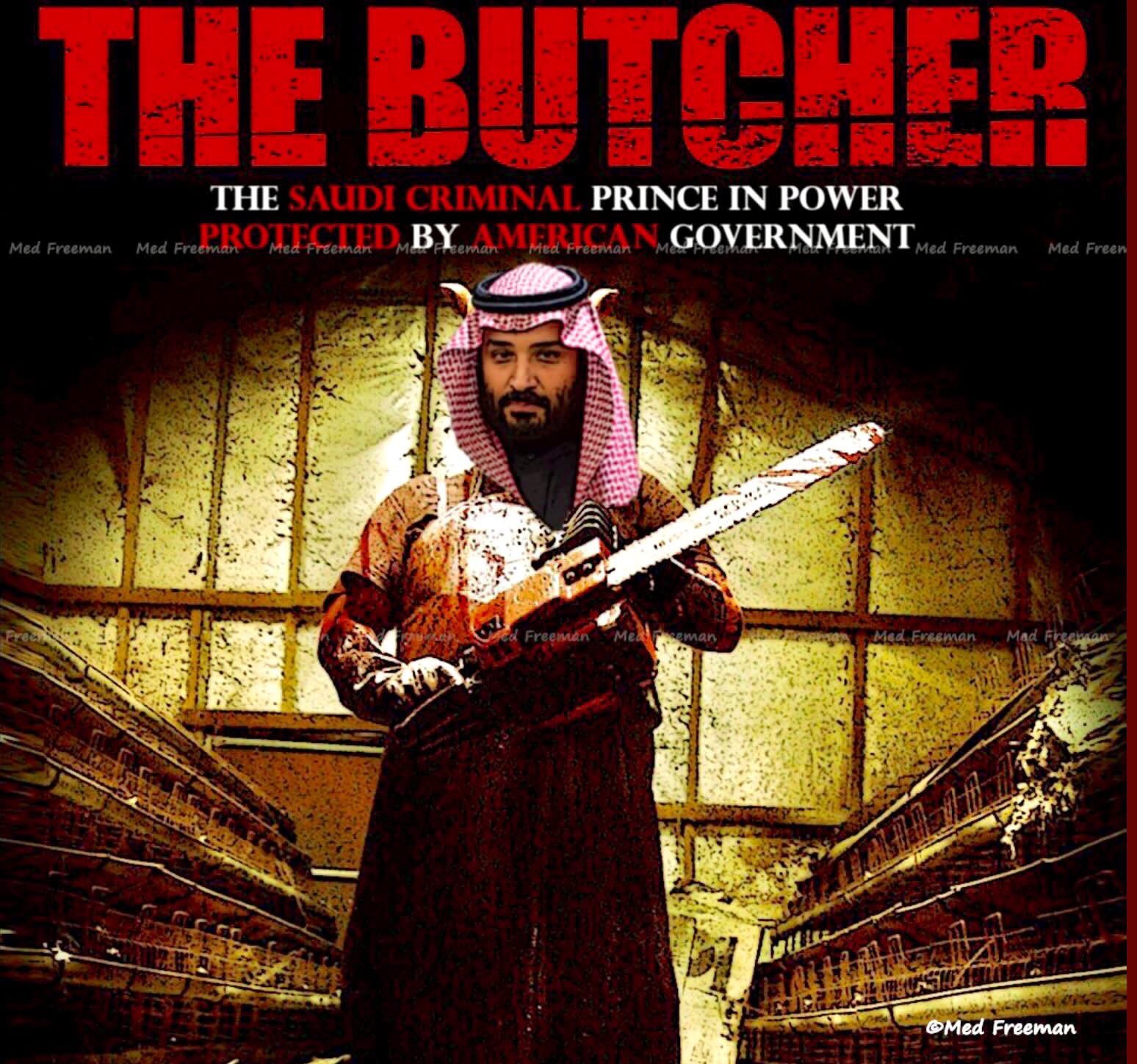
There, “we” have been supporting the country’s invasion by neighboring Saudi Arabia’s Mohammed bin Salman (MBS). He, of course, is a royal prince who (as I said) is specifically against democracy.

For instance, just last week, he had 81 men beheaded in just 12 hours. The executed had no legal representation. Many of the charges against them amounted to thought crimes.  

Additionally, a couple of years ago, MBS had his hitmen butcher with surgical bone saws the Washington Post journalist, Jamal Khashoggi.

More to my point here: for the past seven years, MBS, perhaps the richest man in the Middle East, has waged a genocidal war on Yemen, making it the poorest country in the world. In the process, (with full American support) he has created what the UN’s World Food Program has identified as genocide and the world’s greatest humanitarian crisis. — far greater than Ukraine.

Over those seven years, MBS has come to the aid of Yemeni oligarchs who have kept the country’s rich oil wealth for themselves. The Saudi crown prince thinks that’s a good idea. So, supplied and guided by the U.S., he’s been bombing, blockading, and starving the children of Yemen and their parents. The brutal process has claimed more than 100,000 lives. An additional 85,000 Yemenis are dead as the result of the famine and cholera epidemic produced by our war.

And what is it that the opponents of MBS and the United States are seeking? According to a Newsweek report, rebel groups (the Houthis) are fighting  “for things that all Yemenis crave: government accountability, the end to corruption, regular utilities, fair fuel prices, job opportunities for ordinary Yemenis and the end of Western influence.”  

Today’s Readings

As I mentioned at the outset, today’s liturgy of the word focuses on the character of Israel’s and Yeshua’s God as the protector of the poor and oppressed – the champion of those like the people in Ukraine and especially in Yemen.

In fact, as you’ll see below, the first reading recounts the vocation story of Israel’s great rebel leader, the prophet Moses. When Moses asks God’s name, the Source of Everything says, She is the liberator of the poor and oppressed. The second reading from St. Paul’s letter to a Christian community in Greece expands on that theme.

Then today’s final selection from the Christian Testament presents Yeshua as doing exactly what I’m attempting in this homily. He raises two “current events” connected with the hegemonic force of his own day, the Roman Empire. Of course, it was the invader of Yeshua’s homeland Israel.

In one event the infamous Pontius Pilate, the brutal Roman procurator in charge of Palestine had just slaughtered several Jewish insurgents in the act of offering sacrifice in Jerusalem’s temple. They were honoring the liberating God of Moses.

Meanwhile, another group of insurgents tunneling under a Roman armory (it seems with a plan to steal its arms cache) had caused the tower’s weak foundations crumble and fall not only on top of the tunnellers but people in nearby houses as well. According to Maria Lopez Vigil and her brother, Jose Ignacio, the armory was located in the Tower of Siloam.

In response, Yeshua expresses sympathy for its resisters. “They’re no more sinners than the rest of us,” he says. “All of us are ‘guilty’ of wanting to be rid of the Roman invaders. But actions like Pilate’s and the fate of those undermining the Tower of Siloam foreshadow a more general slaughter that will inevitably take place in response to such “direct action.”  

In effect, Yeshua says, “Those who resist the hated Romans by resorting to arms are (understandably) bloodthirsty too. And if we follow their example, we’ll all drown in a bloody deluge.” Or as Yeshua put it, “I tell you, if you do not change your minds, you will all perish as they did!”

And time is running short, he adds with today’s parable about a fig tree. The bloody deluge has been building for at least three years, he says. We have maybe another twelve months before the chickens of the deadly cycle of violence come home to roost. Without replacing violent resistance to Roman butchery with non-violent tactics, we’ll all be cut down like a barren fig tree.

(Jesus’ prediction of bloodbath, of course, eventually came true, but not as soon as he thought. The Romans would defeat the Zealot uprising in the year 70, and definitively squash all Jewish rebellion in 132. Jesus was right however about the extent of the slaughter. It was horrific resulting in the deaths of more than a million Jews. Such disaster is inevitable, Jesus teaches for all who “live by the sword.”)

His words, of course, have implications for our nation which like none other has lived by the sword ever since its foundation.

The Readings Translated

With all of that in mind, here are my “translations” of today’s powerful readings. Please check out the originals here to see if I got them right.

Exodus 3: 1-8a, 13-15
 
A stuttering shepherd 
Tending his father-in-law’s beasts 
In the barren desert 
Encounters a bush 
On fire 
But unconsumed. 
Fantastically, 
The stammering one 
Hears a voice 
From the raging flames 
Frightening him 
Out of his wits, 
Crumbling the man 
To the desert floor 
But calling on Moses 
In the name of 
The Great “I Am” 
To lead A motley horde 
Of slaves 
To freedom, prosperity 
And abundance. 

“This,” says the voice 
“Remains the unchanging 
Will and identity 
Of your people's God – 
The Liberator Of the poor 
And oppressed 
Everywhere.” 

Psalm 103: 1-11 

Yes, the Great “I Am”. 
Is the champion 
Of the downtrodden 
Throughout the world 
Hungering and thirsting 
For justice. 
Yahweh is 
Kind and merciful 
Gracious and loving 
Kinder than anyone 
Can even imagine 
The giver of abundance 
The physician 
Who cures, forgives 
And saves the enslaved 
From destruction. 

Who cannot love 
Such a One? 

1st Corinthians 10: 1-6, 10-12 

Certainly, Paul did
Whose God 
He recalls 
Protected His fugitive people 
With cloud, fire 
Desert and sea 
From pursuing 
Egyptian slave holders 
And then fed 
The liberated ones 
In the desert 
With manna 
And water 
Drawn from a rock 
(Foreshadowing Jesus himself.) 

While complainers 
(“What, manna again?”)
Perished 
Preferring instead 
The fleshpots and security 
Of Egyptian captivity. 

For your own good,
Paul warns, 
Don’t be like them! 

Matthew 4: 17 

I mean, 
Leave behind 
Enslavement 
With all its predictability 
And false security 
Choosing instead 
The insecure 
But imminent realm 
Of God’s New Future 
With all its promised 
Freedom, prosperity 
And abundance. 

Luke 13: 1-9 

That’s the realm 
Yeshua based 
His entire life upon. 
He contrasted it 
With Pilate’s Cruel slaughter 
Of insurgent Jews 
Simply trying 
To worship 
Their Great “I Am” 
And 18 other 
Revolutionaries 
Tunnelling under 
A Roman armory 
That collapsed upon them 
At Siloam. 

“No,” Jesus cautioned 
“Choose Yahweh’s 
Non-violent Order, 
Along with 
Complete abandonment 
Of (sinless) religious naivety 
And equally understandable 
And innocent 
Revolutionary derring do. 
Otherwise, 
You’ll have no future 
At all. 

And time’s running out,” 
He warned, 
“You’ve got maybe a year 
Before you’ll reach 
The point of no return.”

Conclusion

As you’ve just seen, the readings for this Third Sunday of Lent call us to repentance – to change of mind about empire, brutal invaders, occupiers, and what to do about all of it.

Followers of the biblical heroes, Moses and Yeshua, are summoned to examine their own consciences about how we see and respond to “current events.” We’re called to repentance.

Many would say that the tragic events unfolding in both Ukraine and in Yemen can be laid at the doorstep of the United States, the bloody successor of the Roman Empire that plagued Yeshua and his people.

Regardless of “the fog of war” that might impede such perception for many regarding Ukraine, the case of Yemen should be crystal clear. It should help us realize that our country’s leaders are not in the least interested in democracy, the deaths of innocents, preventing genocide, or opposing brutality of national leaders considered “friends.”

Instead, the guiding interests of U.S. “leadership” are money, oil, and maintaining hegemony, whatever the cost in human lives. History shows that to realize those interests they’ll ally with anyone – with butchers like MBS, with Nazis like Ukraine’s Azof Battalion, with the Mafia, drug dealers, ISIS, or the devil himself.

Events in Ukraine and Yemen should be forcing us to such shocking conclusions. They should be driving us all towards non-violent revolution — and towards publicizing and resisting U.S. aggression, warmongering and policy hypocrisies on every front.

That is, according to the teachings of Moses and Yeshua, the proper response for believers is unrelenting clarity of thought and analysis, along with non-violent resistance. And we’d better act quickly. As Yeshua warns, time is running out for us too..   

20 Principles for Making Sense of the Ukraine War

It’s easy for any of us to lose our way in “the fog of war.” I’m sure you agree. After all, most of us aren’t experts in matters Ukrainian. What do we know?

One way of dealing with such mystification is to remember some elementary principles and truisms that apply to all cases of international conflict including Ukraine and far beyond.

Let me review 20 of them. See if these help:

  1. The United States (not Russia, China, or ISIS) is the world’s “greatest purveyor of violence.” Martin Luther King made that identification. By all measures (including weapons sales, “defense” budgets and involvement in ongoing wars), it remains true today. This realization might be enough to raise suspicions about “our” government’s position on Ukraine.
  2. Might does not make right. A military force powerful enough to impose its will on weaker opponents is no indication of who’s right. This, of course applies to the United States as well as to Russia.
  3. International laws should never be disobeyed. This principle the United States applies to its enemies (such as Russia in the Ukraine) but rarely to itself.
  4. Wars are illegal unless they follow UN protocols. Please note that nearly every (if not all) of the myriad “American” wars since the end of the Second Inter-capitalist war have been illegal according to this standard.
  5. Everyone is equal before the law. Obviously,, legal double standards are morally repugnant. For instance, the United States can’t deny the authority of the World Court when it’s invoked against itself and then turn around and invoke its authority against an “enemy” like Putin.
  6. It is not logically permitted to lecture others to “Do as I say, not as I do.” In other words, law breakers lose moral authority to lecture others about the virtue of law abidingness. Every child can grasp this rule.
  7. People in glass houses shouldn’t throw stones. The U.S. cannot condemn Vladimir Putin for his actions in Ukraine, when it’s doing and has done worse things in Yugoslavia, Afghanistan, Iraq, Libya, Syria, Somalia, and Yemen.
  8. What’s good for the goose is good for the gander. If the United States can invoke its “Monroe Doctrine” to protect its Latin American “backyard,” a similar right must be extended to Russia and its perceived need for a buffer zone around its borders.
  9. The one who delivers the first punch can’t prevent a counterpunch by claiming “Two wrongs don’t make a right.” I’ve even heard State Department officials adopt this defense when U.S. crimes are compared to those of designated enemies.  [“Well, are you telling me that two wrongs make a right?” (Please don’t hit me back!)]
  10. “Whataboutism” should be cultivated. It’s simply the informed art of making connections. That’s what I’m trying to do with this piece.
  11. Without making connections, the world cannot be understood. We lurch from one crisis to another with no ability to understand.
  12. Borders, nationality, and race are creations of the elite to control the rest of us. Imperialists have used these fictions throughout the history of colonialism. All three, borders, superstitions about national allegiance and the illusion of race have been used to divide, conquer, and rule — to know whom to bomb, to collect taxes, and create captive workforces forbidden to cross imaginary lines to better their lives. (To illustrate, imagine if there were no enforceable border line between Russia and Ukraine. How would Putin know whom to attack? Would there even be a Putin?}
  13. Cultivate a long memory. This is another way of expressing the truism that those who forget history are bound to repeat its errors as we’re seeing with the coalescing dangers of yet another European war.
  14. Follow the money. Because NATO requires its members to increase their “defense” expenditures, the military-industrial complex benefits from each additional affiliate. Could that be a factor in the campaign to increase NATO’s membership — including in Ukraine?
  15. Follow the oil. Decommissioning the Nord Stream pipelines from Russia to Europe means new markets for U.S. liquified natural gas. Hmm. . ..
  16. The CIA, the U.S. government, and the media which unquestioningly report their claims cannot be trusted. After all, CIA boss, Mike Pompeo admitted “We lie, we cheat, we steal all the time. In fact, we take entire courses. . ..” (See below, point # 20.)
  17. If the U.S. favors a national leader, he’s probably a puppet or subservient client. This applies to U.S. creations such as Venezuela’s Juan Guaido and (on this principle) like Volodymyr Zelenskyy
  18. If the U.S. opposes a national leader, he’s usually doing something right. The leader in question is probably somehow interfering with U.S. claims to world hegemony. Certainly Putin is doing that.
  19. Non-white lives matter too – just as much as Europeans’ or Americans’. Again, it’s amazing how we’re led to clutch our pearls at the sight of thousands of Europeans (“who look and live like us”) as victims of war and as refugees while ignoring the far higher number of refugees and war casualties “we” produce every day among black and brown people.
  20. Fool me once, shame on you; fool me twice, shame on me. Another Great Man (remember him?) tried to say that but failed. I wonder why he didn’t seem to understand. Do we?

Can you think of other applicable principles? If so, please share them.

“Game of Thrones”: Belated Theological Reflections

I’m probably the last person in “America” to finally watch the fantastically popular video series “Game of Thrones” which concluded in 2019. But that’s what I’ve done over the last month. In a very belated effort (initially at least) to see what all the fuss was about, I watched all 73 episodes.

Like most others, I was hooked from the get-go.

However, because of my peculiar theological background, the whole thing moved my octogenarian self far beyond any superficial desire for cultural literacy. It turned my thought squarely to what many still call “God.”

I mean the behavior of those playing the violent, sadistic game of musical thrones greatly resembled that of the God I and most others in the “Christian” west were taught to believe in. That’s because the dominant understandings of God as king, judge, condemner, and punisher were solidified precisely during the period depicted in the HBO series.

Let me show you what I mean by first briefly recalling what viewers saw on “Game of Thrones,” and then adding what the series revealed about medieval ideas of God. Finally, allow me to describe the alternative suggested by the insights of modern science – of quantum physics in particular.   

My hope in doing this is to bring back from the dead a version of the divine that I at least find more worthy of belief, and helpful (if not necessary) to the project of saving the planet. The resurrected belief also holds promise of redeeming the rest of us from our age-old habit of unquestioning acquiescence while our “betters” repeat with impunity the atrocities depicted on HBO.

Game of Thrones

But first some reminders of what most of us witnessed in the series. It treated us all to kings, lords, and ladies beheading, castrating, and inflicting other forms of torture including skinning victims alive.

Then there were the endless swordfights and battlefield massacres – the spectacle of hundreds of thousands of armed men (and a few women) including spectacular giants, armored soldiers, terrifying ghosts, assaulting castles of various descriptions – wildly setting fires, swinging long knives, daggers, hammers, spears, and scythes, or launching flaming cannonballs, and shooting hundreds of arrows in deadly unison. Fire breathing dragons joined the mayhem to devastating effect.

Significantly, it was all, well, “biblical” in scope and carnage.  

Even closer to the topic at hand, viewers witnessed supposed spiritual masters, witches, and military hierarchs supporting compulsory celibacy, slavery, shaming of women, and a sometimes-prudish morality also enforced by torture and death, along with solitary confinement to dungeons where prisoners were starved, and subjected to insistent commands to “confess.”

And the reactions of both palace officials and commoners to all of it? Apart from the Wildlings or Free Peoples, the universal response was blind obedience. Everybody but the Wildlings accorded to the royal classes absolute power even if orders given were foolish, cruel, selfish, suicidal, sadistic, genocidal, lustful, or completely demeaning. Everything was justified for the sake of “the realm.” Child sacrifice? “Yes, your grace, as you wish.”   

Thrones and God

My point here is that all those medieval practices shaped western ideas of God who ends up being seen primarily as a potentate just like the ones in “Game of Thrones” – or in the Bible. As such he (sic) emerged for western believers primarily as a king, a legislator, judge, condemner, and punisher. God ended up being a torturer too. According to resultant doctrine, he was prepared to commit to an eternal lake of fire (hell) unconfessed sinners who (for Catholics at least) ate meat on Friday, did anything sexual outside of marriage, or even missed Mass on Sunday.

Not only that but, according to the extremely influential Thomas Aquinas (1225-1274), one of the principal delights of those lucky enough to “get to heaven” would be their witnessing the torments of those tortured in hell. They’d take great pleasure in observing the agony of others.

To that point, here’s what Aquinas said: “In order that the happiness of the saints may be more delightful to them and that they may render more copious thanks to God for it, they are allowed to perfectly see the sufferings of the damned …” [Summa Theologica, Third Part, Supplement, Question XCIV, “Of the Relations of the Saints Towards the Damned,” First Article]

It’s no wonder then that so many Christians accept torture on the one hand, but on the other have left aside unacceptable theological convictions straight out of Kings’ Landing, Winterfell, and the Seven Kingdoms depicted in “Game of Thrones.”

Problem is that the removal of such beliefs has confined us to a meaningless world in terms of life’s transcendent dimensions. And it apparently has done little to make us less obedient subjects of the realm.   

A Quantum Alternative

Despite everything however, at least according to the Pew Research Center, 90% of Americans retain belief in some sort of Higher Power, though not always in the God of the Bible. But if “God” is neither that deity described by the bloodier passages in the sacred scripture, nor the eternal torturer celebrated by Thomas Aquinas, what is left to believe in?

It’s here that quantum physics might offer some help. I mean, even those only marginally acquainted with the subject know that contemporary physicists see everything in the universe not as ultimately solid objects, but as packages of light waves – of energy.

Such understanding suggests not only that in a very real sense all of us form a single substance united with each other and with everything that exists – with animals, plants, minerals, soil, air, and water. All of it expresses the same energy, including that of consciousness. In some sense then, everything is united and aware. All reality is one.

Scientific insights like those suggest a Ground of Being who might be described simply as the sum of all the energy in the universe and in the universe of universes of which our solar system is an infinitesimal part. That unfathomable quantum would include, of course, the energy of consciousness. It might even be addressed personally as a Thou. It finds incarnation in each of our apparently solid bodies.

Such realizations have salutary consequences. That is, if we are one with each other, with the natural world, and ultimately with the one we used to call “God,” then wars, borders, and us-and-them thinking of any type should find no place among any but the psychopathically insane.

Moreover, the wisdom of one of the world’s great prophets, Jesus of Nazareth, who instructed us to “Love your neighbor as yourself” becomes evident. Our neighbor is everyone. And everyone is our Self. There is no real distinction, no real separation among us. Loving one’s neighbor makes sense because one’s neighbor is in fact oneself.

Conclusion  

I suppose what I’m saying is that my binge watching of “Game of Thrones” helped me better understand firstly where our ideas of a sadistic god come from. Secondly, it made clear why so many of us have abandoned belief in that God. We can’t any longer accept a deity who acts as cruelly and arbitrarily as King Robert, Cersei, Joffrey, Ramsey Bolton, or Daenerys. 

Thirdly, and even more importantly, such rejection yields practical conclusions that might save us from the insanities of our contemporary political powers whose slaughters, genocides, ecocides – their omnicides – massively eclipse anything depicted in “Game of Thrones.” I’m thinking of modern weapons of war even well below civilization-ending nuclear weapons. So many of them make the fire breathing dragons and “Game of Thrones” massacres look like children’s pets.

And finally, all of this suggests resistance on the part of citizens like us. I mean, when you think about it, we’re not much different from those commoner subjects of the kings and royalty depicted in “Game of Thrones.” “Nuclear war, Mr. President? As you wish, your grace.”

I mean, most of us stand quite ready to turn off our rationality and consciousness and proceed to sacrifice our children and ourselves at the whim of those whose words and actions reveal them to be psychopathic and quite stupid.

It’s time we realize our “kings’” lunatic nature and deny them any authority whatsoever.  The revolution against the medieval mindset of “Game of Thrones” is still incomplete.      

“A Meaningless World Engenders Fear”

Welcome to Episode 21 in this series called “A Course in Miracles for Social Justice Warriors.” My name is Mike Rivage-Seul, and I’m your host on this podcast.

Today we’ll focus on Lesson 13 of ACIM’s Workbook for Students. Its main idea is summarized in these words, “A meaningless world engenders fear.” That is, today’s lesson expands Lesson 12’s insight that “I am upset because I see a meaningless world.” Today’s instruction identifies the specific emotion aroused by meaninglessness. The emotion in question is fear.

Before we turn to that notion, let me remind you of our podcast’s general approach to A Course in Miracles. As I pointed out in episodes 3 and 4, we’re interpreting ACIM as though it was written primarily for U.S. citizens living in the belly of the U.S. empire that is the latest iteration of global domination embodied, for instance in Rome and the British Empire.

A Course in Miracle’s Historical context, authorship, language, and literary genre makes that clear. The voice of Jesus in ACIM is not the voice of the historical Jesus, but of a Christ addressing well-educated, well-to-do Americans far removed from the poor, uneducated, and mostly illiterate victims of empire the Jewish master addressed in the first century of our era. As well see later in much greater detail, ACIM calls Americans away from imperial values of individualism, competition, separation, domination, and patriarchy.

With that said, let’s turn our attention specifically to Lesson 13. It reminds us that the cause of our fear is our country’s loss of meaning. To repeat: Lesson 13’s main idea is “A meaningless world engenders fear.”     

Such expression insists that although our national anthem identifies “America” as “the home of the brave,” we are in reality an extremely fearful people. In fact, ours is better described as “the home of the frightened.”  

Today’s lesson 13 calls ACIM students to come to grips with the most profound reason for our fear. It’s because the meaning stories we were raised on have disintegrated before our eyes leaving us with a meaningless world. Understandably, we find that extremely unnerving.

As we’ve seen before, we once thought that:

  • Our country is the greatest in the world
  • We’re a Christian nation
  • God is on our side
  • We live in a democracy
  • Our politicians represent “the people”
  • Our wars are just
  • Our armed forces are invincible
  • Our soldiers are heroic
  • Law enforcement protects and serves us

None of these formerly self-evident statements any longer proves convincing:

  • As Dr. King pointed out, far from being the “greatest” in terms of virtue and goodness, our country is instead the world’s “greatest purveyor of violence.” As such, it is the root cause of most of the world’s problems.
  • This means that the God of Jesus is not our God; we are therefore not his followers; we are not “Christian.”
  •  God is not on our side; we are not divinely favored. Instead, America is more like the Roman Empire responsible for the execution of Yeshua of Nazareth.
  • Neither is the United States a democracy. In fact, it never was. As Federalist Paper # 10 makes clear, the Founding Fathers specifically rejected democracy in favor of a republic where (as John Jay put it) “Those who own the country ought to govern it.” 
  • And Jay’s imperative has been obeyed throughout U.S. history. This truism has been unmistakably underlined in the Citizens United SCOTUS decision. Its aftermath shows that politicians represent their donors rather than “the people.” (This is why a coal baron like Joe Manchin can defy the will of West Virginians on issues they overwhelmingly favor like Medicare for all, a $15.00 minimum wage, pharmaceutical pricing, family leave, and college debt forgiveness.
  • As for our wars being just, think about the lies that got us into Vietnam, Iraq, and Afghanistan.
  • Those same conflicts give the lie to convictions about the heroism of service in the U.S. military, whose personnel General Smedley Butler (already in the 1930s) implied are no better than brainwashed Mafia foot soldiers.
  • And just try to convince any black people you know that the police protect and serve them. Most would laugh in your face, if they didn’t burst into tears.

As pointed out in Lesson 12, A Course in Miracles itself can also engender fear. That’s because its relentless insistence that our favorite convictions (like those just mentioned) are 180 degrees opposite those of the divine order, can be extremely disorienting.

In the words of today’s lesson, “Recognition of meaninglessness arouses intense anxiety in all the separated ones” – that is, in everyone who sees herself or himself in competition and strife with fellow human beings. And that includes most of us.

And just whom is it that we Americans see ourselves in competition with? Largely, it’s with the poor, but ultimately, it’s with God.

Competition with the poor is evinced by that fact that (at least since the end of the Second Inter-capitalist War) ALL our wars have been fought against the impoverished identified as terrorists, communists, Muslims, and (as a Great Man once put it) “bad hombres.” (On this, please view the speech of the highly decorated ex-CIA operative John Stockwell.)

The real crime of the poor, however, is simply their poverty. It makes us afraid that they’ll rise and take our stuff [which our ancestors – and current wars – have taken from them (e.g., from Native Americans, from 250 years of enslaved Africans, in wars over oil, markets, water, raw materials etc.)].

Lesson 13 goes even further, however. It’s not only the poor we fear. It’s God we’re afraid of because (as the lesson puts it) “we think we’re in competition with God.” That is, we’re afraid of God whose primary function (we’re taught) is to legislate, judge, condemn, and punish. We’re afraid of this oppositional God. We might even say that he turns out to be not only our competitor, but an abusive enemy who threatens us all with eternal torture.

No wonder we’re upset.  No wonder we’re all afraid. No wonder that we find all that questionable if not downright meaningless.

Lesson 13 asks us to face that discordant music. Again, it says, “A meaningless world engenders fear.”

Accordingly, the lesson asks us to spend 3 or 4 periods of no more than a minute each doing the following: “With eyes closed, repeat today’s idea to yourself. Then open your eyes and look about you slowly saying: ‘I am looking at a meaningless world.’ Repeat this statement to yourself as you look about. Then close your eyes and conclude with: ‘A meaningless world engenders fear because I think I am in competition with God.’”

As usual, I’ll fulfill this assignment today as well. Remember that specifically as North American inhabitants of empire, we are at this point in The Course attempting to clear our minds of common misconceptions that have encumbered and polluted our consciousness. With that uncomfortable task foremost in my mind, this is Mike Rivage-Seul wishing you well and God’s abundant blessings.  

Christmas Reflection: “Oh, Come Let Us Ignore Him”

Every year at this time, the entire Christian world of more than 2.5 billion people pauses to observe the birth of a martyred Jewish construction worker about 2000 years ago. In America, we tirelessly observe this winter festival with increasing intensity from about Halloween, through Thanksgiving, and the entire month of December – for two solid months.

All during that time, our radio airwaves, and every shop we enter repeat the familiar songs and hymns we’ve come to associate with Christmas. Many of the carols celebrate “the newborn king.” Some even issue the invitation, “Oh, come let us adore him” – as God. Only occasionally (as in the “Little Drummer Boy”) is there the slightest hint that Jesus was “a poor boy too.” But that insight is quickly obscured by that same song’s four references to Jesus as “king.”

However, Jesus’ unmistakable poverty, his conception out of wedlock, his homelessness at birth, his status as asylum-seeker and immigrant in Egypt (MT 2:13-18), his social location in the working class, his association with Zealot insurrectionists (MT 10:4; MK 3:18; LK 6:15; ACTS 1:13), and the fact that he ended up a victim of torture and capital punishment at the hands of empire reveal far more about Yeshua than those popular sentimental Christmas jungles and hymns about a “newborn king.”

But even if we take those latter glorifications seriously, they unwittingly communicate a revolutionary message that the Christmas season completely ignores – one that finds important application to our troubled times.

I’m referring to the fact that calling the impoverished Yeshua “king” turns upside down reigning conceptions about the One some call “God,” and about the people divinely designated to rule the world.

Such references unconsciously point to the truth of Jesus’ words that the “meek” or (better put), the lowly, the humble, the unpretentious, those without public power, the despised and discarded, the gentle and non-violent, are (in God’s eyes) the ones divinely destined to “have the earth for their possession” (Psalm 37: 11; Matthew 5:5). History belongs to them. Despite appearances, it is on their side.

What else can it mean that we call “king” a brown or black homeless child born in a barn and who will remain poor, deep in political trouble all his life and will finish on death row? What else can it mean that such a one was selected to be (according to Christian faith) the ultimate revelation of life’s meaning.

On this Christmas Day 2021, all such considerations should send us to look for God in today’s people and places Yeshua was so deeply a part of. Christmas reflections on the historical Yeshua should find him living in those tents that now dot all our big cities. He’s sleeping under some bridge in DC or NYC. He’s dodging drive-by bullets on Chicago’s South Side and shivering in the cold on the Tijuana border. He’s walking his last mile after his appeal for a stay of execution has been ignored by Trump’s SCOTUS packed with “pro-life” Catholics. His appeal is ignored by governors opening gifts with their lily-white children and filling their bellies with turkey and all the trimmings, after singing “Silent Night” with misty eyes in their heretical megachurch based on prosperity gospel lies.

In the face of all that, the proper hymn to sing is “Oh, come let us ignore him.” Yes, ignore that white supremacist, Jesus. And instead, let us adore the real Yeshua in that filthy, stinking barn. He’s there sharing a roof with the rats and beasts with whom our police forces equate those whose neighborhoods and barrios their militarized platoons occupy as enemy terrain.

If we were to find Yeshua in those unlikely places, how different our interminable Christmas season would be. Yes, suppose Americans (and the world’s other two billion Christians) spent two months each year giving serious reflection to Jesus’ social circumstances as presented in the biblical texts that scholars call “the infancy narratives.”

Doing so would change “the season” to one of national repentance, instead of the orgy of “Christmas shopping” for those who already have more than they need. We’d double down on support for Rev. Barber’s Poor People’s Campaign. We’d organize to spend the season (any beyond) doing everything possible to eliminate the specific elements that plagued the life of Yeshua — namely:

  • Identification of “God” with scepters, armies, priests, and “power over”
  • Royalty of all kinds
  • Poverty
  • Homelessness
  • Persecution of asylum seekers
  • And immigrants
  • Imperialism in all its expressions
  • Honoring imperial military service as though it were heroic (It’s not!)
  • Infanticide (today by drone instead of sword)
  • Wars invariably waged against the world’s poor
  • Torture of those same impoverished souls
  • Capital punishment of the poor [never (please note) the rich]
  • Etc.

In other words, historical reflection would cause us to embrace the one whose life and rejection by organized religion and the imperial state reveal the true social location of divine incarnation.

As for the Jesus of our hymns, carols, and Christmas jingles, “Oh (please!), come let us ignore him.”

P.S. We might replace the ignored one’s hymns with Woody Guthrie’s “Jesus Christ:”

Jesus & Borders: The World Belongs to Everyone

The other night, my wife Peggy and I were involved with friends from church in a conversation about borders. The question arose, because of immigration problems that have arisen throughout the world because of climate change and U.S. wars. I’m talking about the conflicts our government initiated in Central America during the 1980s, as well as the most recent campaigns in Afghanistan, Iraq, Syria, Lybia, Sudan, Somalia, Yemen, not to mention miscellaneous dronings, and the drug war in Mexico. Every one of those debacles has created thousands of refugees.

During our discussion of borders, the question became, “What would Jesus say about them?” Surely, we can’t just ignore demarcations between countries, can we?”

My response is, “Actually, we can. Not only that, but we have done so repeatedly.” In fact, when you think about it, borders turn out to be  completely arbitrary, and the rich ignore them all the time. Only the rest of us are naïve enough to believe that lines on a map are somehow sacrosanct. It’s all a scam by the 1% to keep the world’s majority in line by creating captive labor forces.

Besides that, Jesus himself and the moral thrust of the Jewish tradition he represented by no means held borders inviolable when it came to immigrants, refugees, and asylum seekers.

Here’s what I mean:

Borders Are Arbitrary

In historical perspective, current demarcation lines dividing countries are totally artificial and changeable. Many of them, for instance in Africa and the Middle East, were drawn up in a field tent by basically ignorant imperial generals.

The colonial outsiders’ overriding interest was accessing the resources of the areas in question. So, they formed alliances with local chiefs, called them “kings” of their new “nations,” and drew those lines I mentioned describing the area the nouveau royalty would govern.

But the colonial conquerors did so without knowledge of traditional tribal habitats, shared languages, or blood connections between families their random lines separated. As a result, from the viewpoint of the groups divided, the problem with borders is not that people cross them, but that the borders cross peoples.

Closer to home, that ironic crossing phenomenon is best illustrated in the cases of Texas, California, New Mexico, Colorado, Arizona, and Utah. Before 1848, all those states were part of Mexico. Then following the Mexican-American War (1846-’48), the U.S. border crossed Mexicans in those new states and they suddenly became foreigners in what previously had been their own country.

In 1848, ordinary Mexicans viewed the entire process as highway robbery. As a result, their descendants often speak of contemporary Mexican migration to “America” as a Reconquista — a justified re-conquest of lands stolen from their forebears.

Nevertheless, 170 years later, U.S. presidents like Biden and Trump want to solidify America’s unlawful annexation of huge swaths of Mexico by laws and a wall to enforce this relatively new line of separation. The argument seems to be that borders are holy, have always been there, and that people who cross them are “illegals” and criminal. But that just raises questions about our rich confreres’ attitude towards the new lines drawn.

The Rich Disregard Borders

Fact is: The rich routinely disrespect borders in two principal ways, one juridically “legal” and the other completely otherwise.

For starters, so-called “legal” border crossings are claimed as a right by international corporations. According to its free enterprise principles, Wal-Mart, for example, has the right to set up shop wherever it wishes, regardless of any resulting impact on local merchants, farmers, or suppliers. Thus, capitalists claim license to cross into Mexico in pursuit of profit. They legalize their border crossing by signing agreements like NAFTA with their rich Mexican counterparts. The agreements exclude input from the huge populations of farmers, workers, and indigenous populations directly affected by the pacts in question.

In other words, workers (who are just as much a part of the capitalist equation as their employers) enjoy no similar entitlements. For them, borders are supposed to be inviolable, even though the boundaries create a captive labor force and prevent labor from imitating the rich by serving its own economic interests — by emigrating to wherever economic advantage dictates.

Workers everywhere intuitively recognize the double standard operative here. So, they defiantly cross borders without permission. That in large part is what we’re witnessing  in immigration problems at our own borders and across the world’s map.

The other disrespect for borders on the part of the rich is more insidious. It takes the form of their own defiant transgression of international law by crossing borders to drop bombs on poor people they deem “terrorists” wherever and whenever they’re found, without formal declaration of war. (Imagine if poor countries claimed that same right vis a vis their wealthy counterparts, because they consider the wealthy’s bombing raids and drone operations themselves as “terrorism.”) Let’s face it: in the so-called “war on terror,” borders have become completely meaningless — for the rich.

Jesus & Borders

As for the attitude of Jesus towards borders? We don’t have to guess. The Bible’s main thrust centralizes the question. The basic moral injunction of the Jewish Testament is to welcome the stranger, along  with caring for widows and orphans.

As a Jewish rabbi, Jesus is presented in Matthew’s gospel (Chapter 25) as doubling down on that traditional Hebrew command. I’m talking about the only description of the “last judgment” in the entire Christian Testament. There, Jesus is depicted as saying to people who sacralize borders, “Depart from me you cursed into the fire prepared for the devil and his angels . . . for I was a stranger, and you did not welcome me.”

Those are strong, strong words depicted as coming from”the Prince of Peace” and the one often remembered as “meek and mild.” At the very least, Matthew’s insistence on attributing them to the Master indicates the strength of Jesus’ teaching on the topic at hand. For him, it seems that borders were by no means sacrosanct in the face of human need.

Conclusion

The point is that we “Americans” need to re-examine our attitudes towards borders and border walls. Borders, after all, are not sacred to the rich. Never have been. So why should rich corporatists expect workers and refugees from their destructive and illegal border-crossings to respect boundaries the elite have drawn so arbitrarily and violated so cavalierly?

Episode 9: Part I, Lesson I: As a prisoner in Plato’s Cave, Nothing I See Means Anything

Welcome to Episode 9 of “A Course in Miracles for Social Justice Warriors.” I’m your host, Mike Rivage-Seul.  And today we’ll turn our attention to Part 1, Lesson 1 of The Course’s Workbook for Students.

Remember, we’re re-reading The Course from below – from the position occupied by Jesus of Nazareth whose words channeled specifically to North Americans represent the entire content of ACIM’s three volumes. Be reminded that the historical Jesus necessarily saw reality “from below.” He was poor, imperialized, working class, and stood in opposition to the Roman Empire and to temple authorities who lay in bed with the Roman occupiers.

As we saw in our last episode, the purpose of A Course in Miracles as described by Jesus in its Introduction is to help students “think differently” – to see the world as he saw it. Such adjustment of vision is necessary because as The Course insists, the world’s way of seeing things is completely skewed. Its world vision is 180 degrees opposed to God’s vision – to the vision of Jesus the Christ.

As The Course implies again and again, it’s like all of us are imprisoned in Plato’s Cave where everything we see as real is merely only a shadow of something completely artificial. It’s all illusion. In effect, we take for reality what are only shadows of statues projected for us by the frauds who control our world.

The course would have us escape the captivity of our culture’s cave. It would have us follow Socrates and Jesus.

To that end, the point of the first part of Book I – more than 200 lessons – is to help deconstruct the world we’ve been tricked into accepting as real.

So, buckle up. Open your book to the third page of your student workbook. Pause this recording and prayerfully read the chapter for yourself. Follow its directions as closely as possible. Then come back here.

The central thought of Lesson One reads: “Nothing I see in this room [on this street, from this window, in this place] means anything.” “Nothing I see in this room [on this street, from this window, in this place] means anything.”

To make that thought clearer, I suggest reading it like this: As a prisoner in Plato’s Cave, I see nothing in this room [on this street, from this window, in this place] that means anything. As a prisoner in Plato’s Cave, I see nothing in this room [on this street, from this window, in this place] that means anything.”

Alternatively, you might read today’s central thought to say: “As one indoctrinated into the ideology of a white supremacist, imperialist, capitalist, patriarchy, I see nothing in this room [on this street, from this window, in this place] that means anything.” Everything I see in this room, on this street, from this window, in this place is shadow; it’s illusion; it’s all unreal.

Let those thoughts sink in. Repeat them whenever you can throughout the day: “As a prisoner in Plato’s Cave, everything I see is meaningless. It’s all illusion, shadows, deception.”

Thank you for listening. Tomorrow we’ll move on to Lesson 2.

And by the way, if you want to review the first eight episodes in this series, please go to my podcast site at acim for activists .com (acimforactivists.com)

Episode 8: The World Will Call You Crazy for Embracing Jesus’ Truth

In the introduction to A Course in Miracles’ Workbook for Students, Jesus calls us to “see things differently” — so differently that our white supremacist, imperialist, capitalist patriarchy will call us insane.

Previous episodes of this series, “A Course in Miracles for Social Justice Warriors,” may be found on my podcast site. Please visit it when you can.

Jimmy Lai vs. Julian Assange: Prophets without Honor (A July 4th Sunday Reflection)

Readings for the 14th Sunday in Ordinary Time: Ezekiel 2: 2-5; Psalm 123: 1-4; 2nd Corinthians 12: 7-10; Luke 4: 18; Mark 6: 1-6

I can’t believe that we’re still expected to believe that the United States and Great Britain are concerned about human rights or press freedom or that either has any leg to stand on in such posturing.

I mean, how can any of us still believe after the lies about Iraq, Abu Ghraib, the refusal to punish Saudi Arabia for the murder of Washington Post journalist Jamal Khashoggi, the imprisonment of Julian Assange, the demonization of Wikileaks, and the cooperation of the mainstream media (MSM) with all of it.

You’re telling me that either London or Washington has the right to pronounce on press freedom? On human rights? Please!

Demonization of China

Nonetheless, they’re at it again in relation to China and the desperate campaign of both Great Britain and America to demonize Beijing and its implied invocation of an Asian version of The Monroe Doctrine in relation to Hong Kong [which, by the way, (unlike the U.S. relationship to Nicaragua, Honduras, Cuba, or Venezuela) is actually part of China.]

More specifically, we’re supposed to join the MSM and “our” government as well as England’s in worrying about the recent shutdown of the Apple Daily newspaper in Hong Kong – a publication that sounds a lot like The National Inquirer.

Judge for yourself. A recent cover story in The Guardian describes the paper as a tabloid-style publication that has “a chequered history including cheque-book journalism, muckraking and sometimes unethical reporting alongside fearless investigation into government corruption and police brutality.”

What? Chequered history? Paying sources for information (probably with money from the CIA or the National Endowment for Democracy) and unethical reporting?

Oh, and the paper is owned by billionaire Jimmy Lai who has been imprisoned (according to The Guardian) “on protest-related convictions and national security charges.”

So, now it’s “Hands across the Planet” for poor Jimmy and his yellow journalism.

Meanwhile Julian Assange wastes away precisely in a British prison for publishing government secrets exactly about U.S. war crimes in Wikileaks – a source that publishes the Washington’s own unquestionably true confessions of the criminal acts it desperately wants kept secret from the rest of us.

So let me get this straight: Jimmy Lai’s a hero. And we’re all supposed to get misty-eyed about the Hong Inquirer’s brave reporters. But Julian Assange is a criminal. And Wikileaks doesn’t even qualify as journalism.

And, by the way, we’re supposed to forget that there was absolutely no press freedom all those years the Brits controlled Hong Kong.

Does anyone else sense the irony?

Today’s Readings

Such considerations are especially relevant this July 4th as we celebrate our supposed “freedoms” and the tarnished ideals of the United States. Significantly, this month marks as well the 100th anniversary of the founding of China’s Communist Party (CCP) whose good example (in drastically reducing world poverty and extending foreign aid) our country so fears.  

Besides being July 4th, today also happens to be Sunday, time for a weekly “Homily for Progressives” where the theme of the day is prophecy in the sense of social criticism in the name of all that’s holy.

The first reading from the prophet Ezekiel implicitly reminds us that there were two kinds of prophets among the ancient Hebrews. Both are still with us today.

One type was a “court prophet” telling the king and power structure what they wanted to hear – justifying their oppression of the poor. (On this Independence Day you’ll hear a lot of their drivel as they praise “America” as though it were not – as Martin King put it – “the world’s greatest purveyor of violence.”) Think about The Apple Daily, Jimmy Lai and our MSM as court prophets.

The other type of prophet spoke for the Truth that was commonly referred to as “God.” The words of such men and women were routinely dismissed by the powers that happened to be. Some prophets (as is the case with Jesus in today’s final reading) were even rejected by the very oppressed people they were trying to champion. Their words were thought too dangerous and, in some cases, too good to be true. Think about Julian Assange as a prophet in the mold of Ezekiel or the Nazareth construction worker many of us claim to follow.

In any case, here are my “translations” of today’s selections. You should really check them out here to see if I got them right. As you read, think of Julian Assange.

Ezekiel 2: 2-5

I was startled
When God’s Spirit
Demanded that
I criticize my own people
As ungodly and stubborn
Telling me 
To make them uncomfortably
Aware
That a fearless prophet
Was at work
Among them.

Psalm 123: 1-4

Great and holy Parent
We invoke your compassion
On your prophetic
Servants and handmaids
So eager to serve you
Despite contemptuous mistreatment
At the hands 
Of our so-called “leaders”
With their pride and arrogance
Directed 
Against your beloved poor.

2 Corinthians 12: 7-10

Neither do prophets 
Have to be perfect.
Even Paul of Tarsus
Despite his many gifts
Suffered under
“An angel of Satan”
And “a thorn in the flesh"
To keep him humble
Lest he take credit
For the work
Of the Holy Spirit
Within him.

Mark 6: 1-6

But like Ezekiel
Jesus was rejected 
By his own townsfolk
Who complained that
He had gotten “above his raisin’s”
They didn’t even
Call him by  
His father’s name
(Implying he was a bastard)
While dismissing
His brothers and sisters
As quite unremarkable.
There’d be
No mighty deeds
For such whiners.
Only cures for
A few ailing beggars.

Conclusion

In a recent New York Times editorial, another court prophet, Yi-Zheng Lian, the former chief editor of The Hong Kong Economic Journal, joined the chorus of warnings about China’s grave threat to the West.

To an audience acquainted with the revelations of Edward Snowden Lian decried China’s surveillance system. To those whose country has bombed and killed Muslims by the scores and thousands every day over the last 20 years, he complained about treatment of Uyghurs in Xinjiang. To Americans who have lived through a Trump presidency, he criticized Chinese governance by lies. (His example? President Xi Jinping actually claimed that China seeks an international image that is “trustworthy,” “respectable” and “lovable.”) The horror of it all!   

Nonetheless, Lian also pointed out the fact that the Chinese Communist Party retains high popularity among a vast majority of its people. In fact, the party has grown by 20% annually since its foundation 100 years ago. There are no refugees from China. Travelers and students come and go at will and usually return home.

For Lian, the bottom line is that China is showing no evident signs of decline. This means that it will remain a formidable force continuing to threaten the United States and Western allies for years to come. This will be true, he said, not just militarily and ideologically, but also technologically and economically.

So, the West, Lian concludes, had better get used to the CCP’s threatening presence “at its front door.”

Of course, all this talk of threat and menace from a country that (unlike the United States and Great Britain) has bombed no one in the last 40 years – all this imperial identification of a country more than 7000 miles away as at “our front door” is nonsense.

So is any continued posturing about “our” championing of human rights and press freedom. July 4th in the context of faith reflection is a good time for reminders of such home truths.