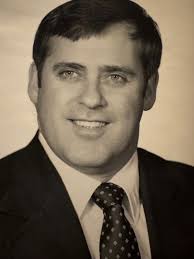
In Memoriam: Tom Shea (1938-2024)

I lost a dear friend last week. His passing made me cry. 

His name was Tom Shea and I knew him for 70 years – ever since I entered St. Columban’s high school seminary in 1954 at the age of 14. Tom was 16 then, a junior while I was a freshman. Even in such a small school of only about 100 students, juniors didn’t have much to do with freshmen.

Still however, I admired him greatly. Everybody did. He was so smart and such a great athlete. He was a strong-armed quarterback, a terrific basketball guard, a hard-throwing pitcher, excellent at any racket sport, especially good at ice hockey, a super golfer, and even (I was told) a respectable Irish hurler. He was also a crafty poker and bridge player. With all that, he never took himself that seriously and had a great sense of humor.

However, I didn’t really get to know Tom till I got to the major seminary years after high school. Even there it took a while. At the age of 21, I arrived still working on my bachelor’s philosophy degree. Meanwhile, at 23 Tom had already begun his 4 years of graduate theology work. By the time I began my theological studies, he was almost ready for ordination. That happened for him in 1964. He was ordained on December 22nd of that year – 60 years (almost to the day) before his final transition.

Besides playing with and against him on various athletic fields, the only time I remember speaking seriously with Tom in the major seminary was during the Second Vatican Council (1962-1965). I asked him for advice on what to read to catch up with the drastic changes occurring because of that historic event. I forget what he told me. But I remember following his instructions.

Because Tom was so smart, our missionary group, the Society of St. Columban, had singled him out for professorship in the seminary. They wanted him to teach Sacred Scripture. So, after his ordination, they sent him off to Catholic University in Washington, DC to get a preliminary master’s degree in theology. After two years there, he’d go on to Rome (and Jerusalem) for his terminal degree in biblical studies.

That’s when Tom and I really connected.

I was ordained in 1966. And as with Tom, the Columbans wanted me to teach in the major seminary. My field would be moral theology instead of biblical studies. But Tom and I would go off to Rome together to study – he for 3 years, and I for 5.

And oh, what a ride that would be! In Europe, we’d vacation together, ski many of Europe’s great resorts, and as brothers and colleagues sort out the details of our personal and political lives.

It began with both of us living at St. Columban’s major seminary in Milton, MA the summer before we left for the Eternal City. That was in 1967. I forget what Tom was doing in Milton. I was completing a summer course in Hebrew at Harvard. But every night the two of us drove over to Boston’s West Roxbury to play basketball with “the brothers.” We were the white boys who could ball with any of them. (I remember one night the Celtics’ Satch Sanders was there watching.)

The basketball connections continued in Rome. Both of us ended up playing in something like a G League there for a team affiliated with Rome’s professional club, Stella Azzurra. We scrimmaged against them a time or two. And it was all great fun — a great way to learn Italian culture and make Italian friends. Our Stella Azzurra team was coached by Altero Felice who later had a basketball arena named after him. We considered Altero a good friend and father figure.

While in Rome, Tom and I were also invited by Giulio Glorioso [the Italian equivalent (we were told) of Babe Ruth] to play baseball for the Rome team. (We had worked out with them one spring.) I remember the Saturday afternoon Giulio came to the Columban residence to try to persuade us to play ball that summer.

For better or worse, we passed up that offer in favor of studying German two of our summers in Europe at the University of Vienna. (German at that time was still considered essential for any serious theologian or scripture scholar.)

In a sense, both Tom and I grew up in Rome. Following Vatican II, everything was called into question. Over Pasta e Faggioli and salsiccia dinners in the Columban house at Corso Trieste 57, the 20 or so of us graduate students (all ordained priests from Ireland, Great Britain, Australia, New Zealand, Scotland, Tasmania – and we two Yanks) debated fundamental topics never open to question before Vatican II: God (Is there such a being?), Jesus (Was he somehow God? But how?), the nature of the church (Was Luther a heretic or a saint?), the priesthood (Was it necessary?). And what about mandatory celibacy? The discussions were unforgettable and life-changing.

Our friendship continued and deepened to eventually include our wives, Dee (Tom’s bride) and Peggy (mine). We spent several year-end celebrations together. And once we got together in Costa Rica for a long weekend at an all-inclusive resort. Peggy and I attended the wedding of their eldest son, Tommy in Chicago. Tom and Dee came to our daughter Maggie’s wedding in 2007 in Kentucky. Peggy and Dee remain fast friends.

The four of us got together for the last time a year-and-a-half ago in Florida. By then Tom had already been slowed by heart and lung problems. But his sense of humor never faded. Neither did his life-long interest in and commitment to spiritual growth.

Yes, Tom Shea was a close friend of mine. We grew up together for nearly three-quarters of a century, often acting as each other’s counsellor, advisor and confessor — every minute accompanied by stories and laughter.  As Peggy recently pointed out to me, his down-to-earth wisdom and example saved  me  in effect from a closed system and lonely life that otherwise would have throttled me.

So, thank you, Tom Shea for being such a good fellow traveler. You were wise, generous, humble, and always brilliant. I’m grateful for the gift of your impactful life. We’ll see each other again soon, I know.
Post-Election Thoughts on Trump Pro & Con

I’m not yet sure what to think about last Tuesday’s election results. Surprisingly, I find myself ambivalent and guardedly hopeful.

On the one hand, I feel strong foreboding about the Trump victory. I have nothing but painful memories of his last term. It was tough to wake up each day to the crudity, mendacity, stupidity, self-promotion, and sheer ignorance of the man. As a result, like many others, especially at the beginning, I experienced great relief returning to a kind of normalcy under Joe Biden.

But then as that “normalcy” kicked in, I found that horrifying too. Distressingly, there are those billions and billions and billions spent on a war in Ukraine whose reasons were impossible for me to understand. How was Ukraine our concern? I mean, most Americans can’t even find it on the map. Additionally, by all accounts its government is incredibly corrupt. Historically, it has been consistently associated with Nazism. Ukraine seemed far from our business, especially when we have so many problems at home.

I’m referring to huge income gaps between rich and poor, to decaying cities, roads and bridges, low minimum wage, lack of universal health care, college loan indebtedness, rampant homelessness, and incoherent immigration policy. Why did the Biden administration find it so easy to find billions for Ukraine, but not for us and our problems?

Then came the genocide in Gaza! At the very least, it revealed the hypocrisy of Democrats ostensibly concerned with women’s rights, and racism, but supplying weapons to kill mothers and their children in Gaza. Clearly the administration felt differently about Palestinian women and children than about their American or Ukrainian counterparts. Isn’t that sexism? Isn’t that racism? Isn’t it politically suicidal?

Mrs. Harris promised more of the same. During her ineffective campaign she repeatedly refused to distance herself from anything Genocide Joe continues to implement in the Middle East. Doesn’t that make her a genocider too? Of course it does!

But won’t Trump just give us more of the same as well? Probably. But maybe not.

So, to clarify my own ambivalence about Tuesday’s election results, I decided to make a list of Trump’s pros and cons. Here’s how it came out:

Trump’s Negatives

There are so many! But here’s the short list:

  • In general, he’s crude, superficial, and uninformed.
  • He’s a pathological liar, e.g., about immigrant crime rates and their eating pets.
  • His only true accomplishment during his first term was to give gratuitous tax breaks to the world’s richest people.
  • He totally mishandled the COVID 19 outbreak. As a result, more Americans died than citizens of any other developed country.
  • His punitive policies against Venezuela, Nicaragua, and Cuba have increased the immigration situation he decries.
  • More specifically, he repeatedly tried to overthrow the Venezuelan government ridiculously installing U.S. puppet Juan Guaido to replace Nicolas Maduro.
  • He’s a climate change denier
  • He’s a champion of the fossil fuel industry’s super polluters.
  • He exhibits no understanding of the dangers of nuclear war. (Remember his wondering “If we have nuclear weapons, why can’t we use them.”)
  • Like Biden and Harris, he’s anti-Palestinian and an enthusiastic supporter of Israel’s genocide.
  • He blames U.S. unemployment and low wages on immigrants and the Chinese rather than on the decisions of his capitalist friends to offshore American jobs.
  • He thinks that tariffs hurt the Chinese, when they are covert taxes on American consumers, while increasing inflation and funneling the surcharged money to Washington.
  • He’s disrespectful of women and has been convicted of rape by a jury of his peers
  • He was a friend of Jeffrey Epstein.
  • He encouraged the January 6, 2021, assault on our nation’s capital.
  • He’s likely to incorporate into his administration neanderthals like Mike Pompeo and Marco Rubio.

Trump’s Positives

Believe it or not, there are a few. Here’s the longest list I can think of:

  • Trump’s disliked and vilified by the Washington establishment and the mainstream media. (Indicating that he can’t be all that bad).
  • His landslide election has exposed widespread discontent with the economic and political status quo.
  • He’s a loose cannon. He and his MAGA followers form the closest thing to the third party that America requires.
  • His “party” has succeeded in uniting large swaths of previously hopelessly polarized population segments who somehow realize that they have more in common with each other than what drives them apart – including women, African Americans, and Hispanics.
  • He promises to incorporate into his administration anti-big-pharma, Robert F. Kennedy Jr., war critic, Tulsi Gabbard, and Putin interviewer Tucker Carlson.
  • He’s willing to negotiate an end to the Ukrainian war.
  • He’s highly skeptical of NATO.
  • His vice-president is J.D. Vance has been described by Robert Barnes as “the most war skeptical and pro-labor Republican office holder in the last 50 years.”
  • Beyond that and unlike the Biden administration, he’s proven willing to dialog and “deal” with America’s designated enemies including North Korea’s Kim Jong Un and Russia’s Vladimir Putin.
  • He promises to open sealed government documents (and their can of worms) on the JFK assassination.
  • And (most importantly) his election may drive neo-con Democrats to repudiate their efforts to out-Republican Republicans and to reappropriate their identity as Roosevelt New Dealers.  

Conclusion

Well, there you have it – the pros and cons of Trump’s triumph as I see it. What do you think? Am I being naïve and too optimistic? Am I whistling past the graveyard? Can you add to my lists? Do you care to refute my reasoning?

Immigrants Are Everywhere And They’re Demanding Reparations; They’ll Replace Us; And They Should!

Last week my wife and I spent three days in Venice. For me it was a return visit.

Fifty-two years ago, I traveled there twice with a very dear friend. So, this time round brought back a flood of happy memories.

My 2024 visit was highlighted by hours spent at the Biennale art exhibition in and near the city’s Arsenale Gardens. It’s theme was “Stranieri Ovunque” (Foreigners Everywhere).

The displayed sculptures, paintings, films, fabrics, and other objets d’art celebrated rather than lamented the planet-wide population exchanges we’re all witnessing. The displays elicited deep reflections on contemporary debate about immigrants, borders, and attempts to keep “foreigners” out of Europe and the United States.

It all made me think not only about immigration, but about colonialism and reparations.

On the one hand, across the entire world we’re witnessing seemingly irresistible waves of immigrants traveling from the global south to Europe and the United States. On the other hand, those former colonial powers are contesting such movements in the name of preserving their (predominantly white) cultures and economies from foreign invaders.

The colonial powers are worried about being “replaced” in their own countries.

Attempts at preservation evoke restrictive measures such as laws, walls and increased militarization of borders. They also involve propaganda campaigns that villainize immigrants from the former colonies as invaders, criminals, and agents of economic destruction bent on taking jobs from their working-class victims.

More specifically, the propaganda would have e.g., “Americans” believe that immigrants cause their economic problems such as unemployment, job loss, and lower wages. Such reasoning has it that in our 2024 population of 350 million people, U.S. economic problems are created by 12 million of the poorest people in the world seeking refuge across “our” sacred borders. 12 million is about 3.4% of 350 million. Economically speaking, that’s an insignificant percentage – especially when those involved have virtually zero political power.

So, the concern immigration raises is not only absurd, it also misdirects public attention from the real causes not only of our economic problems and of immigration itself. Those causes include colonialism and capitalism with its practice of offshoring the very jobs that once created a prospering middle class in Europe and the United States. In other words, current economic problems are and have always been caused by the richest people among us rather than by the poorest.

More precisely, it’s all associated with colonialism – i.e. with the centuries’ long practice of western Europeans invading and plundering the homelands of those now seen as threatening Europe and the United States.

Recall that the last 500 years have seen “westerners” migrating to the Global South (Africa, Latin America, and South Asia), stealing its land and treasures, and enslaving its peoples while often taking up residence and in the process destroying economies, cultures, indigenous art, and languages.

The further result has been the creation of “underdeveloped” countries whose purloined wealth fueled the economic development of Europeans inhabiting lands (like England) that are by comparison small, resource poor and sparsely populated.

Additionally, the industrial “development” supported by the colonial system has caused an unprecedented warming of the environment that has taken its worst toll in the Global South. There formerly productive agricultural land has been robbed of its fertility by the resultant changes in temperature and rainfall as well as by forest fires.

The very existence of entire island nations is threatened by rising sea levels caused by global warming.

Likewise, invading capitalists drove peasants from their subsistence milpas and small farms through colonial practices that precisely ignored property lines and borders while often redrawing them altogether.

Additionally, “foreign aid” in the form of food giveaways and subsidies to giant agricultural firms consistently made it impossible for small indigenous farmers to compete with their invaders from the north. How can a local farmer sell her crops in the face of “foreign aid” (dumping) whose very purpose is to drive her out of business?

And when local populations tried to remedy such problems by electing governments to meet their own needs rather than those of their exploiters, the latter either initiated regime change or directly fought wars against them — all to reverse people-centered programs in the name of fighting socialism and communism.

So now the shoe’s on the other foot. Floods of people from Latin America, Africa, and South Asia are returning the favor. Whether they’re conscious of it or not, they’re voting with their feet to demand reparations for the wealth the colonialists stole from them.

In other words, whether to give reparations for the plunder of colonialism is not up to the colonizers to decide. The exploited are at our doorstep to take back what was unjustly stolen. They are the deciders.

And there’s no stopping them. You can pass all the laws you want. You can build your walls.

You can militarize your borders.

But those we’ve wronged are still going to come. And they’ll bring their languages, clothing, foods, religions, music, art, and large families.

The Great Replacement is inevitable. The Great Replacement is just. It’s karma. The chickens are coming home to roost.

What goes around comes around.

The earth belongs to everyone!