A Teenager Far Smarter Than Donald Trump or Marco Rubio (Sunday Homily)

emma-gonzalez

Readings for 2nd Sunday of Lent: GN 22: 1-2, 3A, 10-13, 15-18; PS 118: 10, 15-19; ROM 8: 31B-34; MK 9: 2-10

We’re all still reeling from the St. Valentine’s massacre in Parkland, Florida.

The massacre itself represented a horrendous act of domestic terrorism tolerated by the NRA-sponsored policies of the two wings of the Money Party that rule our country.

It also exemplified an act of child sacrifice that Party not only condones, but in-practice advocates as it refuses to implement common-sense gun laws prohibiting the ownership of weapons of war by U.S. citizens.

For them, the right to own AR-15s is more important than the lives of our children and grandchildren. Guns are more important than kids’ lives. Or more accurately: the millions of dollars supplied to our politicians by the NRA is more important than anything.

That’s idolatry pure and simple. It’s worship of Baal and Moloch. Politicians like Donald Trump try to rationalize it. But their “logic” comes across as ludicrous and just plain stupid. For example, did you hear what President Trump’s solution to school shootings is? Arm the teachers! (He said that with a straight face!)

But do you know who’s not fooled by such stupidity?

Our nation’s children!

Last week all across the country, high school kids were out in the streets, speaking at town meetings, and confronting their senators and even the president with common sense and wisdom far beyond that of their completely unprincipled elders. Those so-called “leaders” were absolutely shamed by the eloquence of high schoolers more than 50 years younger than, for instance, “the leader of the free world.”

Emma Gonzalez, a senior at Marjory Stoneman Douglas high, where the massacre took place, was the most impressive of all.

“We are going to be the last mass shooting,” she told the crowd. “We are going to change the law. That’s going to be Marjory Stoneman Douglas in that textbook, and it’s all going to be due to the tireless efforts of the school board, the faculty members, the family members and most importantly the students.”

And the kids followed through. They marched on Washington. They confronted the President. Their outspoken questions left Florida Senator Marco Rubio speechless as he attempted to defend his acceptance of NRA campaign funds.

There’s no question about it. Our children are more effective leaders than the country’s elected officials. Our children are standing strong against child sacrifice.

Their stand highlights the contemporary relevance of today’s liturgy of the word as it presents us with the transfiguration stories of Abraham and Jesus of Nazareth.

First of all, consider the familiar narrative of Abraham and Isaac, its rejection of child sacrifice, and how it transfigured or transformed the roots of Jewish faith.

At first glance, the text seems to praise the great patriarch for his readiness to plunge a knife into Isaac’s heart. It has God saying, “For now I know that your fear God, since you have not withheld your son, your only son from me.” It’s as though Abraham’s readiness to do violence to his son were a unique proof of his faith.

Such understanding however is to forget that in ancient Mesopotamia it was required of all parents to sacrifice their firstborn sons. So despite the text’s claim, there would have been nothing remarkable about Abraham’s willingness to sacrifice his son. Everyone in Abraham’s culture had that sort of primitive “faith.”

Scripture scholars conclude that the words just quoted (“For now I know that your fear God, since you have not withheld your son, your only son from me.”) represent an editorial addition inserted centuries after the reported event, when people no longer remembered the ancient and universal requirement of tribal gods to sacrifice the first-born of family and flock.

The editors were priests and scribes in service to Israel’s royal family. They adjusted the Abraham story to suit their employers’ needs for patriotic cannon-fodder. This explains the addition of the words indicating God’s pleasure at parents’ willingness to sacrifice their children.

In contrast to that textual adjustment, and as originally told, the Abraham-Isaac tale was about the ancient patriarch’s transfigured understanding of God. It was about his discovery of Yahweh as the God of Life who prohibited rather than required child sacrifice. [Note that even in today’s English translation, it is “God” (meaning Baal, the biblical name denoting foreign idols) who gives Abraham the order to sacrifice his son. But it is “the Lord” (meaning Yahweh, the God of Abraham) who tells the patriarch to stay his hand.]

So, Abraham’s real merit is found not in his willingness to sacrifice his son, but in his unwillingness to do so. In that sense, Abraham in this instance is like Yahweh, the non-violent God of life, who (Abraham discovers) never endorses child sacrifice. That realization should have transfigured Abrahamic faiths forever. Unfortunately, it did not.

Jesus carries on and expands Abraham’s insight. He rejects violence of any type. He is the one who said: “love one another. Love your enemies. Forgive one another. Be compassionate. Be merciful. Seek God’s reign and God’s justice. Put away the sword. Rise and do not be afraid.”

Today’s gospel about Jesus’ “transfiguration” concludes with a voice directing us to “Listen to him.”

If Americans did, our world would indeed be transfigured. We would be transfigured – totally transformed. We would lay down our arms.

In other words, Abraham and Jesus are calling us away from idol-worship – away from sacrifices to Baal, Moloch, Money, Guns and the NRA.

In the context of the Valentine’s Massacre in Parkland, Florida, the spiritual icons of Judaism and Christianity are calling us to listen to our child-leaders like Emma Gonzalez.

“This is my beloved daughter,” we are being told. “Listen to her.”

The Florida School Massacre Is Domestic Terrorism: and the NRA and the Republican Party Are Terrorist Organizations

School_Shooting_Florida

It was domestic terrorism pure and simple. Our children were its object. And our politicians don’t give a damn.

Of course I’m talking about the most recent school shooting in Florida. There, Nikolas Cruz, an expelled high school student slaughtered 17 of his former schoolmates.

But Cruz was white and a gun worshipper. So the politicians don’t care. Instead of talking about the most elementary, common sense restrictions on gun ownership, they bow down before the NRA and a sacralized interpretation of the Second Amendment.

Instead, they offer their de rigueur “thoughts and prayers.” They explain how “this is not the time to politicize the tragedy” by discussing gun control. They explain away the massacre’s causes in terms of the Mr. Cruz’s supposed mental illness.

However, just imagine the reaction if the shooter were an immigrant, a DACA dreamer, if he were black, or especially if his name were Mohammad! The response would be generalized and immediate regardless of constitutional protections, regardless of international law. Conclusions would be drawn about the intrinsic violence of Islam and about how immigrants are criminals and prone to mayhem. We would be told that all of them need to be expelled and/or excluded. There’d be references to “ISIS links.” There’d be talk about bombing, drones and military options.

Everybody knows that’s all true.

Moreover, if the shooter had been Muslim or immigrant, we would never hear mention of mental illness on his part. (Apparently, the victims of colonial control, war and U.S. bombing remain psychologically impervious to such effect.) There would never be sympathetic statements (as in the case of Charlottesville) about “very fine people” that can be found among those sympathizing with the violence.

If you doubt that, just recall that following 9/11 and shootings by Muslims, constitutional protections like the 4th Amendment were overridden without a second thought. In case you’ve forgotten, this is what the Amendment says:

‘The right of the people to be secure in their persons, houses, papers, and effects,[a] against unreasonable searches and seizures, shall not be violated, and no Warrants shall issue, but upon probable cause, supported by Oath or affirmation, and particularly describing the place to be searched, and the persons or things to be seized.’

Despite those clear words (every bit as “sacred” as the Second Amendment), the government now claims the right to surveil all of our e-mails, and listen in on our phone conversations. Moreover, it says it can extrajudicially kill U.S. citizens anywhere in the world regardless of what the Constitution might say. And this despite the fact that terrorist attacks on U.S. soil, compared with the frequency of school shootings, have been far rarer. Since the beginning of this new year, school shootings like the one in Florida have occurred once every 60 hours!

No, the time for calling terrorism by its true name has long since arrived. Nikolas Cruz is a terrorist. The NRA is a terrorist organization. And so is the Republican Party (along with pro-NRA Democrats). As Noam Chomsky has indicated, because of its stand on climate change, nuclear warfare, and (I would add) gun control, the GOP is the most dangerous organization in the history of the world. They are all terrorists and terrorist sympathizers.

In the name of our children that must be said and its logical conclusions acted upon!

The Shape of Water Is about the Unexpected Shape of God

Shape

It’s about an amphibian creature dredged from a river in South America. It’s a fairy tale about a princess who falls in love with a monster. It’s science-fiction fantasy about a gigantic scaly Merman who learns to communicate and to love. It’s about a God made flesh who’s killed by the state, but then rises from the dead and gives eternal life to his devotee. It’s about an alien trying to get back home.

Put otherwise, The Shape of Water is science fiction, fantasy, fairy tale, myth, and story of humans’ doomed attempts to effect the death of God. It’s entirely redolent of Creature from the Black Lagoon, Beauty and the Beast, Mary Shelley’s Frankenstein, ET, and the Jesus Myth.

And for that reason, plus its artistic excellence The Shape of Water has struck a chord with viewers subconsciously hungry for meaning. They’ve called it tender, elegant and mesmerizing. It has been nominated for 13 Academy Awards, including Best Picture.

For what it’s worth, I agree. Sally Hawkins‘ performance as Elisa Esposito, the mute janitor-princess who falls in love with the Creature, is nothing short of magnificent. She deserves her Best Actress nomination – and the Oscar.

The film’s central theme is conveyed in its beautiful, mysterious title that invites its audience to imagine the impossible. The shape of water? Of course, it has none at all. Water takes the contours of its container.

And that’s the point imagistically asserted at the very beginning of the picture. There the story’s world is portrayed as filled with the medium of life itself. As the movie unfolds, it’s hard to miss that theological point: the world is full of possibilities for realizing the presence of the divine. The patriarchal establishment can’t see that. Only the social misfits do – a mute janitor, her African-American friend, an aging gay unemployed artist, a Russian enemy of the state.

There are plenty of references that suggest such meaning:

– Biblical themes of the Great Flood and Crossing the Sea, as well as purgative baptismal images of are all evoked by the film’s water-world.
– More than once, we’re told that the film’s androgynous monster is worshipped as a god by primitives in its place of origin.
– It has powers to heal.
– And resurrect from the dead.
– Near the story’s beginning, the fish-human’s demented antagonist, Richard Strickland, discusses specifically his own idea of God. In doing so, he reveals why recognizing the divine in such unexpected form is impossible for him. He’s looking for someone made in Strickland’s own image. God’s actual incarnation is anything but.
– The central character’s apartment is located above a movie theater showing a biblical film, The Story of Ruth who discovers and embraces God in a foreign and unexpected form.
– A supporting character’s name is Delilah, and the story of Samson and Delilah is told twice.
– Meanwhile Giles (the aging unemployed artist) grows back his hair as, like Samson, he owns his ability to help destroy the enemies of the alien god he’s come to love.
– Like the Roman soldier at the foot of Jesus’ cross, Strickland as representative of the patriarchal military, finally recognizes and confesses that the monster is indeed god.

Yes, this film is about our experience of the divine, about God’s shape, and omnipresence. It’s about baptism, cleansing, and salvific intercourse with the divine. It’s about death and resurrection and making it possible for the divine to manifest itself. It’s about the work of misfits (and especially women) that enables the divine to fit into a world created by men – specifically by a military committed to the death of God. It’s about females cleaning up the messes that men create everywhere, from their bathrooms to the battlefield and the world at large.

As Sally Hawkins clutches her Oscar, watch for those feminist and perhaps even theological themes in her acceptance speech.

In the end, however, The Shape of Water is about the total commitment that the discovery of God provokes. For a moment, as the film concludes, Elisa recovers her voice. She gazes at the monstrous but fascinating object of her love and prays the haunting words of the picture’s central air, “You’ll Never Know.” She whispers:

If I can do one thing more
To prove that I love you,
I swear I don’t know how.
You’ll never know
If you don’t know now.

Would that we could all make that prayer our own!

Pedophilia in the Church & U.S. Military = the Same Syndrome: Young People Should Abandon the Army Just as They’ve Abandoned the Church

vignette-bacha-bazi

Sex scandal and pedophilia were in the news again last week. And this time it deeply involved more than the Catholic Church, Harvey Weinstein or Kevin Spacey.  No, it struck even closer to home than that for all Americans regardless of their religious affiliation. It involved an institution even more revered than Rome, Hollywood, or any Christian denomination.  I’m talking about the U.S. Military.

Yes, we all know about Pope Francis’ faux pas last week when he appeared to embody the ecclesiastical “old boys” syndrome by defending Juan Barros, a Chilean bishop who apparently had shielded a notorious pedophile priest from legal prosecution. The pope’s snippy defense of his prelatic friend, smacked of the cover-ups of child abuse that have come to light in the church over the last 30 years. According to the syndrome, Catholic bishops throughout the world have moved pedophilic priests from one parish to another, where the sociopaths typically continued preying on unsuspecting altar boys and confessional penitents.

Such procedure and its accompanying hypocrisy are prominent among the reasons young people and others have abandoned the church altogether.

A similar procedure involving the U.S. military should persuade young people to despise and reject military service.

I’m referring to an article published in the New York Times last week about a pedophilic practice in the Afghan military known as “bacha bazi” or boy play. It involves the widespread abuse and rape of underage boys by U.S.-trained Afghan Army personnel.

And how does this involve the U.S. military? Its leaders have adopted virtually the same policy that Catholic prelates have used over the years. They’ve turned a blind eye to the scandal and in doing so have allowed it to continue.

You see, there’s such a thing as the Leahy Law on the books. It legislates that when a recipient of U.S. aid commits gross human rights abuses, all aid to the offender must be cut off. Yet, to block application of Leahy, the U.S. and its military arm have invoked another law. It states that in the specific case of the Afghan War, no other U.S. laws apply.

Is that cynical enough for you? Does it remind you of the practice that has brought such opprobrium on the Catholic Church?  Imagine the corruption of two supposedly highly moral organizations (the Catholic Church and the U.S. military) that go out of their ways to protect pedophiles and prevent enforcement of laws that would penalize child abuse! Yet, that is exactly what two of our most trusted institutions have allowed to happen.

Add this black eye for the military to the “Me Too” scandal of sexual abuse of women enlistees in various service branches, and you end up with an outfit whose sexual corruption absolutely dwarfs that of the Catholic Church. Fully 40% of female military personnel claim they have been sexually assaulted by their peers. Eighty percent say they have been sexually harassed. If military women must endure such abuse at the hands of their colleagues, can you imagine how the abusers treat “enemy” women?

It’s time to face the facts. The U.S. military is at least as sexually corrupt as the Catholic Church. It’s time for our decent young people to vote with their feet just as they have with the church.

None of them with any shred of conscience should enlist.

Trump’s Suicidal SOTU Rant

sawing-off-branch-sitting-on

Readings for Fifth Sunday in Ordinary Time:JB 7: 1-4, 6-7; PS 147: 1-6; I COR 9: 16=19, 22-23; MK 28-39

It was like watching a man sitting high above on a tree limb sawing away at it and bragging about the quality and sharpness of his saw. I’m talking about President Trump’s first State of the Union (SOTU) message last night. It was ridiculous in its necrophilic braggadocio.

“Look how great I am,” the braggart kept repeating one way or another. I’m promoting “clean coal” and oil that will make the planet unlivable for your grandchildren. (Applause!) I’m proposing a wall in the desert to keep poor people out (instead of dykes everywhere to protect low-lying cities against rising sea levels). I’m willing to start a nuclear war that will be the end of us all. (Even wilder applause!) In the meantime, as head of the Family Values Party I have the courage and integrity to destroy immigrant and refugee families – to tear parents away from their children and send them back to countries that our great economic system has ruined. (Wildest applause of all!)

Encouraged by the cheers, the president just kept sawing away reminding everyone with eyes to see and ears to hear that his perch will soon come crashing down.

The hell of it is, however, that we’re all sitting on that branch with him.

It was Trump’s SOTU position on immigrants and refugees that was particularly offensive in the light of this Sunday’s reading from the Gospel of Mark. There the evangelist announces a theme central to his Gospel, to the teachings of Jesus, and those of Paul of Tarsus. It is that laws that don’t serve people are invalid. They should not be obeyed.

That’s the opposite of the Republican position on immigration. It puts legalism ahead of the welfare of human beings. It says: “We’re a country of laws. Those immigrants who have crossed borders illegally don’t deserve to be here. They’re ruining our country. We must send them back even if it means depriving children of their parents. Otherwise, what will become of our great legal system? Laws are sacred, (and to repeat and repeat) we’re a country of laws.”

The insanity of that positon is illustrated by comparing the GOP attitude towards laws and people with its approach to laws relative to money and products. As Robert Reich recently pointed out so eloquently, Republicans value the latter more than people. For the GOP, money and merchandise have the right to cross any border. People do not.

That’s to forget that immigration is an economic problem. Immigrants are part of a globalized labor force. They are an essential part of an economic equation that includes capital (money, factories, offices, etc.) on the one hand and labor on the other. You can’t have one without the other. Yet, as I said, capital and merchandise are allowed to cross borders regardless of their impact on people, while labor must stay put. That’s a policy that values things over human beings.

And it’s all legal, only because moneyed people in their smoke-filled back rooms say so. They confect laws to justify the whole arrangement. And they do so over the strong objections of local peasants, for instance, in Mexico who understand that “free trade” and subsidized corn entering their country from the U.S. spells the end of their incomes and way of life. The laws in question override the concerns of environmentalists and trade unionists who recognize that the “legal” trade agreements of the rich ravage their ecosystems and destroy far more jobs than they create. However, in the name of self-serving “law” created precisely by the rich and powerful, it’s all O.K.

Jesus and Paul recognized the syndrome even in the early first century. So, they both embodied in their persons and proclaimed in their teachings that laws that fail to serve human beings need not be obeyed. In fact, they should be disobeyed!

That’s the case in this morning’s Gospel reading, where Mark sets the tone for his entire Jesus narrative by having the master’s very first public act be the transgression of the Jewish Sabbath Law – the holiest of all. The theme will become central to the conflict between the scribal establishment and Jesus which Mark will centralize.

In any event, and regardless of their motivation (inspired by faith or not), the global labor force is in practice asserting with their feet their agreement with Jesus and Paul. They are insisting on their rights as indispensable parts of the economic equation. Like capital, they are crossing borders regardless of laws, walls, ICE agents, and saw-obsessed, suicidal presidents. In the end, they will not be denied.

Keep that in mind, as you read my little reflection that follows below:

Jesus very first cure,
Mark is careful to note,
Took place on the Sabbath
Which the scribes kept by rote
Without thinking at all
Of its purpose or aim
Which was to help people
Rather than blame
Them for curing the sick
Or raising the dead.
Acting like him
Fulfills the law, Jesus said.

His act of defiance
Sets a tone for Mark’s book
And sends a strong message
If we but care to look.

It says law’s invalid
If it doesn’t serve man.
It’s a tool of oppression
It’s more worthless than
The ills and the sickness,
And sins Jesus forgave.
It’s worse than our death
It’s worse than the grave.

So, in the spirit of Jesus
We must break any law
That acts like a tooth
That looks like a claw
To bite and tear mothers
Their husbands and sons
Their daughters and grandkids.
You know the ones
I’m talking about
In this day and age:
Immigrants and refugees.
It should fill us with rage
When they’re excluded from here
For breaking a law
That only serves rich men.
(That’s what Jesus saw.)

So “devout Catholic,” Paul Ryan
Should take careful note.
He’s one of those people
Thinking only by rote
About all that money
And about Wall Street stock
About what they hold sacred
Though their laws truly mock
The teachings of Jesus
About the poor and the lame
And how meeting their needs
Is the Good News he came
To announce to us all
If we choose but to hear:
From those fleeing oppression
We have nothing to fear.

Groundhog Day, The Musical: Better than Church

Ground Hog Musical

Today is Groundhog Day. It reminds me that last summer one Sunday instead of going to church, I took in the musical version of the familiar story. I accompanied my daughter’s and son-in-law’s family to the August Wilson Theatre on 52nd Street in New York City to see Groundhog Day: The Musical. It’s the inspired and inspiring Danny Rubin and Tim Minchin rendering of the familiar Bill Murray classic of the same name, without “The Musical” addendum.

Virtually everyone, of course, will recall the Groundhog Day story. It’s about Phil Connors (Andy Karl), the big city TV weatherman sent to small town Punxsutawney PA to cover its famous winter festival. To his great frustration, the jaded and self-centered Connors finds himself condemned to living the same day over and over again till he gets it right.

Obviously, then, it’s a story about personal transformation reminiscent of Murray’s Scrooged. But the musical version of Groundhog Day has the advantage of making its point even more sharply than the Murray film, because the play’s memorable songs provide direct insight into the minds of the story’s characters.

So my choice of theater over church proved to be a good one. The play confronted me with the sort of questions that church should raise for me, but rarely does. Among them:

  • What is the nature of time and space?
  • Does when and where I live make any difference?
  • Does my own life make a difference?
  • How do I escape from behavioral patterns that objectify women and seek salvation in sex, alcohol, and the latest fads in natural healing, therapy and religion?
  • What is life for anyway?
  • Does God fit into any of this?

Surprisingly, the play suggests answers that coincide perfectly with universal spiritual traditions found everywhere. As the play’s book writer, Danny Rubin, points out, I’m not alone in saying that. Spiritual teacher, Eckhart Tolle loves the story.

Take those questions about time and place and the pointless nature of life’s repetitious patterns. The play’s songs make them as inescapable as Connors finds Punxsutawney itself. After all, his very job has caused him to focus on the future and absolutely predictable weather events. That job has given him an identity of sorts. But it’s no more meaningful than that of his namesake, Punxsutawney Phil, a large rodent who comes out each February 2nd to declare with great pomp and circumstance what everyone already knows: “There Will Be Sun,” but there will also be six more weeks of winter.

Again, Phil Connors’ job is like that too. So he’s entirely bored. He’s as stuck in past patterns of thought and living as the two drunks Phil eventually identifies with in the song, “Nobody Cares.”

Phil’s foil in Ground Day is Rita Hanson (Barrett Doss). As the associate producer of his TV spot, she has accompanied Connors to Punxy to cover Groundhog Day festivities. And she’s everything Connors is not. She was French major in college focused on 17th century French poetry. She enthusiastic and lives in the present. She loves Punxy, its simple people, and Groundhog Day itself with its funny hats, balloons, and ice sculptures.

The contrast between Phil and Rita is wonderfully expressed in their rousing duet “If I Had My Time Again.” Phil’s part is focused on the superficial, and he’d do it all over again.  Rita would make great changes in her life. Phil has spent his life focused on eating, drinking, sex, violence and money. He’d like to sleep with 90% of the women he meets. He’s stolen $18 million dollars, started 700 fights, and once masturbated seven times in a row. If he could, he’d eat a dozen donuts at a time without knowing why. And he’s spent endless nights contemplating different ways of committing suicide.

Rita, on the other hand, is focused on growth and change. Sure, she’s made mistakes, but she’d like to set them all right. If she could live her young life over, she’d take the road less trodden. She’d fulfill neglected desires, study math, send unsent letters, learn piano, and make more friends. She’d also punch a lot of men.

The reason for the latter is embodied in her relationship with Connors. For two-thirds of the play, he tries to bed Rita using all the ruses familiar to men (and women!). He flatters and even feigns interest in French literature. But Rita resists each time and actually does punch Phil at one point. She’s intent on not being like Nancy, Rita’s own foil.

Nancy (Rebecca Faulkenberry)  is the Punxy girl we meet at the beginning of Act II. She has come to terms with the world shaped by men – men like Phil Connors. Nancy is pretty and, as she confesses, looks good in tight jeans and low-cut tops. But, like Rita, even she wants to be more than a sex object. She wants to be more than the role men expect from women. But she’s given up trying. She says all of that beautifully in her wistful “Playing Nancy.” Listen for yourself.

As it turns out, Rita outlasts Phil. And here’s where his spiritual conversion comes in.

Realizing that the present moment is all that he has, Phil at first concludes that his actions have no consequences; after all there is no future. He’s free to do anything he wants. So he continues doing what he’s always done, only with greater abandon. More sex, drinking, anger, and violence.

Then, however, comes the inevitable. The meaninglessness of it all becomes so clear that suicide makes more sense than ever. So Phil puts a gun to his head and pulls the trigger. Ironically, however, that’s the key.  As Buddhists would put it; Connors saves himself by dying before he dies. That’s necessary, he realizes, before he can resurrect – as he himself puts it, “Like you know who.”

His resurrection makes Connors discover his own divinity. He realizes that in fact he is God. The awareness makes him so sensitive to his unity with others that he becomes as familiar with the details of their lives as if they were his own – because they are his own. So he knows what they’re thinking and everything they’ve done with their lives. He perceives it all in God’s eternal Now where everything is happening simultaneously – where there is no past or future. Here’s the way Bill Murray expresses the consequent power in the movie.

In this way, like Dickens’ Scrooge, Connors transforms before our eyes. He exchanges his cynicism for cheerfulness, shares his money generously, changes tires for strangers, takes care of the homeless and dying. He falls in love with Rita’s person, not just her body.

As a result, winter’s bleakness ends for this human Punxsutawney Phil. He’s released from the rodent-like behavioral patterns that previously imprisoned him. He’s finally free to exit Punxy. Ironically, though, he chooses not to. He and Rita decide to remain in the small town he previously despised. They end up on a park bench simply watching the sunrise.

The play’s bottom line?

  • Time and space are figments of the imagination.
  • Small town life can be every bit as meaningful as in the big city.
  • So when and where I live is completely relative.
  • My own life can make a difference for others if it is focused on the present rather than the past or future.
  • Putting the needs of others first provides exit from self-centered and destructive behavioral patterns.
  • That’s what life is for.
  • It’s the path to realizing (making real) the divine nature all of us share.

Of course, all of that sounds platitudinous, doesn’t it? A lot of it is what we learned in Sunday School. But Groundhog Day: The Musical makes us realize it’s all true. And it does so far more effectively than most Sunday sermons I’ve heard.

I’m glad I took it in. Church can wait.

The Unschooled Prophet Shouts Down the Learned Rabbi (a one-minute Sunday reflection)

Readings for the Fourth Sunday in Ordinary Time

Truth to Power

He strides into the synagogue
Stinking whores, beggars and bandits creeping behind.

The presiding rabbi knows why he’s there.
He’s come to disrupt his Holy Mass.
“I know who you are: The Holy One of God”
The robed demon screams in terror.

“You hypocrite!”
The prophet shouts back.
“You know nothing of holiness,
Be gone!”

The devil slinks out, tail between legs
To await another day
Leaving the intruder to teach the enthralled masses.

They all wonder:
“Where did he learn to speak like that?
This workman with calloused hands and patched robes
Unschooled like us.

Truth to power
Maybe we can do the same.”

Yes, maybe we can do the same!

Captain Fantastic Cleans House Before His Final Journey (Part 3)

Death Cleaning

This is the 3rd part in my series of reflections on “Captain Fantastic.” The first addressed the film’s theme. The second recalled how Peggy and I attempted to live, like the film’s hero, “off the grid.” This final posting offers my reflections on what’s happened to us over the last 20 years as family considerations have made us compromise.

I’ll be moving on soon.
They say to CT.
But, really, I know
It’s far beyond.
So (as other Swedes put it) I’m ‘death cleaning.’
 
That means getting rid of
All that stuff which
(Pace, Captain Fantastic, please!)
I’ve managed to accumulate over 77 years
To save my kids the trouble.
 
What a burden it is!
Books I once labored over and annotated so carefully
And loved and left and forgot
Like my forsaken lovers.
Reduced to inert, mute strangers now
With nothing to say.
Computers and cell phones
And chargers and wires
I don’t even know what they’re for.
Not to mention the clothes and shoes
I haven’t worn for years.
It all cost me (or somebody) thousands.
But now I can’t give it away.
(No one else knows what those wires are for either!)
 
Then there’s this old house
In Berea, Kentucky
Just seven minutes away
From the place I worked those 40 years.
Where I’m now a stranger
And must show my card to babies
Born when I was sixty
Who guard the shiny gadgets
in the college gym
And ask ‘Mike Who?’
 
We bought this place 20 years ago.
Painted it twice
Finished the basement
Rented it to students
Bought a lake house in Michigan
And a pontoon Party Boat,
Acquired 2 Volvos (used)
This Apple Watch on my wrist
And more green paper
Than I know what to do with
Along with countless other trinkets.
 
And now I’m about to leave it all
With little to show.
In the end (and I’m close now)
It all means nothing.
Did it ever?
Surely, you agree.
 
Once in my early days
I gave no value to such things.
Then, I took literally
The Master’s words (And still do!)
“What does it profit a man
If he gains the whole world,
And loses his soul.”
 
So, at the age of 14,
I gave it all up
(With joy and such earnestness!)
Left home and family
And for about 20 years
Lived (as a communist, I guess)
Owning very little of what they call ‘mine.’
Wore the same clothes as everyone else.
Ate the same food
Making no choices anywhere
And wanting nothing more
Even gave up women and sex
And the prospect of family.
What freedom then!
And I didn’t even know it.
 
Meanwhile, I accumulated nothing there
But learned to pray
To think deeply
About things that matter
Ultimately.
To realize that possessions
Are merely dreams
That in the end (like now)
Mean nothing at all.
 
I hope to take most of that with me
When I move on
And wake up from this dream.
Don’t you?

Bernie’s the Man: His Town Hall Meeting on Single Payer Healthcare

Bernie-Sanders-Town-Hall

Tonight, Bernie Sanders held our nation’s first-ever D.C. town meeting on single payer health care. But he didn’t do it on national television or on cable. Instead, the meeting had to be held online. It was sponsored jointly by the news outlets, The Young Turks (TYT), Now This, and Attention.

Such sponsorship was necessary because the mainstream media (MSM) largely sponsored by Big Pharma, have no interest in an issue so vital to the American people. Network and cable are more focused on Russia-Gate and President Trump’s incoherent tweets. Predictably then, the MSM will continue to repeat Big Pharma’s tone-deaf talking points about single payer health care (see below).

All of this means that Bernie Sanders is yet again ahead of his competitors on the communications curve just as he was in 2016 on the campaign-funding curve. Then he established himself as the most popular politician in America despite spurning contributions from large corporate donors. Similarly, although holding his healthcare meeting online, the ever-creative Mr. Sanders maximized tonight’s audience. According to TYT’s Cenk Uygur, in order for Bernie to capture an audience of size comparable to the one he reached tonight, he would have to appear on CNN more than a hundred times.

In any case, the meeting was a model of efficient organization, relevance, and clarity. It featured three panels of three persons each, and had them discussing our nation’s healthcare crisis, the cost of single payer programs, and the success of such programs in Canada, Norway, and France. The message was quite simple:

  • 36,000 Americans needlessly die each year, because they have no healthcare. (Imagine the response if that many were killed by terrorists each year.)
  • Healthcare is a right, not a privilege.
  • But even if that right isn’t recognized as such, our present system is undeniably over-priced, wasteful, inefficient, and insane.
  • It actually has uninformed bureaucrats dictating instructions to highly-trained healthcare providers
  • Who waste untold hours arguing with insurance companies and filling out forms.
  • Inexplicably, it excludes dental and optometrist expenses as though they were luxuries.
  • Moreover, our system rewards callous employers who refuse to provide healthcare for their workers by giving them an edge over competitors with conscience who do.
  • The system even has taxpayers subsidizing the wealthiest family in America, the Waltons, by providing Medicaid to their underpaid workers.
  • Single payer systems everywhere in the industrial world provide better care at half our cost.
  • Everywhere they are so wildly popular that it would be politically suicidal for any politician to suggest their replacement with the U.S. system.
  • Single payer is popular because it requires no premiums, co-pays, deductibles or out-of-pocket expenses.
  • Compared to such savings, any tax increase to fund the system here would be miniscule.
  • A single payer system even exists in our own country; it is called Medicare.
  • After Social Security, Medicare is the most popular government program in the nation’s history.
  • Yet, our elected representatives refuse even to acknowledge single payer’s success anywhere,
  • Because they are paid off by insurance and pharmaceutical companies to do so.
  • Medicare can be easily universalized by simply lowering the age for eligibility from 65 to the day of a child’s birth.
  • Despite the disinformation of opponents, doing so would not cost more. It would cost far less! Remember, we already pay twice as much for inferior healthcare as those countries with single payer.

In a TYT follow-up to Bernie’s program, one right wing viewer ignored its entire content. Instead, he tweeted those typical Big Pharma talking points I mentioned above. The tweeter summarized the town hall meeting in three points: (1) everything is free; (2) the rich will pay for it, (3) I don’t know how much it costs.

As the TYT commentator observed: “There’s at least one thing Single Payer can’t do. It can’t cure stupid.”

The Post: What’s Wrong with the Capitalist Model of News Publication

The POst

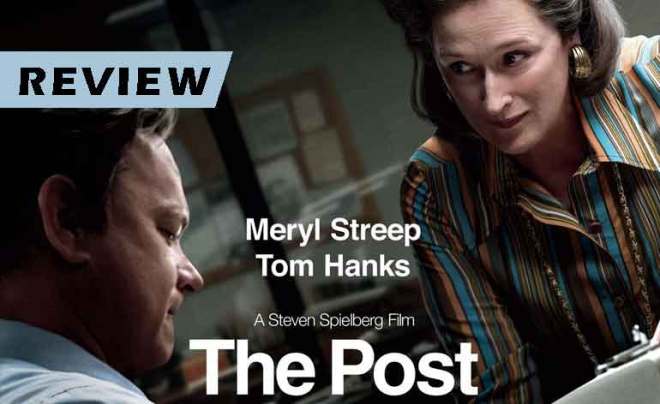
Last week some dear friends joined Peggy and me to see The Post. That’s the Steven Spielberg film detailing the story behind The Washington Post’s publication of the Pentagon Papers in 1971. It stars Meryl Streep as Katherine Graham, the Post’s chief executive, and Tom Hanks as the paper’s editor, Ben Bradlee.

Intentionally or otherwise, The Post ended up revealing a huge reason why readers have increasingly given up on large for-profit news organizations. They turn out to be run by ignorant people, who know far less than those they pretend to inform. The would-be informants are blinded by the profit motive. Moreover, their organizations top-down structures prevent them from even hearing those who work for them. Thankfully, however, The Post unwittingly suggests remedies for the dire situation it depicts – some of which are taking form before our very eyes.

The Post begins with a revealing vignette of the Vietnam War. It shows a world invisible to the newspaper’s sophisticated editors. There, U.S. infantry are seen executing one of their commanders’ signature “Search and Destroy” missions. The maneuver consisted in having poor, terrified disproportionately black and brown twenty-somethings make their way through rainforests they knew nothing about in search of Vietnamese farmers exquisitely familiar with the terrain. The idea was to find the farmers awaiting them in ambush and kill them. According to the strategy, if they did that enough times, the Americans would soon eliminate the peasants and win the war.

Brilliant, no?

Obviously not.

In fact, by 1971, when The Post begins, it was clear to nearly everyone outside the Beltway that the whole idea was stupid, crazy, doomed, and immoral. That was especially evident to those at the wrong end of Vietnamese rockets and machine guns, as well as of those with any shred of religious conscience. Buddhist monks called attention to the war’s immorality as they immolated themselves in Saigon as far back as 1963. So did the Baptist preacher, Martin Luther King when in 1967 he “Broke Silence” at New York’s Riverside Church. The Muslim, Malcolm X, knew it, as did the boxer, Mohammed Ali. The Catholic Berrigan Brothers and the Catonsville Nine knew.

Even Bob Dylan, Paul Simon, Jimi Hendrix, and Joan Baez were in the know. So were the college students demonstrating (with four of them murdered) at Kent State in 1970 – not to mention the throngs of young people brutalized by Mayor Daley’s riot police at the Chicago Democratic Convention in 1968.

Yet with straight faces, the enlightened and secular mainstream media continued to parrot the lies of the generals and politicians. “Great progress is being made,” the war-makers told the official stenographers. “There is light at the end of the tunnel.”

All such statements were about Southeast Asia were known to be false by the ones uttering them. They should have been known by Washington Post editors too. An early sequence in the film shows Truman lying about it, then Eisenhower, Kennedy, Johnson, and, of course, Richard Nixon.

And why did they lie? Was it for reasons of national security or to prevent countries in the region from falling to communism like so many dominoes?  Again, no. According to Robert McNamara in the film, seventy percent of it was to prevent embarrassment on the part of the “leaders” responsible for the enterprise in the first place.

Or as Nixon himself put it when he described the ultimate impact of the Pentagon Papers revelations:

“To the ordinary guy, all this is a bunch of gobbledygook. But out of the gobbledygook comes a very clear thing…. You can’t trust the government; you can’t believe what they say; and you can’t rely on their judgment; and the — the implicit infallibility of presidents, which has been an accepted thing in America, is badly hurt by this, because It shows that people do things the president wants to do even though it’s wrong, and the president can be wrong.”

So, to prevent such irreparable damage to “national security,” the wholesale killing went on for years – long after those responsible for the disaster had concluded the war was genocidal and completely unwinnable. In the end, more than 58,000 U.S. soldiers and two million Vietnamese were sacrificed to the myth of Presidential Infallibility – to conceal the fact that OUR GOVERNMENT IS RUN ON LIES.

And (other than repeating government falsehoods) what was the press doing while all of this was going on? What were The Washington Post’s Katherine Graham and Ben Bradlee doing? According to the film, they were hobnobbing with the liars. They were dining with them in expensive DC restaurants, vacationing with them in Hyannis, posing with them for photo-ops, throwing parties for them, guarding their secrets, and attending meetings with Wall Street insiders and white men in dark suits.

Their big news item? Tricia Nixon’s wedding!

But then Daniel Ellsberg risked his life by releasing irrefutable proof of government duplicity. And all the Washington insiders are suddenly shocked and appalled. As if the idea had never previously occurred to them, they realize the people in the streets, the religious prophets, the boxing champion, the rock ‘n roll singers and the student demonstrators and martyrs were all right after all.

The newspaper magnates had to face the facts. Their hand was forced.

But what were their biggest concerns when faced with the prospect of publishing the truth? Was it informing the American people? No. It was:

  • Selling more papers than their competitor
  • The impact of publication on the stock market value of their product
  • Fallout in the form of experiencing the ire of President Nixon
  • Being excluded from his inner circle as a result
  • And thus, losing market share.

Several conclusions suggest themselves from all of this – one particular, others more general. In addition, a basic remedy becomes apparent.

The particular conclusion is that the capitalist model of for-profit news publication is deeply flawed. Its power structure is entirely top-down. As depicted in the film, it empowered a tiny group of rich white mostly males to make decisions of extreme national import. Workers at the newspaper were treated with disdain.

That dismissal of underlings is portrayed at the film’s turning point. One of the paper’s staff far down the food chain obtains a copy The Pentagon Papers long sought by the paper’s editors. It had been delivered furtively to him by an even lesser nobody – a young woman in tie-dye obviously out-of-place in the newsroom. Shaking in his boots, the staffer tries to deliver his acquisition to Bradlee. However, he’s rudely waved off by his arrogant boss who initially refuses to even to acknowledge him. Then when he finally does get the editor’s attention, the staffer remains completely ignored as he tries to explain the information’s origin. That’s of no interest to his superior. Evidently for Mr. Bradlee, the idea was inconceivable and irrelevant that young hippies might be credible news sources.

That in itself represents a bleak commentary on capitalist workplace relationships.

Even more damningly however is the movie’s implied criticism of the system’s ownership structures. In fact, they placed the ultimate decision about whether or not to release The Pentagon Papers entirely in the hands of, Katherine Graham, a CEO presented in the film as singularly unprepared for such responsibility. She occupied her position of authority only because she inherited it from her deceased husband. At least within the confines of the film, she knew nothing of world affairs, much less about the Vietnam conflict or the inner workings of government – or those soldiers in the rainforest. True, she socialized with presidents and Wall Street high-rollers. But basically, she was ignorant. All her advisers (those white men in black suits) shared only one concern – the paper’s profitability.

Yet decisions of extreme national concern were entirely up to Ms. Graham. Only because of residual remnants of motherly conscience was she finally able to resist market pressures and do the right thing.

And so here come the general conclusions suggested by The Post:

  • In terms of informing the public, white male patriarchy is extremely inefficient.
  • Similarly, capitalist structures of inheritance, ownership, and commodification of information inhibit service of the truth.
  • The closer you are to power, the less you are likely to know about the concerns of ordinary people.
  • The richer you are, the less you are likely to know about the way the world really works for people in the street.
  • The higher up in the military you find yourself, the less you probably know about the disastrous outcomes of your pet theories and tactics.

What to do about it all. . .  As I earlier remarked, the solutions are unfolding before our eyes:

  • Stop trusting the mainstream media as reliable sources of information.
  • Realize that news sources can be co-operatives where all workers have meaningful input and respect, because they co-own the newspaper and need tremble before none of their peers.
  • Trust only such non-profit outlets, like Democracy Now and OpEdNews that rely for funding on viewer and reader support. They deserve trust because they depend on street-level sources for all of their information and analysis of official misdeeds and legislation.

In the end, The Post is worth watching. But it’s not for the reasons Hanks, Streep and Spielberg advance in their promotional commentaries. It’s not because Ms. Graham or Mr. Bradlee were heroic and demonstrate that the system somehow works. In fact, it’s quite the opposite. The true heroes were far down the food chain. The Post merely unveils the system’s severe dysfunctions. It demonstrates the need to put news gathering and publication under the decentralized aegis of workers and activists who refuse to be governed by the venal corporate interests of the military-industrial complex.