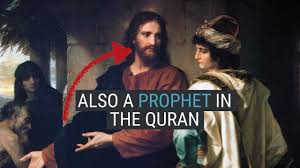
What We Do to the Least: The Most Political Sunday Readings of the Year!

Readings for the Solemnity of Our Lord Jesus Christ, King of the Universe: EZ 34: 11-12, 15-17; PS 23: 1-3, 5-6; I COR 15: 20-26, 28; MT 25: 31-46. 

This Sunday’s readings raise the central political question of our day: what is the purpose of government? Is it simply to protect the private property of the well-to-do? Or is it to sponsor programs to directly help the poor who (unlike their rich counterparts) cannot on their own afford adequate food, shelter, clothing, health care, and education – even if they are working full-time?

For the last forty years or so, the former view has carried the day in the U.S. So it has become fashionable and politically correct even (especially?) for Christians to advocate depriving the poor of health care to help them achieve the American Dream, “ennobling” the unemployed by removing their benefits, criminalizing sharing food with the poor, and “punishing” perpetrators of victimless crimes by routinely placing them in solitary confinement.

Currently, the idea that government’s task is to help corporations even it means hurting the poor, elderly, and newly arrived has been incarnated in Washington’s response to Covid-19. It has amounted to a giant give-away to billionaires including the president’s own family. Today’s poor, middle class and future generations will pick up the tab for that particular wealth redistribution upward.

Today’s readings reject all of that. And they do so on a specifically political liturgical day – the commemoration of the “Solemnity of Our Lord Jesus Christ, King of the Universe.” Yes, this is a political liturgy if ever there was one. It’s all about “Lords” and “Kings” and how they should govern in favor of the poor. It’s about a new political order presided over by an unlikely monarch – a king who was executed as a terrorist by the imperial power of his day. I’m referring, of course, to the worker-rebel, Jesus the poor carpenter from Nazareth.

Today’s readings promise that the rebel – the “terrorist” – Jesus will institute an order utterly different from Rome’s. That order recognizes the divine nature of immigrants, dumpster-divers, those whose water has been ruined by fracking and pipelines, the ragged, imprisoned, sick, homeless, and those (like Jesus) on death row. Jesus called it the “Kingdom of God.” It’s what we celebrate on this “Solemnity of Jesus Christ King of the Universe.”

(Btw: in the eyes of Jesus’ executioners, today’s commemoration would be as unlikely as some future world celebrating the “Solemnity of Osama bin Laden, King of the Universe.” Think about that for a minute!)

In any case, our readings delineate the parameters of God’s new universal political order. To get from here to there, they call governments to prioritize the needs of the poor and those without public power. Failing to do so will bring destruction for the selfish leaders themselves and for the self-serving political mess they inevitably cultivate.

Our first selection gets quite specific about that mess. There the prophet Ezekiel addresses the political corruption Lord Acton saw as inevitable for leaders with absolute power. Ezekiel’s context is the southern kingdom of Judah in the 6th century BCE. It found itself under immediate threat from neighboring Babylon (Iraq). In those circumstances, the prophet words use a powerful traditional image (God as shepherd) to inveigh against Israel’s pretentious potentates. In God’s eyes, they were supposed to be shepherds caring for their country’s least well-off.  Instead, they cared only for themselves. Here’s what Ezekiel says in the lines immediately preceding today’s first lesson:

“Woe to you shepherds of Israel who only take care of yourselves! . . . But you do not take care of the flock. You have not strengthened the weak or healed the sick or bound up the injured. You have not brought back the strays or searched for the lost. You have ruled them harshly and brutally.”

In other words, according to Ezekiel’s biblical vision, government’s job is to address the needs of the weak, the sick and the injured. It is to tenderly and gently bring back the wayward instead of punishing them harshly and brutally.

A great reversal is coming, Ezekiel warns. The leaders’ selfishness will bring about their utter destruction at the hands of Babylon.

On the other hand, Judah’s poor will be saved. That’s because God is on their side, not that of their greedy rulers. This is the message of today’s responsorial psalm – the familiar and beloved Psalm 23 (“The Lord is my shepherd. . . “) It reminds us that the poor (not their sleek and fat overlords) are God’s “sheep.”  To the poor God offers what biblical government should: nothing but goodness and kindness each and every day. Completely fulfilling their needs, the divine shepherd provides guidance, shelter, rest, refreshing water, and abundant food. Over and over today’s refrain had us singing “There is nothing I shall want.” In the psalmist’s eyes, that’s God’s will for everyone – elimination of want. And so, the task of government leaders (as shepherds of God’s flock) is to eradicate poverty and need.

The over-all goal is fullness of life for everyone. That’s Paul’s message in today’s second reading.  It’s as if all of humanity were reborn in Jesus. And that means, Paul says, the destruction of “every sovereignty, every authority, every power” that supports the old necrophiliac order of empire and its love affair with plutocracy, war and death instead of life for God’s poor.

And that brings us to this Sunday’s culminating and absolutely transcendent gospel reading. It’s shocking – the most articulate vision Jesus offers us of the basis for judging whether our lives have been worthwhile – whether we have “saved our souls.” The determining point is not whether we’ve accepted Jesus as our personal savior. In fact, the saved in the scene Jesus creates are confused, because their salvific acts had nothing to do with Jesus. So, they ask innocently, “Lord, when did we see you hungry and feed you, or thirsty and give you drink?  When did we see you a stranger and welcome you, or naked and clothe you?  When did we see you ill or in prison, and visit you?”

Jesus’ response? “Amen, I say to you, whatever you did for one of the least brothers of mine, you did for me.”

But more than personal salvation is addressed here. Jesus homage to Ezekiel’s sheep and shepherd imagery reminds us of judgment’s political dimension. So does Jesus’ reference to the judge (presumably himself) as “king.” And then there’s the church itself which centralizes this climactic scene precisely on this Solemnity of Jesus Christ King of the Universe. All three elements say quite clearly that “final judgment” is not simply a question of personal salvation, but of judgment upon nations and kingdoms as well. To reiterate: in Matthew’s account, the final judgment centralizes the political.

And what’s the basis for the judgment on both scores? How are we judged as persons and societies? The answer: on the basis of how we treated the immigrants, the hungry, ill-clad, sick, and imprisoned.

On that basis, Jesus’ attitude towards the United States as earlier described ought to be quite clear. It’s the same as Ezekiel’s when he predicted the destruction of Israel at the hands of Iraq:

“Depart from me, you accursed, into the eternal fire prepared for the devil and his angels. For I was hungry and you gave me no food, I was thirsty and you gave me no drink, a stranger and you gave me no welcome, naked and you gave me no clothing, ill and in prison, and you did not care for me.”

Ironically enough, that “fire prepared for the devil and his angels” is today embodied in the west coast’s raging fires kindled by our mistreatment of Mother Nature – whom we routinely submit to the most horrendous form elder abuse.

Referencing his own text, Ezekiel might say, “You read it here first.”

Truth-Telling Is Not Anti-Semitism or Holocaust Denial: A Personal Reflection

This is a follow-up to and revision of my last posting about a Zoom call that recently caused a stir on OpEdNews

Rob Kall, the editor in chief of OpEdNews (OEN) recently published a provocative edition of a weekly Zoom call among editors and contributors to his website. It was provocative because the remarks of one of the participants about fascism and the Great Holocaust caused several Jewish attendees to take offense and vehemently accuse him of holocaust denial and anti-Semitism.

Basically, the offending remarks identified Germany’s wealthy Jewish 1% as providing Hitler’s fascism with pretext for his genocide of the other 99%.  (I’ve summarized what was actually said here.) The discussion that ensued led Rob to wisely recommend caution in approaching such sensitive topics.

Rob’s recommendation reminded me of a sobering experience I had years ago in Mexico. It put me in the position of the OEN provocateur. It also caused me to reflect on the role of self-criticism that is part and parcel of the Judeo-Christian tradition and of critical thinking in general.

My Report from Israel

The experience I’m referring to came when I was invited to give a “Report from Israel” after a three-week study tour of Israel, Jordan, and Egypt sponsored by Berea College, where I taught in the Philosophy and Religion Department for 40 years. The invitation came from the Unitarian Universalist (U.U.) congregation of San Miguel de Allende.

My report was heavily influenced not only by our time spent in the Palestinian community, but by a separate visit my wife, Peggy, and I made to the Sabeel Ecumenical Center for liberation theology in Jerusalem. Scholars there connected the Palestinians’ situation with colonialism. They pointed out that ever-expanding Jewish settlements stood in blatant contravention of UN Resolution 242. It was a continuation of the European colonial system that had supposedly been abolished following World War II. In Israel-Palestine, Jewish occupation represented the familiar European settler pattern repeated throughout the former colonies. It had (Zionist) settlers from Germany, Russia, Poland, Hungary, Rumania, and elsewhere arriving unexpectedly in lands belonging for millennia to poor unsuspecting Palestinian peasants, and then confiscating their homes, fields and resources.

With all of that fresh on my mind, the thesis of my U.U. presentation was clear and unambiguous. “The real terrorists in Israel,” I said, “are the Zionists who run the country.” I didn’t consider my basically historical argument particularly original or shocking. The Sabeel Center and Noam Chomsky had been making it for years.

What I didn’t realize was that almost everyone in my audience was Jewish. (I didn’t even know about San Miguel’s large Jewish population – mostly “snowbirds” from New York City.) Nonetheless, my remarks that Sunday stimulated an engrossing extended discussion. Everyone was respectful, and the enthusiastic conversation even spilled over beyond the allotted time.

The trouble started after the head of San Miguel’s Center for Global Justice (CGJ) where Peggy and I were working at the time invited me to publish my talk as an article in San Miguel’s weekly English newspaper, Atención.

I’ll never forget what followed; it was very similar to what occurred during Rob’s OEN Zoom call. All hell broke loose:

  • A barrage of angry letters flooded the Atención pages for the next two weeks and more.
  • As a result, Atención threatened to cancel the column space set aside for the CGJ each week.
  • San Miguel’s Bibliotheca (library) talked about ending the CGJ’s access to meeting rooms there.
  • My article was removed from Atención’s archives.
  • Someone from the AIPAC (American-Israeli Public Affairs Committee) phoned my provost at Berea College reporting me for my inflammatory article, asking whether I really taught there and if my credentials were genuine.
  • The CGJ’s leadership was forced to do some back-pedaling distancing itself from me and my remarks.
  • They lit candles of reconciliation at a subsequent U.U. meeting begging forgiveness from the community and absolution for that mad man from Berea.
  • The guiding assumption in all of this was that my argument was patently false.

In other words, an article that should have stimulated critical thinking and discussion (with CGJ activists leading the way as a voice for Palestine’s voiceless) was met instead with denial, dismissal, and apology.

Biblical Perspective

Of course, I know that criticizing Zionists for their treatment of Palestinians is quite different from the holocaust denial that some on the OEN call perceived a few weeks ago.

It is also probably futile for members of the goyim like me to comment on the topic. Frankly, I’m unqualified to do so, because:

  • My relatives and loved ones weren’t the ones slaughtered in Hitler’s crematoria and gas chambers.
  • They weren’t among the peasants, laborers, shopkeepers, mothers, fathers, grandparents and children whose lives were cruelly wasted and destroyed by the Third Reich.
  • Instead, as Elie Wiesel has pointed out again and again, my Christian religious cohorts were the very ones who incinerated Jews during the week, went to confession on Saturday, were given absolution, received Holy Communion on Sunday, and then returned to their gruesome work the following day.

Yet, it must be acknowledged that my religious tradition is also specifically Judeo-Christian. Its central figure is the Jewish prophet, Jesus of Nazareth, who was a reformer of Judaism and had no intention of founding a new religion. Jesus was not a Christian; from his birth to his death, he was a proud and faithful Jew.

In a sense, then, especially as a theologian in this tradition, I too am somehow a spiritual Semite. (Whether they realize it or not, all Christians are.) Additionally, what separates Zionists from other contemporary neo-colonizers is their claimed religious identity. So, to ignore the role of religion here overlooks the proverbial elephant in the room.  

Recognizing the elephant gives license to say that what really happened in the Zoom conversation and in reaction to my remarks in San Miguel mirrored exactly the traditional dynamic between Jewish prophets like Amos and Jesus and their contemporaries. Both Amos and Jesus (as typical Jewish prophets):

  • Denounced their nation’s elite in no uncertain terms
  • Predicted that their crimes would lead to destruction of the entire nation
  • Were vilified as unpatriotic, self-hating Jews
  • Were threatened with ostracism, imprisonment and death
  • And were often (as in the case of Jesus) assassinated for their prophetic words      

Put otherwise, the Jewish prophets were social critics – the kind of clear-eyed seers who weren’t afraid to blame the powerful in their own nation for crimes that brought harm, ruin, death and destruction to the entire nation. The prophets did not blame the widows, orphans, foreigners, peasants, unemployed, beggars, prostitutes, or the hobbled and ill. Instead, they unstintingly impugned the equivalents of Germany’s Jewish 1% while recognizing that the crimes of those few inevitably brought ruin, pain, exile and death even to the innocent among their own people. It’s simply the way the world works. The blameworthy crimes of the powerful cause suffering, death and massacre for the innocent majority. Pointing that out is simply telling the truth.

Conclusion

Despite what I said about being unqualified to comment on words that seem cruel and insensitive to victimized Jews, I do know something about being tarred with a broad brush. As a Roman Catholic and former priest, I could easily be accused of being part of a worldwide pedophilic ring represented by the priesthood and hierarchy of the Roman Catholic Church. It would even be true to say that the ring has connections to a still wider movement of pedophiles among the world’s elite whose iceberg tip revealed (e.g. in the Epstein scandal) connections with the CIA, mi5, mi6, Mossad, and Mafias of various types throughout the world.

All of that would be true even though I never personally encountered any hint of pedophilia in all my more than 20 years preparing for and direct involvement in the Roman Catholic priesthood. It remains true despite the innumerable saints, martyrs, and holy men and women I’ve known personally and from the otherwise hallowed history of the Catholic Church.

The point here is that as an American, and much more as a former priest, I’ve been deeply associated with horrendous institutional delinquencies that I’d rather not discuss, because they hit too close to my spiritual and cultural identity. In other words, as both a Roman Catholic and a U.S. citizen, I find in my own community, uncomfortable truths that parallel the “accusations” against the Jewish 1% in Hitler’s Germany and against contemporary Zionists. I feel resentment at the very mention of such truths.

Nonetheless, and despite my hurt feelings, truth remains truth. And in the spirit of Amos and Jesus, I must face the facts and draw appropriate conclusions. Doing so draws me out of parochial consciousness and self-defensive denial. It creates room for the dialog and recognitions that might head off further community disaster.

As Paulo Freire puts it in The Politics of Education, all critical thinking begins with self-criticism.

Anti-Semitism, Holocaust Denial, Hurt Feelings: The Bible’s Prophetic Tradition

Rob Kall, the editor in chief of OpEdNews (OEN) recently published a provocative edition of a weekly Zoom call among editors and contributors to his website. It was provocative because the remarks of one of the participants about fascism and the Jewish holocaust caused several other attendees to take offense and vehemently accuse him of holocaust denial and anti-Semitism. The discussion that ensued led Rob to wisely recommend caution in approaching such sensitive topics.

In my capacity as a theologian of the specifically Judeo-Christian Tradition, the conversation made me realize that the type of criticism that offended so many on the OEN call was entirely biblical. It was consonant with the tradition of Jewish prophets like Amos and Jesus of Nazareth who because they denounced the rich and powerful among their countrymen, were roundly accused of being self-hating Jews.

My hope is that summarizing the offending remarks on the one hand along with the outraged responses to them on the other, might highlight the value of the biblical tradition in helping us transcend national and institutional loyalties that prevent frank self-criticism and acceptance of historical fact.

Offending Remarks

Begin by considering the provocative remarks in question. In paraphrase, they ran as follows:

“I never use the word ‘fascist,’” the provocateur said. “I never use the word ‘holocaust’ either. That’s because the simple use of those words implies that one accepts the assumptions of Zionists and right-wing Jews. I refuse to do that, because the words suggest that in the 1930s, the German Jews were entirely innocent, when they weren’t – not by a long shot.

“I mean, no one hates any person or group without reason. For instance, the Shylock character in the “Merchant of Venice” wasn’t simply a product of Shakespeare’s imagination. Shylock had a foundation in reality – in people’s experience.  And like Shylock, elite Jews in Germany gave Germans plenty of reason for hating them. In turn, Hitler used that legitimate animosity towards the few to tar all Jews – even the poorest and most exploited – with the same well-justified brush.

“Let me explain.

“The fact is that the period from the end of the 19th century to WWI was a very prosperous time. Working class expectations for social mobility were on the rise. However, to move up the social ladder – to become an attorney, for instance — one had to belong to certain clubs (like guilds) in order to get clients. Wealthy Jews who were the bankers, attorneys and physicians, controlled the clubs in question; and they wouldn’t let working class people in. That created a lot of bitterness towards Jews in general.

“Before that, under feudalism and until the end of the First World War, the people who owned the land were the nobles, the clergy, the burghers and yes, the Jews. Wealthy Jews were not peasants. They had privileges. For instance, they could carry weapons. They also bought leases to the estates of the nobles (sometimes the size of entire counties). They managed those estates for a profit.

“In other words, wealthy Jews were the interface between the peasants and the nobles.

“At the same time, the nobles mistrusted the Jews I’m describing because (again) they were the bankers, attorneys, and physicians. The nobles resented having to trust the Jews for all those essential services. For their part, the peasants mistrusted the Jews just referenced because they were always in debt to them as their landlords.

“Then following the First World War and the Treaty of Versailles, Germany experienced tremendous inflation that drastically devalued the German mark. The Jews were blamed for that too because they controlled banking. The fact is that Jewish bankers engineered the inflation to bring down the actual costs of repaying the debts demanded by the Versailles treaty. That served the interests of the wealthiest Germans who, like the wealthy today, kept their money not in savings accounts but in stocks, bonds, and real estate. Unlike working class savings accounts, the value of stocks, bonds, and real estate float with inflation. So, inflation helped the rich Germans stay rich, but completely wiped out the country’s workers, both Jewish and non-Jewish. 

“Finally, there came the Great Crash of 1929 that impoverished everyone. So, by the time Hitler came to power in 1933, the Germans, the Poles, the Hungarians and the Austrians were all ready to explode. And, of course, Hitler lit the match with his identification of all Jews as the root of their problems.”

Defensive Responses

Responses mainly from Jewish participants in Rob’s Zoom call came thick and fast.

They included the following:

  • I disagree. People do in fact hate individuals and groups for no reason at all. And Jews in Hitler’s Germany represent a case in point. They were completely innocent. To hint otherwise is simply anti-Semitic and leads to holocaust denial.
  • I don’t think there were very many Jews who managed property for the feudal lords. Yes, there may have been a few Jews who had a lot of power, and there is something to the Rothschilds, and now we have the Zionists that I absolutely hate. However . . .
  • You’re talking about Jews as if they were somehow monolithic. Most Jews were poor.
  • Yes, my own ancestors were holocaust victims and I assure you that they had nothing to do with what you’ve just described.
  • My grandmother was dragged off to Auschwitz with her husband and three children. Their entire village was leveled.
  • I’ve heard these tired arguments before – you know: the Jews keep to themselves, they wear odd clothes, speak their own language, etc., etc. It’s all part of anti-Semitism. I don’t buy any of it.
  • You should be ashamed of yourself. You’re nothing but an anti-Semitic holocaust denier. You’re basically saying that “The Jews deserved what they got in the holocaust. That makes you uncivilized; you should get off this call.”
  • I hope you’re recording all of this, Rob, so we can go back and see who’s misrepresenting what.

Biblical Perspective

Of course, it’s probably futile for a member of the goyim like me to comment on the dialog just summarized. Frankly, I’m unqualified to do so. My relatives and loved ones weren’t the ones slaughtered in Hitler’s crematoria and gas chambers. They weren’t among the peasants, laborers, shopkeepers, mothers, fathers, grandparents and children whose lives were cruelly wasted and destroyed by the Third Reich.

Instead, as Elie Wiesel has pointed out again and again, my Christian religious cohorts were the very ones who incinerated Jews during the week, went to confession on Saturday, were given absolution, received Holy Communion on Sunday, and then returned to their gruesome work the following day.

Yet, it must be acknowledged that my religious tradition is also specifically Judeo-Christian. Its central figure is the Jewish prophet, Jesus of Nazareth, who was a reformer of Judaism and had no intention of founding the new religion that ended up defaming Jews as God killers – and who finished by supporting Hitler’s genocide. Jesus was not a Christian; from his birth to his death, he was a proud and faithful Jew.

In a sense, then, especially as a theologian in this tradition, I too am somehow a spiritual Semite. Whether they realize it or not, all Christians are. So, in that capacity, please indulge the attempt that follows to shed some biblical light on the dialog centralized here.

What really happened in the Zoom conversation just summarized mirrored exactly the traditional dynamic between on the one hand Jewish prophets like Amos and Jesus, and on the other, their contemporaries, especially among the elite in Amos’ 8th century BCE and in Jesus’ first century of our era. Both Amos and Jesus (as typical Jewish prophets):

  • Denounced their nation’s elite in no uncertain terms
  • Predicted that their crimes would lead to destruction of the entire nation
  • Were vilified as unpatriotic, self-hating Jews
  • Were threatened with ostracism, imprisonment and death
  • And were often (as in the case of Jesus) assassinated for their prophetic words      

Put otherwise, the Jewish prophets were social critics – the kind of clear-eyed seers who weren’t afraid to blame the powerful in their own nation for crimes that brought harm, ruin, death and destruction to the entire nation. The prophets did not blame the widows, orphans, foreigners, peasants, unemployed, beggars, prostitutes, or the hobbled and ill. Instead, they unstintingly impugned the equivalents of Germany’s Jewish one percent while recognizing that the crimes of those few inevitably brought ruin, pain, exile and death even to the innocent among their own people. It’s simply the way the world works.

For his part, Amos criticized the wealthy for breaking covenant with Yahweh, their God, the traditional protector of widows, orphans and resident non-Jews. Instead of caring for the poor, the one-percenters, he said, lay on beds of ivory, lounged idly on soft couches, drank the finest wines, anointed themselves with precious perfumes and oils, lived in their luxurious summer houses while underpaying and overcharging the peasant poor. They victimized everyone, even the most innocent. Such crimes brought harm, the prophet warned, to everyone, even the most innocent. Once again, that was simply the law of cause and effect.

Jesus did something similar under the Roman Empire. His prophetic criticism was directed not towards his people’s poor majority; he didn’t blame them. No, he unrelentingly criticized their Jewish exploiters. However, at the same time he knew that the crimes of those powerful would cause untold suffering for everyone. So, he predicted the absolute destruction of Jerusalem where forty years after his death more than one million innocent Jews were slaughtered and nearly 100,000 of his blameless compatriots were captured and enslaved.

To repeat, that’s the way the world works. The blameworthy crimes of the powerful cause suffering, death and massacre for the innocent majority.

Conclusion

Despite what I said about being unqualified to comment on words that seem cruel and insensitive to victimized Jews, I do know something about being tarred with a broad brush. As a Roman Catholic and former priest, I could easily be accused of being part of a worldwide pedophilic ring represented by the priesthood and hierarchy of the Roman Catholic Church. It would even be true to say that the ring has connections to an even wider movement of pedophiles among the world’s elite whose iceberg tip revealed (e.g. in the Epstein scandal) connections with the CIA, mi5, mi6, Mossad, and Mafias of various types throughout the world.

All of that would be true even though I never personally encountered any hint of pedophilia in all my more than 20 years preparing for and direct involvement in the Roman Catholic priesthood. It remains true despite the innumerable saints, martyrs, and holy men and women I’ve known personally and from the otherwise hallowed history of the Catholic Church.

The point here is that as an American, and much more as a former priest, I’ve been deeply associated with horrendous institutional delinquencies that I’d rather not discuss, because they hit too close to my spiritual and cultural identity. In other words, I find in my own community, uncomfortable truths that parallel the “accusations” against the Jewish 1% in Hitler’s Germany. I feel resentment at their very mention.

Nonetheless, and despite my hurt feelings, truth remains truth. And in the spirit of Amos and Jesus, I must face the facts and draw appropriate conclusions. Doing so draws me out of ghettoized consciousness and self-defensive denial. It creates room for self-criticism, dialog and recognitions that might head off further community disaster.

Jesus & Rent Strikes: Violent or Non-Violent?

Readings for 27th Sunday in Ordinary Time: Isaiah 5: 1-7; Psalm 80: 9-20; Philemon 4: 6-9; Matthew 21:33-43

During the COVID-19 hiatus, I watched in its entirety Ken Burns’ and Lynn Novick’s PBS production “The Vietnam War.” The series has ten episodes, each about an hour and a half long.

I bring it up because the viewing experience has relevance to this morning’s Gospel reading which describes resistance to a landlord system similar to the one that provoked Vietnam’s peasantry to take up arms.

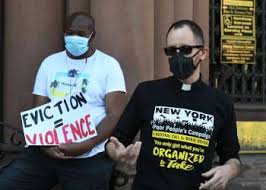
Closer to home, the parable is also relevant to our current Corona Virus context, where unemployed renters will soon be required either to pay their rents or risk eviction. Their dilemma, like those of Jesus’ audience 2000 years ago is whether to pay those rents or to join a general rent strike. Additionally, Jesus asks to what extent citizen violence might be justified as a strategic option as they resist paying rent.

Ironically, both the Burns and Novick film series and this morning’s gospel obscure the questions just posed. The producers of “The Vietnam War” avoid the rent question altogether. As for Matthew the evangelist, he completely allegorizes Jesus’ parable to similarly obscure its central question about absentee landlordism, rent strikes, and the role of violence in social change.

Vietnam & Rent Strikes

Let’s begin with Burns and Novick. The official story they tell is that of a geopolitical struggle between China and Russia on the one hand and the U.S. and France on the other. So, the film’s narrative is dominated by maps depicting huge swaths of geography (China and Russia) looming menacingly over Vietnam. The maps indicate that Vietnam along with the rest of “French” Indochina (including Laos and Cambodia) were threatened by monolithic communist takeover.

U.S. officials one after another describe their alarming “domino theory” contending that if Vietnam were “lost” to communism, so would Laos, Cambodia, Korea, Japan, the Philippines and the rest of Far East. It wouldn’t be long before Ho Chi Minh’s forces would be landing in Hawaii and then in California.

So, viewers are asked to believe that in the footage showing huge numbers of Vietnamese civilians (including the elderly, women and children) moving equipment, building bridges, and ferrying supplies, we are simply witnessing mindless agents of China and Russia. The Vietnamese were somehow persuaded to risk their lives (four million of them were killed in the conflict) to advance the totalitarian cause of Sino-Soviet world conquest.

As John Pilger and others have written, that simply doesn’t stand to reason. For one thing, there was no monolithic alliance between Russia and China. Any semblance of that lay in ruins between the years 1960 and 1989.

That is, for the Vietnamese, what they call “The American War” (1960-75) could not have been fought on behalf of China or Russia. Rather, the conflict represented a struggle against colonial rule by French and American forces. It was also fought against a rent system that had peasants paying predatory tribute to absentee landlords. The latter were holed up in Saigon along with other beneficiaries of deteriorating colonial arrangements including its dysfunctional army, government officials, and participants in the supporting infrastructure.

Meanwhile, outside of Saigon, the peasants’ revolutionary army (the Viet Cong) defended farmers against rent collection. They had the peasantry stop traveling to Saigon to pay their land fees. This, they said, would force representatives of the landlord class to venture out into territory controlled by the Viet Cong to collect their money or in-kind revenue. And there in the countryside they would be duly slaughtered.

In other words, patriotism and the peasants’ immediate economic interest, not geo-political considerations, provided their main motivations for resistance to a colonial rental system that had long exploited them and caused their families to starve.

Jesus & Rent Strikes

All of this has relevance to this morning’s Gospel episode where Jesus tells a story that parallels the situation I’ve just described. Jesus and his audience too were living under an imperial system not unlike Vietnam’s. The Romans controlled Palestine using tactics highly similar to those of the French and Americans in Indochina. The system’s administrators, armies, police, and hangers-on were all holed up in Jerusalem protected by Roman legions.

Meanwhile, absentee administrators and landlords kept the province’s peasants impoverished by exacting rent and taxes that the farmers detested. The latter resisted accordingly – at times in Israel’s history forming armies of resistance similar to the Viet Cong. One of those militias was known as the Zealots.

In any case, the parable centralized in this morning’s gospel has Jesus problematizing a situation of violent peasant conflict over rent collection. In so doing, Jesus, no doubt, provoked a spirited discussion among his listeners about colonialism, landlordism, and about violent vs. non-violent resistance.

Jesus’ story goes that an absentee landlord has rented out his vineyard. Peasants are resisting payment. So, the man in the Big House sends out no doubt well-armed rent collectors. After the first ones are murdered by the farmers, he sends out what was probably a small army of “enforcers.” But the peasants successfully defeat them too. Eventually, the landlord gets more serious. His own son heads up a collection force probably much larger and better armed than its predecessors. But surprisingly, the renters wipe them out as well. They assume ownership of the land in question presumably under some ancient version of the revolutionary slogan “Land to the tiller.”

That said, the Master articulates the problem that certainly provoked spirited discussion in his audience. “What will happen,” Jesus asks, “to the revolutionaries demonized as ‘wicked’ by the landowning class?”

No doubt, some in Jesus audience would say they weren’t “wicked” at all, but heroic champions of the exploited. They would applaud their armed resistance. Others though joining the applause, might point out that the peasant victory would be short-lived and doomed.

These more cautious discussants would hold that the better-armed and trained forces of the landowners and their Roman sponsors would eventually prevail with disastrous results for the entire province of Palestine. Accordingly, they might advise nonviolent resistance to the system in question. (There were, by the way, at least three such forms of nonaggressive struggle in Jesus’ first century context.)

It is unlikely that any in Jesus’ audience would defend the imperial status quo the way Matthew’s allegorized retelling of the parable seems to do. Fifty years after Jesus death the anonymous Jewish author called by that name even goes so far as to imply identification of the absentee landlord with God and the landlord’s son with Jesus himself. Such identification would have been possible around the year 80 or 85 when the Gospel of “Matthew” was written following the utter defeat of Jesus’ people by the Romans in the year 70.  That same identification would, of course, have been abhorrent to Jesus listeners and thus impossible in the Master’s revolutionary context.

Considerations like these – about the similarities in revolutionary situations separated by 2000 years – might help viewers better understand the causes of the Vietnam War and other conflicts even closer to our own day. Clearly, I find those causes obscured in the Burns and Novick documentary despite its very evident artistic merits.

Conclusions

Several conclusions suggest themselves from the considerations just advanced. They have to do with Jesus himself, with rent, and with considerations of violent vs. non-violent resistance.

First of all, Jesus:

  • As originally told, Jesus’ parables weren’t nice little five-minute vignettes. They were meant to stimulate long lively discussions as indicated in this morning’s reflection.
  • As thought provocateur, Jesus was wildly popular among peasants and the dispossessed on the one hand and hated by the religious-political establishment and occupying Romans on the other, not because of one-dimensional religious teachings, but because he constantly connected his people’s faith with issues like land reform, workers’ wages, debt and rent.
  • Those are the same connections that put religious leaders in danger and in early graves today, whether they’re Jewish, Christian, or Muslim.

Secondly, rent:

  • According to Jesus’ teaching, land reform, wages, and rent were more matters of faith than what we term “going to church” or saying the right words about God, the Bible, sexual behavior, or “thoughts and prayers.”
  • For the dispossessed including basically conservative peasant farmers (in ancient Palestine, Vietnam, or in the United States) such local issues are what lead to revolutionary action, not geopolitical considerations.
  • That is, like politics, all revolutions are local and center on issues of exploitation involving food, shelter, and dignity.

Thirdly, violence:

  • High rents imposed on poor people are an egregious form of violence.
  • Even violent resistance to such deprivation of the fundamental human right to shelter and subsistence is entirely justifiable as self-defense.
  • The U.S. Founding Fathers said something like that.
  • However (as indicated by the “more cautious discussants” referenced above) such secondary violence can be counterproductive in terms of the absolute destruction wreaked in response by state and empire.
  • Ironically too, the propaganda arms of state, empire, and church (including someone like Matthew the evangelist) excel at lastingly branding justifiable violence by the poor and oppressed as (to use Matthew’s word) “wicked.”

Finally, the very least people of faith can do today is to support rent strikers and to help others understand motivations for violent response in places like Vietnam, Lexington and Concord – or the streets of New York today. Equating state and imperial violence with the self-defense and counterattacks of the poor represents a false equivalency. Thoughtful people of faith must reject it.

Unforgetting the Past: The Karmic Roots of U.S. Border Problems

Readings for the 24th Sunday in Ordinary Time: Sirach 27: 30-28:7; Psalm 103: 1-4, 9-12; Romans 14: 7-9; Matthew 18: 21-35. 

This week’s readings are about forgetting and unforgetting. They emphasize our tendencies to remember, rehearse and perversely treasure wrongs done to us, while denying, ignoring or dismissing those we’ve done to others. The wrongs in question can be both personal and/or political.

For today, let’s leave aside the myriad personal grievances we all nurse.  

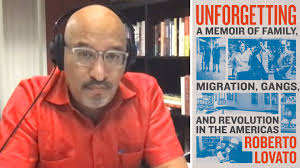
Instead, let me focus on political resentments and point out that this week’s selections are especially relevant to an interview many of us may have seen last week on Amy Goodman’s Democracy Now. The telecast spent time with Salvadoran journalist Roberto Lovato who has just published his own memoir called Unforgetting: A Memoir of Family, Migration, Gangs, and Revolution in the Americas.

Problems at the Border

In tune with our readings, the book addresses the topic of our collective amnesia about the true causes of immigration problems and their uncomfortable cure. In Lovato’s case, both remembering and forgetting connect more than four decades of destructive U.S. policy in Central America with the refugees and asylum seekers at our southern border mostly from El Salvador, Guatemala and Honduras. Those three countries, Lovato pointedly recalls, were absolutely destroyed by counter-insurgency wars that go all the way back to 1932.

Without “unforgetting” those disasters, the author insists, we can understand neither the border crisis nor the gang phenomenon that causes it.

To begin with, Lovato reminds us why almost no one outside El Salvador remembers “la matanza” of ‘32. Instead, that massacre along with its more recent reprise at El Mozote in 1981, have been shoved down our Orwellian memory hole by the U.S. and Salvadoran states whose very job is to destroy records and manufacture the mass amnesia that afflicts American culture.  

Similarly, very few of us connect our contemporary border crisis with U.S. Central American policy during the 1980s. Virtually no one links the Central American policies of the Carter, Reagan, Bush I, Clinton, Bush II, Obama, and Trump administrations to immigrant prisons and baby jails.   

Nonetheless, on Lovato’s analysis, the connections are there for the rescue.  La matanza, he says, was one of the most violent episodes “in world history in terms of the numbers of people killed per day, per week, in a concentrated place.” The massacre at the hands of a U.S. supported military government killed thousands upon thousands of mostly indigenous Salvadorans.

As for El Mozote, some can still remember that horrendous U.S. crime where nearly 1000 unarmed Salvadoran villagers were slaughtered by U.S.-trained forces.

In fact, El Mazote encapsulates the entire disaster of American policy towards Central America foreshadowed in la matanza and resumed with a vengeance all during the 1980s. Under its aegis, entire towns were destroyed; homes were set ablaze and jobs destroyed; families were decimated; sons and husbands were killed; wives and daughters were systematically raped; union leaders, social workers, and teachers along with liberationist priests and nuns were assassinated without pity.

Disgracefully, much of the destruction was financed by CIA operations that flew narcotics from Central America to Florida and carried guns and ammunition back to U.S.-supported terrorist troops in Salvador, Guatemala, and Honduras – not to mention the Contras in Nicaragua. 

And of course, in the aftermath the militarily decommissioned terrorists continued their lucrative involvement with narcotics. They became the drug gang kingpins and foot soldiers who in turn have driven so many families northward.

All of that, Lovato repeats, must be “unforgetted” if we North Americans are to have any hope of solving our problems of immigration, gangs, drugs, and social justice. Our country owes extensive reparation to Central Americans.      

Today’s Readings

So, with all of that in mind, please consider this Sunday’s selections. On the one hand, they centralize the divine amnesia of Jesus’ Great Father-Mother God regarding our personal and communal shortcomings that some refer to as “sin.” On the other hand, our Divine Parents’ compassionate forgetfulness is contrasted with our own petty preoccupation with the way we imagine others have somehow done us wrong.

Sirach, the Psalmist, Paul, and Jesus all remind us of how easily we forget the way we’ve abused “strangers” (like those at our border) whom the Master identified as our very sisters and brothers. Ironically, unforgetting them is the karmic key to our own forgiveness and liberation.

In any case, what follow are my “translations” of today’s biblical excerpts. You can find the originals here to see if I’ve got them right. 

Sirach 27: 30-28:7: Karma is a Law of the Universe. LIFE will treat you as you treat your neighbor. If you’re vengeful, you’ll inevitably experience others’ revenge. If you’re always angry, life will seem cruel. But if you’re forgiving, Life itself will forgive you. So, forget about your own fictitious wounds. Instead practice forgetful mercy, forgiveness, and compassion. After all, life is short. Vendettas will mean nothing to you on your deathbed.

Psalm 103: 1-4, 9-12: Our Divine Mother herself sets the example. She is patient, forgiving, kind, generous and compassionate. She doesn’t remember any of our faults – not even grave “sins” we fear may have destroyed our lives. Far, far from such guilt, it’s as if she never witnessed our shortcomings at all.

Romans 14: 7-9:  Practicing such forgetfulness, none of us will have anything at all to fear from death which will simply be surrender to the One in whom we have always lived and moved and had our being. This is what Jesus himself showed us by the example of his own life.

Matthew 18: 21-35: When Peter asked him about the limits of forgiveness, Jesus said there are none at all. “Or maybe” (he joked) “you can stop forgiving after the 490th time – but be sure to keep track, Peter, as I know you will. Don’t let yourself go over 500.” (He said that with a gentle smile.) “In any case, remember what Sirach said about karma. If you’re generous to others, Life will treat you kindly; If not, you’re creating your own tragic misfortune – and that of your entire family. It’s you, not God who creates your inevitable destiny.”

Conclusion

Yes, Karma is a law of the universe. All the world’s great spiritual traditions teach that simple profound truth. What we do to others will eventually come back to haunt us. There’s no getting around it.

The problems experienced at our borders are simply blowback from our country’s own criminal missteps in the world. While we imagine that we’re threatened and wronged by those at our border, simple unforgetting reminds us that we’re actually the ones who have victimized the ones seeking refuge and asylum. Actually, we have nothing at all to forgive them. Instead, we owe them enormous repair.

No, it’s the ones at our border who have so much to forgive us. So far, they’ve been generous in doing so – well beyond the 500-mark specified by Jesus. Both our karmic liability and our debt of gratitude to our southern siblings are huge.

We’re indebted to Roberto Lovato for helping us unforget all of that.

Beware: Conspiracy Theorists May Be Prophetically Correct

Readings for the 22nd Sunday in Ordinary Time: Jeremiah 20: 7-9; Psalm 63: 2-9; Romans 12: 1-2; Matthew 16:21-27

This Sunday’s readings are about truth, the world’s rejection of the same, and about the truth-teller’s willingness to take the consequences – even if they entail loss of one’s life.

The readings are extremely relevant to our moment in history. There, the current occupant of the White House has from day one (and before) challenged conventional ideas about truth itself. His administration popularized the phrases “fake news” and “alternative facts.” The Washington Post alleges that in less than one year, the chief executive told more than 2000 lies.

In the meantime, sources like QAnon have spread right-wing conspiracy theories that have many scratching their heads about what to believe. For instance, are Q’s assertions true that:

  • Antifa is a sworn enemy of Black Lives Matter (BLM)?
  • BLM itself is funded and controlled by George Soros and left-wing think tanks?
  • President Obama is really a Muslim?
  • Kamala Harris is ineligible to be POTUS?
  • Sandy Hook was a false flag event staged to justify disarming U.S. citizens?
  • Prominent Democrats have run a child-trafficking ring out of a D.C. pizzeria (“Pizzagate”)?
  • The entire world is run by a Satan-worshipping child sex-trafficking organization?

In the context of COVID-19, beliefs are widespread that:

  • COVID-19 is a fake “pLandemic” orchestrated by a “deep state” to eliminate democracy and reset the economy even more in favor of the rich.
  • Dr. Anthony Fauci is a key player in starting the pLandemic – to make billions for himself.
  • But the ultimate goal is to set up a New World Order under a single government.
  • Face masks and social distancing are means to deprive unsuspecting citizens of their civil liberties.

Debate Among OpEd Editors

With all of that in mind, a lively debate has erupted for the past couple of weeks among OpEdNews senior editors. It was sparked by an editorial penned by the website’s editor-in-chief (EIC), Rob Kall. Rob has taken a courageously firm editorial stance against articles that reflect the right-wing talking points of view just listed. According to Rob, they’re all “bad guy” theories. Moreover, the uncritical use of right-wing talking points and language (e.g. “deep state,” “pLandemic,” and “New World Order”) only serve to boost and promote right wing messaging. The EIC wrote, “When you use the language of the enemy, you help the enemy . . . So, stop using their language.”

For me, Rob’s stance makes a lot of sense. But I can also see how others (excluding the senior editors) might label it just another example of “cancel culture?” Are we to cancel well-written and well-documented articles because of their conspiratorial language?

More importantly (at least in the context of this Sunday homily) can we get away with classifying those we disagree with as “bad guys” or as “the enemy?”

[Believe me, I ask that question with some trepidation. I’m uncomfortable with the theories listed above. Many of them (not all – see below) seem outrageous. Most often, I think of Donald Trump and his cohorts as “the enemy” – as “bad guys.”]

Today’s Readings

However, such reflections bring me back to this Sunday’s readings and their faith underpinnings. All of the readings underwrite truth alternatives severely in conflict with unquestioned cultural convictions. They point to the embrace of those who hold “unacceptable” opinions.

And it’s not just the Judeo-Christian tradition I’m talking about. Instead, I’m referencing all the non-dual spiritualities that find home in all the world’s Great Religions. In their mystical forms, they all agree that there’s no distinction between us and those we’re tempted to “other” as bad guys and enemies. Despite our understandable antipathies, none of them is cancelable any more than we would like to be.

Even more familiarly, Jesus the Christ recommended loving “your neighbor as yourself” (i.e. because she or he is yourself). That’s because (as Marianne Williamson puts it) “There is really only one of us here.” Ken Wilber comes close to saying the same thing when he observes (uncomfortably for me!) that given their level of consciousness, everyone is right — at least partially. And then there’s Deepak Chopra who says everyone’s doing the best they can.

Again, with all of that in mind imagine, for instance, how Donald Trump or QAnon partisans would relate to today’s readings. Please check out the originals for yourself here to see what I mean. My “translations” run as follows:

Jeremiah 20: 7-9: Life is deceptive. When I explain how, everyone laughs and makes fun of me. Yet, despite my resolutions to stop talking, I cannot remain silent about the violence and outrages that no one else seems to see. My compulsion to tell the truth is like an out-of-control fire burning inside me.

Psalm 63: 2-9: In fact, truth-seeking is synonymous with my thirst for Life Itself. It’s like rain falling on parched soil. It involves an encounter with the Force that some call “God.” That meeting is what life itself is about. Hence despite rejection by the world, speaking truth is more satisfying than a rich banquet. It’s like water for my scorched soul.  

Romans 12: 1-2: So, sisters and brothers, be willing to endure rejection for your stubborn non-conformity – for your commitment to the true, the good, and the beautiful – for your enlightenment. No other way of life is worth living.

Matthew 16:21-27: Commitment to truth always brings some type of martyrdom. Jesus saw that clearly. However, he refused to be dissuaded from following his prophetic script – even by his closest friend. “STFU,” he told Peter in no uncertain terms. “You too,” he said, “and anyone wishing to follow me must be willing to endure even capital punishment. Yes, opposing the lies of church and state is more important than life itself.” 

The Unresolved OpEd Debate

So, if life is so mysterious and even deceptive, if our faith demands nonconformity and taking the heat for unpopular opposition to church and state, if transcendent truth really lies 180 degrees opposite of routinely accepted cultural bromides, what are we to do about “bad guys,” “enemies,” and their apparently wild conspiracy theories?

First of all, we must recognize that bad guys indeed exist. There are criminals in the world and the worst of them reside not behind bars, but behind desks in D.C., in state capitals, and on Wall Street. It may even be that CIA or NSA operatives are behind the more outlandish conspiracy theories in question.  Clearly, many of these perps belong in jail. And most of us look forward to the day of their incarceration.

Secondly, however, we must recognize that the bad guys are emphatically not the people writing for OpEdNews. In Ken Wilber’s terms, those persuaded by the earlier-referenced theories might simply be coming from mindsets Wilber calls “egocentric” or “ethnocentric.” These are not negative terms; all of us, even if we’ve transitioned to “world-centric” or even “cosmic-centric” levels, have passed through those stages (no one can avoid them). In other words, following the thread I’m trying to develop here, and given their stage of evolutionary development, these people are right and are doing the best they can.   

Thirdly (and most uncomfortably for me), it may be that the so-called “conspiracy theorists” are objectively correct or at least partially so. Here I’m thinking specifically about a video interview of Sasha Stone I posted on OEN a few weeks ago. There Stone (who sometimes appears angry and even unhinged) does endorse that claim that the world is run by a cabal of pedophiles and Satan worshippers. More importantly however, he’s endorsed in that position by Robert David Steele, an ex-CIA officer, who seems perfectly sane, objective, and entirely rational. Steele claims that 22,000 children are kidnapped and “disappear” every year into an underworld of pedophilia and Satan worship. That conclusion is supported by an entire panel of sober scholars and jurists belonging to Stone’s International Tribunal for Natural Justice.

What is one to think about all that – especially given what’s been revealed in the Jeffrey Epstein/Ghislaine Maxwell saga? Is that merely the tip of an iceberg?

Conclusion

Given the thrust of today’s readings (and even discounting them if you prefer) it could very well be possible that the conspiracy theorists now under threat of cancellation from OEN pages might be right – or at least partially so. With the readings’ recommendations of nonconformity and prophetic resistance ringing in my ears, here’s where I see that they might well be on the right path:

  • By his outrageous lies, Donald Trump has clearly pulled the curtain back from our culture’s ethnocentric prevarications. As the very incarnation of egocentrism, he has rendered untenable all claims to American exceptionalism. In that sense, he himself is a great (though completely unconscious) prophet.
  • Secretary of State and former CIA director, Mike Pompeo, has been even more explicit in his admissions about our government’s systemic lies. Pompeo’s predecessor under President Reagan, William Casey was more honest still. He said, “We’ll know our disinformation program is complete when everything the American public believes is false.” (Think about that! How can we trust anything our government says?)
  • Trump, Pompeo, Casey and the revision of American history stimulated by their policies have shown that all of us have been duped about our country’s foundations and “noble traditions.” Most of it is fake.
  • Consequently, everyone should presume without contrary smoking gun evidence that our politicians (and mass media, church leaders, scientists and educators) are lying, though often unconsciously.
  • NOTHING is immune from such well-founded skepticism – including COVID-19, mask wearing, and social distancing.
  • Moreover, the Epstein/Maxwell saga coupled with the worldwide pedophilia scandal within the Roman Catholic Church and the massive profits gained from child pornography have all revealed the centrality of child sexual abuse that few previously suspected. (As Robert David Steele puts it: the five pillars of U.S. policy are guns, gold, cash, drugs, and child trafficking.)
  • Those same revelations have demonstrated that our country’s ruling class (and the world’s!) are corrupt to the bone. NOTHING – no crime, no degeneracy – is beyond them. The swamp is deep and fetid.
  • Joe Biden and the Democrats will be no better than Mr. Trump in draining that swamp. They have no interest in doing so.

Of course, I could go on with my list. However, the point is that there is more overlap than one might think between the convictions of those on the right and progressive readers and contributors to OEN. As uncomfortable as it might be, leftists must not cancel, but rather dialog with “the enemy” and seriously investigate their claims.

Jesus Confers Power on the Poor to Unlock Empire’s “Gates of Hell”

Readings for 21 Sunday in Ordinary Time: Isaiah 22: 19-23; Psalm 138: 1-8; Romans 11: 33-36; Matthew 16: 13-20

Of course, you’re all following the news, I know. It’s so discouraging, isn’t it? Portland, Gaza, Syria, Yemen, and U.S. support for all that violence.

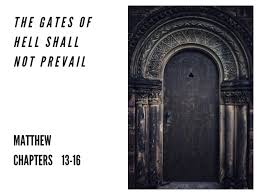
It all reflects such one-dimensional thinking. It gives the impression that in the eyes of public officials from the militarized cop in the street to the POTUS himself, the only solutions to social problems are found in shooting, tear gas, torture, and Hell Fire Missiles? In sum, “solutions” uniformly involve locking the poor and people of color behind “the Gates of Hell” centralized in today’s Gospel reading.

Gates of Hell Locked by the Rich

In every case, diplomacy, social reform, and negotiation seem out of the question. In fact, diplomacy has become a vanished art. Who needs it? After all, those damn “others” – be they Black Lives Matter demonstrators in Portland, Houthis in Yemen, or Palestinians in Gaza – can’t possibly have legitimate grievances. They simply must be brought to heel by force – shooting, bombing, and killing their children and youth. We’re made to believe that alternatives such as dialog and working out problems by negotiation and compromise are signs of weakness. So, violence is the first resort, never the last. It’s the order of the day in a world ruled by machismo, revenge, violence, and the law of the strongest.

When we’re not bombing, we’re building walls with locked gates. Our “gated communities” and locked doors wall us off from unsightly ghettos and the realities of the world’s poor mostly non-white majority. Better to build a wall along the Mexican border and then lock the gates, throw away the key and pretend that such barriers solve the problem of farmers and their children driven off their land by globalization, poverty and gangs. Better to justify it all by invoking the Ultimate White Privilege: “I feared for my life!” (Whites are the only ones who can get away with that one.)

Today’s Readings

All that brings us to today’s Liturgy of the Word. It’s about God’s interest in matters like those just enumerated – about politics, oppression and the liberation of non-white people like Jesus, Houthis, Palestinians, and residents of Chicago’s south side. It’s about breaking bonds and opening the gates of hell so that every Inferno can be transformed into the Kingdom of God. It’s about refusing to be discouraged even though the flow of history makes Jesus’ prayer, “Thy Kingdom come” seem like an impossible dream.

Start with today’s first reading. There the prophet Isaiah has God telling a courtier named Shabna to step down in favor of a man called Eliakim. Little is known about either one. The reason for including the reading today is apparently to establish today’s central point that God is concerned with the world of politics, and that (despite appearances) God is ultimately in charge of what happens in that sphere. There can be no separation of politics and religion in the divine dispensation.

The responsorial psalm continues the “this worldly” theme set by the first reading. It had us all singing “Lord, your love is eternal. Forsake not the work of your hands.” Once again, emphasis on “the work of God’s hands” reminds us of God’s commitment to this world – including ghettos, those living under endless bombing campaigns in Gaza and Yemen, and rich people like Mr. Trump and Saudi Princes making life unbearable for the world’s largely non-white poor. The psalm goes on to praise Yahweh for divine kindness, truthfulness, encouragement of the weak, care for the impoverished, and God’s alienation from their proud oppressors – again all connected with life here and now.

Then in today’s Gospel selection, we find a reprise of the very reading we shared just two months ago on the “Solemnity of St. Peter and Paul.” We practically know this passage by heart.

The reading centers on three titles associated with Jesus of Nazareth – Son of Man, Son of God, and Christ. All three names are politically loaded – in favor of the poor rather than the privileged and powerful.

Jesus asks his friends, “Who is the Son of Man in history and for us today?” (Scripture scholars remind us that the “Son of Man” is a figure from the Book of Daniel. He is the judge of all those who oppress the People of God whether they’re Egyptians, Assyrians, Babylonians, Medes, Persians, Greeks or Romans. He is “the human one” as opposed to a series of monstrous imperial beasts which the author of Daniel sees arising from the sea against God’s poor.)

So, Jesus’ question boils down to this: who do you think has taken the strongest stand against Israel’s oppressors? Jesus’ friends mention the obvious heroes, Elijah and Jeremiah. But in the end, they settle on a contemporary political prisoner in King Herod’s version of Abu Ghraib. He’s John the Baptist who was Jesus’ mentor. (According to Jesus, John was the greatest of all the prophets of Israel (MT 11:11). He’s the Son of Man, they say.

Having set that anti-imperial tone, Jesus then asks the question, “What about me? Who do you say that I am?” No question could be more central for any of us pretending to follow the Teacher from Nazareth. How we answer determines the character of the path we walk as Jesus’ would-be disciples in a world filled with Portlands, Yemens, Gazas, Hell Fire Missiles and militarized cops. Our answer determines whose side we are on – that of Mr. Trump or with the innocent victims of U.S. bellicosity.

Matthew makes sure we won’t miss the political nature of the question. So, he locates its asking in Caesarea Philippi – a city Herod obsequiously named for his powerful Roman patron. Herod had commemorated the occasion by minting a coin stamped with the emperor’s countenance and identifying him as “the Son of God.” Caesar was also called “the Christ,” God’s anointed. Good Jews saw all of that as idolatry.

So, Peter’s answer, “You are the Christ, the Son of the Living God” has the effect of delegitimizing Caesar and his empire. It’s also a swipe at King Herod. Peter’s response couldn’t be more political. Jesus, not Caesar is king, God’s anointed, the Son of God.

Neither could Peter’s words be more spiritually meaningful and heartening for those of us discouraged by events in those places afflicted by permanent U.S. belligerence.

Gates of Hell Unlocked by the Poor

The encouragement is found in Jesus rejoinder about the “gates of hell” and the “keys of the kingdom.” Jesus says, “Blessed are you, Simon son of Jonah . . . I will give you the keys of the kingdom of heaven . . . whatever you bind on earth will be bound in heaven, and whatever you loose on earth will be loosed in heaven.”

What powerful words of encouragement! They say that the world’s ultimate decision-makers are poor people like the fisherman, Peter, and like the rest of Jesus’ followers – the beggars, prostitutes, and victims of Roman imperialism. It’s what they decide — what they bind on earth — that reflects God’s divine order. History is on their side, not on that of the apparently invincible.

For those who would join Jesus on “The Way” to God’s Kingdom, Jesus’ words disclose the very key to life’s meaning. In effect, Jesus says, “Here’s the key to opening ‘the gates of hell’ and transforming life’s Infernos into God’s kingdom: all our actions – even apparent failures like my coming crucifixion – have cosmic significance. Don’t be discouraged even when the agents of hell end up killing me – as they inevitably will.”

Conclusion

In other words, we may not be able to see the effect of resisting empire and its bloody agents in the short term. But each act has its effect. God’s Kingdom will finally come. That’s our faith! It’s what gives meaning to our lives of resistance.

In today’s second reading, Paul elaborates the point. He says it’s not always apparent what God is up to in the world. After all, the ways of Transcendent Reality are deep and beyond comprehension – even by the wisest human beings. We may not be able to see God’s (political and personal) purposes at close range. But ultimately their inscrutable wisdom will become apparent (ROM 11: 33-36).

Or as Martin Luther King put it: “The arc of the moral universe is long, but it bends towards justice.”

All of us need to embrace that wisdom, refuse discouragement and continue doing what we can to resist the forces of empire and unlock those “Gates of Hell.” We may not live to see them swing open. But they will. That’s our faith.

U.S. Wars on Muslims Continue Even During CV-19 & BLM Uprisings

Readings for the 16th Sunday in Ordinary Time: Wisdom 12: 13, 16-19; Psalms 86: 5-6, 9-10, 15-16; Romans 8: 26-27; Matthew 13: 24-43

Despite what you might hear in church today, this Sunday’s liturgy of the word is not about the end of the world and the condemned spending eternity in endless fire. So, don’t be confused by the words Matthew puts in Jesus’ mouth about an afterlife filled with “weeping and gnashing of teeth.”

No, today’s readings are much more relevant than that. They’re actually about non-violent resistance in a context of imperial aggression and war. They suggest that Americans withdraw our support for the U.S. military and from Washington’s policy of state terrorism against impoverished Muslims in the Middle East. (Need I remind us that even during the Covid-19 crisis and Black Lives Matter uprising, U.S. wars against Muslims continue unabated?)

At the same time, the day’s three parables attributed to Jesus also imply a message for Middle Eastern followers of Mohammed. Today, as the principal victims of (U.S.) imperialism, Muslims are the closest analogue to the Judeo-Christian understanding of “People of God.” So, all three readings call followers of Islam [which recognizes Isa (Jesus) as the second greatest of the prophets (after Mohammed and before Abraham)] to lay down their arms in favor of Jesus’ own non-violent resistance.

Today’s Readings

To get my meaning, begin by considering my translations of today’s exceptionally beautiful readings. As usual, you’re advised to check the originals here to see if I’ve got them right:

Wisdom 13: 13, 16-19: Our Divine Mother loves all her creatures, even unbelievers. She condemns no one. Her love is the source of justice, easy forgiveness and of human courage. Consequently, the truly powerful on earth are also merciful, lenient, gentle and kind. None of us should worry about our “sins.” They are all forgiven.

Psalms 86: 5-6, 9-10, 15-16: Yes, our Divine Mother is good, understanding and kind. So, in time of trouble, we should feel confident asking for her help. She’s the One we’re all looking for. Deep down, we all want to be like her – forgiving, graceful, patient, gentle and faithful. At our profoundest level, we are!

Romans 8: 26-27: In fact, our Mother is there even for those who don’t know how to pray. Weak, painful groanings are enough. She knows what they mean. She knows we’re trying to do our best.

Matthew 13: 24-43: Our Mother’s world is like a garden sown with radiantly beautiful flowers of all kinds and colors. However, the spiritually unevolved sow weeds of hatred and violence to ruin that splendid paradise. Don’t resist them in kind. That only makes matters worse. Instead, just tend the flowers. Our compassionate Mother will do the rest. Her power is everywhere like yeast in a loaf of bread. That knowledge should give us courage to exercise similar gentle influence everywhere.

Jesus & Nonviolent Resistance

I hope you’re able to see the call to non-violence contained in those selections. They implicitly address all victims of aggression by Americans, today’s ruling empire. This means the selections are most relevant to the Muslim community and the question whether or not (as people of The Book) they should resist their oppressors in kind – i.e. with extreme violence.

That is, Jesus’ parable of the weeds planted by an enemy in a landlord’s field can be read as addressing the Roman occupation forces encumbering Israel during Jesus’ lifetime. [According to John Dominic Crossan, Matthew’s allegorizing of Jesus’ parable – making it about the end of the world – is more reflective of the situation of the Jewish diaspora (following the destruction of Jerusalem in 70 CE) than of the actual revolutionary situation of Jesus’ own day.]

In Jesus’ occupied Israel, the suffocating Roman presence (like our own country’s in the Middle East) was as unwelcome, alien, and destructive as weeds in a garden or field.

The question was how to deal with such odious foreign occupation. Like ISIS and others today, Zealot revolutionaries had their answer: Uproot the weeds here and now. Take up arms; assassinate Romans and their collaborators; drive them out mercilessly. Be as cruel and vicious as the Romans.

Jesus’ response was different. As a non-violent revolutionary, he could surely understand such apocalyptic energy. After all, much of his teaching expressed sympathy to the Zealot cause including land reform, debt forgiveness, and expulsion of the hated Roman occupation forces. Many scripture scholars even identify possibly five members of Jesus’ inner circle as Zealots themselves.

But Jesus’ Parable of the Weeds is more prudent and sensitive to civilian casualties than the strategy of the impatient Zealots – or that of ISIS.

When the landlord’s workers ask, “Should we uproot the weeds?” Jesus’ landlord answers: “No, if you pull up the weeds you might uproot the wheat along with them.”

In other words, Jesus agrees with El Salvador’s Oscar Romero and with Brazil’s Dom Helder Camara that revolutionary violence, though understandable (and justifiable on the grounds of just war theory), is imprudent at the very least.

This is because when faced with a vicious, overwhelmingly armed oppressor (like the United States) resistance inevitably leads to state terrorism – to the war crime of collective punishment impacting women, children, the elderly and disabled. At the very least, that’s why Jesus eschews Zealot violence.

Conclusions for Muslims

How then are Muslims to respond to increasing American domination of the Middle East since the dissolution of the Ottoman Empire?

Jesus’ answer? Be like mustard plant, he says. Be like yeast in flour. Both puzzling recommendations are relevant not just to Muslim victims of United States imperialism, but to Christians in our country who wish to dissent from their government’s policies of endless war.

First of all, think of the puzzlement that must have struck Jesus’ listeners. Jews didn’t have much use for yeast. They preferred unleavened bread. Neither would any farmer sow mustard seeds in her field or garden. The mustard plant was like kudzu – itself a kind of weed that eventually can take over entire fields and mountainsides while choking out other plants, weeds or not. The mustard plant was unstoppable.

So, Jesus is saying:

* The Romans are enemy weeds in your garden.
* Don’t try to uproot them by force.
* That will only lead to slaughter of the innocent.
* Rather, become weeds yourselves in Rome’s “garden.” Be like the mustard plant which is much more powerful than ordinary Roman (or U.S.) weeds.
* Resist the Romans by embodying the Spirit of God that is slow to anger, good, forgiving, abounding in kindness.
* Only imitation of Wisdom’s God can defeat the evil of imperialism – or any evil for that matter.

Conclusions for Christians

What does that mean for Christians wishing to express solidarity with our Muslim brothers and sisters against their cruel “Christian” oppressors? At least the following:

* Reject U.S. militarism in general as counterproductive, since fully 90% of the casualties it inflicts in war are civilians.
* Be instead like the yeast a homemaker puts into 60 pounds of flour, “infecting” the greater culture by non-violent resistance rather than “supporting our troops.”
* Recognize and take sides with the real victims of terrorism – those plagued by U.S. policies of aggressive wars and regime-change – i.e. of state terrorism.
* Lobby against absurd proposals to increase U.S. military spending, when already “our” country spends more on “defense” than the next ten countries combined.

* Refuse to honor the military and dissuade your children and grandchildren from entering that corrupt and corrupting gang of outlaws.

Surely Jesus’ Way of non-violent resistance, forgiveness and love of enemies will strike many (non-believers and believers alike) as unrealistic. But according to the faith we Christians (and Muslims) pretend to embrace, Jesus’ Way is God’s way.

But then perhaps we Christians think we’re smarter and more realistic than Jesus — or our Divine Mother?

What do you think?

(African) American Exceptionalism: The Case for Black Supremacy

Readings for 13th Sunday in Ordinary Time: 2 KINGS 4: 8-11, 14-16A; PSALM 89: 2-3, 16-19; ROMANS 6: 3-4, 8-11; MATTHEW 10: 37-42

Today’s first reading from the Jewish Testament’s Second Book of Kings sets the tone for this Sunday’s reflection. It is about a privileged woman (from biblical Shunem) who is given a new lease on life by creating a room “upstairs” for a prophetic presence and voice. Doing so brings her new life beyond anything she had dared hope for.

Her situation taken in conjunction with our day’s other readings can be understood as calling us all to clear space in our minds for recognizing our own inner prophets. Currently, that means attuning our consciousness to the oracular nature of the shouts and denunciations raised in our streets. The black voices resonating there are far more perceptive and informed – more prophetic – than anything we hear from white politicians and talking heads on TV. In effect, the tumult in the streets calls us to recognize the truth of black supremacy.

To see what I mean, let’s think about prophecy as referenced in today’s liturgy of the word. Then consider the analytical advantage native to the truly exceptional among us (our African American sisters and brothers). Finally, let’s entertain suggestions for creating suitable space in the upper reaches of our minds for black prophets who possess the power to change our nation’s collective life.

Prophetism  

The reading about the Shunamite woman comes from the part of 2nd Kings that details the words and deeds of the great prophet Elijah and his successor Elisha. For our purposes today, those details are not important.

What is important is to rethink the category of prophet. Most lump the term together with something like fortune teller. They think prophets are primarily concerned with the future.

But that’s where they’re wrong. Biblical prophets were not principally concerned with the future. They were not fortune tellers. Instead, they were understood as spokespersons for God. Though some functioned as court advisors, most were primarily defenders of the poor and oppressed – the real “chosen people” of Israel’s God throughout the Jewish Testament.

As such, prophets had their eyes firmly fixed on the present. Their task was twofold. It was first of all to denounce and secondly to announce. Prophetic denunciation targeted kings, rich landowners, bankers, the royal classes in general, and temple officials. The habitual crime of the well-off was their systemic exploitation of poor peasants and laborers, and those forced into debt peonage. In fact, if you examine the parables of Jesus, you’ll find most of them addressing the situations of such people. Yes, Jesus appeared in the prophetic tradition.

The second prophetic task was to announce a new future for the oppressed. For the prophets, another world was possible. Another God was possible. Jesus called that other world “the kingdom of God.” The phrase and its parabolic descriptions in stories like the Prodigal Son and Good Samaritan captured what the world would be like if God were king instead of Caesar.

That God was “Father” to the poor, their “Good Shepherd,” the Great Liberator of people like those Jesus himself befriended – prostitutes, beggars, insurgents, lepers, foreigners, drunkards, the hungry and thirsty, social outcasts, children, and repentant tax collectors.

Besides being a prophet, Jesus himself was a poor man – a day laborer (not a priest or rabbi) who had been an immigrant in Egypt as a child. From the beginning of his public life, he was under surveillance and investigation by the authorities. They identified him as a terrorist and subversive. He finished as a victim of state torture and capital punishment.

All of that means that (according to Christian faith) God chose the socially marginalized and rejected as the vehicle for revealing the true meaning and purpose of human life. It’s as if (according to divine epistemology) the poor are somehow more connected with Life itself.      

African American Exceptionalism

What could that mean for our actual world that’s now on fire with insurrection?  And here, let me emphasize that I’m not just referring to Minneapolis, but to the rebellions that Twin City has evoked across the country and across the planet. Does it all suggest that African Americans know more than the rest of us? Does it suggest that as a people, they’re more perceptive – more prophetic – than the rest of us?

Cuba’s great poet and historian Roberto Fernandez Retamar thought so.

I remember 20 years ago when he addressed my class (about half of them African American) when we were in Havana for a month studying “The African Diaspora in Cuba.”

In his riveting presentation, he described the descendants of African slaves as the world’s most exceptional people. They are, he said, the strongest, most beautiful and most intelligent humans on earth.

Professor Retamar reasoned as follows:

  • Slave traders in Africa began by selecting the sturdiest, best looking and smartest specimens to sell to their slaver counterparts in the New World. (It’s the way the market works.)
  • On the Middle Passage to distribution points like Cuba, up to half of those so carefully selected perished; only the strongest survived.
  • Then on auction blocks in places like Charleston and New Orleans, none but those with the best characteristics and strongest bodies were again selected by discerning slave buyers. (They examined teeth, hair and limbs as if the slave wares were horses.)
  • Only the best and brightest of those so purchased survived the harsh conditions of slavery to reproduce and have their offspring once again culled and selected.
  • The repetition of such processes for 300 years produced the super-race of people that continues to exhibit admirably courageous survival characteristics to this very day. Despite all the obstacles, they’re the authors of the unparalleled moral achievements embodied in slave rebellions, the abolitionist movement, and in civil rights struggles – the most spiritually-grounded, inspiring and influential causes in the history of the world.
  • Moreover, African American achievements in the arts, especially in music including spirituals, jazz, rock ‘n’ roll, and hip-hop rank with the highest contributions that westerners have made to world culture. The black community’s tremendous athletic achievements are second to none.

Yes, Dr. Retamar concluded, the African diaspora represents the best and brightest of the human race. They are the most beautiful, strongest and smartest of humans. Their wise and perceptive prophetic presence is based on an American experience that is truly exceptional. It has much to teach us about what blacks are especially privy to – about the nature of Life Itself and the unending struggle for justice.

Today’s Readings

With all of that in mind, please reread today’s liturgical selections. As I said, they’re about making room for prophets (like Elisha and the ones in our streets) in the upper reaches of our minds. What follows are my “translations” of the readings. You can read the originals here to see if I got them right.

2 KINGS 4: 8-11, 14-16A: Despite obstacles of wealth and power, even the privileged can make room for prophets who speak for the poor. But to do so, the rich must carefully create space in the upper reaches of their clouded minds. “Up on the Roof,” they should cultivate quiet, rest, and space for reading and enlightenment. Such provision will free their inner prophet and yield new and unexpectedly welcome life.

PSALM 89: 2-3, 16-19: So, repair to your own “upper room” every day and there discover transcendent security, strength, joy, fidelity, and commitment to God’s justice. Doing so will even confer ability to discern political leaders who exhibit such qualities.

ROMANS 6: 3-4, 8-11: In fact, the whole point of following Jesus the Christ is to die to the comfortable but misleading wisdom of the world and rise to God’s new life as exemplified in the poor man, Yeshua. That life is lived entirely for justice despite the world’s threats.

MATTHEW 10: 37-42: Notwithstanding such intimidations then, be open to prophetic voices. Depart from familial truisms even as taught by your parents and (ironically) as accepted by successfully indoctrinated children. Such departures represent the only way to find your True Self. But be forewarned: the state will incriminate and crucify you even for giving a cup of cold water to thirsty oppressed people. Do it anyway and learn to live with the resulting fulfillment and happiness.

Conclusion

Today, we are called to imitate the Shunamite woman who welcomed the prophet Elisha.

She prepared space for him, and provided him with a bed, table, chair, and lamp. She welcomed him to her dining room, fed him, and made him feel at home.

Today’s liturgy of the word calls us to do something similar. It suggests that we use this time of COVID-19 respite to make room for our inner prophet who turns out to be black and (because of a unique experience of oppression) is especially insightful and aligned with the divine purposes of the universe.

This is the time to figuratively enter that space in our attic, to turn on its lamp, to meditate and read something like Howard Zinn’s People’s History of the United States. While we’re at it, we might watch something like “The Help,” “Malcolm X,” “Amistad,” or “Glory.”

Today’s readings (and our very times) call us to rethink everything, turn it upside down, see it with new eyes, and perhaps recognize the truth of black supremacy.

Jeremiads for America: Six Unspeakable Propositions (& One Glimmer of Hope)

Readings for 12th Sunday in Ordinary Time: JEREMIAH 20: 10-13; PSALM 69:8-17, 33-35; ROMANS 5: 12-15; MATTHEW 10: 26-33

Today’s readings can be seen as centralizing the term “jeremiad.” In that light, and despite its usually dismissive connotations, I hope you’ll consider what I’m about to say as belonging to that prophetic category. I make it my own in a spirit of desperation generated by the trouble we all observe in our streets these days following the murder of George Floyd. What follows is entirely consistent with a liberation theology perspective — the most important theological development in the last 1500 years.

Jeremiads

According to online dictionaries, “jeremiad” refers to a sermon or another work that accounts for the misfortunes of an era as a just penalty for great social and moral evils but holds out hope for changes that will bring a happier future.

The word derives from the name of the biblical prophet, Jeremiah whose words set the tone for today’s liturgy of the word. Taken together, the day’s readings might be considered commentary on his opening denunciation of his own country, Judah.

By way of context, you should know that Jeremiah did his work during the Babylonian Exile (roughly, 597 – 538 BCE), when his country’s elite had been abducted to what is modern day Iraq. Jeremiah attributed that defining tragedy to the infidelity of Judah’s leadership to their covenant with their God. Above all, it mandated care for the nation’s poor, its widows, and orphans.

Instead, its kings and upper classes were busy lining their own pockets while neglecting the very ones their religious traditions identified as God’s favorites. For Jeremiah, that neglect represented a rejection of God’s very self. It accordingly merited a half century of exile from the Holy Land and God’s special presence there.

With all of that in mind, please read today’s biblical selections. To repeat, they will lay the groundwork for my contemporary jeremiads that might be addressed to the United States. What follows are my “translations” of the readings. You can read them for yourself here to see if I got them right.

Today’s Readings

JEREMIAH 20: 10-13: I am surrounded by state terrorists. They monitor my slightest missteps using a sophisticated surveillance apparatus and sting operations that seek revenge for my damning accusations. But I remain undeterred.  My rich persecutors are the ones who will end up confused and shamed. YHWH, the champion of the poor, will see to that.  

PSALMS 69: 8-17, 33-35: In fact, nothing can stop any genuine prophet from siding with the poor: not public shame, not family ostracization, not insults or curses. Bolstered by divine kindness, mercy and love, all prophets speak words of comfort to the impoverished and imprisoned. In this, God’s spokespersons are one with the Source of Life itself that fills the seas and skies and the very hearts of humanity.

ROMANS 5: 12-15: The prophet, Paul of Tarsus, was no different from Jeremiah. Shockingly, he identified Law itself as the source of the world’s evil – a tool of the rich and powerful to control God’s favorites (the poor and despised) with feelings of guilt and shame. For Paul, Jesus the Christ – the greatest of the anarchistic prophets — rendered all such law obsolete. 

MATTHEW 10: 26-33: In that spirit, Jesus advised absolute refusal to accept the regulations, cover-ups and “state secrets” of the rich and powerful. Their every utterance should be disclosed for the lie it is. Speak truth then, even in the face of death threats. It is far better to lose your life, Jesus said, rather than surrender to lies of Rulers from Hell. Follow the example of prophets who though typically assassinated, preserved their integrity by telling the truth of a loving God committed to the poor and oppressed.

Jeremiads for America

So, in the spirit of those words from Jeremiah, Paul and Jesus the Christ, let’s review some of the most profound reasons for the police riots in our streets. I feel confident our three prophets would say that taken together, the following half-dozen propositions describe elements that have shaped our national reality of damning racism and police state violence. Our readings direct us to face up to these defining truths and take our lead from those vilified by mainstream culture – our nation’s indigenous, descendants of slaves, and the Latinx community.

  1. “America” was founded by scoundrels, not heroes: Face it: the so-called “Founding Fathers” were not heroic. They were outright colonialists who tired of sharing the spoils of their Grand Larceny with royal godfathers back home in England. Washington, Hamilton, and the rest wanted it all for themselves and their class. As liberation theologians argue, their Jeffersonian declaration that “all men are created equal” was intended principally to establish the fact that settlers were equal with the “Indians” and so could steal their land and resources which, they argued, were up for grabs according to the law of the strongest and that of capitalist “efficiency.”
  2. It all began with unbelievable genocide: In American Holocaust, David E. Stannard puts the number of indigenous Americans killed from the time of Columbus’ invasion to Wounded Knee (in the 1890s) at 100 million. It remains the most massive act of genocide in human history.
  3. Primitive accumulation of capital came from the unpaid work of millions of slaves: Three hundred years of such labor created huge fortunes and laid the groundwork for America’s industrial revolution.
  4. Huge swaths of “America” were stolen from Mexico: In 1845, the U.S. absorbed nearly half of Mexico – Texas first, and then [after the Mexican American War (1846-’48)], what became Arizona, California, Colorado, Nevada, New Mexico, Utah, and Wyoming. So, it’s not that Mexicans are crossing “our border;” rather, the border crossed them.
  5. Probably, about 90% of the nation’s police force is criminal: The evidence or police brutality displayed in our streets these days leads one to think that not much has changed since 1973. That’s when NYPD police insider, Frank Serpico, estimated that about 10% of police officers are honest; about 10% are absolutely corrupt, and the other 80% wish they weren’t. In fact, ninety percent of the cops we’ve seen on our TV screens exhibit what can only be described as unconstitutional criminal activity. Virtually all of them cover up, condone evidence-planting, and make excuses for crimes of their colleagues that we’ve all seen with our own eyes. In other words, virtually all of them are liars.
  6. Our nation remains the greatest purveyor of violence in the world: This characterization by Martin Luther King is as true today as it was when he made the allegation in 1967. As the most violent nation on earth, the United States represents the origin of most of the planet’s problems. If it fell off the face of the earth, the planet would be better off.

Of course, the list of propositions like those could go on infinitum. Our nation continues to exist in profound denial about its continued racism and overwhelming corruption. Democracy in America has virtually disappeared through gerrymandering, voter suppression, crooked voting machines, and campaign contributions that amount to legalized bribery. All levers of power now reside in the hands of oligarchs supported by a racist “justice system” that has also been captured by the wealthy elite – all the way up to the Supreme Court.

Glimmer of Hope

Besides echoing prophetic jeremiads, what I’ve just said are simply home truths. By themselves they’ll surprise almost no one who is paying attention. Yet (at least for me) taken together they illustrate the fact that (far from being exceptionally good) our country is deeply, deeply flawed by a profound racism, corruption, and supporting violence that put us nearly beyond human possibility of redemption.

Ironically, however (as always in the biblical tradition that Jesus endorsed) it’s in society’s marginalized classes that hope is to be found.

At this particular historical moment, it’s the nation’s black community that embodies our last best prospect. It’s what makes America truly distinct and great. I’m referring to abolitionism, the civil rights movement, and heroes like Sojourner Truth, Frederick Douglass, Fannie Lou Hamer, Ella Baker, Martin Luther King, and Malcolm X. They were more highly principled and greater heroes than Washington, Jefferson or Hamilton. Their work for social justice has influenced liberation struggles across the planet. It has inspired other achievements that make America great – such as the drive for women’s liberation, the gay rights struggle, and the environmental movement.  

Conclusion

Yes, this has been a jeremiad homily against a dying nation blinded to its false premises by systemic racism. Today’s readings and the prophetic traditions they represent remind us that what makes America great are those who have resisted and continue to resist all representations of white supremacy. The real heroes – the truly Great Americans – are our country’s indigenous remnant as embodied for example in the Standing Rock water protectors. They’re the slavery and prison abolitionists, women suffragists and feminists. Above all, at this moment, they’re the Black Lives Matter activists inspired by their Civil Rights Movement forebears.

The prophet Jeremiah himself, along with his counterparts, Jesus and Paul call us to accept such uncomfortable facts and join forces with those equally prophetic agents of hope.