Starting a House Church: A Faith-Inspired Response to Trumpism (First in a series of four)

barth

Recently, I surprised friends and readers of this blog by announcing plans to “re-appropriate my priesthood” and start a house church. It would be a faith-based response, I said, to Trumpism and its planetary threat. The community, I hoped, would mobilize the spiritual power that in fact dwarfs the U.S. presidency and the president’s capacity as Commander-in-Chief of the mightiest military in the history of the world.

Some of my former priest-colleagues wondered, “Why on earth would you want to do that?”

After all, the church is for all practical purposes dead and the priesthood along with it.

And good riddance. By and large, the church remains sexist, religiously fundamentalist, and arguably the most conservative force on the face of the earth.

“And there’s more,” they said.  “Virtually no one believes in priestly powers any more. According to Catholic faith, it all hangs on two quasi-magical endowments that priests alone allegedly have to: (1) transform bread and wine into the literal body and blood of Christ, and (2) forgive mortal sins that would otherwise send their perpetrators to hell. Few who think about it take such beliefs seriously any more. The others are just coasting along in thoughtless denial. Their children however perceive the nonsense and are jumping the sinking ship in droves. That’s why if ‘former Catholics’ were an actual denomination, they would constitute the third largest church in the United States.

“Moreover, Catholics are virtually indistinguishable from Protestants (or non-believers for that matter) in their life-styles and political positions. They even practice birth control in exactly the same percentages as other Americans. It’s a similar case with divorce and same-sex relationships. And many Catholics vote Republican, despite papal social teachings on social justice, the environment, and war.

“So what’s the point of the Catholic Church with its anachronistic priesthood? It has become a mere social club – good for keeping old friendships alive, but little more. Most of its committees, sodalities, youth and men’s groups are self-serving. Do-gooders could easily find other organizations elsewhere to satisfy their passion for social change – without having to fight resistant Catholic fundamentalists in the process.”

To be frank, I find such objections persuasive.  Despite the best efforts of Pope Francis, the church seems more dead than alive. For all practical purposes, it whistles past the crises that characterize our age. The Sunday Masses I attend completely ignore the unprecedented contemporary context of threats from nuclear war, climate change, racism and sexism.

And yet, I remain firm in my intention to proceed with the house church. That’s because despite the institutional church’s having lost its way, I still find in my faith a source of spiritual strength and political resistance that for me is irreplaceable.

I intend to start a house church also because the objections just mentioned overlook the fact that Catholic Church pews also seat resisters like me. There are people whose faith has been shaped by the reforms of the Second Vatican Council. In the spirit of the conciliar document, “The Church in the Modern World,” their faith engages them not only with world events, but with one another.

For instance, in my own community, a group of more than 20 has met regularly over the past two or three decades as our church’s Peace and Social Justice Committee. Our gatherings often find us reflecting on liturgical readings. Discussions connect them with political organizing, welcoming refugees, war-resistance, the environmental crisis, and with the needs of local unemployed and impoverished families. Work with Habitat for Humanity has been a constant commitment.

I’m loathe to let such relationships and commitments go. At the same time, I’m convinced there has to be a better, more focused, more regular and consistent way of harnessing the deep faith the 20 or so of us share, especially in the face of Trumpism. To repeat: we’re in an unprecedented situation that calls for an unprecedented response.

I’m convinced that the best response is to experiment with house church Sunday liturgies that would bring our sub-community and others together on a weekly basis to reflect, pray, break bread, and plan creative acts of resistance. The liturgies will take place on Saturday evenings (i.e. on the Sabbath) and thus allow those wishing to attend Mass in our church the next morning, to do so.

In the end, my reasons for starting a house church are rooted in history and theology – in post-Vatican II understandings of church, of Eucharist, and of priesthood. A changed understanding of each – more in accord with the leadership of Pope Francis gives hope and direction.

I will try to explain what I mean in subsequent postings over the next three weeks.

On Re-appropriating My Priesthood


Ordination[1]

I’m so appalled at the prospect of a Donald Trump presidency and the threats it poses to everyone and everything I care about:  the environment and climate chaos, avoidance of nuclear war, victims of torture and false imprisonment, Muslims, drone attacks, wealth disparities, women’s reproductive rights, people of color, the LGBT community, our public school system, the right to privacy, human rights in general, labor unions – my children and my grandchildren.

In fact, as I’ve written recently, a Trump presidency portends the dawning of a Fourth Reich, where the victims of incineration will be not only Jews, but all of us, as the White House teems with climate change deniers whose policies threaten all species and the continuity of human life itself.

So the question is, what can we do about it? What talent does each of us have to respond to Trumpism? As parents and grandparents, teachers, writers, counsellors, school board officials, musicians, public speakers, church members, and public citizens, what does each of us have to offer these unprecedentedly dangerous times.

My own answer is my priesthood.

Only gradually and reluctantly have I come to that conclusion. After all, 40 years ago I exited the Catholic priesthood, got married and raised a family of three outstanding children. I remained active in my local church. And as a professor at Berea College and associate of Costa Rica’s Ecumenical Research Institute (DEI), I continued my role as a theologian with a doctoral degree from Rome’s Academia Alfonsiana. For years I taught in a Latin American Studies Program that took students to Nicaragua, Guatemala, and Cuba. In those capacities, I wrote books and articles and offered courses connected with liberation theology.  However, I resigned myself to my role as lay person – a member of the church’s “loyal opposition.”

And the opposition was absolutely called for. Over the years I’ve found myself dismayed as two consecutive regressive popes (John Paul II and Benedict XV) waged a vicious campaign against liberation theology and systematically removed from the hierarchy and Catholic seminaries progressives and theologians like me. The result over the two generations has been the production of a largely reactionary Catholic clergy who long for the good old days before the Second Vatican Council (1962-’65).

So as a lay person, I’ve often found myself sitting passively in my pew while rebelling internally against the reintroduction into the Catholic liturgy Latinisms and even Latin itself. I’ve listened uncomfortably to well-intentioned priests offer ill-prepared pious platitudes in their homilies rather than reflections connected with the historical Jesus and his relationship to the problems that householders like me face in our private and public lives. And, to speak truly, I was blaming them unfairly. After all, how could they possibly offer what their retrenched seminary training prevented them from receiving?

Still, it struck me as ironic that hundreds of people in my parish come together for about 2 hours each Sunday to reflect on their most dearly held (Gospel) values, but come away having barely tapped into the unlimited power for changing their personal lives and the world itself that those values supply. What a waste, I thought – not only for the parishioners directly involved, but for the world.

Then came a breath of fresh air reminiscent of Pope John XXIII’s famous “opening of windows” more than 50 years ago. Argentina’s Jorge Bergoglio became Pope Francis – a man intent on recovering the spirit of Vatican II. Deeply influenced by the liberation theology his predecessors had warred against, he published “The Joy of the Gospel” (J.G.) and then his eco-encyclical, Laudato Si’ (L.S.). Both publications were bolstered by unprecedentedly honest and refreshing public statements. (Who can forget his question about homosexuality: “Who am I to judge?”)  Francis not only called the church to profound reform; he called the world itself to a “bold cultural revolution.”

As for church reform, Francis called for a “new chapter” in the history of the Catholic Church and for the Church to embark on a “new path” (J.G. 1, 25) on which things cannot be left as they presently are (25). He called for new ways of relating to God, for new narratives and new paradigms (74). He wanted new customs, ways of doing things, new times, schedules, and language (27) — with emphasis on better prepared and delivered homilies (135-159).

Despite (lamentably) continuing to exclude women from the priesthood, the pope ordered the church to expand their roles in church life.  He recognized women as generally more sensitive, intuitive, and otherwise skilled than men (103, 104).

Clearly, then, the pope was speaking (as he said) not primarily to pastors and bishops, but to everyone (33). Decisions about change, he said, should be guided by the principle of decentralization (16, 32). They should be made at the parish level, because parishes are more flexible than Rome or the local chancery, and more sensitive to the specific needs of local people (28). The inventiveness of local communities should not be restrained, he said, but limited only by the openness and creativity of the pastor and local community (28). Such decisions should be respected by local bishops (31).

As for connecting the gospel with world issues, Pope Francis identified the struggle for social justice as “a moral obligation” that is “inescapable” (220, 258). He saw “each and every human right” (including education, health care, and “above all” employment and a just wage) as intimately connected with “defense of unborn life” (192, 213). He also completely rejected war as incapable of combatting violence caused by “exclusion and inequality in society and between peoples” (59). Pope Francis rejected unfettered markets and the “trickle down” ideologies as homicidal (53), ineffective (54), and unjust at their roots (59).

In Laudato Si’ the pope issued an urgent call to the Church and the world to address issues connected with human-caused climate chaos.  In this the entire encyclical (see my book, Understanding Laudato Si’: a Discussion Guide) might be seen as a complete rejection of Trumpism and of the entire Republican Party’s denial of that problem.

So, once again: what to do about it?

Experience shows that the anti-Vatican II clergy resistant to Pope Francis remains incapable of responding either to the latter’s Apostolic Exhortation (J.G.) or to his eco-encyclical (L.S.). Much less has it demonstrated a willingness to address the issues of political-economy, racism, sexism, homophobia, xenophobia, war, torture, etc.  raised by the emergence of Trumpism. (Once again, it is wrong to blame the clergy for this. Their training has made effective response impossible.)

So I’ve decided to do something about it myself. I’ve decided to reactivate my priesthood.

Honestly, I have to admit that the process of doing so began about 5 years ago following my retirement after 40 years of teaching at Berea College. It was then that I set goals for myself. One of them was an ill-formed, vague resolve to “reclaim my priesthood.”

As a preliminary step, I started a blog. Its center piece was the publication of a “Sunday Homily” each week. The reflections tried to connect world events, personal, and family problems with each Sunday’s liturgical readings.

Eventually, my homilies were picked up by OpEdNews – a completely secular progressive news source run by a Jewish editor. Over the years, I’ve published more than 200 such homilies covering Catholic lectionary readings for all three liturgical cycles. The result has been the creation of a kind of cyber community of readers that averages 1600 views of each reflection every week.

Now, in view of the crisis of Trumpism, I’ve decided that my contribution to resistance will be to translate that cyber community into a real-time assembly of faith. It will actually attempt do something to implement Pope Francis’ summons to church reform, and address in particular issues connected with climate chaos.

What I’m proposing is not a Protestant or even an ecumenical gathering. Rather my call is to an alternative Catholic “parish” in my town. Of course, this is not unusual; most towns of any size have more than one Catholic parish. Though specifically Catholic, all people will be welcome – Catholics, Protestants, atheists . . . In particular, “drop-outs” from our local community of faith are encouraged to join.

I imagine the gathering will be very simple – nothing of a show or performance. Rather, people will gather in my home (to begin with). We’ll sing or chant for a while, read the week’s liturgical selections, and share reflections. Afterwards we’ll gather at the dining room table for a brief Eucharistic breaking of bread followed immediately by a pot-luck meal. The week’s meeting will conclude with a planning session outlining activities for the coming week to resist the inroads of Trumpism.

All of this reminds me of the activities of Dietrich Bonhoeffer’s “Confessing Church” in the 1930s when Lutherans and others decided they had to do something to resist Hitler’s fascism. What I’m proposing here is an analogue, where people of faith call on their tradition to confront fascism’s re-emergence.

I’m convinced that only resistance fortified by deep faith can effectively combat that reincarnation. And even if only two or three join me in this proposal, I’m determined to go through with it. After all Jesus did say: “Wherever two or three are gathered in my name, I am there in their midst” (MT 18:20).

A Wedding and Then a Funeral

phil-joann

Isn’t it strange how family events run together? Only two weeks ago, I officiated at the wedding of my niece, Jeanine. There I saw relatives I hadn’t laid eyes on in years and years. And then all of a sudden, just a fortnight later, most of us are together again – this time attending the funeral of Jeanine’s grandfather, my brother Jim’s father-in-law.

So this morning found me in St. Bartholomew’s Catholic Church in Newaygo, Michigan at a Mass celebrating the life of Phil Loppiccolo, the father of my dear sister-in-law, JoAnn. (She’s pictured above with Phil and his wife Millie on JoAnn and Jim’s wedding day 50 years ago.)

Phil was only 14 years my senior, which means he died at the age of 90. (Am I really that close to 90?!!)

In any case, all morning my mind was filled with thoughts of this man who led such an adventurous, fulfilling and productive life. I found myself wondering about his whereabouts now.

Phil was part of what Tom Browkaw called “The Greatest Generation.”  A year or so before the end of the Second World War, he joined the navy as a teenager. He wanted to do his part to defeat fascism. Then with the war over, he and Millie, contributed to the rebuilding of an economy devastated by the Great Depression.

Both of them were Michiganders and they took jobs in Detroit, the most dynamic city on the planet. Unlike today, it was the industrial center where presidents took foreign visitors to see the example par excellence of American can-do genius. Eventually, its African-American community made it an art mecca, producing an even more dynamic music admired and danced to throughout the world.

In Detroit, Millie and Phil worked in the transportation industry which was about to make a Great Leap Forward into a new era of truly mass transportation. As an engineer, Millie would eventually work for Learjet. Meanwhile, Phil took an administrative post at General Motors, where he worked for more than 30 years.

Can you imagine the sense of pride and purpose that this couple had as workers on the cutting edge of such dynamism? And all of this after Phil had done as much as he could to defeat what was (up until that time) western civilization’s greatest threat.

Phil retired from GM in his mid-fifties. My brother tells me that all his working life, his father-n-law had paid faithfully into a company pension plan. He had also bought a GM-sponsored healthcare arrangement promising to provide for him and Millie in their old age. Then came the Great Recession of 2008. And that was the end of that. Phil lost everything, while GM executives landed on their feet with golden parachutes and outlandish bonuses. Understandably, Phil never got over his sense of betrayal for that.

But professional accomplishments aside, it was in his family life that Phil and Millie Loppiccolo were most successful. As I said, they were the parents of JoAnn, who eventually warmly graced my brother Jim’s life. Together Jim and JoAnn had three children, Stephanie, Aaron, and Jeanine who turned out so splendidly. They gave Millie and Phil a total of those three grandchildren and seven accomplished and promising great grandchildren.

The Circle of Life is genuinely astounding in its tremendous beauty. As you can see, there is much to celebrate about the life of Phil Loppiccolo.

And now what? Phil has left us. And the truth is, we don’t know much for certain about the “heaven” he’s gone to.

In fact, we know very little about the “Eternal Life” promised by religions across the world. Uniformly, however they promise that life goes on. Death does not really exist, they say. It simply means changing rooms – going from one to another.

And that seems to hold true from what we can observe in nature. Just go for a walk in a forest. There you’ll see living trees and plants alongside apparently dead ones. However closer examination will show that what we consider “dead” is in reality teeming with life. Nothing really dies; it simply changes form.

The wise say that’s the way it is with human beings too. We apparently die. But we only change forms. Our spirits (our souls) come back to complete unfinished business in our assignment to become enlightened as modeled in the great Avatars like Jesus of Nazareth. He was the one who realized the unity of all creation. He lived that truth that constitutes our  true vocation.  He lived as though there were no difference between him and the most despised people in his culture – day laborers, prostitutes, lepers, insurgents, the poor and hungry, Samaritans, and hated foreigners. Again, that’s our vocation too. And eventually we’ll get it right.

The wise (like Jesus) console us by saying that whatever awaits us beyond this life is the absolutely best future imaginable for us. It is exactly what we need.

So if we take their word for it, if we believe what Nature itself tells us about “eternal life,” Phil Loppiccolo is precisely where he should be. He could not be in a better place – just as he was in the perfect place for him and for the rest of us this last time around.

Thank you, Phil, for all you have given us! May you rest in peace and enjoy Eternal Life!

I Attend a New Age Conference Channeling an Angelic Being: afterwards My Political Prayers Receive Surprising Answers

Kryon

Just recently, my wife Peggy and I attended a two-day New Age retreat in Grand Rapids, MI. We were there at the invitation of two good friends who own a Health and Wellness store in Lakeview.

At the conference, we encountered a “loving angelic entity” from the “other side” who impacted both of us – and an audience of about 250 people – clearly beyond any cynical expectations I may have had. As I’ll explain, the gathering was very Catholic in several ways. Moreover, I was surprised when some highly political prayers I offered there seemed to find rather immediate answers. It was almost enough to convert me – but not without reservations.

The angelic being in question is called Kryon. And he speaks through a medium by the name of Lee Carroll, who’s been channeling him for 26 years. Turns out that Carroll is a delightfully humorous spell-binder himself. He’s a former engineer with a Ph.D. and a reformed skeptic about everything he now teaches so effectively. Years ago, he says, he wouldn’t have been caught dead at a meeting like the one I’m describing. Somehow, I could relate to that.

Here’s what Carroll teaches:

  • Time itself is an illusion – a human construct. The present is all we have. The “past” is a mere memory; the “future” is projection. (In other words, as Einstein said, time is not absolute; it bends with gravity and changes relative to speed of motion.)
  • The evolutionary process is directed. There is indeed “Intelligent Design” in all of it. In fact, left to itself, without direction, the evolution of human consciousness should have taken much, much, much, much longer to develop than the 14 billion years our galaxy has existed.
  • Many of us (called “old souls”) have long participated in the evolutionary process. We’ve passed this way more than once and will do so again and again – but without having to relearn the hard lessons that have wounded us all.
  • In fact, “Old Souls” have an “Akashic Record” of our previous lives that can be accessed with the help of an experienced guide.
  • In tune with Mayan prophecy, “old souls” recognize that a New Age has dawned since 2012 in which people are rejecting obsolete male-centered spiritualties and are turning towards more feminine, indigenous, holistic, positive, experiential approaches to the divine which is the most essential dimension of being human.
  • Eventually within the realm of this dawning consciousness, war will not even be considered as a political option.
  • According to the Mayan calendar, this New Age with a corresponding change in consciousness occurs every 26,000 years, when the earth aligns perfectly with the center of the universe – on this occasion creating circumstances for the greatest, most intense human consciousness ever available.
  • As a result of such cosmic events, for the next 15 years or so, we are entering a sacred time and space where people are waking up to possibilities for creating another world. It is a time of rebellion, where profound changes can happen very quickly making another world truly possible.
  • Put otherwise, the human race is moving forward into a mystical dimension. [Or as the eminent Catholic theologian, Karl Rahner put it: “In the days ahead, you will either be a mystic (one who has experienced God for real) or nothing at all.”]
  • There humans can leave aside the authoritarianism of old religions and step into their own power, into their authentic identities, into their true soul purposes.
  • This shift in consciousness empowers humans to change reality which (from their own bodies to the furthest distant stars) listens to people’s commands.
  • That is, our bodies and the planet know what is best for us; they want to heal us and await our commands.
  • More specifically, if aging people command their bodies to “youth,” their bodies will obey thus allowing seniors to control how fast they age.
  • Kryon has emerged on the scene precisely because the 2012-2030 shift in consciousness is taking place across the planet.
  • However, in the new and exciting age, conservative forces are emerging fighting desperately to prevent the cosmic transformation in question.
  • But none of us should fear the future. Despite appearances, the forces of light (not darkness) are winning.

These are the kind of messages Lee Carroll spoke at the workshop during his three channelings of Kyron’s spirit.

And how is one to enter this new age? According to Dr. Carroll, one does so by forming communities of like-minded mystics. Entrance is facilitated through self-talk, i.e. by reciting personally-chosen affirmations aloud so that the extremely attentive and always responsive cells of our bodies can hear. One drives home such talk using techniques such as “tapping” and wide-ranging prayers offered in ceremonies like Despacho, a Native American prayer ritual which some of us experienced on the final day of our workshop.

The practice of tapping involves lightly drumming on the crown of the head across the meridian separating the left and right sides of the cerebral cortex. (Recall that the left hemisphere of the human brain is more logical; the right side, more intuitive and holistic.) One taps while breathing deeply and reciting a positive, believable, focused, and original affirmation chosen by the tapper.

Typical affirmations include:

  • “My innate intelligence recognizes and supports the eternal nature of my being.”
  • “I am living in a new energy and all around me are new potentials.”
  • “My needs are always met.”
  • “I am in the right place at the right time for everything is in divine order.”

Cerebral cortex drumming is then followed by similar tapping on the heart. The idea is first of all to unite the powers of one’s left and right brain. Tapping one’s heart attempts to plant the affirmation in the human organ that is 5000 times more powerful than the human brain.

Again, before I rolled my eyes too far, I recalled that we Catholics should be familiar with tapping and positive affirmations. We do something similar through the ritual practice of “laying on of hands” accompanied by invocations of the “Holy Spirit.” This happens, for instance, during sacramental ceremonies such as ordination and confirmation. When I thought about it, I realized that placing hands on the crown of ordinandi and confirmandi while invoking the Holy Spirit can be seen as ceremonially attempting to integrate their powers of logic, intuition, and openness to the transcendent Ground of All Being.

Then there’s the Catholic practice of “beating one’s breast” – as in mea culpa, mea culpa, mea maxima culpa. That’s really a version of “tapping” one’s heart. The difference is however, that New Age tapping is completely positive without a trace of guilt, fault, negativity or “beating.” To me that seemed healthier.

As for the Despacho ceremony . . .; it was truly remarkable. It showed me (again!) the power of female priesthood that the Catholic Church ignores. The two-hour ritual was led by a colleague of Dr. Carroll – Michelle Karen. Only about 50 of the 250 workshop participants took part – most of them women.

Michelle is a French deeply insightful astrologer who learned Despacho from shamans of a Native American community in Peru. She had us all sit in a circle while she (with our participation) created a beautiful mandala on a piece of colored fabric. In a circle outlined with sugar (symbolizing the sweetness of life) she had us each place one white and one red carnation petal with a bay leaf sandwiched between. (Obviously, we couldn’t use the more authentic coca leaf.) The red petal represented the female principle of creation; the white, the male. The bay leaf stood for our desire to change our consciousness.

Then successively, while humorously and perceptively explaining the meaning of each element, Michelle added at least 25 other items. They symbolized prayers for the planets, oceans, air, animals, insects, our deceased relatives and friends, and so much else. The symbolic additions to the burgeoning mandala included salt, leaves, twigs, toys, ribbons, hair – you get the idea. With the addition of each element, Michelle offered a corresponding prayer, breathed on the item and touched it to her forehead.

Towards the end of Despacho, each of us was asked to silently offer our most solemn prayers and in the form of a rose petal place them on top of the finished mandala. We were to do so with great care, Michelle advised, because the Despacho ceremony is extremely powerful. We should expect our prayers to be amazingly answered within days.

Our final product was gorgeous. Michelle wrapped it in the underlying fabric and commissioned an “honorary shaman” chosen from our group to later on ceremonially burn the package whose smoke would carry our prayers to the Universal God.

The prayers I offered were mostly quite personal. However, I also decided to add political petitions I’ve been praying each morning for the last eight years or so. (Ever-compassionate Peggy later told me that they seemed rather negative. She didn’t approve. Maybe she’s right.) In any case, my prayers for most of the past decade have included:

  • May U.S. Empire be brought to its knees.
  • May Israel similarly be defeated before liberated Palestinians.
  • May the Republican Party and Fox News disintegrate.
  • And may President Obama be remembered as the best president the United States has ever had. (I’ve given up on this one!)

Wild prayers, no? (I suppose you see what Peggy meant.) But here’s the thing: three days after the conclusion of the Kryon Workshop, Roger Ailes, the head of Fox News, resigned as its CEO. Commentators identified the event as earth-shaking in terms of the Republican Party, since Ailes had shaped its strategy since the Nixon years. Fox News, they predicted, would become more moderate (while, no doubt remaining right wing – thus more closely approaching the center-right position of the U.S. mainstream media).

Then that same day, after Donald Trump accepted the GOP’s nomination for president, a figure no less than George W. Bush expressed his worry that he might end up being the last Republican president ever.

What? Despacho prayers answered after just four days? Should I take credit? (Just kidding.)

Whatever: just two petitions to go. And events promise that the Universe may soon honor those requests as well.

So have I converted to become a Kryonite? Not quite. While I appreciated the weekend and recognize the soundness (and even Catholicity) of much of the underlying spirituality, and while I admired the wonder of female leadership in worship, I was pulled up short towards the end of our retreat.

It happened on Sunday, when Dr. Carroll seemed to get a bit off-script.  He ended up sounding quite like a climate change denier. (Though he claimed, “I’m actually a ‘Greenie’.”) Based on the insights of a single scientist friend of his, Carroll asserted that the planet is essentially cooling and that an ice age is on the way. “It’s a natural process,” he added. Humans have nothing to do with it. Technology will soon appear to save us. Moreover, the oceans can clean up any of the oil spills we might throw at them. “Everyone knows this outside the United States, but not here.”

Hmm. During the Q&A I raised my hand to question. But the session was cut short before I was recognized. I wanted to ask him:

  • Sure, an ice age may be coming, but when? A thousand years from now?
  • With due respect to your scientist friend, ninety-seven percent of climate scientists tell us the catastrophe of climate chaos is upon us. We don’t have 1000 years (or even 100) to wait.
  • What about greenhouse gases?
  • And rising sea levels?
  • How do you explain the consecutive months and years of record-setting rising temperatures?
  • And aren’t “Americans” virtually alone in the world in denying climate change?

Despite my reservations and unanswered questions, it should be clear that there was much to recommend the Kryon Workshop I’ve been describing. It shows a widely shared hunger for meaningful non-patriarchal spirituality – for optimism and hope rather than guilt, sin and hell. It demonstrates the effective leadership of wise women – counsellors, healers, shape-shifters like Michelle Karen.

It highlights the undeniable fact that we have indeed entered a New Age in which old forms are disintegrating and losing credibility while women and other angelic spirits are asking us to rethink everything and create the “other world” we all want and need.

It might even have confirmed my belief in the power of prayer.


Studying Liberation Theology in Brazil: Realizing Hitler Won WWII (Personal Reflections XVI)

Nazis Won

Last week I wrote about Paulo Freire and the friendship Peggy and I formed with him in Brazil in 1984. Paulo had a huge influence on Liberation Theology which I first met during my graduate studies in Rome (1967-’72). There I had written my doctoral dissertation on Jurgen Moltmann, the great Reformed theologian who was the doyen of the Theology of Hope. As a member of a missionary society (Society of St. Columban) I tried to connect Moltmann’s concept of “mission” with the same category in the Second Vatican Council’s  Ad Gentes.

While finishing my work on that topic (at the Academia Alfonsiana – with Bernard Haring on my committee), I heard Gustavo Gutierrez speak. At the time, Gustavo was the leading voice in the theology of liberation, which emerged to prominence following the 1968 Medeillin Conference of Latin American Bishops in Colombia. Immediately I could see the connections between the two.

I got the opportunity to explore those connections while Peggy was working on her own dissertation with Freire. I enrolled in a seminar at the Santa Maria de Asuncao seminary in San Paulo. It had me sitting at the feet of a series of liberation theologians I had by that time been reading for years. Prominent among them was Enrique Dussel; so was Chilean scripture scholar, Pablo Richard who (because of the U.S.-supported Pinochet coup) was living in exile in Costa Rica. Dussel was an Argentinian philosopher of liberation. His home had been bombed by the Argentine military during its infamous “dirty war” supported by the United States. So he was then living in exile in Mexico.

He was a dynamic lecturer, but I found him puzzling. He used terms and made references that were new to me. For instance, instead of referring to World Wars I and II, he spoke of the First and Second Inter-capitalist Wars. I had never heard that before. But the phrases caused me to do some research. And sure enough: those wars were between capitalist powers who were struggling for supremacy and to achieve a position in the world very like the one enjoyed by the United States today.

How had I missed that, I wondered? The answer, of course, was that I had learned my history in the United States which conceals such obvious facts. I did more research and eventually wrote a long essay that I published in Spanish in Pasos, the journal of the Ecumenical Research Institute in Costa Rica – a liberation theology think tank. The essay was called “How Hitler Saved Capitalism and Won the War.”

Here it is summarized in the “Easy Essay” form coined by Peter Maurin, the founder (with Dorothy Day) of the Catholic Worker newspaper:

Following Germany’s defeat

in “the First Inter-Capitalist War,”

the system was in trouble in das Vaterland.

It also foundered world-wide

after the Crash of ‘29.

So Joseph Stalin

convoked a Congress of Victory

to celebrate the death of capitalism

and the End of History —

in 1934.

Both Hitler and F.D.R.

tried to revive the corpse.

They enacted similar measures:

government funds to stimulate private sector production,

astronomically increased defense spending,

nationalization of some enterprises,

while carefully keeping most in the hands of private individuals.

To prevent workers from embracing communism,

both enacted social programs otherwise distasteful to the Ruling Class,

but necessary to preserve their system:

legalized unions, minimum wage, shortened work days, safety regulation, social                     security . . .

Roosevelt called it a “New Deal;”

Hitler’s term was “National Socialism.”

Roosevelt used worker discontent

with their jobs and bosses

to get elected four times.

Meanwhile, Hitler successfully directed worker rage

away from the Krupps and Bayers

and towards the usual scapegoats:

Jews, communists, gays, blacks, foreigners and Gypsies.

He admired the American extermination of “Indians”

and used that model of starvation and internment

to guide his own program for eliminating undesirables

by hunger and concentrated slaughter.

Hitler strictly controlled national unions,

thus relieving the worries of the German elite.

In all of this,

he received the support of mainline churches.

Pius XII even praised der Führer  as

“an indispensable bulwark against the Russians.”

Dietrich Bonhoeffer and the German “Confessing Church”

resisted Hitler’s program

of social Darwinism, patriotism and persecution of the undeserving.

Confessing faithful were critical of “religion”

which combined anti-Semitism, white supremacy, patriotism and xenophobia

with selected elements of Christianity.

They insisted on allegiance

to Jesus alone

who stood in judgment over soil, fatherland, flag and blood.

They even urged Christian patriots

to pray for their country’s defeat in war.

Bonhoeffer participated in a plot to assassinate Hitler

and explored the promise of

Christianity without “religion.”

Hitler initially enjoyed great popularity

with the powerful

outside of Germany,

in Europe and America.

He did!

Then as baseball magnate and used car saleswoman, Marge Schott, put it,

“He went too far.”

His crime, however, was not gassing Jews,

but trying to subordinate his betters in the club

of white, European, capitalist patriarchs.

He thus evoked their ire

and the “Second Inter-Capitalist War.”

Following the carnage,

the industrialists in other countries

embraced Hitlerism without Hitler.

They made sure that communists, socialists and other “partisans”

who bravely resisted German occupation

did not come to political power,

but that those who had cooperated with Nazis did.

Today, the entrepreneurial classes

still support Nazis, whenever necessary.

The “Hitlers” they championed have aliases

like D’Aubisson (El Salvador), Diem (Vietnam), Duvalier (Haiti), Franco (Spain),

Fujimori (Peru), Mobutu (Zaire), Montt (Guatemala), Noriega (Panama), Peron                         (Argentina), Pinochet (Chile), Resa Palavi (Iran), Saddam Hussein (Iraq), Somoza                     (Nicaragua), Strossner (Paraguay), Suharto (Indonesia). . . .

The list is endless.

The global elite deflect worker hostility

away from themselves

towards communists, blacks, gays, immigrants and Muslims,

towards poor women who stay at home

and middle class women who leave home to work.

Today, Christians embrace social Darwinism

while vehemently rejecting evolution.

Standing on a ground of being

underpinning the world’s most prominent culture

of religious fundamentalism,

they long for Hoover,

and coalesce

with the right.

In all of this

is forgotten the Jesus of the New Testament

who was born a homeless person

to an unwed,

teenage mother,

was an immigrant in Egypt for a while,

came from the working poor,

was accused of being a drunkard,

a friend of sex workers,

irreligious,

possessed by demons

and condemned by the state

a victim of torture

and of capital punishment.

Does this make anyone wonder about Marge Schott,

the difference between Hitler’s system

and our own,

and also about “religion”

and how to be free of it,

about false Christs . . . .

And who won that war anyway?

(Next week: more about our experience in Brazil)

For Discussion: The Clearest Explanation of Marxism and Surplus Value I’ve Come Across

Whenever my adult children and I get together, we end up “discussing” current events such as the coming General Election, U.S. foreign policy, Black Lives Matter, or Cuba. And those discussions always lead to exchanges about alternatives to capitalism — especially socialism inspired by Karl Marx. On such occasions I end up defending those alternatives, and my dialog partners offer powerful counter-arguments.

I always come away from such events wishing I could be clearer in expressing my convictions. I’ve taught Marxism in the past. For a while, in a team-taught interdisciplinary course involving 15 Berea College faculty drawn from various disciplines (History, Philosophy, Physics, Biology, Economics . . .), I was asked to give the Karl Marx lecture to those colleagues and the entire B.C. sophomore class. The context was a course called “Religious and Historical Perspectives,” the best teaching (and learning) experience I’ve ever had.

There I wish I had been able to give something like the lecture I’ve pasted below. It’s given by Richard Wolff and it’s the clearest explanation of Marx’s theory of “surplus value” that I’ve come across.

Richard Wolff is emeritus professor of economics at the University of Massachusetts. He is a Marxist educated at Yale,Stanford and Harvard. He currently teaches at the New School in New York City. I am grateful to my good friend, John Capillo, who called him to my attention.

Please watch the video. If my children do, I know it will spark more enlightened conversation. I’m also hoping it will start discussion here among readers of this blog.

See what you think:

The Poor Know More than the Rich: Paulo Freire on What the Impoverished Can Teach Us All (Personal Reflections XV)

Freire Trust

Our world is characterized by an ongoing “conflict” (not to say “war”) waged by the rich and powerful against the poor and politically powerless. It’s all an inheritance of colonialism, which did not disappear after World War II. Instead, colonialism simply took other more sophisticated forms. As J.W. Smith puts it, the system changed from “plunder by raid” to “plunder by trade.” The enduring point is to keep the wealth and power where it’s been since the onset of the colonial era – with the plundering powers (Europe and the United States) which have systematically robbed the resources of the former colonies whose populations today (unsurprisingly) constitute the world’s poor.

One cannot be neutral in the conflict just referenced; one must take sides.  As our friend and mentor Paulo Freire put it, “Washing one’s hands of the conflict between the powerful and the powerless means to side with the powerful, not to be neutral.”

My forty-plus years of travel, teaching, and scholarship in the Global South (Brazil, Nicaragua, Costa Rica, Guatemala, Honduras, Mexico, India, Zimbabwe, South Africa, and Cuba) have taught me the truth of Paulo’s words. Not to decide is to decide – in favor of the status quo.

When sides are consciously taken with the poor and oppressed, a whole counter-narrative emerges that rarely gets a hearing in the United States whose official policy favors the rich and powerful. The counter-narrative about history, economics and politics comes from the underclasses that so concerned Paulo Freire and the liberation theologians I’ve studied with in the countries I’ve just mentioned as well as in the U.S. and Europe.

But here’s the Freirean point: the counter-narrative of the poor is more comprehensive and informed than the one typically pedaled in the United States. In fact, the U.S. story (pretending to be neutral) is actually the product of one-sided “banking” model of education that endorses oppression as normal and inevitable.

Let me explain.

Paulo Freire famously contrasted what he called the banking concept of education with “education for critical consciousness.” In the banking model, teachers make deposits of knowledge into the “accounts” of passive, unsuspecting students. What they learn is mostly irrelevant to their everyday lives. However it amounts to the “official story” which remains unquestioned and explains the given order as normal and good.

On the other hand, education for critical consciousness “problematizes” the students’ own reality and asks them to come up with solutions to real dilemmas: for example, their own hunger, its causes, and how to escape it. In the process they learn how the world works and come up with strategies to change their immediate experience.

Freire also made key distinctions about the stages of consciousness typically passed through by learners  among the world’s majority poor and oppressed. Normally, he said, students begin with the resigned attitude that “to be is to be under the oppressor.” They see no exit from their poverty and life’s circumstances. From there they pass to a second stage: “to be is to be like the oppressor.” They take the rich and powerful as their role models.  They want to be like them – rich and successful. Finally, if they persevere in the growth process, poor students arrive at a stage where they realize that “to be is to be neither oppressor nor oppressed.” In that stage they start taking active and proactive measures against their own poverty and oppression.  They work to change the world.

[BTW: Part of my quarrel with Lin Manuel Miranda’s “Hamilton” (which is where these reflections began) is that it reflects Freire’s second stage of consciousness – to be is to be like the Oppressor. In the play, African-American and Hispanic actors literally pretend to be their white oppressors; they actually celebrate the ones who enslaved and exterminated their ancestors – the ones who excoriated Native Americans in the Declaration of Independence and who wrote slavery into the U.S. Constitution.]

Towards accomplishing the task of changing the world, the poor have an epistemological privilege in their analysis of life in general. Though typically far less formally educated than the rich, their perception and analysis is characteristically more comprehensive and accurate. They might not be able to make the historical references or to employ the academic jargon; they might not use complete sentences or be grammatically correct, but simply put, the poor know more about life.

Why? Think about it for a minute.

Those of us who are rich and/or comfortable have very limited experience and awareness.  Our communities are pretty much siloed and gated. As a result, we can live without consciousness of the poor at all. Wall Street execs rarely really see them. The poor are located in different parts of town. Most even in the middle class never enter their homes or schools. The comfortable have no experience of hunger, coping with rats, imminent street crime, living on minimum wage, or cashing in Food Stamps. Even if they notice the poor occasionally, the comfortable can quickly dismiss them from their minds. If they never saw the poor again, the rich and middle class would continue their lives without much change. In sum, they have very little idea of the lived experience of the world’s majority.

That becomes more evident still by thinking of the poor outside the confines of the developed world who live on two dollars a day or less. Most in the industrialized west know nothing of such people’s languages, cultures, history, or living conditions. I’m talking about “enemies” living in Syria, Iraq, Somalia or Yemen.  Even though our governments drop bombs on such people every day, they remain only abstractions. That is, few of us know what it really means to live under threat of hellfire missiles, phosphorous bombs or drones. Similarly, we know little of the actual motives for “their terrorism.” Syria could drop off the map tomorrow and nothing for most of us would change.

None of this can be said for the poor and the victims of bombing. They have to be aware not only of their own life’s circumstances, but of the mostly white people who employ them, shape their lives, or drop bombs on their homes. The poor serve the rich in restaurants. They clean their homes. They cut their lawns. They beg from them on the streets. The police arrest, beat, torture and murder their children.

If the U.S., for example, dropped off the planet tomorrow, the lives of the poor would be drastically altered – mostly for the better. In other words, the poor and oppressed must have dual awareness. For survival’s sake, they must know what the rich minority values, how it thinks and operates. They must know more about the world than the rich and/or comfortable.

That’s why when the poor develop “critical consciousness,” (like Malcolm X or Mumia Abu Jamal) their analysis is typically more comprehensive, inclusive, credible, and full. They have vivid awareness not only of life circumstances that “make no difference” to their comfortable counterparts; they also have lived experience of life on the other side of the tracks.

However despite such comprehensive knowledge, the critically conscious poor and their representatives find little place in mainstream analysis which comes overwhelmingly from white, well-to-do, and university-educated men.

This is why I’ve learned to give scant credence to mainstream media (MSM) explanations of the world and always takes pains to understand reality from the viewpoint of the epistemologically privileged poor and oppressed – found outside the MSM. Those viewpoints are more comprehensive and informed.

Such Freirean insights are, I think, worth thinking about.

(Next week: My study of liberation theology in Brazil)

Anniversary Celebration in Wyoming: Photos

Family

I’ve been remiss lately in my blog postings. Family activities have kept me away from my computer. There have been lots of comings and goings as Peggy and I have moved to our cottage in Michigan for the summer.

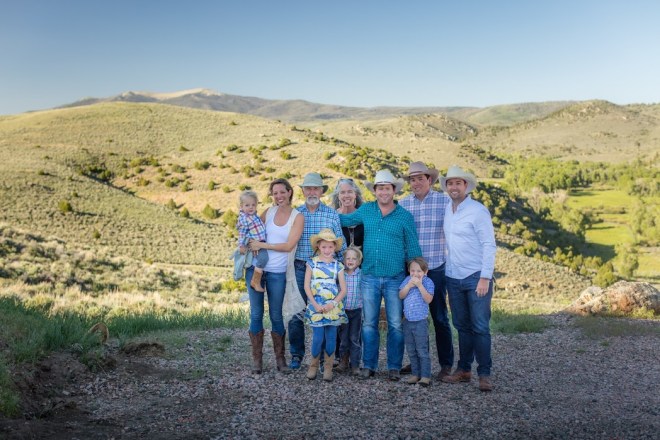
The big family event was a week on the Brush Creek Guest Ranch near Saratoga, Wyoming. It was an extremely generous gift from our daughter, Maggie, and our son-in-law, Kerry – part of this year’s celebration of Peggy’s and my 40th wedding anniversary. Our whole family was there: Maggie and Kerry, Brendan (on leave from his Foreign Service assignment in Pakistan), Patrick (who’s taking a new job working for The Economist), and our four grandchildren, Eva (age 7), Oscar (5), Orlando (almost 4), and Markendeya (almost 2). Diana, the family’s au pair from Colombia was also present.

It was our first time in Wyoming – the “Wild West” as we described it to our grandkids. And at Brush Creek we did it all: skeet shooting, horseback riding, river floating, zip line and rope courses, hiking, fly fishing, paint ball skirmishes, golf, yoga, picnicking, and eating and drinking that didn’t end. A couple of evenings, we watched the NBA Finals in the ranch’s Man Cave. On Friday, country singer, John Rich (of Big & Rich), who was also vacationing at Branch Creek, sang a few songs. Everyone loved it – especially his “Save a Horse; Ride a Cowboy.”

Our dinners together were transcendent. We reminisced, ribbed each other about marriage, parenting, and being parented. Eyes were tear-filled more than once. We really love our kids and grandchildren, and (gratefully) it’s so evident that they love and respect us.

Here are some pictures from Brush Creek:

Family Again

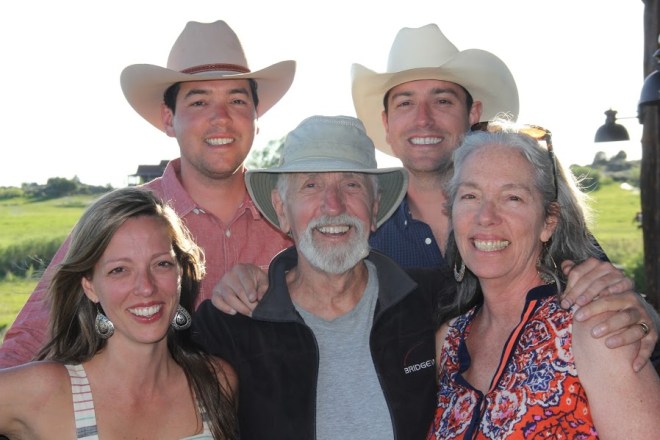
L-R: Maggie, Brendan, Mike, Patrick, Peggy

M & P

Maggie & Kerry

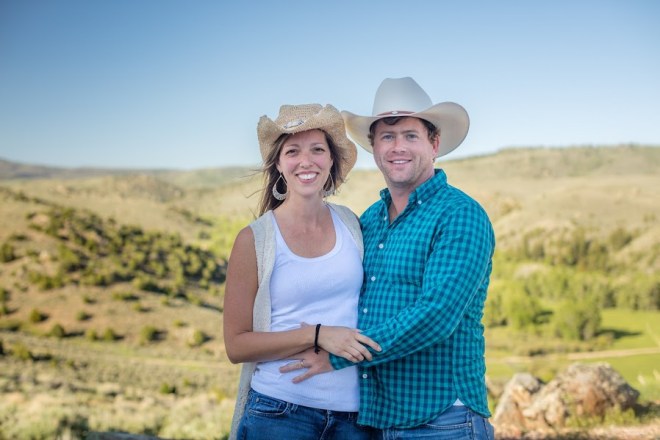
Our Hosts: Maggie and Kerry

Maggie's Family

L-R: Eva, Markandeya, Maggie, Oscar, Kerry, Orlando

Lovers

Forty Years!

Our 1984 Experience with Paulo Freire (Personal Reflection XIV)

freire-neutral

This 14th “Personal Reflections” blog continues my modest project of explaining myself to my three adult children who are often puzzled by my criticisms of the United States in these blogs and elsewhere. Half- jokingly (I think) they often ask, “Why do you hate America, Dad?”

Of course, I don’t hate the country of my birth. Quite the opposite. But my patriotism and loyalty take quite different directions from those fostered by the mainstream media and the otherwise fine educations our children received at Wellesley (Maggie), Lafayette (Brendan), and Davidson (Patrick). In contrast to those sources, and for reasons connected with faith, my own thinking aspires to view the world from the perspective of the world’s impoverished majority (both nationally and in the Global South) rather than from that of privileged classes within the United States.

Along with liberation theologians, Paulo Freire has played a major role in shaping me that way. Freire’s the great Brazilian educator who (among other books) wrote The Pedagogy of the Oppressed and Education for Critical Consciousness. His influence on liberation theology is immeasurable.

Peggy and I got to know Paulo quite well beginning in 1982 when we participated in his two-week seminar at Boston College. Then during my first sabbatical from Berea College (1983-’84) Peggy worked with him for six months at his center in Sao Paulo, Brazil. Every week, she joined a team of young Brazilians conducting one of Paulo’s literacy programs in Sao Paulo’s impoverished favelas. It was all part of her research on Freire for her Ed.D (Philosophy of Education doctorate) at the University of Kentucky. In 1986 the American Education Research Association gave Peggy’s work the year’s “Outstanding Dissertation Award for Conceptual Research.” She later published an article based on her work in the Harvard Educational Review.

I remember spending our sixth wedding anniversary in Freire’s apartment in Sao Paulo where we had a memorable supper with him and his wife, Elsa. Afterwards Paulo read aloud from the latest chapter in Peggy’s evolving dissertation. I recall his pausing after reading a lengthy quotation from one of his works and remarking, “Right now I am loving these words.”

I’m convinced that the Rivage-Seul’s were given the gift of tongues for our Brazil experience. During the first semester of my sabbatical (at the end of 1983) and in preparation for our trip to Brazil, I had studied Portuguese at the University of Colorado in Boulder. [I had been given a fellowship there (at the Center for the Study of Values and Social Policy) to research the relationship between freedom and justice. It was to prepare me to head Berea’s newly established Freshman Seminar whose readings were organized around that theme.] In any case, my Latin, French, and Italian helped me learn Portuguese. Peggy’s college French major (at Central Michigan University) helped her as well. Then in Anapolis, Brazil with the help of a tutor, we spent our first two months studying intensively. And it somehow worked. We ended up quite able to carry on in the language.

Brazil at this time was still run by its generals. That was the result of a 1964 coup sponsored by the CIA. The father of my Portuguese teacher at CU was one of those generals. So she arranged for our first few nights in the country to be spent at the Clube Militar as guests of the oppressors and fierce enemies of liberation theology in Brazil which was a hotbed of the discipline. (More about that later.) Staying at the Clube was very creepy for us.

But back to Paulo Freire . . . . After our return to the United States we had a warm reunion with him at the Highlander Center where he was working on a text with the Center’s founder, the great activist, Myles Horton. Horton’s work had directly influenced Martin Luther King. In fact, in the ‘60s, the F.B.I. had published photos of MLK at what they called the “Communist” Center (Highlander). It was part of J. Edgar Hoover’s campaign to portray King as a Red. Paulo’s and Myles’ text was eventually published as We Make the Road by Walking.

As I said, Freire’s method of teaching and learning was central to the methodology of liberation theology, which had increasingly seized my attention since I first encountered it in 1969.

One of Freire’s key concepts (shared with liberation theology) is “the hermeneutical privilege of the poor.”  Basically it says that the poor and oppressed know more about the world (and about the Bible) than the rich and comfortable. That idea constitutes a key basis for my own analysis of the world.

(I’ll explain that more fully next week.)

Our Dinner with Amy Goodman

Amy Goodman

A week ago today, Peggy and I had dinner with Amy Goodman, the host of “Democracy Now: the War and Peace Report” (DN).  The program airs each Monday through Friday on radio and TV stations across the country. I watch it every morning in its podcast version that can be accessed at any hour at http://www.democracynow.org/

The dinner was a Christmas present from my daughter, Maggie who (with her husband, Kerry) had given DN a substantial contribution.

[The gift came with a black Democracy Now tee shirt (which I wore to our dinner) and two coffee cups showing the program’s logo. The meal portion of the gift was for me and a companion of my choice. Naturally, it was Peggy. Still another of the gift’s components was attendance at one of the show’s morning productions (which we’ll take advantage of sometime in the future).]

There were four of us in Thursday’s dinner party. Amy brought along her factotum, Edith Penty, whose presence was absolutely delightful. We ate at the Hangawi Korean restaurant on 32nd street between Fifth and Madison Avenue. There we shared “The Emperor’s Tasting Menu” that featured starters, appetizers, entrees and dessert –   acorn noodle salad with avocado fritters, dumplings in pine nut and pineapple sauce, tofu with sesame leaves and seaweed sauce, and dessert.

As the meal unfolded we all shared our biographies.

Amy is a New Yorker raised in Bay Shore. She is the daughter of an ophthalmologist father and a mother who taught literature and Women’s Studies. Her family is Jewish Orthodox. Her maternal grandfather was an Orthodox Rabbi.  She studied Hebrew and Torah from kindergarten through high school. Amy graduated from Radcliffe College in 1984, with a degree in anthropology.

From her stories about participation in demonstrations, vigils, and campaigns, it’s clear that Amy Goodman has always been an activist. For some years she worked in an organic bakery that eventually supplied buns for Arby’s restaurants. Journalism has always been in her family’s blood. (Her brother published a family newspaper before reaching his teenage years.) She founded Democracy Now in 1996; this is its 20th anniversary year. Throughout Amy’s account of her life, there wasn’t a trace of self-promotion. On the contrary, both Peggy and I were impressed with her interest in our stories, and with her unassuming presence.

In all the four of us spent about two hours together. And of course conversation went far beyond autobiographies. Inevitably we discussed Trump, Bernie and Hillary.

The most interesting insight came when Amy shared the fact that the Obamas and Clintons can’t stand one another. Obama made Hillary his Secretary of State following the principle: Stay close to your friends, and even closer to your enemies. One of the first questions asked in any Obama or Clinton vetting process is: “What do you think about Hillary?” “What do you think about Barrack?” Hiring decisions are made accordingly.

Towards the end of our time together, Amy left the table for a moment. Soon afterwards waiters came to our table with ice cream and small cakes and a candle. Amy had informed them that Peggy and I are celebrating our 40th wedding anniversary. That’s the kind of thoughtful person Amy Goodman is.

As we left Hangwai, a young African American man caught sight of my Democracy Now tee shirt. He said to me: “Love your tee shirt. I watch that program every day. Love that too!” I pointed ahead of us to Amy who was deep in conversation with Peggy. I said, “That’s Amy Goodman right there.” He couldn’t believe it. Soon we were all taking pictures with the celebrity. It was a moment that topped the evening off just perfectly.

If Democracy Now isn’t part of your daily news-gathering routine, it should be.  Unlike other newscasts, it centralizes stories from the grassroots. So it often interviews victims of police violence, representatives of NGOs (non-governmental organizations), political dissidents, and community organizers. Noam Chomsky, Glen Greenwald, Naomi Klein, Bill McKibben, Medea Benjamin, Cornel West, Lori Wallach, Richard Wolff, Tariq Ali, and many other thought-leaders and journalists are among the program’s frequent guests.

“Democracy Now” covers the Black Lives Matter Movement along with the Boycott, Divest, and Sanction campaign against the Israeli apartheid system – whose proponents are almost never interviewed in the mainstream media.

If you watch Democracy Now, you know details of the recent coup in Brazil, its predecessor in Honduras, and current attempts at still another in Venezuela. You know about Michael Brown, Eric Garner and Tamir Rice. But you also are familiar with police killings of Sandra Bland, Tanisha Anderson, and Miriam Cary.

None of the stories is reduced to sound bites. Interviewees like Noam Chomsky are sometimes given an entire hour (without commercial interruption) to analyze a whole host of world and national issues. An hour-long broadcast was devoted recently to Daniel Berrigan, the Jesuit peace activist who died last month.

Peggy and I are so grateful to Maggie and Kerry for making possible such a memorable evening — and of course, to Amy Goodman for spending so much time with us and for being the huge inspiration she is